
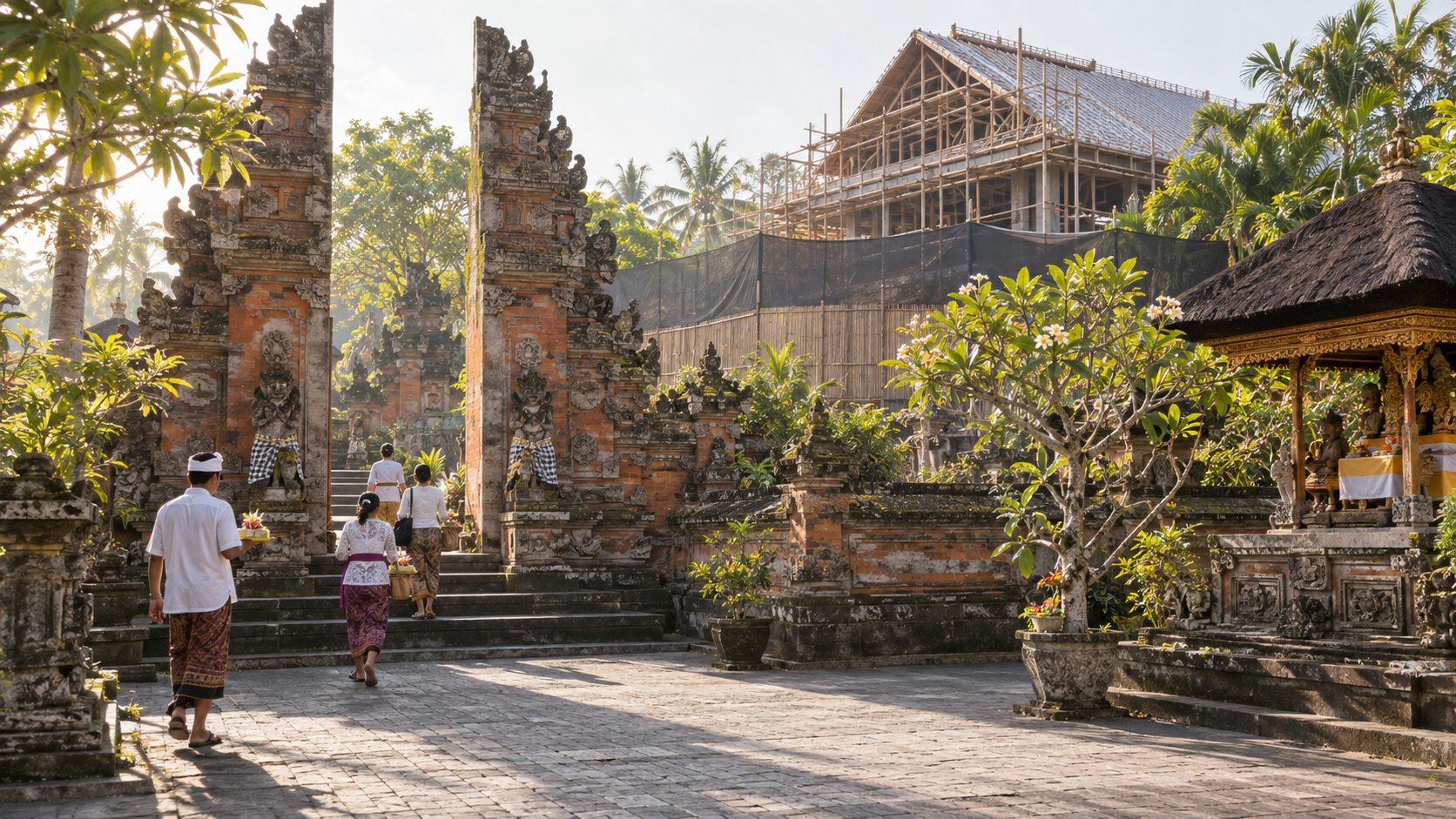
If you are planning darshan at Sri Sri Radha Rasesvara in Denpasar, the most important fact is that the temple is in a period of transition. Worship and community life are continuing while a new temple is being built, and the transfer of the deities has been planned for later in 2026.
That means you should not rely on an old location, an assumed programme time, or the December target without checking again. Here is what is known, what remains provisional, and how you can prepare for a respectful visit.
What is confirmed, and what is still only planned
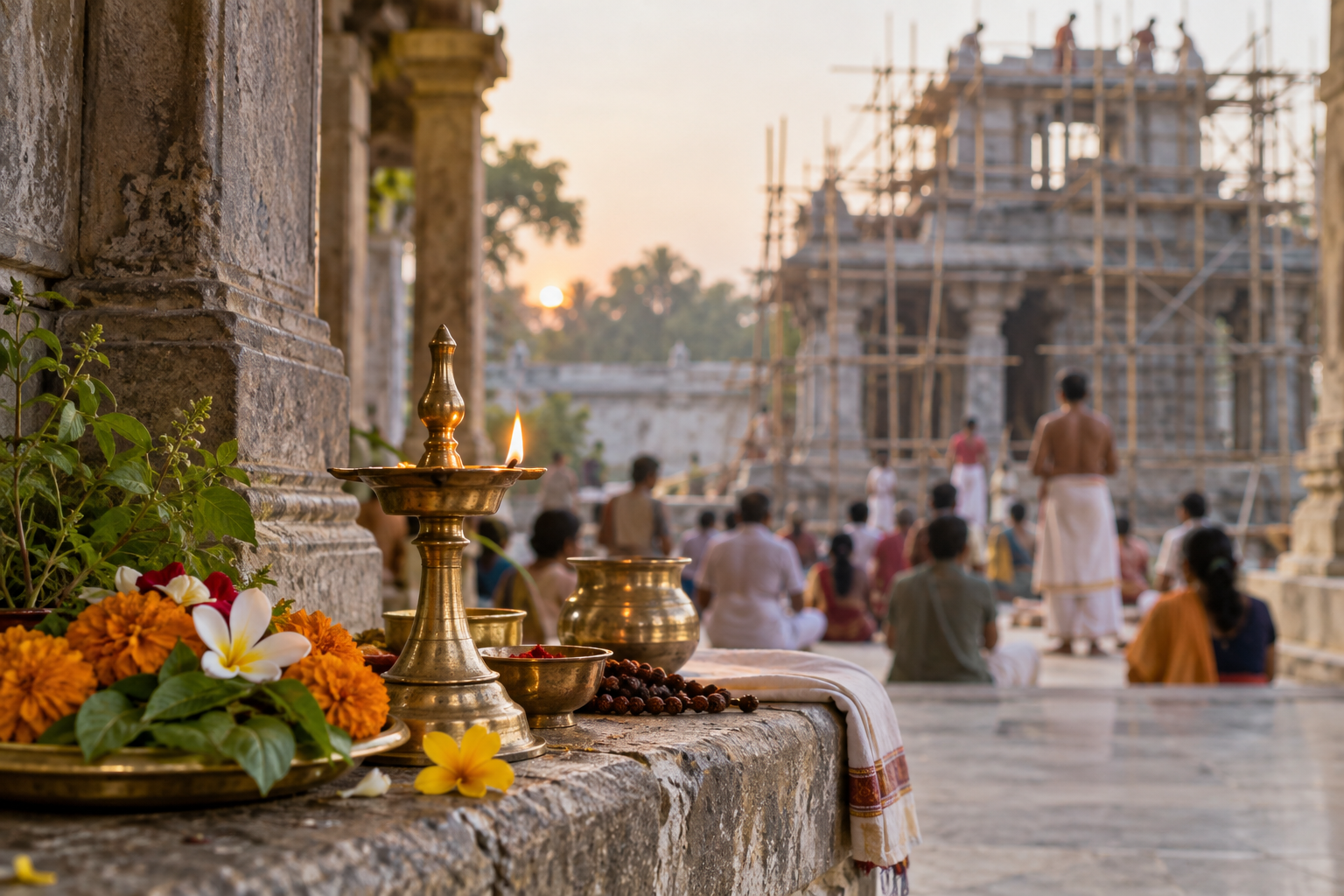
The new temple was under construction and proceeding according to schedule in September 2026. The intended transfer of Sri Sri Radha Rasesvara to Their new home remained set for December 2026.
The careful word is “planned.” December is a target for the move, not confirmation that it has already occurred, that the new premises are open, or that a public installation programme has been announced. If you are visiting near or after December, confirm which premises currently house the deities before arranging transport.
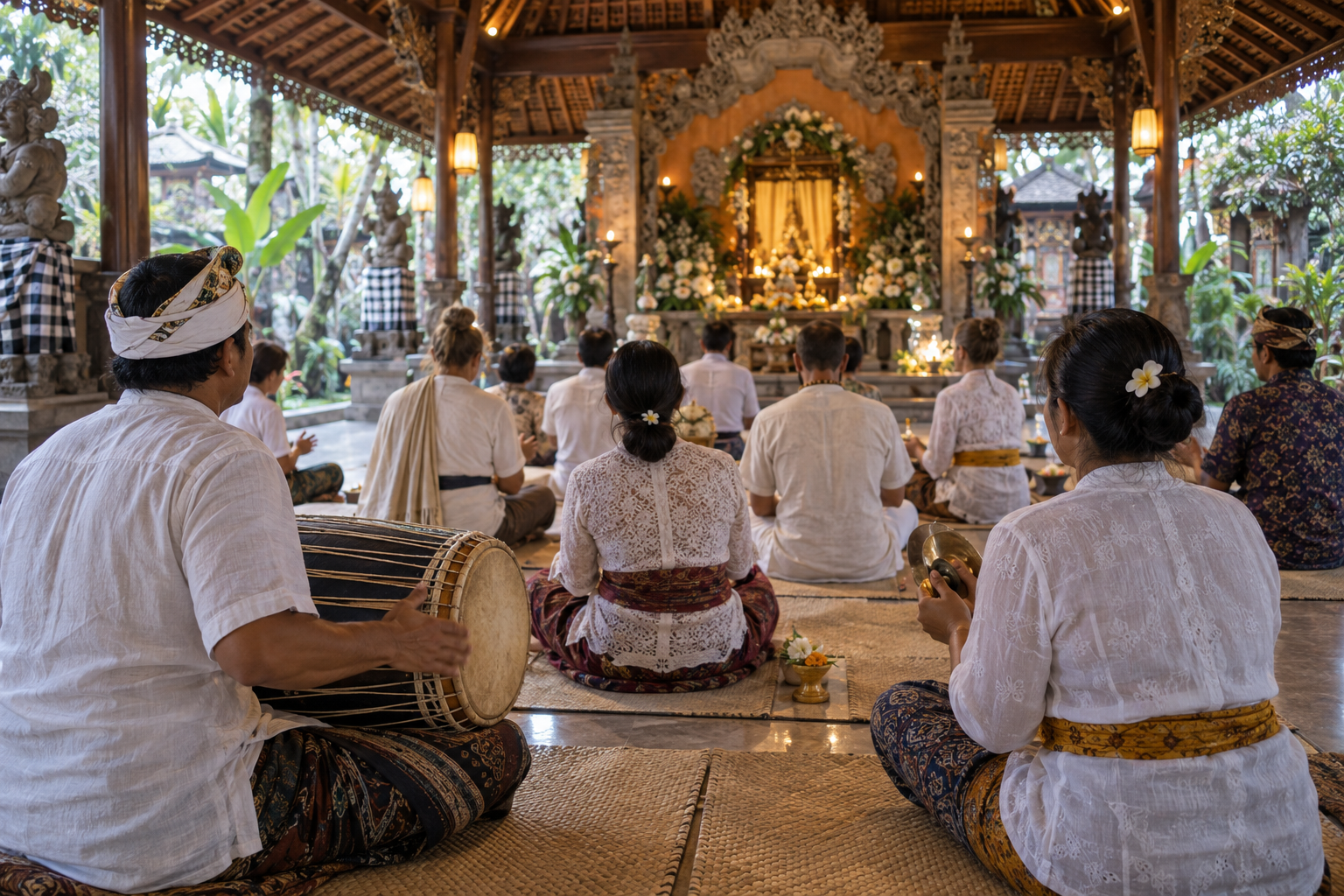
The temple’s devotional life is active during the building work. A recent gathering included kirtan led by Ramai Swami, a class from the Chaitanya-charitamrita, and prasadam. Devotees were also continuing their service to the deities. This establishes the character of the worship taking place, but it does not establish a recurring public timetable for each activity.
- Construction status: the new temple building was still in progress.
- Relocation status: the deity move was intended for December 2026 but remained a future plan.
- Devotional life: worship, kirtan, scriptural teaching, service and prasadam were taking place.
- Visitor information: no confirmed address, daily schedule, relocation ceremony date or public-access arrangement is established here.
How to understand the temple’s devotional setting
Sri Sri Radha Rasesvara is a Radha-Krishna temple. The honorific “Sri Sri” expresses reverence, while “Their Lordships” reflects the devotional understanding that the deities are personal recipients of worship and seva. For a visitor, this distinction matters: the altar is not an exhibition, and darshan is not ordinary sightseeing.
The combination of Radha-Krishna deity worship, kirtan and teaching from the Chaitanya-charitamrita places the gathering within a recognisably Gaudiya Vaishnava devotional pattern. You may therefore encounter practices that differ from those at a Balinese Hindu pura. Do not assume that every Hindu temple in Denpasar follows the same sequence, terminology or visitor customs. Follow the instructions of the devotees serving at this particular temple.
- Darshan means approaching the sacred presence of the deities with attention and reverence. Pause, avoid blocking others, and let active worship take precedence over photography or conversation.
- Seva is devotional service. Preparing the altar, maintaining the temple and caring for guests can all be undertaken as offerings rather than merely as organisational tasks.
- Kirtan is congregational devotional singing or chanting. You can listen until you recognise the response; participation does not require you to know every melody or Sanskrit and Bengali phrase.
- Chaitanya-charitamrita class involves teaching from a foundational Gaudiya Vaishnava text concerning Sri Chaitanya Mahaprabhu and the theology of bhakti. Sit where directed and reserve extended questions for an appropriate pause or the end of the class.
- Prasadam is food received after being offered in worship. Take only what you expect to finish. If you have an allergy or strict dietary restriction, ask about ingredients before accepting a serving; sacred food should still be approached with ordinary care for your health.
Five questions to settle before travelling across Denpasar
A construction project and a planned deity transfer can make otherwise reliable listings temporarily obsolete. Before you leave, obtain current confirmation from the temple or a local devotee. Ask precise questions rather than simply asking whether the temple is “open.”
- Where are Sri Sri Radha Rasesvara presently worshipped? Ask for the current location, not merely the address of the organisation or the site of the new building.
- Has the December 2026 transfer taken place? If it has not, ask whether the target date has changed. If it has, confirm that ordinary public darshan has begun at the new temple.
- What programme can a visitor attend on the chosen day? Request the start time for darshan, kirtan, class and prasadam separately. One documented programme does not prove that all four occur every day.
- Which language will be used? A class may not be delivered in a language you understand. Knowing this in advance lets you decide whether to attend for the full teaching, join the kirtan, or arrange help from a bilingual devotee.
- Has construction changed access? Ask about the entrance, footwear area, parking, step-free access and any restricted zones. A new building project can affect these practical details even while worship continues normally.
If you hope to attend the deity transfer or an opening celebration, ask whether it is a public event and whether visitors need to register. Do not treat the month of the planned move as a ceremony date. The exact day and access arrangements require their own confirmation.
Visit as a participant in a sacred space
You do not need prior experience of Gaudiya Vaishnava worship to visit respectfully. You do need to notice that the community’s attention is directed toward the deities. Simple restraint will carry you further than trying to imitate every gesture around you.
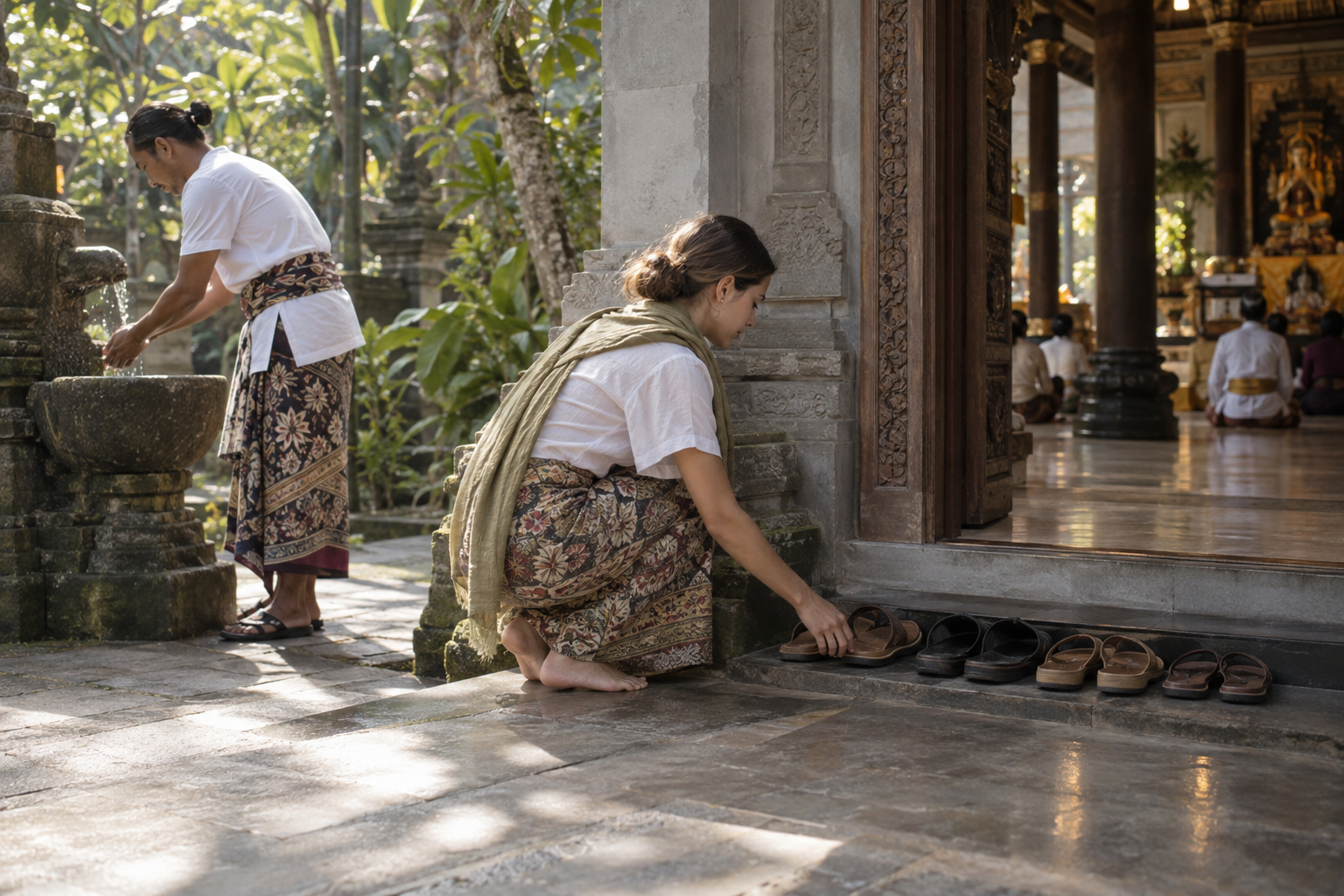
- Choose modest clothing and follow the temple’s own instructions about footwear. Local directions should take priority over assumptions imported from another Hindu temple.
- Keep your phone silent. Ask before photographing the altar, deities, worship, class or other visitors.
- During kirtan, stand or sit where the congregation indicates. You may chant, clap gently, or listen without making yourself the centre of the gathering.
- During the class, avoid walking in front of the speaker or having side conversations. If you must leave early, sit where your departure will cause the least disruption.
- Wait for guidance before entering areas near the altar or any construction zone. Enthusiasm does not replace permission.
- If prasadam is served, receive a manageable portion and ask where plates or cups should be returned. Do not assume that prasadam is included with every visit.
- If you wish to donate or volunteer, ask for the designated method and the seva currently needed. A construction period may create practical needs, but the temple should define them.
The new building matters because it will become a home for worship, teaching, kirtan, hospitality and service. Yet the spiritual centre of the transition is not the construction itself. It is the continued seva of Sri Sri Radha Rasesvara and the community gathered around Them.
Key takeaways
- The new Radha Rasesvara temple in Denpasar was under construction in September 2026.
- The transfer of the deities was planned for December 2026; that target should not be mistaken for confirmation of a completed move or a public opening.
- Kirtan, Chaitanya-charitamrita teaching, deity service and prasadam are all part of the documented devotional setting, but no recurring visitor schedule is confirmed.
- Before travelling, verify the current worship location, the programme for your chosen day and any construction-related access changes.
- Approach the temple as a living place of Radha-Krishna bhakti: let worship take precedence, follow local instructions and ask before taking photographs or entering restricted areas.
Your next step is straightforward: contact the temple close to the day of your visit and ask where the deities are presently receiving worship. That single confirmation will prevent the most likely mistake during the transition and let you arrive ready for darshan rather than searching for the correct premises.
References
