
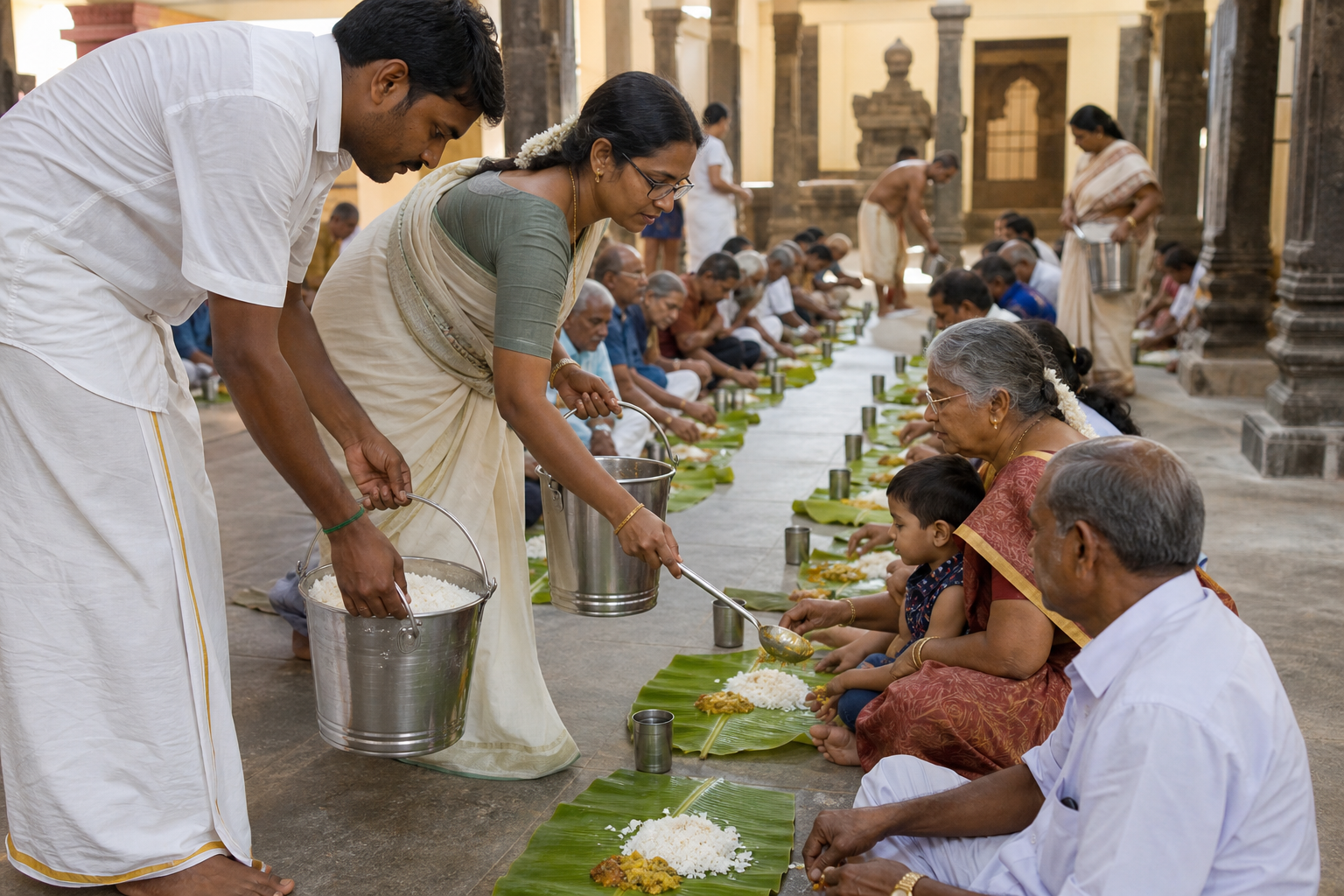
If you are planning darshana at a TTD-managed temple, the proposed Anna Prasadam expansion raises an immediate question: can you now rely on receiving a meal there? The careful answer is that you should treat this as a major programme in progress, not as confirmation that every covered temple is already serving at all times.
The direction is clear: TTD intends to bring a supervised, hygienic and consistent meal service to many more devotees. The temple-level details still matter, however. Knowing what has been promised, what remains to be confirmed and how to participate respectfully will help you plan your visit without reducing prasadam to another travel amenity.
What the 60-temple expansion actually means
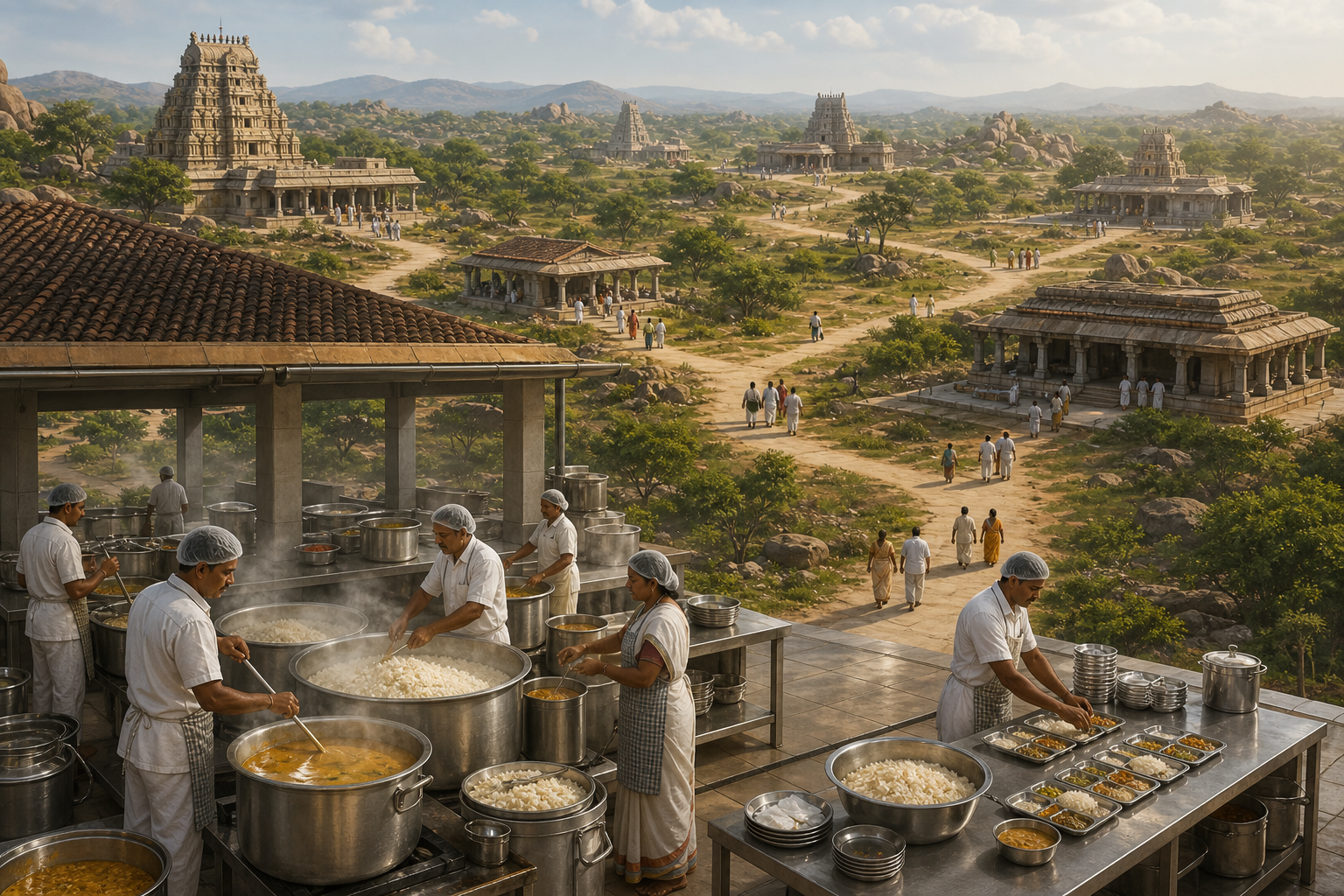
TTD has begun arrangements to provide Anna Prasadam across 60 temples under centralized supervision. That establishes the intended scale of the programme and its emphasis on common standards. It does not establish that all 60 locations began serving simultaneously.
This distinction matters. A programme can cover 60 temples administratively while individual kitchens, serving areas and local teams become ready at different times. The rollout is expected to proceed through localized implementation under TTD supervision. Exact temple coverage, launch sequence, serving hours, menus, distribution points and access arrangements therefore remain details you should confirm through official TTD communications.
Central supervision is intended to align preparation and distribution around purity, hygiene, taste and orderly service. It should make the standard less dependent on the habits of a single location. It cannot, by itself, guarantee identical queues, meal times or seating arrangements at every temple. Local execution will determine what you encounter on the day of your visit.
What to verify before planning your temple meal
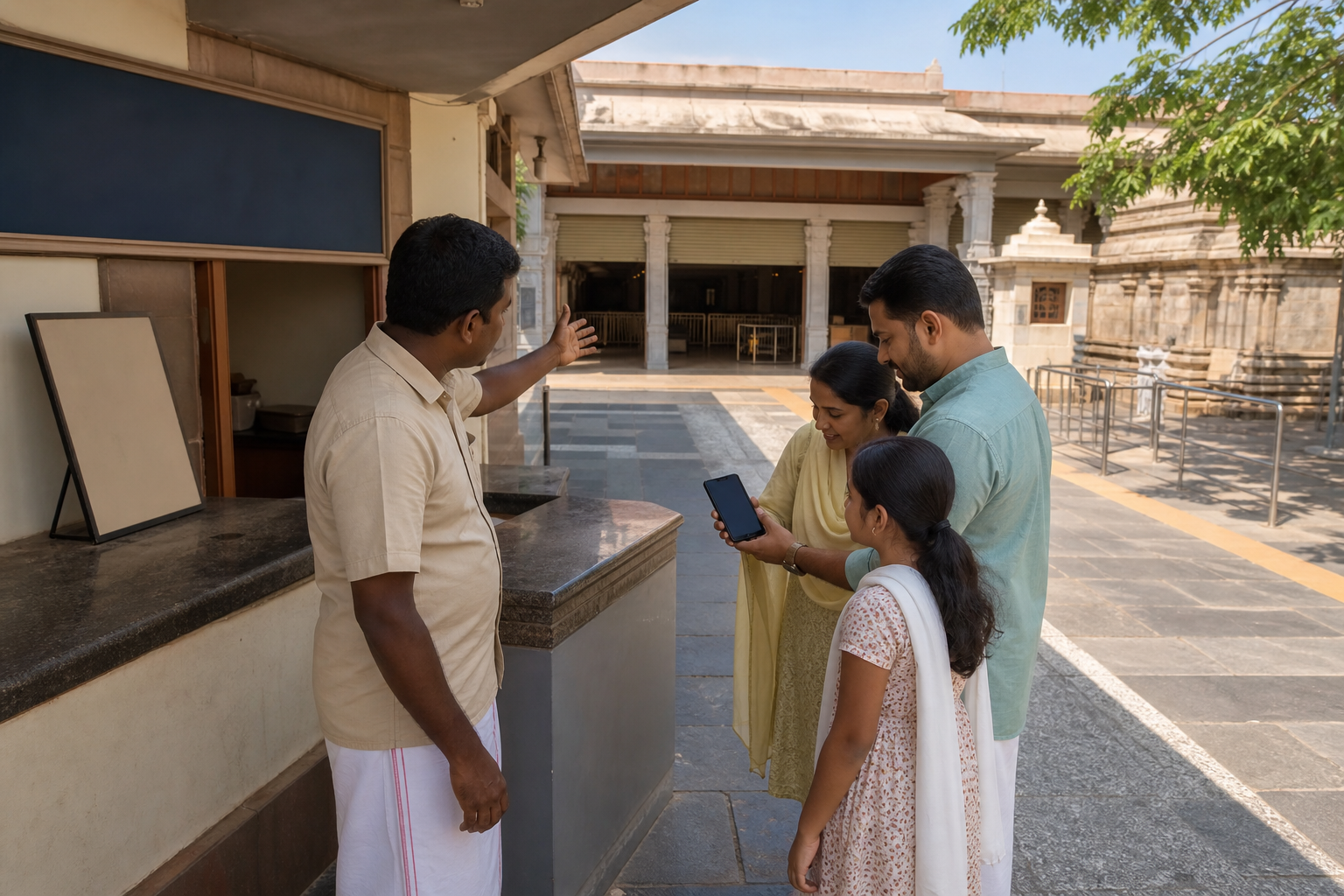
Do not build a tightly timed pilgrimage itinerary around the assumption that the words “60 temples” amount to a meal guarantee. Check the exact location close to your travel date, especially if you are accompanying children, elders or anyone who cannot comfortably wait through an uncertain serving window.
- Confirm the exact temple. Verify that the temple you intend to visit is included in the rollout rather than assuming every TTD-associated location is already covered.
- Confirm that service has begun. Preparations and localized rollout mean inclusion in the programme and active distribution are not necessarily the same thing.
- Ask where and when prasadam is served. The kitchen, dining hall and distribution point may not be beside the darshana exit, and local serving windows may shape your visit.
- Clarify local access arrangements. Ask whether there is a queue, token, designated entrance or other process instead of relying on practices you encountered at another temple.
- Check dietary suitability directly. Sattvic and vegetarian describe the intended character of the meal, but those terms do not answer questions about allergies or medically necessary restrictions.
If a missed or delayed meal would create a health or mobility problem for someone in your group, arrange a permissible alternative outside the temple service. Follow the temple’s rules about food inside the premises. Anna Prasadam can be part of your pilgrimage plan, but an expansion still being implemented should not be the only plan for a vulnerable traveller.
You should also distinguish a request for practical information from a demand for privilege. It is reasonable to ask where the service operates and whether it is active. It is not reasonable to expect volunteers to bypass an orderly queue or promise a portion outside the local serving process.
How hygiene, taste and dignity should work together
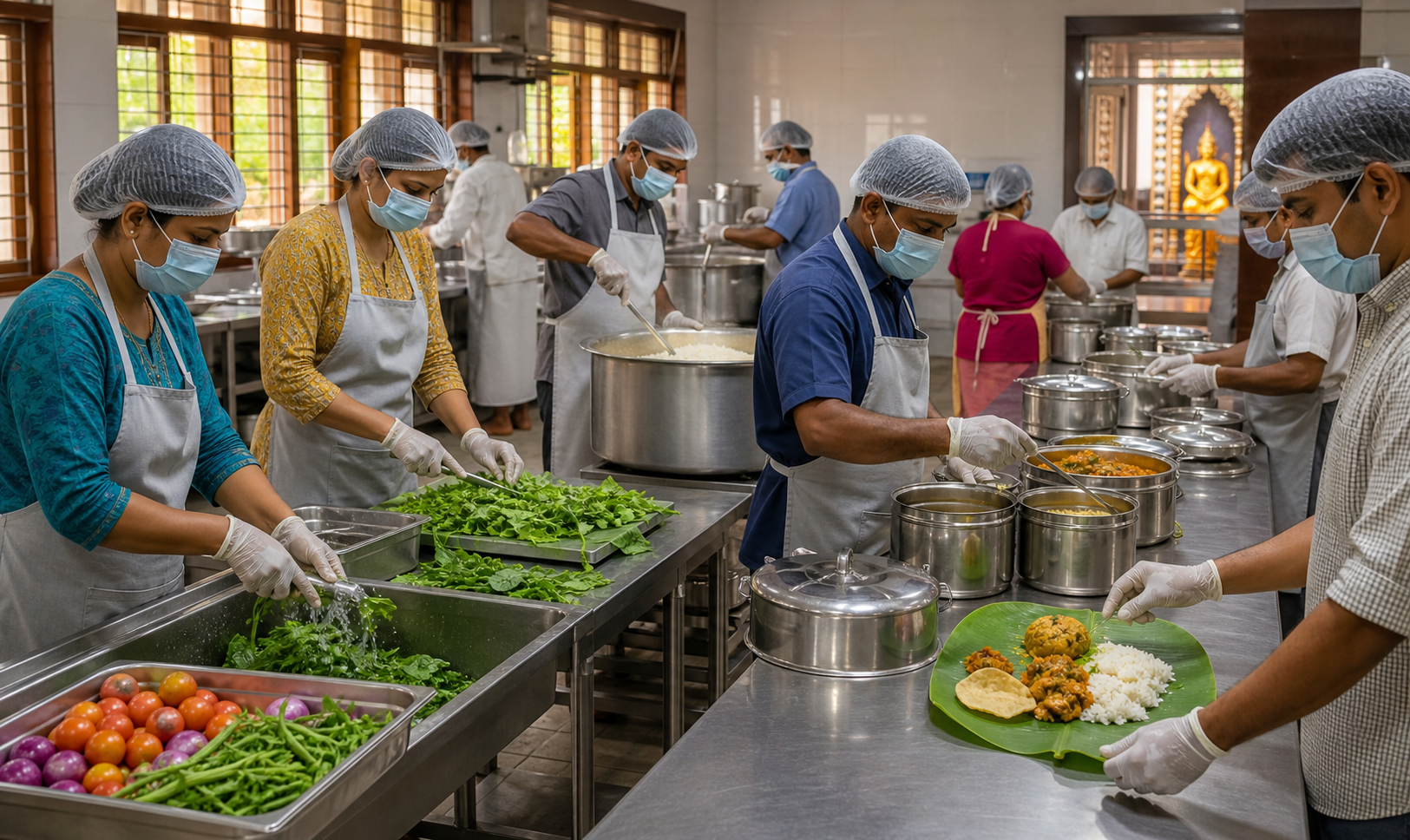
Large-scale temple feeding succeeds only when devotional intent is supported by disciplined operations. Clean preparation areas, orderly distribution and consistent vegetarian food are not secular additions to the sacred act. They are how the institution protects the offering and the people receiving it.
For a devotee, the most relevant signs will usually appear at the serving point rather than inside a kitchen you cannot inspect. Notice whether utensils and serving surfaces are kept clean, whether the queue moves without unnecessary crowding, whether waste is cleared promptly and whether the same basic dignity is extended to every recipient. These observations are more useful than judging the entire programme by a single preferred dish.
Taste still matters. A nourishing, palatable meal after darshana can restore a tired pilgrim and help a family continue its journey. Yet consistency should not be confused with rigid uniformity. Central supervision can establish expectations while local kitchens still respond to their facilities and serving conditions. Until TTD publishes location-specific details, you should not assume that every participating temple will offer an identical menu.
Vegetarian food is not automatically suitable for every allergy or medical diet. If an ingredient could cause serious harm, ask responsible staff and do not eat when the answer remains uncertain. Likewise, if food appears or smells unsafe, set it aside and inform temple management calmly. Reverence for prasadam does not require ignoring a genuine safety concern; responsible correction protects the seva.
Why Anna Prasadam is more than a pilgrim facility

Anna Prasadam is food received as a sacred offering. Its meaning comes from the relationship among the deity, the temple, the people who prepare and serve the meal and the devotees who accept it. Treating it only as complimentary food misses the practice that gives the meal its place in temple life.
The service turns compassion into something concrete. A family tired after travel, an elder completing darshana, a volunteer between duties and a visitor without social standing at the temple can sit within the same circle of care. Distribution without distinction of background makes dignity visible rather than leaving it as an abstract ideal.
Hinduism, Buddhism, Jainism and Sikhism retain their own doctrines and institutions; their differences should not be flattened. Even so, feeding people with care, restraint and an attitude of service expresses a recognizable dharmic concern for the welfare of others. A well-run Anna Prasadam programme can therefore create fellowship without asking participants to erase their distinct paths.
Your conduct is part of that system. Take a portion you can finish, avoid wasting food, follow the serving order and make reasonable room for elders, children and those with mobility difficulties. Respect the volunteers, but also respect the next devotee waiting to be served. These small choices preserve both the material resources and the sacred mood of the meal.
The expansion should ultimately be judged by more than the number of plates distributed. The meaningful test is whether the service remains clean, dependable, inclusive and recognizably devotional as it reaches more temples. Scale is valuable when it carries the ethic of seva with it.
Key takeaways
- TTD is preparing to extend Anna Prasadam to 60 temples under centralized supervision, but localized rollout does not confirm simultaneous availability everywhere.
- Before travelling, verify the exact temple, operational status, serving location, time and local access process through official TTD information.
- The programme emphasizes hygienic preparation, orderly distribution, consistent taste and sattvic vegetarian food.
- Vegetarian or sattvic food is not automatically safe for every allergy or medically restricted diet; ask directly when an ingredient matters.
- Cleanliness, equal treatment, minimal waste and respectful participation are practical measures of whether the seva is fulfilling its purpose.
Before your next TTD temple visit, confirm the local rollout details and keep a suitable contingency for anyone who cannot wait. If the service is active, receive it as prasadam: follow the order, take what you need and leave the space ready for the devotee who comes after you.
References
