
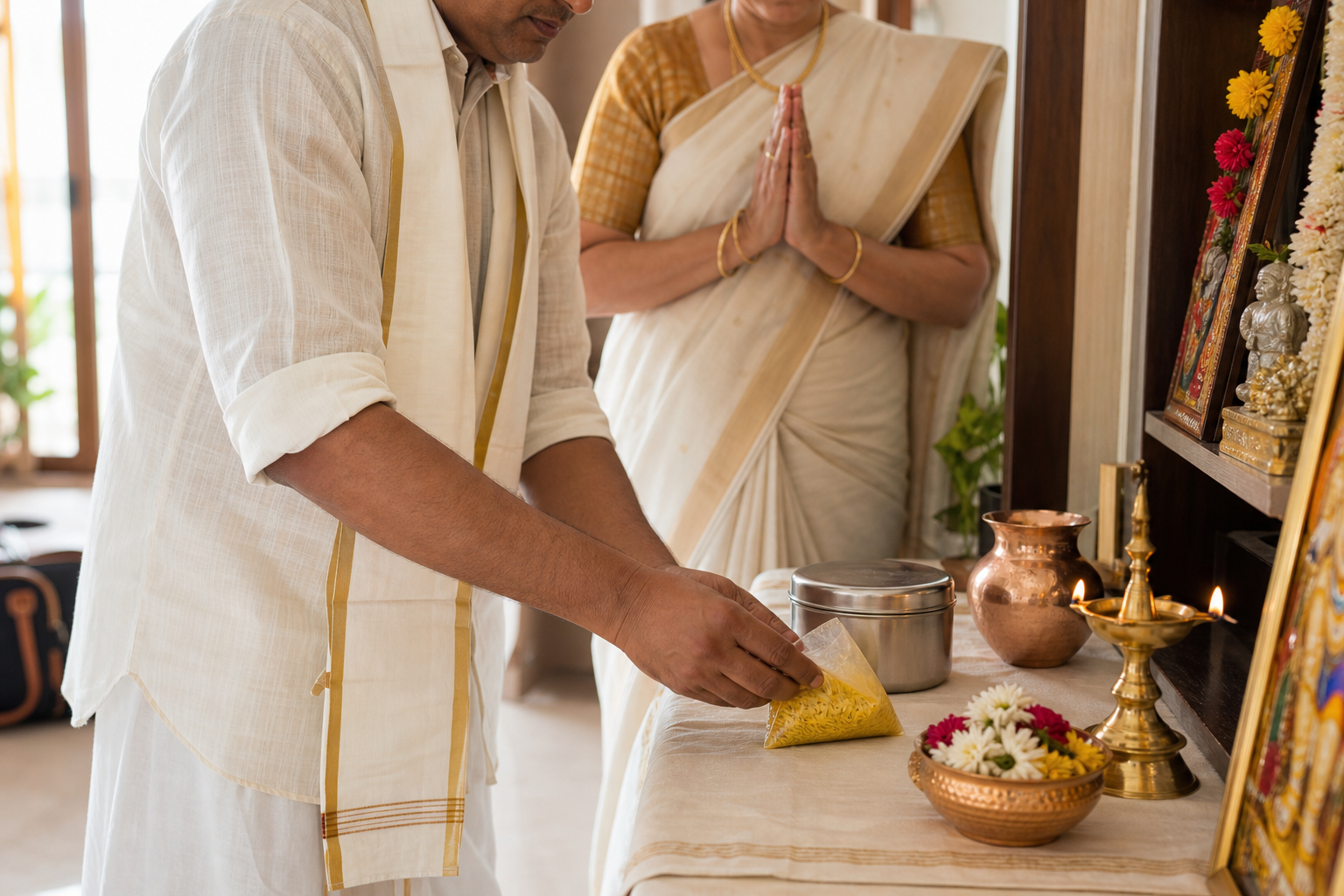
You have returned from Tirupati, attended a sacred procession, or received Srivari Akshintalu after your wedding. Now comes the practical question: where should the sacred items go, how should you receive them, and how do you keep the blessing from becoming another packet stored in a cupboard?
You do not need to reproduce a temple-scale ceremony at home. Give the blessing a clean place, receive it with undivided attention, follow your family’s sampradaya for its exact ritual use, and connect it to one repeatable act of dharmic household life. The point is continuity between darshan and conduct.
Let the temple observance shape an ordinary decision
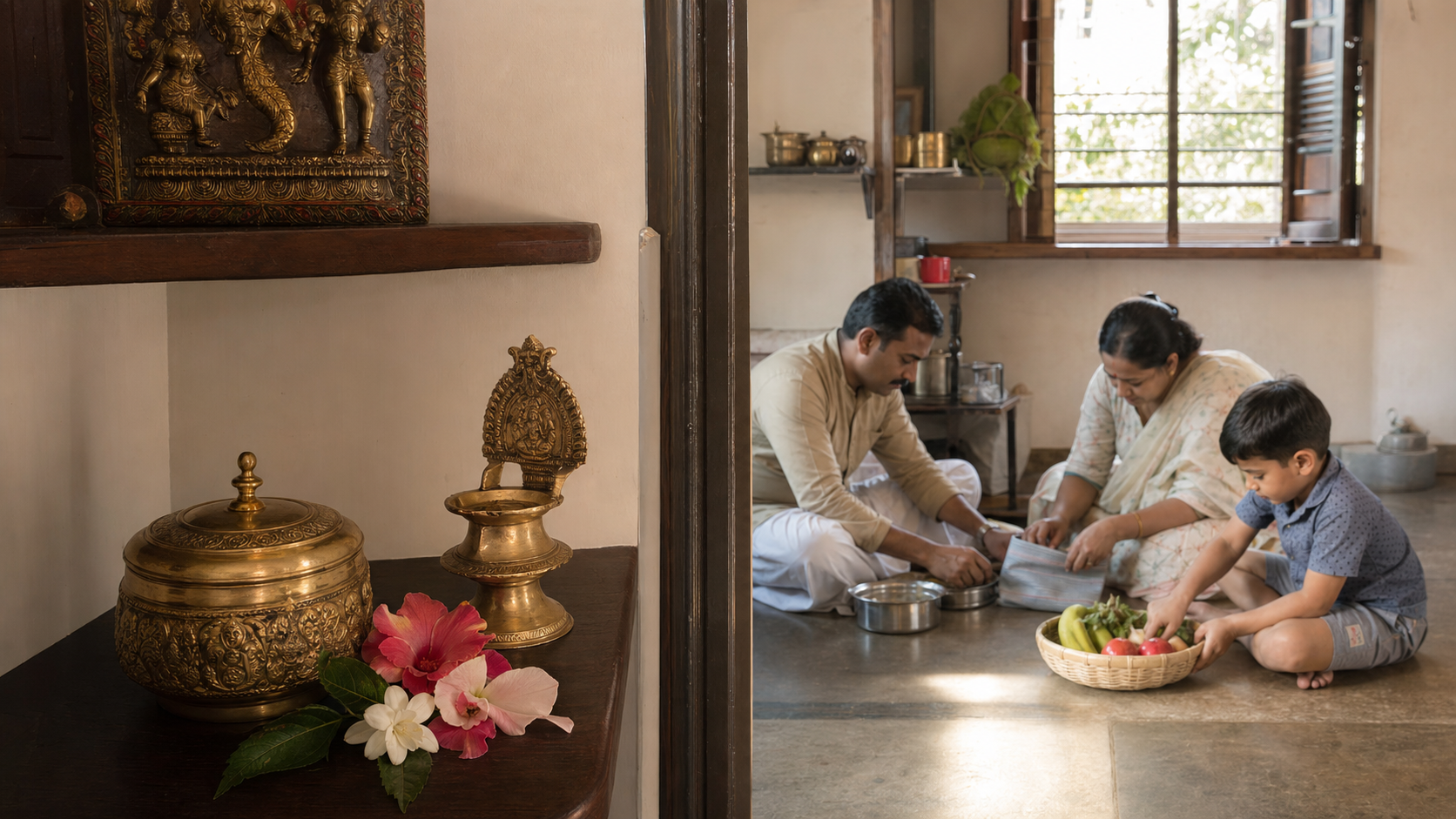
A temple procession gathers many forms of devotion into one movement: the deity leaves the inner sanctum, priests conduct the prescribed rites, musicians sustain the ceremonial rhythm, and devotees receive darshan together. Your home has a different role. It turns the meaning of that encounter into habits that can survive an ordinary week.
A clear example came on 1 January 2026, when Sri Parthasarathy Swamy was scheduled to proceed with Rukmini and Satyabhama at 6:00 PM for Rohini Nakshatra at Sri Govindaraja Swamy Temple. Parthasarathy is Krishna as the charioteer. The form directs attention toward action guided by dharma: power must accept counsel, duty must remain answerable to conscience, and devotion must appear in conduct.
Do not reduce that meaning to a pleasant memory of lamps, music, or evening darshan. After a temple observance, identify one decision waiting at home. It may concern an apology, a family duty, spending, care for an elder, or a promise you have postponed. Ask what dharma-guided action requires, write down the next step, and complete it. That is a more faithful extension of Parthasarathy’s teaching than trying to imitate the external scale of a procession.
If your family already observes Rohini Nakshatra, you can use it as a recurring point for prayer and reflection. Follow the panchanga and custom accepted in your household rather than treating one temple’s past date or time as a permanent rule.
Understand what has entered your household
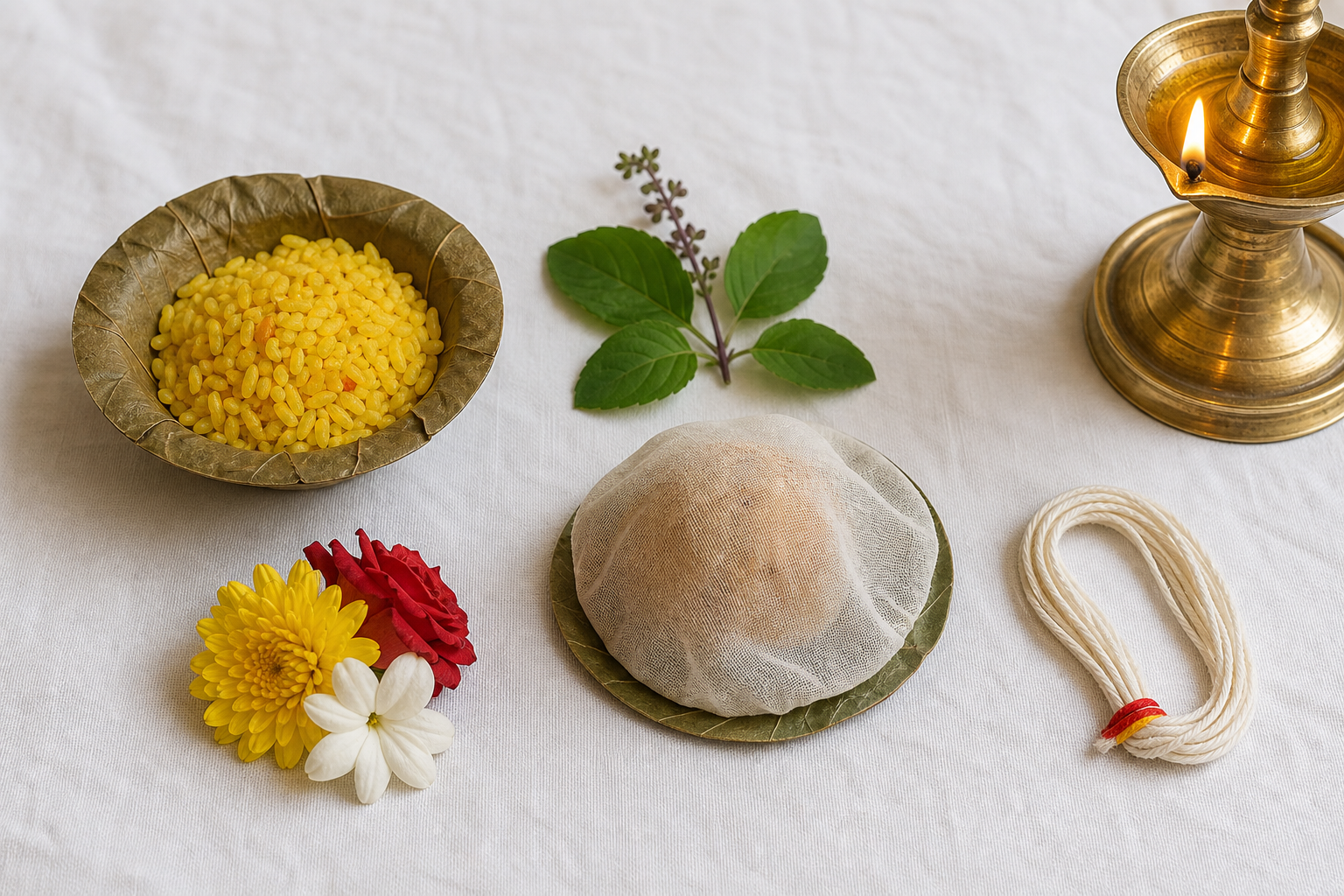
TTD’s Srivari Aseervadam for newlyweds brings several distinct sacred elements together: Akshintalu, kumkum, kankanam, a blessing letter, and photographs of Sri Venkateswara Swamy. Do not treat them as interchangeable souvenirs. Each gives the household a different devotional prompt.
- The photograph of Sri Venkateswara Swamy provides a focus for remembrance and household worship. Place it upright in a clean, stable location rather than leaving it among unopened mail or miscellaneous keepsakes.
- Akshintalu are sacred rice associated with fullness and prosperity. Keep them separate from ordinary pantry rice. Their precise ceremonial use can differ by family and region, so retain them respectfully until you know the practice followed in your home.
- Kumkum carries associations with Shakti, auspiciousness, and marital well-being. Keep the packet dry and clean, and use it according to your family’s custom. It should not be reduced to an ordinary cosmetic item merely because its physical form looks familiar.
- Kankanam is a sacred thread with protective and vow-affirming meaning. The wrist on which it is tied, who ties it, the occasion, and the manner of removal may be governed by local or family practice. Ask a knowledgeable family elder or purohit instead of improvising a supposedly universal rule.
- The blessing letter should be read, not merely preserved. Newlyweds can read it together when receiving the packet and keep it with their sacred items as a record of the blessing extended to their new household.
Physical reverence is only the beginning. Akshintalu may signify prosperity, but a prosperous household also needs restraint, honest earning, generosity, and freedom from waste. Kumkum may signify auspicious married life, but harmony still requires truthful speech and mutual regard. Kankanam may signify a vow, but a thread cannot keep a promise on your behalf. Let the symbolism tell you what must be practised.
Use a simple welcome observance instead of inventing complexity
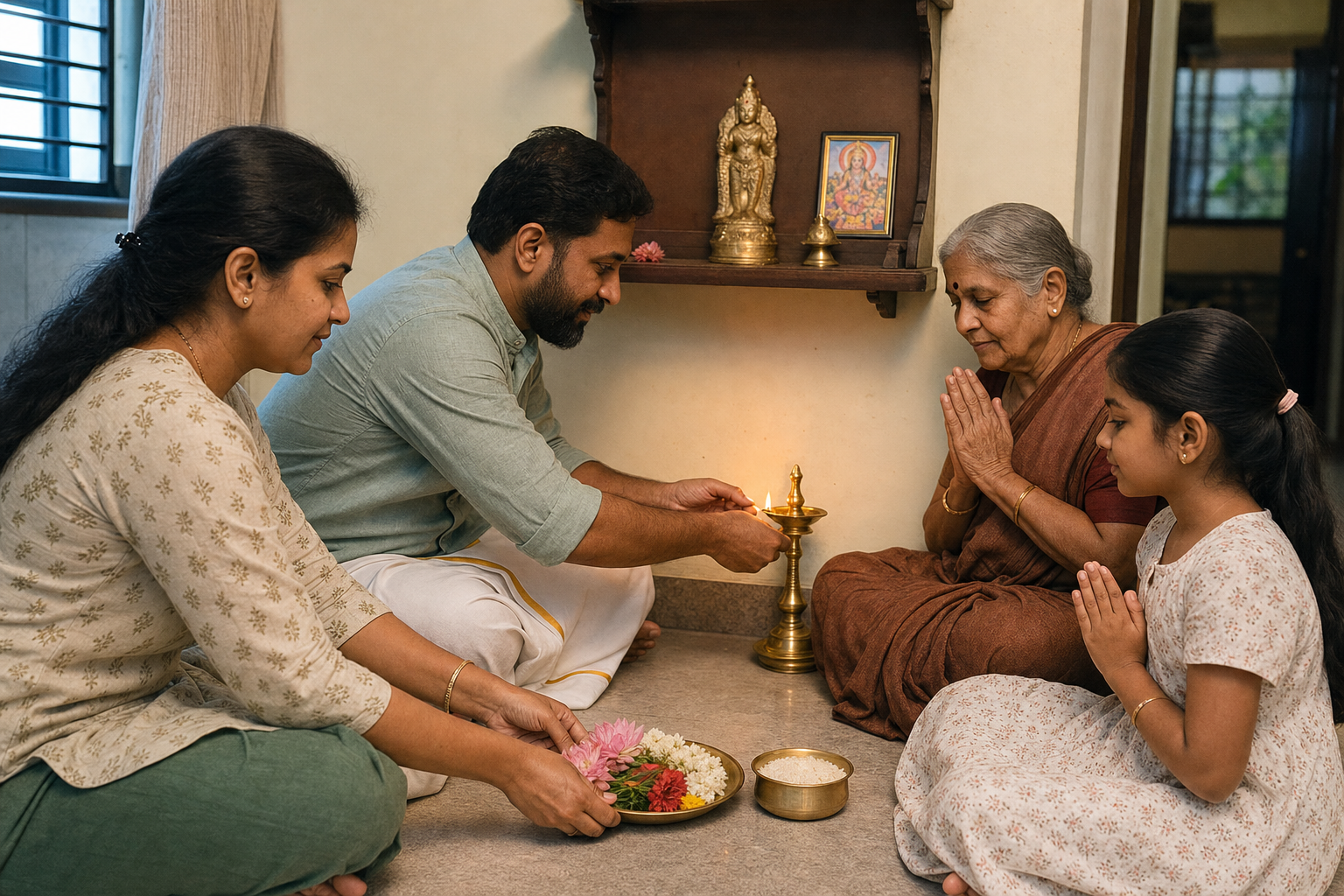
When the blessing packet arrives, set aside a quiet period in which the couple or household can be present. The following sequence is a modest framework, not an official TTD seva and not a replacement for the rites prescribed by your sampradaya.
- Prepare the place. Clean the household puja space or another dignified surface. Wash your hands and remove unrelated objects so the sacred items are not opened amid clutter.
- Arrange the contents carefully. Place the image of Sri Venkateswara Swamy upright. Set the blessing letter, Akshintalu, kumkum, and kankanam before it without mixing them with ordinary household materials.
- Make a simple offering. If it is already your household practice, light a lamp and offer a flower, water, or fruit. An elaborate display is unnecessary. A lamp should be placed where it can be watched and extinguished safely.
- Invoke the divine in a familiar form. Recite a Venkateswara nama, mantra, stotra, or prayer that your family knows. If you do not know one, offer namaskara and sit in silence rather than reciting unfamiliar words carelessly.
- Read the blessing together. Do this aloud if appropriate. It converts the letter from an object received into a blessing consciously accepted by the household.
- State one household sankalpa. Use plain language. For example: “May this home be guided by truth, patience, responsible work, and mutual respect.” This is not presented as a prescribed liturgical formula; it is a clear commitment your family can understand and test through conduct.
- Close without rushing. Offer namaskara, share any food that was offered, and return the sacred contents to a clean place. Follow your family practice or a trusted purohit’s direction before applying the kumkum, tying the kankanam, or using the Akshintalu ceremonially.
Then choose a sustainable rhythm. A brief daily pranam before the image is better than an ambitious routine that disappears after a few days. A newly married couple might also sit together once a week before the puja space, name one reason for gratitude, and address one unresolved household duty. That gives the received blessing a practical place in married life without pretending that a domestic check-in is itself a temple rite.
Preserve temple discipline without pretending home is a temple
Temple and household worship support one another, but they are not identical. Temple ceremonies follow institutional schedules, priestly responsibilities, sacred architecture, and established ritual protocols. A home should not claim that authority merely by copying visible gestures.
- Verify every visit afresh. Procession timings and routes may be adjusted for ritual requirements and crowd safety. Never reuse an old festival time as if it were current. Check TTD notifications before travelling, arrive early, follow the dress code, and respect queue discipline and the sanctity of the prakarams.
- Keep offerings proportionate. Simple, eco-conscious offerings are sufficient where they are permitted. More material does not automatically mean more devotion.
- Do not turn sacred contents into lucky objects. Keeping Akshintalu while ignoring duty, or tying a kankanam while disregarding the vow it signifies, reverses the relationship between symbol and practice.
- Do not prescribe your household custom to everyone. The handling of sacred rice, kumkum, and ritual threads can vary. State what your family follows without presenting it as the only authentic Hindu practice.
- Ask before disposing of sacred material. If an image is damaged, kumkum becomes unusable, or you are uncertain what to do with older Akshintalu or a removed kankanam, consult your family purohit or the relevant temple authority. Do not casually place sacred contents in ordinary waste.
The blessing is distinctly Hindu, even though its ethical horizon can be understood more widely. Compassion, self-discipline, responsible family life, nonviolence, and communal harmony resonate across the dharmic family. If your household includes Hindu, Buddhist, Jain, or Sikh relatives, you can invite reverent participation without pretending that every tradition uses the same ritual forms. Respect does not require erasing difference.
Key takeaways
- Give Tirupati blessings a clean, stable place in the home, then connect them to a repeatable act of dharmic conduct.
- Treat the image, Akshintalu, kumkum, kankanam, and blessing letter as distinct sacred elements rather than generic souvenirs.
- Use a modest welcome observance and let your family’s sampradaya govern the exact ritual handling of each item.
- Read the blessing letter together and make one household commitment specific enough to practise.
- Confirm temple timings through current TTD announcements; a past procession schedule is not a standing timetable.
- When you do not know the accepted practice, ask a trusted elder, purohit, or temple authority instead of inventing certainty.
Begin with the sacred items already in your care. Place them properly, read the blessing, and choose the first household action that will make its meaning visible. The next honest duty you complete can become the point where Tirupati’s grace stops being a memory and starts shaping the life of your home.
References
- DharmaRenaissance Blog – Tirupati Sri Govindaraja Temple January 2026: Rohini Nakshatra Procession and Festival Guide
- DharmaRenaissance Blog – TTD Srivari Akshintalu for Newlyweds (Nava Vadhuvarulaku): Divine Blessings with Kumkum & Kankanam
