
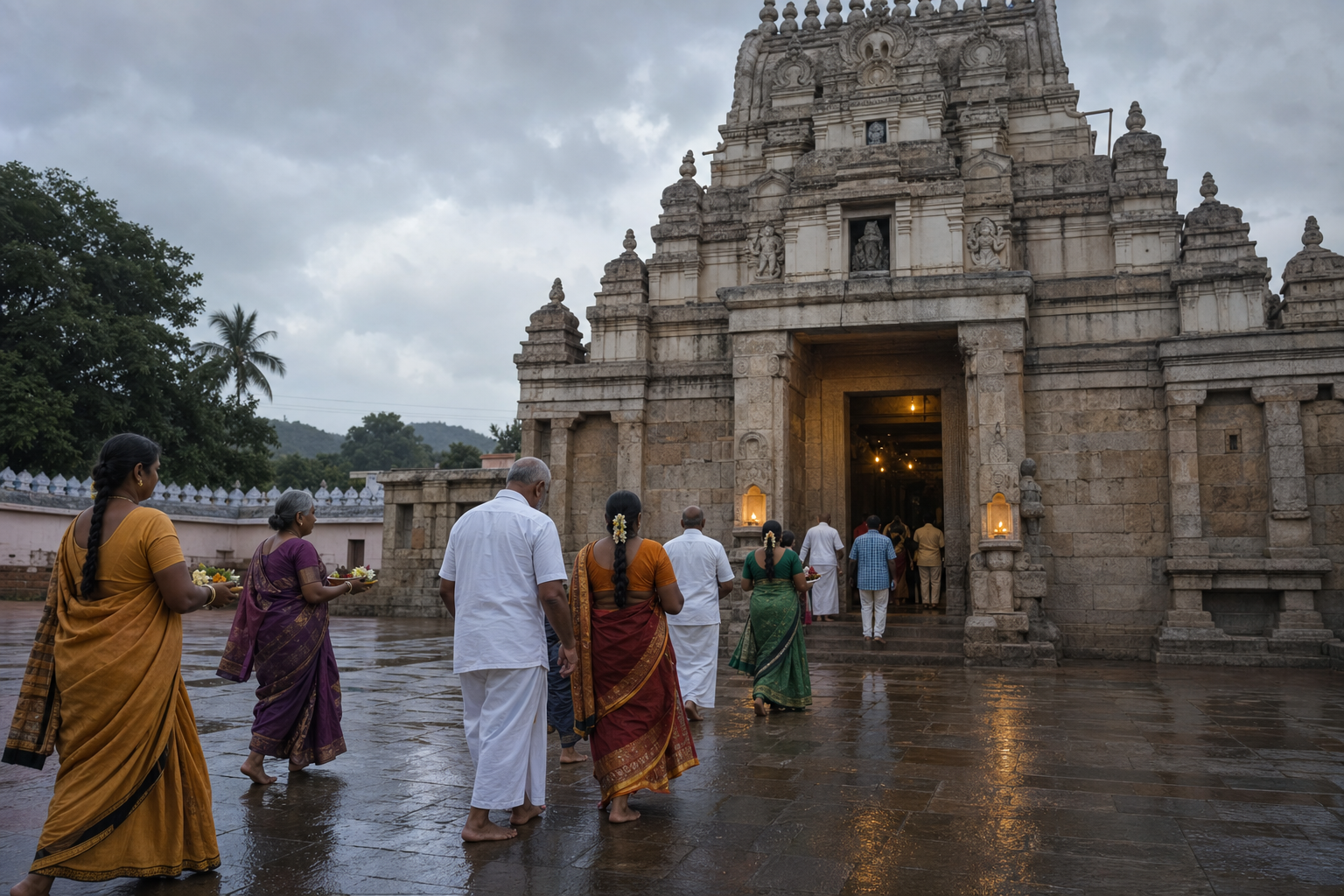
If you are arranging a Tirupati visit specifically to witness Abhishekam at Sri Kodandarama Swamy Temple, choose one of four Saturdays in June 2026: 6, 13, 20, or 27 June. The dates are available, but the internal ritual time and any special viewing arrangements should still be confirmed closer to your visit.
That distinction can save you from the most common planning mistake: reaching Tirupati on the right date but after the ritual itself. Fix your travel day now if necessary, but keep the hours around the temple flexible until TTD communicates the final arrangements.
Key takeaways for your visit
- Special Abhishekams to Sri Sita Rama Lakshmana Moolavarlu are scheduled for all four Saturdays in June 2026: 6, 13, 20, and 27 June.
- Treat the internal ritual time, entry procedure, and viewing arrangements as subject to confirmation by TTD.
- Arrive early because these special Saturday observances may attract more devotees than an ordinary temple day.
- Expect the archakas to conduct the rite within the garbha-griha while devotees witness it from the mandapa or another designated area.
- Prepare for warm, humid weather and possible monsoon rain, and carry only what temple rules permit.
- Use official TTD communication and information displayed at the temple for the final schedule, rather than relying on an assumed time from a previous visit.
June 2026 Abhishekam dates at a glance
The June 2026 schedule identifies four special Saturday Abhishekams for the temple’s presiding deities, Sri Sita, Sri Rama, and Sri Lakshmana.
| Date | Day | Scheduled observance |
|---|---|---|
| 6 June 2026 | Saturday | Special Abhishekam to Sri Sita Rama Lakshmana Moolavarlu |
| 13 June 2026 | Saturday | Special Abhishekam to Sri Sita Rama Lakshmana Moolavarlu |
| 20 June 2026 | Saturday | Special Abhishekam to Sri Sita Rama Lakshmana Moolavarlu |
| 27 June 2026 | Saturday | Special Abhishekam to Sri Sita Rama Lakshmana Moolavarlu |
No one Saturday is identified as preferable to another. Choose according to your travel constraints, then verify the timing before departure. If you must take a train, bus, or flight on the same day, avoid arranging a tight return connection around an unconfirmed ritual hour.
Confirm the details twice if you can: first through an official TTD communication channel shortly before travelling, and again through the notices, counters, or volunteers at the temple. This matters because the ritual schedule and the way devotees are admitted to a viewing area are separate details. A confirmed date does not automatically establish a fixed entry time or guarantee a particular position near the sanctum.
What you can expect during the Abhishekam
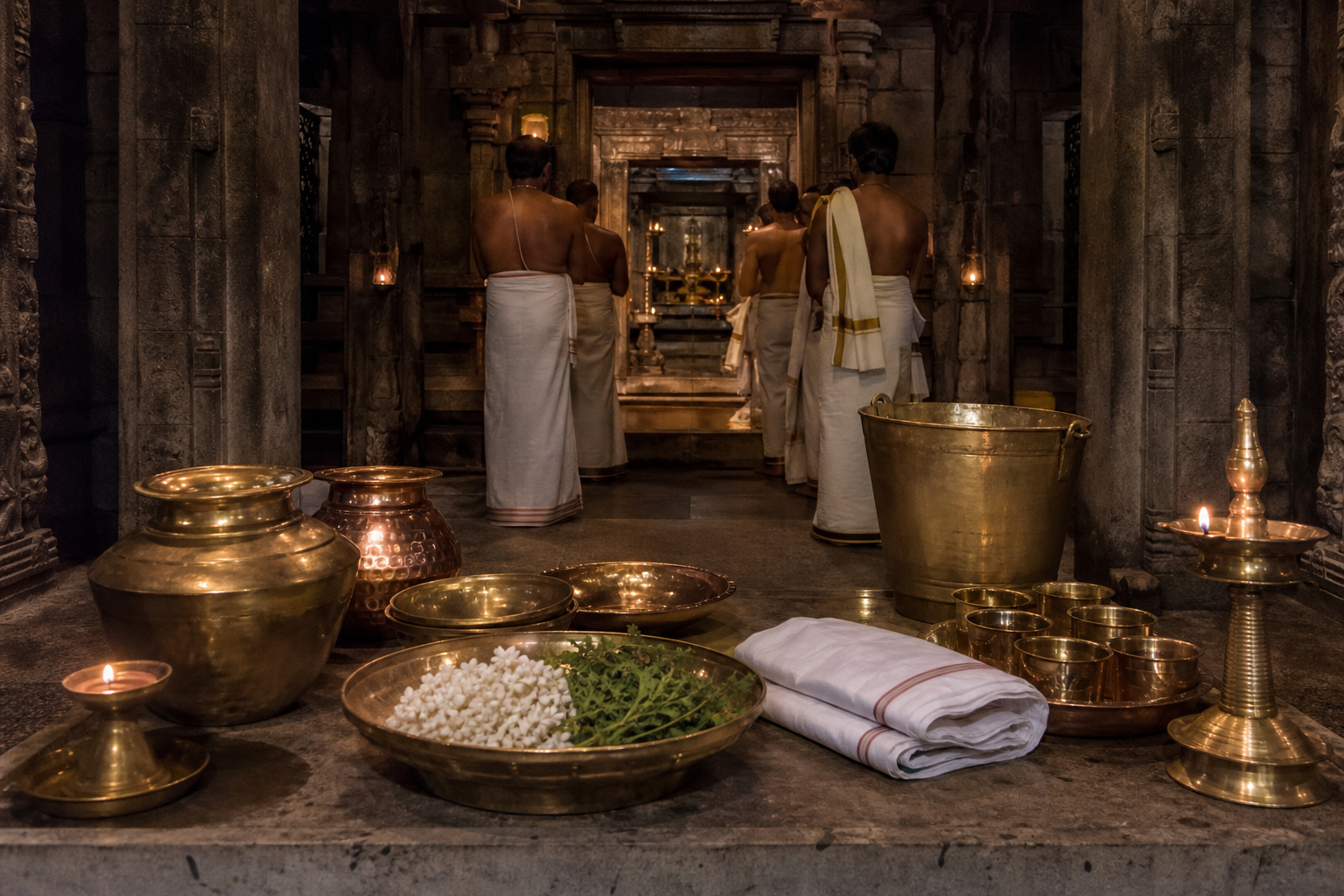
Abhishekam is not simply a ceremonial washing. It is an Agamic act of worship conducted with mantra, sankalpa, and ritually prescribed substances. Depending on the temple’s established procedure for the observance, these may include water, milk, curds, honey, and sanctified herbal materials. A combination of auspicious bathing substances is commonly described as panchamrita.
At a South Indian temple, Abhishekam to the Moolavaru is ordinarily performed by the archakas inside the garbha-griha. Devotees witness it from the mandapa or from the area opened for darshan. You should therefore follow the viewing line assigned by temple staff rather than expecting direct entry into the sanctum. Tokens, designated zones, or other access controls may be used when the administration considers them necessary, but you should not assume that any particular arrangement will apply until it is announced.
The ritual bathing and the darshan that follows it are related but distinct parts of the visit. If witnessing the Abhishekam itself is important to you, the confirmed start time matters. If you arrive later, your attention may instead fall on the alankaram after the bathing, when the deities are ornamented and presented for darshan.
Keep your own participation simple. Form your sankalpa before entering the busiest part of the queue, repeat Rama Nama silently, and listen to the chanting without trying to record it. Photography and mobile use may be restricted, and the sanctity of the rite takes precedence over obtaining a photograph. Do not carry milk, water, flowers, or other materials inside on the assumption that they will be accepted; ask only about offerings authorized by the temple.
Plan the journey around access, weather, and queues
Sri Kodandarama Swamy Temple is situated within Tirupati, making it more accessible than a remote pilgrimage shrine. The city is connected by rail and road, and the temple can be reached from the main railway station and bus terminus using local transport. For devotees arriving by air, Tirupati Airport is at Renigunta; autos and taxis provide onward transport within the city.
- Select one Saturday. Base the choice on the journey you can complete without rushing: 6, 13, 20, or 27 June.
- Check the official timing near the date. Verify both the ritual hour and whether TTD has announced a token, queue, or special viewing procedure.
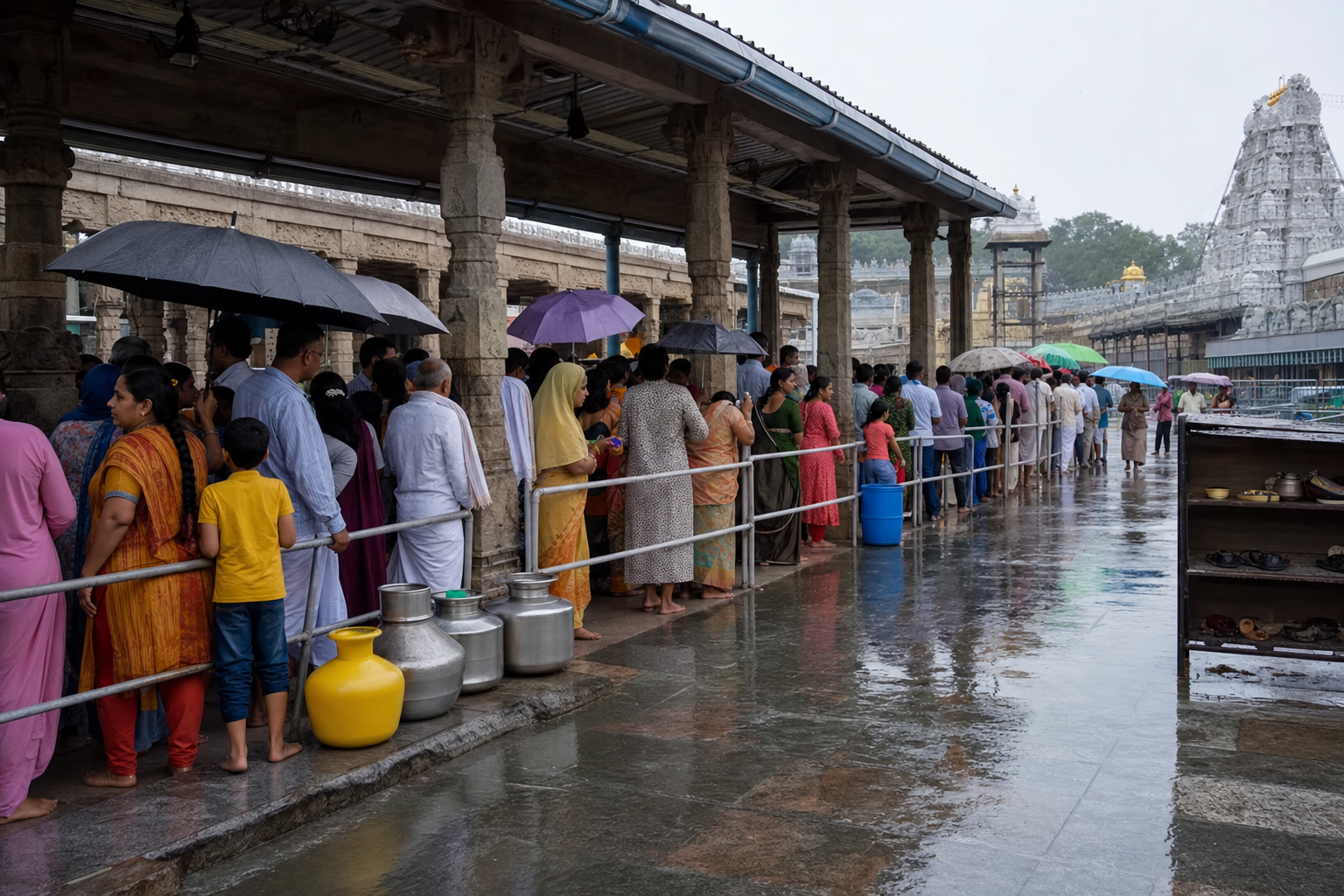
- Reach the temple early. Saturday observances may bring heavier pilgrim movement, and arriving early gives you time to find the correct queue rather than making decisions at the sanctum entrance.
- Dress for both worship and June weather. Tirupati can be warm and humid in June, with monsoon showers possible. Wear light, modest clothing consistent with temple norms and plan for hydration without bringing prohibited items inside.
- Use the footwear facility. Wear comfortable footwear for the approach and queue, then leave it at the designated chappal stand before entering the worship area.
- Keep the rest of the day flexible. The temple’s central location makes it possible to combine the visit with other Tirupati shrines, but place those plans after your Kodandarama Swamy commitment rather than before it.
Carry as little as possible. A crowded temple visit becomes harder when you are managing luggage, loose packaging, or items that cannot enter the premises. If you are travelling with family members, agree on a meeting point before joining the queue because mobile use may be restricted within the sacred area.
Once inside, let volunteers regulate the pace. Do not surge forward when the sanctum becomes visible. Queue discipline is not merely administrative: it protects older devotees, families, and anyone who needs more time to move safely through a narrow threshold.
Make the waiting part of the observance
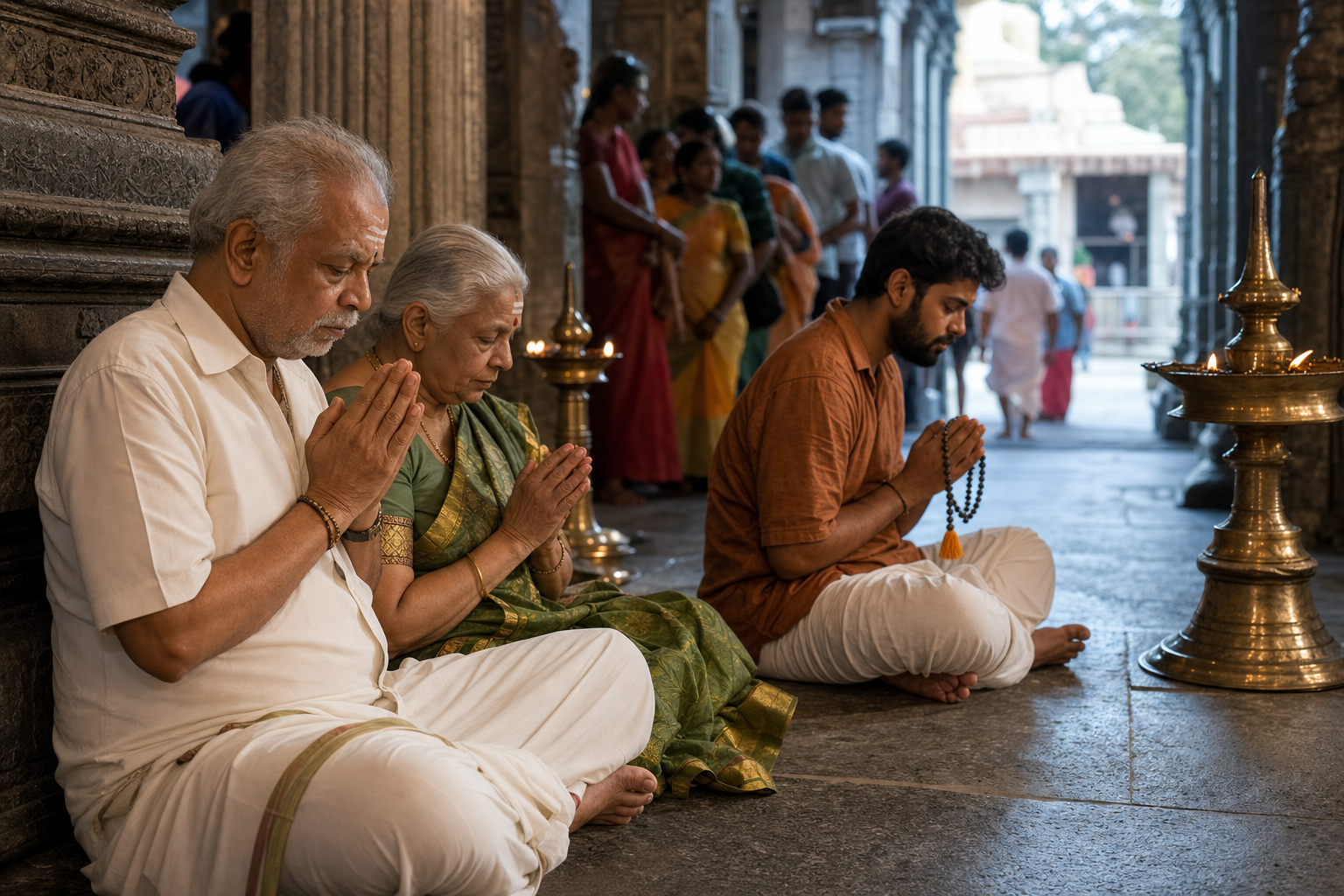
The presiding triad gives you a clear focus for contemplation. Sri Rama, bearing the Kodanda, represents vigilance in dharma and maryada, or conduct held within righteous bounds. Sri Sita evokes grace and forbearance. Sri Lakshmana embodies steadfast service. The devotional presence of Anjaneya draws these qualities together in sevabhava: service offered without placing oneself at the centre.
You can bring that meaning into the queue through a small, deliberate practice. Decide on your sankalpa before entering, keep a quiet repetition of Rama Nama, and notice when impatience begins to displace attention. The queue then becomes part of the discipline rather than dead time before it.
After the Abhishekam, do not rush away the moment the bathing concludes. The subsequent alankaram is part of the temple’s theology of care: the deities are bathed, honoured, ornamented, and presented in an auspicious form. Where archana, harati, theertham, or prasadam is offered, receive it according to the directions of the archakas and volunteers. Availability and procedures can vary, so follow what is actually arranged that day.
Keep the same discipline when leaving. Use designated bins, avoid single-use plastic where practical, and do not abandon puja materials on the premises. Care for the temple environment is a direct extension of the order, restraint, and service cultivated during worship.
Your next step is concrete: select one of the four Saturdays, keep your travel booking flexible around the temple visit, and set a reminder to verify the TTD timing shortly before departure. On the day, arrive early enough that your attention can rest on Sri Sita Rama Lakshmana rather than on the clock.
References
