
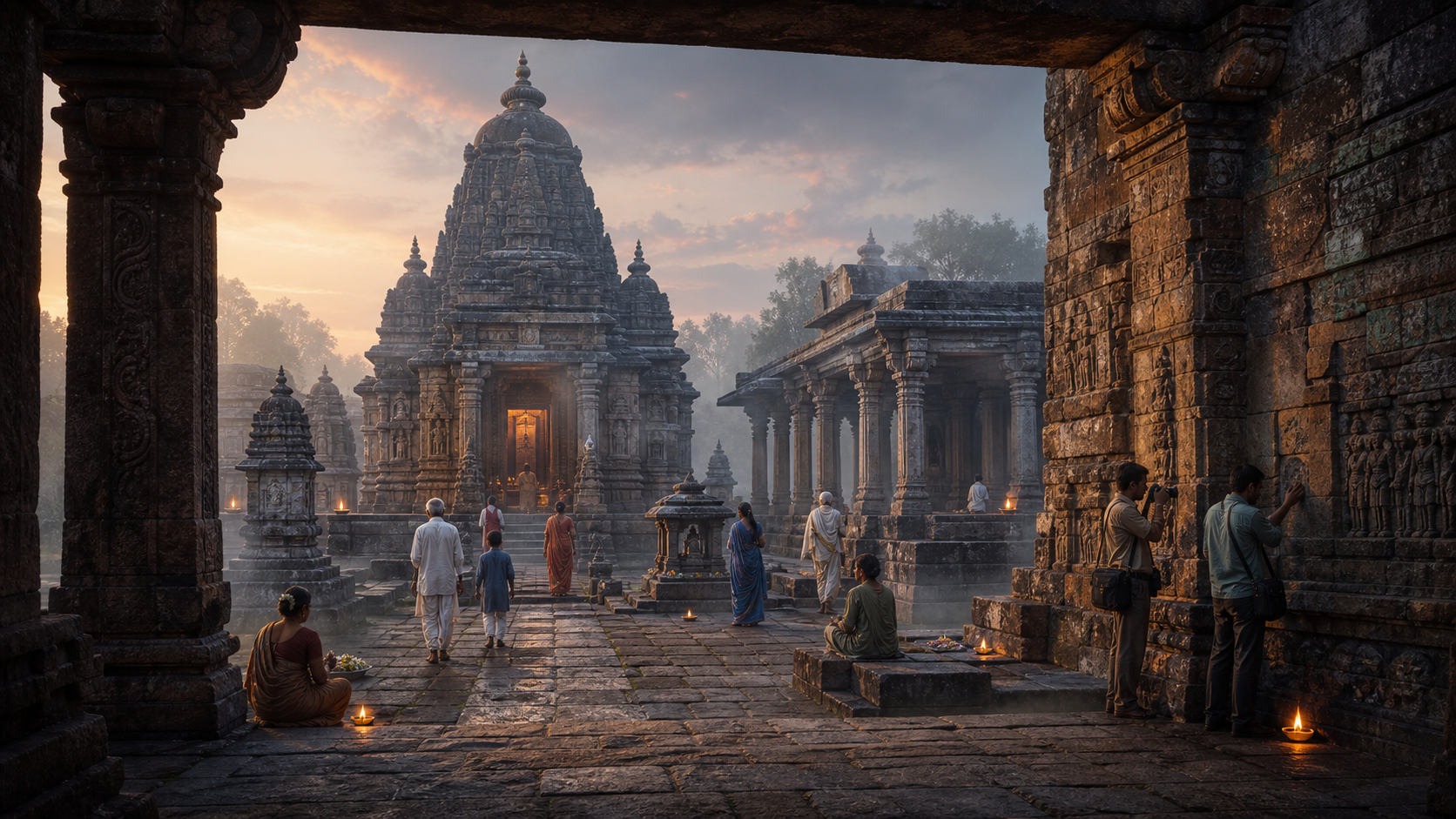
You encounter a temple claim in a family conversation, a pilgrimage video, or a heated public debate. The place is sacred to millions, but the historical claim attached to it may be disputed. How do you honor the memory without repeating more than the evidence can bear?
You do not have to choose between devotion and disciplined inquiry. You need to know which question each one can answer, preserve uncertainty where it exists, and make your public words proportionate to what has actually been established.
Separate sacred memory, historical proof, and civic conduct
Temple heritage usually carries three questions at once. Sacred memory asks why a place matters to a community. Historical inquiry asks what happened there, when it happened, and which evidence supports that account. Civic ethics asks how people should pursue truth while protecting worshippers, monuments, and social trust.
Confusion begins when one answer is made to do all three jobs. A devotional tradition can preserve a place-name, a deity association, a pilgrimage route, or a community’s sense of continuity. That makes the tradition historically important. It does not automatically establish the date, footprint, patron, or construction sequence of a particular building.
Sambhal shows why the distinction matters. Some scholars associate its sacred memory with references attributed to the Skanda Purana, Bhagavata Purana, and Matsya Purana, but the precise textual identifications still require verification. The responsible next step is to identify the relevant passage, recension or edition, translation, geographical markers, and history of interpretation. Repeating only the name of a Purana does not complete that work.
A separate proposition concerns the built landscape. Certain historical accounts place major change in Sambhal in the 16th century and propose that the Jama Masjid was established over an earlier structure associated with Harihar worship. Scholarly conclusions remain varied. This claim therefore needs a converging chain of textual, epigraphic, archaeological, architectural, and archival evidence; sacred association alone cannot settle the construction history.
Use verbs that reveal the status of what you are saying. A community remembers or reveres. A named text contains a passage once the passage has been verified. A historian proposes an interpretation. An inscription records something. Archaeological evidence supports a sequence to a stated degree of confidence. These verbs prevent a hypothesis from quietly becoming a fact as it moves from one retelling to another.
Precision is not a concession against Hindu memory. It protects that memory from claims that can be easily challenged, while directing serious attention toward the evidence that could clarify it.
Read sacred plurality in the temple’s actual design
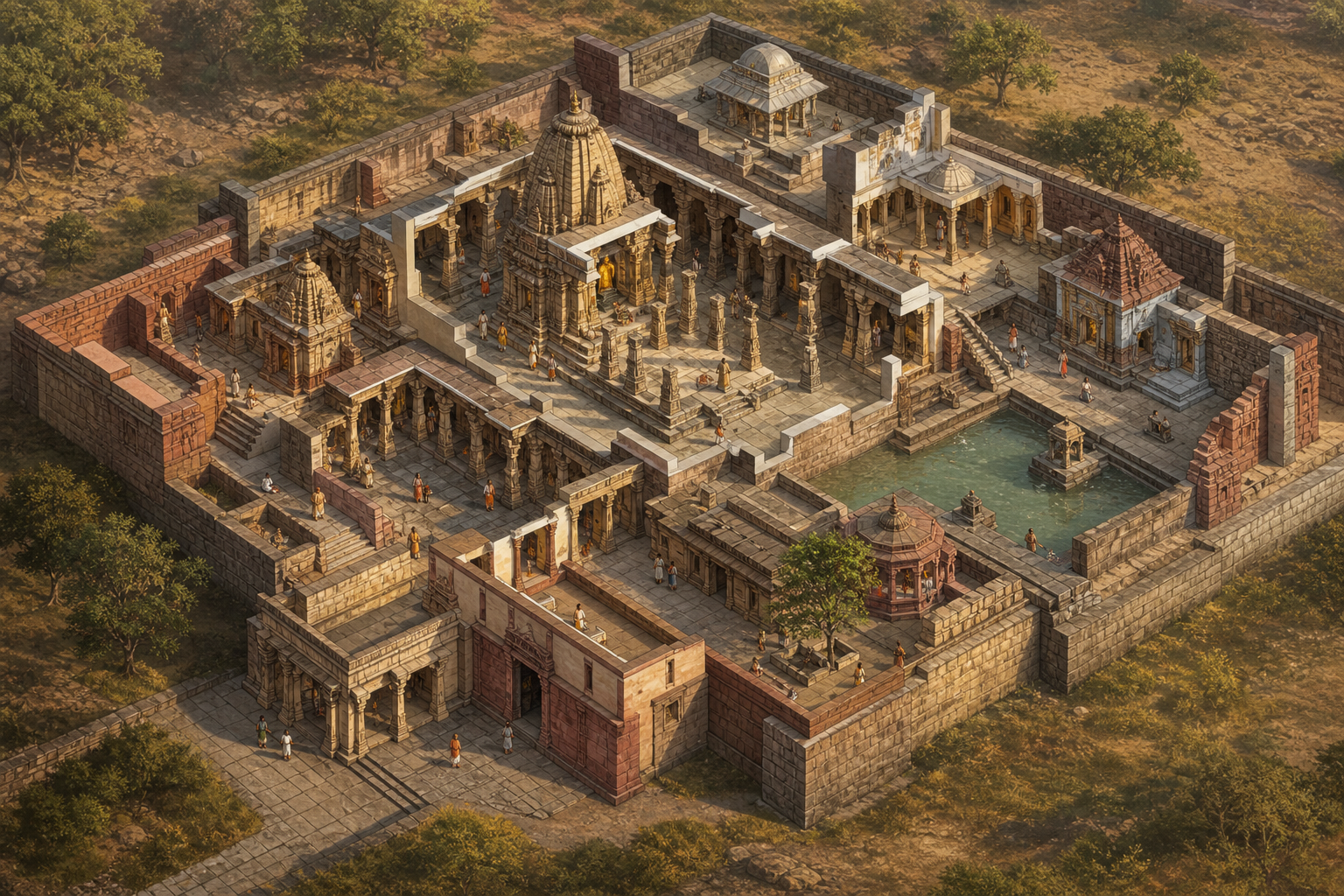
Sacred plurality is more substantial than a general appeal to tolerance. A temple can embody it through the placement of deities, the relationship among sanctums, the direction of movement, and the way one architectural composition accommodates distinct forms of worship.
The Thousand Pillar Temple at Hanamkonda offers a concrete example. Historically known as the Rudreswara Swamy Temple, it is traditionally dated to about 1163 CE and associated with the Kakatiya ruler Rudra Deva. Its Trikutalaya plan contains three garbhagrihas dedicated to Shiva, Vishnu, and Surya. The arrangement does not make the three deities indistinguishable. It gives each a defined sacred presence while bringing them into one ordered complex.
That is plurality with form: distinction without exclusion, and relationship without erasure. When you visit such a temple, do not stop after identifying the sculptures. Locate the sanctums. Notice their approaches and their relationship to the shared space. Observe how a devotee’s movement allows several sacred presences to be encountered within one architectural whole.
The building’s craft deepens that reading. Lathe-turned pillars, carved friezes, perforated screens, granite construction, polished dolerite elements, a star-like platform, and a monolithic Nandi aligned with the Shiva sanctum bind engineering, iconography, and worship together. Light and shadow change as you move, so the building is not merely an object viewed from one position. It is a sacred environment encountered in sequence.
The familiar name also needs careful reading. The “thousand pillars” describe the dense rhythm of supports and colonnades rather than a literal count. Trying to verify the monument by counting pillars misses what the expression communicates: an experience of visual abundance, changing sightlines, and structural intricacy.
The same discipline should guide claims about wider Dharmic unity. Hindu, Buddhist, Jain, and Sikh traditions do not possess one interchangeable theology. They can nevertheless meet around compassion, ahimsa, truth-seeking, self-discipline, and reverence for knowledge. A mature account states both the shared ethical ground and the real doctrinal differences. Unity becomes more credible when it does not demand sameness.
Match every heritage claim to the evidence it needs
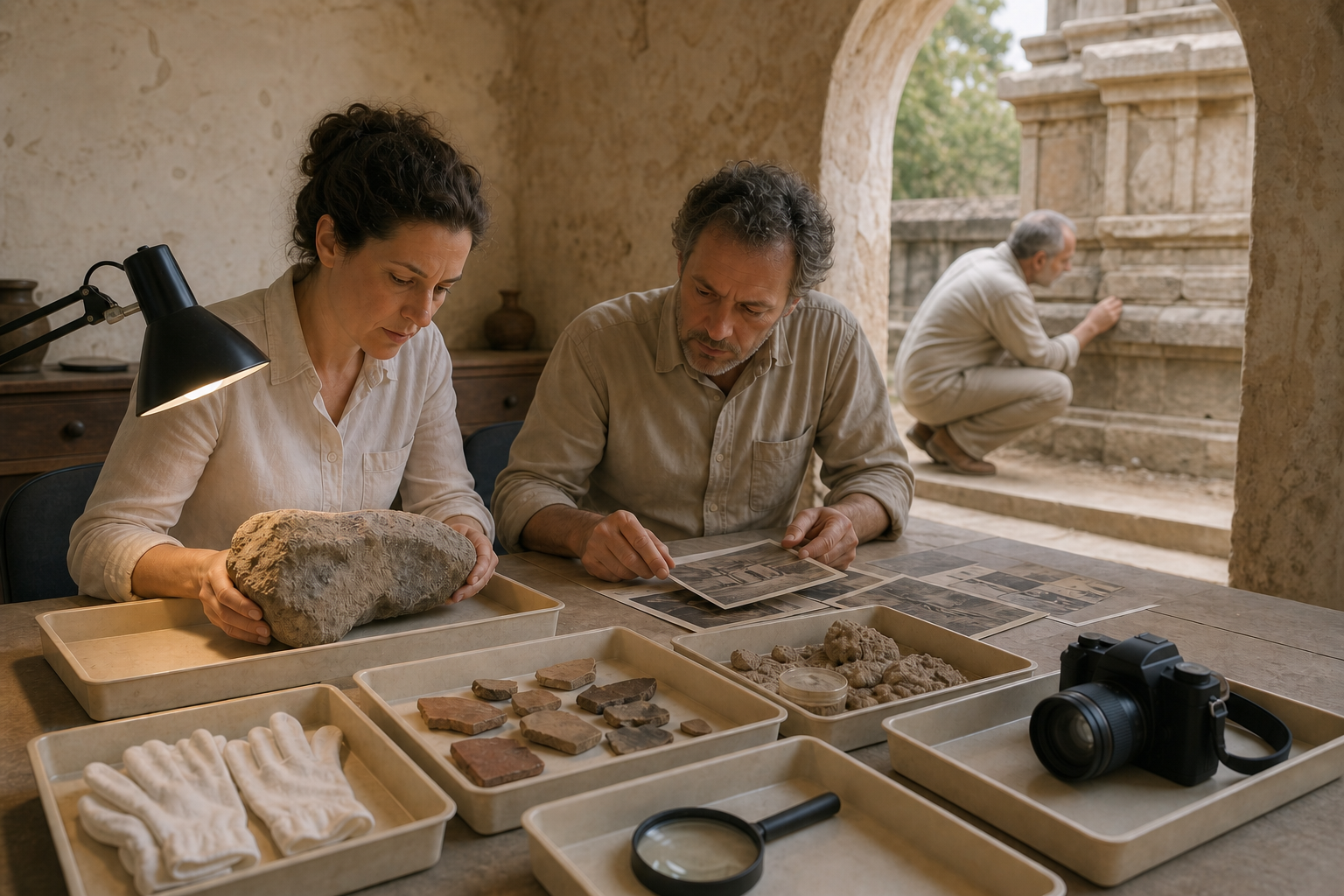
Not all evidence answers the same question. Before accepting or rejecting a temple claim, identify what kind of proposition is being made and what would be capable of supporting it.
| Claim being made | Evidence that fits the claim | What that evidence cannot establish by itself |
|---|---|---|
| A place is sacred within a tradition | Named textual passages, commentarial history, ritual continuity, pilgrimage practice, and documented local memory | The date or physical identity of every structure associated with the place |
| A ruler or patron built a monument in a stated period | Secure inscriptions, dated records, material analysis, and archaeological context | Every earlier use or later alteration of the site |
| One structure replaced an earlier structure | Construction sequence, stratified remains, reused material in context, inscriptions, archival records, and corroborating archaeology | A settled conclusion based only on resemblance, repetition, or political popularity |
| A temple expresses sacred plurality | Architectural plan, deity placement, iconography, inscriptions, and ritual use | The claim that distinct traditions or deities are therefore identical |
This method prevents two equal and opposite mistakes. The first is inflation: turning a remembered association into a fully proven architectural history. The second is erasure: treating memory as worthless because every material question has not yet been resolved. Memory establishes that a community has carried meaning through time. Material investigation tests more specific propositions about dates, structures, patrons, damage, rebuilding, and reuse.
For a Puranic claim, record the exact text, passage, edition or recension, translation, and geographical reasoning. For an inscription, ask where it was found, whether it remains in its original context, what language and script it uses, and how its date was determined. For an architectural claim, distinguish the visible observation from the conclusion drawn from it. A carved stone in later masonry, for example, is an observation; what its presence proves about an earlier building is a separate interpretive question.
Restoration introduces another layer. The Thousand Pillar Temple has passed through damage and subsequent conservation intended to preserve structural stability and authenticity. What a visitor sees may therefore include original fabric, repaired sections, and conservation decisions from different periods. Ask which is which before treating every visible element as untouched evidence from the monument’s founding.
If you document a site yourself, record the date, location, official signage, overall layout, and permitted architectural details. Do not climb on masonry, make rubbings, touch delicate carvings, remove fragments, cross restricted barriers, or interrupt worship. A photograph without location and context is weak evidence; a photograph obtained by damaging the monument defeats the purpose of heritage work.
Use this five-question test before publishing or forwarding
- What is the exact claim? Rewrite it as one sentence. “Sambhal carries a living Harihar association” and “a particular surviving structure replaced a particular earlier temple in the 16th century” are different claims. Do not let evidence for the first silently stand in for the second.
- Which words need independent support? Circle every deity name, place-name, date, ruler, text, monument, and construction verb. A claim may be broadly plausible while one decisive word – such as “built,” “destroyed,” “original,” or “continuous” – remains unproven.
- What was observed, and what was inferred? A three-sanctum plan is observable. What that plan says about royal policy or social relations requires interpretation. Keeping these levels apart makes your reasoning visible to the reader.
- What confidence label belongs to it? Use “documented” when a claim has direct, well-contextualized evidence; “supported” when several lines converge; “plausible” when the interpretation fits but alternatives remain; “reported” when you have not verified the underlying material; and “devotional tradition” when you are describing sacred memory rather than a material conclusion.
- What action is proportionate to that confidence? Strong evidence can support a precise public statement and a case for conservation. Mixed evidence calls for further documentation and explicit uncertainty. Sacred memory can justify respectful preservation and study without being converted into an unqualified archaeological verdict.
Before you share a claim, make a short claim card: Claim, evidence, what remains unknown, confidence, and next responsible step. If you cannot fill the evidence field, present the statement as memory or tradition. If removing a qualifier changes the meaning, keep that qualifier every time the claim is repeated.
This is especially important when a temple’s history has become politically charged. Avoid labels that decide the conclusion before the evidence has been examined. Do not treat worshippers, local residents, or present custodians as proxies for past rulers. Seek preservation, documentation, and truthful description without harassment, trespass, damage, or collective blame.
Key takeaways
- Sacred memory, historical reconstruction, and civic conduct are connected, but they answer different questions.
- A textual association can establish the importance of a place within sacred geography without proving the construction history of a surviving building.
- Temple plurality is best understood through concrete form: distinct sanctums, deities, ritual paths, and architectural relationships within a shared whole.
- Claims about replacement, destruction, patronage, or continuity need converging evidence from properly contextualized records and material remains.
- Uncertainty should determine your wording and next step. It should not be inflated into certainty or used to dismiss inherited memory.
The next time you meet a contested temple claim, create four columns: claim, evidence, confidence, and action. Honor what devotees remember, verify what can be verified, and leave open what remains open. That habit gives Dharmic heritage something stronger than a slogan: a public memory capable of carrying devotion, plurality, and historical truth together.
References
- Hindu Pad – Sambhal Harihar Mandir in the Puranas: Unraveling History, Sacred Memory, and Unity
- Hindu Pad – Thousand Pillar Temple, Hanamkonda: Timeless Kakatiya Splendor and Sacred Trikuta Harmony
