
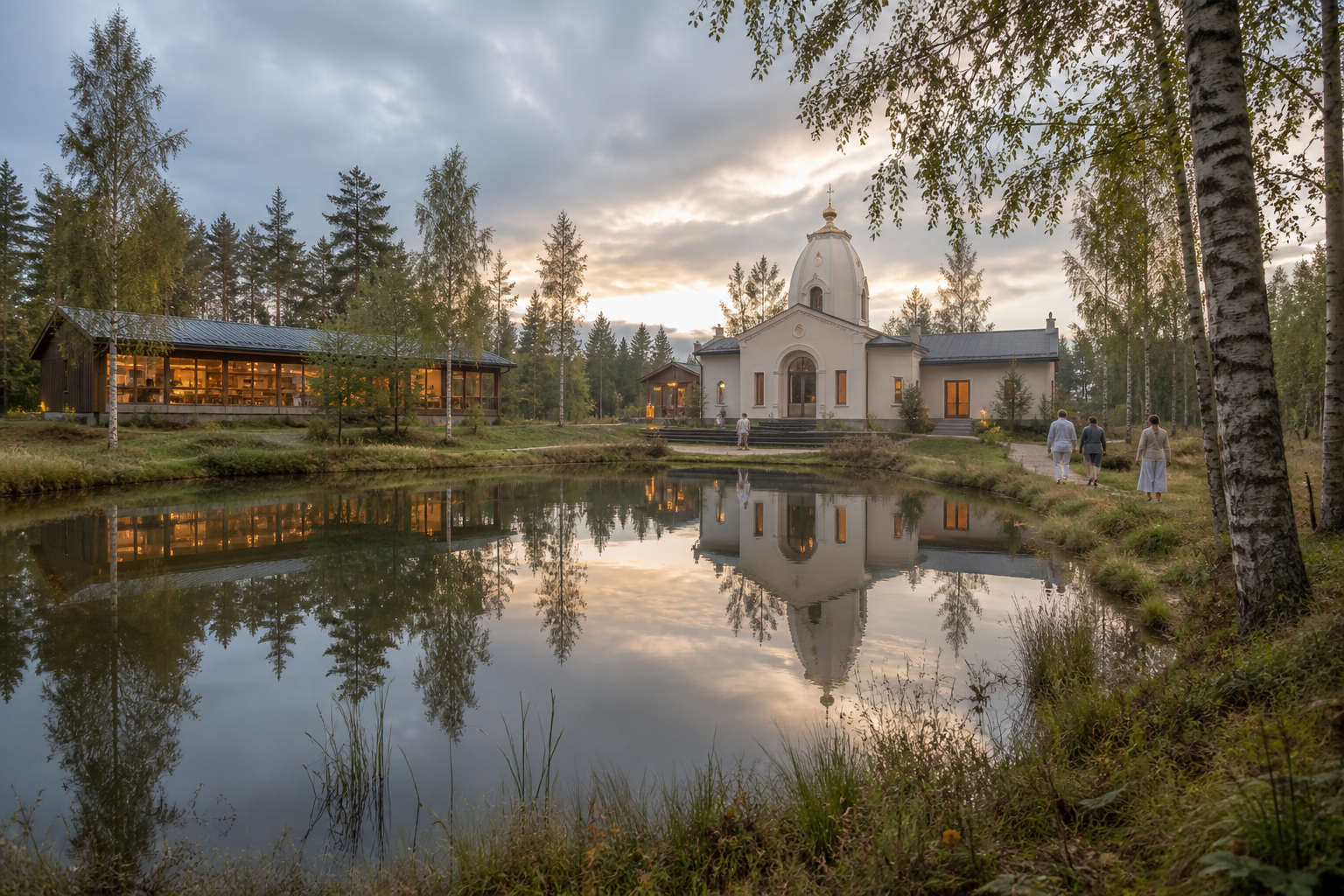
If you have heard about Radha Kunda in Sweden and are wondering whether it is a temple, a pilgrimage place, or a publishing center, the short answer is that it brings all three forms of service into one setting. The Swedish development joins a new Radha Kunda, the Gandharvika Giridhari temple, and a European BBT center.
That combination matters because each element asks something different of you. The kunda invites remembrance, the temple invites worship, and the BBT center points toward study and the transmission of teachings. Understanding those distinctions will help you approach the place as a participant in dharma rather than merely as a visitor looking for an unusual landmark.
Key takeaways
- The Swedish Radha Kunda should be understood in relation to the original sacred Radha Kunda in Vraja, not as a geographical replacement for it.
- The name Gandharvika Giridhari places Sri Radha and Sri Krishna at the devotional center of the temple.
- The European BBT center adds a textual dimension: preserving, preparing, and circulating the teachings associated with A.C. Bhaktivedanta Swami Prabhupada.
- Do not assume that the kunda, temple, and publishing center have identical opening hours or visitor rules. Confirm each one before travelling.
- A worthwhile visit should connect sacred place, worship, and reading. If one of those remains absent, use the visit as the beginning of further practice rather than an isolated experience.
One setting, three different forms of seva
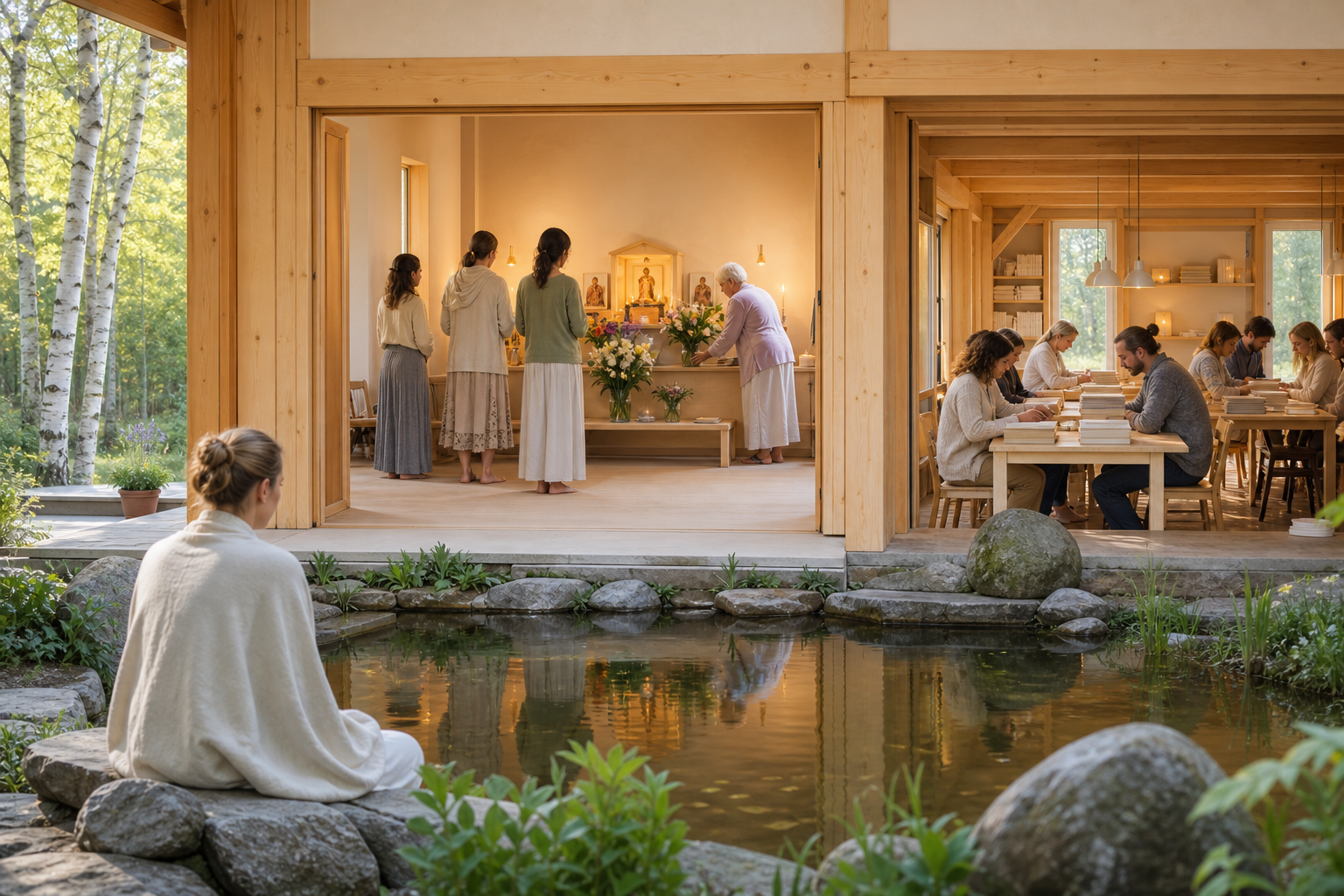
It is easy to compress the whole project into the word “temple.” That misses its distinctive structure. A sacred water body, a place of deity worship, and a publishing center do not perform the same function, even when they support the same devotional tradition.
Radha Kunda gives sacred memory a physical focus
A kunda is a pond or reservoir, but its meaning within a tirtha is not exhausted by its physical form. Sacred water, remembered lila, prayer, circumambulation, and disciplined conduct turn a body of water into a devotional focus. For a practitioner far from Bharat, a locally established Radha Kunda can make remembrance part of an inhabited landscape rather than leaving it as a distant idea.
You should still distinguish representation from identity. The original Radha Kunda belongs to the sacred geography of Vraja near Govardhana. A namesake kunda in Sweden can direct the mind toward that tirtha, but it does not relocate Vraja or make pilgrimage to the original unnecessary. This distinction protects both places from a shallow reading: the original is not diminished, and the Swedish kunda is not treated as decorative landscaping.
Gandharvika Giridhari centers the encounter on worship
The paired name Gandharvika Giridhari directs attention to Sri Radha and Sri Krishna. This tells you how to read the temple spiritually. The kunda is not an isolated cultural symbol; it belongs within a devotional setting shaped by darshan, kirtan, prayer, study, and seva.
If you visit, organize your time around the temple’s confirmed public program rather than around photography. Ask when darshan is available and whether a class, kirtan, arati, or festival program is open to guests on your intended date. A short visit aligned with worship will usually give you a clearer understanding of the place than a longer visit made when the temple is not receiving the public.
The European BBT center carries teachings beyond the site
BBT stands for the Bhaktivedanta Book Trust. Its presence changes the scale of what the Swedish setting can represent. A temple principally gathers people at a place; publishing allows teachings to travel through languages, homes, study groups, and future generations. Editing, translation, production, and distribution are quieter than a public ceremony, but they are essential forms of intellectual and devotional service.
Do not assume, however, that a BBT center is automatically a public bookshop, library, visitor center, or tour facility. If books are the purpose of your journey, ask which languages and editions are available, whether purchases or collections can be made on site, and whether an appointment is required. If you want to offer translation, editing, design, or distribution help, first ask what skills are currently needed; the existence of a center does not by itself establish an open volunteer program.
Why a Radha Kunda in Sweden is spiritually significant
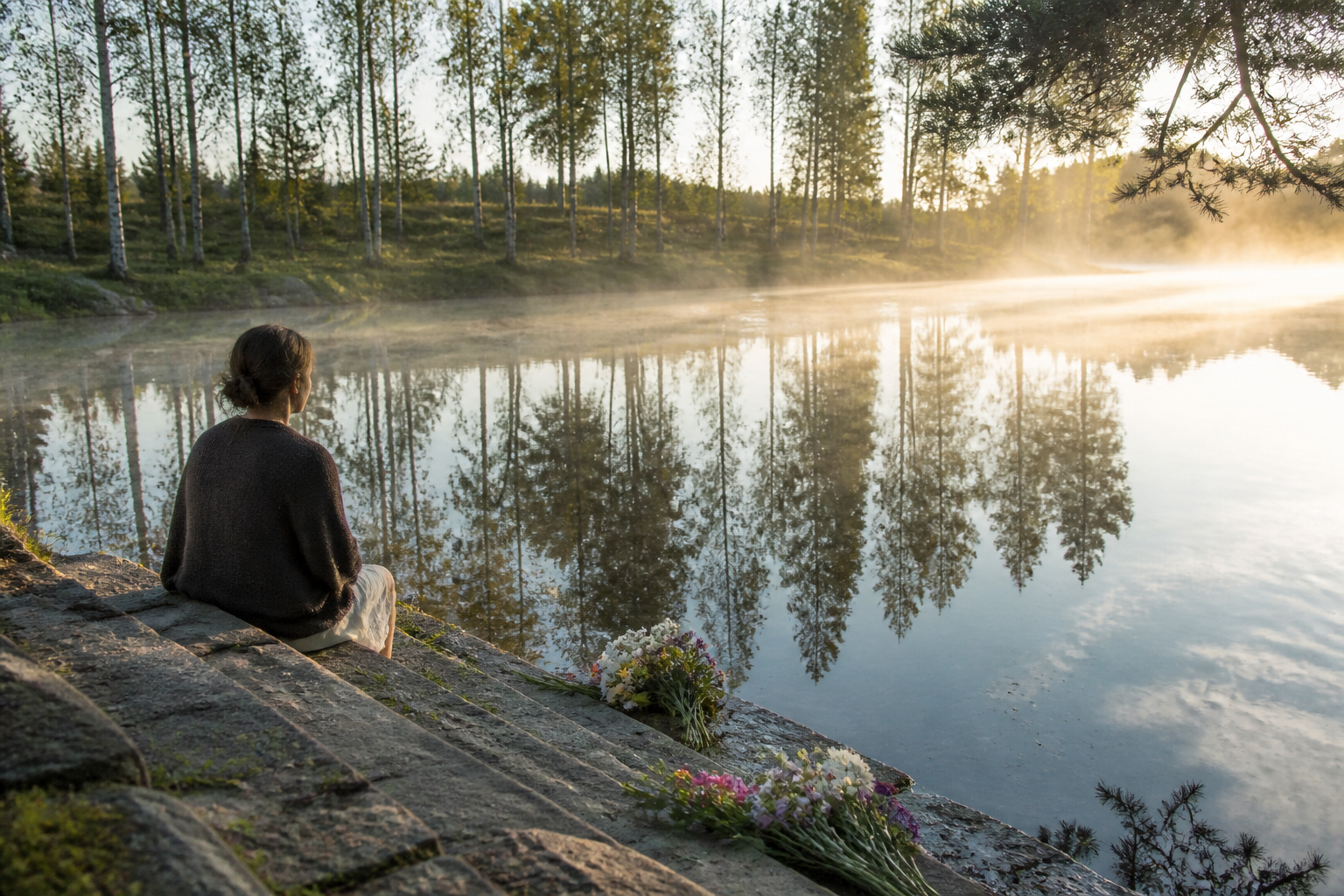
Dharmic traditions have always travelled through more than argument. They endure when teachings become embodied in calendars, food, music, architecture, pilgrimage, books, and daily disciplines. The Swedish setting brings several of those channels close together. Sacred geography trains attention, temple worship establishes rhythm, and books give the practitioner a way to understand and continue what was encountered.
This is especially important outside Bharat. A community can preserve the vocabulary of dharma while gradually losing the practices that give those words depth. It can also preserve ceremonies while losing access to the philosophy that explains them. Bringing a kunda, temple, and publishing center into relationship offers a way to resist both losses: practice need not become intellectually thin, and study need not become detached from worship.
You do not need to make inflated claims to recognize that significance. Sweden has not become Vraja, and a European center does not replace the civilizational soil from which the tradition arose. The more grounded claim is also the more useful one: a serious devotional institution can help people in Europe form a living relationship with a tradition whose sacred geography remains rooted in Bharat.
When you evaluate the project over time, look beyond buildings. Notice whether the kunda is maintained as a place of reverence, whether the temple sustains worship and teaching, and whether the BBT center makes dependable texts accessible to the communities it serves. Those are more meaningful measures than novelty, size, or publicity.
Plan a visit without relying on assumptions
The project name does not tell you everything needed for a journey. Do not infer an exact address, daily schedule, accommodation, prasada arrangements, bathing permission, or public access to publishing offices. Verify each point for the date you intend to travel.
- Decide what you are going for. Darshan, a festival, quiet prayer at the kunda, obtaining books, and discussing publishing work are different purposes. State yours when contacting the organizers.
- Confirm the exact location and current public status. Ask for the address you should enter into your route planner and whether the relevant part of the site will be open that day.
- Ask about separate access. Confirm whether guests may enter the temple, approach the kunda, and visit the BBT center. An open temple does not necessarily mean that working offices are open.
- Request the day’s schedule. Obtain the current times for public darshan and any program you hope to attend. Do not rely on a schedule copied from an older notice or an unrelated temple.
- Check practical needs before booking. Ask about public transport, parking, accessibility, meals, nearby accommodation, and advance registration. Treat silence on any of these points as “not yet confirmed,” not as an implied yes.
- Learn the local etiquette. Ask about footwear, photography, offerings, dress, children, and conduct beside the water. Never assume that bathing, touching the water, or collecting it is permitted.
A concise inquiry is more likely to receive a useful answer: “Please confirm the exact address, public darshan hours on my date, access to Radha Kunda, whether the BBT center receives visitors, and whether prasada or accommodation must be arranged in advance.” Add the number of people in your group and any mobility requirement that affects access.
If you are travelling with children or visitors unfamiliar with temple customs, explain the three-part nature of the place beforehand. Ask them to distinguish sacred water from a recreational pond, darshan from sightseeing, and a publishing workplace from a museum. That small preparation prevents awkwardness and gives everyone a clearer reason for being there.
Turn the encounter into a continuing practice
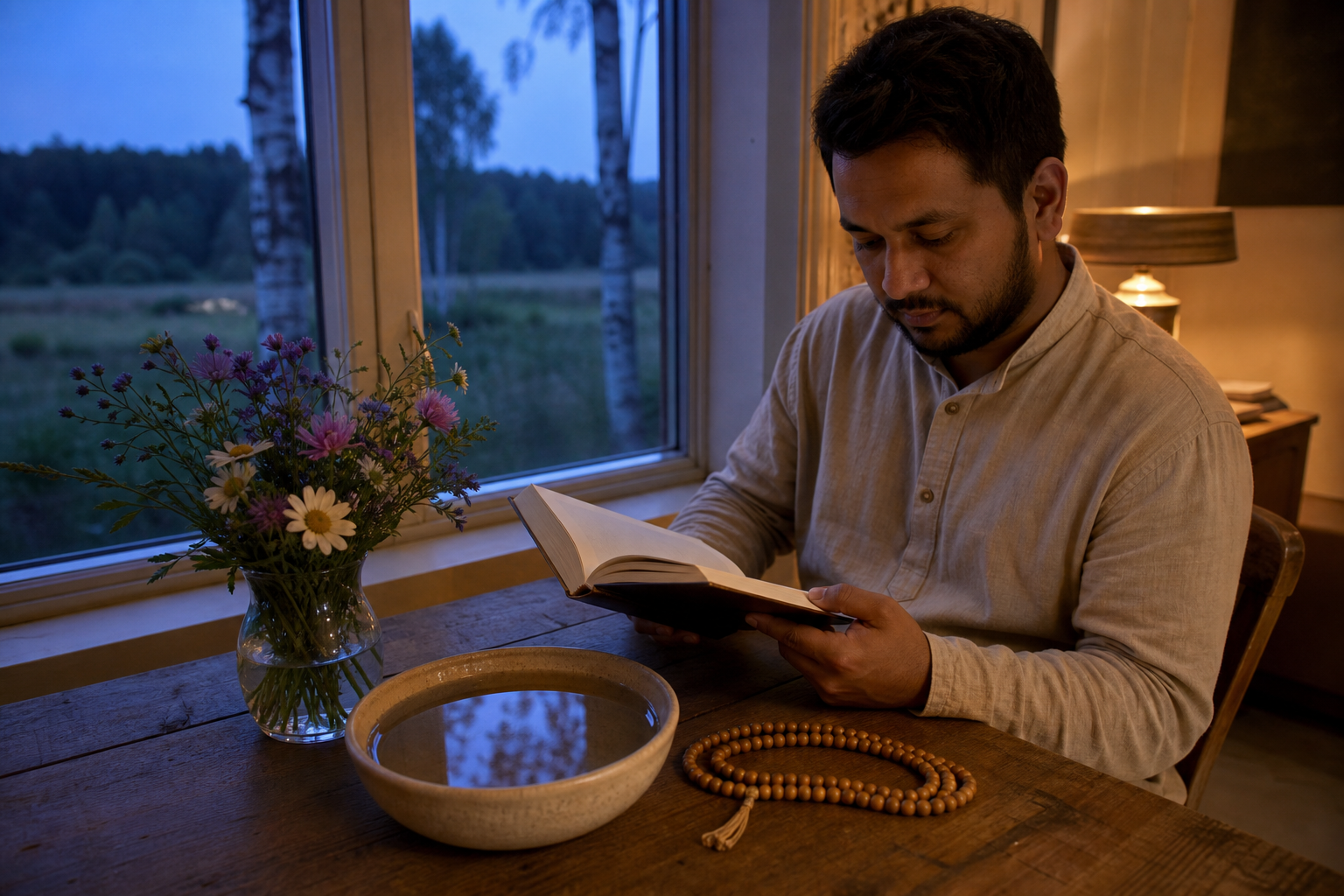
A sacred place can stir the mind for an afternoon and still leave daily life unchanged. You can avoid that by connecting the visit to one practice before you arrive and one practice after you leave.
- Before the visit: learn why Radha Kunda holds a special place in Gaudiya Vaishnava remembrance, and become familiar with the identities signified by Gandharvika Giridhari. Arrive with one sincere question rather than a list of facts to collect.
- At the kunda: follow local instructions, reduce conversation and phone use, and give the place time to work on your attention. Do not invent a ritual or imitate another visitor without understanding what is being done.
- In the temple: join only those parts of the public program you can approach respectfully. Observe how worship, sound, time, and community work together rather than concentrating only on the visible altar.
- Through the BBT connection: choose a suitable edition in a language you read well and establish a realistic reading rhythm. A few pages read attentively and regularly are more useful than books acquired as souvenirs.
- After returning: write down one teaching you understood more clearly and one discipline you will continue. Share verified access information with others, but do not repeat unconfirmed claims about facilities, ceremonies, or future plans.
If you cannot travel, the three-part structure still gives you a practical path. Remember the sacred geography of Radha Kunda, participate in authentic Radha-Krishna worship through a community accessible to you, and study a dependable BBT edition. Physical distance need not become indifference, but neither should online enthusiasm be mistaken for pilgrimage.
Your best next step is simple: confirm the temple’s current public arrangements before making plans, then choose whether your first connection will be darshan, study, or service. Approach the Swedish Radha Kunda as a doorway into sustained sadhana, not as an item to check off a travel list.
References
