
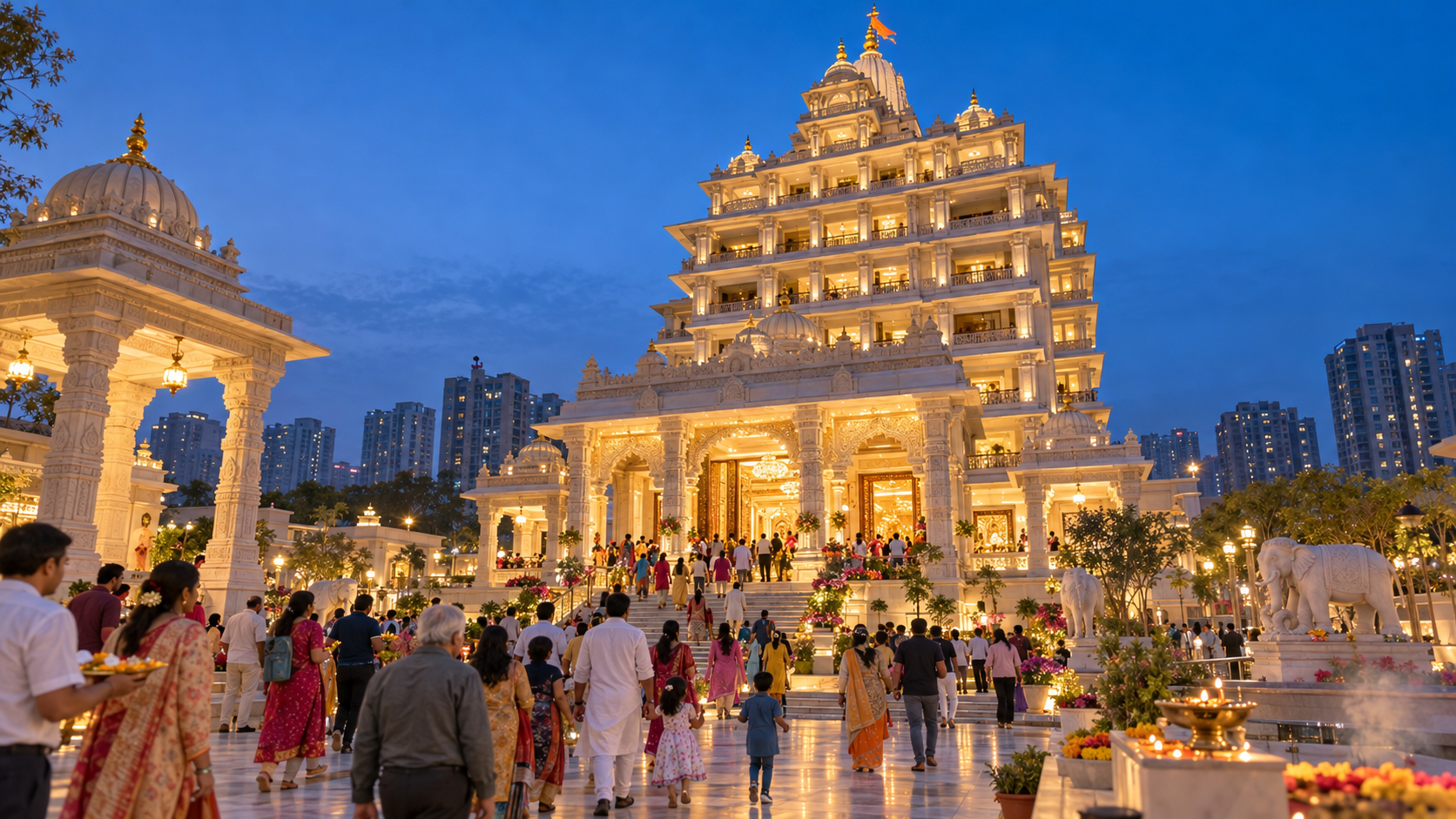
If you knew Sri Radha Govinda Temple near the time of its opening, or you are considering your first visit now, the scale may surprise you. What began as a relatively new temple in Noida has become a seven-storey centre drawing especially large congregations in the evenings, on weekends and during Janmashtami.
The important question is not simply how large the temple has become. It is what produced that growth, how the crowd pattern should shape your visit, and whether physical expansion is being converted into lasting devotional life.
Three kinds of growth are visible in Noida
A return roughly ten or twelve years after the opening found the temple transformed in scale. The clearest physical marker is the seven-storey temple complex. The clearest human marker is the number of people now coming through its doors.
Those details reveal three distinct forms of growth:
- Physical growth: The building has the vertical scale of a major urban religious institution, not a small neighbourhood shrine.
- Congregational growth: Heavy evening and weekend attendance shows that the temple has become part of the recurring rhythm of life for many devotees.
- Functional growth: Kirtana, spiritual classes and the reception of visiting devotees show a centre organised around participation and teaching, not architecture alone.
This distinction matters when you assess a temple’s development. A taller structure is visible from the road, but a living congregation is visible in recurring worship, attentive hearing, voluntary service and the care extended to guests. Sri Radha Govinda Temple’s importance lies in the meeting of those dimensions.
The available account does not provide an official construction chronology, annual attendance series or floor-by-floor description. If you are recording the temple’s history, treat the decade-long comparison as an eyewitness measure of change rather than a complete institutional record. The supported conclusion is substantial growth, not a precise year-by-year growth rate.
The crowd pattern should change how you plan a visit
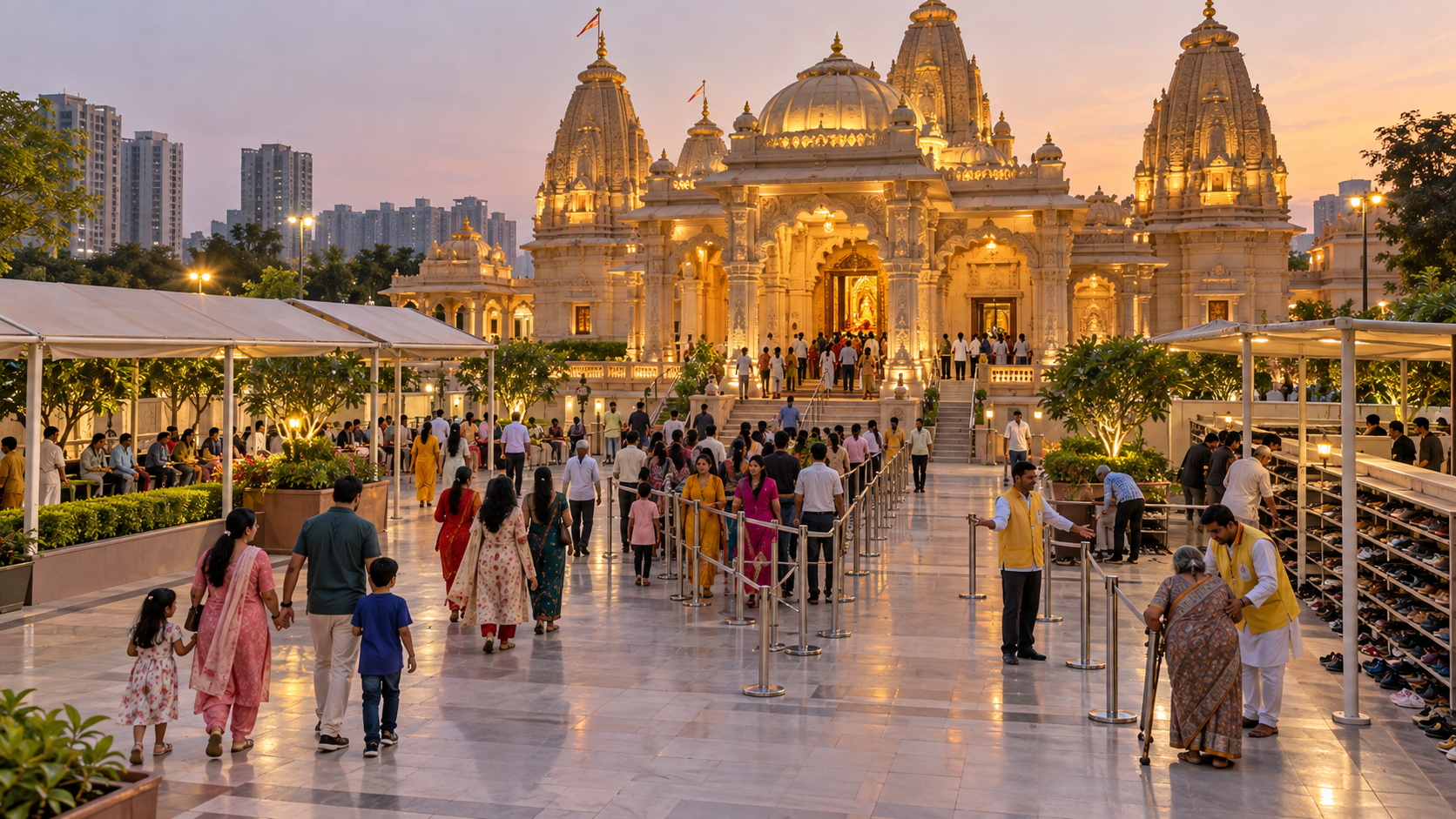
The largest regular flows occur in the evening and on weekends. That is useful information if your priority is unhurried darshan, if you are travelling with elderly relatives or young children, or if you must keep to a fixed onward schedule.
- Decide what kind of visit you want. If you want to experience a large urban congregation, an evening or weekend may suit you. If you want fewer peak-period pressures, choose a time outside those known busy periods and confirm the temple’s current opening arrangements before leaving.
- Treat Janmashtami as a different kind of visit. Temple devotees have described a crowd close to five hundred thousand, with police blocking surrounding streets. That is a locally reported estimate, not an independently published official count, but it is more than sufficient reason to expect controlled access and substantial congestion.
- Verify festival arrangements on the day. Past attendance does not tell you which streets will be closed during the next celebration. Check current information from the temple and local authorities rather than relying on an ordinary-day route or an old journey time.
- Protect the people travelling with you. At a gathering of this reported scale, a convenient drop-off, short walk or quick exit cannot be assumed. Agree on a meeting point, keep your group together and allow enough time that darshan does not become a race against the next commitment.
The Janmashtami figure deserves careful wording. It would be wrong to present the reported estimate as an audited count. It would be equally unwise to ignore what the estimate tells you operationally: this is a major festival gathering for which road access, pedestrian movement and police instructions can determine the shape of your visit.
The Vrindavan connection is part of the temple’s rise
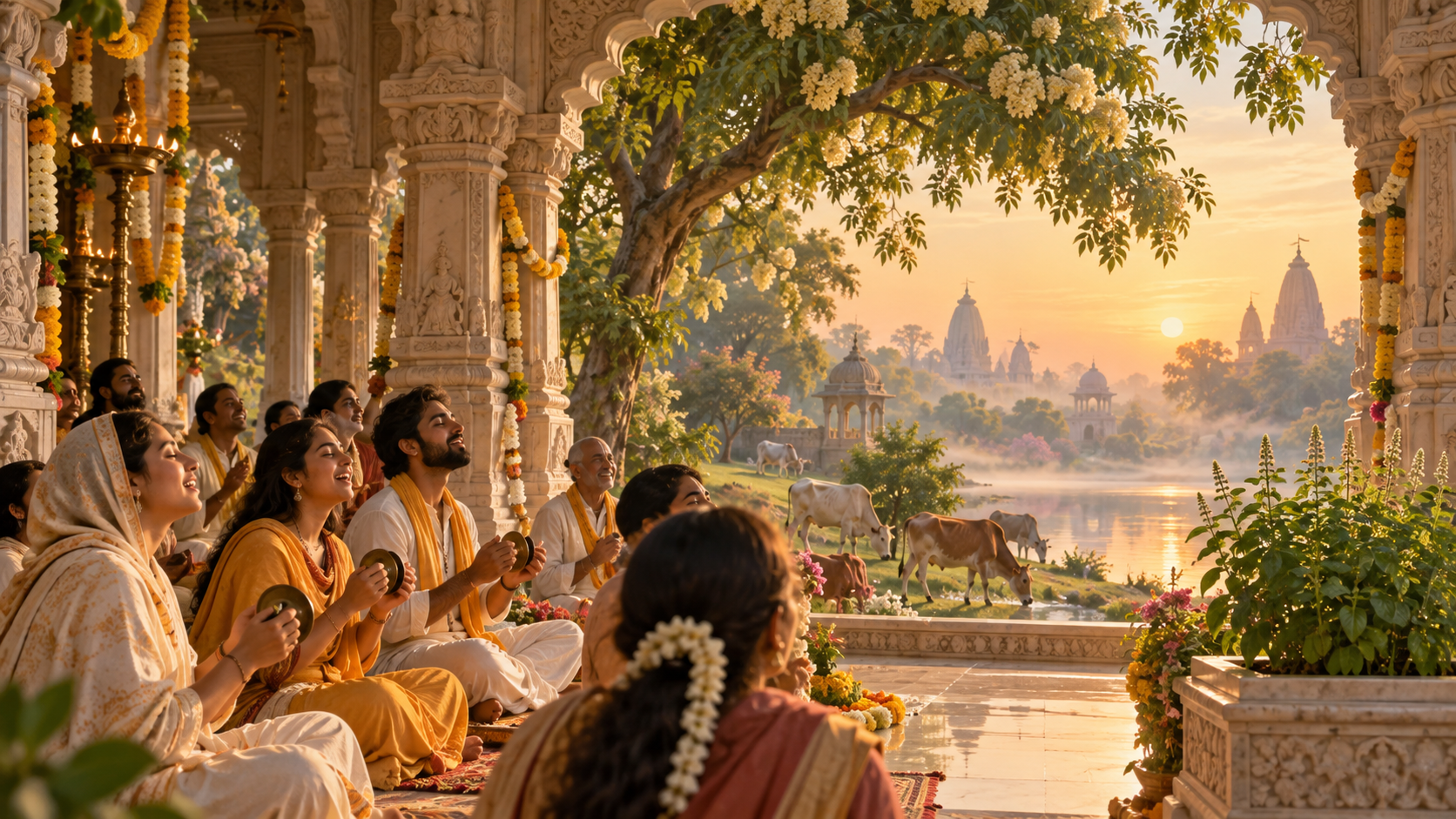
Noida’s growth as a planned city gives the temple a large urban setting, but road connectivity places it within a wider devotional geography. With the new motorway, the journey from the Krishna Balaram temple in Vrindavan was reported as taking less than two hours.
That travel link matters because accessibility changes religious life. A temple is no longer only the centre closest to your home; it can become part of a corridor through which devotees, teachers and families move between an established pilgrimage centre and a modern city. Easier movement can support more frequent visits, stronger relationships and a broader exchange of devotional practice.
If you intend to combine Noida and Vrindavan in one journey, use the reported time as evidence that the connection is practical, not as a guaranteed door-to-door duration. Traffic, festival controls and the location of your starting point can change the real journey. Give each temple enough time to be an object of attention in its own right rather than reducing both to stops on a rushed checklist.
The connection also helps explain why Sri Radha Govinda Temple should not be viewed merely as a local building project. Its location allows an urban congregation to remain linked with Vrindavan while developing its own centre of worship, learning and hospitality in Noida.
Large attendance must mature into durable seva
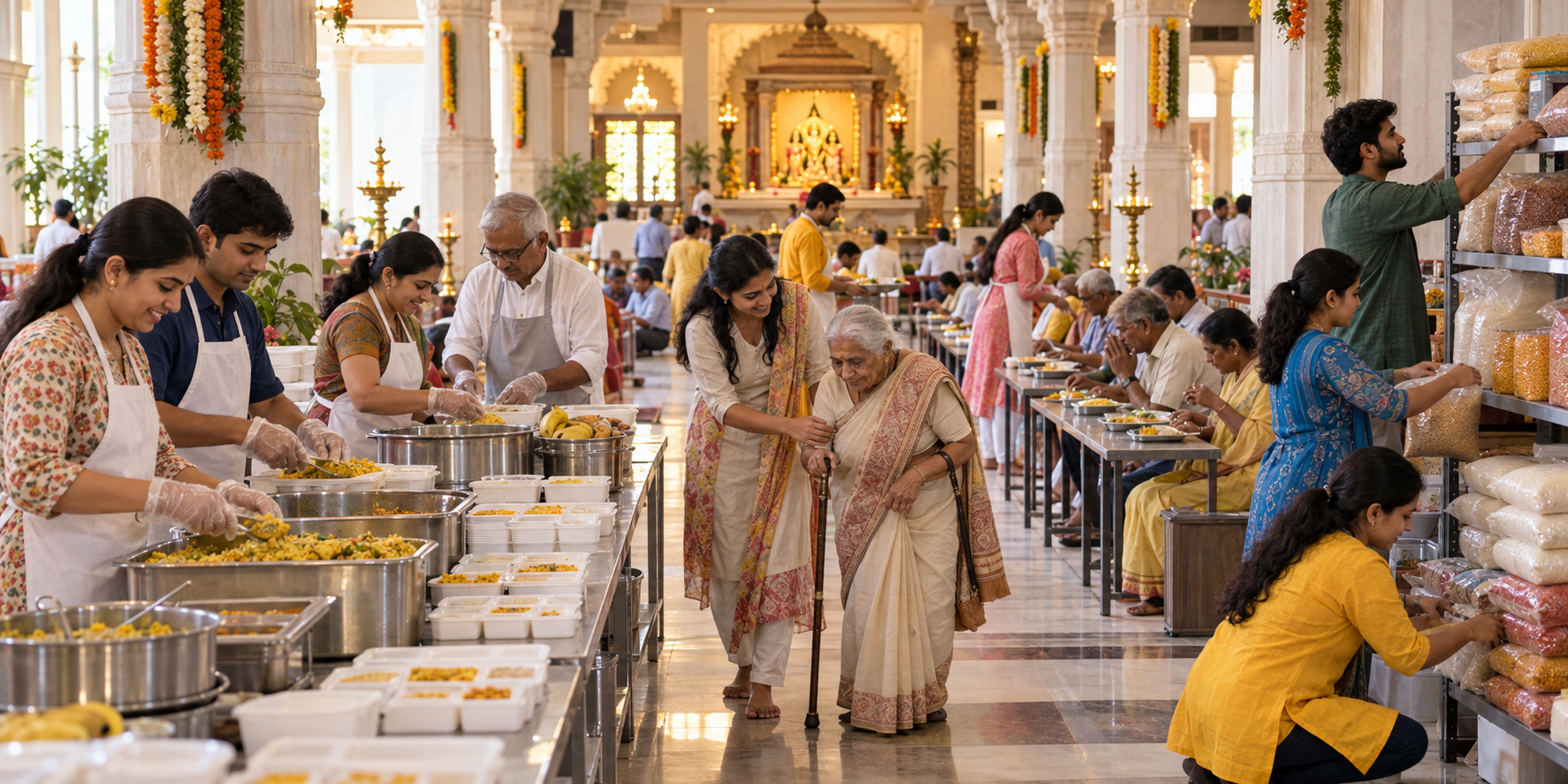
A visiting teacher was able to lead kirtana, give a class and receive attentive hospitality from the resident devotees. Those ordinary-looking activities are important evidence of institutional life. They show people gathering not only to enter a prominent building, but to chant, hear and serve together.
Footfall can tell you that a temple attracts attention. It cannot, by itself, tell you whether newcomers find a path into regular practice or whether volunteers can sustain the pressure of peak days. The next phase of growth should therefore be judged by what happens around the crowd as well as by the crowd itself.
If you support the temple as a devotee, volunteer or donor, useful questions include:
- Can first-time visitors easily learn when kirtana, classes and other devotional programmes take place?
- Are festival access changes communicated early enough for families to plan safely?
- Do volunteer teams have clear roles for welcoming people, guiding queues and assisting those who need help?
- Is there a simple route from a crowded festival visit to regular hearing, chanting and seva?
- Is the temple preserving reliable records of its development, programmes and major gatherings for the next generation?
These are not claims that the temple is failing in any of these areas. They are the practical tests that become more important when a congregation grows. A small gap in communication or crowd flow can become a large problem when attendance multiplies; a clear invitation to return can turn a festival visitor into a steady participant.
The strongest response from the community is therefore not admiration alone. If you can offer time, ask where an additional pair of hands is most useful during peak periods. If you can support teaching or hospitality, ask what helps programmes remain consistent after major festivals. If you are a regular visitor, help someone unfamiliar with the temple understand how to participate respectfully.
Key takeaways
- Sri Radha Govinda Temple has developed into a seven-storey urban devotional centre over roughly a decade since its opening.
- Evenings and weekends are known high-attendance periods, so choose your visiting time according to whether you want congregational energy or a less pressured experience.
- A Janmashtami crowd close to five hundred thousand has been reported by temple devotees, alongside police street closures; treat the number as an estimate but the access risk as real.
- The new motorway has put the temple within a reported journey of under two hours from the Krishna Balaram temple in Vrindavan, strengthening movement between the two centres.
- The best measure of the next phase will be whether large attendance becomes regular sadhana, teaching, hospitality and sustainable seva.
On your next visit, look beyond the height of the building and the size of the gathering. Notice where people are being invited to chant, learn and serve, then choose one concrete way to participate. That is how a rapidly growing temple becomes an enduring spiritual home.
References

Leave a Reply
You must be logged in to post a comment.