
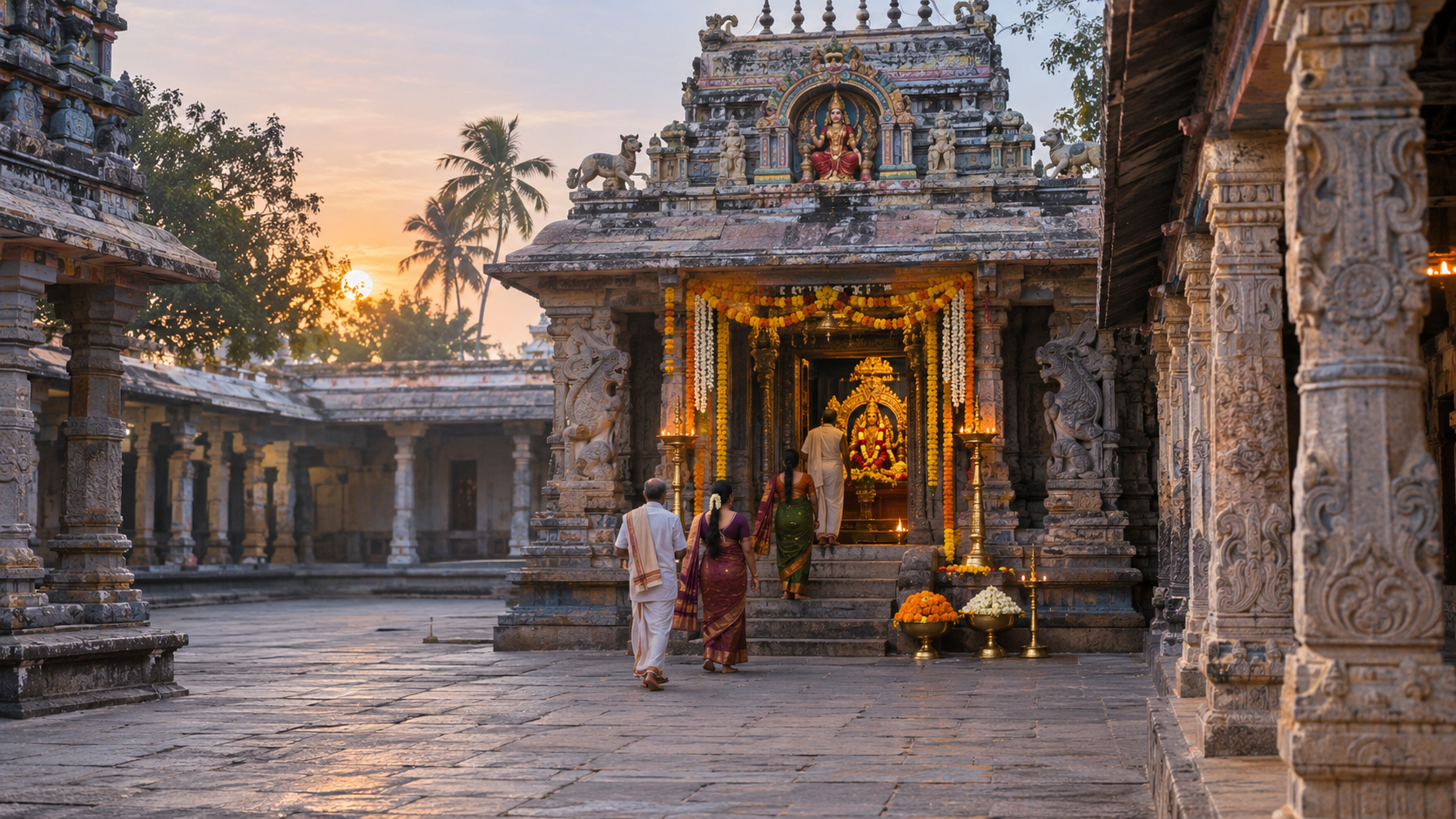
If you are planning darshan at Puruhutika Shakti Peetham, the first challenge is identifying the shrine correctly. Its name appears in several forms, and directions may refer either to Pithapuram or to nearby Kakinada. Knowing how those names fit together will keep a simple pilgrimage from becoming an avoidable search.
The essential orientation is straightforward: Puruhutika Devi’s temple is located in Pithapuram in Andhra Pradesh, on the outskirts of Kakinada, and is regarded as one of the 18 Shakti Peethas. Use Pithapuram as the destination and Kakinada as the wider geographical reference.
Use the local names to find the correct shrine
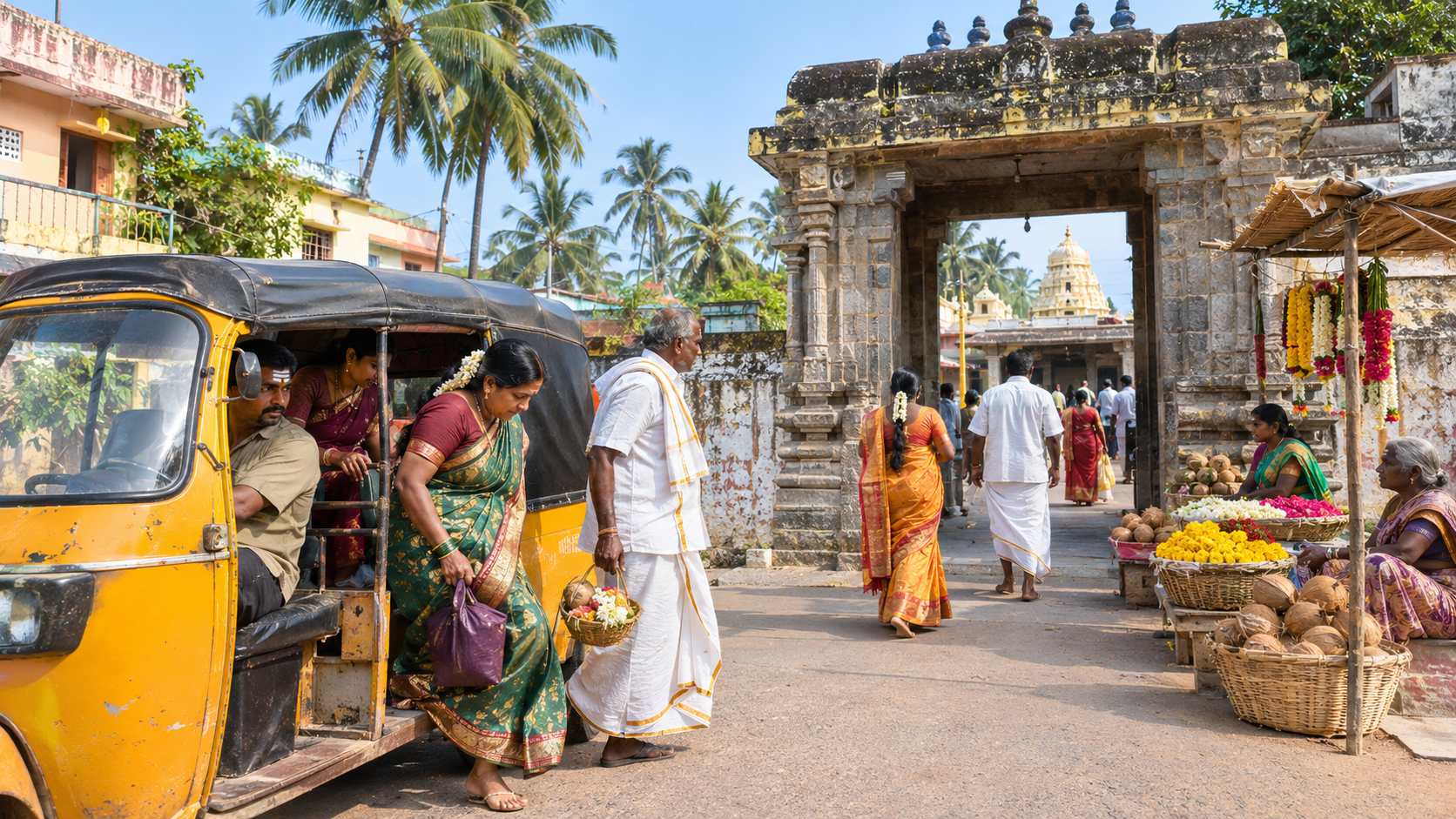
Puruhutika is the Devi, Pithapuram is the place, and Shakti Peetham identifies the shrine’s place within a sacred tradition. Keeping those three functions separate makes the different names much easier to understand.
You may encounter the names Pithapuram Puruhutika, Puruhuta, Puruhutamba, Puruhutika and Puruhuthika. These variations do not, by themselves, indicate separate temples or different Devis. They are local and English-language forms associated with the same Pithapuram shrine.
- For map searches, begin with “Puruhutika Devi Temple Pithapuram.”
- If that does not produce a clear result, try “Puruhutamba Pithapuram” or “Puruhuta Temple Pithapuram.”
- When asking locally, say both the Devi’s name and Pithapuram rather than asking only for a Shakti Peetha.
- Keep Kakinada in your route notes as the nearby urban reference, but do not substitute it for the actual destination name.
This naming discipline matters. “Shakti Peetham” describes a broad class of sacred places; “Puruhutika at Pithapuram” identifies the particular one you intend to visit.
What membership in the 18 Shakti Peethas means

Puruhutika is revered as one of the 18 Shakti Peethas. That designation places Pithapuram within a connected sacred geography of Devi worship. It is not a tourist ranking or a claim that one manifestation of Shakti is superior to another.
A Shakti Peetha pilgrimage invites you to encounter the universal Devi through a particular place, name and local tradition. At Pithapuram, that particularity matters: you are not visiting an interchangeable stop on a checklist but approaching Shakti as Puruhutika.
The number 18 should therefore shape your understanding without reducing the visit to collection. If you are undertaking a wider Peetha yatra, record the shrine’s name, location and the form of Devi worshipped there. If this is your only Shakti Peetha visit, it remains complete as an act of darshan; you do not need a multi-temple itinerary to make it spiritually meaningful.
Be careful with highly specific mythological claims encountered away from the temple. The firmly supported point here is Puruhutika’s recognition within the group of 18. For a temple-specific account of the sthala purana, ritual associations or lineage of worship, seek the explanation preserved by the local temple tradition rather than silently importing details associated with another Peetha.
Prepare for darshan without assuming a ritual sequence
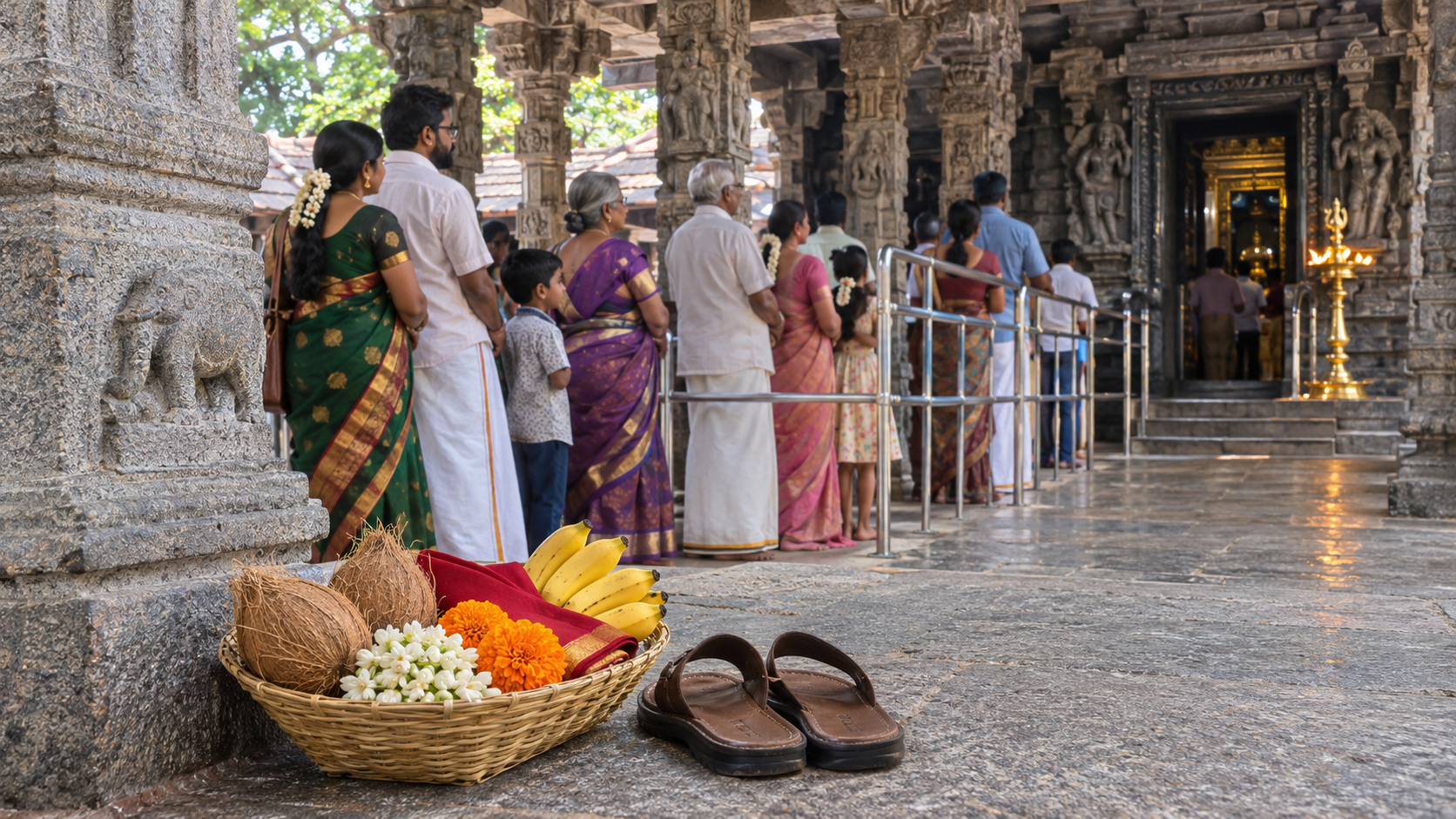
You do not need to arrive with an elaborate personal ritual. A clear intention, attention to local practice and respectful conduct are a sound basis for darshan. The important distinction is between preparing inwardly and presuming that every Shakti temple follows the same external sequence.
- Before entering, state your sankalpa in one plain sentence. You may pray for clarity, steadiness, gratitude or the welfare of your family without turning the moment into a list of demands.
- Address the Devi as Puruhutika or Puruhutamba if either name helps you hold your attention. Both are associated with the Pithapuram goddess.
- At the shrine, follow posted directions and the instructions of the officiating priest or temple staff. Do not reproduce a procedure merely because you observed it at another Shakti Peetha.
- Allow the image and name of the local Devi to remain central. A pilgrimage becomes thin when the visitor spends the entire darshan comparing one temple with another.
- After darshan, pause quietly where permitted. Note one impression or resolution you want to carry into ordinary life; this converts the visit from an isolated event into practice.
If you wish to bring an offering or arrange a particular puja, confirm the accepted practice locally before purchasing anything. This avoids waste and respects the temple’s own customs. The same principle applies to photography, queue arrangements and access to inner areas: observe the rules in force at the shrine rather than assuming that permission elsewhere applies here.
Build a reliable plan around the facts that can change

The shrine’s identity and location are stable points; opening hours, puja schedules, transport connections, festival crowds and visitor rules can change. Confirm those operational details close to your travel date through a current temple or local contact. A copied timetable is not reliable merely because it appears beside the correct temple name.
- Save the destination under at least two names: Puruhutika Devi Temple and Puruhutamba Temple, both with Pithapuram.
- Keep a screenshot of the name and map location so that weak mobile service does not erase your route information.
- Ask specifically whether the hours you receive apply on the day of your visit; ordinary days and observance days need not operate in the same way.
- Confirm any special puja separately from general darshan. Availability of one does not establish the timing of the other.
- If mobility, language or queue conditions affect your visit, ask about them directly before departure rather than waiting until you reach the entrance.
When speaking to a driver or local contact, use a complete phrase such as “Puruhutika Devi temple in Pithapuram, near Kakinada.” That sentence carries the deity, destination and regional reference together, reducing the chance that one spelling variation will derail the journey.
Key takeaways
- Puruhutika Devi’s shrine is in Pithapuram, Andhra Pradesh, near Kakinada.
- Puruhutika, Puruhuta, Puruhutamba and Puruhuthika are names you may encounter for the local goddess.
- The temple is regarded as one of the 18 Shakti Peethas.
- Use Pithapuram as your destination and Kakinada as the wider route reference.
- Verify current hours, puja arrangements and visitor rules locally before travelling.
- For darshan, honour the shrine’s own practice instead of assuming that every Shakti Peetha follows an identical ritual sequence.
Begin with the right search name, confirm the practical details for your chosen day, and arrive prepared to meet Devi in her distinctly Pithapuram form. That is enough to turn uncertainty about the destination into a focused pilgrimage to Puruhutika.
References

Leave a Reply
You must be logged in to post a comment.