
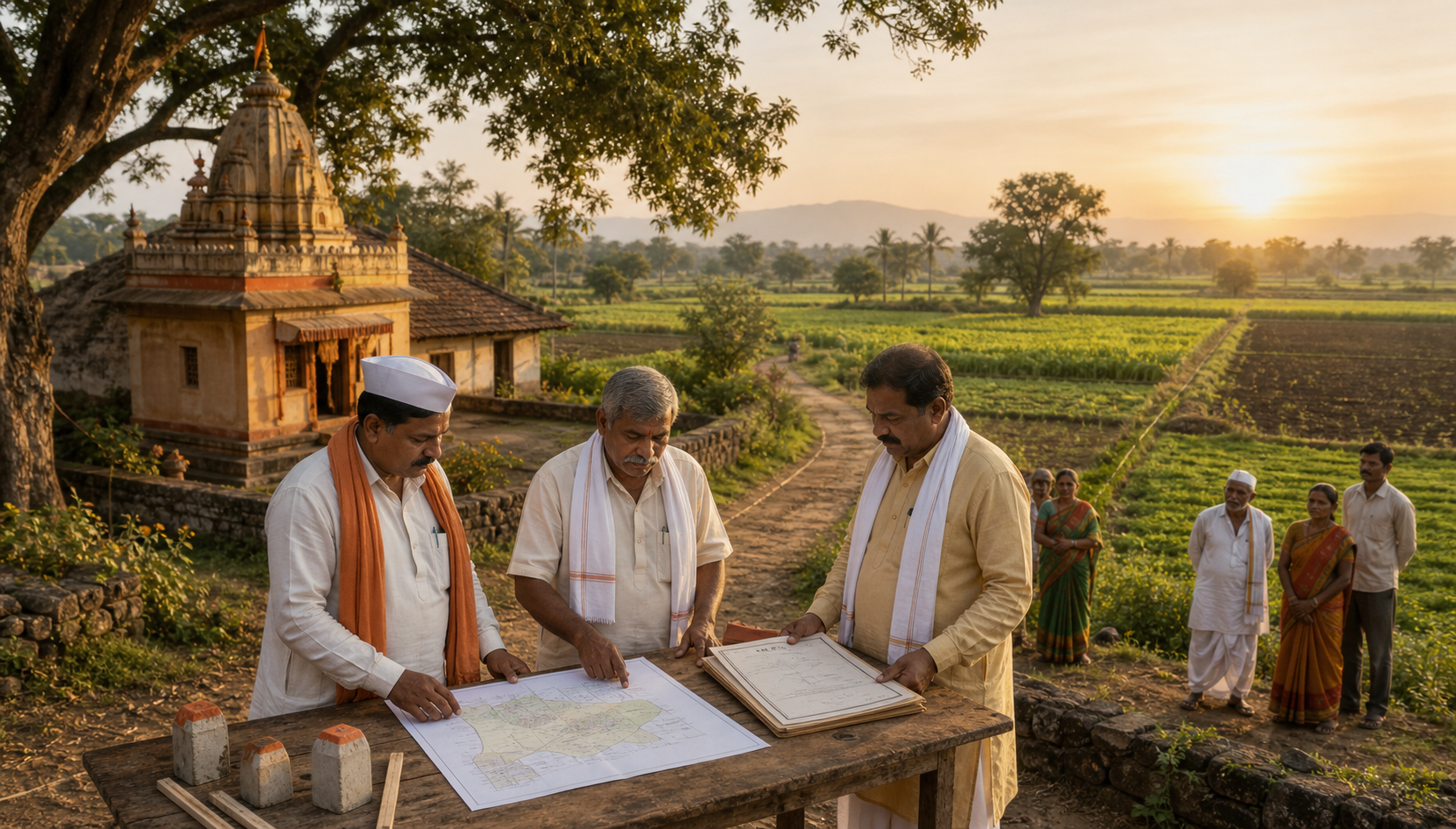
If you are responsible for a temple’s land, the important question is not whether the property looks secure today. It is whether the trustees could prove the temple’s rights, explain every occupant’s status, and file an effective objection as soon as a claim appears.
The protection of Shri Maroti Sansthan’s agricultural land in Amravati offers a practical lesson. A temple does not defend land through sentiment alone. It needs alert trustees, orderly records, the right legal response, and community support directed toward the proceeding that can actually decide the claim.
What the Achalpur decision establishes – and what it does not
An attempt to claim agricultural land belonging to Shri Maroti Sansthan under tenancy law was dismissed by the Achalpur Tehsildar after objections from the temple trustees and Maharashtra Mandir Mahasangh. The immediate result was the protection of the Devasthan’s property in that proceeding.
The sequence matters. A claim was placed before a competent local authority, objections were made, and the authority dismissed the attempt. That is more useful than a vague call to “save temple land” because it identifies the point at which organized action made a difference: inside the formal process.
Its limits matter too. This was a claim concerning a named institution, agricultural land, tenancy law, and a particular tehsildar-level proceeding. It does not prove that every temple is immune from tenancy claims or that every objection will succeed. Without the dismissal order and any appeal history in hand, you should not describe the outcome as an irreversible final judgment or a binding Maharashtra-wide precedent.
Use precise language when discussing the case: a tenancy-law claim to Shri Maroti Sansthan’s agricultural land was dismissed after objections. Precision protects credibility and keeps a genuine local success from being weakened by claims it cannot support.
Why a temple must document more than ownership
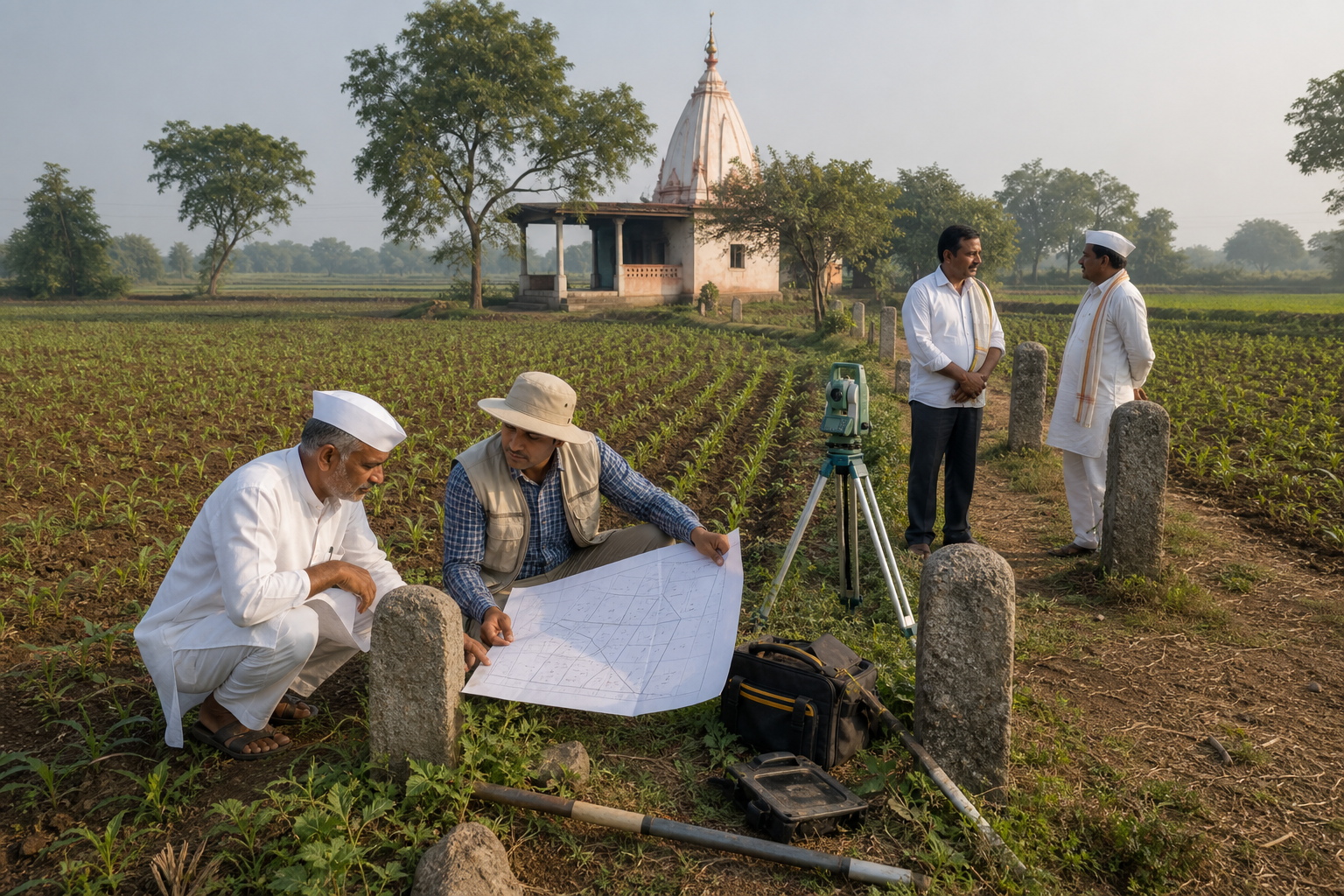
A threat to temple land can begin on paper long before anyone changes a boundary or blocks access. Agricultural property is especially sensitive because the identity of the person cultivating or occupying it, the basis of that arrangement, and its history may become relevant to a tenancy dispute.
Your land file should therefore answer four different questions. They overlap, but they are not interchangeable:
- What property belongs to the temple? Record the official property identifier, location, area, boundaries, and the name in which it appears in the relevant records.
- Who possesses or uses it? Identify the person cultivating, residing on, managing, leasing, or otherwise using each part of the property.
- Why is that person there? Preserve the lease, licence, service arrangement, cultivation agreement, trustee resolution, correspondence, receipts, or other material explaining the occupation.
- Who may act for the temple? Keep current proof of the trustees or office-bearers authorized to receive notices, instruct counsel, sign objections, and appear before an authority.
An old title paper may help with the first question while saying little about the other three. Likewise, physical occupation does not by itself answer who owns the land or what legal rights an occupant may assert. The applicable law and the facts determine those issues; a trustee should not collapse them into a single argument.
If another person is permitted to use temple land, write down the terms while the arrangement is clear. Identify the parcel, permitted use, duration, payment or service terms, renewal process, and authority that approved it. Do not backdate, alter, or manufacture records after a dispute begins. That can damage the temple’s credibility and create legal exposure of its own.
Build a parcel file before a claimant forces you to

The most useful preventive measure is a separate, indexed file for every parcel. A single cupboard labelled “temple papers” is not a land-management system. Trustees must be able to retrieve the history of one property without searching through unrelated donations, festival accounts, and correspondence.
- Appoint a records custodian. Name the trustee or authorized person responsible for maintaining the register, receiving updates, and handing it over when office-bearers change. Give another authorized person secure backup access.
- Create the parcel register. Copy the property’s name, identifier, area, boundaries, location, and recorded use exactly as they appear in the relevant official records. Note variations in the temple’s name rather than silently choosing one spelling.
- Collect the ownership and institutional papers. Preserve deeds, grants, trust or institution records, revenue entries, mutation-related papers, maps, prior orders, and certified copies where available. Counsel should assess their legal effect; the custodian’s task is to preserve provenance and completeness.
- Write an occupation chronology. Record who used or cultivated the land, during which period, under whose permission, for what purpose, and under which written arrangement. Attach receipts, correspondence, renewal papers, and termination notices to the relevant period.
- Connect decisions to authority. File trustee resolutions approving leases, licences, litigation, appointments, or changes in use. A signature is far more useful when the file also shows why that person was authorized to sign.
- Inspect the ground against the records. Check boundaries, access, current use, structures, fencing, and occupants. Date photographs and inspection notes. Record discrepancies for professional review instead of relying on memory.
- Protect originals and searchable copies. Keep originals securely, scan them legibly, use consistent filenames, and maintain a simple index. Limit editing access and record when an original is removed for a hearing or verification.
Several warning signs deserve immediate attention: an unknown cultivator or occupier appearing in correspondence or records; a long-standing user whose written permission has expired or cannot be found; inconsistent property identifiers; boundaries on the ground that do not match the file; and trustee transitions completed without a documented handover.
Do not wait for certainty before investigating a discrepancy. Investigation is not an accusation. It is the ordinary work of ensuring that the temple knows what it owns, who is using it, and on what basis.
Respond to a tenancy claim through the proceeding itself
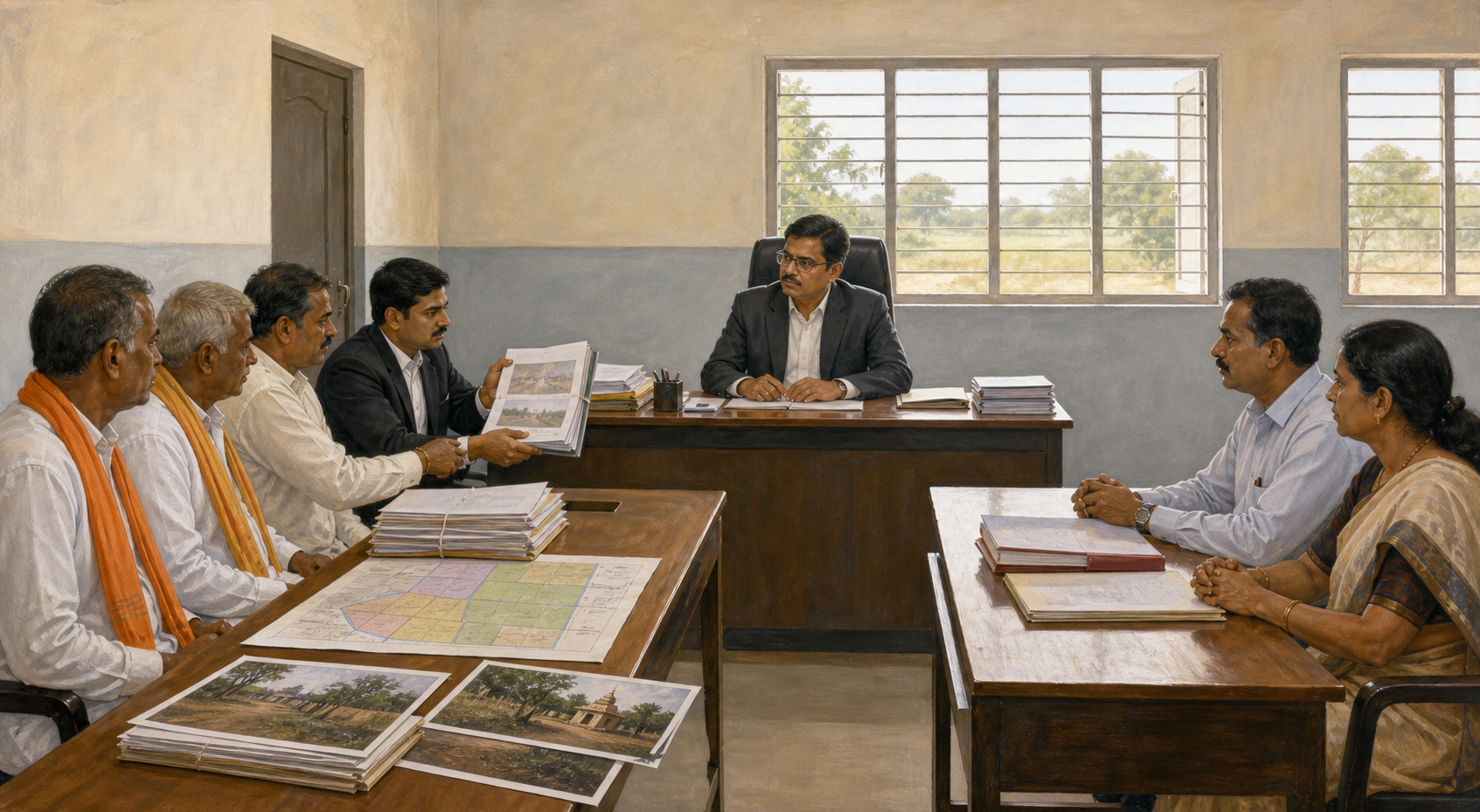
A land or tenancy notice creates legal exposure. The workflow below is a general discipline, not advice for a particular dispute. The trustees should engage a Maharashtra lawyer whose practice fits the land, revenue, tenancy, trust, and temple-property issues actually raised. Do not let an informal opinion consume a filing deadline.
- Preserve the notice exactly as received. Keep the envelope, service endorsement, attachments, electronic headers, and the date and manner of receipt. Scan the complete set before circulating it.
- Extract the controlling details. Identify the authority, case number, claimant, property description, legal provision cited, hearing date, and response deadline. Copy the deadline exactly; never assume an extension will be available.
- Verify authenticity through an official channel. Confirm the proceeding with the relevant office using independently obtained contact details. Do not rely solely on a telephone number or link appearing in an unexpected message.
- Authorize the response properly. Convene the trustees as required by the institution’s governing documents. Record who may instruct counsel, sign pleadings, collect certified copies, and attend hearings.
- Give counsel the complete parcel file. Include inconvenient documents and inconsistencies as well as favourable material. A lawyer can address a weakness that is disclosed early; a hidden weakness may emerge after the temple has committed itself to an inaccurate position.
- Obtain and understand the claimant’s case. Identify the exact land claimed, the right asserted, the alleged factual history, and the relief requested. Do not answer a tenancy claim as though it were merely a boundary disagreement or a public-relations dispute.
- File a reasoned objection with an evidence index. Link each factual answer to the relevant annexure and obtain proof of filing. Ask counsel whether any interim protection is necessary while the proceeding remains pending.
- Attend every required hearing and preserve every order. Record the next date immediately. After a decision, obtain the proper copy and ask counsel about compliance, correction, review, appeal, or further protective steps rather than assuming the matter has ended.
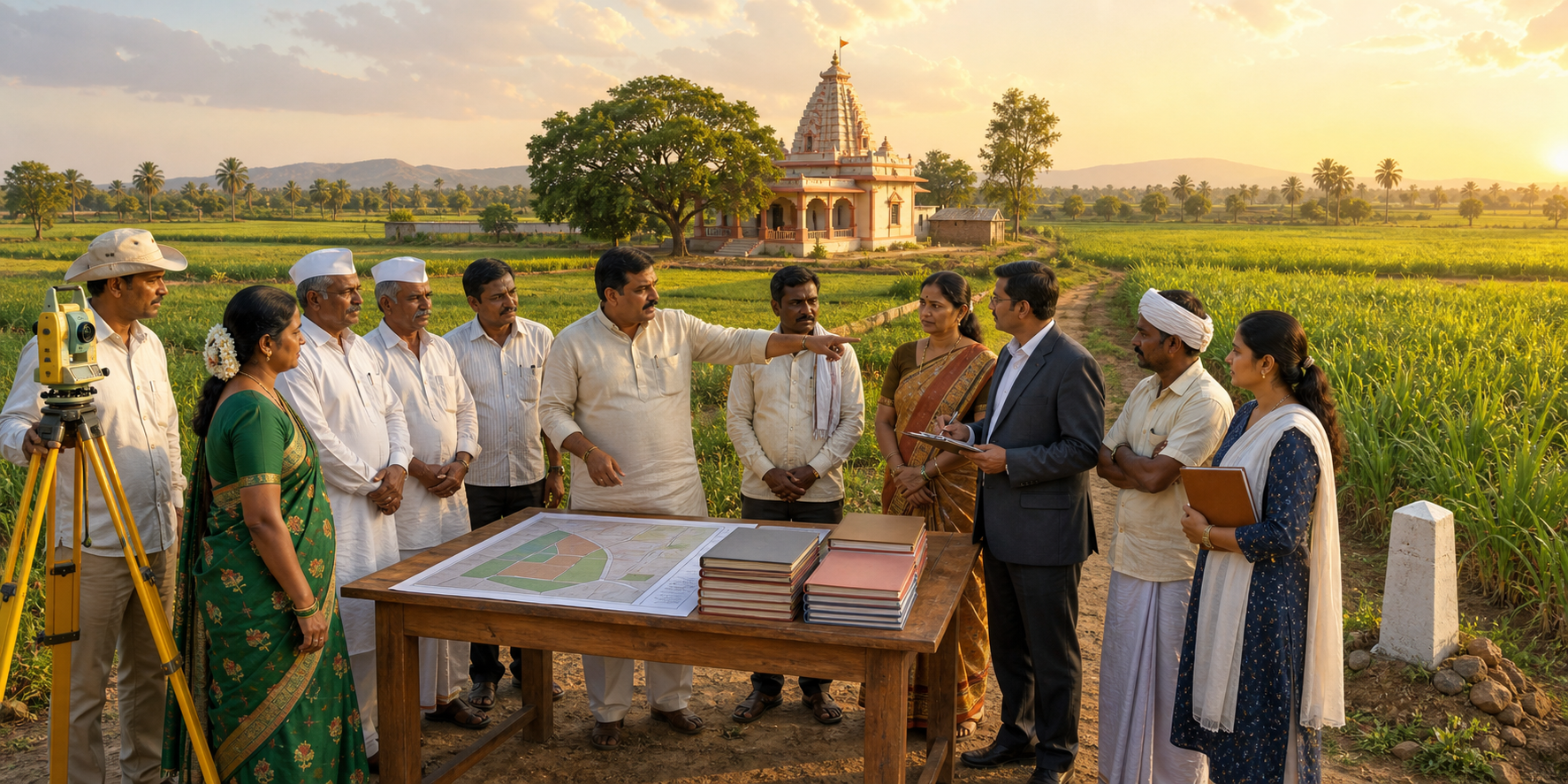
Legal action, administrative recordkeeping, and community advocacy should reinforce one another, but they perform different jobs. The legal team prepares the objection. Trustees supply authority and records. A community organization can coordinate attention, professional referrals, historical material, and lawful support. None of those functions replaces a timely filing.
In the Achalpur matter, the trustees and Maharashtra Mandir Mahasangh both objected. The transferable lesson is coordinated responsibility: the institution with standing remained involved while a broader temple network supported the defence.
Public communication should remain accurate and disciplined while a case is active. Name the authority and procedural status correctly. Distinguish an allegation from a finding. Do not publish private information, make unsupported accusations against a claimant, or coach a witness. If devotees are asked to help, make the request concrete: locate an authentic historical record, identify a person with direct knowledge, recommend qualified counsel, or support authorized legal expenses through accountable channels.
Key takeaways for trustees and devotees
- A temple should maintain an indexed file for each parcel before any dispute arises.
- Ownership, occupation, the basis of use, and authority to act are separate questions; document all four.
- The day a notice arrives, preserve service details, identify the deadline, verify the case, and place it before properly instructed counsel.
- Community advocacy is most effective when it supports the formal objection instead of substituting slogans for evidence.
- Describe every result narrowly and accurately. A dismissed local claim is valuable, but it is not automatically a universal precedent.
- Never create retrospective records or sign an informal compromise merely to make an immediate problem disappear.
At your next trustee meeting, assign one records custodian and identify the parcel with the weakest file. Complete that file first. Temple land is easiest to defend when its history, present use, and chain of responsibility are already clear before anyone challenges them.
References
