
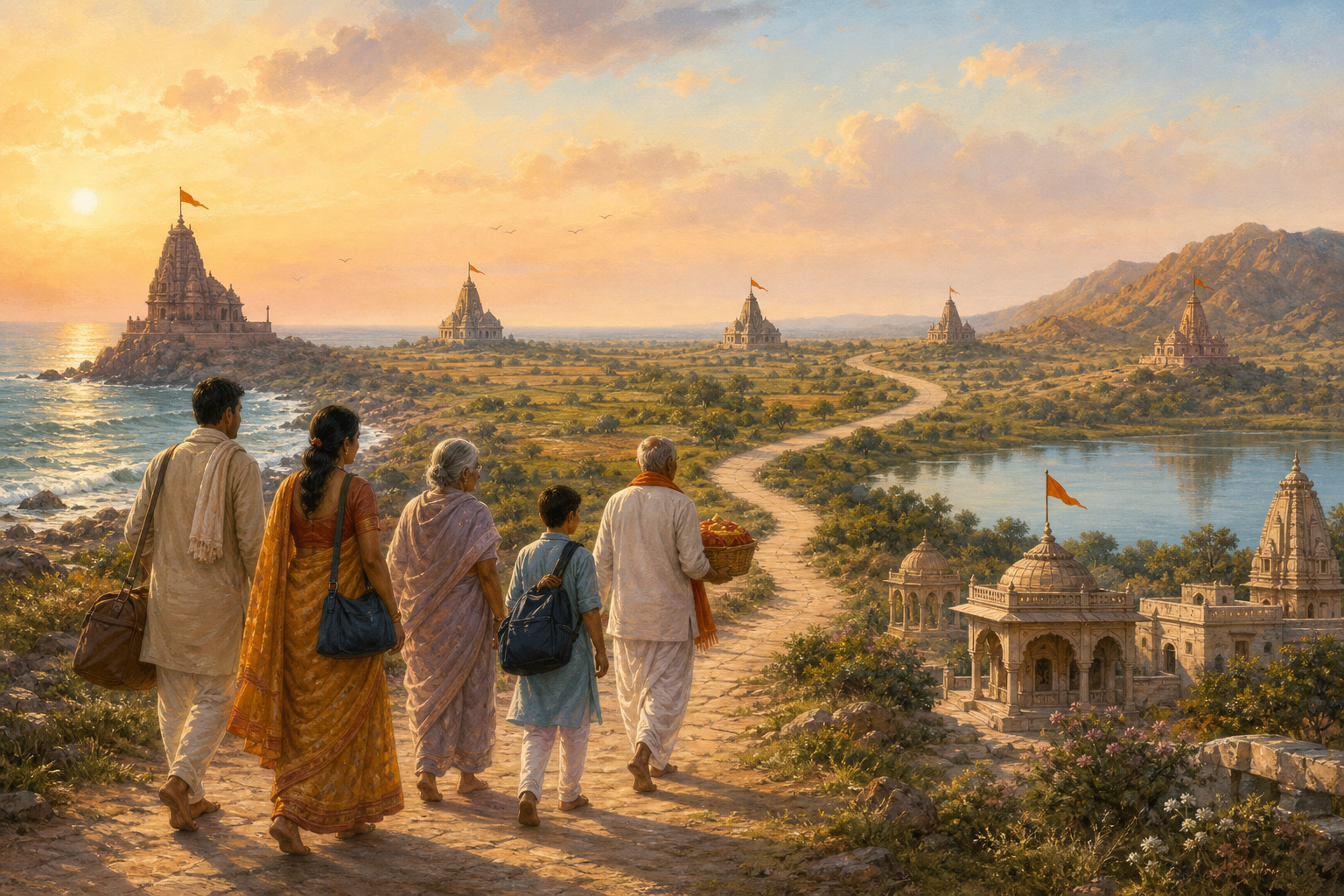
If you are trying to turn Panch Dwarka from a list of temple names into a workable yatra, do not begin by buying tickets. Begin by separating the devotional circuit from the travel problem. Five temples spread across Gujarat and Rajasthan require more than five map pins, especially when darshan timings and local transfers can determine the shape of an entire day.
A sound plan protects two things at once: your ability to reach every temple without a brittle chain of connections, and your freedom to stand before Sri Krishna without watching the clock. The following method gives you that structure without imposing a ritual order that may not belong to your family or sampradaya.
Know which five temples belong to Panch Dwarka
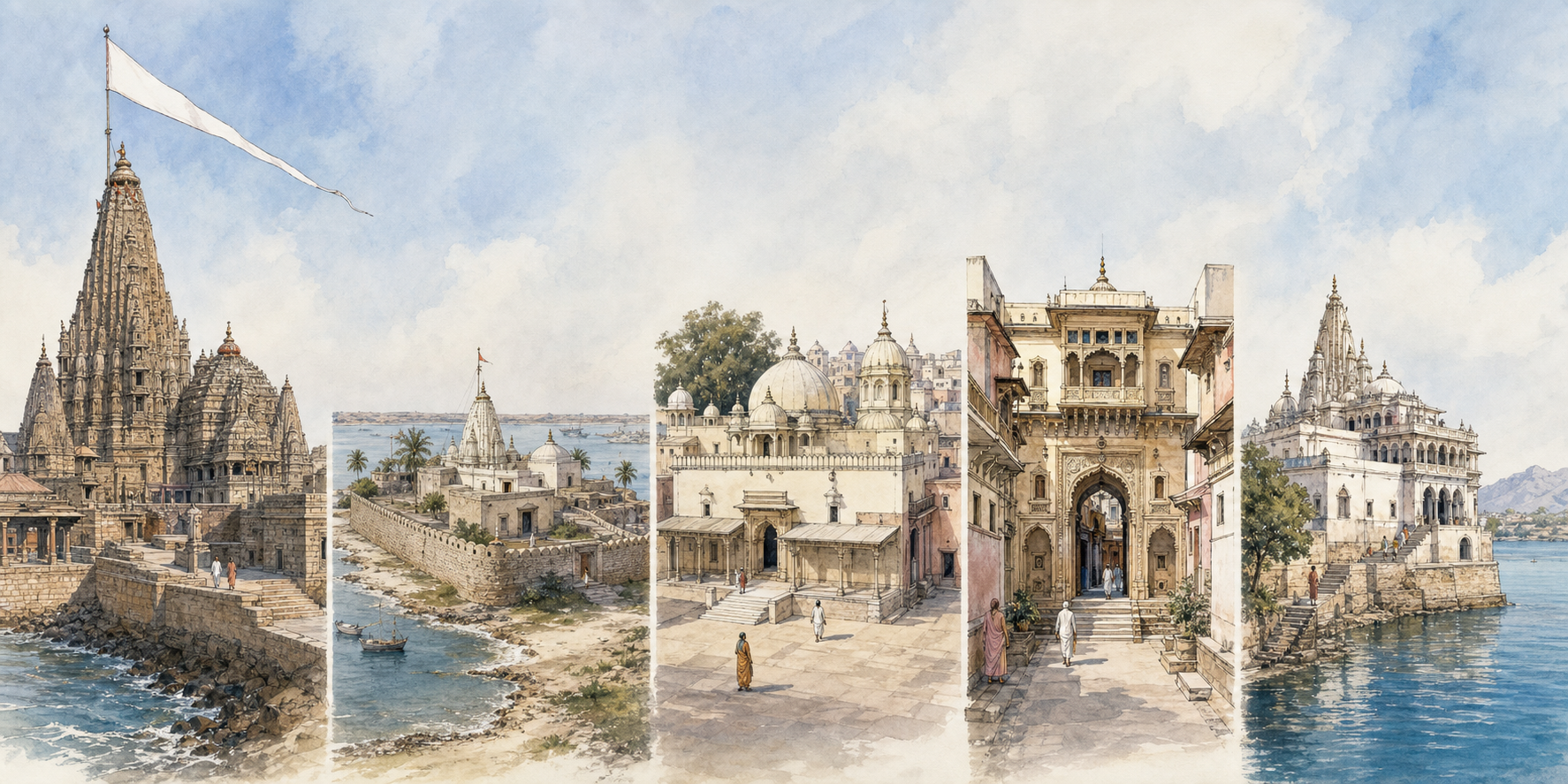
Panch Dwarka brings together five sacred Sri Krishna temples in Gujarat and Rajasthan:
- Dwarkadish Temple at Dwarka
- Bet Dwarka
- Ranchhodraiji Temple at Dakor
- Shrinathji Temple at Nathdwara
- Dwarikadhish Temple at Kankroli
Write the temple and its town together everywhere: in your itinerary, hotel notes, transport bookings and family messages. Dwarkadish Temple at Dwarka and Dwarikadhish Temple at Kankroli have similar names, so a booking note that says only “Dwarkadhish” can send a driver, relative or travel coordinator toward the wrong part of the circuit.
The word panch tells you that the circuit contains five places; it does not, by itself, prescribe which one must come first. If your guru, family tradition or organised yatra gives you a sequence, follow that discipline. Otherwise, choose the direction that fits your arrival point and transport. A practical route is not a claim that one temple outranks another.
Turn five separate stops into three travel clusters
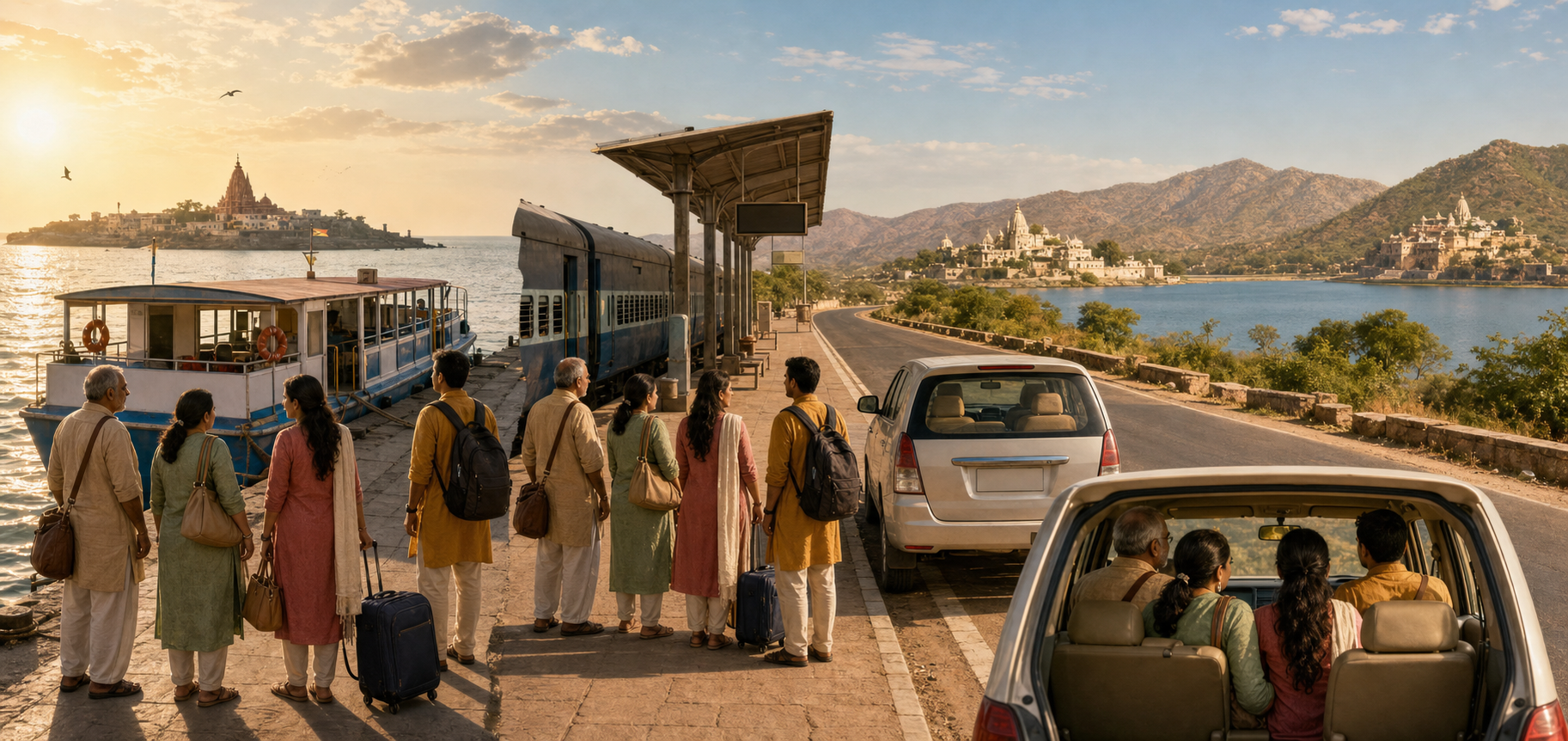
The simplest planning model uses three clusters rather than five isolated bookings:
- Dwarka cluster: Dwarkadish Temple and Bet Dwarka.
- Dakor anchor: Ranchhodraiji Temple.
- Nathdwara-Kankroli cluster: Shrinathji Temple and Dwarikadhish Temple.
This grouping is a planning device, not a promise that both temples in a cluster will fit comfortably into one day. Make one itinerary block for each cluster first. Add specific days only after you have checked the relevant darshan windows, local transfer arrangements and the pace of the people travelling with you.
Within the Dwarka cluster, treat Bet Dwarka as a separate movement even though it belongs naturally with Dwarka. Its island transfer creates an additional dependency. Do not schedule a tightly timed intercity departure immediately after the Bet Dwarka visit. A delay in the local transfer should cost you buffer time, not the next major leg of the pilgrimage.
Nathdwara and Kankroli can sit within one regional accommodation plan, but confirm current ground travel and temple access before deciding that they are a single-day pair. Dakor should likewise remain a distinct anchor in the draft itinerary. Giving every cluster its own planning block makes it easier to reverse the complete route without rebuilding every reservation.
Build each day backward from darshan
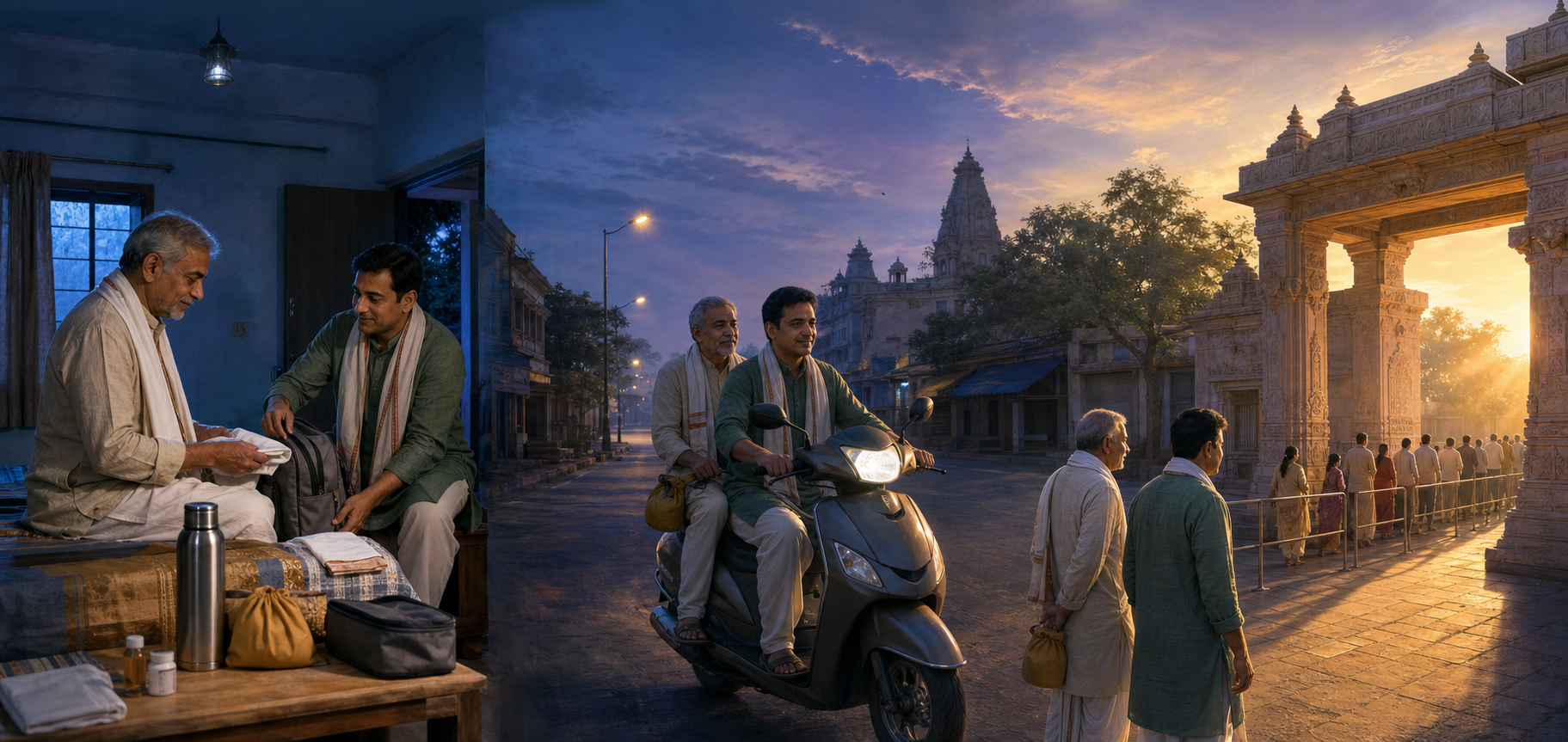
Ordinary sightseeing itineraries are built around arrival and departure times. A pilgrimage works better when you begin with the darshan you do not want to miss and plan backward from it.
- Verify the date-specific darshan schedule. Record the day and date beside the timing so that an old screenshot cannot be mistaken for a current confirmation.
- Identify the final local connection. For Bet Dwarka, this includes the transfer needed to reach and leave the island. At every temple, it includes the last dependable local ride back to your accommodation.
- Add arrival and queue margin. Reaching the town is not the same as standing at the temple entrance. Allow for the final approach, footwear deposit, security or bag procedures and the queue itself.
- Place meals and rest around the fixed window. This matters particularly when children, older relatives or anyone with limited mobility is travelling with you.
- Book the onward intercity leg last. A non-refundable departure should not depend on every earlier step running without delay.
Do not rely on a generic business-hours panel as your only timing check. Ask for the schedule that applies to your exact date, including any closing intervals or changed arrangements. Temple routines can differ on festival days and other heavily attended dates. If you cannot obtain a reliable confirmation, keep the surrounding transport and accommodation changeable.
If a member of your group needs step-free access, assistance in a queue or help with the Bet Dwarka transfer, ask about that requirement before leaving the previous cluster. Do not discover at the entrance that the group needs an arrangement that could have been made earlier. Keep any necessary rest stop in the written itinerary rather than treating it as time you will somehow find during the day.
Keep the five visits spiritually connected without making them identical

The unity of Panch Dwarka lies in Sri Krishna bhakti, not in an expectation that every temple will follow the same local procedure. The names Dwarkadish, Ranchhodraiji, Shrinathji and Dwarikadhish should make you more attentive, not less. Enter each place ready to observe its customs rather than carrying assumptions from the previous stop.
Before departure, prepare a one-page yatra card with five rows. For each temple, leave space for four things:
- The exact temple name and town.
- Your sankalpa or devotional intention for that visit.
- The current entry, offering, phone and photography rules you have confirmed.
- One sentence to write after darshan before the next journey begins.
This is a planning discipline, not a compulsory ritual. Its purpose is to stop the pilgrimage from collapsing into hotel confirmations and completed checkboxes. You may also carry one simple practice through the entire circuit, such as Krishna nama-japa or a prayer taught in your own tradition. A consistent practice supplies continuity while leaving each temple’s character intact.
Families should also agree on one meeting point outside each temple before entering. Give one person responsibility for transport confirmations and another responsibility for keeping the group together. When phones must be put away or the queue separates people, a previously chosen meeting point is far more useful than repeated calls that nobody can answer.
Key takeaways before you pay for the trip
- Save all five temples with their towns; never use “Dwarkadhish” alone in a booking note.
- Plan three clusters: Dwarka-Bet Dwarka, Dakor, and Nathdwara-Kankroli.
- Choose the direction according to your arrival point unless your spiritual tradition supplies a particular order.
- Confirm the darshan schedule for the exact date, not merely the usual daily hours.
- Treat Bet Dwarka’s island transfer as its own logistical step.
- Do not attach a non-refundable onward departure to the end of a tight darshan window.
- Check each temple’s current rules for bags, phones, photography, clothing and offerings.
- Confirm accessibility and boarding needs before the group reaches the temple town.
- Keep at least one recovery block in the wider itinerary so that a delay does not force you to abandon a temple.
- Carry a single devotional practice through the circuit, but respect the distinct custom of every shrine.
Your first useful action is small: write the five temple-and-town pairs, arrange them into the three clusters, and verify the first darshan date before making a fixed reservation. Once the darshan windows are real, the route can serve the yatra instead of ruling it.
References
