

If you are trying to decide whether Peterborough’s Hindu community was simply outbid or whether the council acted unlawfully, do not collapse those questions into one. Peterborough City Council’s February approval to sell the Rock Road freehold to the United Kingdom Islamic Mission prompted a judicial review because the dispute concerns how a public authority reached its decision, not merely which bidder offered more money.
That distinction tells you what to watch. The court is not being asked to rank Hindu and Muslim worship or to choose the morally deserving faith. It must decide whether the council exercised its own powers lawfully, gave proper attention to equality consequences, and retained the judgments that elected members were required to make. The hearing before Mr Justice Morris was expected to conclude with a written judgment to follow, so allegations and defences should not be repeated as judicial findings unless a later judgment has been verified.
Key takeaways
- Bharat Hindu Samaj has occupied the Rock Road premises since 1986. The threatened loss therefore concerns continuity of worship and community life, not just a change of address.
- The Public Sector Equality Duty requires serious, timely consideration of effects on protected communities. It does not automatically give the temple a veto over a sale.
- The council’s obligation to consider financial value does not erase its equality, governance, and rational decision-making duties.
- The delegation question is precise: did officers lawfully assess the bids and advise the cabinet, or did they effectively make a core decision that elected members themselves had to make?
- Even a successful judicial review may only cancel the existing decision and require reconsideration. It would not necessarily transfer the freehold to Bharat Hindu Samaj.
- The strongest Hindu response is evidence-led and peaceful: protect worship, demand accountable government, and refuse to turn scrutiny of a council decision into hostility towards Muslims.
The decision trail matters more than slogans

What is agreed and what remains contested
The essential chronology is unusually important. Bharat Hindu Samaj has used the council-owned premises since 1986 and had been discussing possible transfers or reconfiguration of the site with the council since 2017. The authority later moved to a best-and-final-offer process after receiving an earlier UKIM offer. UKIM said it would “beat any existing cash offer by up to 5%” and stated that its proposed religious facilities would serve the Muslim community. The cabinet then approved the sale to UKIM.
The claimant says serious flaws in the officers’ reasoning were adopted by the cabinet without adequate independent judgment. On that case, the competitive choice was effectively delegated when it should have remained with elected decision-makers. The claimant also describes Rock Road as the region’s principal Hindu place of worship and argues that closing it without an available replacement would have a severe effect on Hindus.
The council disputes that account. Its position is that it engaged with the temple over several years, conducted a transparent and lawful process, placed adequate information before the cabinet, and paid due regard to equality. It denies that members were misled or that officers unlawfully assumed the cabinet’s role.
Those are opposing legal positions. Until the court rules, careful reporting should use verbs such as “argues,” “contends,” and “denies.” Saying that the council unlawfully sold the temple as an established fact would run ahead of the judgment; saying that a higher offer necessarily made the process lawful would do the same in the opposite direction.
Price is important, but it is not the entire legal inquiry
Section 123 of the Local Government Act 1972 places local-authority land disposals within a best-consideration framework, subject to recognised exceptions and guidance. That makes financial value a real public concern. It does not permit the council to ignore a separate statutory duty or bypass its own constitutional allocation of responsibility.
Officers may normally collect bids, score evidence, and recommend an outcome. The critical question is whether cabinet members still made the judgment entrusted to them. You should therefore look beyond the final vote and examine the chain that led to it:
- Were the selection criteria settled and explained before the final bids were assessed?
- Did the criteria capture relevant equality and community consequences, or only financial and property factors?
- Could cabinet members see the assumptions behind the officer scoring and challenge them?
- Did members receive a concrete account of what displacement would mean for current Hindu worship and services?
- Do the recorded reasons show that members weighed the competing considerations themselves?
Long engagement is relevant, but elapsed time alone does not prove lawful consideration. A council can meet a community repeatedly yet still ask the wrong questions at the decisive stage. Conversely, disagreement with the final choice does not establish that the cabinet merely rubber-stamped its officers. The judgment must turn on evidence of what was considered, by whom, and when.
Equality duty requires a real account of what the temple does
Section 149 of the Equality Act 2010 requires a public authority to have due regard to equality objectives, including eliminating discrimination and advancing equality of opportunity. In practical terms, due regard is a discipline of decision-making. The relevant effects must be understood while the decision is still open, not assembled afterwards as a defence.
A formal equality impact assessment is not invariably mandatory. The substance matters more than the label. The council should nevertheless be able to point to a timely and intelligible record showing that members understood the likely effect on the affected faith community and allowed that understanding to shape their deliberation.
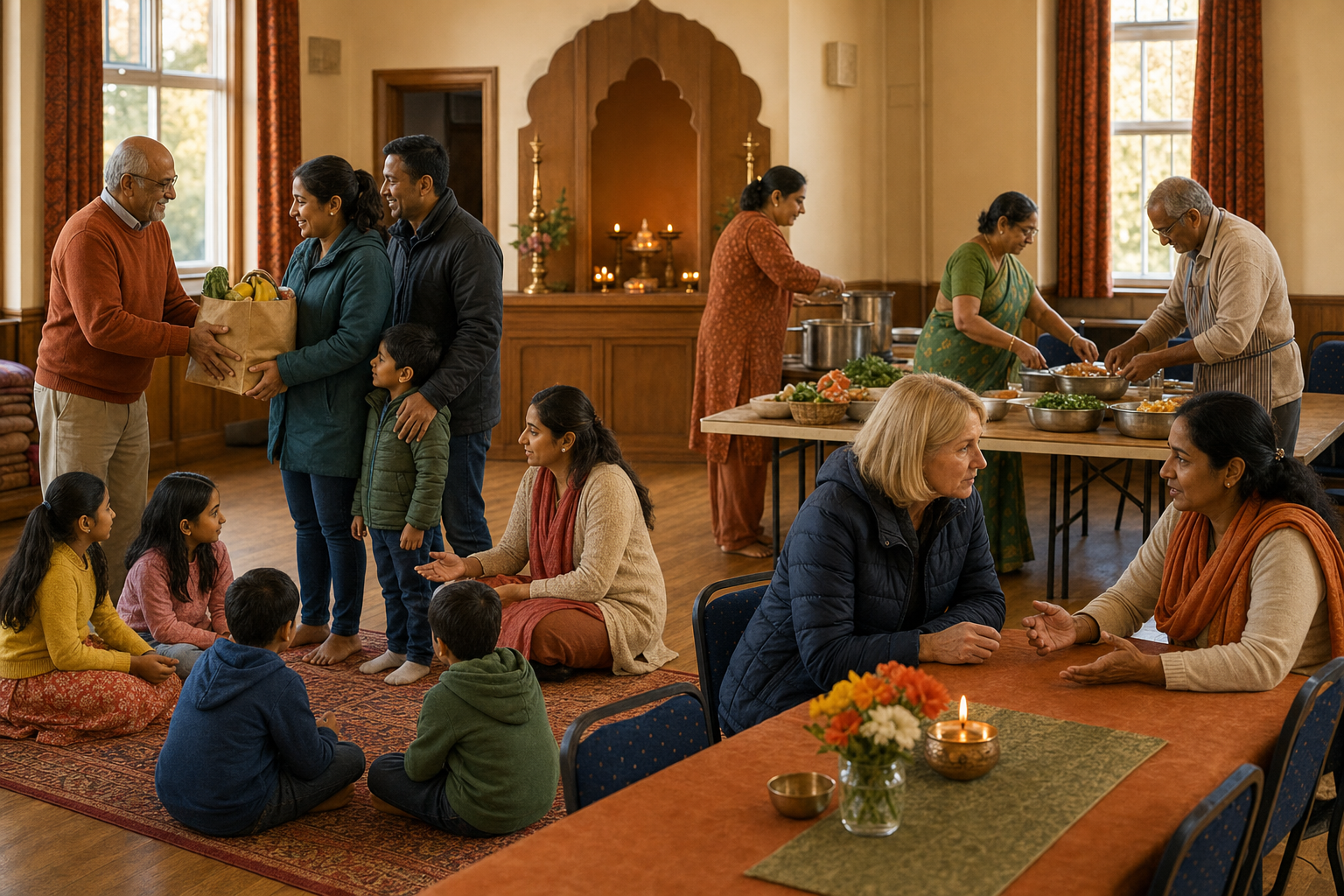
For Rock Road, that inquiry cannot stop at floor area, bidder identity, or the number of weekly services. A long-established diaspora temple may support worship, cultural instruction, language and music, youth mentorship, older people, charitable activity, and family rites. The question is not whether every temple performs every one of those functions. It is whether the council established what this temple actually provides, who depends on it, and what would happen if the congregation had to leave without suitable replacement premises.
The claimant relies particularly on the absence of a current alternative for Bharat Hindu Samaj and contrasts that vulnerability with UKIM’s existing national network of centres and branches. That comparison is part of the claimant’s equality argument, not a finding against UKIM. Nor should it become a contest over whether one religion is more entitled to worship than another. Its legal relevance lies in the practical effects of this specific public decision on each community.
If you are reading council papers or preparing community representations, look for concrete answers to five questions:
- What religious, educational, cultural, and social activities currently depend on Rock Road?
- Which activities could move easily, and which require a consecrated or suitably configured place of worship?
- Was any viable alternative site identified, and was its availability established rather than assumed?
- What interruption would occur between leaving Rock Road and occupying an alternative?
- Where in the cabinet material can you see members considering those consequences before approving the sale?
These questions turn a general plea to “save our temple” into evidence a public decision-maker must confront. They also expose two common mistakes. The absence of a document titled “Equality Impact Assessment” does not by itself prove a breach, while the presence of a few equality paragraphs does not by itself prove compliance. The court must assess the quality and timing of the consideration.
What the judgment could change, and what it cannot

Judicial review usually controls the legality of public decision-making rather than substituting the judge’s preferred property decision. That is why the exact order matters as much as the headline result.
| Possible result | What it would mean | What it would not mean |
|---|---|---|
| The decision is upheld | The challenge has not established a defect requiring the court to intervene. | It would not mean that the court considers Hindu worship less valuable, or that every similar disposal would be lawful. |
| The decision is quashed and remitted | The existing approval falls away and the council must reconsider the matter through a lawful process. | It would not automatically award the freehold to Bharat Hindu Samaj or prevent UKIM from participating in a new process. |
| Procedural guidance or another discretionary remedy | The court may clarify what the authority must address or how any defect should be handled. | It would not necessarily determine which bidder ultimately succeeds. |
Read the operative court order before reacting to summaries. Then read the reasons issue by issue: equality duty, delegation, the information placed before the cabinet, and the remedy. A ruling can reject one ground while accepting another, and a successful ground may produce a narrower remedy than campaigners expect.
This distinction also protects public credibility. “The sale decision was quashed” and “the temple won ownership” are not interchangeable statements. Neither are “the challenge failed” and “the council treated the Hindu community fairly.” Use the court’s actual language and keep moral or political judgments clearly separate from legal findings.
A disciplined Dharmic response starts with evidence
If you worship at Rock Road, support the temple, or speak publicly about the case, you can act before the final legal position is known. The goal is to preserve the community’s capacity to worship while making the demand for accountability precise.
- Verify the procedural stage. Before saying the temple has won, lost, or been evicted, obtain the written judgment or court order and confirm whether any further decision, stay, or reconsideration remains outstanding.
- Keep a dated impact record. Document the temple’s actual schedule, cultural teaching, language or music activity, youth work, support for elders, charitable service, and major rites. Record aggregate participation where reliable, but do not publish personal information merely to strengthen a campaign.
- Record the search for alternatives. Keep a factual log of premises examined, availability, suitability, and the reasons an option could or could not sustain current functions. “There is nowhere else” is easy to dismiss; a dated record of an unsuccessful search is harder to ignore.
- Ask questions that follow the legal duties. Request the available cabinet report, minutes, bid criteria, equality material, officer recommendation, and relevant delegation rules. Ask when members considered displacement, what alternatives they believed existed, and who made each decisive judgment.
- Coordinate litigation and public advocacy. Anyone directly involved in the proceedings should take case-specific advice from the legal team before submitting evidence, making claims about opponents, or assuming that a public campaign step cannot affect the case. General analysis is not a substitute for legal advice.
- Plan continuity without surrendering the claim. Identify how worship, classes, elder support, and community communication would continue if access changes. A contingency plan protects people from disruption; it does not decide whether the council acted lawfully.
- Keep protest peaceful and accurately targeted. The challenged act is a council property decision. Criticising that process does not require denying Muslim residents their dignity or right to worship. Ahimsa here is not passivity. It is the discipline to direct pressure towards the decision, the evidence, and the responsible public body.
Interfaith engagement can continue without blurring the dispute. A carefully chaired meeting can correct rumours, affirm that both communities deserve secure worship, and explore practical ways to prevent civic tension. Mediation or open forums cannot replace a lawful decision, but they can stop an administrative conflict from hardening into communal hostility.
When the written reasons are available, map each finding to a next action: legal advice on the order, a dated request to the council if reconsideration is required, and a continuity plan for every temple service at risk. The credible defence of Rock Road will rest on a documented community impact, insistence on lawful government, and refusal to turn a dispute over public power into animosity between faiths.
References
