
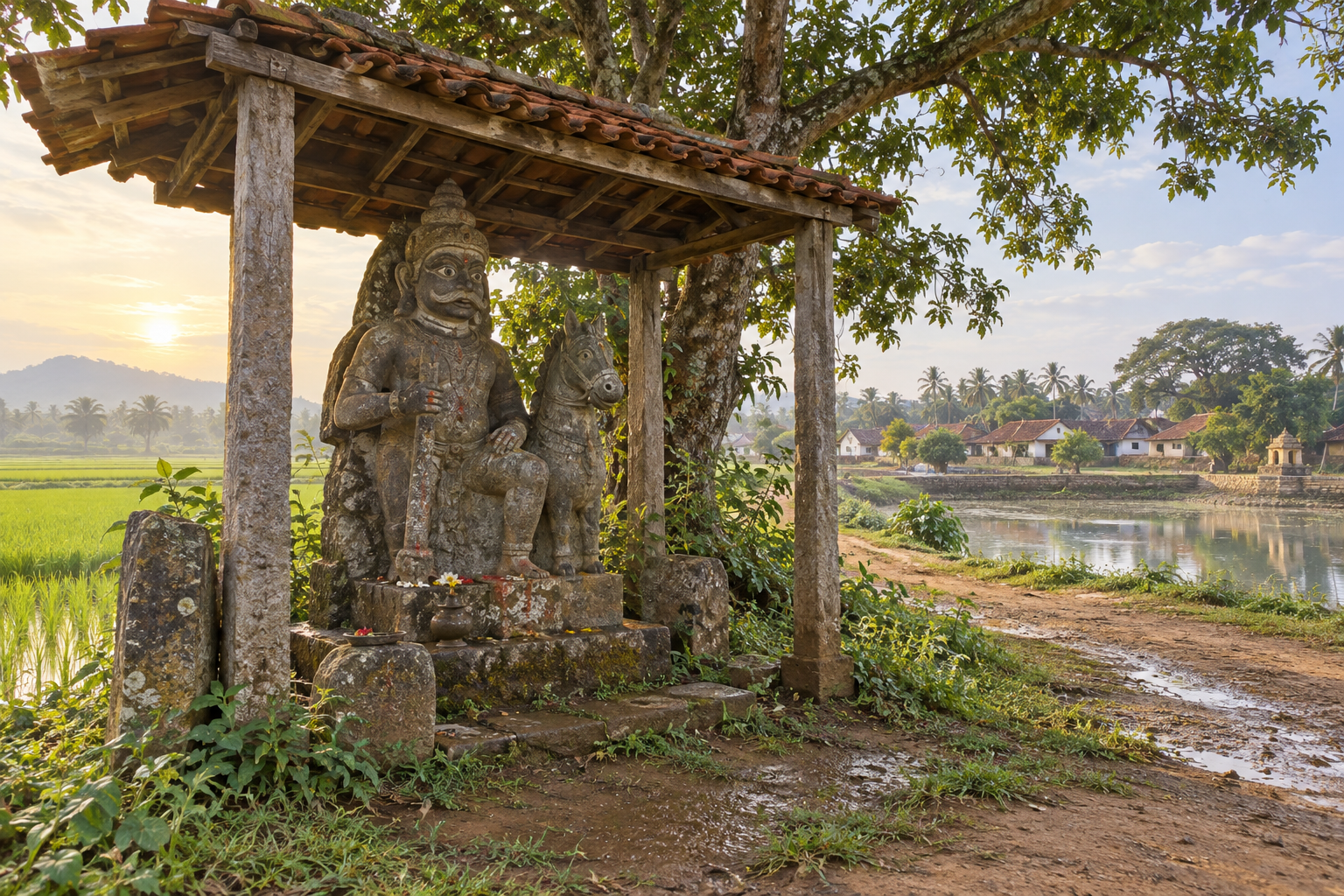
If you have encountered Kundu Mani Ayyanar in a photograph, during a village visit, or through a family tradition, the first question is usually about the figure: What does the sculpture represent? The better starting point is its location. A guardian standing at the edge of a settlement cannot be understood as an isolated museum object.
In Tamil Nadu, Kundu Mani Ayyanar is understood as a protector whose stone image is installed at village boundaries and associated with the protection of paddy fields, water tanks, and hamlets. Sculpture, worship, and landscape therefore belong to one arrangement. If you separate the figure from the place it guards, you lose much of its meaning.
The boundary tells you what the guardian protects
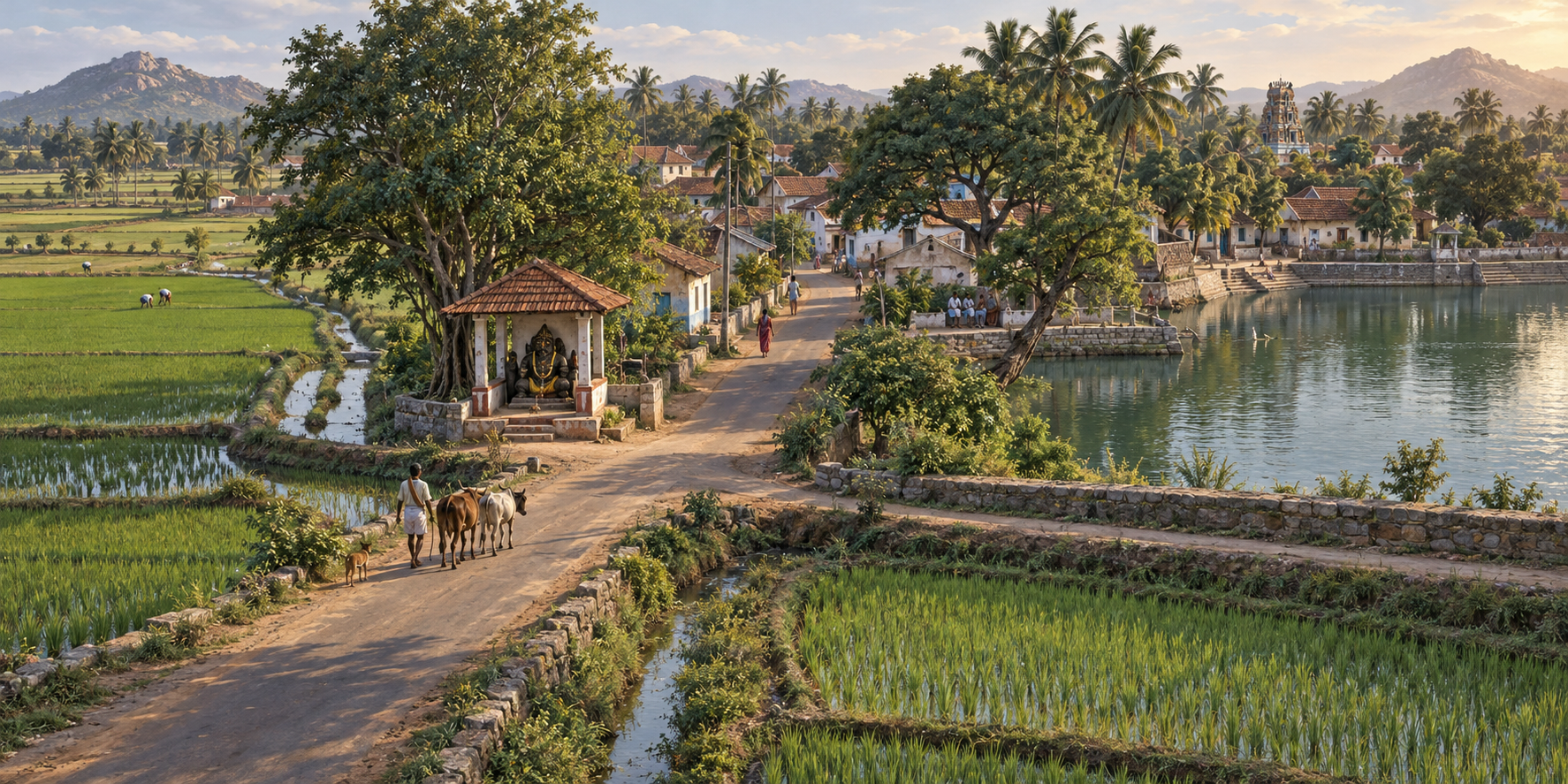
A village boundary is not merely the point where one administrative area ends. It is a threshold between inhabited space and the roads, fields, water systems, and surrounding land on which village life depends. Installing Ayyanar there makes guardianship visible. The deity faces the zone through which people, animals, weather, and uncertainty approach the settlement.
This is why you should look outward before examining the carving closely. Ask what lies around it. Is the image beside an approach road, near cultivated land, within reach of a village tank, or at the transition between houses and open ground? Not every site will contain every one of these features, but the relationship between the guardian and the protected landscape is the first thing to notice.
Paddy fields, tanks, and homes are not three unrelated concerns. Cultivation depends on water; households depend on cultivation; the continuity of the settlement depends on all of them. A guardian associated with this whole field of life expresses protection as something concrete and local rather than vague or purely inward.
- Begin at a distance and identify the village-facing and outward-facing sides of the site.
- Notice nearby paths, fields, water bodies, and houses without assuming that every visible feature has ritual significance.
- Ask a resident or shrine custodian whether the image remains in its original position.
- Separate what you can see from what you have been told. Orientation is an observation; its ritual meaning requires local knowledge.
This sequence prevents a common mistake: searching the face or posture for a complete explanation while ignoring the land that gives the figure its protective purpose.
The sculpture is an installed presence, not detached decoration
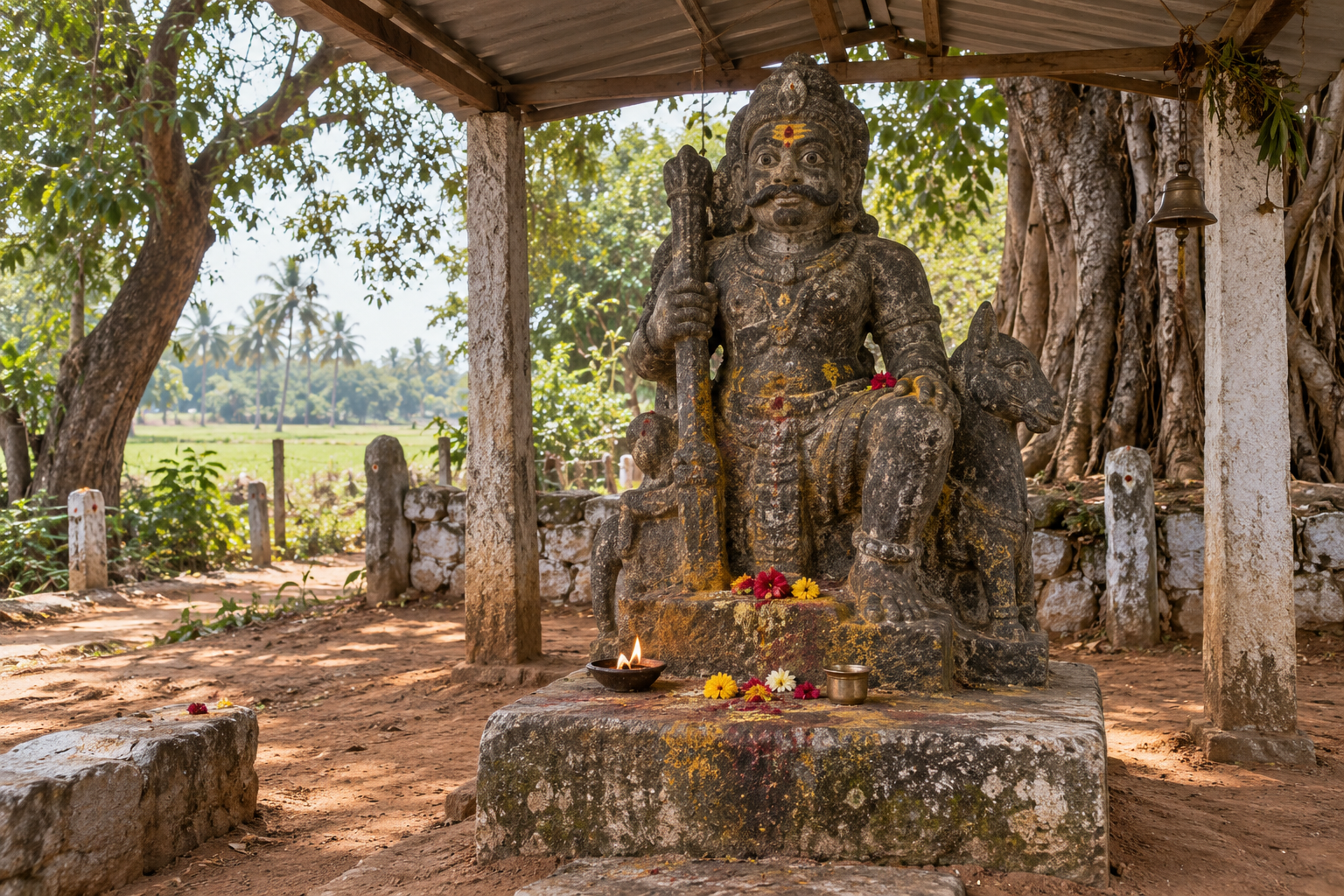
Stone gives the guardian a durable physical presence. It can remain exposed to seasons while marking the continuity of protection across generations. Weathering should not automatically be read as abandonment. An outdoor sacred image can bear the marks of age and still remain important to the community around it.
Installation is as important as material. A carved object displayed elsewhere may still have artistic or historical value, but a guardian image at the village boundary participates in a living geography. Its position connects the visible form to the community, fields, water, and routes it is understood to protect.
You can read the sculpture in three layers without inventing details:
- Visible form: Record the material, scale, posture, condition, orientation, and clearly identifiable attributes. Describe only what is actually present.
- Spatial function: Examine how the image relates to the boundary, approach route, settlement, cultivated ground, and water system.
- Living interpretation: Ask how local worshippers name the deity, understand particular features, and describe the protection associated with the shrine.
The order matters. If you begin with a generic catalogue of Ayyanar imagery, you may paste meanings from another village onto Kundu Mani Ayyanar. Shared identity does not require every local manifestation to have an identical origin story, ritual schedule, or explanation for every sculptural feature.
Nor should the term “folk sculpture” be used to make the image seem artistically minor or religiously incomplete. A work can be locally made, aesthetically forceful, and ritually alive at the same time. The categories of art object and sacred presence may be convenient for a museum catalogue, but they need not describe how worshippers encounter the guardian.
Worship begins with respect for the living shrine
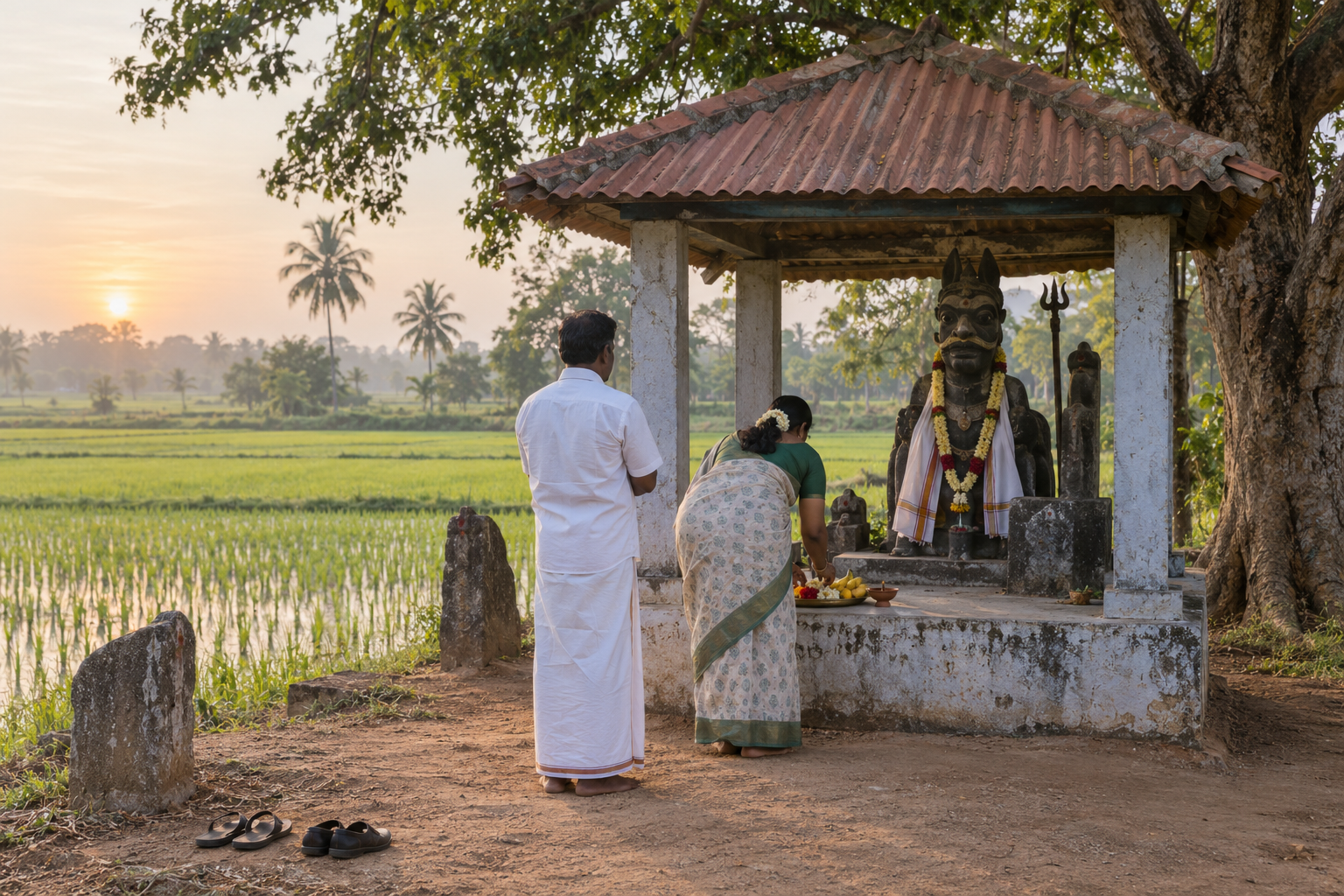
Kundu Mani Ayyanar worship is best approached as a protective relationship rooted in place. The deity is not only contemplated as an idea; the guardian is connected with the continued well-being of cultivated land, water, and habitation. That relationship belongs first to the community that maintains the shrine.
If you are visiting, photographing, or documenting the sculpture, respectful conduct is more valuable than trying to perform a ritual you do not know. Local practice should determine what is appropriate at that particular site.
- Pause before entering. Look for the route worshippers use and follow visible local practice concerning footwear and access. If the custom is unclear, ask.
- Request permission before photography. A public location does not make every sacred act or object available for unrestricted documentation.
- Do not touch, move, clean, or rearrange anything. Stones, temporary materials, and apparently modest objects may have a purpose that is not obvious to an outsider.
- Participate only with guidance. If you wish to offer worship, ask a custodian or local worshipper what is customary. A simple respectful salutation is better than presenting an improvised act as an authentic local rite.
- Do not treat silence as confirmation. If no knowledgeable person is available, leave uncertain features unexplained rather than assigning them a convenient symbolism.
- Respect limits on publication. If residents ask you not to share a photograph, ritual detail, name, or precise location, that preference should govern your use of the material.
This approach is not merely visitor etiquette. It recognizes that sacred heritage is carried by relationships as well as objects. The stone may endure, but the knowledge needed to interpret it lives among people.
Keep the secure core separate from local detail
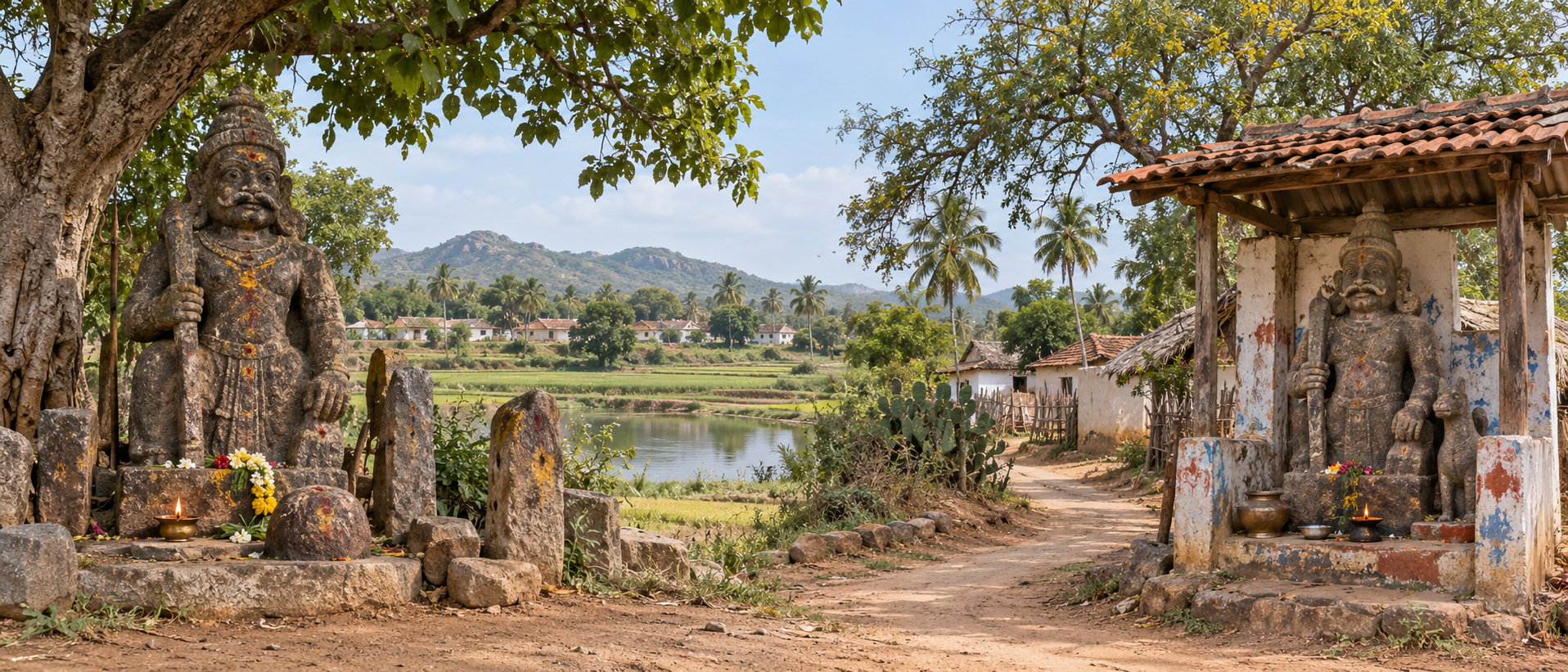
A careful account of Kundu Mani Ayyanar should begin with what can be stated securely: this is an Ayyanar guardian tradition of Tamil Nadu; the figure is carved in stone; its characteristic setting is the village boundary; and its protective field includes paddy land, tanks, and the hamlet. Ayyanar images have served as guardians of such village landscapes across centuries.
That core does not supply an exact date for a particular sculpture. It does not identify its sculptor, establish that the present location is the original one, or prove that every visible detail has one universal meaning. Those matters must be learned at the site, and sometimes the answer may no longer be known.
Questions worth asking locally
- What name and pronunciation do worshippers here use for the deity?
- What area is the guardian specifically understood to protect?
- Has the sculpture always stood in this position?
- Which features of the image carry meaning for local worshippers?
- Is there a remembered account of the shrine’s origin?
- When does the community gather here for worship?
- Who maintains the site and decides how it may be repaired?
- Are photography and publication welcome?
Record the answers as local testimony rather than turning them into rules for all Ayyanar shrines. If two residents give different accounts, preserve the difference. Oral traditions can contain several layers of memory, and forcing them into one neat version may erase precisely what makes the place distinctive.
A practical method for heritage documentation
If you are documenting the sculpture for a family archive, community project, or cultural study, use a method that keeps observation and interpretation distinct:
- Write down the date of your visit and the location as precisely as the community permits.
- Describe the wider setting before describing the figure.
- If photography is allowed, take a contextual view showing the sculpture’s relationship to the surrounding landscape before taking close views.
- Record visible condition without diagnosing its cause. A crack, discoloration, or worn surface can be observed without guessing how it happened.
- Identify every explanation by its basis: local account, inscription, visible feature, or your own interpretation.
- Confirm names and spellings with the people who use them rather than silently standardizing local usage.
- Do not announce an age, sculptor, ritual, or iconographic meaning unless you can establish it.
This method produces a more trustworthy record because another reader can tell where observation ends and interpretation begins. It also allows local knowledge to remain local in voice rather than being absorbed into a generic account of “village religion.”
Key takeaways
- Kundu Mani Ayyanar is understood through guardianship: the stone figure protects a lived landscape of settlement, fields, and water.
- The boundary location is part of the sculpture’s meaning, not incidental background.
- Read the image in layers: visible form, spatial function, and living local interpretation.
- Do not import every feature or explanation associated with other Ayyanar shrines into this particular form.
- At an active shrine, ask before photographing, touching, entering, offering worship, or publishing local details.
- When documenting the image, distinguish direct observation from oral testimony and personal interpretation.
When you next encounter Kundu Mani Ayyanar, spend your first minute looking from the guardian toward the land rather than only at the guardian. Find the boundary, ask what is being protected, and listen to the people who maintain that relationship. Then return to the carving. In that order, the sculpture becomes legible as sacred presence, community memory, and protection made visible.
References

Leave a Reply
You must be logged in to post a comment.