
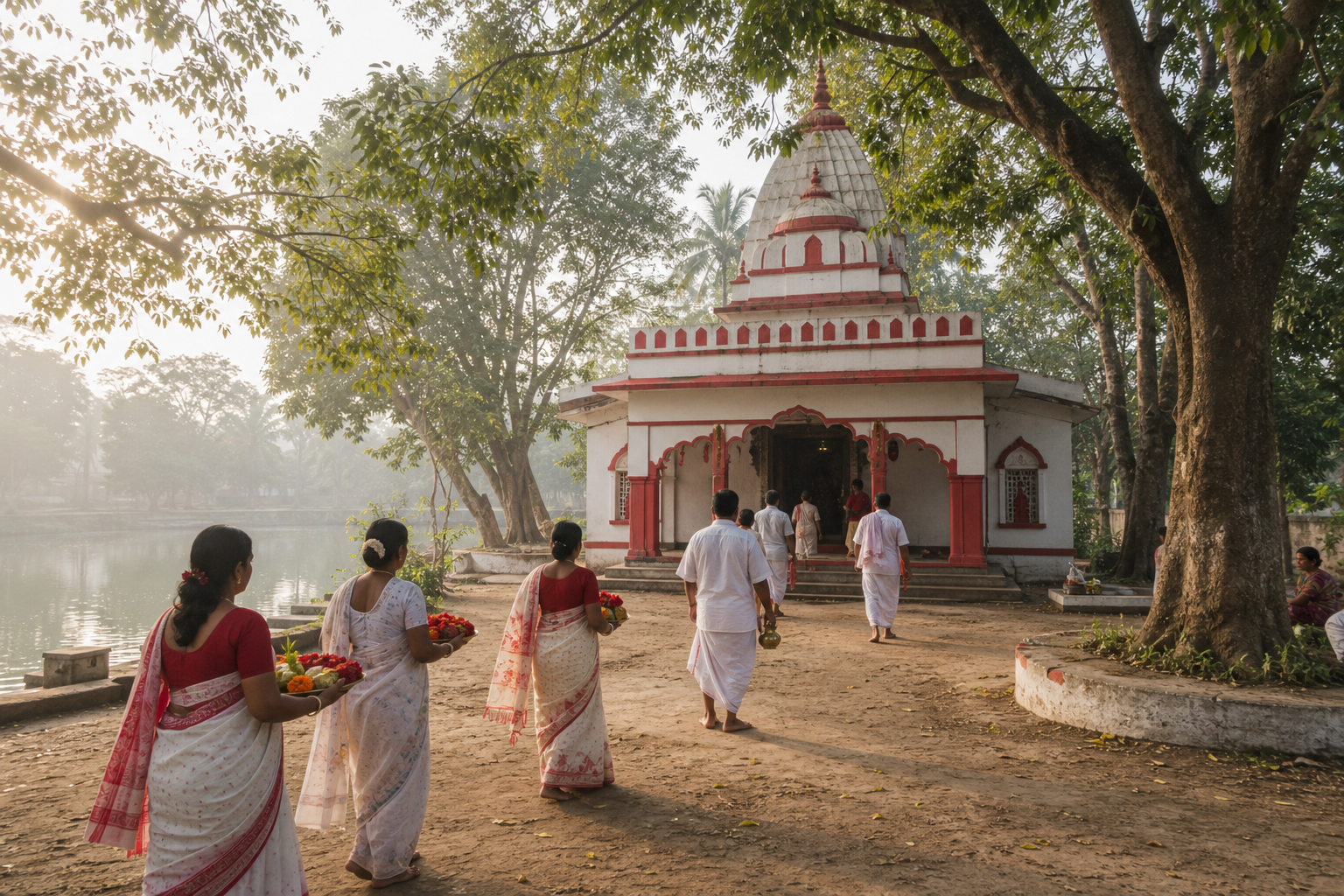
You may be deciding whether Kshirgram deserves a separate pilgrimage, or wondering how to visit without reducing it to one more stop on a temple itinerary. Treat it as a destination in its own right when you want three things together: darshan of Maa Jogadya, contact with Bengal’s Shakta sacred geography, and an encounter with a temple tradition sustained by worship rather than preserved only as history.
A little preparation will help you choose the right kind of visit, distinguish established tradition from unsupported detail, and notice the practices through which Kshirgram remains a living Peeth.
What makes Kshirgram a Shakti Peeth
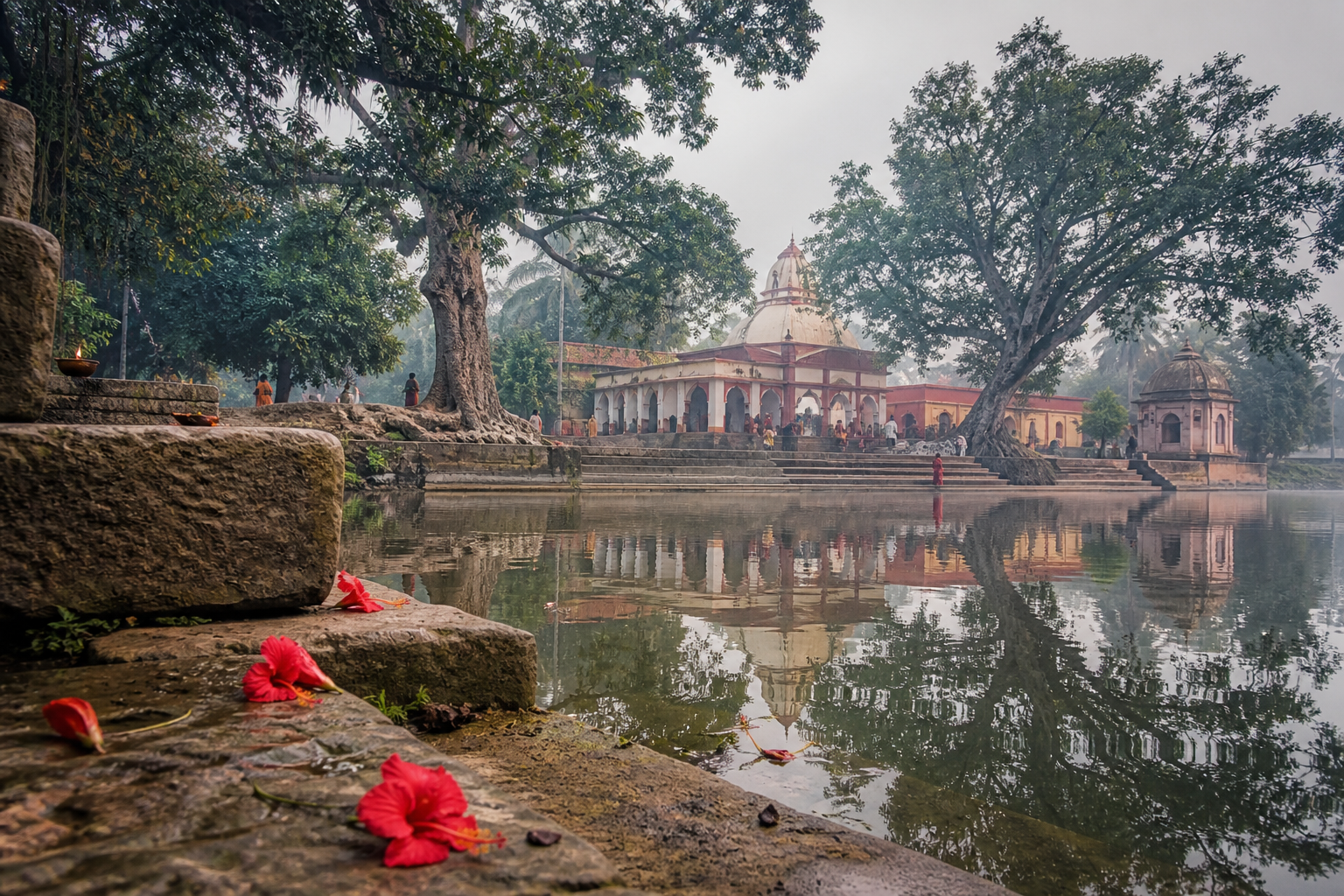
Kshirgram is situated at Mangalkot in Bardhaman, Bengal, and its Maa Jogadya Mandir is counted among the 51 Shakti Peeths of the Indian subcontinent. Its importance therefore does not depend on monumental scale or visual spectacle. It comes from the temple’s place within a sacred network in which Devi is encountered through particular locations, inherited narratives, and continuing worship.
The Shakti Peeth tradition associates these sacred places with the cosmic narrative of Devi Sati and with divine energy made present across geography. That changes how you should approach Kshirgram. You are not merely inspecting an old building. You are entering a place that devotees understand as part of a larger spiritual map, where landscape, memory, ritual, and Shakti belong together.
Visitors often look for a single date or one conclusive historical account. Kshirgram’s antiquity is carried through oral traditions, regional chronicles, and sustained worship. These are related but distinct forms of continuity. Oral memory tells you how a community recognizes the place. Chronicles situate it within Bengal’s regional past. Repeated worship shows that the shrine is not simply a remnant of that past.
Do not force those three forms of memory into one archaeological claim. Likewise, if you encounter a highly specific assertion about the Peeth that is not explained at the temple, ask a knowledgeable local guide or temple custodian which tradition preserves it before repeating it as settled fact. That is a more respectful response than filling gaps with details borrowed from a different shrine.
If you have time for a conversation, ask three focused questions: How is Maa Jogadya addressed in local worship? Which practices belong to the daily routine, and which belong to festival observance? How does the local community narrate Kshirgram’s identity as a Peeth? Those questions will reveal more than a checklist of architectural features.
How to approach Maa Jogadya’s darshan
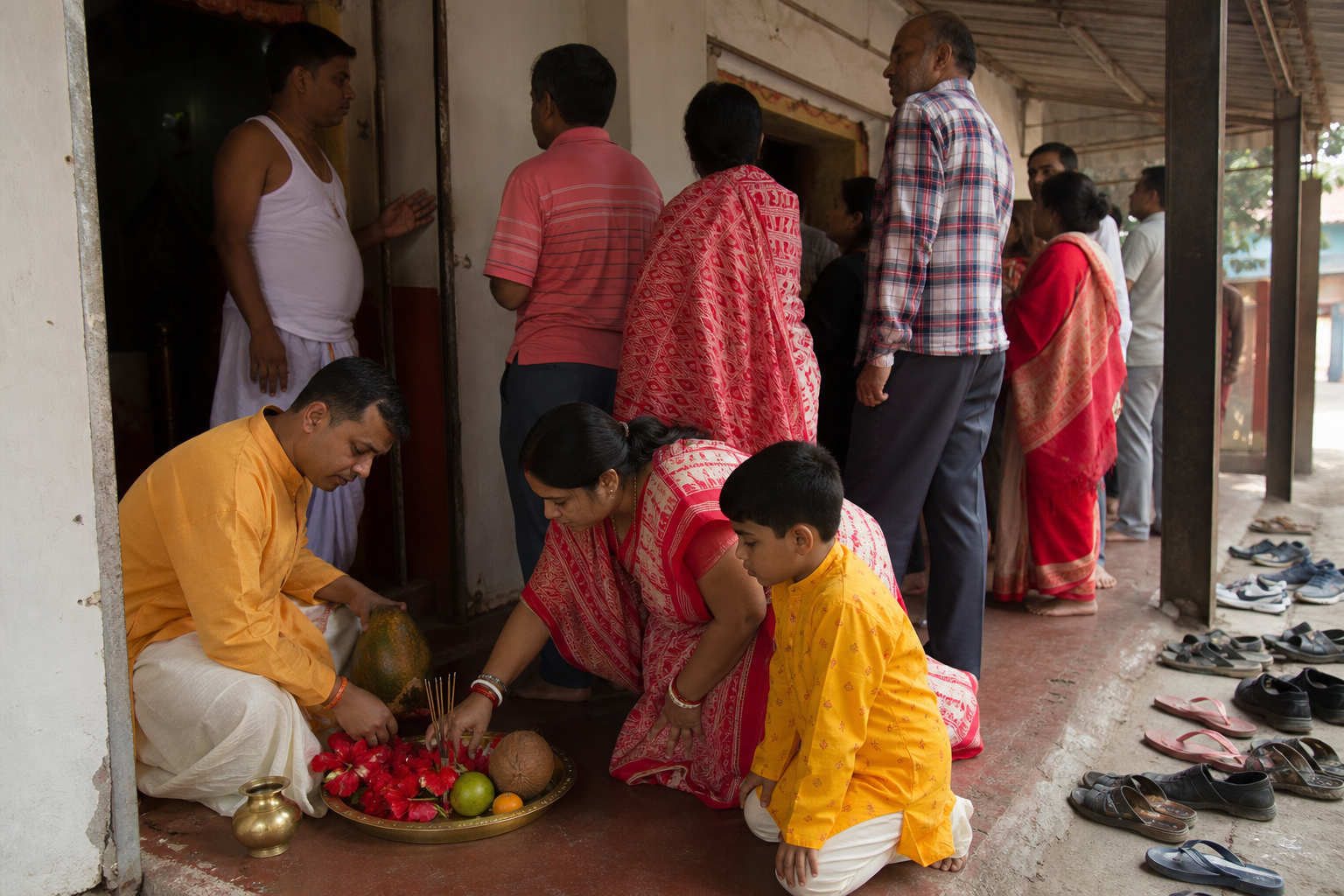
Maa Jogadya is worshipped here as a compassionate yet protective form of the Devi. Strength, grace, and benevolence are not competing qualities in this understanding of Shakti. Protection without compassion can become harshness; compassion without strength can become helpless sentiment. Maa Jogadya holds the two together.
You can let that theological balance shape your prayer. Instead of bringing an unstructured list of requests, name one concern clearly. Ask not only for relief from it, but also for the steadiness, discernment, or discipline needed to meet it. This turns darshan from a transaction into a point of moral orientation.
A simple first-visit sequence is enough:
- Pause before entering and reduce your intention to one honest sentence.
- Observe how local devotees move, wait, offer pranam, and make room for others.
- Follow temple instructions rather than importing a ritual sequence from another shrine.
- During darshan, keep your attention on Maa instead of trying to record every visual detail.
- Afterward, sit quietly where permitted and identify one action through which your prayer can become disciplined conduct.
The temple’s devotional atmosphere is shaped by traditional music, incense, rhythmic chants, and the cadence of worship. Do not treat these as background decoration. Chant, sound, scent, waiting, and shared movement help draw scattered attention toward a common sacred center. If you arrive mentally hurried, spend a few minutes observing that rhythm before deciding what the experience means.
Plan the visit around your real purpose
The most useful planning decision is not which photograph you want. It is whether you seek quiet darshan, festival participation, or cultural understanding. Each purpose calls for a different pace.
| Your main purpose | What to prioritize | What to do before travelling |
|---|---|---|
| Quiet prayer and contemplation | An ordinary worship day and enough unhurried time after darshan | Confirm the current opening and worship schedule locally |
| Festival participation | Navaratri or a regional temple fair, when communal devotion is especially active | Verify the event date, expected access, and any local arrangements shortly before departure |
| History and living heritage | Conversation with a knowledgeable local guide and attention to ongoing rites | Arrange guidance in advance and prepare a few specific questions |
Daily worship continues through the year, while Navaratri and regional temple fairs bring particular devotional fervor. A festival visit can show you how worship, memory, music, and community participation meet. It may not be the best choice if your priority is prolonged silence. An ordinary day may offer more room to observe the temple’s measured routine.
Do not rely on an undated itinerary for opening hours, festival dates, transport, or ritual access. These are practical arrangements, not timeless features of the Peeth. Confirm them close to your travel date through a current local contact, temple representative, host, or guide.
Kshirgram’s rural setting and local hospitality are part of the pilgrimage rather than an inconvenience around it. Build some margin into your arrival instead of scheduling darshan as a narrow transit stop. A rushed visit makes it harder to notice the relationship between the shrine, village life, and the slower rhythm of temple observance.
Use this short preparation checklist:
- Confirm that your directions lead to Kshirgram at Mangalkot in Bardhaman, not merely to a similarly named destination.
- Verify current opening, worship, and festival information shortly before travelling.
- Choose clothing suitable for a sanctified space and footwear that can be removed without delaying others.
- Ask before photographing the shrine, rituals, worshippers, or restricted areas.
- Check locally before presenting an offering rather than assuming that a custom followed elsewhere applies here.
- If you want historical context, arrange time with a local guide instead of seeking explanations while a ritual is underway.
See a living temple, not a heritage display
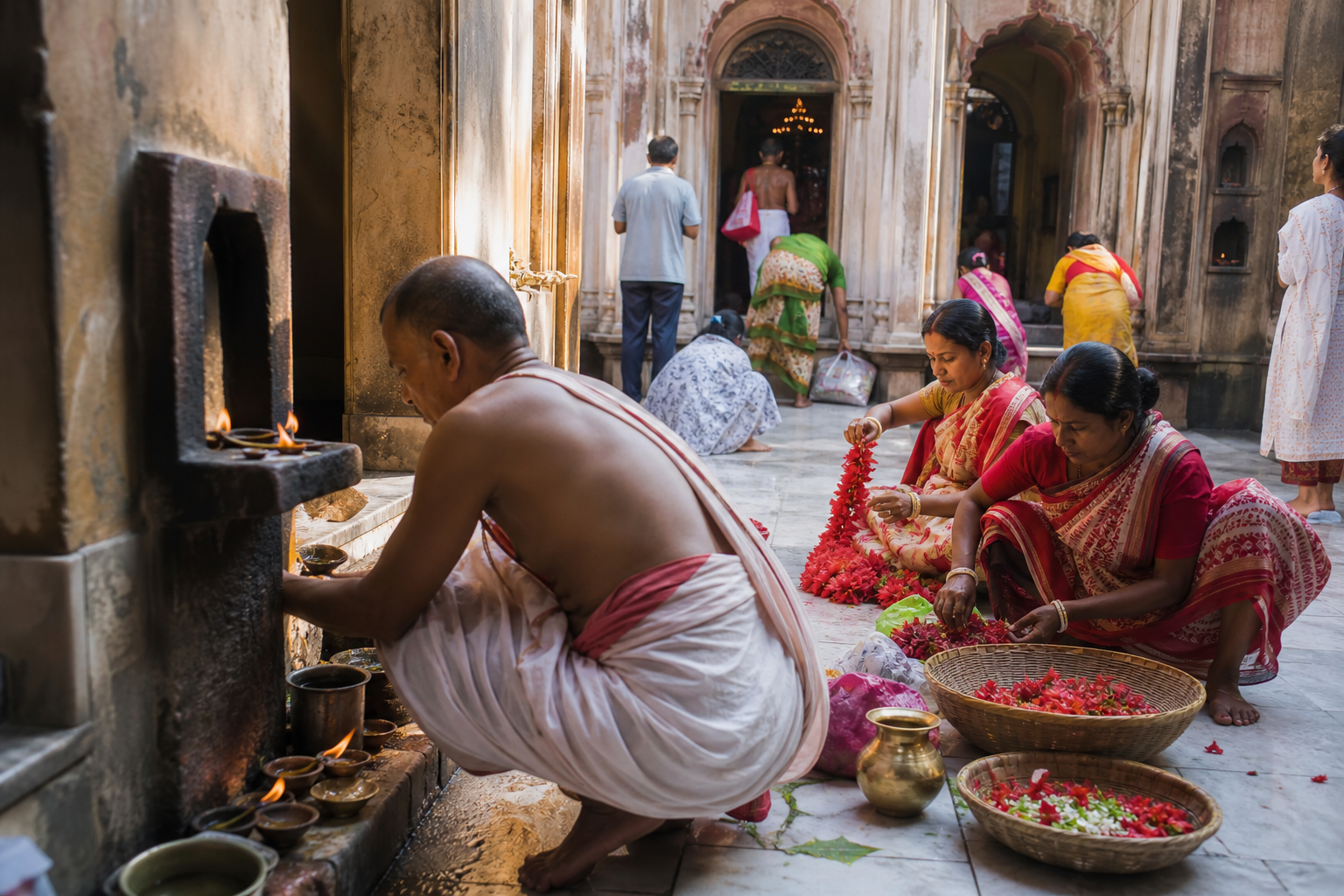
Kshirgram brings sacred narrative, regional custom, and ongoing ritual into the same space. To understand that living heritage, look through three lenses: continuity, community, and conduct.
- Continuity: Notice the repeated forms of daily worship. A living tradition survives because people keep doing ordinary sacred work, not only because exceptional festivals draw attention.
- Community: Notice how seasonal celebrations and temple fairs bring people into a shared rhythm. They do more than gather a crowd; they carry memory from one generation to another.
- Conduct: Ask what the Devi’s union of protection and compassion demands from a devotee. The strongest sign of darshan is not possession of an image, but a change in attention and action.
This lens also helps you recognize values that travel across Dharmic traditions without pretending that Hinduism, Buddhism, Jainism, and Sikhism are interchangeable. Discipline, self-knowledge, reverence for life, and the search for truth can form common ethical ground, while each tradition retains its own theology, practices, and historical voice.
Your behavior contributes to the heritage you have come to see. Keep passages clear, lower your voice where worship is underway, follow boundaries without argument, and avoid treating local devotees as scenery. If a custom is unfamiliar, observation and a courteous question are better than confident improvisation.
Key takeaways for your Kshirgram pilgrimage
- Visit Kshirgram as a Shakti Peeth and a living center of Maa Jogadya’s worship, not simply as an old temple.
- Understand its antiquity through the combined continuity of oral memory, regional chronicles, and sustained ritual life.
- Choose between a quieter ordinary visit and the heightened communal experience of Navaratri or a regional fair.
- Confirm current timings, access, festival arrangements, and travel details locally rather than trusting an undated schedule.
- Approach Maa Jogadya with one clear intention, then connect your prayer to a concrete act of disciplined conduct.
- Use local guidance when a specific historical or ritual claim is unclear, and do not transfer details from another Shakti Peeth without verification.
Before you leave home, make two decisions: choose whether this will be a quiet, festival, or heritage-focused visit, and write down the one question you want to place before Maa Jogadya. That small act of clarity will do more for your pilgrimage than trying to see everything at once.
References
