
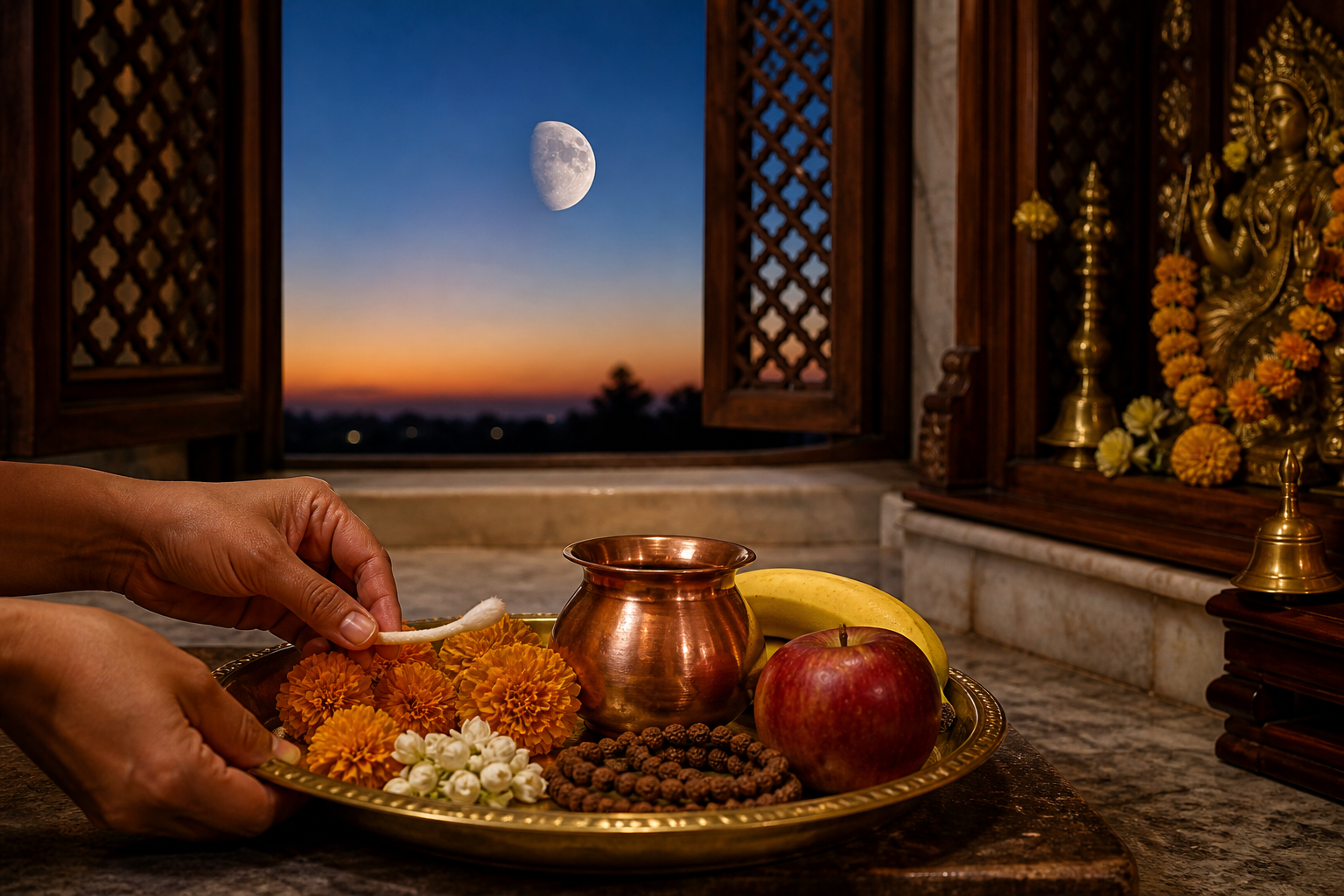
If you need to know whether a puja, vrata, japa, or sankalpa performed on Friday, November 28, 2025 belonged to Ashtami or Navami, the calendar date alone is not enough. The lunar day changed that evening, so the answer depends on when and where the observance took place.
For most regions, the practical sequence was Shukla Paksha Ashtami through 6:45 PM, followed by Shukla Paksha Navami. You can use that boundary as a general planning anchor, but a formal, time-sensitive rite still requires confirmation in a Panchang calculated for your location.
Read November 28 as a two-tithi day
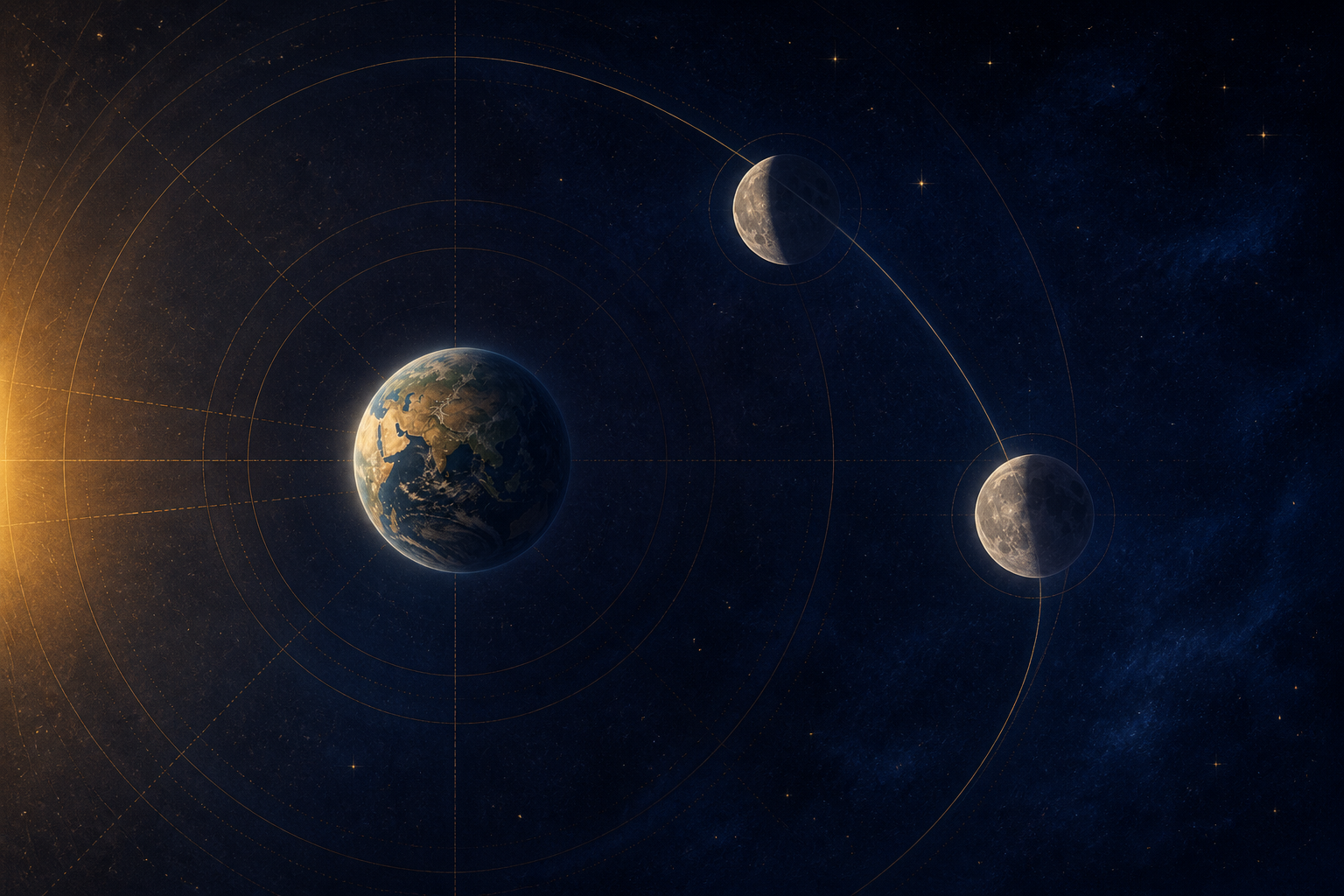
A tithi is a lunar day, and it does not have to begin or end with the midnight-to-midnight civil date. That is the important distinction on November 28: it was not simply an Ashtami day or simply a Navami day. It contained part of both.
| General time on November 28, 2025 | Tithi | What it means for planning |
|---|---|---|
| Up to 6:45 PM | Shukla Paksha Ashtami | Place an explicitly Ashtami-aligned observance in this period, subject to local verification. |
| After 6:45 PM | Shukla Paksha Navami | Place an explicitly Navami-aligned observance after the transition, subject to local verification. |
Shukla Paksha is the waxing half of the lunar cycle. Ashtami is its eighth tithi, while Navami is its ninth. The transition therefore represents the normal progression from the eighth lunar day to the ninth; it is not a second civil date or an interruption in the day.
If your observance fell close to 6:45 PM, do not assign the tithi by guesswork. A few minutes can matter when a family procedure, temple practice, or vrata rule explicitly requires one tithi rather than the other. Record the city and actual time, then consult the regional Panchang used by your household or temple.
Build the observance around its actual intention

The cleanest way to plan this day is to ask whether your practice truly depends on the tithi. A general period of prayer, study, meditation, charity, or remembrance may not require a narrow boundary. A sankalpa or vrata that explicitly names Ashtami or Navami does.
- For an Ashtami-specific intention, complete it before the locally confirmed end of Ashtami. The general reference time is 6:45 PM.
- For a Navami-specific intention, begin after the locally confirmed transition into Navami.
- If your family, guru, sampradaya, or temple follows a prescribed procedure, use that procedure rather than replacing it with a general calendar interpretation.
- If the practice is not tithi-bound, choose a realistic time when you can participate attentively instead of rushing merely to fit the broad transition time.
Ashtami is traditionally associated with steadiness and disciplined practice. That makes the earlier part of the day suitable for a focused round of japa, sustained dhyana, careful scripture study, or another practice that benefits from consistency. Navami is associated with momentum, clarity, and renewal, offering a natural theme for an evening intention directed toward constructive movement.
These associations are themes, not universal ritual commands. They should help you give shape to the day without overriding the teachings of your own tradition. You do not need to invent a special ceremony merely because the tithi changes.
A simple household plan could therefore use the earlier period for disciplined personal practice, observe the evening transition quietly, and use the Navami period for a renewed intention. Seva, daan, compassionate conduct, and remembrance of elders can accompany the day without being forced into a ritual form that your household does not ordinarily follow.
Know what the 6:45 PM boundary cannot tell you

The general transition time answers one narrow question: when Ashtami gives way to Navami in the broad calendar guidance for the day. It does not establish a complete muhurta, and it does not tell you the Nakshatra, Rashi, or Lagna appropriate to your location.
Those Panchang elements depend on location-specific calculations and time conventions. Longitude, latitude, and applicable daylight conventions can affect what appears in a regional almanac. This matters especially if you are outside Bharat, consulting a calendar produced for another city, or coordinating an observance across time zones.
- Set the Panchang to the city where the observance actually occurred, not the location of the temple, relative, or website providing the calendar.
- Confirm that you are reading Friday, November 28, 2025 in that location and that the displayed time is local.
- Look for the tithi ending time rather than assuming the tithi shown beside the date lasts all day.
- Check whether your family or region follows an Amanta or Purnimanta calendar convention, because the presentation and emphasis of lunar dates can differ.
- For a formal muhurta, verify Nakshatra, Rashi, Lagna, and any other required factors separately. They cannot be inferred from the Ashtami-to-Navami boundary.
Different regional Panchangs may therefore show small variations without either one being careless. Before treating two displayed times as a contradiction, check whether both were calculated for the same place, time convention, and calendar tradition.
Keep shared Dharmic values without flattening traditions
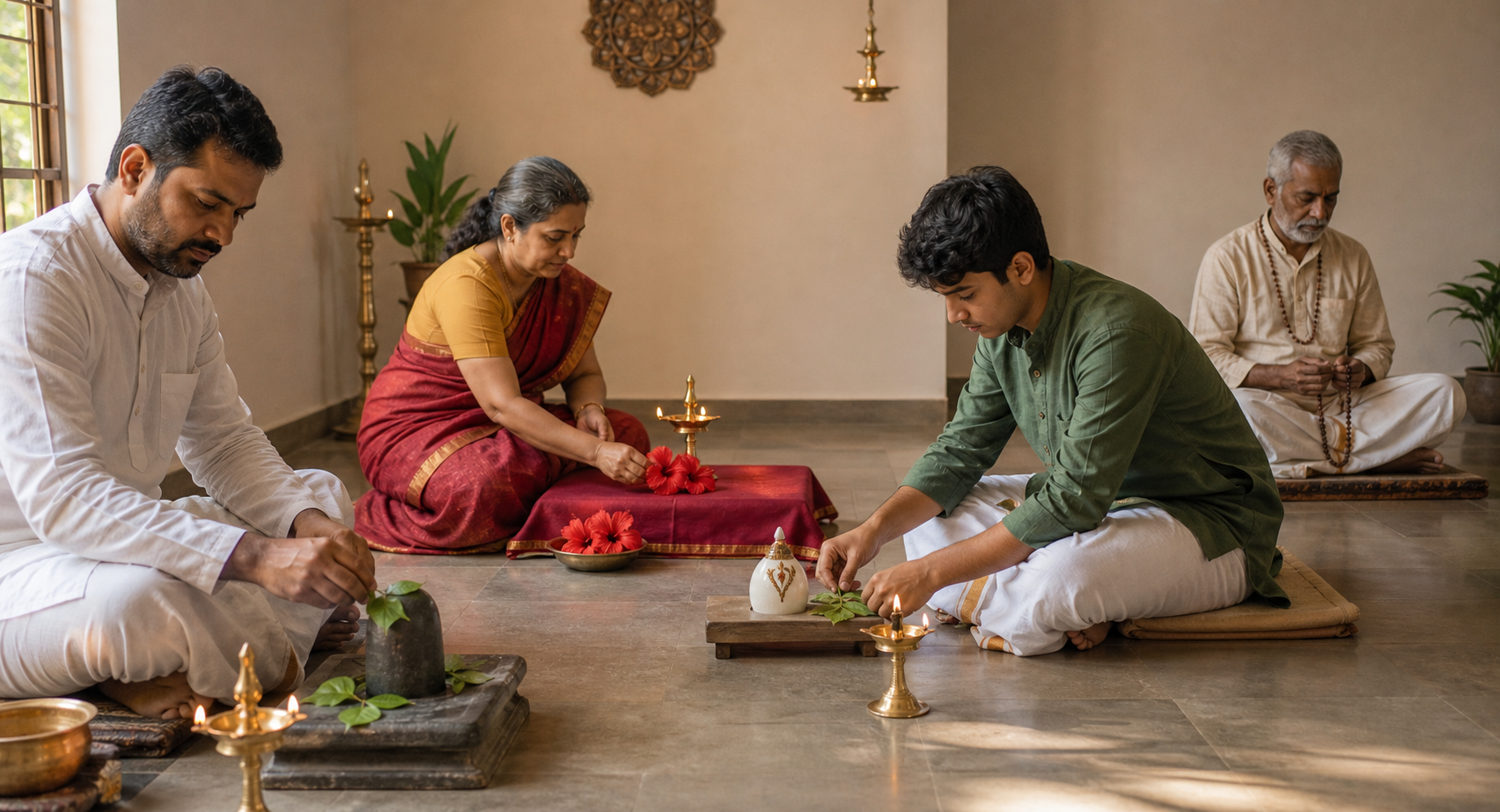
Lunar observance remains a living cultural rhythm across Dharmic communities, but it does not produce one interchangeable ritual system. Hindu and Jain traditions widely retain lunar-calendar practices. Buddhist customs also use lunar rhythms, while many Sikh households may acknowledge such dates culturally. Each community still follows its own teachings, terminology, and forms of observance.
If your household includes more than one Dharmic tradition, the most respectful approach is to coordinate what is genuinely shared and leave distinct rites distinct. Family members can join in scripture study, silence, remembrance of elders, seva, daan, or compassionate action without claiming that every tradition prescribes the same Ashtami or Navami ritual.
This distinction is practical as well as respectful. It lets a family mark the lunar transition together while allowing each person to follow the discipline of their own path. Shared conduct creates unity; ritual accuracy preserves integrity.
Key takeaways
- Friday, November 28, 2025 contained two tithis: Shukla Paksha Ashtami first and Shukla Paksha Navami afterward.
- The general transition was at 6:45 PM, with minor regional variation possible.
- Complete an explicitly Ashtami-aligned practice before the locally verified transition and begin an explicitly Navami-aligned practice afterward.
- Use a location-specific Panchang when exact timing matters, particularly for a vrata, sankalpa, temple rite, or formal muhurta.
- Do not use the tithi transition alone to infer Nakshatra, Rashi, Lagna, or a universally auspicious time.
- Study, dhyana, japa, seva, daan, remembrance, and compassionate conduct can give the day substance without erasing the distinctions among Dharmic traditions.
For a time-bound observance, write down three things before proceeding: your city, the calendar tradition followed by your family or temple, and the tithi your practice requires. Verify those details in a regional Panchang, then place the practice on the correct side of the transition.
References
