

You may know the Komuravelli Mallikarjuna Temple legend only as the story of a shepherd’s dream. If you are trying to understand what the dream revealed, why soft earth matters, or how a devotee should respond, the essential tradition is brief enough to remember and deep enough to practise.
The most faithful reading keeps three things distinct: the sacred events narrated by local tradition, the meanings devotees draw from them, and the conduct those meanings invite from you. Keeping those layers clear prevents both empty literalism and vague symbolism.
The temple legend in its essential sequence

The Komuravelli account belongs to the Hindu tradition of Sthala Puranam: sacred memory attached to a particular place. Its core can be followed in four movements.
- A shepherd becomes the human recipient of the revelation.
- Lord Mallikarjuna appears to the shepherd in a dream.
- The shepherd learns that the hill called Indrakeeladri has been prepared and that the deity is enshrined there in Putta Matti, or soft earth.
- The divine presence is revealed as one that receives devotees and fulfils their heartfelt aspirations.
Each element has a function. The dream communicates what ordinary sight had not disclosed. The shepherd shows that divine guidance can reach a person outside worldly hierarchies. Indrakeeladri identifies the landscape itself as sacred. Putta Matti gives that presence a humble, immediate material form. The aspirations of devotees explain why the revelation matters to the community rather than only to the dreamer.
If you encounter a longer retelling, use these four elements as your anchor. Extra names, dates, dynasties, conversations, or miracles may belong to another local narration, but they should not be silently inserted into this concise form of the legend.
What the shepherd, the earth, and the hill ask you to notice
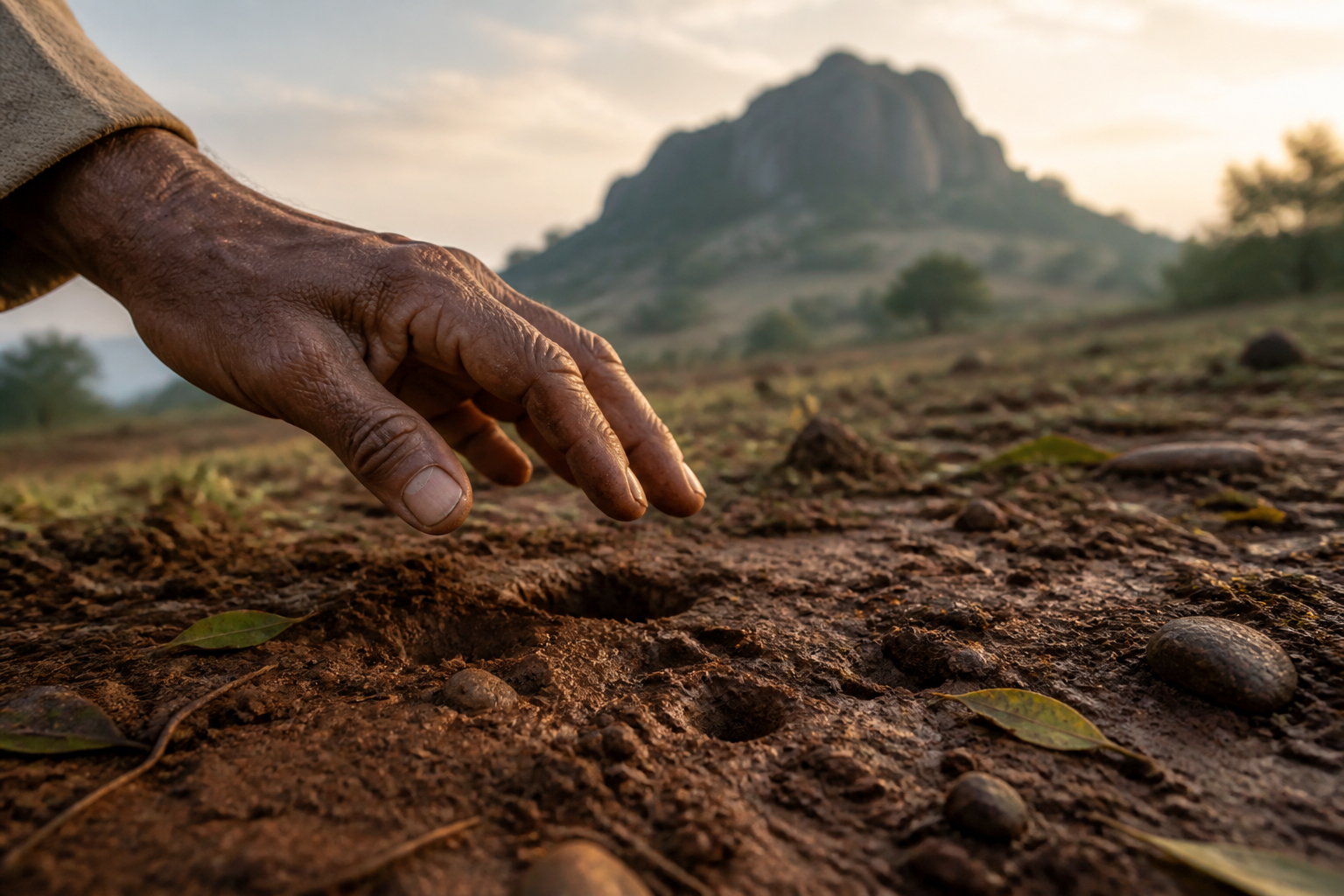
The shepherd is not merely a convenient character. Within the spiritual logic of the legend, his presence places receptivity above status. He does not manufacture the sacred site or conquer the hill. He receives a disclosure and becomes the link between divine presence and communal recognition. For you, the practical question is therefore not whether you possess special standing, but whether you are attentive enough to receive and responsible enough to honour what is sacred.
Putta Matti carries a related lesson. Soft earth is close, elemental, and unpretentious. Its symbolism directs attention away from the idea that sanctity must be remote or inaccessible. The material detail invites humility: the divine can be encountered through what appears simple, provided it is approached with reverence.
Indrakeeladri completes the sacred setting. A temple legend does more than identify a deity; it teaches a community how to see a place. The hill ceases to be interchangeable terrain and becomes a bearer of memory. When you approach such a site, noticing the land is part of understanding the tradition. The setting is not disposable scenery around the shrine.
These symbols also clarify why caring for sacred places is a dharmic responsibility. Reverence that ends at an image but disregards the surrounding land, the worshipping community, or the needs of other pilgrims is incomplete. The legend joins devotion to humility, compassion, service, and respect for place.
Those ethical commitments can also be recognised across the broader dharmic family. Hindu, Buddhist, Jain, and Sikh traditions are not interchangeable, and their theological teachings should not be flattened into one system. Yet disciplined remembrance, truth-seeking, non-harm, service, and ethical self-correction provide genuine points of conversation. Komuravelli’s legend remains distinctly Hindu while still directing attention toward values that can strengthen dharmic fellowship.
How to approach the legend as a devotee
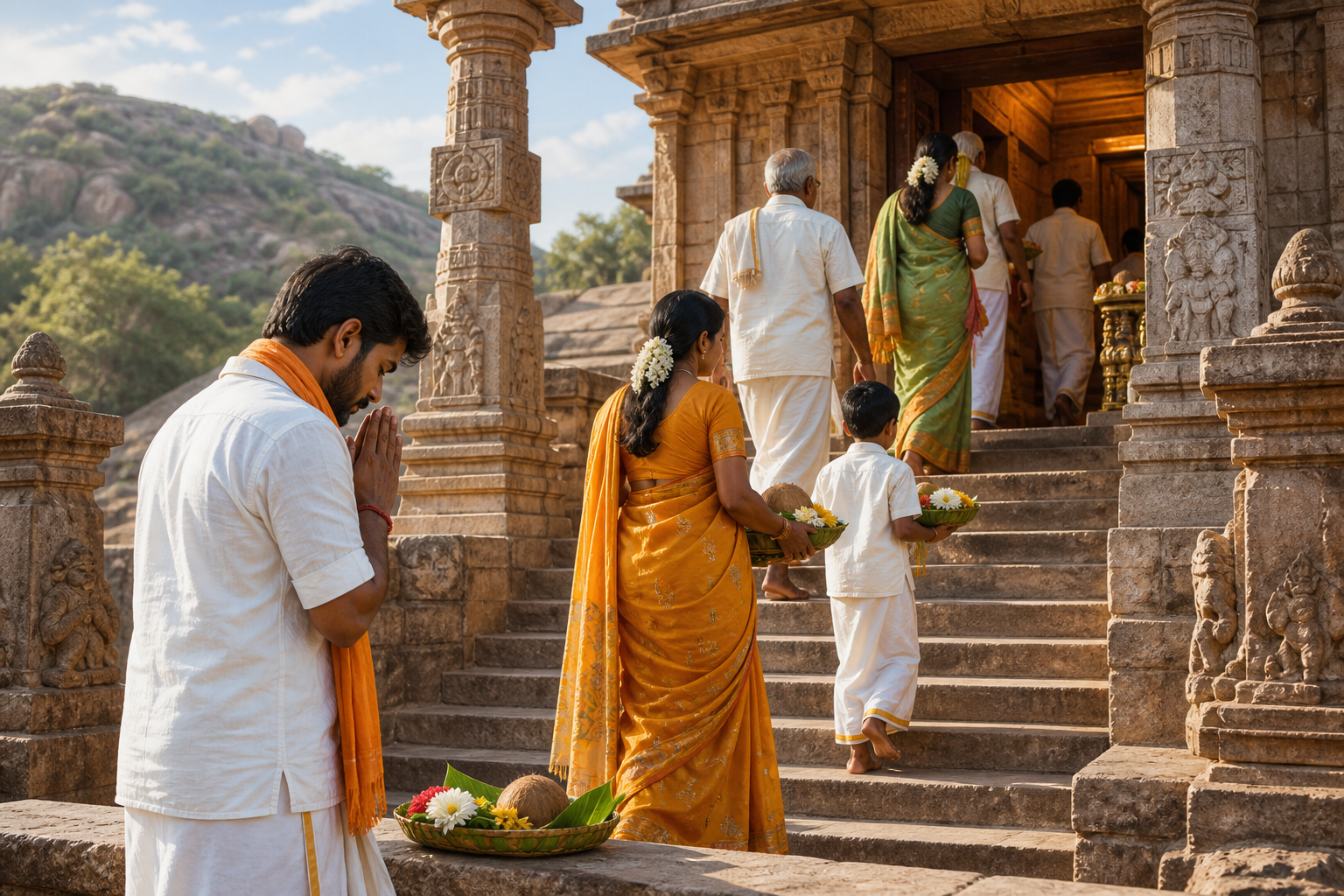
The belief that worship of Sri Mallikarjuna brings fulfilment should be handled with devotion and care. It expresses trust in divine grace; it is not a mechanical guarantee that every desired event will occur in the form or on the timetable a person demands. Devotees commonly associate darshan and regular observance with reassurance and inward steadiness, which are themselves meaningful fruits of worship.
You can turn the legend into a disciplined devotional approach without inventing a ritual formula:
- Name your aspiration plainly. Reduce it to one honest sentence instead of carrying a restless collection of demands.
- Examine the motive beneath it. Ask whether fulfilment would support dharma, responsibility, compassion, or service, or merely satisfy pride and resentment.
- Bring the prayer with humility. The symbolism of soft earth is a useful correction to the impulse to bargain with the divine.
- Identify the action that remains yours. Prayer does not remove your duty to speak truthfully, repair harm, serve others, or undertake the work your aspiration requires.
- Practise remembrance after the moment of worship. The legend points toward sustained devotion, not a single request abandoned as soon as it has been voiced.
- Respond with gratitude rather than entitlement. Whether reassurance comes immediately or the hoped-for result remains uncertain, let worship refine your conduct.
This approach does not replace the temple’s established customs or instructions from legitimate ritual authorities. It gives you an inner preparation: a clear prayer, an examined motive, a willingness to act, and a grateful disposition. Those are within reach even when you do not know every ceremonial detail.
How to retell the legend without overstating it
A Sthala Puranam can carry spiritual truth and communal memory without being presented as a modern historical report. If you teach the story to children, discuss it in a temple group, or publish it online, accurate framing protects both faith and intellectual honesty.
- Begin with “Local tradition holds” or “The Sthala Puranam relates.” This identifies the kind of claim without treating the tradition dismissively.
- Preserve the core details: the shepherd, the dream appearance of Lord Mallikarjuna, Indrakeeladri, and Putta Matti.
- Translate Putta Matti as soft earth when your audience may not know the term, but retain the original expression because it carries the legend’s local texture.
- State fulfilment as a devotional belief. Say that devotees trust in Sri Mallikarjuna’s grace, not that a particular outcome is guaranteed to every visitor.
- Mark symbolism as interpretation. For example, the shepherd can be read as representing accessibility and receptivity; the narrative does not need to state that explanation for the interpretation to be spiritually useful.
- Do not supply a historical date, royal founder, inscription, or archaeological conclusion unless you have separately verified evidence for it.
This distinction matters because legend and history answer related but different questions. Historical inquiry asks what can be established through dated records and material evidence. Sacred tradition asks how a community recognises divine presence, remembers grace, and orders its devotional life. You do not honour either mode by making one impersonate the other.
Key takeaways for understanding Komuravelli
- The core legend begins with Lord Mallikarjuna appearing in a shepherd’s dream.
- The revelation identifies Indrakeeladri as the prepared sacred hill and Putta Matti, or soft earth, as the medium in which the deity is enshrined.
- The shepherd represents access to divine guidance without dependence on worldly rank.
- The soft earth directs the devotee toward humility, nearness, and reverence for apparently simple forms.
- Fulfilment of prayers is a matter of devotional trust, not a transactional promise.
- The soundest response combines prayer with disciplined remembrance, ethical action, service, and gratitude.
When you next hear or share the Komuravelli legend, begin with its four anchors and then let them test your own posture: receive attentively, pray honestly, act responsibly, and treat the sacred place with care. That is how a brief temple legend becomes lived dharma rather than merely a story remembered.
References
