
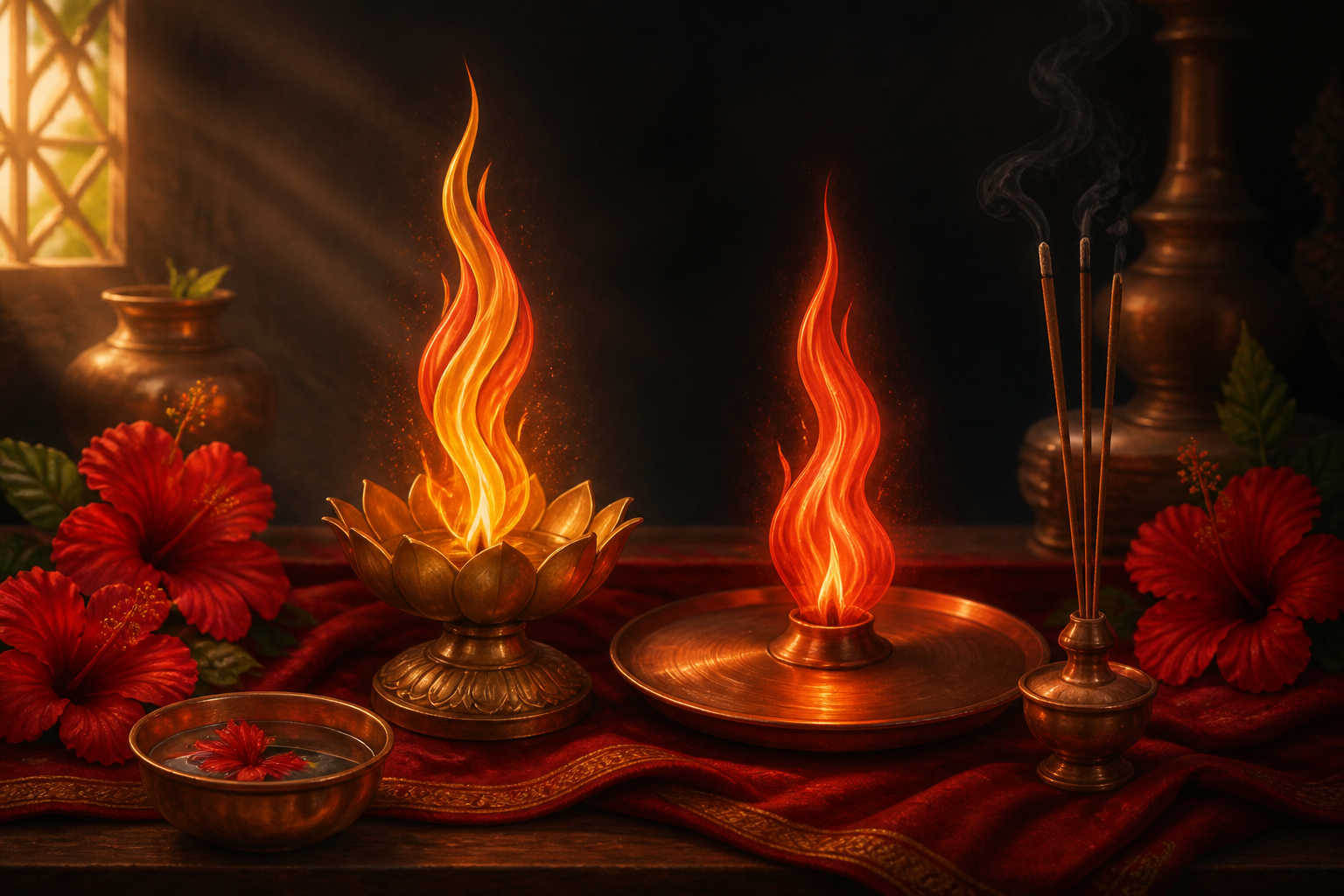
If you have heard of Jwalini Mata as the consort of Lord Mangala but are unsure how to worship them, begin with the purpose rather than the ritual inventory. You do not need an elaborate altar or an improvised collection of astrological remedies. You need a clear intention, a respectful Tuesday observance, and one act through which your energy becomes useful.
The practical question is not how to make fiery energy more intense. It is how to govern the heat already present in ambition, anger, fear, conflict, and the urge to protect. Jwalini-Mangala worship gives you a disciplined way to turn that heat toward courage, restraint, service, and dharmic action.
Understand the pair before beginning the ritual
In the tradition that reveres Jwalini Mata beside Mangala, she is his Shakti: the illuminating and refining power that directs martial force toward a worthy purpose. Her name evokes jwala, or flame. Mangala is the planetary deity associated with Mars, Tuesday, red radiance, vitality, initiative, and fortitude.
The symbolism matters because fire can illuminate, purify, protect, or destroy. Strength has the same range. Mangala without discipline can be imagined as impulse, aggression, or conflict for its own sake. Jwalini represents the clarity that asks where power should be directed, what must be purified, and what should remain untouched.
Some Hindu narratives understand Mangala through qualities associated with Muruga, or Skanda, and some traditions connect him with Veerabhadra, the protective form associated with Shiva. These are devotional lenses, not a reason to flatten distinct deities or insist that every Hindu lineage must use the same identification. If your family, guru, or temple follows a particular paddhati, let that tradition govern the exact ritual form.
Before you light a lamp, choose one concrete sankalpa. It might be to face a necessary conversation without cruelty, finish a duty you have been avoiding, defend someone without seeking revenge, or stop turning frustration against your own household. A specific intention gives the ritual somewhere to land. A vague wish for power does not.
A simple Jwalini-Mangala practice for Tuesday
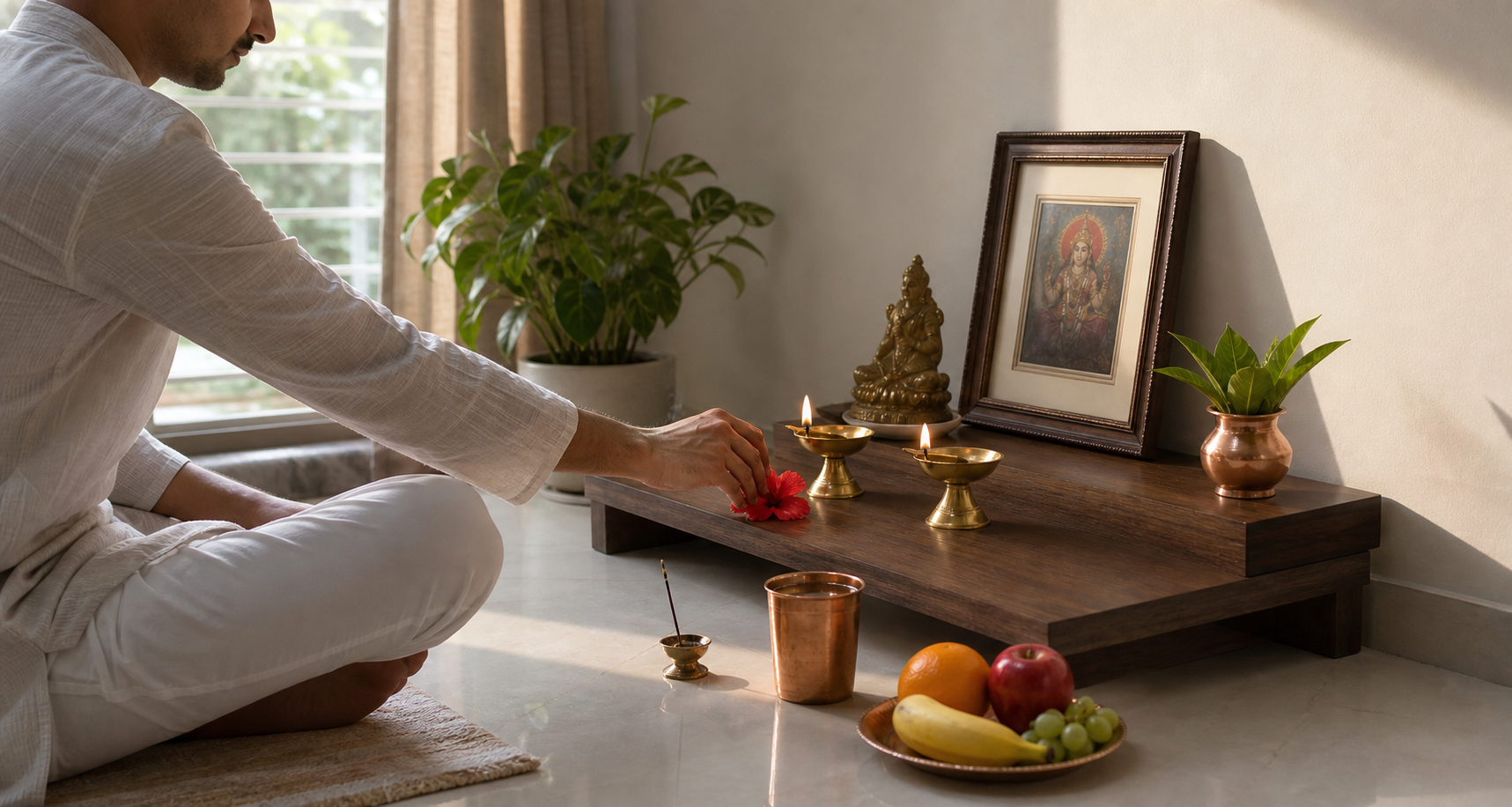
A home observance can be modest. Its coherence matters more than the number of objects on the altar. Use a murti or image if you already have one and it belongs to your practice. Otherwise, a carefully placed deepa can serve as the visual focus for contemplating Jwalini’s flame-like clarity.
- Prepare the place. Clean a small worship surface and settle yourself before beginning. Put the lamp on a stable, heat-safe base, away from anything flammable, and never leave it unattended.
- Name your sankalpa. State one quality you intend to practise and one situation in which you will practise it. Keep it narrow enough to act on during the coming week.
- Light a deepa at dusk. Lighting the lamp on Tuesday evening joins the outer flame to the inner work of seeing clearly before acting.
- Make a simple offering. Red flowers or sindoor are traditionally associated with this worship. Choose what is appropriate in your household or lineage; there is no need to collect every possible red item.
- Offer prayer to Mangala. Recite a Mangala hymn or mantra that you already know or have received through your tradition. If you have not received a particular mantra, use a plain and respectful prayer rather than pretending to an initiation you do not have.
- Meditate on Jwalini’s refining fire. Look at the flame and identify the reaction that needs purification. Ask what should be removed from your response: spite, haste, fear, vanity, or the desire to dominate.
- Choose the dharmic form of the same energy. Turn anger into a firm boundary, fear into preparation, ambition into sustained work, or protectiveness into service. End by naming the action you will take.
- Close with gratitude and follow through. The observance is incomplete if the sankalpa never leaves the altar. Carry out the chosen action as soon as it can be done responsibly.
A Tuesday vrata is also common, but the available tradition does not require us to invent one universal menu or fasting rule. If you observe a vrata, follow the form taught in your family or sampradaya. Food restriction is not the essence of the worship, and it should not override medical needs or qualified clinical advice. Prayer, restraint, and responsible conduct remain available when fasting is unsuitable.
Repeat the same modest structure for several Tuesdays before adding complexity. Keeping the intention, time, and sequence steady makes it easier to notice whether the worship is changing your conduct rather than merely changing the appearance of your altar.
Turn emotional heat into disciplined courage

Jwalini-Mangala worship should not become a spiritual excuse for suppressing anger until it erupts. Nor should Mangala’s martial symbolism be used to sanctify every aggressive impulse. The more demanding task is to separate the energy contained in a reaction from the harmful form that reaction first wants to take.
- Name the heat accurately. Are you angry because a boundary was crossed, embarrassed because your status was challenged, or frightened because the outcome is uncertain? These conditions may feel similar in the body but call for different actions.
- Identify what deserves protection. Distinguish a person, duty, principle, or vulnerable community from your pride and convenience. This prevents the language of protection from disguising retaliation.
- Choose an action that can survive later scrutiny. Ask whether you could explain it calmly to a respected elder, teacher, or member of your community after the immediate emotion has passed.
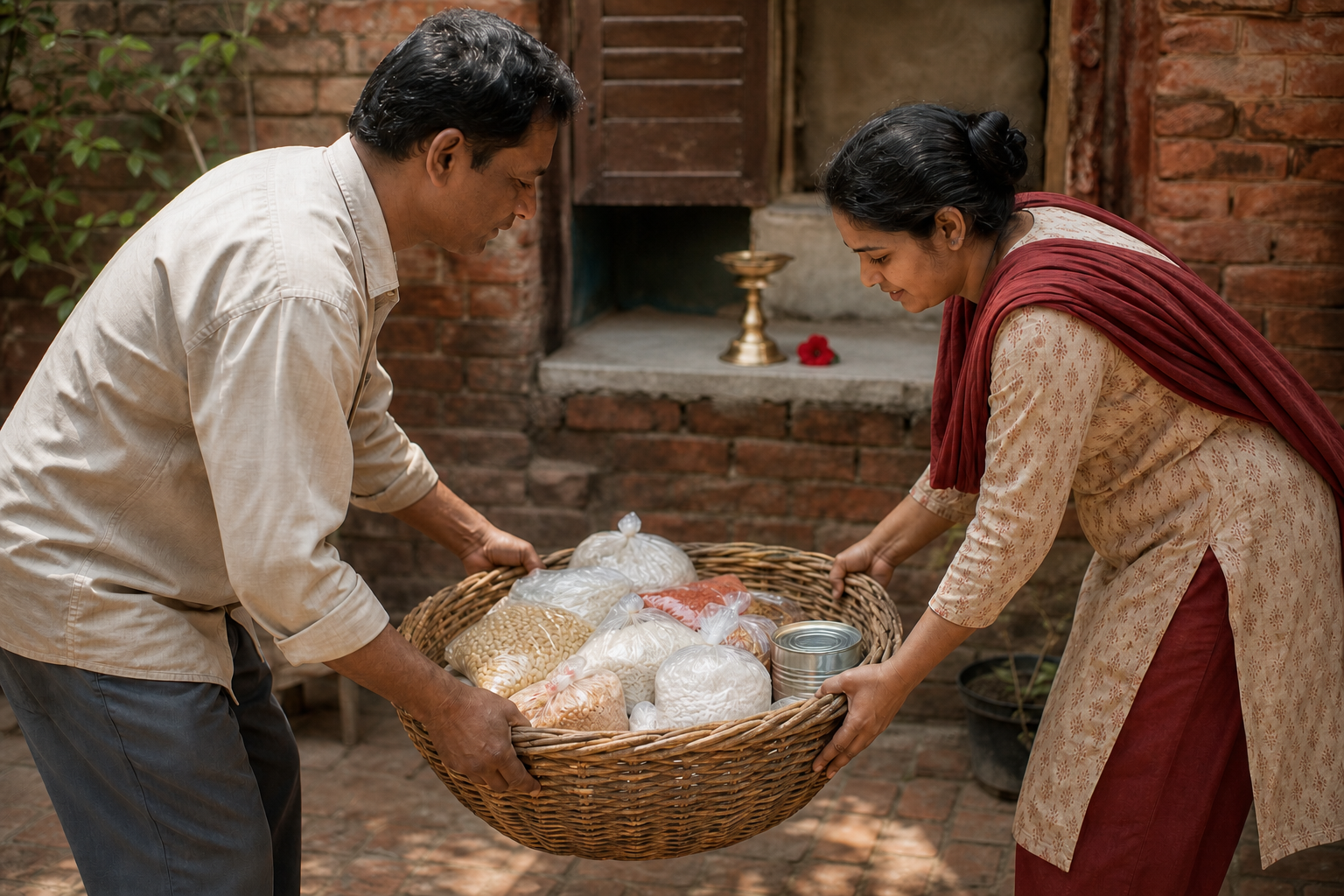
- Use no more force than the duty requires. Firm speech, documentation, withdrawal, preparation, patient work, and seeking appropriate help are all forms of directed strength. Combativeness is not the only evidence of courage.
This discipline has recognizable parallels across the wider dharmic family without making every tradition ritually or theologically identical. Buddhist mindfulness interrupts automatic reaction, Jain ahimsa subjects power to restraint, and Sikh seva and the sant-sipahi ideal connect courage with service. Jwalini-Mangala worship remains a Hindu devotional form, while these parallels help reveal a shared ethical question: can you possess strength without becoming its servant?
Judge the worship by its effect on your conduct
Devotees may experience confidence, steadiness, or renewed readiness to act. Such experiences can be meaningful, but they are not guaranteed and should not become the only measure of worship. A powerful sensation during puja is easier to produce than a fair response during conflict.
Use four practical tests. Notice whether you can pause before reacting, speak firmly without humiliating another person, complete difficult duties without manufacturing unnecessary enemies, and repair harm when you have used your strength badly. These are more demanding signs of progress than feeling forceful for an hour after prayer.
Keep a four-line note after each Tuesday observance: the situation, your first impulse, the response you chose, and any repair still owed. Review it before the next worship. Patterns will become visible. You may discover that your recurring problem is not insufficient courage but haste, or not excessive anger but avoidance disguised as patience.
Within Jyotisha, Mangala is associated with vitality, initiative, and fortitude, and remedial observances can serve as focal points for inner transformation. That framework should increase responsibility, not remove it. Blaming Mangala for harmful behaviour defeats the discipline the worship is meant to cultivate.
If the practice is making you more contemptuous, reckless, or eager for confrontation, return to the sankalpa. Replace the wish to overpower with a duty you can name. Reintroduce restraint, fairness, and service. Jwalini’s fire is not merely heat; it is the light by which heat receives direction.
Key takeaways
- Jwalini Mata represents the luminous, refining Shakti paired with Mangala’s courage, initiative, and protective force.
- A simple Tuesday observance can include a clear sankalpa, a deepa at dusk, red flowers or sindoor, prayer to Mangala, meditation on Jwalini, and one concrete act of follow-through.
- Use hymns and mantras you know through an authentic practice; a sincere plain-language prayer is preferable to an invented claim of initiation.
- A vrata may support the observance, but food restriction is not mandatory when it is unsuitable or medically unsafe.
- Measure progress through conduct: clearer decisions, fairer conflict, steadier duty, proportionate protection, and willingness to repair harm.
Next Tuesday, keep the beginning small. Choose one real difficulty, light one deepa, and decide what disciplined courage requires from you. Then complete one concrete action before the next Tuesday arrives. That movement from flame to duty is where Jwalini-Mangala worship becomes a lived practice of dharma.
References
