
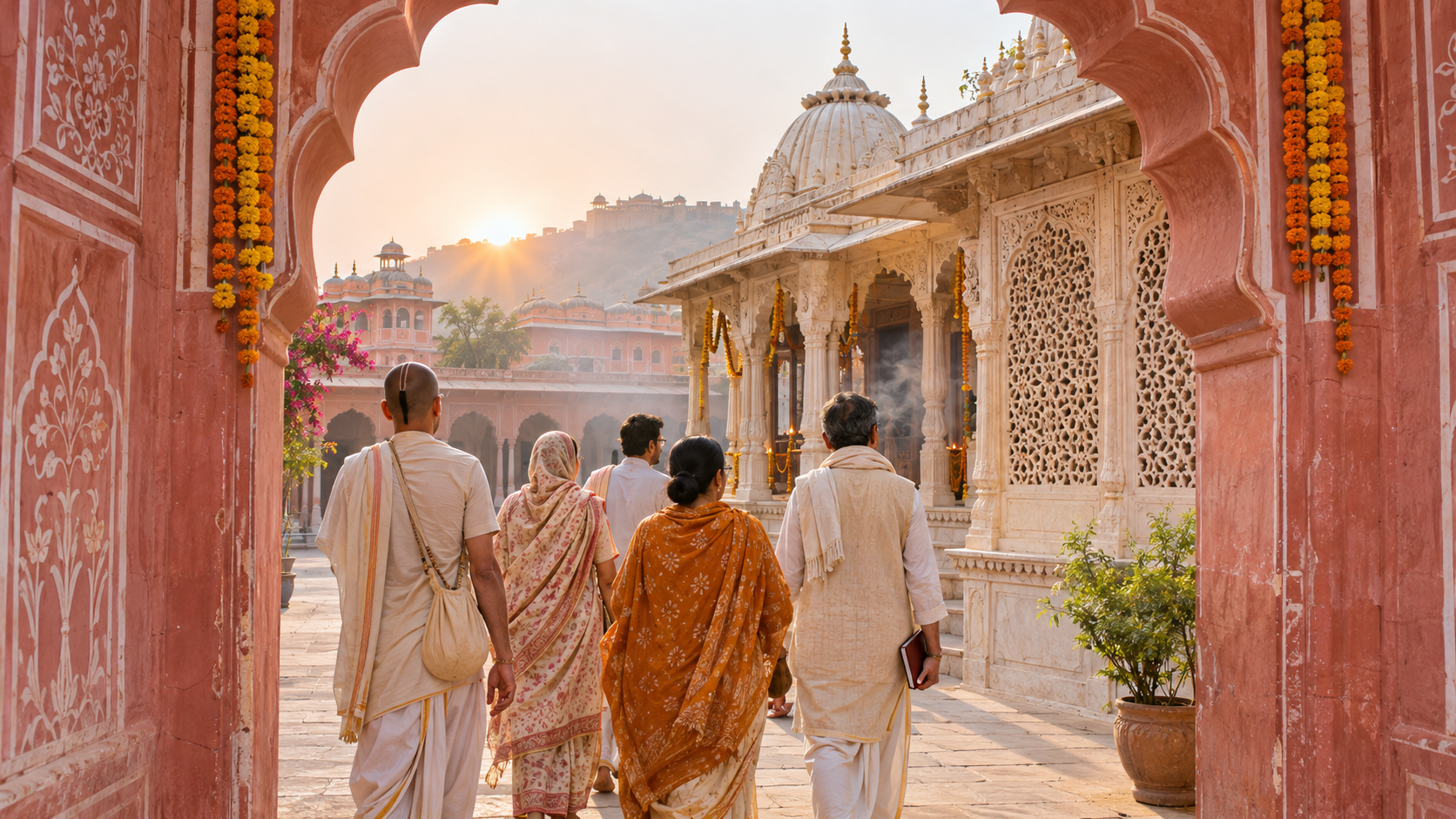
You have one important decision to make before visiting Jaipur: will you collect temple stops, or will you let each sacred place introduce you to a relationship between the deity and the devotee? The second approach takes more attention, but it is what turns a crowded itinerary into pilgrimage.
A sound devotional plan centres on the deities worshipped by the Goswamis, accounts of their divine appearances, and participation in kirtan. Use those three elements to decide where to linger, what to ask, and what to carry home.
Build your route around sacred relationships
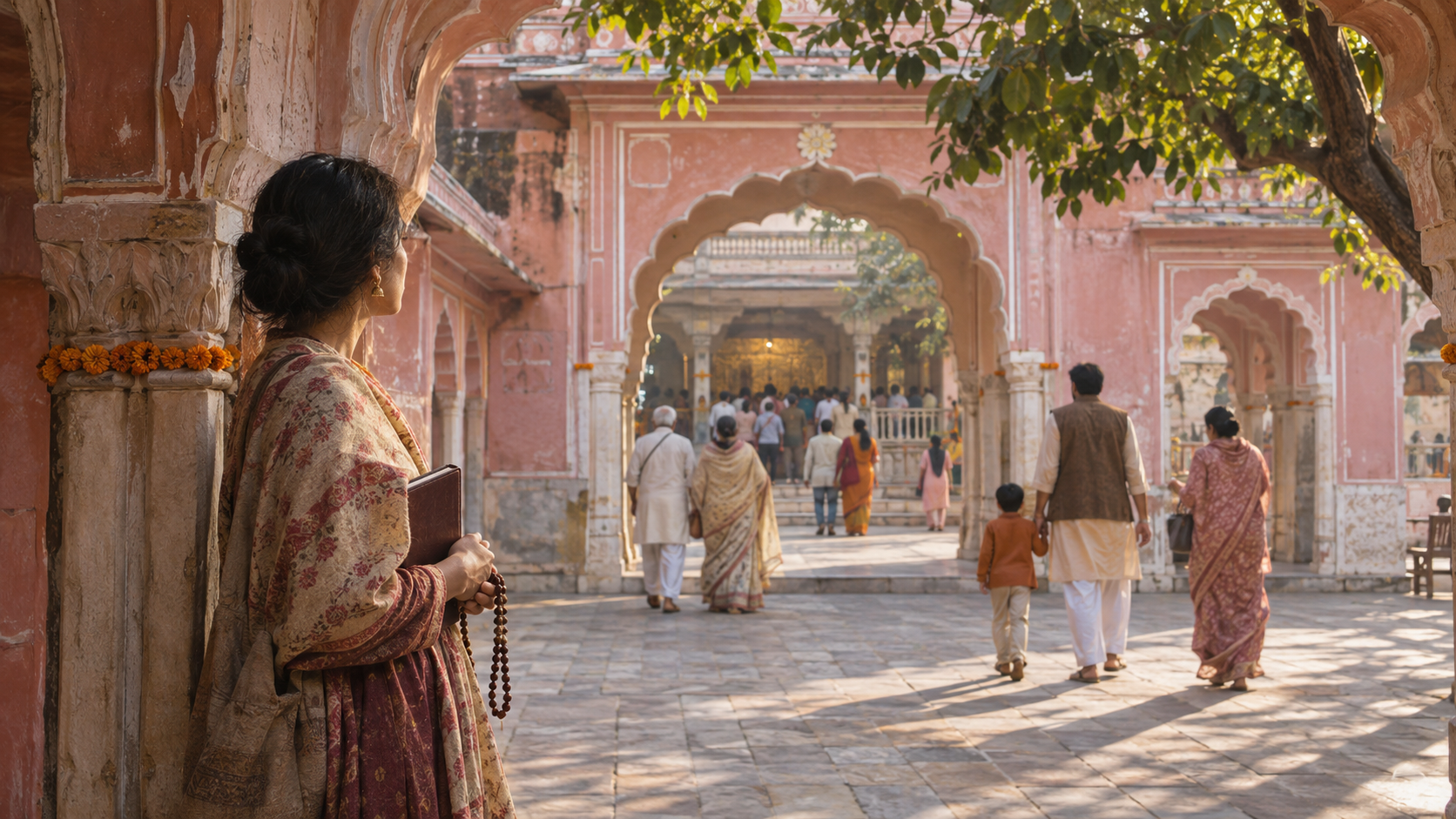
A Gaudiya Vaishnava shrine is not fully understood through its architecture or popularity. Its devotional centre is a relationship: who is being worshipped, how a Goswami served the deity, which appearance account is remembered, and how that memory continues in worship.
Begin with a local devotee, temple contact, or pilgrimage organiser rather than an unverified list of attractions. Ask the following questions before fixing your route:
- Which deity is central to this place?
- What is the deity’s connection with a Goswami?
- Which divine appearance account or pastime should a visitor hear here?
- When can you attend darshan or kirtan without interrupting the temple’s seva?
- Are there current instructions concerning entry, photography, queues, or offerings?
These questions prevent a common mistake: arriving at a sacred site with logistical information but no devotional orientation. If you know only the address and opening time, you may see the shrine without understanding why Gaudiya Vaishnavas treasure it.
Once you have reliable answers, arrange your visits by spiritual thread. You might follow a particular Goswami connection, a sequence of deity histories, or places where you can both hear and participate in worship. Do not force extra stops into the day simply because they fit on a map. Leave enough room for an unhurried darshan and a complete account of the deity’s appearance.
Use the same devotional discipline at every shrine
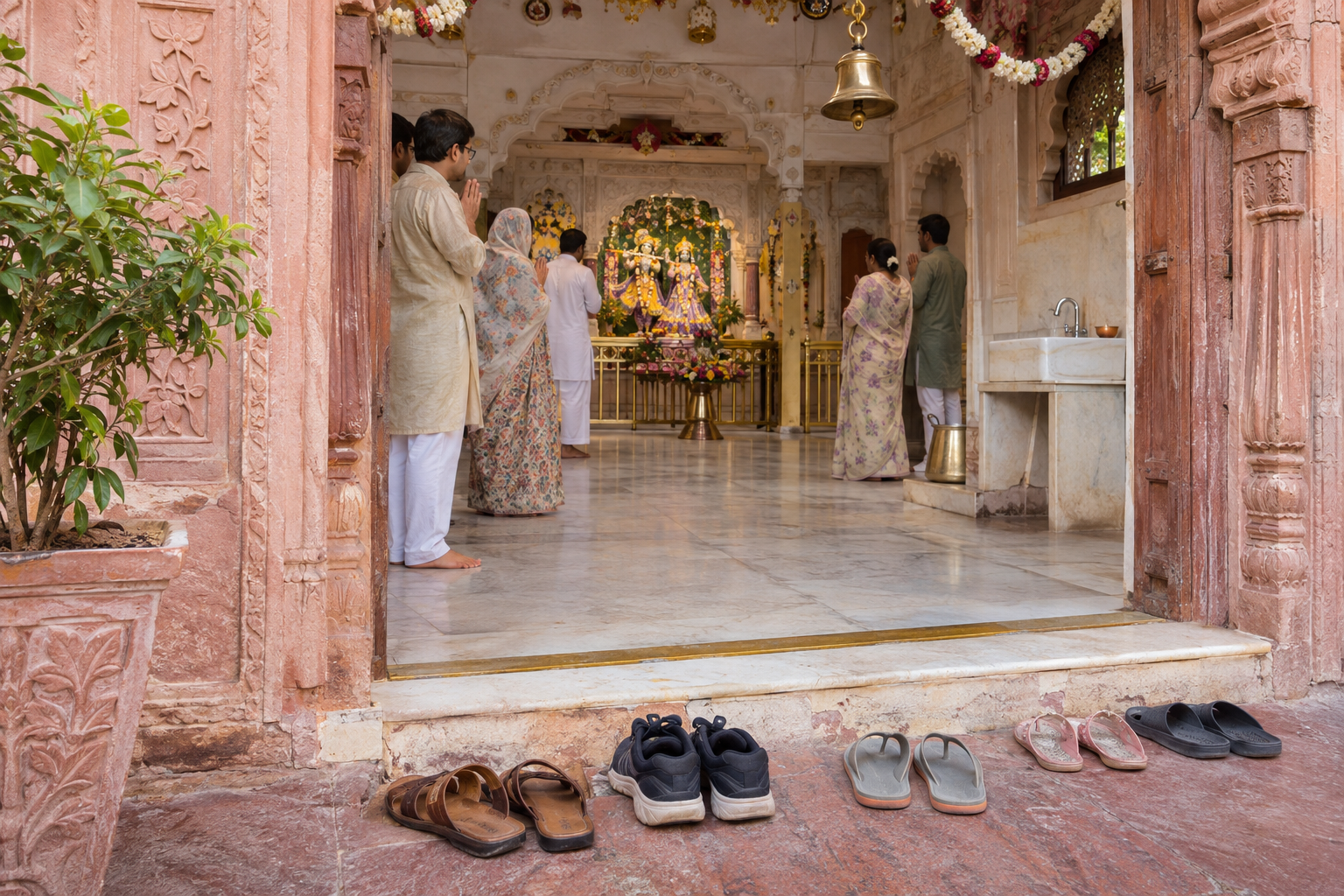
A repeatable method helps when the city, crowds, and unfamiliar surroundings compete for your attention. Temple customs can vary, so instructions given at the shrine take precedence. Within that boundary, use this sequence:
- Confirm the visit before leaving. Check the current darshan window and any access instructions with a local contact. An old itinerary should not outrank present temple practice.
- Put observation before documentation. Notice where devotees leave footwear, how the queue moves, whether photography is permitted, and when conversation stops. Follow the community’s conduct rather than assuming that every temple works in the same way.
- Take darshan before reaching for your phone or notebook. Give your first attention to the deity. Images and notes can assist memory, but they should not replace the encounter they are meant to preserve.
- Hear one account without rushing it. Ask which appearance pastime matters most at that shrine. One complete account, heard attentively, is more useful than several disconnected fragments.
- Ask one focused follow-up question. A precise question about the Goswami’s service, the deity’s name, or the worship being performed is easier to answer well than a general request for the entire history.
- Record your notes after stepping aside. Do not obstruct darshan, a procession, a doorway, or a serving area while trying to capture details.
This discipline also helps you distinguish pilgrimage from religious tourism. Tourism tends to ask, “What did I see?” Pilgrimage adds, “Whose service did I encounter, what did I hear, and what response does it ask of me?” Keep both historical curiosity and devotional receptivity, but do not confuse one for the other.
Let hearing and kirtan complete the darshan
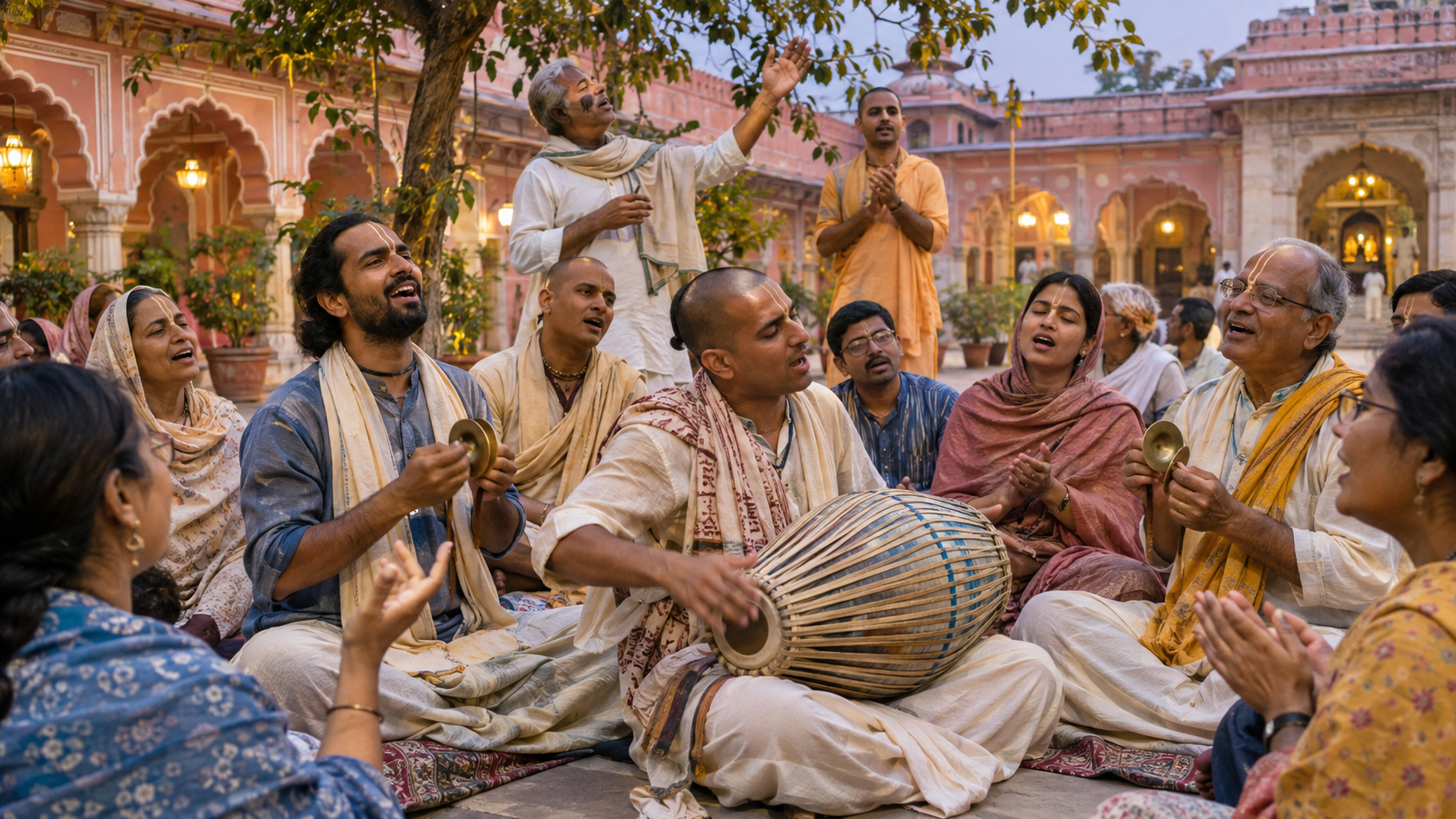
Jaipur’s Gaudiya sacred memory is carried through sound as well as through places. Accounts of divine appearances give the shrine a remembered history, while kirtan allows that history to become present devotional practice. If you leave immediately after seeing the deity, you may miss the part of the visit that explains how the community relates to the deity.
For one group of visiting devotees, singing the bhajan Gopinath in Jaipur has become a cherished yearly practice. That is a useful model for your own visit: choose a prayer or bhajan that belongs naturally within your Gaudiya practice, understand what you are singing, and let it gather the day’s darshans into remembrance.
Prepare for kirtan without turning it into a performance:
- Carry a trusted transliteration and translation of the bhajan you expect to sing.
- Ask whether visitors are invited to join, respond, or listen at that moment.
- If the melody or local rhythm is unfamiliar, follow the lead rather than competing with it.
- Keep recording secondary to participation, and do not record where the temple asks you not to.
- Afterward, write down the name, quality, or relationship that the singing brought into focus.
You do not need to manufacture an intense experience. Listen carefully, sing as the setting permits, and notice whether the bhajan changes how you understand the darshan you have just received. That small movement from seeing to remembering is one of the practical purposes of pilgrimage.
Keep a pilgrimage notebook that separates fact from reflection
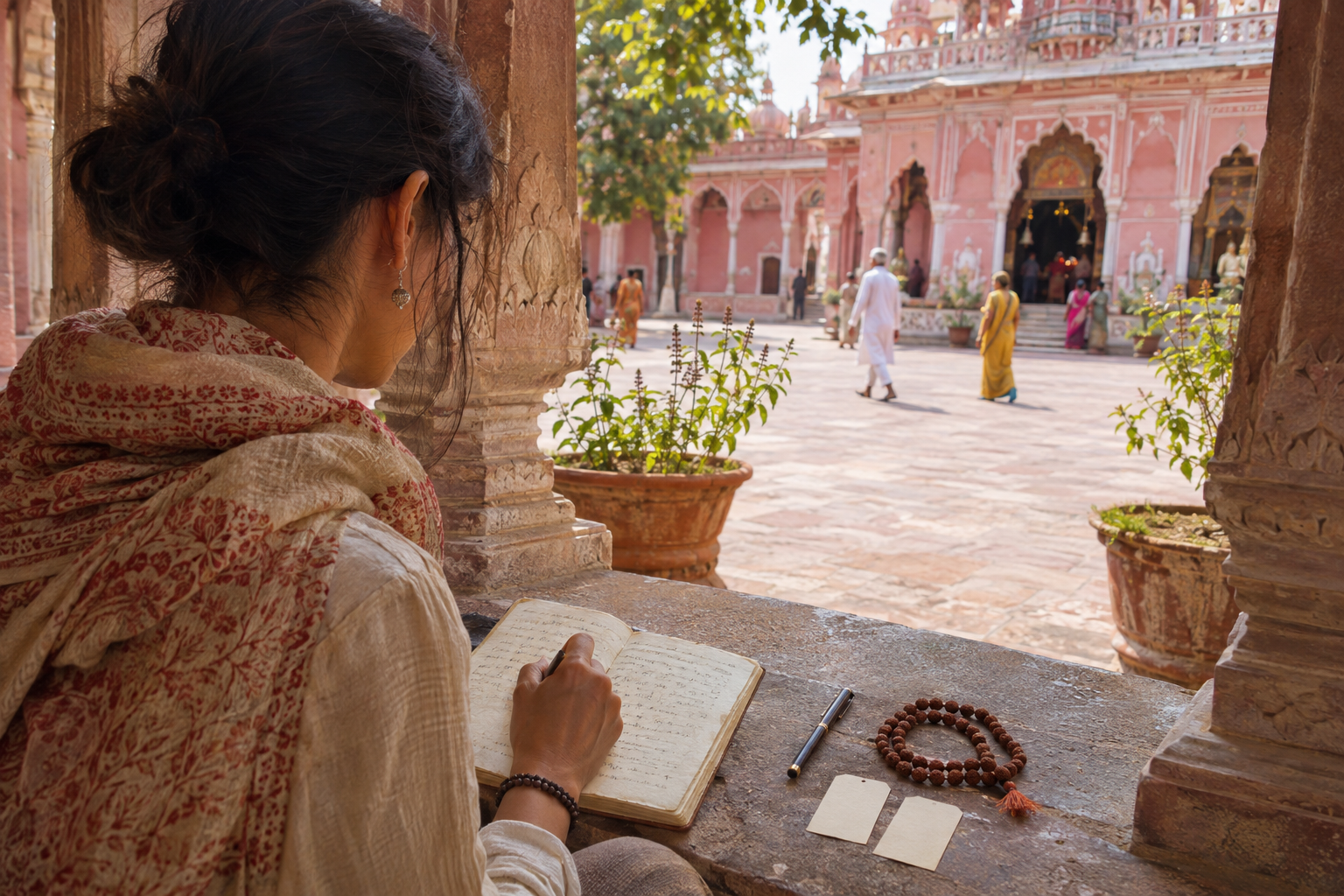
Memory compresses several shrines into one surprisingly quickly. A short, consistent record will protect the distinctions between deities, Goswami connections, appearance accounts, and your own responses. Give each sacred place a separate entry with these fields:
- Place: the name used by the temple or local community.
- Deity: the name exactly as you were given it.
- Goswami connection: who worshipped or served the deity, and what kind of connection was described.
- Appearance account: the central event or pastime, written in a few clear sentences.
- Living worship: the darshan, seva, bhajan, or kirtan you encountered.
- Attribution: who provided the information, such as a caretaker, local devotee, or pilgrimage teacher.
- Personal reflection: what you noticed or resolved, clearly separated from the historical account.
- Question to verify: any detail that remains uncertain.
The separation between attribution and reflection matters. A thought that arose during darshan may be spiritually valuable without being part of the shrine’s received history. Likewise, when two people give different versions of an account, preserve the difference in your notes instead of silently combining them. Write “not yet confirmed” where necessary. Reverence does not require carelessness with memory.
At the end of the day, read the entries once and choose a single bhajan, prayer, or act of remembrance for the following morning. This keeps the visit from becoming a pile of impressions. It gives one encounter enough time to deepen before the next day’s movement begins.
Key takeaways for your Jaipur pilgrimage
- Organise the visit around Goswami-connected deities and their sacred histories, not around the maximum number of stops.
- Confirm current timings and temple instructions locally before travelling to a shrine.
- At each place, identify the deity, the Goswami connection, one appearance account, and one form of living worship.
- Receive darshan before taking photographs or extensive notes.
- Approach kirtan and the bhajan Gopinath as devotional participation, not as cultural background.
- Keep reported history, unresolved details, and personal reflection in separate parts of your notebook.
Your next step is simple: send the orientation questions to a trusted Jaipur contact before fixing your schedule. Build the journey from the answers, leave space to hear each account properly, and carry one practice from the pilgrimage into your worship at home.
References

Leave a Reply
You must be logged in to post a comment.