
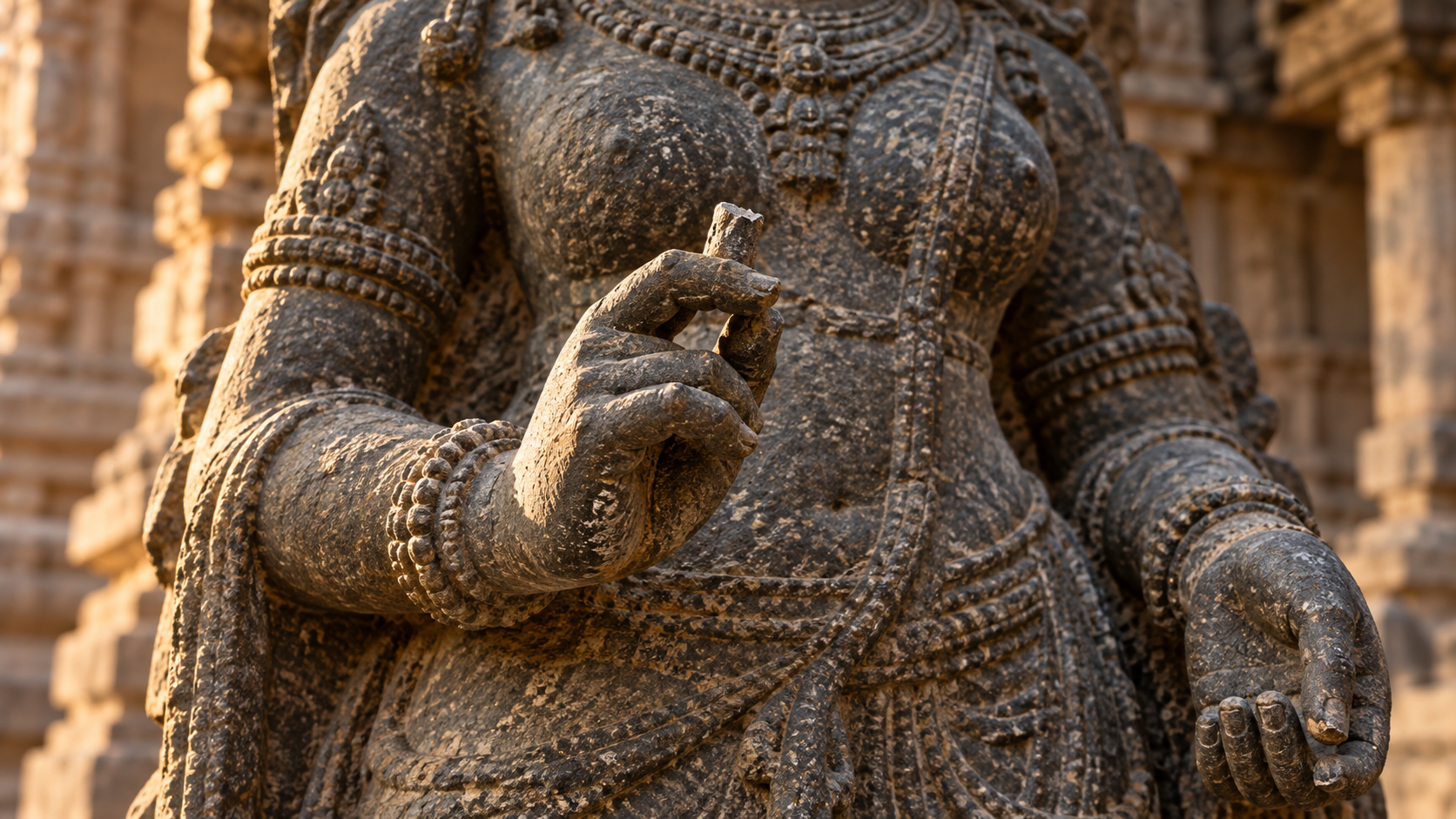
You are looking at a murti whose fingers curl into a delicate grip, but the object near the hand is damaged, missing, or too weathered to identify. Is the deity making a symbolic gesture, holding an attribute, or simply resting the hand in an elegant pose?
Kataka Hasta helps you answer that question. Once you learn to recognize its visual logic, you can read a sacred sculpture more carefully without pretending that one hand position reveals the figure’s entire identity.
Recognize a grip, not a greeting
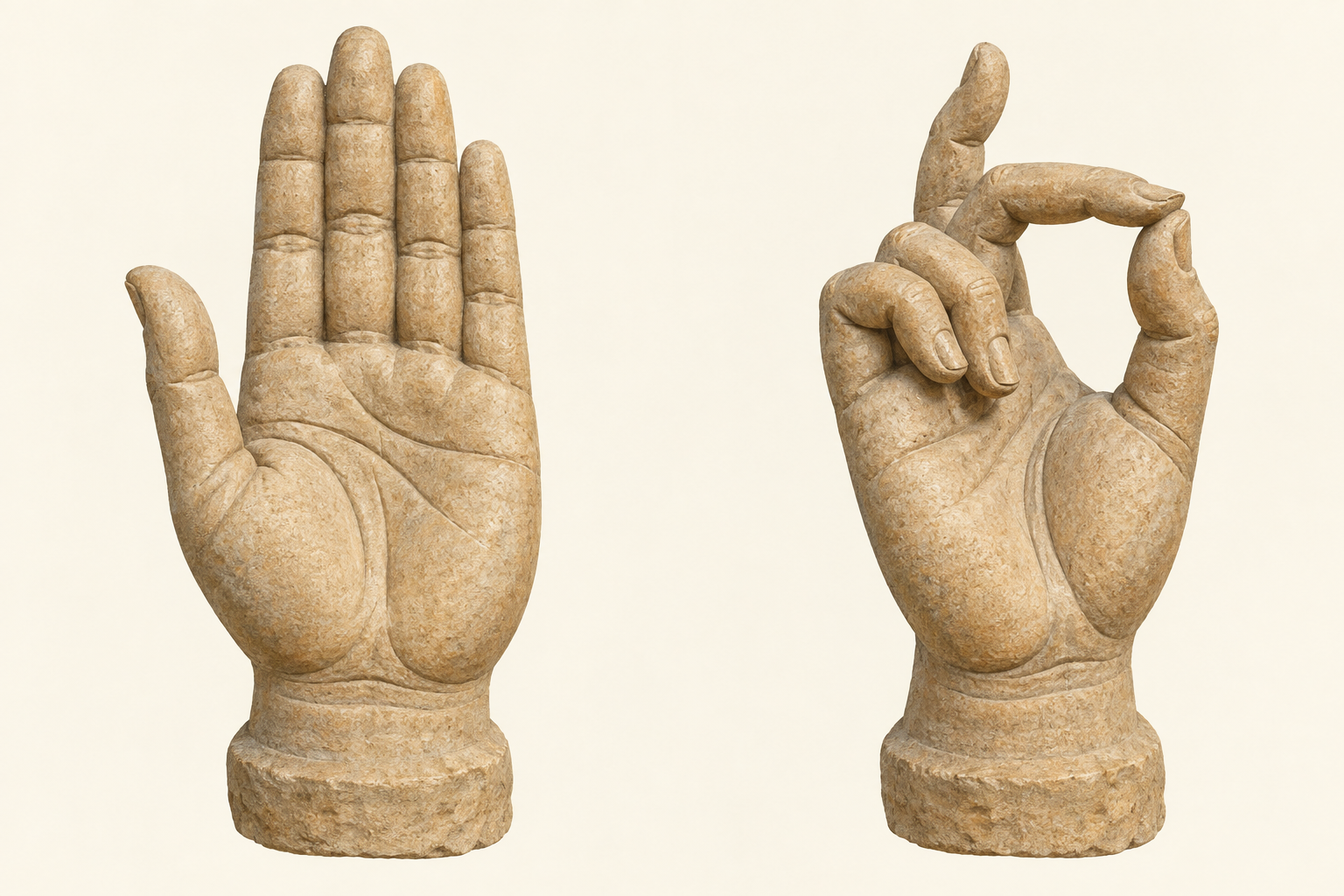
The first distinction is functional. Kataka Hasta arranges the hand as a controlled hold: the thumb and one or more fingers curve toward one another, creating the impression that they can secure a small object. The remaining fingers continue the graceful line of the hand instead of closing into an ordinary fist.
This is why the gesture can look both practical and highly stylized. It resembles grasping, but it is not a naturalistic snapshot of someone tightly clutching an object. The codified vocabulary of Hindu sculpture treats Kataka Hasta as a refined and purposeful configuration. Its controlled curve belongs to the visual grammar of the sacred image.
When you inspect a sculpture, begin with three features:
- Look for a small gripping space between the thumb and the curved fingers.
- Notice whether the fingers seem organized around an object or an invisible axis.
- Check whether the hand addresses the viewer with an open palm or turns toward something the figure carries.
That last test prevents a common mistake. An outward-facing open palm follows the visual logic commonly associated with abhaya, the assurance of fearlessness. Kataka Hasta follows the logic of holding. Position alone is not decisive, but an open palm and a formed grip are doing different work within the image.
Read the hand and its attribute as one unit
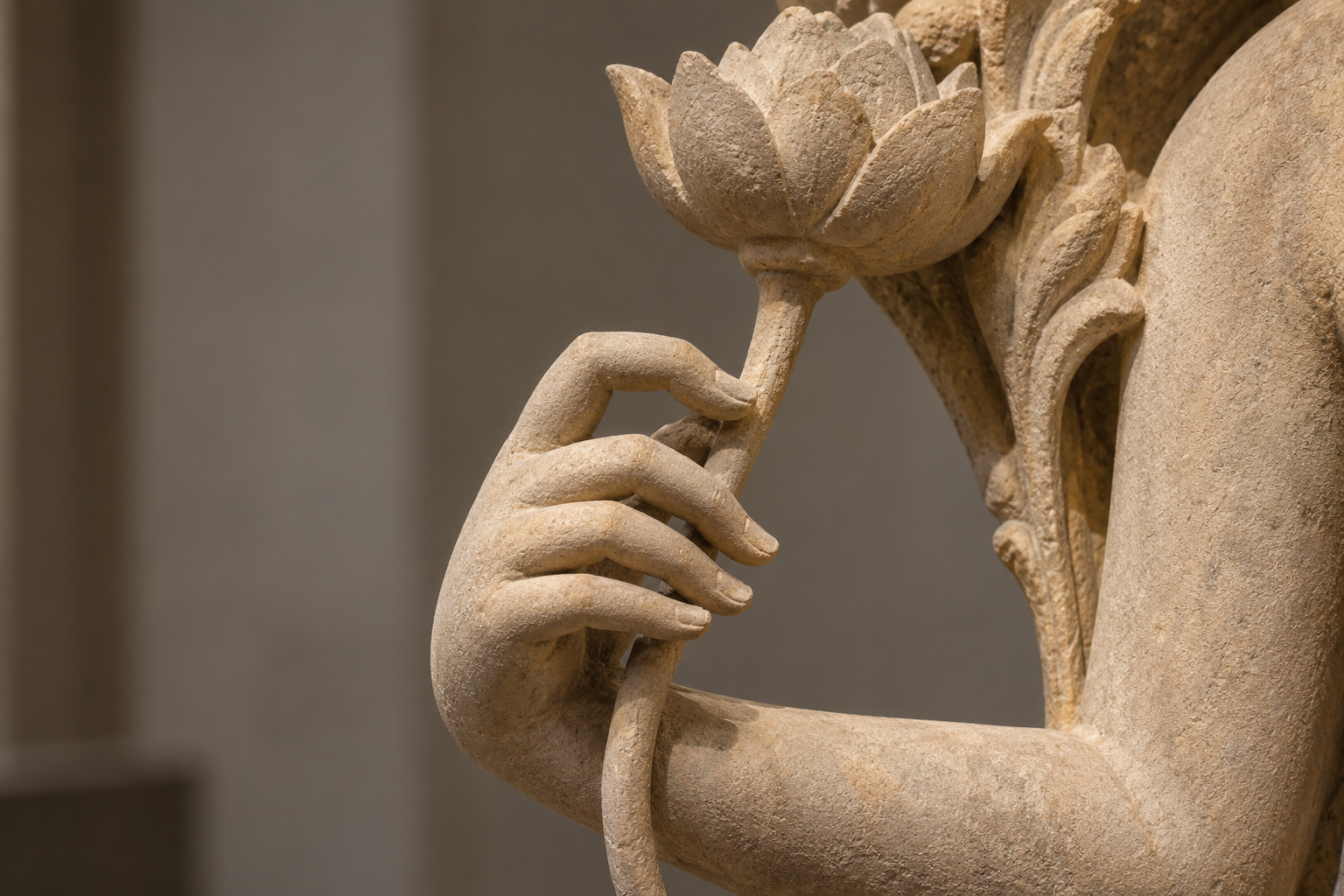
Kataka Hasta does not usually give you a complete message in isolation. It establishes a relationship between the divine hand and an attribute: a stem, ornament, emblem, or another object appropriate to the figure. The identity and significance of that object must come from the rest of the iconographic program.
If the attribute survives, trace it before naming the gesture. Follow its line through the fingers and determine whether the hand supports, presents, or merely touches it. A slender element may pass through the grip and continue above or below the hand. An object may also be carved against the body or supported by another structural element, so the fingers need not bear its apparent weight in a naturalistic way.
If the attribute is missing, treat Kataka Hasta as evidence of a holding action, not proof of one particular lost object. Stone can break at narrow projections, metal images can lose separately attached elements, and surface wear can erase the point where an attribute met the hand. A surviving circular grip may therefore preserve the action after the object itself has disappeared.
Before proposing what was lost, inspect the whole figure:
- Which hand forms the grip, and how is that arm positioned?
- Do any fragments, attachment points, or uninterrupted carved lines remain near the fingers?
- What do the other hands hold or communicate?
- Are there identifying companions, vehicles, ornaments, headgear, or surrounding figures?
- Does the temple setting or sculptural group narrow the possibilities?
The safest description of a damaged image may be modest: “The hand is arranged in Kataka Hasta and may once have held an attribute.” That is more useful than confidently supplying an object that the sculpture no longer supports.
Key takeaways
- Kataka Hasta is best recognized by the visual logic of a deliberate grip.
- The gesture indicates a holding relationship; it does not identify the deity by itself.
- A missing attribute should be reconstructed only from physical and iconographic evidence.
- An open, viewer-facing palm and a curved holding hand perform different functions.
- Regional style, material, damage, and restoration can change how clearly the gesture appears.
Use a five-step method at a temple or museum
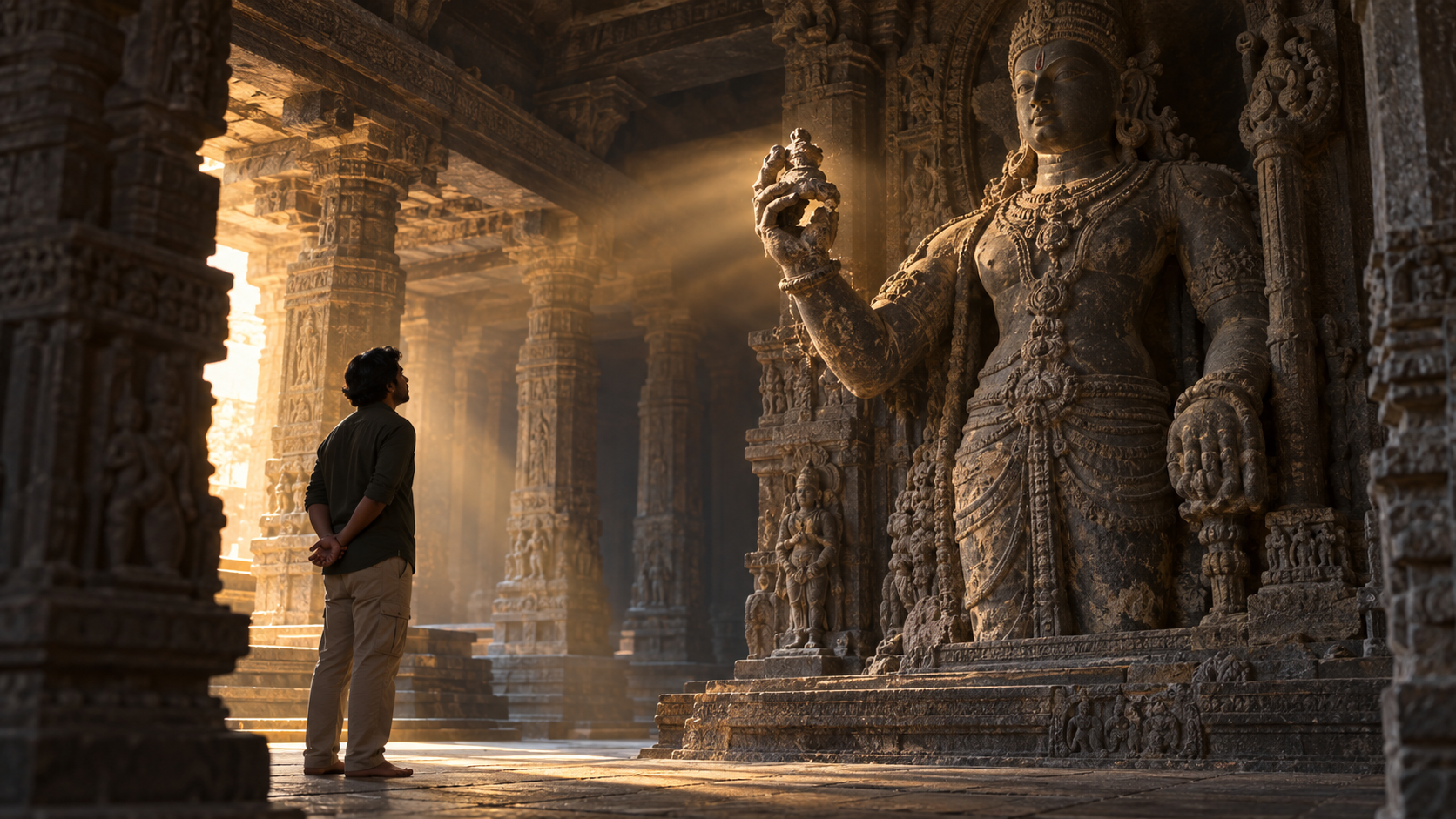
You do not need specialist equipment to make a disciplined first reading. Use the following sequence whenever a sacred hand gesture is unclear.
- View the entire figure before concentrating on the fingers. Record the number and arrangement of the arms, the direction of the body, and the larger composition.
- Find the hand’s active line. Follow the forearm through the wrist and into the fingers. Ask whether the hand projects toward the viewer, rests against the body, or organizes itself around an object.
- Inspect the gripping point. Look for curved fingers, a narrow space near the thumb, an attribute passing through that space, or a break where one may have been attached.
- Compare every hand in the same image. Contrast the suspected Kataka Hasta with open palms, pointing fingers, lowered hands, and hands that still retain attributes.
- State only what the evidence warrants. Separate what you can see from what you infer: “curved grip” is an observation; “held a lotus” is an identification that requires additional evidence.
If photography is permitted, take one image of the whole sculpture and another of the hand from a slight angle. A frontal photograph may flatten the gap between thumb and fingers, while an angled view can reveal whether a stem, socket, fracture, or supporting connection is present. Keep the wider photograph because a close-up without context encourages overconfident identification.
Also account for the material. Deep shadows in stone can make separated fingers look joined. Reflections on metal can hide shallow modeling. Heavy pigment, ritual substances, weathering, or an old repair may obscure the original contour. When the surface is unclear, describe the uncertainty instead of forcing the hand into a familiar category.
Do not transfer a hand name mechanically from dance, modern diagrams, or another regional sculptural tradition. Related hand vocabularies can illuminate one another, but a still sacred image must be read within its own figure, material, period, and setting. The useful question is not merely, “What does this hand resemble?” It is, “What is this hand doing here?”
Let precise looking deepen devotional seeing
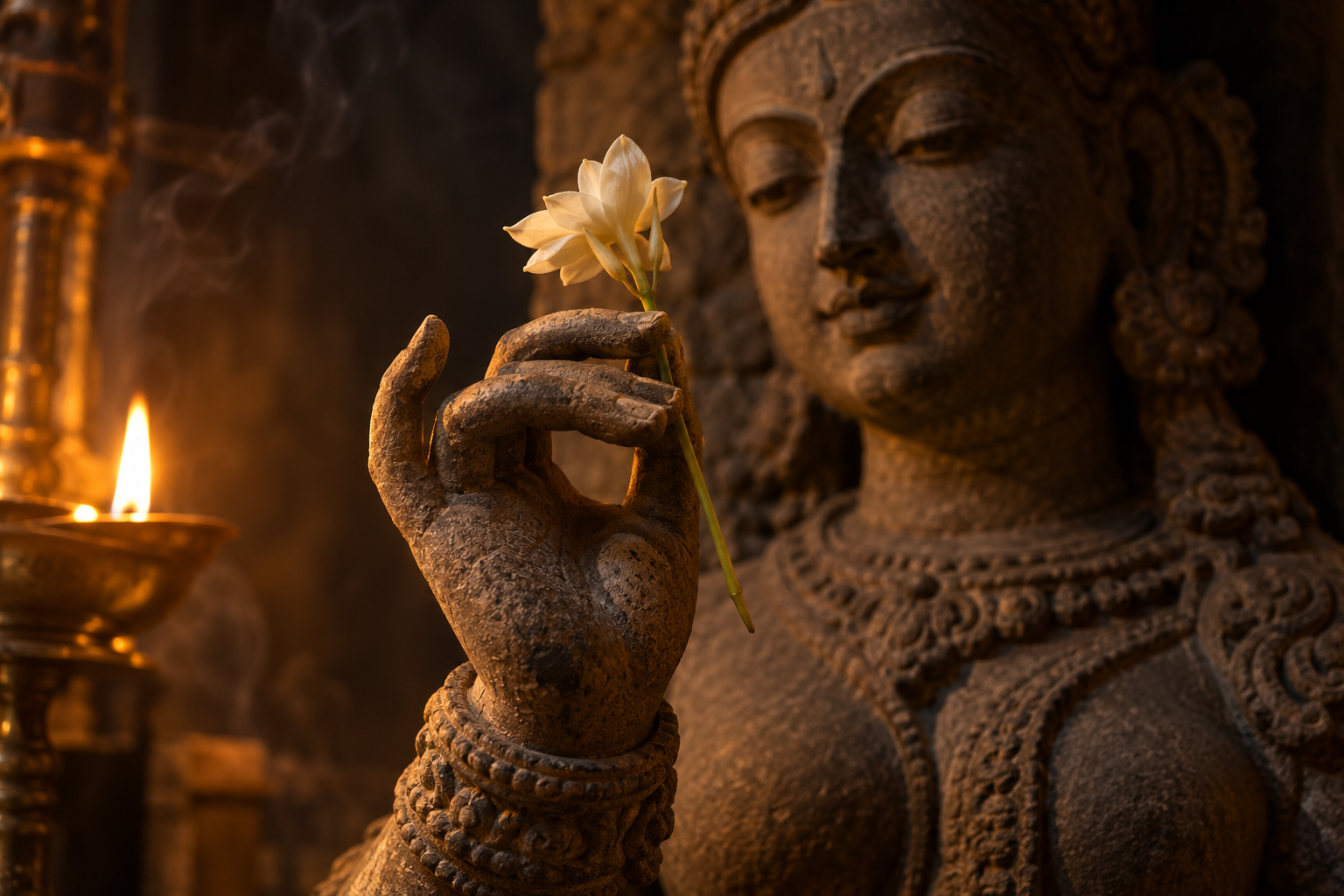
Iconographic study need not reduce a murti to a catalogue of technical labels. It can slow your attention enough to reveal how carefully the sacred form has been composed. In Hindu sacred art, the curve and orientation of a hand carry meaning beyond decoration. The sculptor makes action legible without sacrificing serenity.
Kataka Hasta is a particularly clear example. The hand is active because it holds, yet it does not strain. Its measured grip integrates the attribute with the body of the deity. What might first appear to be a small anatomical detail becomes part of the image’s larger order.
Avoid turning that visual effect into a rigid universal doctrine. The precise significance comes from the deity, the attribute, the surrounding figures, and the worship tradition in which the image belongs. Kataka Hasta supplies the grammar of holding; the complete sculpture supplies the sentence.
The next time you encounter a sacred sculpture, pause at the hands before reading the label. Follow the fingers, locate the grip, look for the object, and then return to the whole form. That small discipline will help you see both what survives and what time may have taken away.
References

Leave a Reply
You must be logged in to post a comment.