
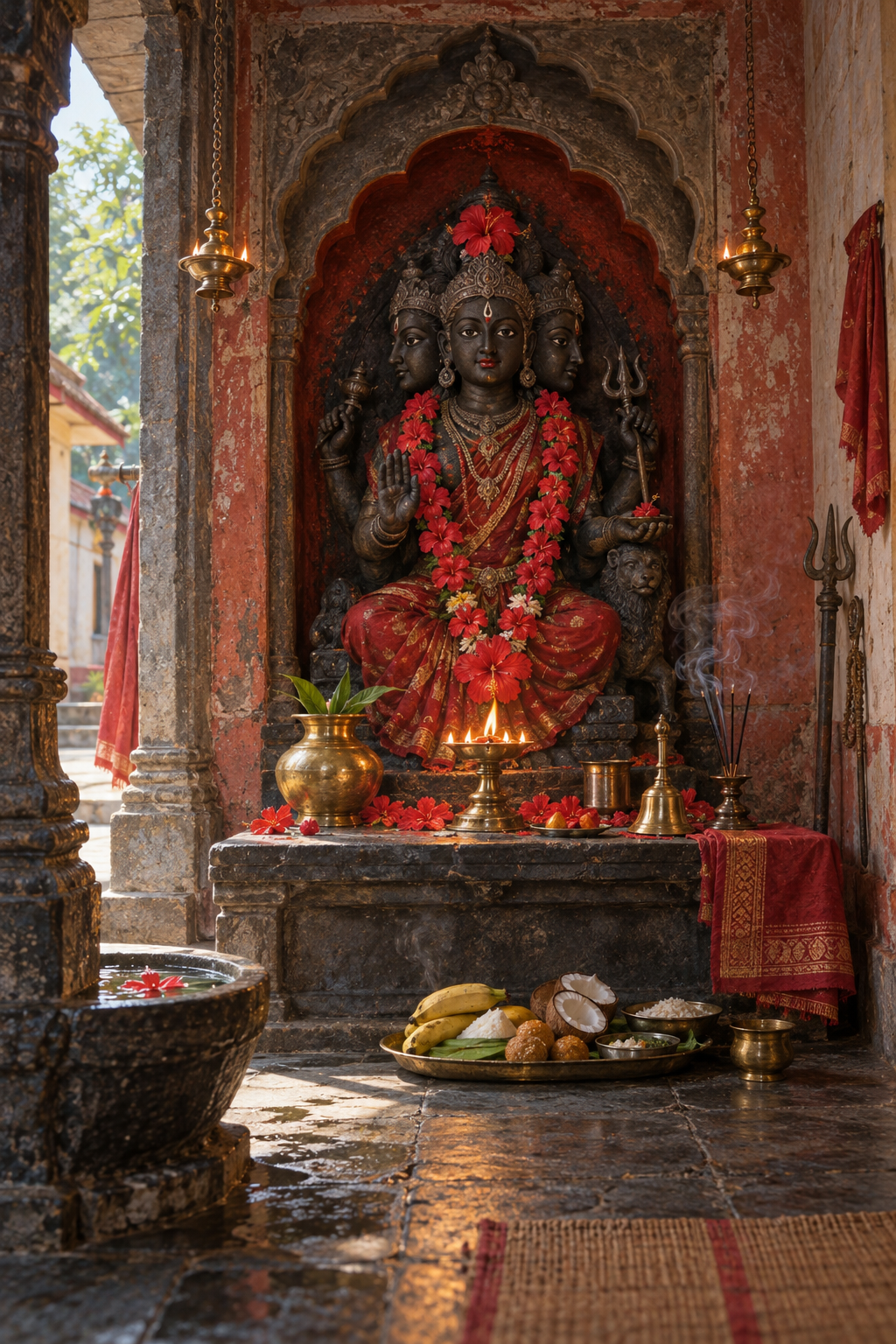
You encounter a Goddess with three heads, an unfamiliar name, or a temple offering that seems to contradict what you were taught at home. The quickest response is often to force it into a familiar explanation: three heads must represent a particular triad; a non-vegetarian offering must be an exception to Hindu practice; an esoteric form must conceal a single secret meaning.
That approach produces confident mistakes. Tantric iconography has to be read with its ritual setting, and ritual has to be understood within its temple, lineage, and local custom. You do not need initiation merely to look carefully. You do need the discipline to separate what you can see, what tradition actually identifies, and what remains unknown.
Read the form before assigning it a meaning
A murti is not simply a coded illustration. In living worship, it is a focus of divine presence, darshan, offering, meditation, and relationship. Its visible features matter, but their meaning does not come from appearance alone. The same type of object, gesture, colour, or number can carry different associations in different settings.
Begin with three separate questions:
- What is visibly present? Count faces, heads, arms, objects, attendants, ornaments, seats, and directional features without interpreting them yet.
- How is the form identified? Record the Goddess’s name, the temple or region, the textual witness if one is known, and the tradition that uses the image.
- What meaning is actually attested? Accept a symbolic explanation only when it is tied to that form, text, temple, or lineage. Leave the rest unresolved.
This separation is more important than it looks. If you see three heads and immediately declare that they signify creation, preservation, and dissolution, you have moved from observation to speculation without noticing the step. A familiar triad may be plausible, but plausibility is not identification. The honest notation is simpler: three heads are visible; their precise correspondence has not yet been established.
The same rule applies to fierce features. They need not indicate moral evil, uncontrolled rage, or a deity opposed to benevolent forms. Tantric imagery can confront fear, limitation, death, protection, transformation, or concentrated power without fitting a simple pleasant-versus-frightening scale. Look for the ritual relationship established by the whole form rather than treating one dramatic feature as the answer.
Trikanthaki Devi: let the three heads set the boundary
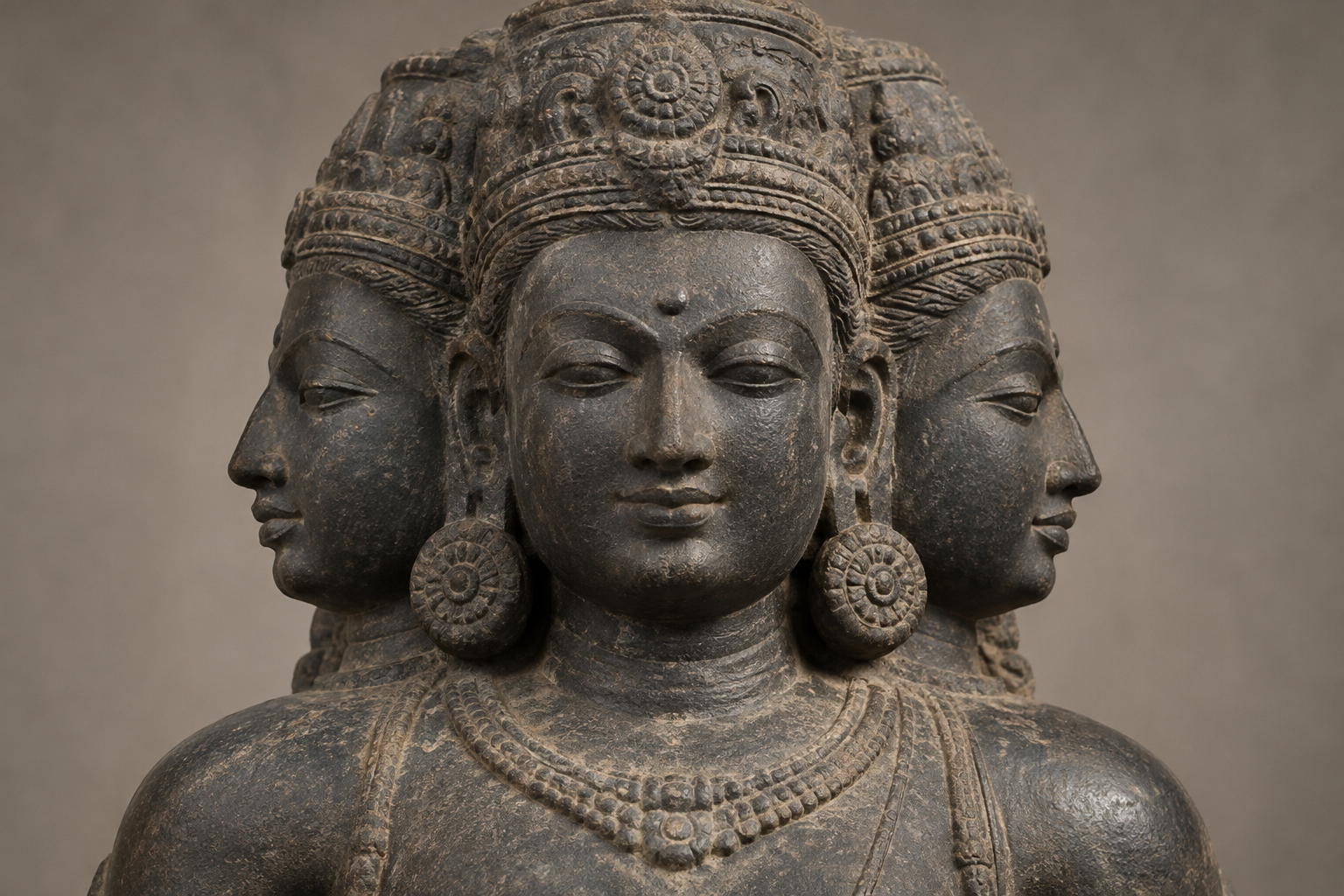
Trikanthaki Devi gives you a useful test case because the available identification is meaningful but limited. She is a triple-headed Goddess associated with the three Kutas and an esoteric Tantric stream. Her form is mentioned in the Sritattvanidhi, a nineteenth-century compendium.
Those facts establish a firm starting point. The multiplicity of heads is intentional, not an artistic accident, and the form belongs within a triadic Tantric framework. They do not, by themselves, establish the exact identity of each head, a complete ritual procedure, a mantra, or a universal philosophical formula.
When you encounter a description of Trikanthaki Devi, sort each claim into one of three boxes:
- Observed: the form has three heads.
- Attested: the form is connected with the three Kutas, belongs to an esoteric Tantric context, and appears in the Sritattvanidhi.
- Proposed: any exact assignment of a cosmic function, syllable, energy, direction, or psychological state to an individual head unless a relevant tradition explicitly supplies it.
This method prevents two common errors. The first is under-reading: reducing an unusual murti to decorative fantasy because you do not recognise it. The second is over-reading: filling every gap with whichever symbolism you already know. Respectful interpretation avoids both.
The date of a surviving textual witness also needs care. A nineteenth-century compendium shows that the form was recorded there; it does not, without further evidence, prove that the Goddess originated in that century. Documentation and origin are different historical questions. If you are preparing a temple note, lecture, caption, or social-media explanation, write only the first claim unless you have independent evidence for the second.
At Tarapith, offering and place cannot be separated
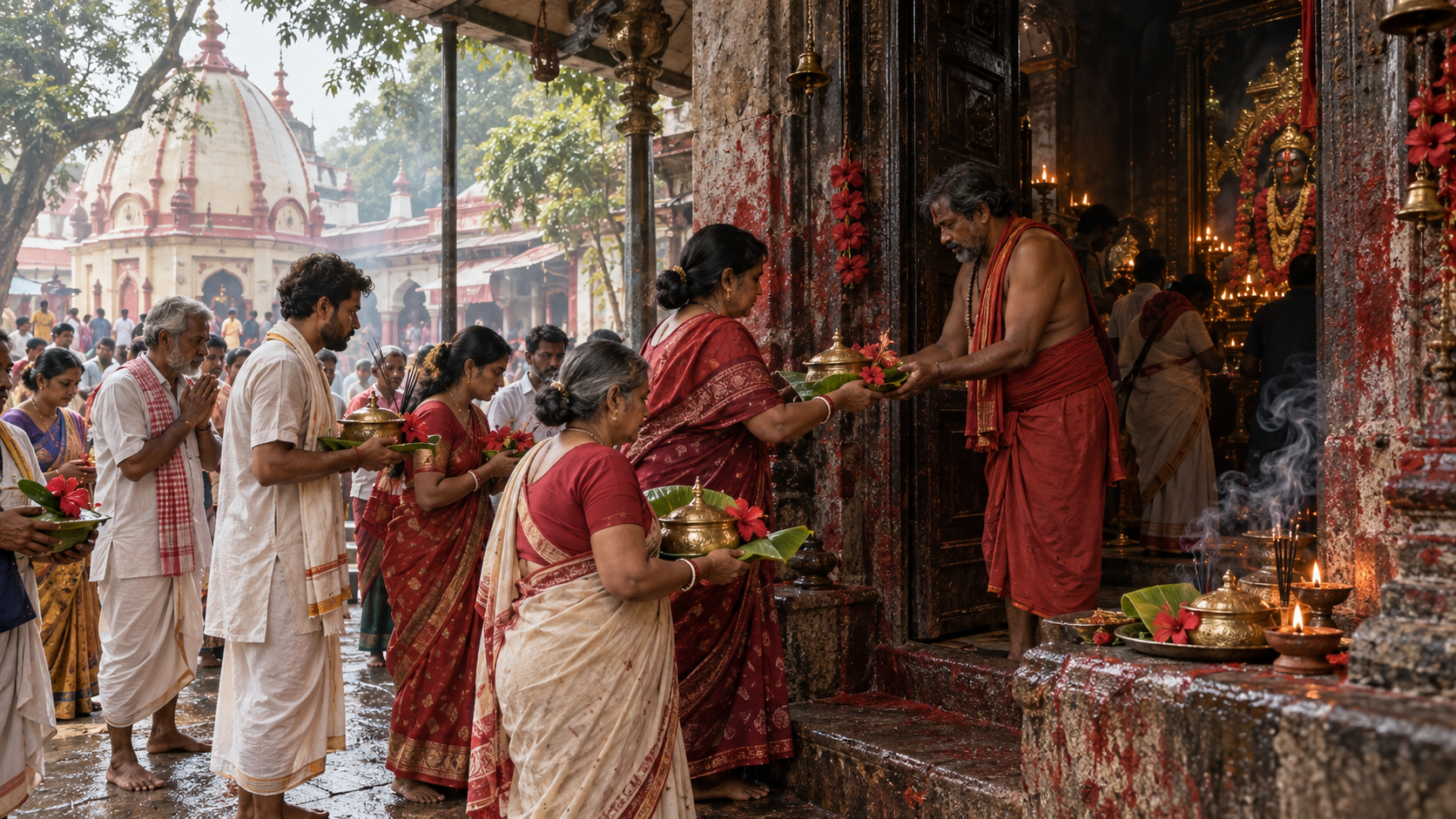
Ritual practice requires the same restraint. Tarapith in West Bengal’s Birbhum district is a Tantric centre of Goddess Tara worship whose established customs include non-vegetarian bhog and animal sacrifice. That differs from the strictly vegetarian offering discipline maintained by many other Hindu temples.
The difference does not force you to choose between calling one practice authentically Hindu and dismissing the other. It shows that Hindu ritual life contains temple-specific disciplines. A rule observed in one mandir should not automatically be projected onto every mandir, while a specialised Tantric custom should not be advertised as a general obligation for every Hindu household.
Keep three distinctions clear when discussing Tarapith:
- Bhog is not an ordinary meal. Bhog refers to food presented to the deity within worship. Prasad is what is received after the offering. The ritual relationship, not merely the ingredient list, defines the act.
- Local permission is not universal prescription. An offering accepted within Tarapith’s tradition does not become appropriate at every Tara shrine, every Shakta temple, or a home altar.
- Description is not authorisation. Learning that a rite exists does not entitle a visitor to reproduce it. Temple authority, established procedure, applicable law, safety, and lineage all matter.
Animal sacrifice is irreversible and involves legal, ethical, and physical-safety consequences. Do not attempt to organise or imitate it from an online description. If your purpose is darshan or understanding, observe only what the temple permits and direct procedural questions to authorised temple personnel. If you object to the practice, you can decline participation without ridiculing the deity, devotees, or the wider tradition.
This is also why the word Tantric should not be used as a shortcut for bizarre, dark, or transgressive. It tells you that a practice belongs to a particular ritual and theological system. It does not mean that every sensational association attached to Tantra applies to that Goddess or temple.
Choose the level of engagement you are prepared for
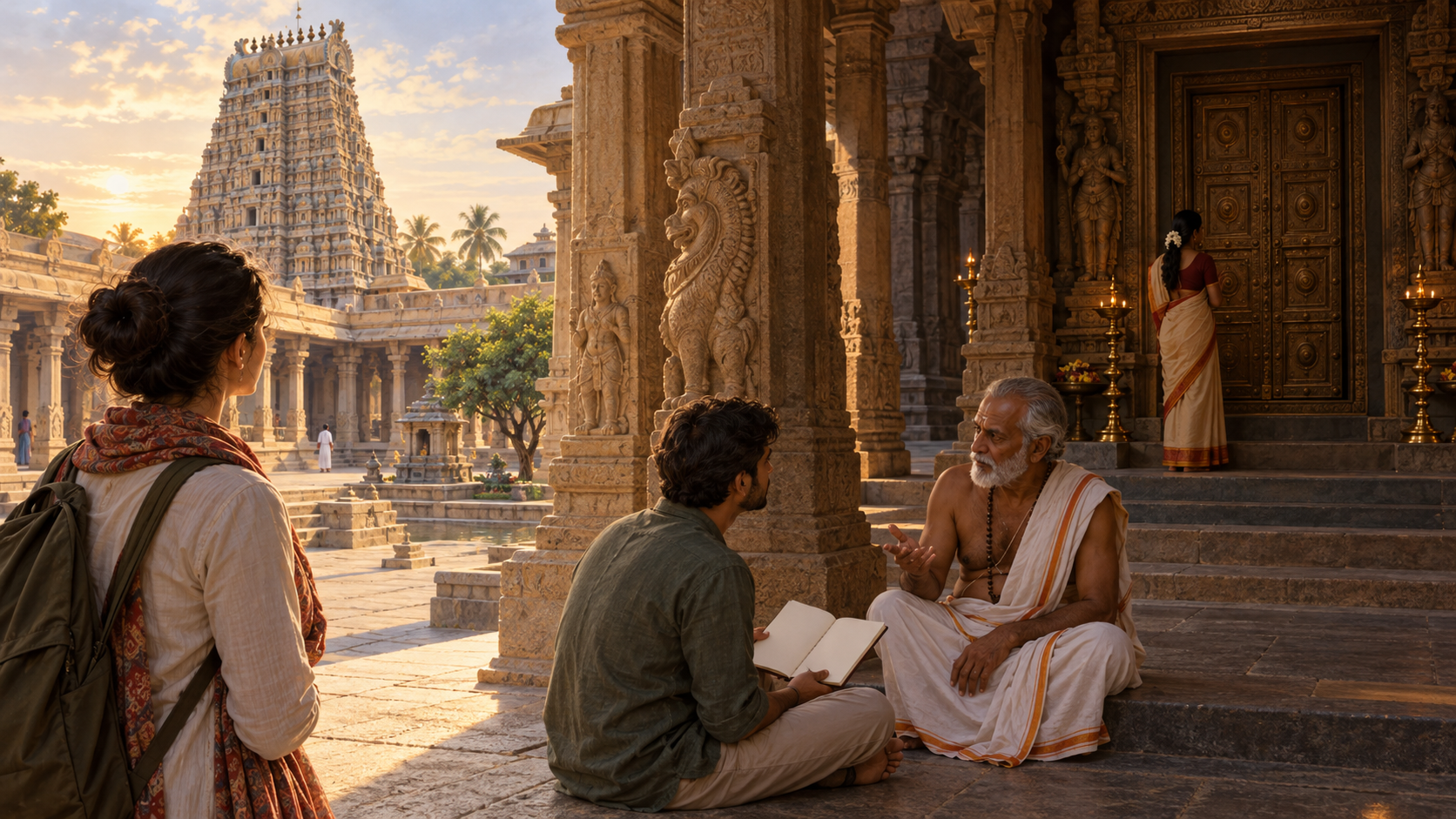
You can learn from Tantric Goddess traditions without pretending to possess ritual authority. The practical question is not whether you are sufficiently fascinated. It is what kind of engagement you are undertaking.
If you are visiting a temple
- Identify the shrine precisely. Confirm the deity’s local name and the temple’s own custom instead of relying on a generic description of Tara, Devi, or Tantra.
- Ask before bringing an offering. Use the items accepted by that temple. A valid offering in another region or lineage may be inappropriate here.
- Separate darshan from participation. You may be allowed to witness a rite without being authorised to perform its actions, enter restricted areas, or handle ritual objects.
- Ask before photographing or recording. Public visibility does not make every moment of worship available for documentation.
- Receive instructions locally. Follow authorised temple personnel on queues, offerings, prasad, and restricted spaces rather than copying another visitor.
If you are studying an image
Write a two-column note. In the first column, list only visible features. In the second, list identifications that can be tied to a named text, temple, inscription, or lineage explanation. If a meaning fits neither column, mark it as a hypothesis. This small habit is especially valuable when captions have been detached from their original images or when several Goddess forms share a visual feature.
Do not erase regional names in favour of a better-known pan-Indian deity merely because the resemblance is strong. Record resemblance as resemblance. Identity requires stronger grounds. Conversely, do not assume that two local forms are unrelated simply because their names differ. The correct answer may require textual and ritual context that the image alone cannot provide.
If you want to begin personal practice
Start with the boundary between public devotion and lineage-bound practice. Respectful pranam, a familiar prayer, or ordinary remembrance of Devi is not the same undertaking as adopting a specialised mantra, visualisation, offering sequence, or esoteric discipline. Some Tantric practices depend on initiation and instruction because their elements operate as a connected system.
Do not assemble a ritual by taking a mantra from one website, an image from another, and an offering from a third. Even when each item is genuine somewhere, the combination may belong nowhere. Ask a qualified teacher what is open to general devotion, what requires initiation, what daily obligations follow, and how the practice fits the tradition you already observe. A trustworthy answer should be able to state limits, not merely promise access to hidden power.
Be especially cautious with anyone who treats secrecy as protection from all questions. Esoteric does not mean exempt from discernment. You should still be able to ask what commitment is being requested, whether an action is lawful and safe, whether money or sexual access is demanded, and whether you may step away. Reverence for guru and lineage is not a command to surrender moral judgement.
Key takeaways
- Describe a Goddess’s visible features before assigning symbolic meanings to them.
- Treat a named textual or temple identification as a boundary: it establishes what is known, not permission to invent what is missing.
- Do not turn a specialised practice at Tarapith into a rule for all Hindu temples or homes.
- Distinguish bhog offered to the deity from ordinary food, and distinguish witnessing a rite from being authorised to perform it.
- Do not reconstruct initiatory practice from disconnected online fragments.
- When an interpretation cannot be tied to the relevant form, temple, text, or lineage, label it as a possibility rather than a fact.
The next time an unfamiliar Goddess form confronts you, resist the urge to solve it in one sentence. Write down what you see, establish the local or textual identity, and ask where ritual context begins. That patient sequence will take you closer to the tradition than either sceptical dismissal or imaginative certainty.
References
- Hindu Blog – Trikanthaki Devi Idol Form – Iconography
- Hindu Blog – Tarapith Temple in Bengal – Prasad – Food – Offerings – Symbolism – Meaning

Leave a Reply
You must be logged in to post a comment.