
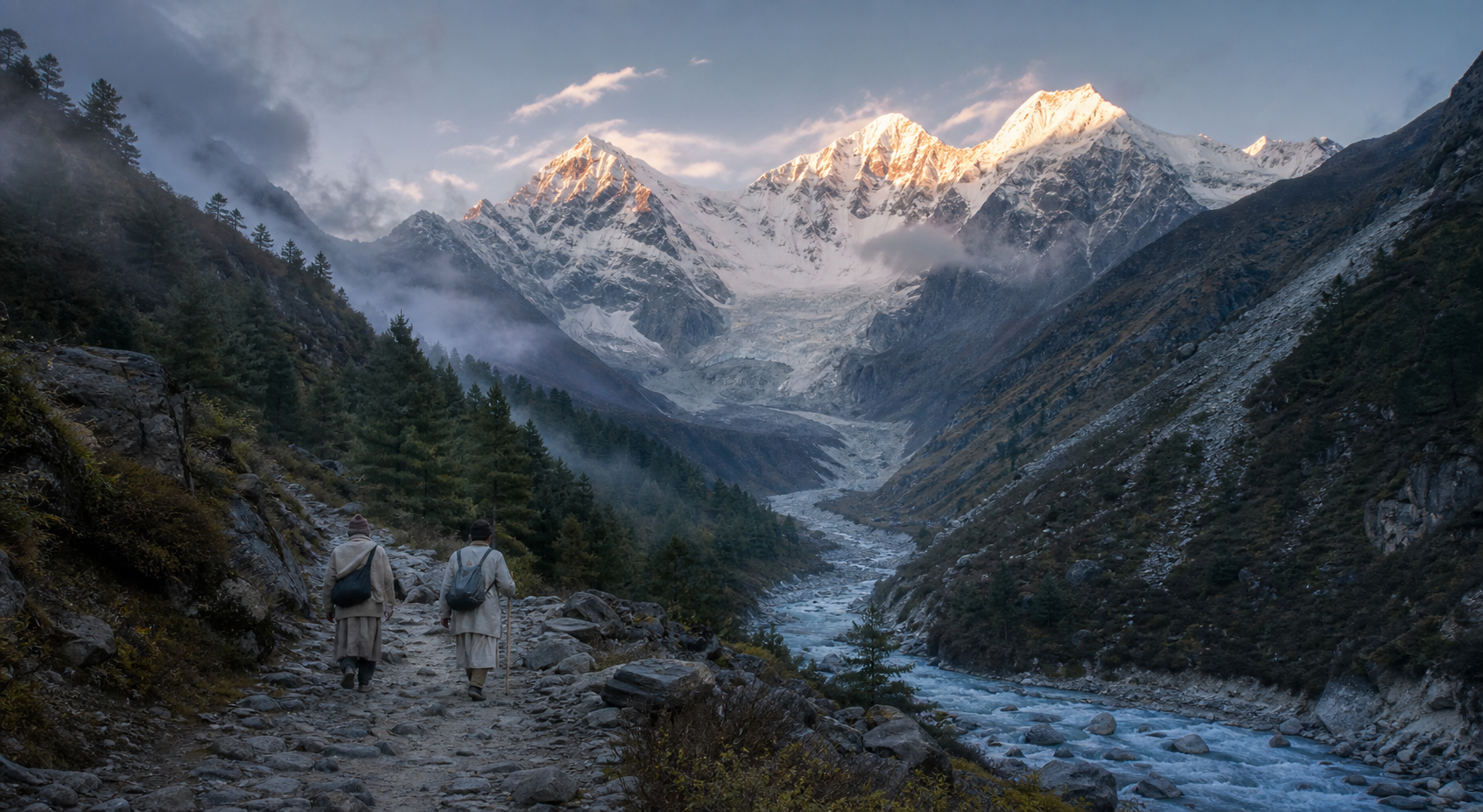
You can visit Uttarkashi, enter temples, continue to Gangotri and return with little more than photographs. The sacred geography opens more fully when you stop treating every place as another attraction and give each one a distinct spiritual purpose.
The practical question is not how many Himalayan sites you can fit into a journey. It is how to move from the daily devotion of Uttarkashi to the austerity of Gaumukh without outrunning your body, ignoring local custodians or reducing living traditions to scenery. Build the yatra around that progression, and the route itself becomes part of the practice.
Choose your route by intention and walking capacity
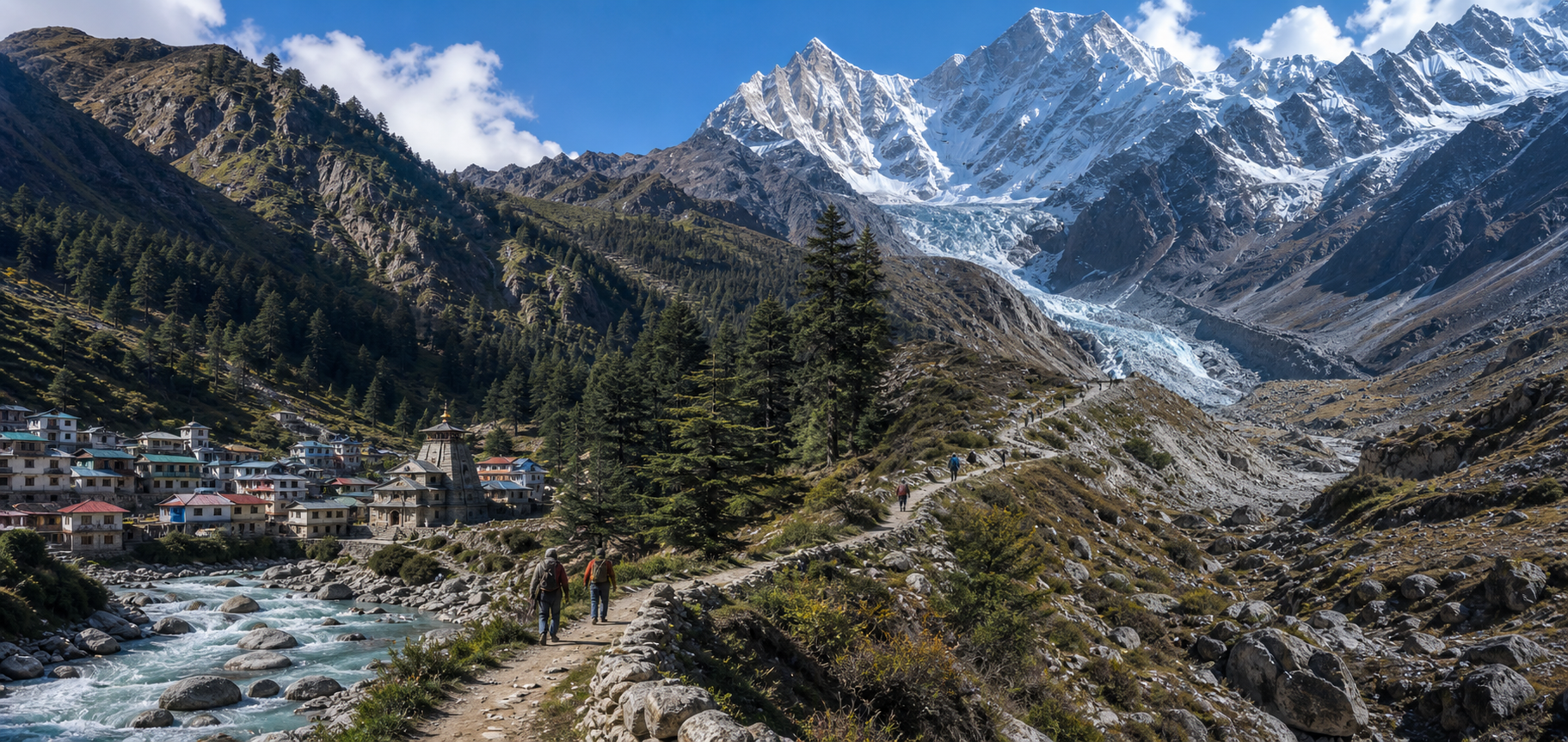
Uttarkashi works well as the spiritual and logistical centre of the journey. Its ghats, ashrams and temples let you establish a daily rhythm before entering colder, quieter and more demanding terrain. The town is not merely the place where you sleep between excursions. Morning worship beside the Bhagirathi, evening recitation across the river and regular visits to Shiva temples reveal how sacred ecology operates as ordinary life.
From that base, think of the pilgrimage as several layers rather than one continuous race:
- Begin in Uttarkashi. Spend enough unhurried time by the river to establish a simple practice. Kashi Vishwanath Temple, the Uttarkashi Kedarnath Temple and the ghats show how Ganga, Shiva, the pipal tree and household devotion belong to one continuous religious world.
- Use Gangnani as a meaningful pause on the ascent. The hot springs can restore the body after the mountain road, while the local Mahadev temple and the tradition of Maharishi Parashara’s tapasya place the village within a much older sacred landscape.
- Let Gangotri be the centre of bhakti. Attend aarti, listen carefully and allow time for the cold, altitude and austerity to alter your pace. Suryakund and the riverbank offer contemplation without requiring a strenuous trek.
- Attempt Gaumukh only as a serious mountain undertaking. The route rises from forest into exposed glacial terrain and may involve an overnight halt at the seasonal Bhojbasa camp. Do not treat it as an excursion to squeeze between temple visits.
- Make Nachiketa Tal a separate inward journey. It lies about 26 kilometres from Uttarkashi toward Dunda, followed by an ascent of approximately five kilometres from Chauranghi Khal through rhododendron forest. Its stillness and Upanishadic association call for a different state of mind from the Ganga valley.
- Keep a local Uttarkashi day in reserve. Kuteti Devi Temple involves a roughly two-kilometre ascent from the river area, while Bimaleshwar Temple on Varanavata Mountain is reached after travelling to the road end and walking about one kilometre through woodland.
If sustained mountain walking is not appropriate for you, Uttarkashi, Gangnani and road-accessible Gangotri still form a complete pilgrimage. If you can manage a moderate forest ascent, add Nachiketa Tal. Choose Gaumukh only when you are prepared for a high, cold trail and have verified current access, weather and local arrangements. Spiritual seriousness is not measured by reaching the farthest point.
Let each sacred place prescribe a different practice
A coherent yatra needs more than a route. Give every stop one governing intention. This prevents the familiar cycle of arriving, photographing the shrine, making a hurried pranam and leaving before the place has asked anything of you.
Uttarkashi: establish a daily rhythm
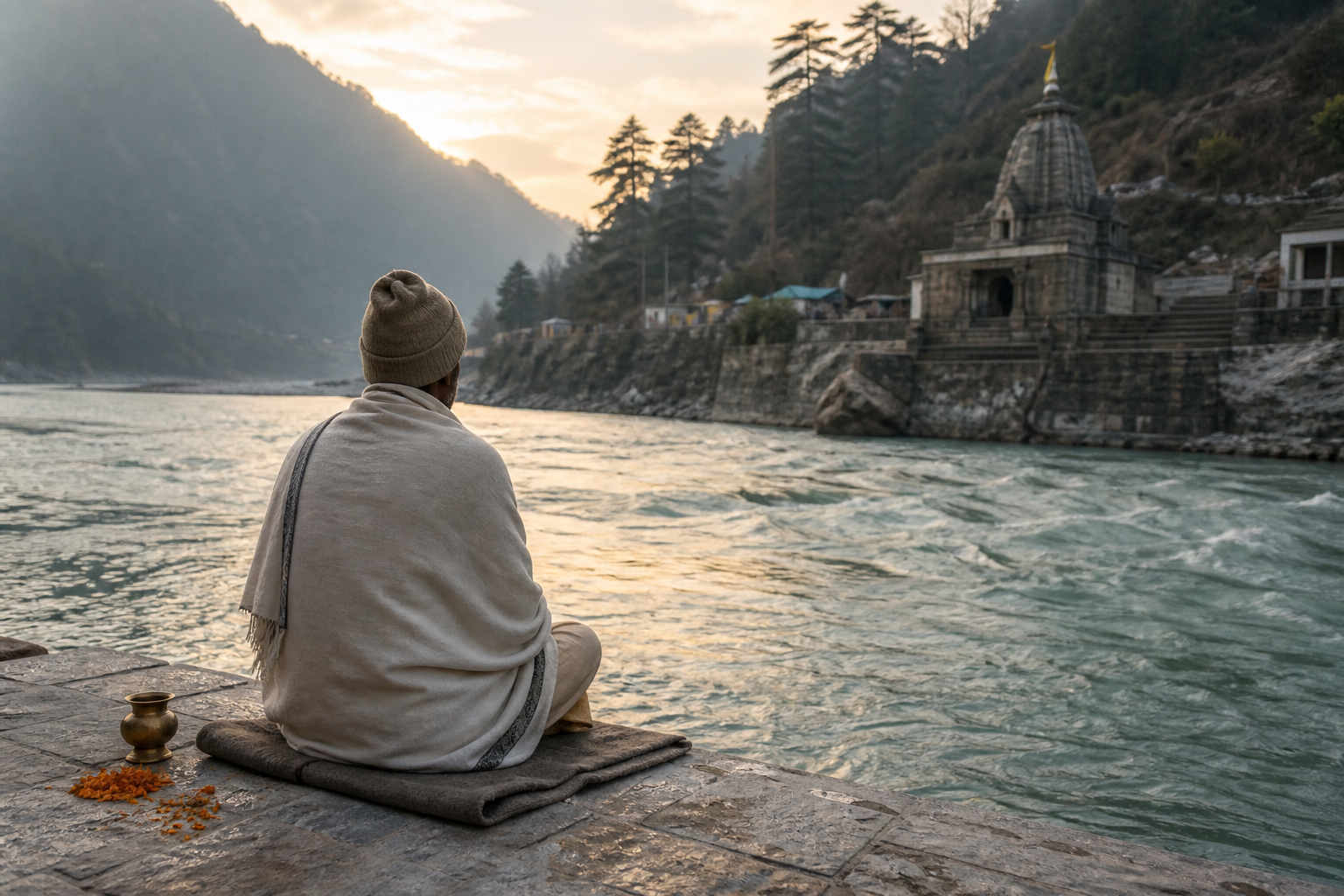
Begin with what local worshippers do naturally: approach the river without spectacle, acknowledge Ganga and carry that reverence into the temple. A simple morning can include quiet japa at the ghat, darshan at a Shiva shrine and participation in aarti. You may also observe the local sequence of drawing river water, circumambulating a pipal tree, offering water at its roots and then approaching Mahadev. Ask before copying a practice whose procedure you do not understand.
Do not make a full river immersion the test of whether your pilgrimage is authentic. The Bhagirathi is cold and forceful. Use a locally recognised bathing place, follow instructions on the ground and choose a modest sprinkling or achamanam when immersion would be unsafe. The purpose is reverence, not a contest with the river.
Gangnani: practise receptivity without hunting for marvels
Gangnani rewards the pilgrim who slows down. Rest at the hot springs, visit the understated Mahadev temple and learn why the cave above the springs is associated with Parashara. Local memory also speaks of forest-dwelling ascetics who descend without announcement. One such encounter involved Om Giri Baba, a Naga sannyasin of the Juna Akhara, who arrived at Parashara’s cave and disappeared again by morning. The right response to such a tradition is availability, not pursuit.
Do not wander into forested slopes hoping to force an encounter, and do not pressure residents to disclose private teachings or the locations of secluded practitioners. A sadhu’s anonymity may be part of the teaching. Sit at the temple, help maintain cleanliness, accept ordinary hospitality respectfully and let the village decide what it wishes to reveal.
Gangotri and Gaumukh: distinguish devotion from endurance
At Gangotri, evening aarti concentrates the valley’s bhakti into bells, conches, chanting and the movement of the river. Arrive early enough to settle before the ritual begins. Afterwards, resist the impulse to fill the silence with conversation. Suryakund, the deodar forest and the path toward Pandava Gupha offer places where attention can continue after formal worship.
Ashram hospitality in Gangotri can be intentionally austere. At Dandi Ashram, accommodation has included unheated rooms, limited electricity, doors without locks and bucket bathing with warmed river water. Carry little of value, keep a light available and receive simplicity as part of the discipline rather than as failed hotel service.
The trail from Gangotri toward Gaumukh passes through forest, climbs above the treeline and enters a landscape of frozen crossings, scree, shrines and glacial water beneath the Bhagirathi peaks. At the glacier, you can make pranam, perform japa, consecrate a mala or carry Gangajal home in a clean vessel. Full immersion in water barely above freezing is not spiritually compulsory. Cold-water shock, loss of footing and exposure are real consequences; if conditions or your body make immersion doubtful, touch the water reverently and remain on secure ground.
Nachiketa Tal: carry one honest question into the forest
Nachiketa Tal is best approached through the teaching that gives the lake its name. In the Kathaka Upanishad, Nachiketa recognises the hollowness of an outwardly pious but ethically deficient gift. Sent to Yama, he waits at Death’s threshold and receives three boons: reconciliation with his father, knowledge of the sacred fire and instruction about what lies beyond death. He refuses wealth, longevity and pleasure when they are offered in place of Atma Vidya.
Before entering the rhododendron forest, choose one question that you will not evade. The story gives you three useful forms:
- What am I presenting as a worthy offering when it costs me nothing of value?
- Which relationship needs reconciliation before I can claim spiritual progress?
- What temporary reward keeps diverting me from the question I actually need to ask?
Carry the question without demanding an immediate answer. The quiet around Nachiketa Tal, its small Naga shrine and the nearby feature identified locally with Yama’s portal give physical form to the Upanishadic encounter. The narrow pit is not a place to enter. Treat it as a boundary, not an adventure challenge, and leave the lake and its fish undisturbed.
Enter Naga country as a guest, not an investigator
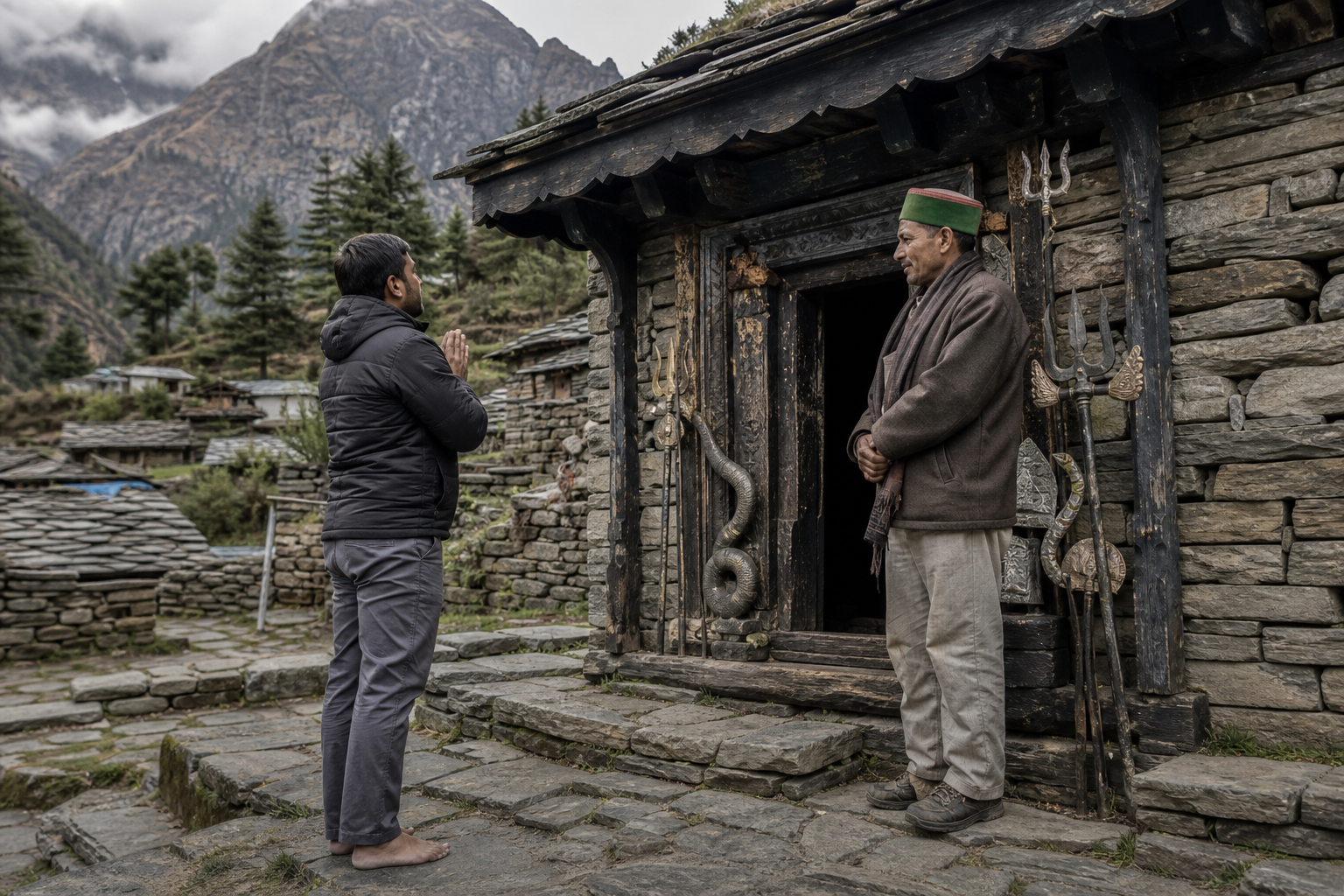
The upper Himalaya preserves Naga traditions through streams, lakes, forests and village shrines. These traditions should neither be mocked as superstition nor sensationalised as evidence waiting to be captured. Their immediate significance is ethical: water, trees, animals, homes and human conduct exist within relationships that require permission and reciprocity.
Above Gangnani, an unmarked path climbs for nearly two hours to a small, widely scattered community without road access. Residents venerate a local Naga associated with the streams and forest, as well as a great devadaru cedar said to be around 450 years old. In their understanding, the Naga does not live inside the human-built temple. The shrine is a place where people honour a presence that remains free to move through the landscape.
That distinction should govern your conduct:
- Use a trusted local guide. The route is unmarked, steep and overgrown. An online description is not a substitute for someone who knows the terrain and has a relationship with the community.
- Ask before entering sacred or residential space. A tiny settlement is not an open-air museum. Do not photograph people, homes, rituals or secluded locations without clear consent.
- Do not search for the hidden Naga lake. Local tradition places it more than 20 kilometres east through trackless, forested mountains and associates it with Maninaga and a radiant Nagamani. A sacred account is not permission to trespass or attempt a hazardous expedition.
- Protect water and trees physically. Do not leave offerings in plastic, carve bark, break branches or contaminate a stream. If residents permit you to sit by the old devadaru, let stillness be the offering.
- Do not improvise an advanced ritual. A documented Naga puja in the village invoked Manasa and Kaliya, followed by Ananta, Vasuki, Shankhapala, Kulika, Takshaka, Mahapadma, Karkotaka and Padma in the eight directions, along with Sarpa Mantras from the Maitrayani Samhita 2.7.15. That ritual structure is not a tourist script. Follow a qualified priest or local custodian; otherwise, namaskara, cleanliness and ahimsa are sufficient.
The Naga traditions around Gangnani also preserve memories of conflict and reconciliation between human and serpent beings. Annual atonement and non-harm practices across Hindu, Buddhist and Jain settings express a principle that any pilgrim can apply immediately: approach the more-than-human world without entitlement. Sikh traditions of seva add the practical counterpart. Reverence becomes credible when it produces restraint, care and useful service.
Prepare for austerity before it becomes an emergency
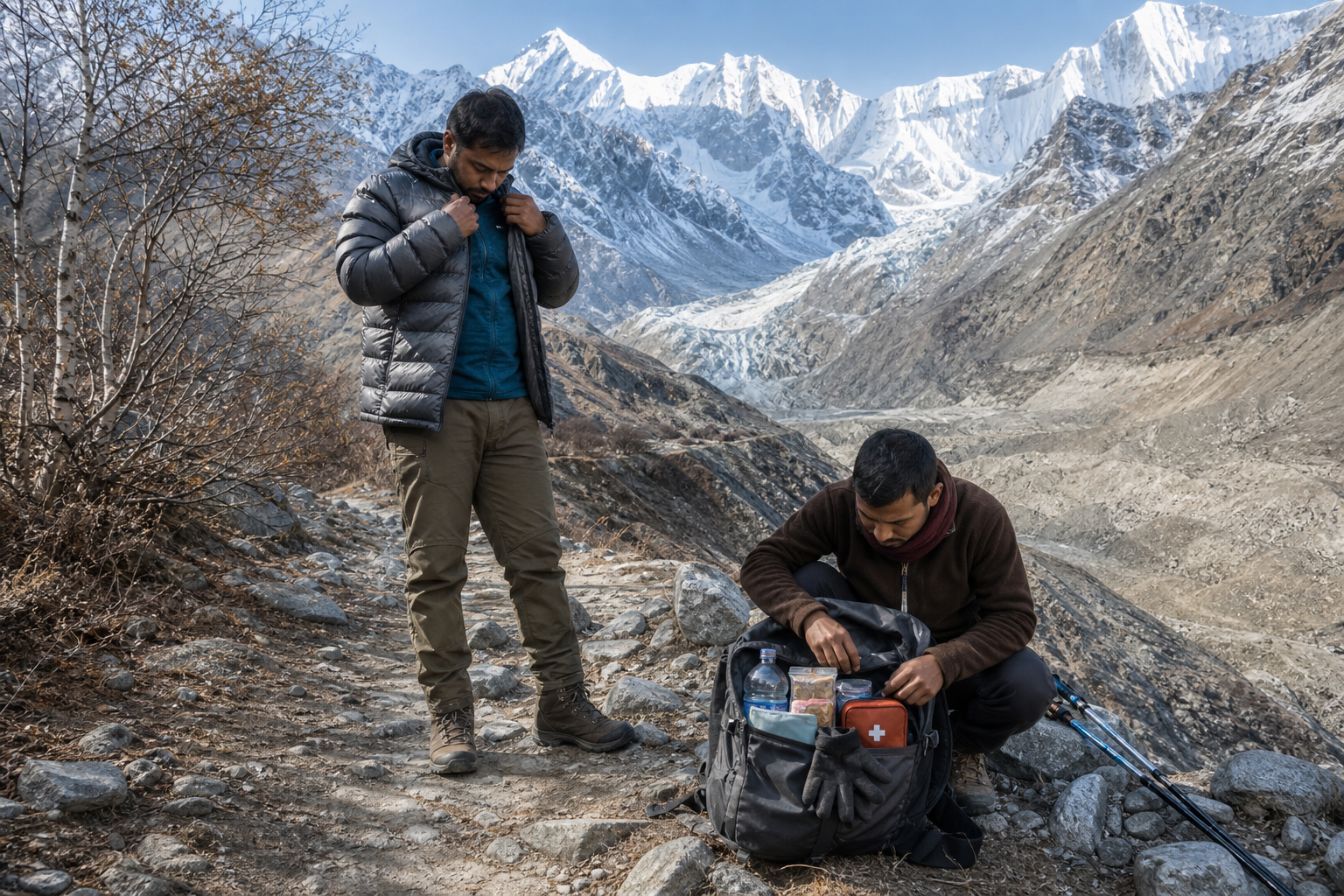
Mountain conditions can change faster than an itinerary. The journeys described here took place in autumn 2022, while place information was reviewed through mid-2025. Transport, trail access, seasonal lodging and local restrictions can change. Verify them through more than one current local channel before leaving Uttarkashi, and ask again before beginning a remote walk.
Pack for the conditions actually described by the route, not for an idealised temple tour:
- Carry warm layers and rain protection. Gangotri can be penetratingly cold, while rain can arrive quickly near Nachiketa Tal.
- Use footwear with reliable grip on mountain paths. Keep any barefoot vrata within a safe temple or ghat area rather than extending it onto forest trails, frozen crossings or scree.
- Bring a dependable light and a charged backup for simple accommodation where electricity may be limited or interrupted.
- Keep valuables to a minimum when staying in ashrams with simple, unlocked rooms.
- Carry a clean vessel only if you intend to bring Gangajal home. Do not allow bottles, wrappers, food packaging or ritual remnants to remain at the river, lake, cave or shrine.
- Learn enough simple Hindi to ask permission, confirm a path and understand a warning. In smaller villages, English may not be available.
- Turn back when the route becomes unclear, rain changes the slope, a stream crossing is unsafe or your body stops responding normally. Reaching a sacred destination does not justify ignoring an immediate hazard.
Also prepare your expectations. A hot spring may be restorative without being luxurious. An ashram may offer integrity and hospitality without heat, locks or constant power. A saint may not appear. A temple priest may be occupied. The forest may give you no vision at all. None of these outcomes makes the yatra incomplete.
Key takeaways for your Uttarkashi yatra
- Use Uttarkashi as a place of practice, not merely as accommodation between excursions.
- Match the route to your real capacity: town and road-accessible temples, the Nachiketa Tal forest ascent or the more demanding Gaumukh trail.
- Give each destination one purpose: daily discipline in Uttarkashi, receptivity in Gangnani, bhakti at Gangotri, austerity at Gaumukh and ethical inquiry at Nachiketa Tal.
- Seek local permission before entering caves, unmarked paths, village shrines or Naga sacred spaces.
- Never use icy immersion, barefoot trekking or a hazardous shortcut to prove devotion.
- Verify current weather, access, transport and seasonal lodging before every remote stage.
Before you leave the mountains, choose one discipline that can cross the distance home with you: a Ganga stotra, a morning water offering, regular seva or the honest question you carried to Nachiketa Tal. Begin it again the next morning. The clearest sign of a fruitful pilgrimage is not how remote a place you reached, but what you are prepared to practise after returning.
References
- DharmaRenaissance Blog – Discover the Sacred Himalaya: Complete Gangnani Journey, Hidden Nagas, Living Temples
- DharmaRenaissance Blog – Ultimate Journey to Gangotri and Gaumukh: Discover the Transformative Hindu Himalaya
- DharmaRenaissance Blog – Complete Nachiketa Tal Guide: Discover the Hindu Himalaya’s Sacred Lake and Mythic Origins
- DharmaRenaissance Blog – Ultimate Uttarkashi Spiritual Travel Guide: Discover Sacred Ecology, Temples, and Diwali Traditions
