
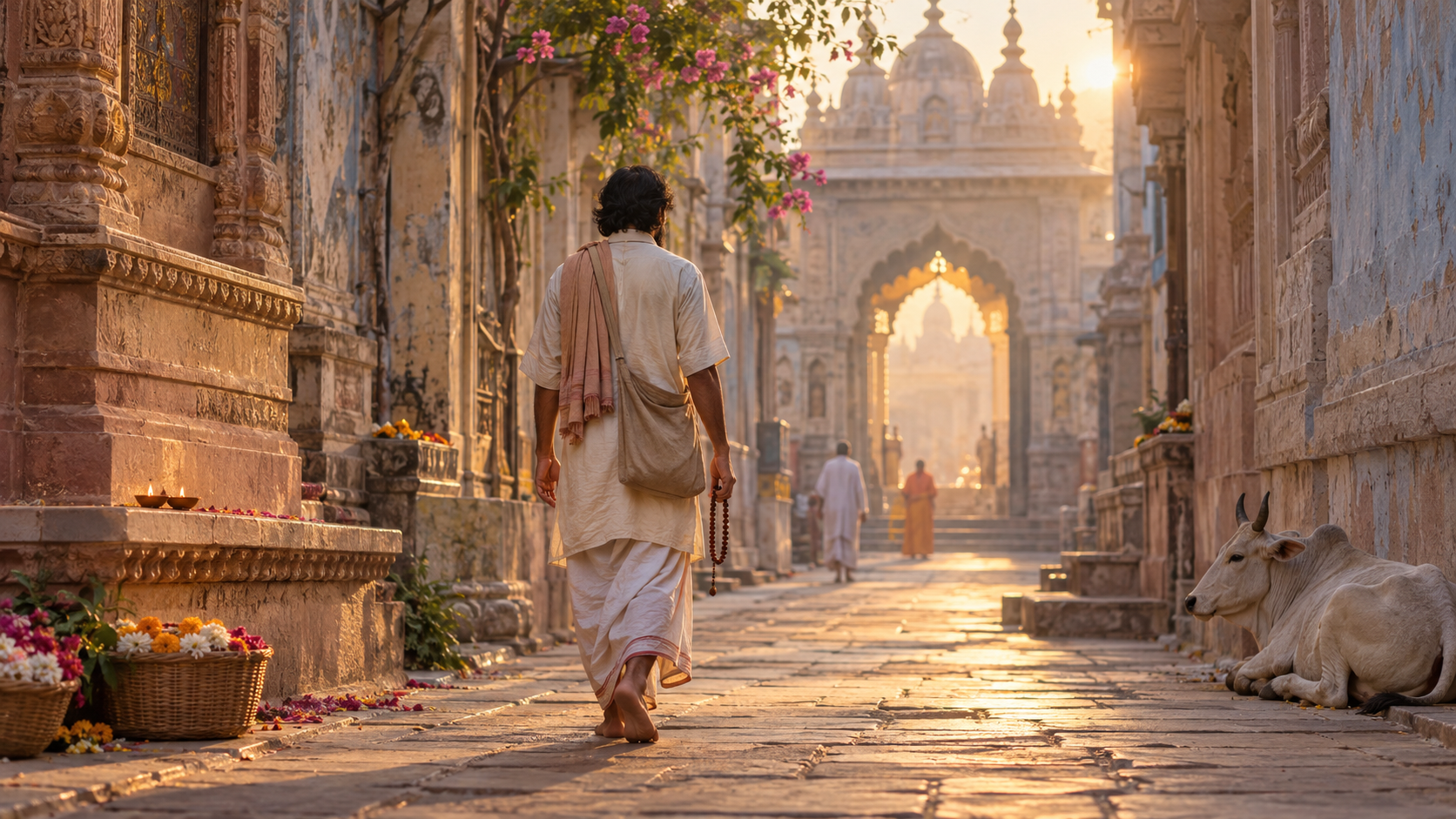
You may arrive in Vrindavan carrying a quiet fear: what if a place revered as sacred feels crowded, tiring or emotionally ordinary to you? That does not mean your pilgrimage has failed. Vrindavan is not an examination in which you must produce devotion on demand.
The useful distinction is between collecting impressions and offering attention. A tourist asks how much can fit into the day. A pilgrim asks what deserves complete presence. Build your visit around that question, and even an imperfect day can become spiritually fruitful.
Begin the pilgrimage before you arrive
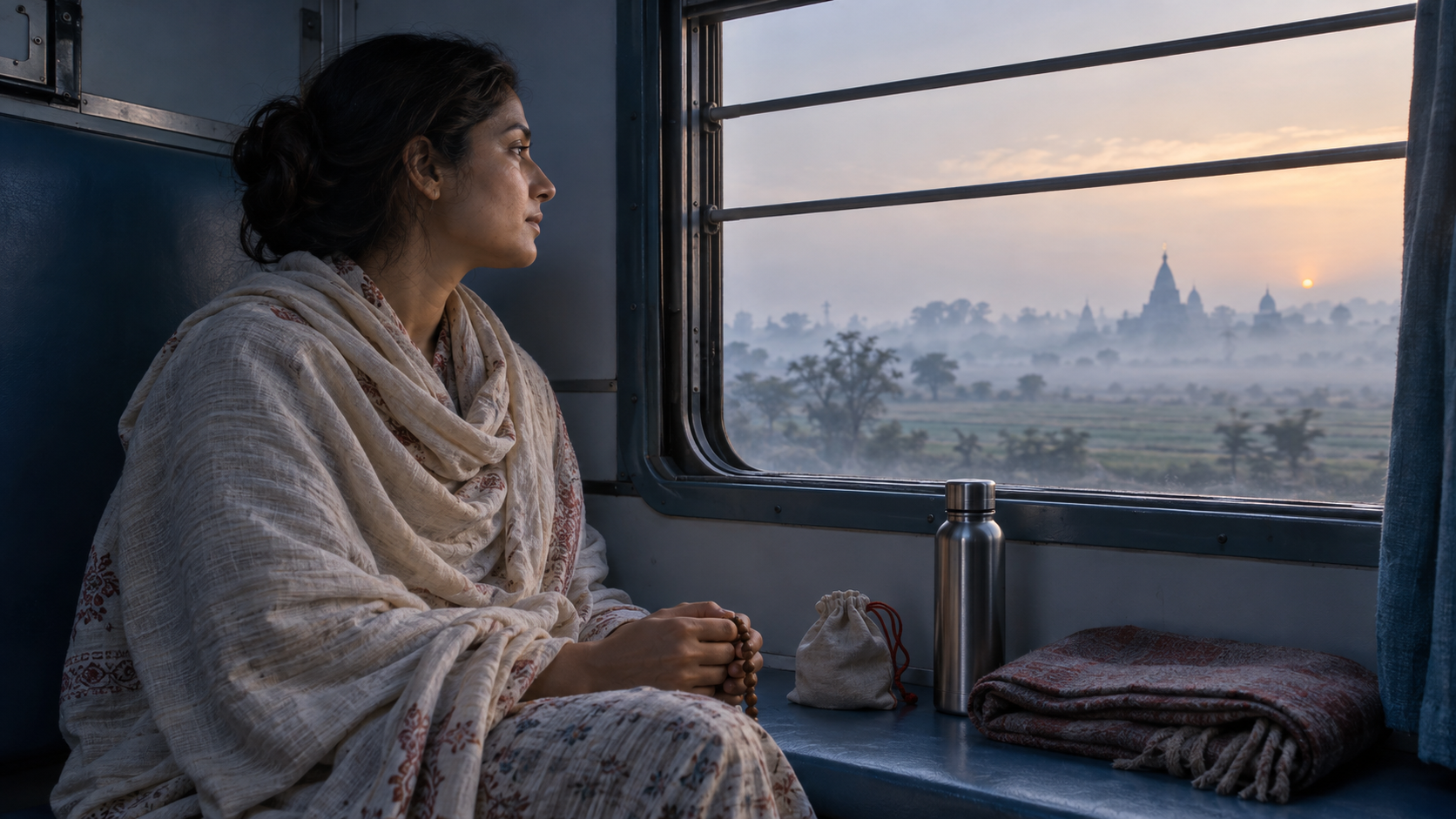
In Vaishnava understanding, Vrindavan is inseparable from Radha and Krishna and from the remembrance of divine lila. It is not merely a historic location or an attractive background for religious photographs. To enter it as a pilgrim is to approach a relationship that already exists, whether or not you immediately feel it.
Begin with a short sankalpa, a statement of intention. Write one sentence that is concrete enough to govern your choices: “During this visit, I will listen before judging,” or, “I will give undivided attention to nama and darshan.” Avoid grand promises. A narrow intention can survive tiredness, distraction and changes of plan; an ambitious spiritual performance usually cannot.
Prepare three anchors before travelling:
- One purpose: Decide whether you are coming primarily for remembrance, prayer, study, repentance, gratitude or another honest intention.
- One daily practice: Choose a mantra, prayer or form of remembrance already rooted in your lineage or sincere practice.
- One restraint: Limit something that fragments attention, such as constant photography, compulsive posting, needless shopping or an overloaded itinerary.
If you have a guru, acharya or established sampradaya, ask how your tradition recommends approaching the dhama. Different Vaishnava lineages may use different liturgies, disciplines and theological language. Do not combine unfamiliar practices merely because they appear exotic. Simple nama, prayer and respectful conduct are better than imitating an esoteric discipline you do not understand.
Distance is not depth. Even a journey from the Netherlands to Vrindavan becomes a pilgrimage only through the quality of attention brought to it. Conversely, a person may live near a sacred place and still need to recover the pilgrim’s gaze.
Do not decide in advance what grace must feel like. Devotion may appear as joy, but it may also expose restlessness, impatience, grief or resistance. Treat those responses as material for honest reflection, not as a verdict on Vrindavan or on your spiritual worth.
Build the day around remembrance, not coverage
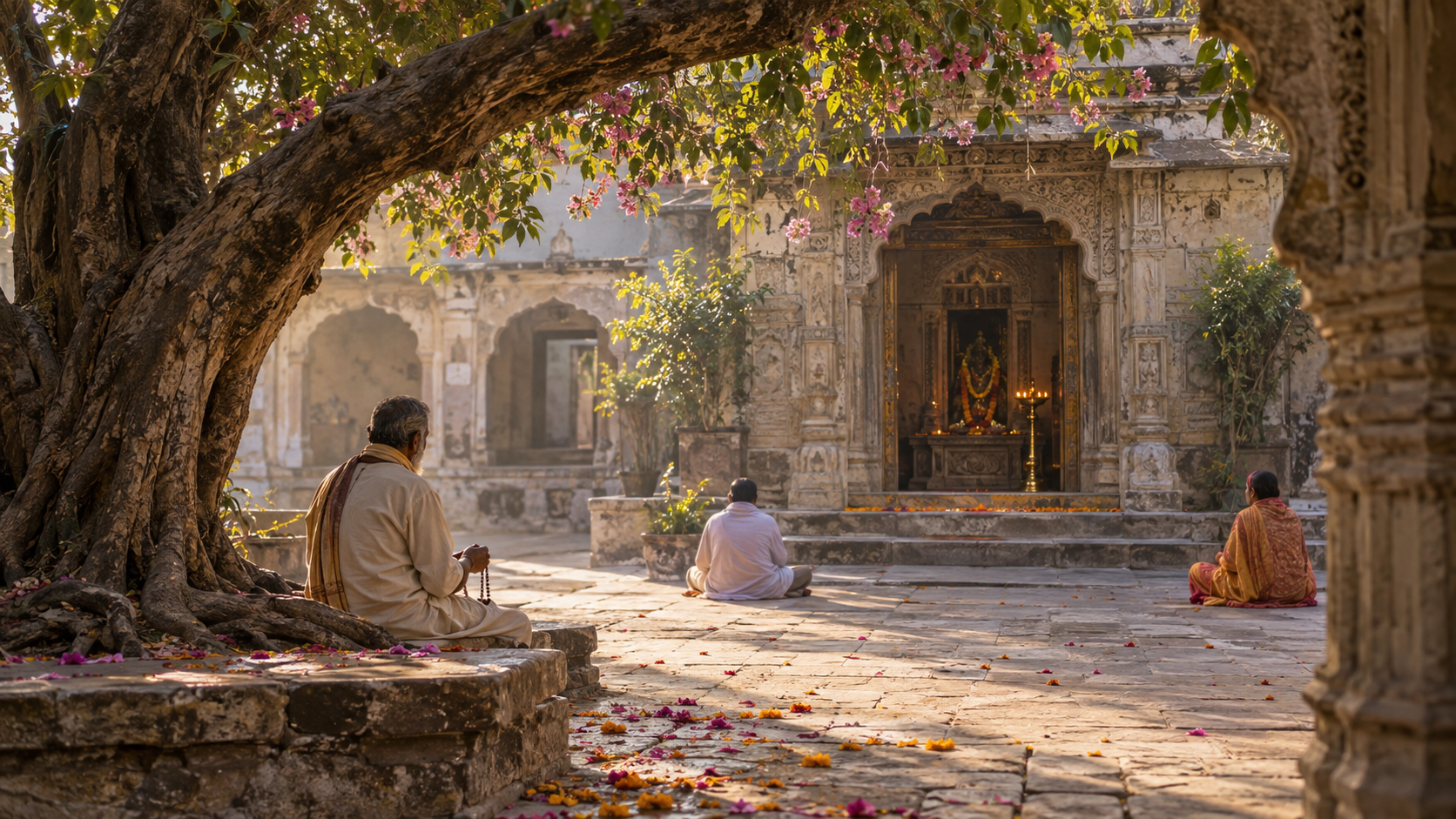
An itinerary can help you reach a place, but it cannot make you present there. When every stop is followed by a rushed departure, darshan becomes another completed item. Reduce the number of commitments until you can remain attentive at the ones you keep.
A simple pilgrim’s rhythm can work better than an elaborate schedule:
- Begin before looking at your phone. Recall your sankalpa and offer your chosen prayer or nama. This gives the day a centre before messages, maps and logistics claim your attention.
- Choose one primary darshan. Let one temple visit or devotional gathering be the spiritual anchor of the day. Other visits can remain secondary.
- Remain briefly after the main encounter. Do not move immediately from darshan to photography or navigation. Step aside without obstructing others and allow what you have seen, heard or felt to settle.
- Make one unhurried passage. Walk without trying to document every scene. Notice when your mind begins rating, comparing or consuming the place, and return to remembrance.
- Close the day honestly. Record what drew you toward devotion, what disturbed you and what you avoided. The difficult entry may teach you more than the impressive one.
Darshan is not merely the act of inspecting a sacred image. The pilgrim presents himself or herself before the deity and becomes available to be seen. That changes your posture. Instead of asking whether the image, temple or ceremony was sufficiently impressive, you ask whether you were attentive, truthful and receptive.
During aarti or another form of worship, follow the cues of the temple and its regular devotees. Keep entrances and movement paths clear. Follow instructions concerning shoes, phones, photography and restricted areas. If you do not know a response, observe quietly rather than copying gestures for appearance’s sake. Reverence does not require pretending to possess knowledge you do not have.
Use your camera deliberately. If photography is permitted, take what you genuinely need and then put the device away. Ask before photographing an identifiable person, especially someone engaged in worship. A devotee’s absorption is not a public performance, and another person’s hardship is not pilgrimage scenery.
Listening matters as much as looking. You may encounter forms of pronunciation, music, dress or worship that differ from what you know. Difference is not evidence of inferiority. Notice the impulse to correct or rank people, then return to the humility appropriate to a guest in a living sacred community.
Hold reverence and discernment together
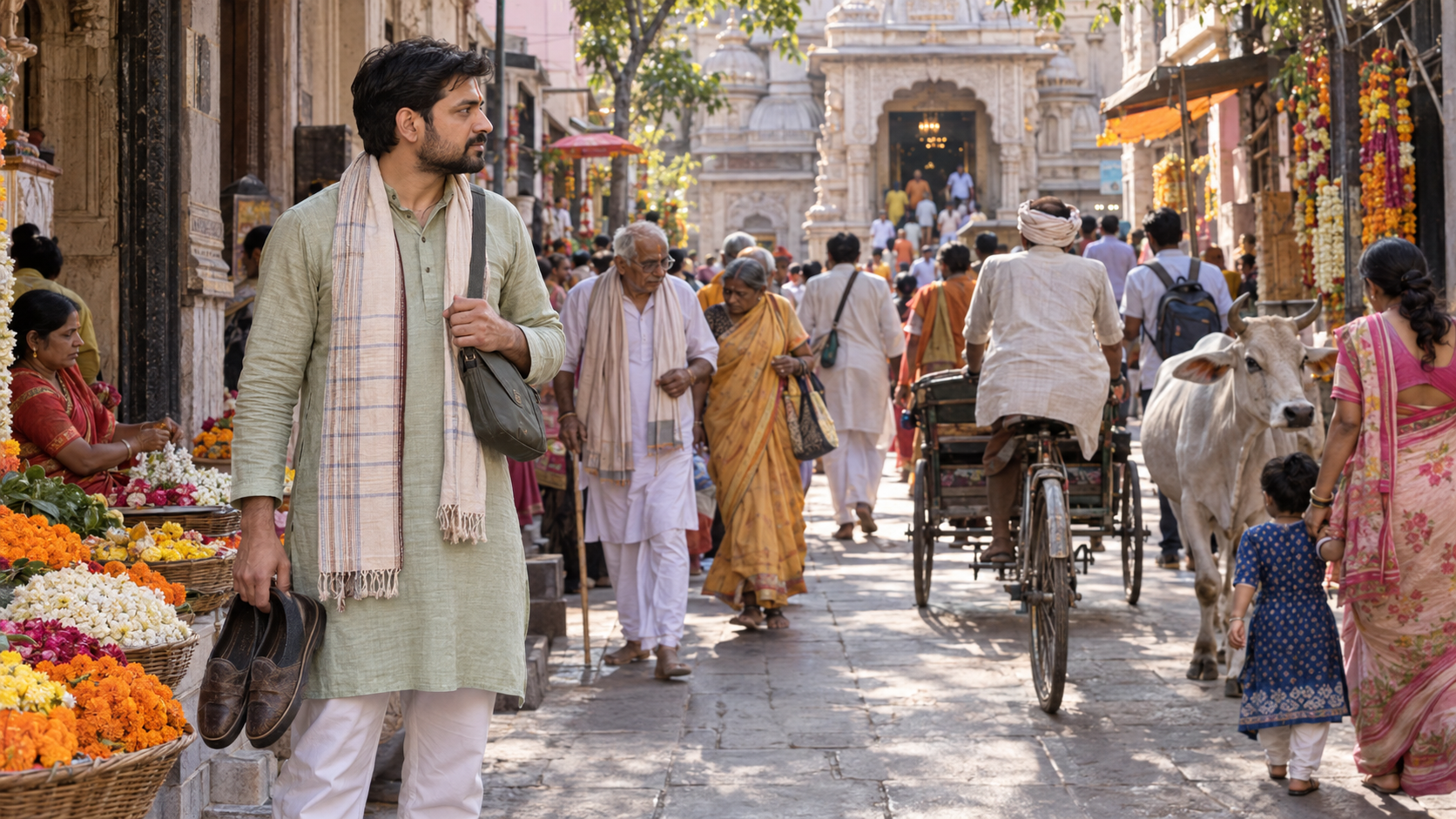
A holy place is still inhabited and visited by human beings. Sanctity does not make every transaction fair, every claim authoritative or every interaction spiritually beneficial. The right response is neither cynicism nor naivety. Keep reverence for the dhama while applying ordinary discernment to human conduct.
If someone pressures you to pay for access, purchase a ritual, disclose personal information or make an immediate donation, pause. You do not need to settle a theological argument in the moment. Give only when you understand whom or what you are supporting and can do so freely. A calm refusal is not an offence against devotion.
Protect your documents, money, phone and payment details as you would during any journey. If a crowd, the weather or physical fatigue exceeds your capacity, step away and recover. Exhaustion is not proof of surrender, and preventable danger is not tapas. A sustainable pilgrimage leaves you able to pray, notice and behave well.
Discernment must also be directed inward. A pilgrim can use spirituality to excuse impatience with companions, disregard for workers or entitlement toward residents. Watch how you speak when plans change. Pay agreed prices without humiliating bargaining. Keep shared spaces clean and carry away what you bring. These ordinary acts reveal whether devotion is shaping conduct or remaining an idea.
Do not judge Vrindavan solely through a single pleasant or unpleasant encounter. At the same time, do not use the holiness of the place to deny misconduct. You can honour the sacred character of the dhama, maintain a firm boundary with an individual and seek help when you feel unsafe. Those positions are compatible.
Be equally careful with instant spiritual conclusions. A powerful emotion does not automatically make every interpretation correct. A dry period does not prove that you were rejected. Let the experience mature through prayer, study and conversation with a trustworthy teacher rather than announcing a final judgment while you are still inside it.
Leave with a practice, not just a feeling
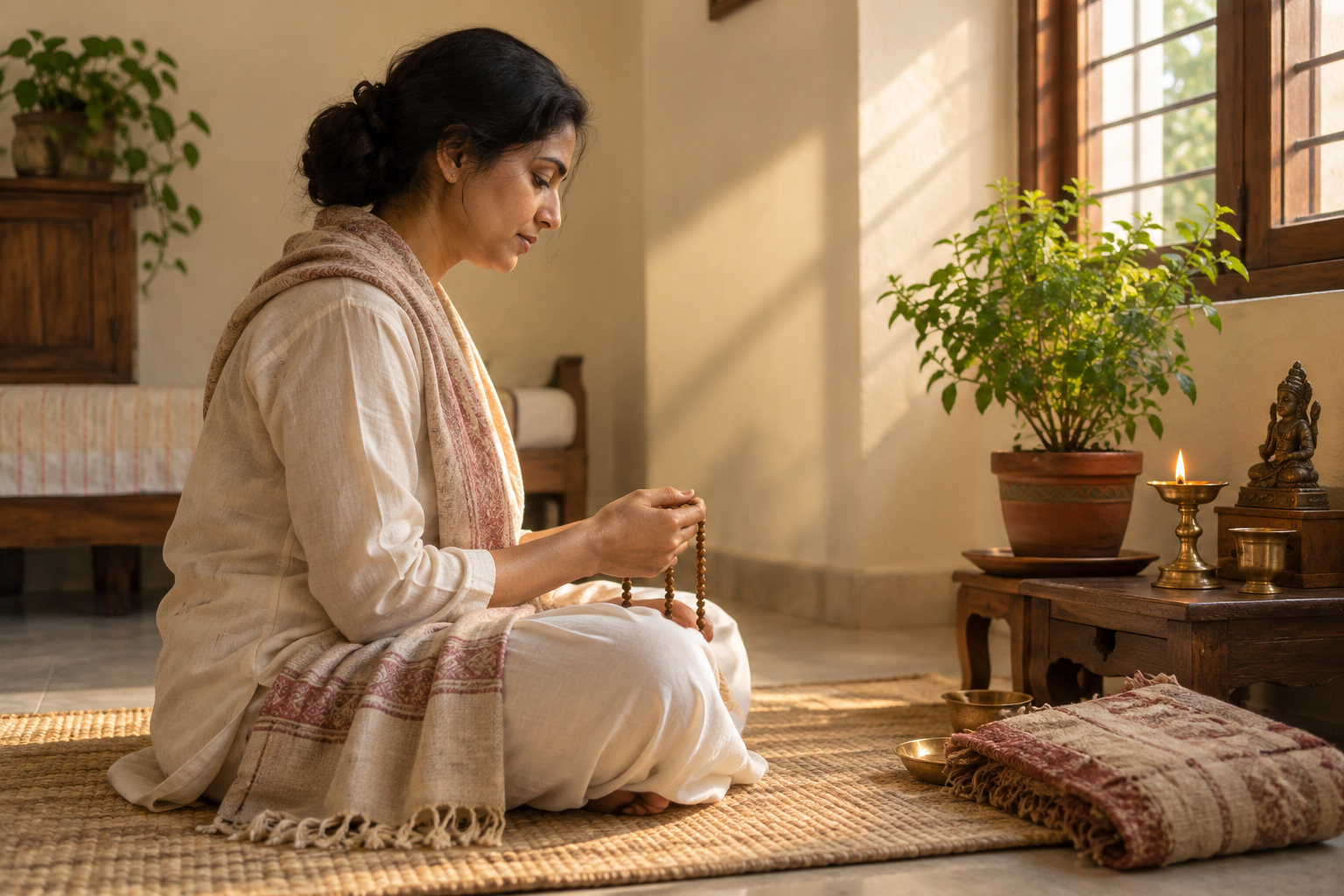
The most useful measure of your visit appears after you return to ordinary life. A memory may fade, while a practice can continue reshaping attention. Before leaving, select one discipline small enough to keep without the atmosphere of pilgrimage carrying you.
Tie that discipline to an existing point in the day: repeat your chosen nama after bathing, offer a prayer before opening your first message, read a small passage before the evening meal or serve regularly in a nearby temple or community. The exact practice matters less than continuity and sincerity. Abhyasa turns a meaningful visit into a durable orientation.
Use a simple three-part journal page before you travel home:
- Received: What brought clarity, gratitude, humility or remembrance?
- Resisted: What provoked impatience, superiority, fear or disappointment?
- Will practise: What single change will enter your daily conduct?
Be precise. “Become more devotional” is too vague to guide tomorrow morning. “Keep the phone closed until after prayer” or “ask consent before photographing worship” can actually change behaviour.
You need not publish every conclusion immediately. Some encounters should remain unedited long enough to work on you. When you later ask what Vrindavan feels like to you, distinguish the first sensory impression from the deeper effect of remembrance. The place may have challenged an expectation before it clarified a responsibility.
Choose your continuing practice before you pack. Then keep it on the first ordinary day after your return. That day, more than the most photogenic moment of the journey, is where the pilgrimage begins to bear fruit.
Key takeaways
- Enter Vrindavan with one clear sankalpa, one established devotional practice and one restraint that protects your attention.
- Organise each day around one primary act of darshan or remembrance instead of trying to cover every possible stop.
- Do not demand a particular emotion. Joy, discomfort and apparent ordinariness can all become material for sincere self-examination.
- Respect temple rules, local devotees and personal consent; do not turn worship or hardship into visual content.
- Combine reverence for the dhama with ordinary boundaries concerning money, personal information, physical safety and coercive claims.
- Carry one specific form of abhyasa home and connect it to an existing daily routine.
References

Leave a Reply
You must be logged in to post a comment.