
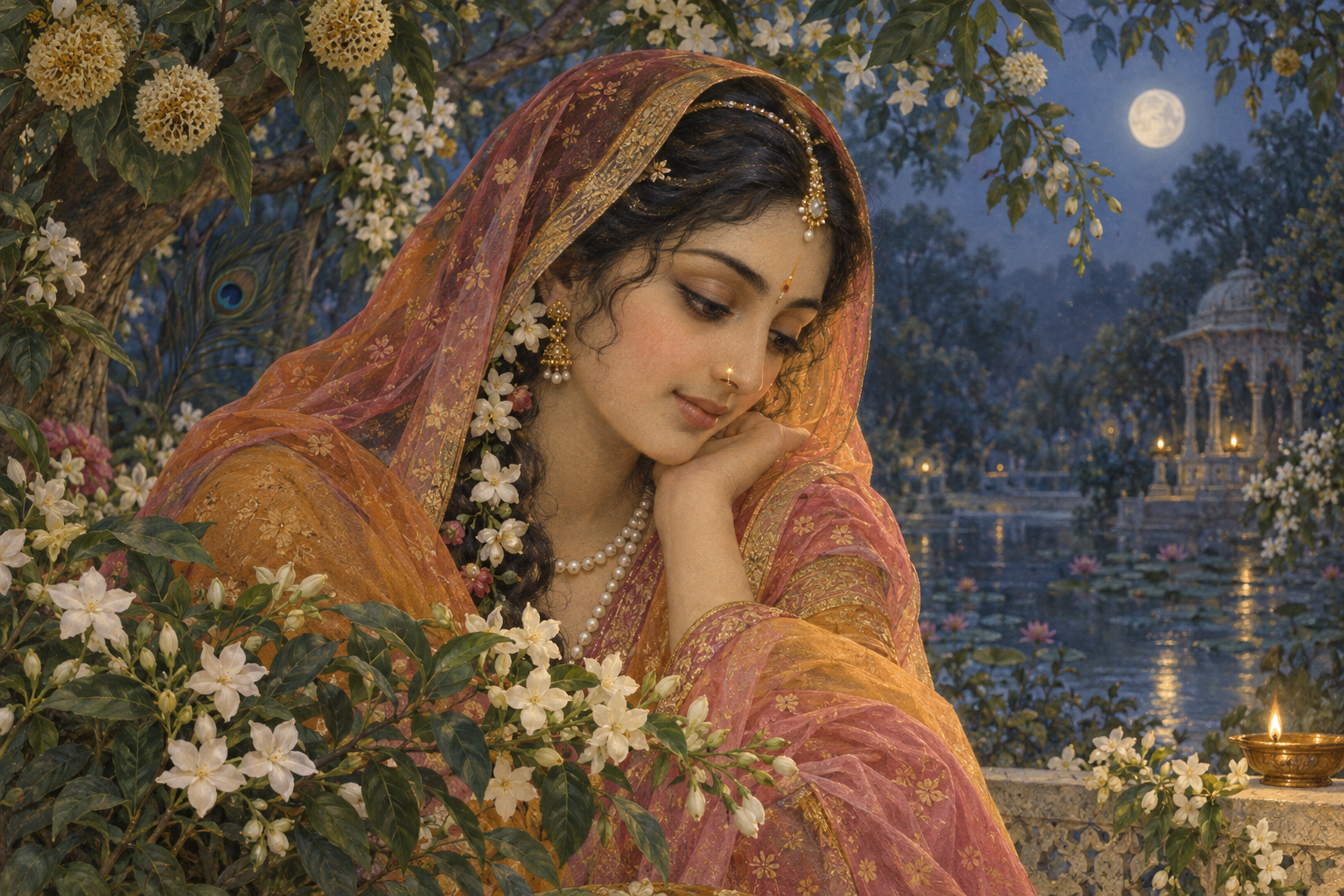
If you pause over a hymn or meditation praising Sri Radha’s nose and wonder why sacred poetry gives such close attention to one small feature, don’t rush past the discomfort or dismiss the description as ornament. The useful question isn’t, “What does the ideal nose look like?” It is, “What kind of attention is this asking me to cultivate?”
Within Radha-Krishna bhakti, loving attention can become extraordinarily particular. A feature is contemplated not as an isolated object but as part of the beloved divine person. The devotional purpose is explicit: Sri Radha’s nose can serve as a stimulation for ecstatic love. That changes how you should read, view, or remember it.
A small feature trains a different kind of seeing

Ordinary looking often turns a face into an object of judgment. We compare proportions, rank attractiveness, search for flaws, or project a fashionable ideal onto what we see. Devotional contemplation has another direction. It begins with relationship: this feature is precious because it belongs to Sri Radha.
The nose occupies a visually decisive place in the face. It helps establish the central line when the face is seen from the front and gives the profile much of its character when viewed from the side. A poet, painter, or devotee can therefore let attention rest there without treating it as a complete subject in itself. The detail leads back to the countenance, and the countenance leads back to the person.
This distinction is essential. Devotional attentiveness is precise, but it is not clinical. It does not dissect the divine form into unrelated parts. Nor does it ask you to manufacture an anatomical reconstruction from poetic language. Love notices specifically while continuing to perceive the whole.
When you encounter praise of Sri Radha’s nose, ask three questions. What quality is the description inviting you to notice? What devotional mood does that quality awaken? How does the feature return your attention to Sri Radha rather than trapping it in a judgment about physical appearance? If you cannot answer the third question, you have probably stopped at form instead of allowing form to open into bhava.
Move from form to rasa without reducing either
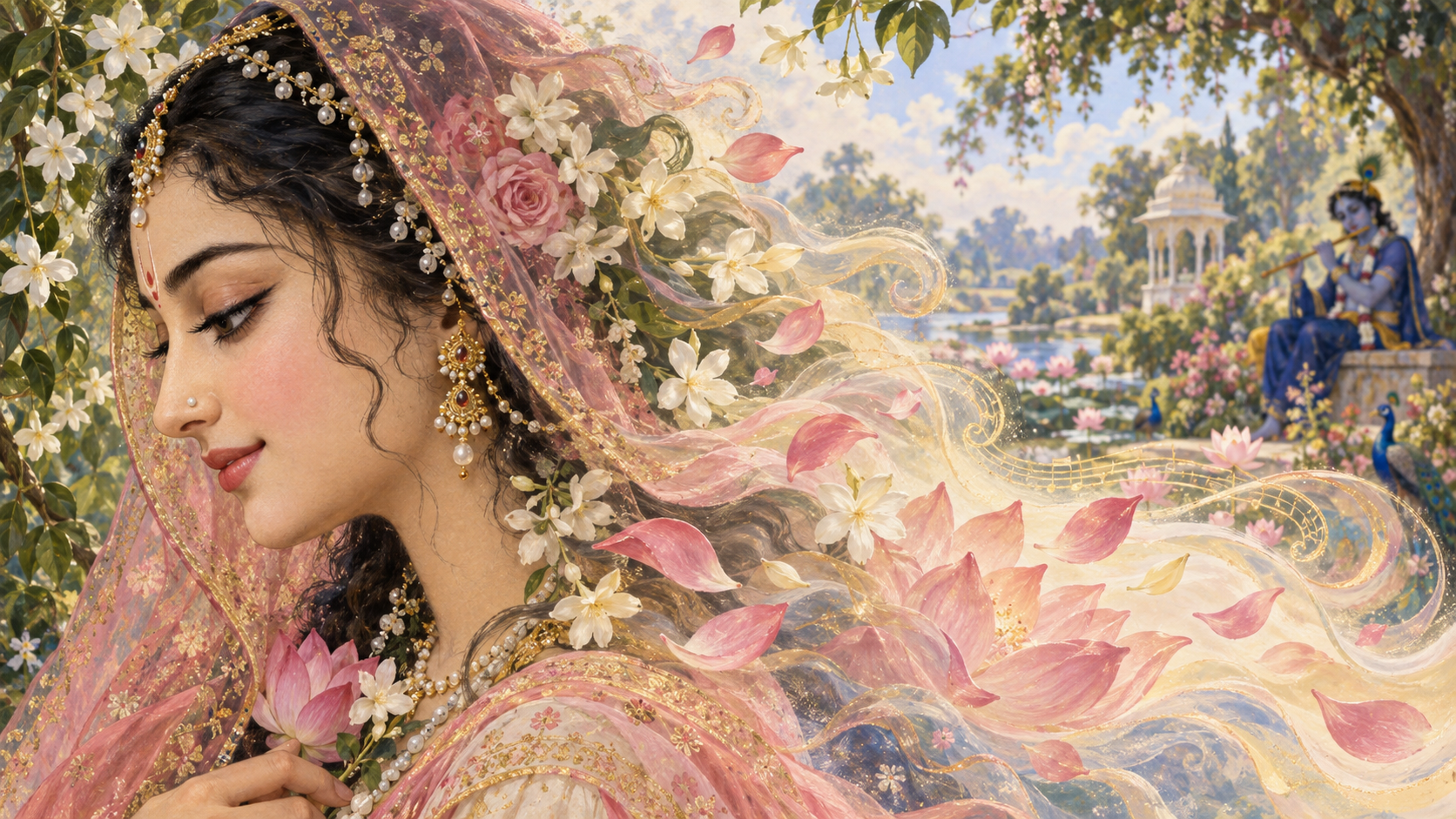
A useful devotional reading moves through three connected layers. First comes the visible or imagined feature: the contour presented by a murti, painting, verse, or meditation. Second comes its aesthetic effect, which may be experienced as delicacy, harmony, grace, or another quality actually supported by what is before you. Third comes the devotional movement: remembrance of Sri Radha, affection for her, humility before her, or a wish to serve.
Problems arise when one layer replaces the others. Attention confined to physical contour becomes aesthetic inspection. Emotion detached from the form becomes vague sentiment. An elaborate interpretation unsupported by the words or image becomes private invention. Devotional aesthetics keeps form, felt response, and relationship together.
Poetic comparisons also need to be read as comparisons, not construction diagrams. Their work is often to shape perception and mood. If a comparison conveys fineness, softness, balance, or radiance, receive that effect before asking how literally the two objects resemble each other. Measuring the metaphor can destroy the very sensitivity it was meant to awaken.
At the same time, “symbolic” should not become permission to assign any meaning you prefer. Begin with what the verse, image, or inherited explanation actually gives you. If it names a quality, stay with that quality. If it simply praises beauty, do not force a hidden doctrine into every curve. Reverence includes restraint.
This approach also prevents a common mistake: treating sacred embodiment as embarrassing. Bhakti need not make the divine form abstract in order to keep it holy. The body is not the problem. The decisive issue is the movement of the gaze. Does beauty produce possession and comparison, or remembrance and service?
A four-pass practice for reading or beholding the feature

You can use the following practice with a verse, painting, or murti. It is deliberately simple because the aim is disciplined attention, not the accumulation of imagined detail.
- Locate the devotional setting. Identify whether you are encountering public temple imagery, a song, literary praise, or an intimate contemplative description. These settings do not automatically carry the same permissions. If your lineage reserves a mode of meditation for guided practice, respect that boundary.
- Receive the whole form first. Notice Sri Radha’s face or presence before concentrating on the nose. This establishes the feature as belonging to a person rather than appearing as a detached aesthetic specimen.
- Attend only to what is given. Observe the actual line, wording, comparison, colour, or gesture before you. Do not add an ornament, expression, symbolism, or physical detail merely because it seems plausible. Let attention become fine without becoming fanciful.
- Return deliberately to relationship. After resting on the feature, return to the whole countenance, Sri Radha’s name, or the devotional activity you were performing. The feature has served its purpose when it strengthens remembrance rather than replacing it.
If you are translating or explaining a verse, preserve this movement from detail to person. Avoid turning a sequence of praises into a catalogue of body parts. Repeatedly restore the grammatical and devotional subject: it is Sri Radha who is being remembered, not an anonymous standard of feminine beauty.
If you are painting, sculpting, or commissioning an image, establish the whole face before emphasizing a feature. Work within the iconographic and devotional conventions of the community for whom the image is intended. Generic glamour, contemporary beauty trends, and personal preference are poor substitutes for a living tradition’s visual language.
If you are using the description in personal remembrance, follow the practice received from your guru or lineage. Not every Dharmic tradition worships Sri Radha, and not every Radha-Krishna lineage approaches intimate descriptions in the same way. Tradition-specific guidance is more reliable than assuming that every published meditation is automatically a personal instruction.
Key takeaways: five tests for a devotional gaze
- The feature remains connected to Sri Radha. You are remembering a divine person, not evaluating an isolated body part.
- Attention produces relationship, not comparison. The description should not become a template for judging human faces or enforcing a beauty standard.
- Your interpretation stays within what is given. You distinguish the wording or image before you from associations supplied by your own imagination.
- Beauty leads toward remembrance and service. If contemplation chiefly produces possession, vanity, or agitation, return to the whole form, the divine name, or a simpler practice.
- Lineage determines the proper depth of practice. When imagery becomes intimate or its intended use is unclear, seek tradition-specific explanation instead of improvising a method.
These tests do not ask you to suppress aesthetic response. They help you recognise its direction. Sacred beauty can delight the senses and stir the heart while remaining reverential. The safeguard is not indifference to beauty but fidelity to the beloved to whom that beauty belongs.
Let the detail return you to Sri Radha
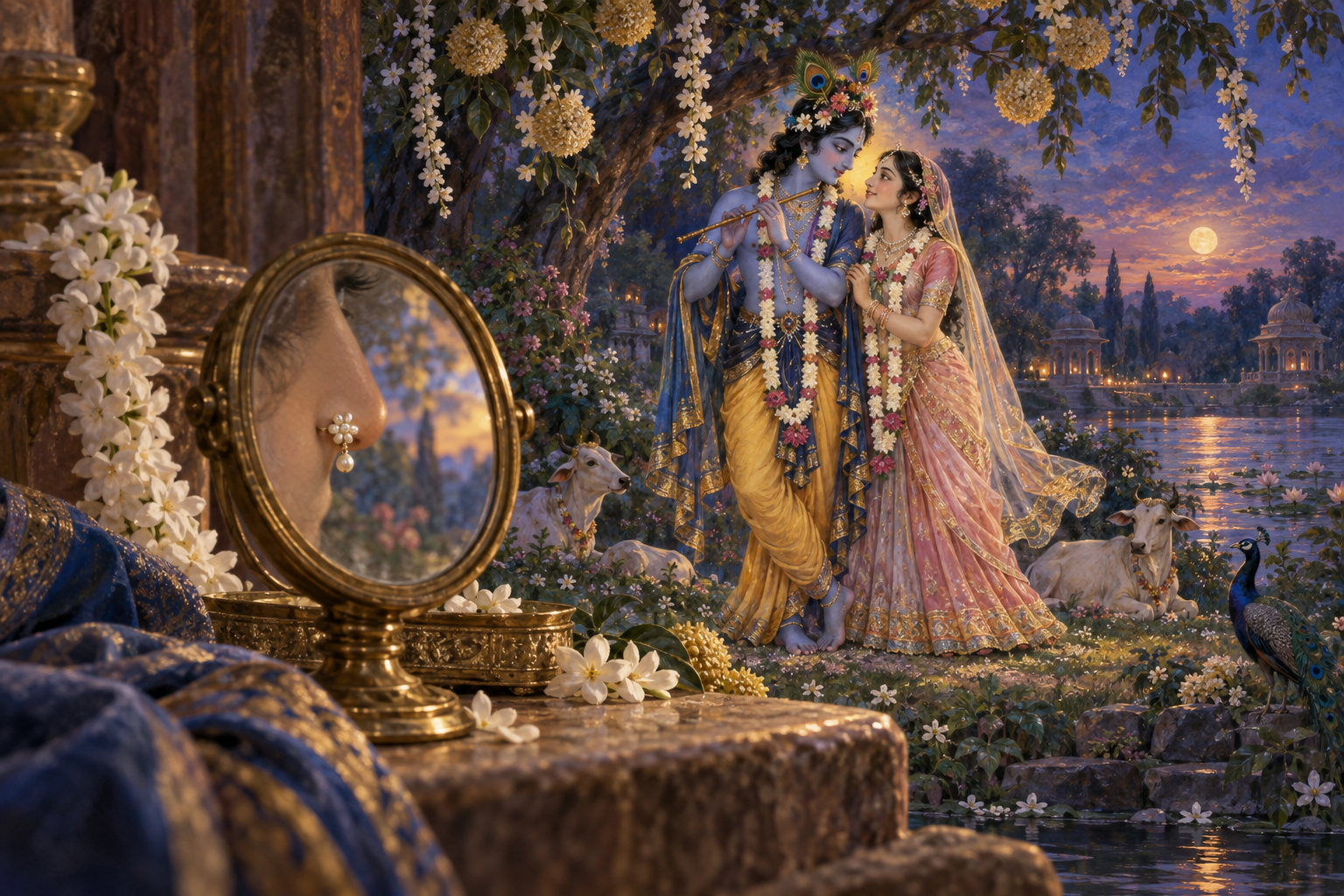
The next time you meet a description of Sri Radha’s nose, read or behold the whole scene first. Then pause at the feature and ask what loving attention is being trained to notice. Finally, return to Sri Radha herself. If the detail makes your remembrance more attentive, your interpretation more disciplined, and your disposition toward service more gentle, it has become a doorway rather than a distraction.
References

Leave a Reply
You must be logged in to post a comment.