
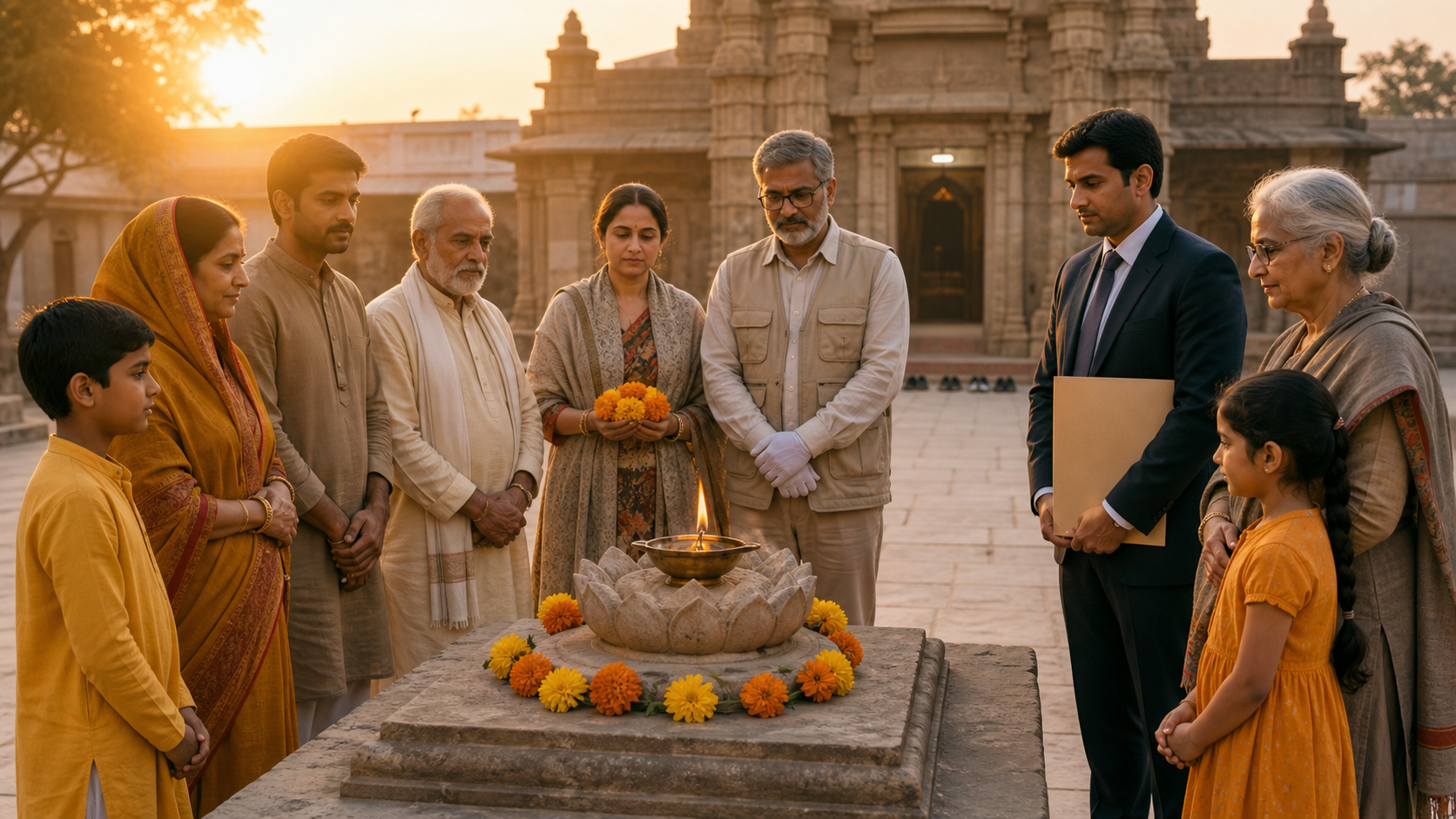
You see a Hindu deity printed on something meant to be stepped on, or you hear that worship has been restricted at a place claimed as sacred ground. You want to respond, but you do not want anger, weak evidence, or a confrontation to damage the cause you are trying to defend.
Start by separating two very different problems. A product that puts sacred imagery underfoot calls for prompt correction. A disputed site’s history calls for evidence, lawful process, and protection of worshippers. When you use the right response for the right problem, your demand becomes clearer and harder to dismiss.
First decide what kind of disrespect you are seeing
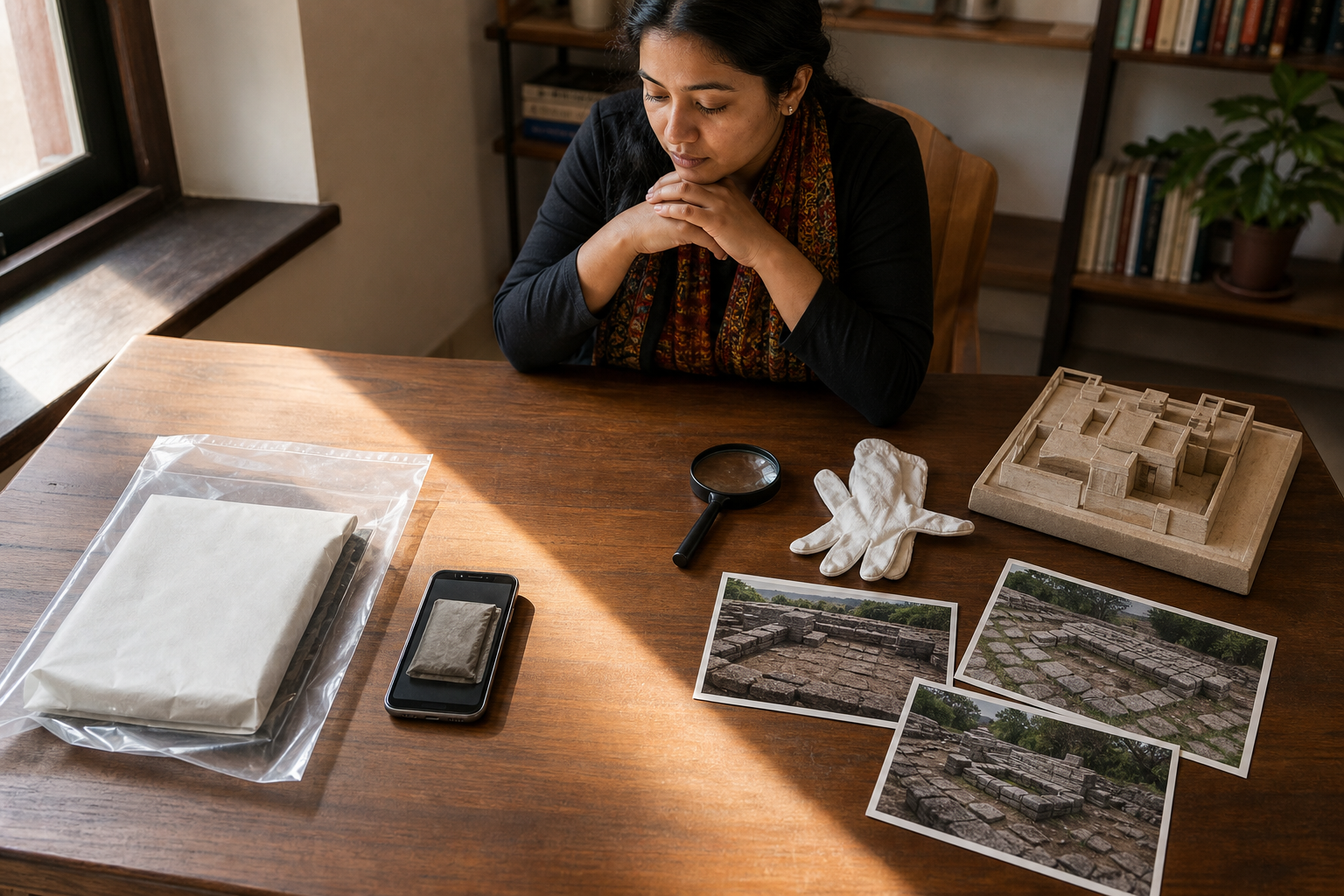
Not every appearance of a Hindu image outside a mandir is disrespectful. A depiction can be devotional, educational, artistic, or decorative. Placement and intended use are often what change the meaning. Ask what the object requires a person to do with the sacred form.
A doormat carrying Lord Ganesha makes the problem unusually clear: its ordinary purpose is to be walked upon. That function conflicts with the reverence given to Ganesha as the deity associated with wisdom, auspicious beginnings, and the removal of obstacles. In Hindu households, images and murtis are commonly kept in a shrine or at a respectful height, not placed where feet will tread on them. This was the central objection when Shein was urged to withdraw a Ganesha doormat and apologize.
Before starting a campaign, run the use through five questions:
- What is represented? Identify the deity, sacred symbol, mantra, scriptural calligraphy, shrine, or ritual object accurately. Do not rely on a vague claim that something merely looks Hindu.
- What does normal use require? Does the item invite someone to tread on, wipe against, sit on, soil, or casually discard the sacred image?
- Where will it be placed? An image intended for a shrine carries a different context from the same image printed on flooring, footwear, or a disposable object.
- Does the design preserve the sacred meaning? Look at the whole object, not only the image. A respectful depiction can become degrading when its commercial function contradicts devotional handling.
- Are you certain about the custom? Hindu traditions are diverse. If the problem is not obvious, ask a practitioner, temple authority, or tradition-specific advisor before speaking for an entire community.
This assessment gives you a precise explanation: the item is objectionable because its ordinary use requires a sacred form to be treated in a particular degrading way. That is more useful than telling a company that its product is offensive without explaining why.
Make a commercial complaint that can produce a correction

Your immediate goal is not to prove how angry you are. It is to get the image out of circulation, obtain an honest acknowledgment, and reduce the chance of repetition. A disciplined complaint gives the seller a clear set of actions.
- Preserve the evidence. Capture the full product page, including the image, item name, seller, retailer, URL, and the date on which you viewed it. Save associated advertisements as well. A cropped image without its commercial context is easier to dispute.
- Describe the conflict in one sentence. Name the sacred figure and explain how the product’s normal use violates the way that figure is handled devotionally. Avoid speculative claims about the designer’s motive.
- Request exact remedies. Ask the retailer to remove the listing and associated advertising, stop further distribution, and explain how remaining stock will be handled without further degrading the imagery.
- Ask for an accountable apology. A useful apology identifies what was wrong, acknowledges the hurt caused, states what has been removed, and explains what will prevent recurrence. A generic expression of regret leaves the underlying failure untouched.
- Request a preventive review. Ask for a protocol covering products that use deities, sacred symbols, scriptural text, and ritual imagery. Cultural advisors and community stakeholders should be consulted before such merchandise is approved.
You can adapt this wording: Please remove [product name]. It places an image of [deity or symbol] on [type of item], whose normal use involves [specific treatment]. That treatment conflicts with the sacred status and customary handling of the image. Please remove the listing and related advertising, explain how remaining stock will be handled respectfully, issue a clear acknowledgment, and add cultural review before approving similar products. Evidence: [URL and screenshot].
If ordinary customer support does not act, send the same evidence and request to the retailer’s ethics, compliance, or public-relations channel and to a responsible community organization. Keep the focus on the item and the decision-makers who can correct it. Threats, abuse, disclosure of private employee information, or attacks on an ethnicity or religion do not protect a deity; they create a second wrong and give the company an excuse to treat a substantive complaint as a moderation problem.
Once the listing disappears, verify that related advertisements and duplicate listings have also been addressed. Removal is the urgent remedy, but a review process is the durable one.
Defend a contested sacred site through evidence and due process
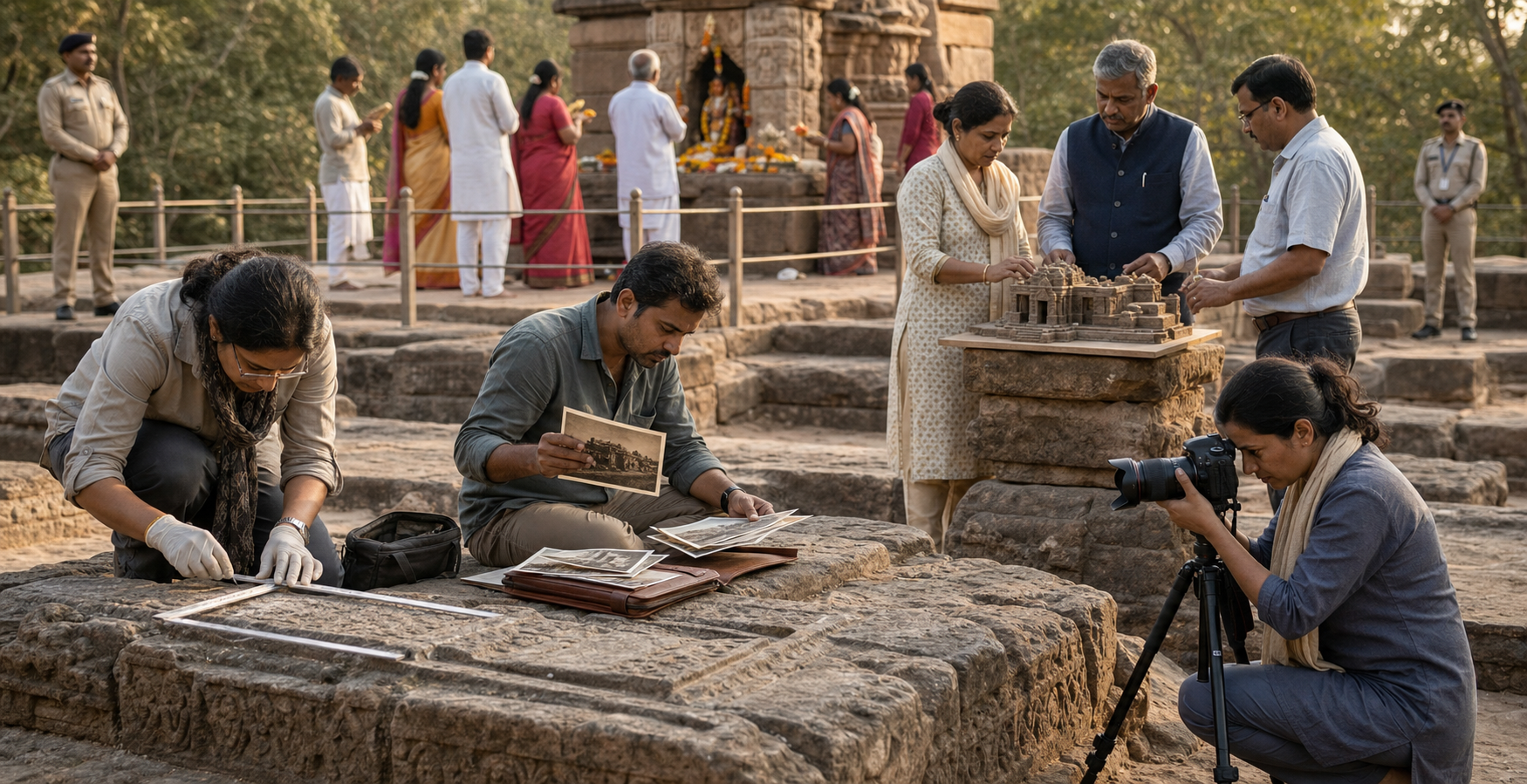
A disputed site requires a different discipline. Devotion can explain why a community cares deeply about a place, but devotion alone does not settle archaeology, legal title, historical use, or present access rights. Administrative control, by itself, does not settle the site’s history either.
The danger of confusing religious conviction with an already established legal conclusion became visible in Fatehpur on November 6, 2025. Hindu women attempted to perform puja at a mausoleum that some residents regard as a former Hindu temple site. Police intervened, and a brief confrontation followed. The site’s historical status remained disputed even as access restrictions, religious aspiration, and public-order concerns collided.
If you are supporting a sacred-site claim, work in this order:
- Establish the current status. Confirm who administers the site, which access rules are in force, whether litigation is pending, and whether any court or government order governs worship. If the position is unclear, seek written clarification from the relevant administration and advice from qualified local counsel.
- Separate evidence from assertion. Organize archaeological or architectural material, historical records, and evidence of living religious memory as distinct categories. Label disputed interpretations as claims until a competent authority has examined them.
- Ask for an evidence-producing process. A court-monitored archaeological assessment, transparent documentation, and review by qualified heritage bodies can test a claim without requiring the public to decide history through a confrontation.
- Include the people who bear the consequences. Community consultations should include worshippers, local residents, women, young people, civic representatives, and relevant heritage expertise. Consultation is not a substitute for evidence, but it can expose practical access and safety issues before they become flashpoints.
- Seek an interim protocol. While adjudication or heritage review is pending, ask for written rules covering entry, observances, processions, communication with police, and changes to access. The protocol should protect public safety without pretending that the underlying historical question has already been decided.
- Demand regular communication. A district administration should explain restrictions, procedural milestones, and changes plainly. Silence allows rumor to occupy the space where verified information should be.
Do not enter a restricted site, organize unauthorized worship, or encourage participants to push through a police line. Such action can expose worshippers and bystanders to injury, detention, and an escalation that makes an evidence-based resolution more difficult. If an order appears discriminatory or unlawful, challenge it through the appropriate court or administrative procedure rather than asking devotees to become the test case in a physical confrontation.
Due process should not become a polite name for indefinite delay. Ask who will conduct the assessment, what evidence will be considered, which authority will decide, how the public will receive updates, and whether an interim access arrangement is possible. A time-bound, documented request protects the claim from both reckless escalation and bureaucratic disappearance.
Apply the same dharmic standard to every community

Hinduism, Buddhism, Jainism, and Sikhism are distinct traditions. Respect does not require collapsing those differences. It requires recognizing a shared expectation that sacred images, murtis, symbols, and scriptural calligraphy should not be reduced to objects of humiliation or careless disposal.
The values often brought to tense religious situations include ahimsa, karuna, daya, and sarbat da bhala: non-harm, compassion, mercy, and concern for the welfare of all. These principles do not require passivity. They set the manner in which a firm demand should be pursued.
- Be uncompromising about removing an object whose ordinary use places a deity underfoot, but do not dehumanize the people responsible for the error.
- Defend freedom of worship, but do not declare a contested historical claim proven before the evidence has been examined.
- Ask public authorities to maintain safety impartially, but also require them to explain restrictions and provide a path for review.
- Extend to Buddhist, Jain, Sikh, and other sacred forms the consideration you expect for Hindu deities, temples, mantras, and scriptures.
Consistency matters because cultural respect cannot survive as a privilege demanded only for one’s own community. A principle becomes credible when you are willing to apply it even when another tradition is the one being mocked, commercialized, or denied a fair hearing.
Key takeaways
- Judge sacred imagery by both what it depicts and what the object’s normal use requires someone to do with it.
- For commercial misuse, preserve the listing and request removal, respectful handling of stock, a specific apology, and a preventive review process.
- Do not accuse a seller of malicious intent when the observable placement and function already establish the problem.
- For a contested site, distinguish devotion from proof and pursue transparent heritage assessment, judicial review, community consultation, and written interim access rules.
- Keep advocacy firm, nonviolent, accurate, and reciprocal across religious traditions.
The next time you encounter misuse, take one disciplined first step: record the exact object or restriction, name the specific harm, and send the remedy to the person or institution able to act. If the issue concerns a disputed site, protect worshippers by moving the claim into an evidence-producing legal process before emotion turns uncertainty into confrontation.
References
- DharmaRenaissance Blog — Shein Urged to Apologize and Remove Lord Ganesha Doormat Amid Outrage and Calls for Respect
- DharmaRenaissance Blog — Fatehpur Standoff: Women’s Puja at Disputed Mausoleum Spurs Police Clash, Calls for Harmony
