
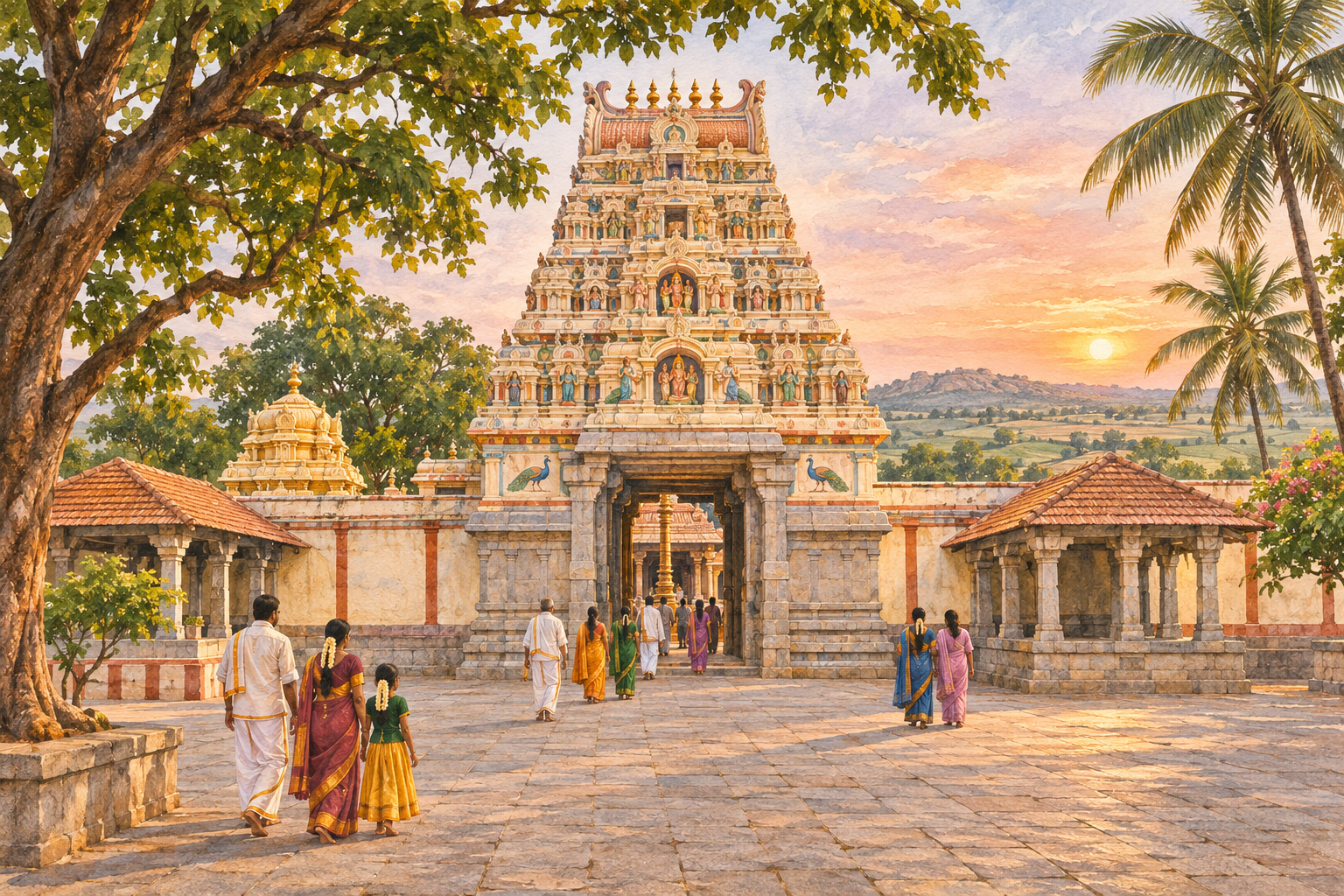
If you are deciding whether to make a dedicated trip to Ghati Subramanya Temple from Bengaluru, begin with what actually distinguishes the shrine. Its identity rests not only on its dedication to Lord Subramanya, but also on the presence of Lord Lakshmi Narasimha and the sacred status of the Subramanya vigraha.
That gives you a sound basis for darshan. It also helps you separate established details from the unsupported histories, ritual promises, and travel assumptions that can accumulate around a well-known temple.
What makes Ghati Subramanya Temple distinct
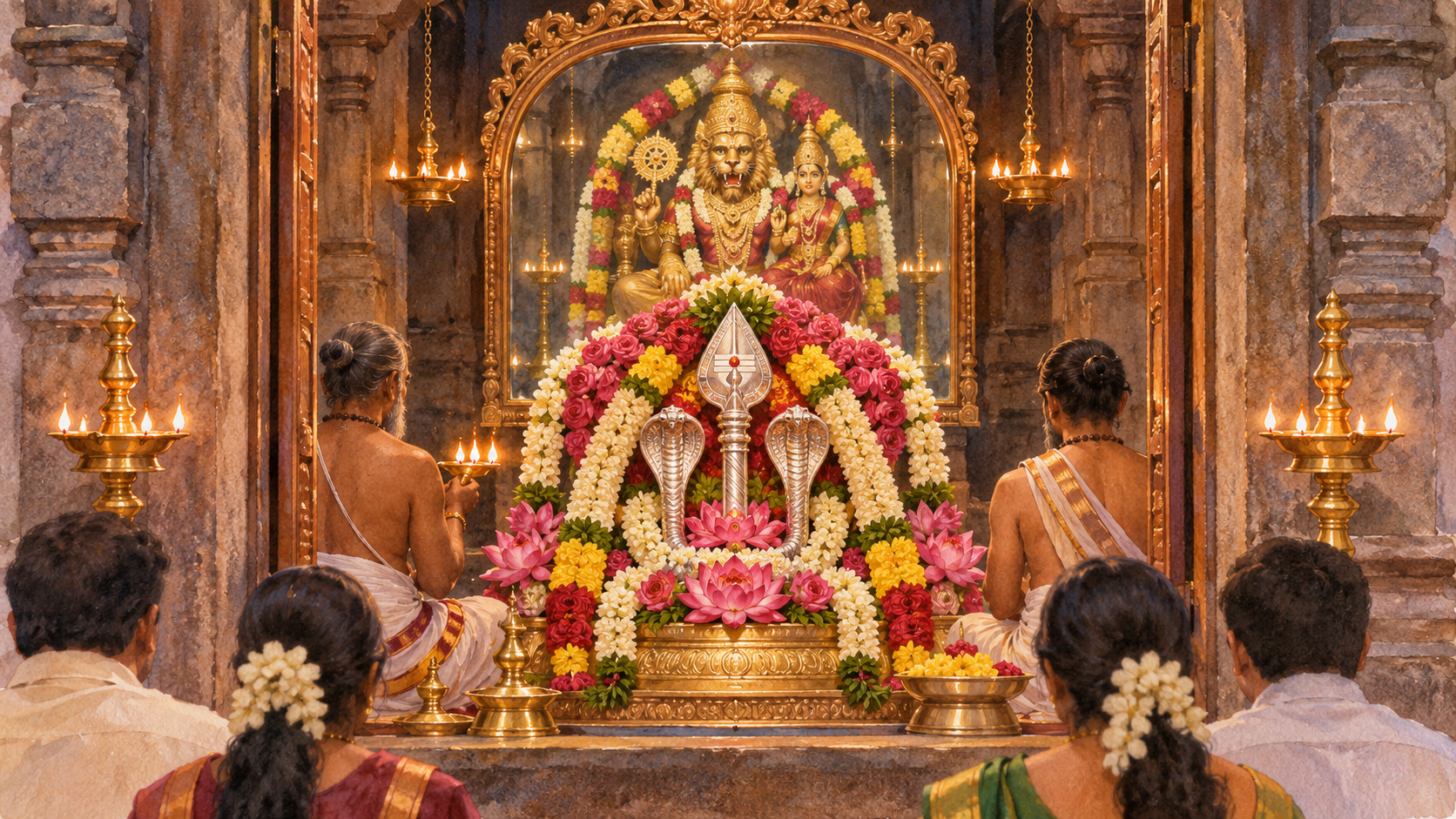
These details answer three practical questions before your visit: where the temple is located, which deity defines its principal identity, and which sacred feature deserves particular attention. They also prevent a common mistake: reducing the temple to a generic Subramanya shrine while overlooking the consecrated presence of Lakshmi Narasimha.
The combination does not automatically establish a particular theological explanation, a founding story, or a compulsory order of worship. A co-consecration tells you that both divine forms are present; it does not, by itself, tell you how the temple currently organizes darshan. Follow the directions given at the temple rather than constructing a ritual sequence from assumption.
Understand the word swayambhu without adding to it
Swayambhu means self-originated or self-manifested. At Ghati, the term expresses how devotees regard the Subramanya vigraha. It is a statement of sacred identity, not merely an observation about a carved object.
The most accurate phrasing is therefore that the vigraha is considered or revered as swayambhu. That wording honours the temple tradition while avoiding a different kind of claim that the term cannot establish on its own. Swayambhu does not supply a construction date, an archaeological chronology, or a complete account of the temple’s historical development.
This distinction matters when you tell others about the shrine. Repeat the devotional tradition clearly, but do not attach an unsourced date, named founder, miraculous outcome, or elaborate origin narrative to it. Reverence does not require embellishment. Careful language often protects a sacred tradition better than a dramatic story whose details cannot be checked.
Plan the journey around facts you can confirm

The distance from Bangalore is approximate, so use it for geographical orientation rather than as a promise about travel time. Your starting point, route, traffic, stops, and mode of transport will determine the actual journey. The useful planning question is not simply, “How far is it?” but, “What must be confirmed for the date and needs of my visit?”
Before leaving, make a short verification list. Do not fill unanswered items with guesses from another temple, an old itinerary, or a general assumption about Karnataka temples.
- Confirm the current opening and darshan hours. Temple schedules can affect the entire trip, so settle this before choosing a departure time.
- Ask about any specific seva you intend to perform. Confirm that it is offered, whether advance arrangements are required, and whether devotees must bring anything.
- Check access requirements for your group. If you are travelling with an elderly person, a young child, or someone with limited mobility, ask about walking distance, steps, queues, and available assistance rather than assuming access will be easy.
- Verify local rules. Ask about clothing, photography, bags, footwear storage, and other practical restrictions that could affect your visit.
- Plan the return as carefully as the outward journey. Confirm your transport and meeting point in advance, especially when different family members are travelling together.
If you cannot confirm a particular seva or special arrangement, do not make it the hinge of your trip. Plan first for darshan. Treat anything additional as something to arrange only after receiving reliable, current information.
This approach is especially important on a family pilgrimage. A vague plan may be manageable for one flexible traveller, but it becomes difficult when someone needs medication on schedule, cannot remain in a long queue, or depends on prearranged transport. Resolve those practical needs before departure so that they do not consume the attention you hoped to bring to worship.
Make room for both deities in your darshan
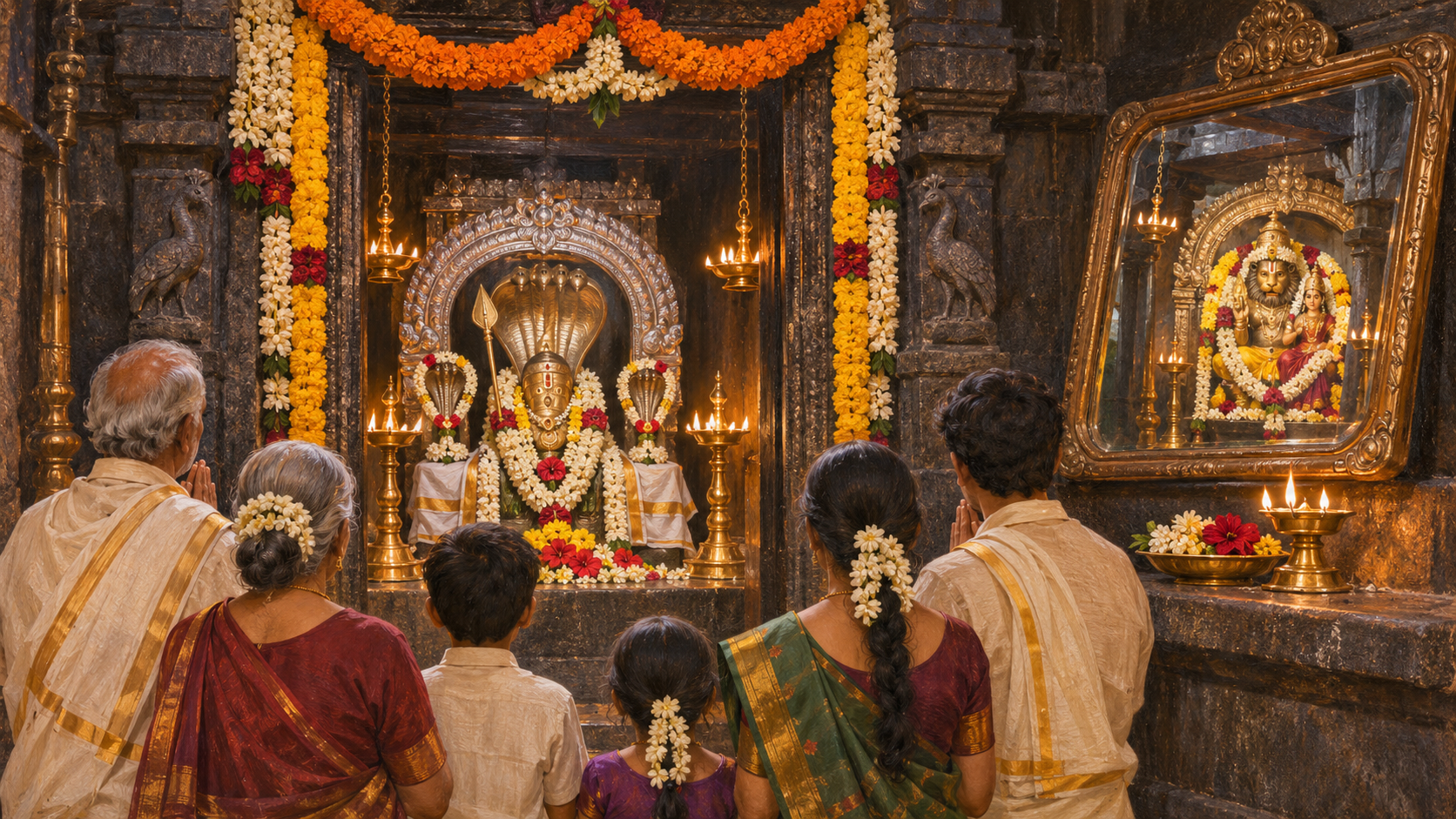
You do not need to invent a complicated devotional programme for a meaningful visit. You do need to arrive knowing whom the temple honours. Lord Subramanya gives the temple its defining dedication, while Lord Lakshmi Narasimha is also consecrated there. Keep both facts in view without merging the two forms or turning one into a decorative detail in the story of the other.
- Before entering, state your intention to yourself in one sentence. It may be prayer, gratitude, darshan, or a wish to understand the shrine more carefully.
- Inside the temple, follow posted directions and the instructions of those managing darshan. Local practice should guide your movement through the sacred space.
- Recognize the swayambhu status of the Subramanya vigraha as a matter of reverence, not as a guarantee of a particular personal result.
- Give proper attention to Lakshmi Narasimha rather than speaking of Ghati as though only one divine form were consecrated there.
- If you want to know the temple’s explanation of a custom, ask a precise question on site. Do not turn an unanswered question into a confident claim later.
A sacred visit is not improved by collecting the largest number of stories. It is improved by attention: knowing the names before you arrive, observing how worship is conducted, and refusing to replace what you do not know with folklore presented as fact.
The term swayambhu should not be treated as a transactional promise. It describes the revered origin of the sacred form; it does not mean that darshan mechanically produces every outcome a visitor requests. Bring your prayer, but leave room for humility, disciplined conduct, and the larger meaning of worship.
Key takeaways for your visit
- Ghati Subramanya Temple is near Doddaballapur, approximately 60 kilometres from Bangalore.
- The temple is dedicated to Lord Subramanya, and Lord Lakshmi Narasimha is also consecrated there.
- The Subramanya vigraha is regarded as swayambhu, meaning self-originated or self-manifested.
- The presence of both deities does not, by itself, establish a mandatory order of worship; follow the temple’s current directions.
- Confirm opening hours, sevas, access conditions, local rules, and transport before travelling.
- Treat the approximate distance as a planning reference, not as an estimate of journey time.
Open a note before you set out and divide it into two headings: “Confirm” and “Carry.” Under the first, write timings, route, seva questions, access needs, and return transport. Under the second, write the single intention you want to bring to darshan. Resolve the first list before departure; let the second keep the journey centred on worship.
References

Leave a Reply
You must be logged in to post a comment.