
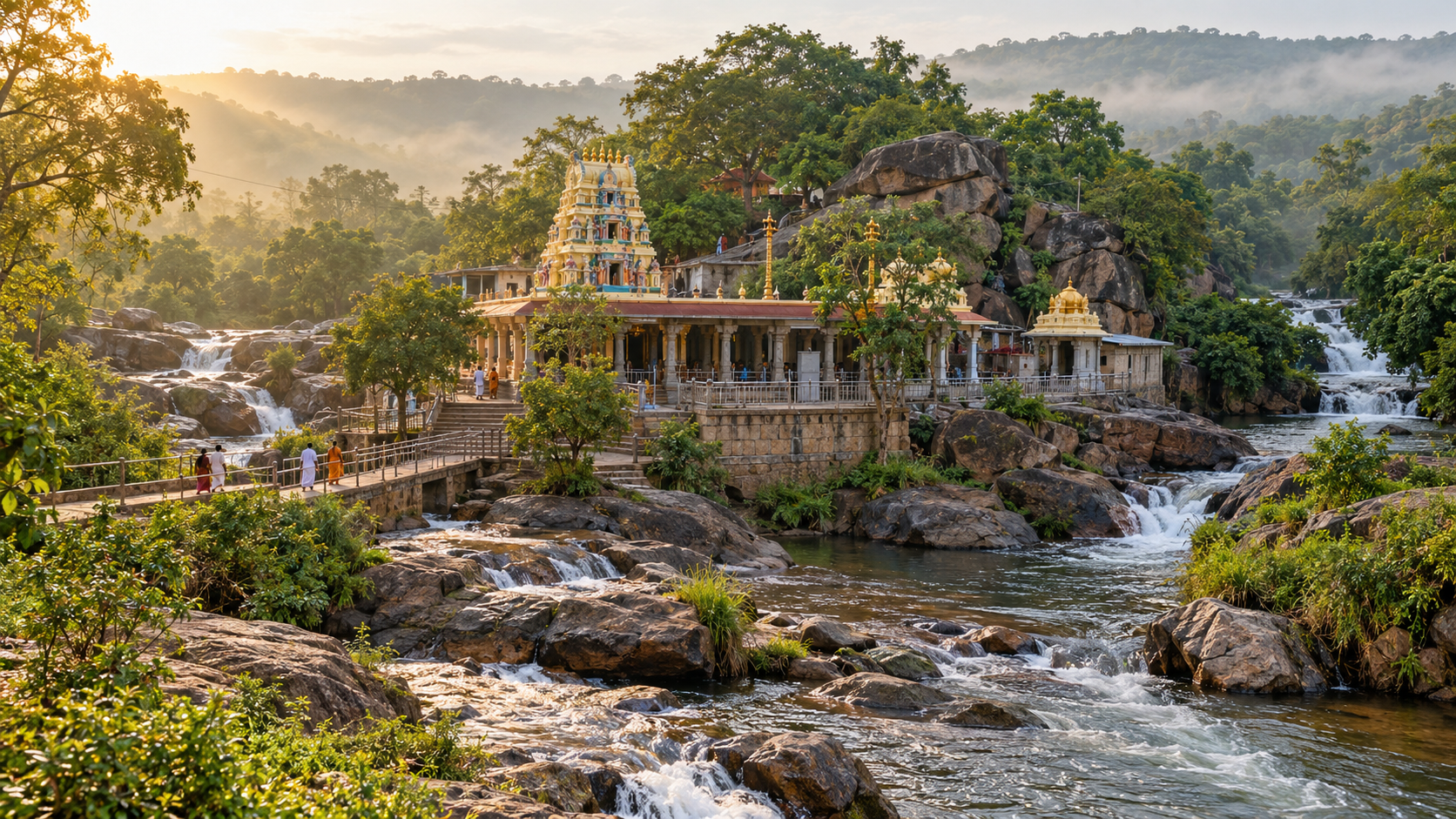
If you are considering a visit to Edupayala Vana Durga Bhavani Temple, the first thing to understand is that its sacred geography is not incidental. This is a Shakti shrine whose identity is bound to flowing water, woodland imagery, and the meeting of seven streams.
You can plan the pilgrimage well without relying on unverified legends or a timetable that may have changed. Start with the confirmed location and distances, allow the landscape to shape your visit, and check current local arrangements before you leave.
Why the seven streams matter
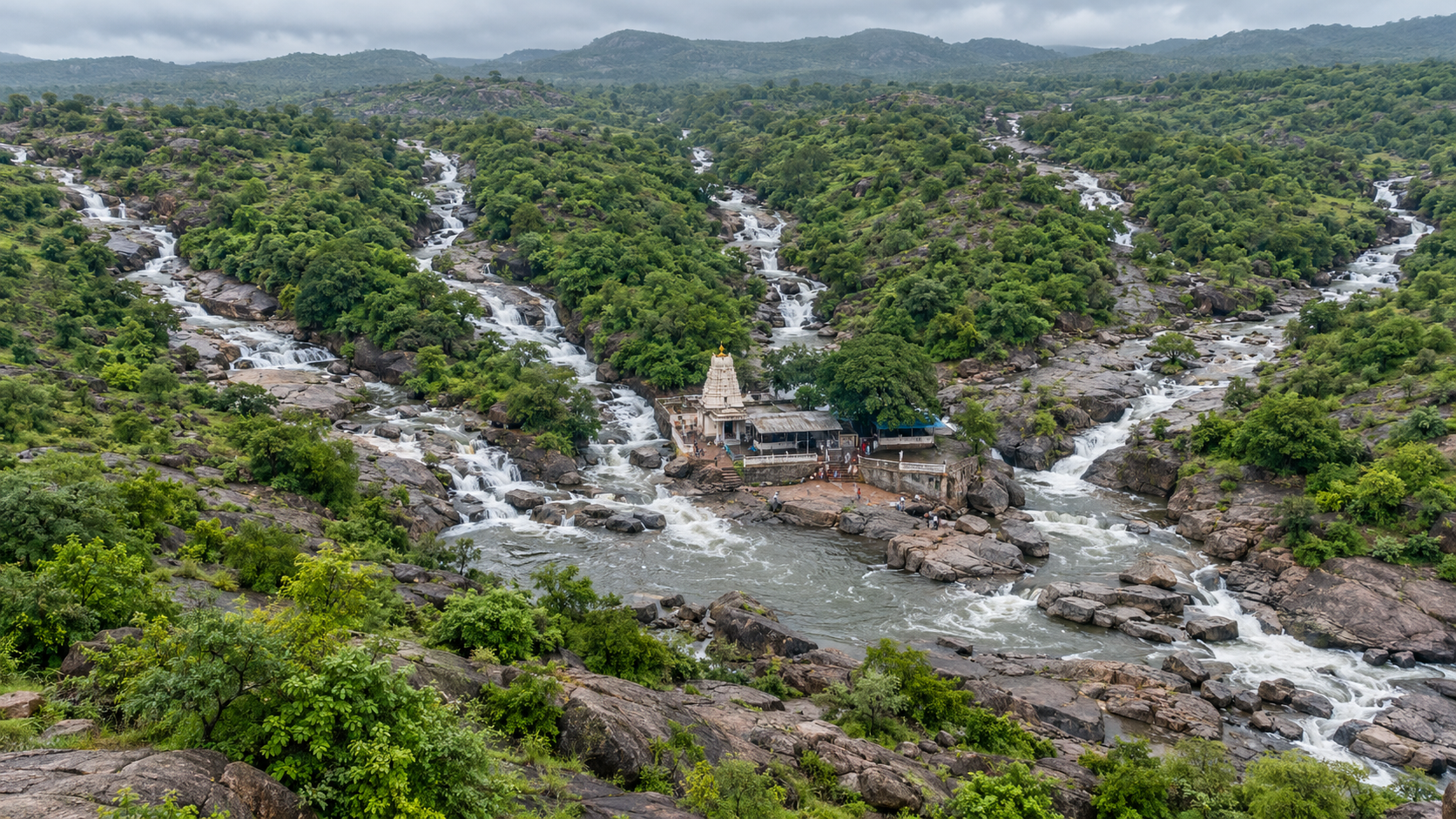
Edupayala is one of Telangana’s revered Shakti shrines, situated near Nagasanpally village at the confluence of seven streams of the Manjeera River. The name itself comes from Telugu: Edupayala means “Seven Streams.” That meaning gives you the clearest introduction to the place.
A confluence is more than an attractive setting in the Dharmic imagination. Separate currents meet without ceasing to be currents, producing a natural image of unity that does not demand sameness. At Edupayala, this is not an abstract metaphor imposed on a distant landscape. The waters give the shrine its name and help define how a pilgrim encounters it.
The presiding deity is Vana Durga Bhavani. “Vana” evokes the forest or uncultivated natural world, so the name directs your attention beyond the built shrine. Approach the water, terrain, vegetation, and sanctum as parts of one sacred setting. If you rush from the vehicle to darshan and immediately leave, you may see the deity while missing the distinctive character of the kshetra.
Choose Medak or Hyderabad as your travel anchor
The most useful planning decision is where your journey will begin. The temple is about 19 kilometres from Medak town and about 110 kilometres from Hyderabad. Those figures make Medak the nearer anchor, while Hyderabad requires a substantially longer outing.
- Starting in Medak: Treat Edupayala as a focused local pilgrimage. The shorter stated distance gives you more freedom to allow time at the shrine instead of building the entire visit around transit.
- Starting in Hyderabad: Plan it as a dedicated excursion rather than an incidental urban stop. Do not convert the 110-kilometre distance into a promised travel time; road conditions, congestion, weather, and crowd controls can all affect the journey.
- Setting the destination: Use the complete name, Sri Edupayala Vana Durga Bhavani Temple, together with Nagasanpally and Medak. This reduces the risk of confusing the shrine with another Durga or Bhavani temple.
Keep fixed facts separate from changing arrangements. The location and approximate distances help you choose a starting point. Darshan hours, road access, festival restrictions, parking arrangements, and conditions near the streams require a current local check. Confirm them on the day of travel through an official or reliable local contact, especially if you are bringing children, older relatives, or anyone with limited mobility.
Prepare for darshan without assuming local rituals
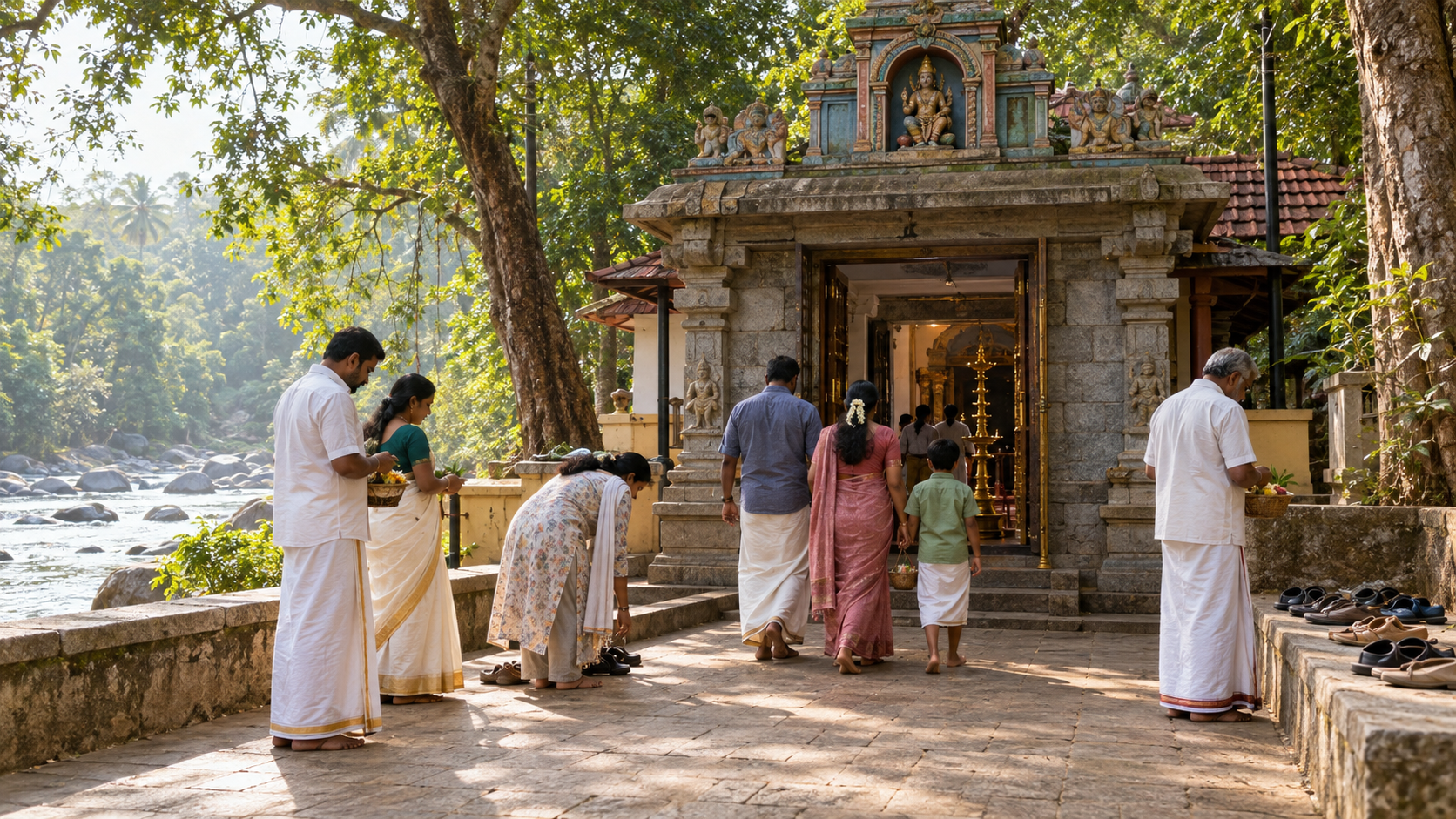
Devotees sometimes arrive at a regional shrine with instructions collected from unrelated temples. That can turn devotion into anxiety: which offering, which sequence, which vow, and which form of worship is supposedly mandatory? A more respectful approach is to distinguish ordinary temple conduct from practices specific to Edupayala.
- Dress and behave for a place of worship. Choose modest clothing, keep voices low near the sanctum, and follow the queue rather than attempting to create a private route through it.
- Check offerings locally. Do not assume that every item associated with Devi worship elsewhere is accepted here. Ask at an authorised counter or consult a temple priest before purchasing or presenting anything.
- Follow instructions about footwear and photography. Remove footwear where directed and ask before photographing the deity, worshippers, or ritual activity.
- Ask about a vow instead of improvising it. If your family has come for a sankalpa, thanksgiving, or a particular observance, explain it plainly to the priest and follow the guidance given at the shrine.
- Leave room for quiet attention. After darshan, pause without obstructing other pilgrims. Observe how the natural setting, the meeting waters, and the presence of Vana Durga belong together.
This approach does not make the visit less traditional. It prevents internet hearsay from being mistaken for temple custom. Regional temples often preserve living forms of worship through the people who serve and visit them; listening carefully on site is part of honouring that continuity.
Treat the waters as sacred and physically real
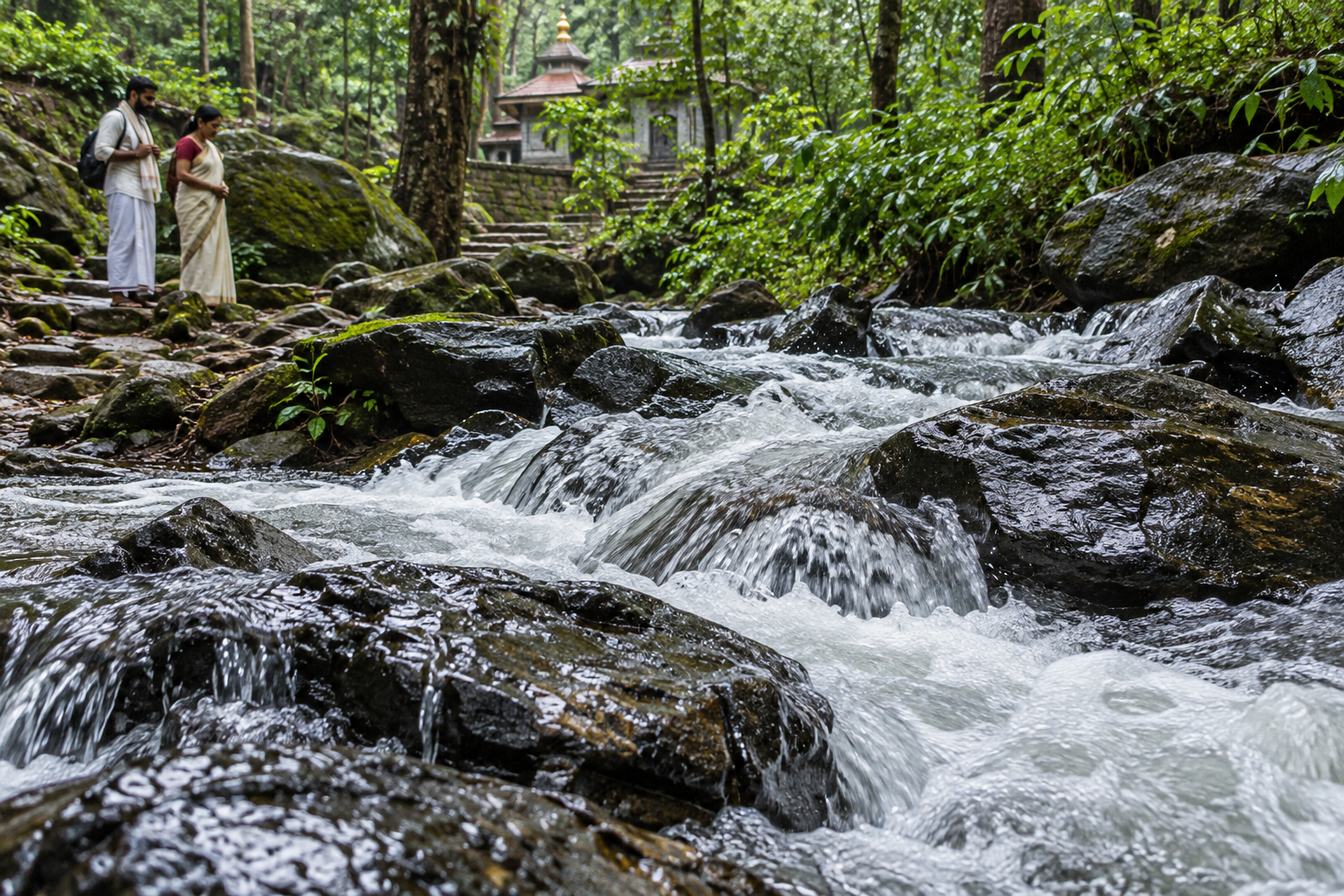
The confluence is central to Edupayala, but sacred water still demands practical caution. Flow, depth, footing, and access can vary. Do not assume that ritual contact with the water is always permitted or safe merely because other pilgrims approach it.
- Use only the approaches that are open and designated for visitors.
- Obey barriers, warning signs, and instructions from temple or local personnel.
- Do not enter moving water to obtain a photograph or imitate another visitor.
- Keep children within reach near banks, rocks, steps, and crowded approaches.
- If conditions look uncertain, offer pranam from a safe place. Physical entry into the water is not required for sincere reverence.
- Carry away your own packaging and do not leave plastic, food containers, or non-biodegradable offerings near the streams.
Care for the confluence is not separate from worship. When a shrine takes its very name from seven streams, protecting the surrounding water and land is one concrete way to respect the place.
Key takeaways for your visit
- Edupayala Vana Durga Bhavani Temple is a Shakti shrine near Nagasanpally village in Telangana’s Medak area.
- Its defining feature is the confluence of seven streams of the Manjeera River; Edupayala means “Seven Streams” in Telugu.
- The stated distances are about 19 kilometres from Medak town and 110 kilometres from Hyderabad.
- Use Medak as the nearer travel anchor, or allow a dedicated outing if you begin in Hyderabad.
- Confirm current darshan hours, road access, and local restrictions before departure rather than relying on an old schedule.
- Ask locally about offerings and temple-specific observances, and follow all safety directions around the water.
Before you set out, decide which city will anchor the journey, verify the day’s access arrangements, and give the shrine more time than a quick photo stop. Edupayala is best approached as a meeting of Devi, water, and landscape; plan your visit so you can attend to all three.
References

Leave a Reply
You must be logged in to post a comment.