
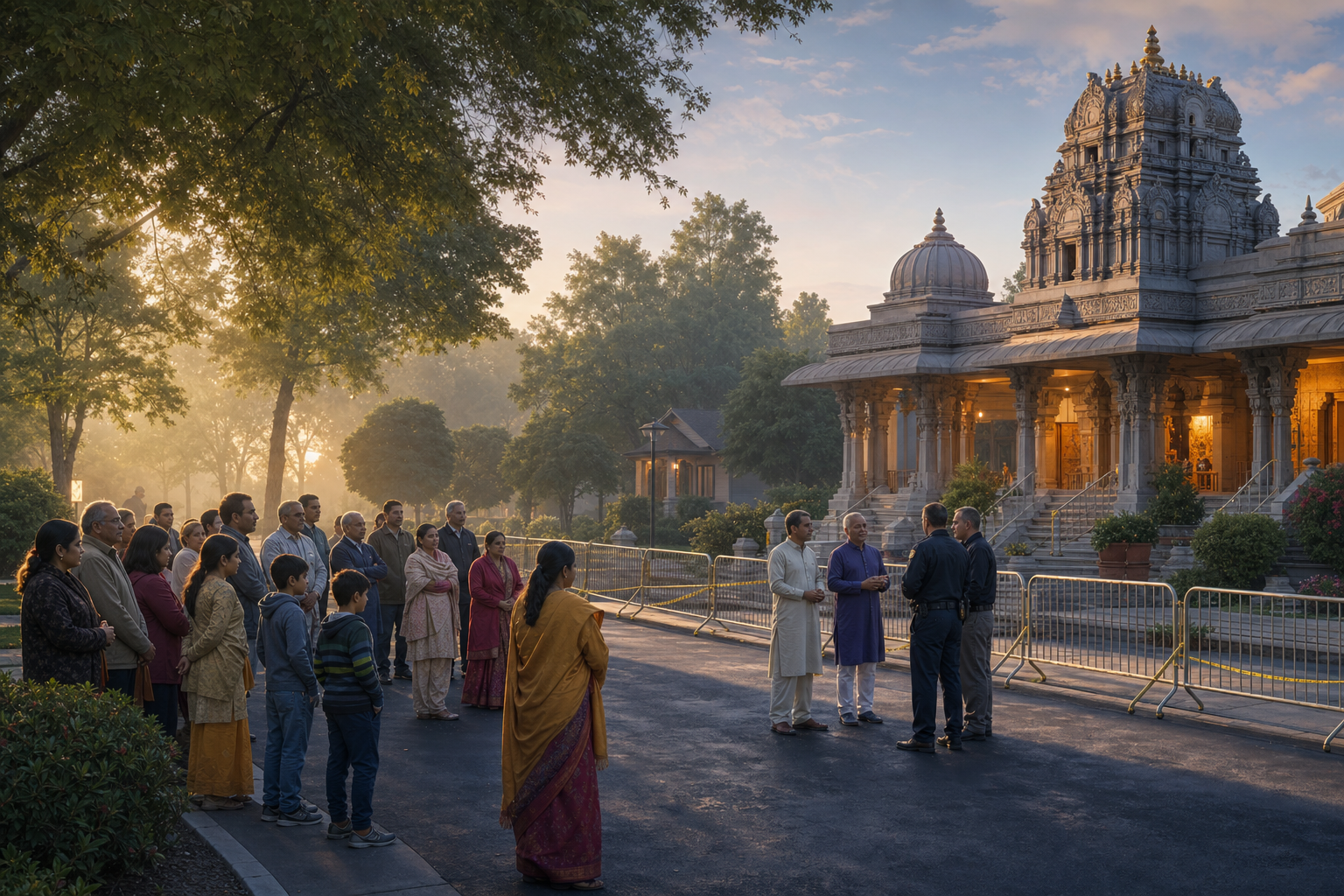
When a murti is damaged, you may feel pressure to defend the sanctity of the mandir and demand answers immediately. The most useful first response does both without filling gaps in the evidence: protect people, preserve the scene, state only what is known, and begin a visible civic response.
Cary shows why Hindu communities need more than private outrage or a burst of social-media activity. You need a response that helps investigators, reassures families, educates neighbors, gives public officials concrete work to do, and leaves the temple better prepared after attention moves elsewhere.
Begin with what is known, and keep the unknowns visible
The verified core of the Cary incident is serious but narrow. A sacred guardian-deity statue at Sri Venkateswara Temple was vandalized around 3 a.m.; early accounts said security cameras captured five suspects, and police were reviewing CCTV material. Community leaders, interfaith partners, and residents condemned the damage and expressed solidarity with devotees.
Those facts justify a prompt public response. They do not yet establish motive, the identity of the people recorded, or the legal classification of the offense. Calling the damage anti-Hindu before investigators establish a religious-bias element can weaken an otherwise strong case. Refusing to speculate does not minimize the desecration. It protects the credibility of the temple and the wider Hindu community.
Every public update should separate three kinds of information:
- Verified: what was damaged, where and when it was discovered, what evidence has been preserved, and whether a police report exists.
- Not yet verified: motive, identity, affiliation, legal classification, and claims circulating through community groups or social media.
- Requested next step: witness information, an official briefing, a public statement from civic leaders, or a meeting about protection of the temple.
A usable opening statement would be: “Vandalism at our temple has been reported to police, and relevant evidence has been preserved. The damage is confirmed; motive and legal classification remain under investigation. We ask anyone with direct information to contact the investigating authority rather than circulate unverified claims.”
This distinction matters because two failures are possible. Silence can make devotees feel that desecration of a Hindu sacred space is being treated as an ordinary maintenance problem. Speculation can misidentify people, spread rumors, and distract from evidence that investigators can actually use. A firm factual statement avoids both failures.
The concern does not exist in isolation. Other Hindu temples in North America have faced recent incidents, creating a cumulative sense of vulnerability among families. Individual motives may differ, which is precisely why consistent documentation matters. A reliable record can reveal patterns without forcing every incident into a conclusion the evidence does not support.
Protect worshippers, sacred objects, and evidence at the same time
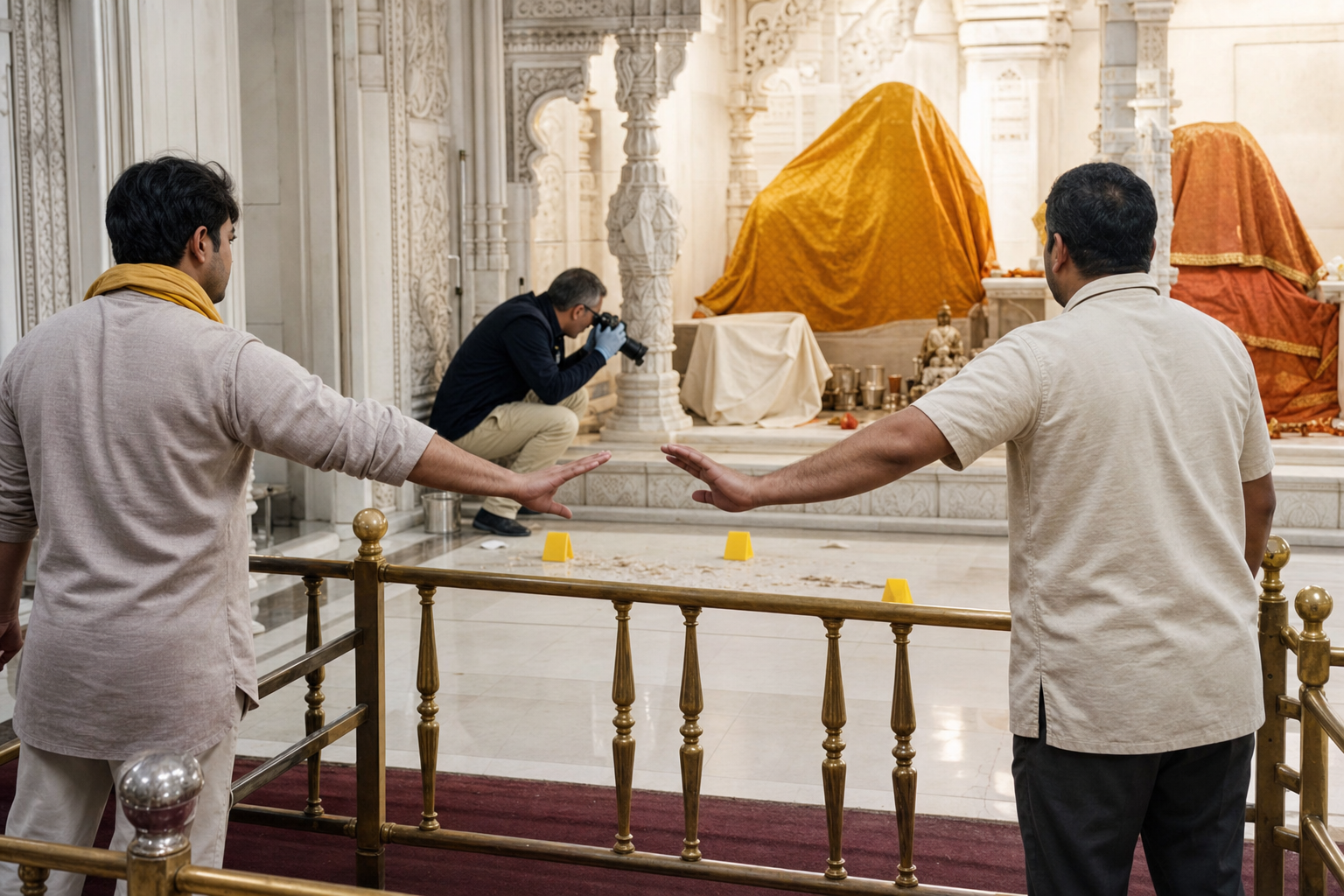
A damaged murti is not merely broken property to a devotee. It may also be evidence in an active investigation. Temple leaders should therefore coordinate the religious and investigative responses instead of allowing either one to erase the needs of the other.
- Secure people first. Keep devotees, children, volunteers, and curious visitors away from the affected area. If there is an active threat, do not confront anyone; move to safety and contact emergency services.
- Limit access to the scene. Record who entered after the damage was discovered and what, if anything, was touched or moved. Delay cleaning and repairs until law enforcement has documented the relevant area.
- Preserve the original digital evidence. Export CCTV in its native form, retain the original recording, and make a separate working copy. Record which camera supplied it and whether the device clock was accurate. Do not crop the footage, add captions, compress it for social media, or treat an online upload as the archive.
- Photograph context as well as damage. Wide images show where the object stood and how the area was entered; closer images show the damage itself. Preserve related materials and follow police guidance before disposing of anything.
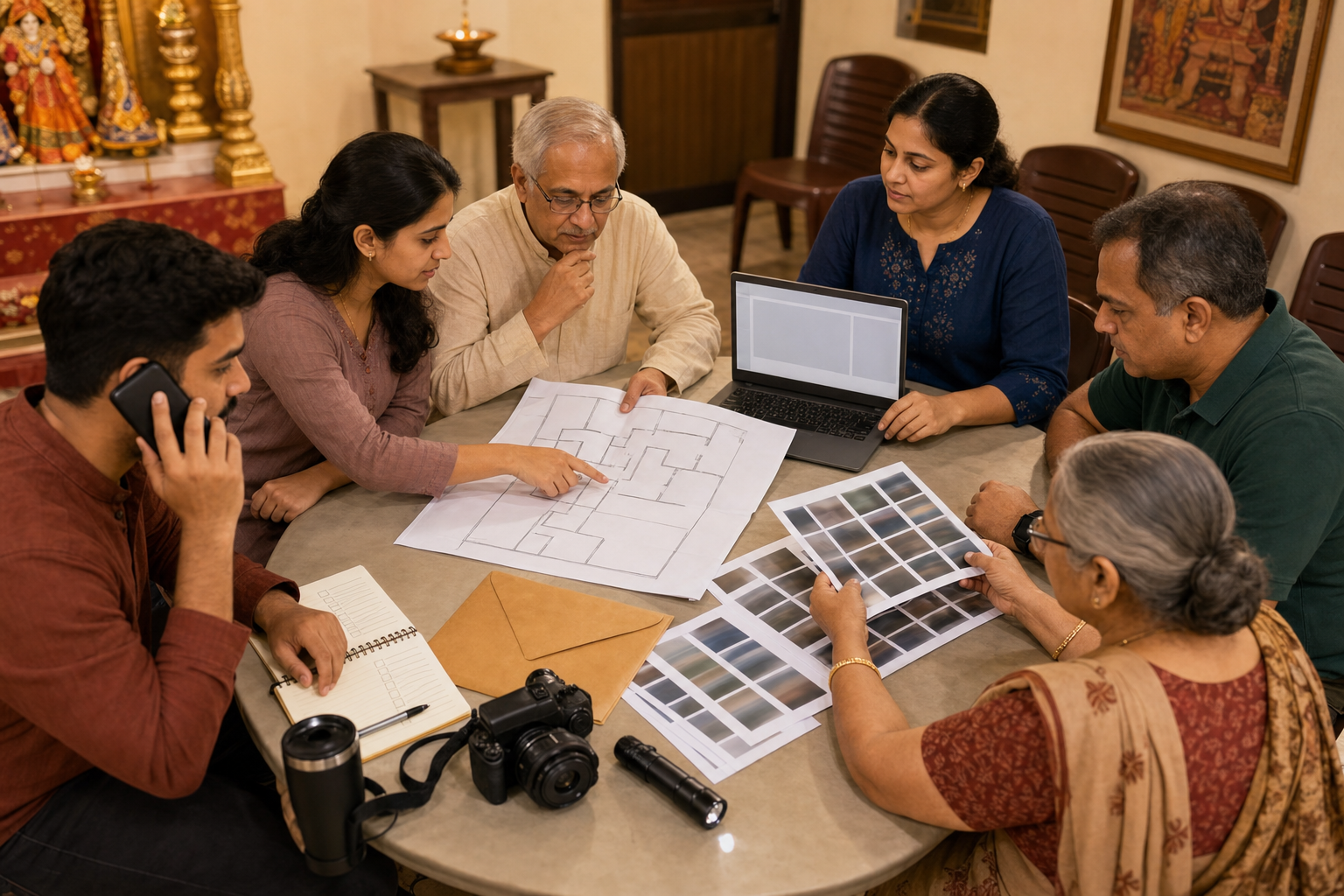
- Create a central incident log. Include when the damage was discovered, who discovered it, witness contact details, the police case or report number, the assigned contact, evidence transferred, repair estimates, public statements, and follow-up commitments.
- Coordinate ritual care with evidence preservation. Priests or the appropriate religious authorities should determine how the murti and sacred area must be treated. If something must be moved for religious reasons, first ask investigators whether documentation is complete and record what was moved, by whom, and why.
The temple should also name a single evidence custodian. That person does not decide the public message or speak for investigators. The role is narrower: maintain original files, control copies, record transfers, and make sure important material does not disappear across personal phones and group chats.
Do not publish suspect images simply because the temple possesses them. Public circulation can produce misidentification and may complicate investigative work. Ask the assigned law-enforcement contact whether releasing an image would help and who should release it. If authorities request public assistance, share the official notice rather than a community-edited version.
Families also need a clear operational update. Tell them which entrance or area is closed, whether worship and classes are continuing, and where questions should go. Do not expose children or distressed devotees to the damaged area merely to demonstrate that the temple remains open. Continuity of worship should express resilience, not override safety or pastoral judgment.
Turn private concern into a public record officials can act on
An email chain can alert people, but it rarely creates sustained civic accountability. Public institutions work through records, assigned contacts, meetings, stated requests, and follow-up dates. The temple therefore needs a short briefing that can be handed to police leadership, elected officials, interfaith partners, journalists, and community organizations without changing from audience to audience.
That briefing should contain:
- A concise description of the confirmed damage and its location.
- The status of police reporting and evidence preservation.
- A plain statement that motive remains under investigation unless authorities have said otherwise.
- An explanation of why damage to a murti or sacred boundary affects devotees differently from ordinary property damage.
- The practical effect on worship, classes, seva, festivals, access, or security.
- The temple’s specific requests and the name of its designated contact.
Do not make officials guess what solidarity should look like. Ask for actions that can be confirmed:
- A public condemnation that names the temple and recognizes it as a place of worship.
- A law-enforcement liaison who can provide accurate procedural updates.
- A community briefing on the investigation when authorities can appropriately provide one.
- A review of lighting, cameras, entrances, vulnerable boundaries, and patrol visibility around significant gatherings.
- Clear guidance on how evidence of possible religious bias should be submitted and recorded.
- Official participation in a peaceful vigil, open house, or educational event.
The community should not demand arrests, identify suspects, or insist on a hate-crime finding before the evidence supports those outcomes. It should insist on a serious investigation, correct recording of relevant facts, respectful communication, and equal protection of a Hindu house of worship. If evidence later supports a religious-bias element, the public record should reflect it accurately.
Media engagement needs the same discipline. Name a spokesperson, prepare the verified chronology, and route factual questions through that person. Priests can explain the sacred meaning of the damage, while the civic spokesperson addresses the investigation and community requests. Separating those roles reduces contradictions without turning religious leaders into public-relations staff.
Correct errors openly. If a community message gives an unverified detail as fact, issue a clear correction rather than quietly deleting it. Accountability strengthens the case that officials and journalists should treat future statements as reliable.
Make the response visible without making it reckless
A peaceful public presence is not an optional display added after the real work. It tells devotees that their sacred space matters, shows neighbors what has been harmed, and gives civic leaders a setting in which to make public commitments. Visibility is most effective when the format serves a defined objective.
Choose the event by the result you need
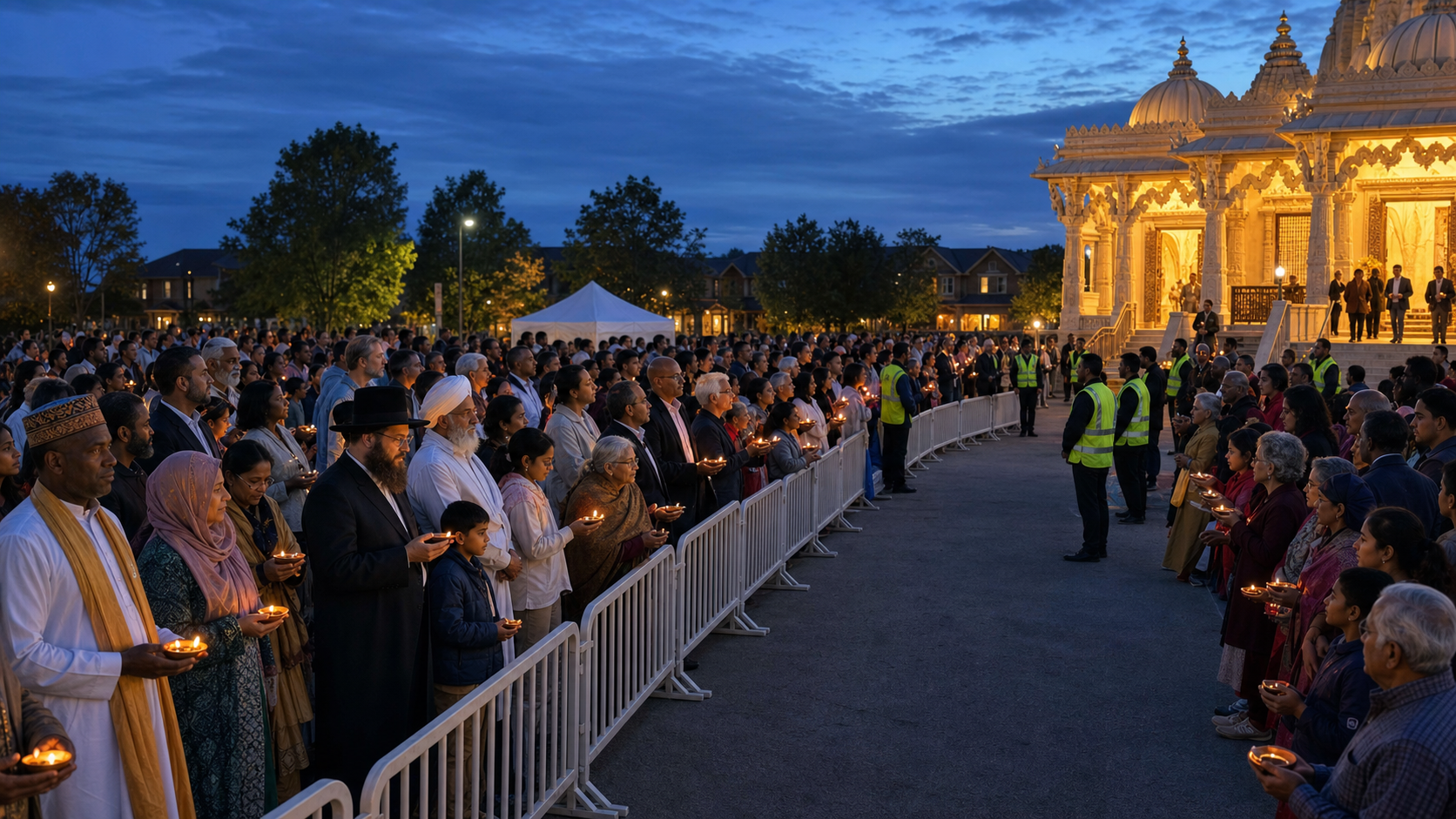
- Hold a candlelight vigil when the immediate need is solidarity, prayer, and a clear public rejection of desecration.
- Hold a temple open house when neighbors need to understand the mandir as a living center of worship, education, seva, and community life.
- Hold a teach-in when schools, universities, journalists, or public officials need context about murtis, Hindu worship, and anti-Hindu prejudice.
- Send a civic delegation when the central need is a decision, an investigative update, a security review, or a commitment from an institution.
Trying to make one gathering perform every function often leaves the message vague. A vigil can end with a concrete request for an official meeting. An open house can include a prepared educational handout. A delegation can later report publicly on what officials agreed to do. Each action should lead to the next.
Give a peaceful gathering an operating structure
Assign an event lead, temple liaison, safety lead, law-enforcement contact, press contact, volunteer coordinator, and interfaith liaison. Publish the gathering’s purpose and expected conduct. Keep access routes clear, give volunteers a way to report a concern, and designate who may make schedule or safety decisions.
The message should be brief enough to remain consistent: sacred spaces deserve protection; the confirmed vandalism is unacceptable; the investigation must proceed on evidence; and the community expects transparent follow-through. Avoid slogans that attribute guilt to a person, ethnicity, religion, or political group not established by the investigation.
Ahimsa does not require disappearance from the public square. It governs how the community enters it: without threats, collective blame, or reckless accusation. A calm gathering can still be unmistakably firm about the dignity of Hindu worship and the civic duty to protect it.
Dharmic solidarity can make that presence harder to ignore. Buddhist, Jain, and Sikh organizations can stand with Hindu devotees around the shared commitments of ahimsa, mutual respect, and protection of sacred life. Such unity should not flatten distinct traditions. A mandir, vihara, derasar, and gurdwara have their own theologies and practices; they can still defend one another’s right to worship safely.
Partnership with churches, synagogues, mosques, and other local congregations extends the same civic principle: an injury to one sacred space concerns the whole community. Ask partners to do more than lend their logos. They can attend, provide speakers, share the event with their congregations, join meetings with officials, and host later educational conversations.
Key takeaways: build capacity before attention fades
- Mobilize around verified damage without assigning an unverified motive.
- Treat the affected murti or sacred area as both a religious concern and a potential evidence scene.
- Preserve original CCTV files, document every transfer, and keep public edits separate from the archive.
- Give police and elected officials named requests that can be tracked, not a general appeal for sympathy.
- Choose a vigil, open house, teach-in, or delegation according to the result the community needs.
- Build Dharmic and interfaith solidarity around shared protection without erasing religious differences.
- Record commitments, assign owners, and report back to devotees after meetings and public events.
The durable response begins after the cameras and public statements move on. Keep a secure incident register with common fields across the temple and, where appropriate, partner organizations. A consistent record supports data-driven advocacy without exaggerating a case or losing important details in informal messages.
Use that record in educational outreach. Schools, universities, public agencies, and local media may not understand why damage to a murti is experienced as desecration of a spiritual home. Give them a factual explanation, describe the community impact, and offer a knowledgeable contact. Education is most credible when it is paired with documented incidents rather than broad claims no one can verify.
Before the next major festival, weekend class, or crowded gathering, put a name beside every essential role: safety lead, evidence custodian, police liaison, spokesperson, priestly contact, and interfaith liaison. Test camera exports, check access points, and make sure those people can reach one another. If your mandir has no written incident protocol, place a short draft on the next committee agenda. The time to become civically visible is before another sacred space is harmed, not only after it happens.
References
