
-
Trapped Yet Aware: Awakening From a 23-Year Nightmare and the Call for Compassion

A widely reported case described a Belgian man believed to be in a coma for 23 years who was actually conscious throughout, illuminating urgent questions about consciousness, communication, and medical ethics. His testimony”I screamed, but there was nothing to hear”reveals the lived trauma of awareness without a voice. The account underscores the need for clinical…
-
Losing Sight, Gaining Insight: A Filmmaker’s Path Through Blindness to Meaning

This reflective account presents a clear, practical path through vision loss by showing how accessibility tools, mindful pedagogy, and deliberate writing practices preserve creativity and purpose. Readers learn how macular degeneration reshapes daily life in a vision-centric, digital age and why accessible design is essential for inclusion. The narrative integrates dharmic perspectives from Buddhism, Hinduism,…
-
Elevate 2026 with Tiny Buddha’s Daily Mindfulness: A Compassionate Calendar for Dharmic Unity

The 2026 Tiny Buddha Day-to-Day Calendar provides concise daily reflections that support mindfulness, compassion, and self-care. Printed on FSC certified paper with soy-based ink, it aligns with eco-conscious values and the principle of ahimsa. Readers appreciate how a brief morning reading offers perspective, steadies attention, and builds emotional resilience. The entries span happiness, relationships, change,…
-
Love Those Who Lift You, Forgive Those Who Hurt: Dharmic Wisdom for Resilient Living

This article explores the dharmic wisdom behind the maxim “Love the people who treat you right, forgive the ones who don’t.” It clarifies how loving support builds sattva, while forgiveness safeguards inner peace without excusing harm. The analysis balances compassion with justice, showing how Dharma requires both accountability and kṣamā. Cross-tradition parallels in Buddhism, Jainism,…
-
Letting Go of Perfectionism: How Self-Compassion Built Resilience, Clarity, and Calm

Perfectionism often masquerades as virtue, yet it drains energy and obscures clarity. This reflection tracks a shift from self-criticism to self-compassion using a simple parenting moment as a case study. The narrative explains how kinder self-talk reduces shame, steadies the nervous system, and improves problem-solving. It outlines practical stepsnotice the inner critic, respond with patient…
-
Empathy Over Control: Dharmic Wisdom for Advice that Respects Autonomy and Dignity

This reflection explores a core dharmic principle: advice should empower, not control. Drawing on the Bhagavad Gita and parallel insights from Buddhism, Jainism, and Sikhism, it shows how empathy, autonomy, and compassion guide ethical counsel. The discussion connects ancient Hindu teachings to modern contextsfamily, workplace, and communitywhere respectful guidance builds trust and accountability. It outlines…
-
Temple of the Vedic Planetarium: A Profound Act of Compassion and Dharmic Unity
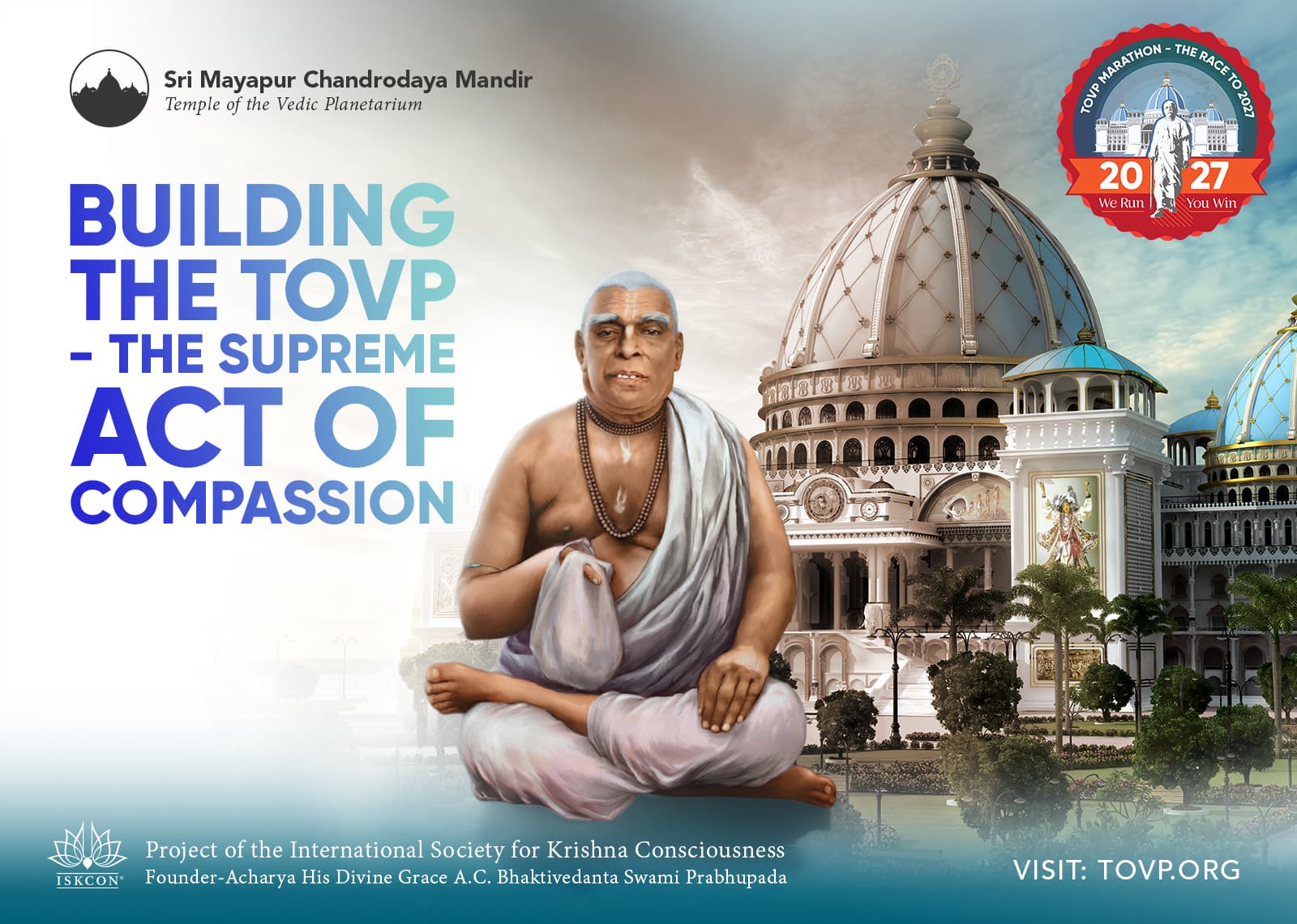
The Temple of the Vedic Planetarium (TOVP) is presented as a compassionate cultural institution rather than just another temple. It integrates sacred architecture with education, translating Vedic heritage into accessible learning for families, students, and pilgrims. Rooted in the Vaishnava tradition, it highlights values shared across Hinduism, Buddhism, Jainism, and Sikhism, advancing unity in spiritual…
-
Sita’s Compassion Tested: Dharma and the Ethics of Lakshmana’s Punishment of Surpanakha

The Aranya Kanda episode of Surpanakha’s attack and Lakshmana’s response invites a careful reading of dharma and compassion. Valmiki’s text does not quote Sita’s immediate reaction, so understanding her stance relies on her consistent character across the Ramayanarooted in karuṇā and kṣamā. Interpreted through proportionality and restraint, Lakshmana’s non-lethal action reflects kṣātra-dharma: protecting the innocent…
-
Feeling Impure Despite Sadhana, Satsang, Seva? Practical, Dharmic Steps to Inner Purity

Many practitioners feel impure despite steady Sadhana, Satsang, and Seva, especially when encountering arrogance in spiritual spaces. This piece reframes purity as a gradual refinement of chittaless reactivity and more compassionrather than a performance outcome. It integrates insights from Hinduism, Buddhism, Jainism, and Sikhism to emphasize unity and shared principles. Actionable steps include breath awareness,…
-
Enlightenment Demystified: Clear Signs, One Essence, and a Unified Dharmic Path to Peace

Across Hinduism, Buddhism, Jainism, and Sikhism, realization is singular while pedagogical stages vary. Signs of enlightenment commonly include steady equanimity, spontaneous compassion, ethical ease, and a quieting of egoic narratives. Emptiness (śūnyatā) is one essence taught for different purposes, dissolving clinging and opening fearless presence. Traditions use diverse skillful meansethics, meditation, devotion, and insightto mature…
-
Compassion Over Ritual: Transformative Caitanya Bhagavata Insights on jive-daya and Bhakti

This reflection on Caitanya Bhagavata highlights a central bhakti insight: worship of Lord Visnu is authentic only when paired with jive-daya, or compassion for all beings. Envy or harm toward othersespecially toward a Vaisnava serving Lord Hariundercuts spiritual progress. Rather than condemn, the text guides practitioners to restore empathy, humility, and responsibility. These teachings resonate…
-
When Grief Strikes: Finding Sacred Shelter and Resilience Through Dharmic Compassion

A grieving family sought solace after the sudden loss of their eighteen-year-old son, and the temple community responded with quiet compassion rooted in dharmic wisdom. The encounter highlights how inner orientationnot circumstancescan transform the experience of suffering. Drawing from Hindu, Buddhist, Jain, and Sikh traditions, the narrative emphasizes unity through practices like japa, mindfulness, ahimsa,…
-
Lalkitab Remedies for Mars in the 7th House: Compassionate Steps to Strengthen Marriage and Harmony

This guide presents Lalkitab remedies for Mars (Mangal/Kuja) in the 7th house with a unity-centered, non-fearful approach. It explains how to channel Mars’ energy into ethical conduct, calm communication, and compassionate service that strengthen marriage and partnerships. Practical steps include Tuesday vrata, mantra recitation (Om Kraam Kreem Kraum Sah Bhaumaya Namah), Hanuman puja, and Navagraha…
-
When Love Can’t Heal: Reclaiming Safety, Dignity, and Dharma After Emotional Abuse

This reflection explores how healing from emotional abuse begins when safety and dignity are prioritized over the belief that love alone can change harmful dynamics. It shows that love cannot substitute for another person’s willingness to do the work and that true transformation requires mutual participation, respect, and safety. Readers will learn how social and…
-
Who Are the ‘Good People’? A Dharmic Guide to Recognizing Virtue and Choosing Satsang

Spiritual traditions often advise keeping the company of the wise, yet the criteria can seem unclear. A dharmic lens makes the measure practical: consistent alignment with dharma, non-violence (ahimsa), truthfulness (satya), compassion (karuna), and self-restraint offers reliable evidence of goodness. The Bhagavad Gita’s daivi sampad and the Yoga Sutra’s yamas and niyamas provide observable markers.…
-
Praise the Living, Not Just the Departed: Humility, Bhakti, and Dharmic Unity

Communities often praise devotees only after they pass, yet spiritual maturity calls for timely appreciation anchored in humility. Drawing on Siksastakam 3 and Lord Caitanya Mahaprabhu’s example, this reflection shows how praise can be offered responsiblyhighlighting dharmic qualities rather than inflating egos. It reconciles the counsel to neither praise nor criticize with the need to…
-
Karma and Innocent Suffering: A Compassionate Dharmic Guide to Miscarriage and Child Loss

This reflection explores how karma is understood when young children die painfully or a baby passes in the womb, emphasizing humility before the mystery of cause and effect. It unifies perspectives across Hinduism, Buddhism, Jainism, and Sikhism, highlighting compassion rather than blame. Readers learn how dharmic traditions approach grief with practices such as prārthanā, dāna,…
-
From Brain Fog to a Midlife Roar: Transforming Perimenopause into Grounded, Wise Power

Perimenopause can feel like an existential stormbrain fog, insomnia, and mood swings woven into caregiving pressures and shifting identities. Framed as a rite of passage, midlife becomes a portal to grounded power, embodied truth, and fierce compassion. This narrative shows how symptoms often mirror unspoken burdens and how the body signals when responsibilities grow too…
-
The Essential Breakthrough on Projection: Discover Proven Shadow Work to Master Boundaries

This article examines projection psychology through a precise, compassionate lens. It traces how a person labeled “too much” learned, through therapy and shadow work, that intense reactions often reflect another’s unprocessed fear or history. The shift from self-blame to reflective inquiry enabled stronger boundaries, reduced over-explaining, and greater self-trust. Practices such as pausing, asking clarifying…
-
Essential Guide to Goddess Shyama: Discover the Proven Paradox of Love and Terror in Hindu Tradition
Goddess Shyama, widely identified with Kali in Shakta traditions, embodies the Divine Mother as fierce compassionlove powerful enough to dissolve fear and ignorance. Her blue-black radiance symbolizes the infinite, guiding seekers from bondage to freedom. The paradox of terror and tenderness resolves as an ethical call to inner transformation and protective care for all beings.…