
-
When Do Our Karmas Ripen? A Dharmic, Evidence‑Based Guide to Prarabdha, Agami, Sanchita

This article addresses a common spiritual question: if current experiences reflect past-life karma, when do the karmas of this life bear fruit? Drawing on the clarification by Sri Sri Ravi Shankar—”That is not how it is!”—it explains why karmic results arise on multiple horizons: immediate, near-term within this life, and across future births. It provides…
-
When Do Our Actions Bear Fruit? Unraveling Karma’s Timing with Profound Dharmic Insights
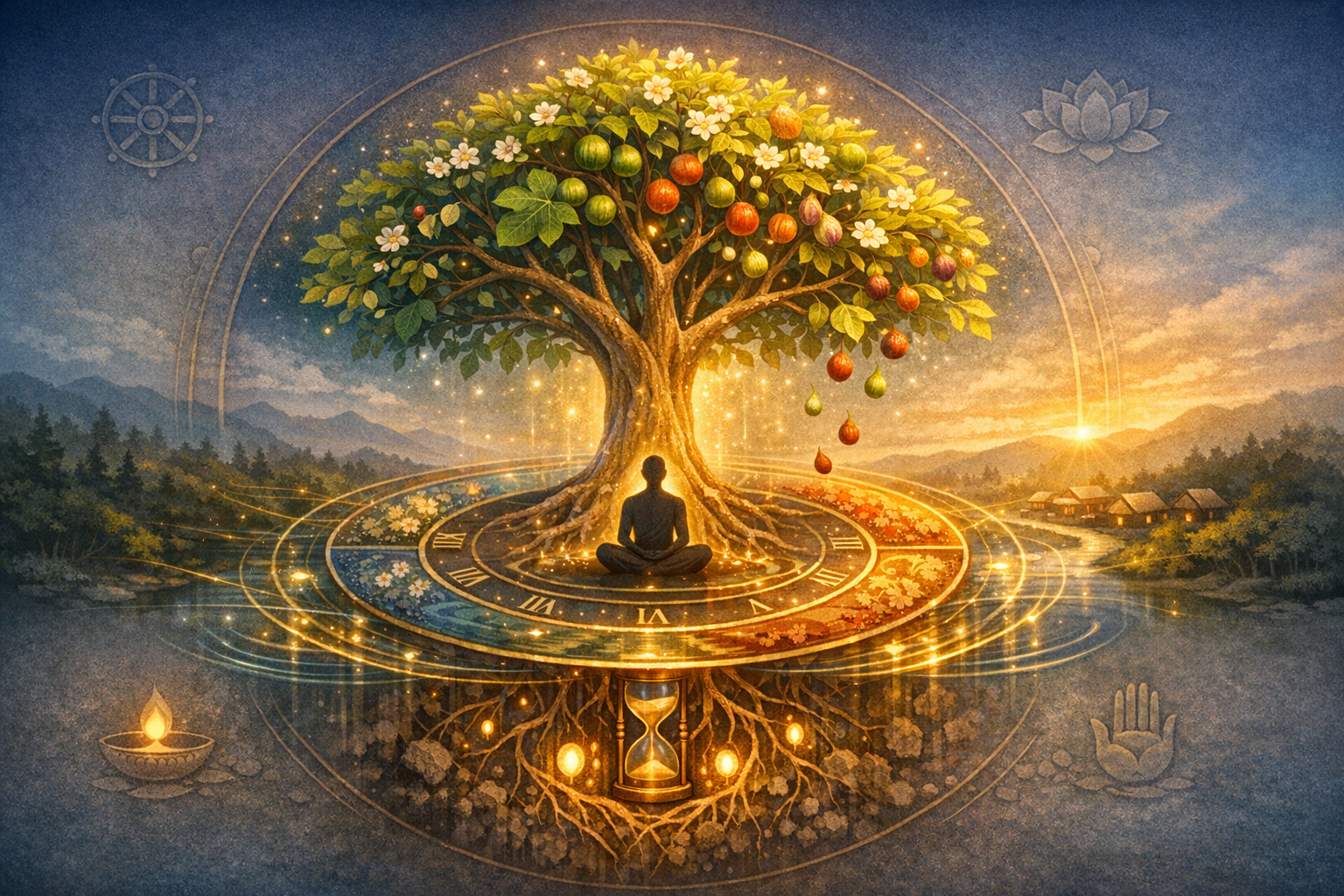
A perennial dharmic question asks when the actions of this lifetime truly bear fruit. Drawing on Hindu sources such as the Bhagavad Gita, Upanishadic thought, the Yoga Sutras, and dharmashastra, this analysis explains how outcomes may manifest immediately, over time, or in future births through the interplay of sanchita, prarabdha, and agami karma. It integrates…
-
Punya and Paap Unveiled: The Moral Physics of Karma in Hindu Dharma and Dharmic Unity

Punya and Paap are presented here as the moral physics of Hindu Dharma, explaining how intention, means, and consequence shape character, community, and future conditions. Readers gain a clear, text-grounded understanding of karma, including sañcita, prārabdha, and āgāmi, with practical guidance on cultivating Punya and attenuating Paap through yamas, niyamas, dāna, prāyaścitta, and daily mindfulness.…
-
Karma and the Realized Soul in Hinduism: Sanchita, Prarabdha, Agami and Jivanmukti Explained

This article explains how the threefold classification of karma in Hinduism—sanchita, prarabdha, and agami—operates for both seekers and the realized person in Advaita Vedanta. It shows why Self-knowledge nullifies sanchita, prevents the accrual of agami, and yet allows prarabdha to complete its course until the body’s end. Readers gain scriptural grounding from the Bhagavad Gita…
-
Unraveling Karma’s ‘Complicated Play’: Dharmic frameworks of action, causality, and grace

This long-form guide unpacks why “Gurudev says that it is a complicated play,” showing how Karma operates across intention, action, impressions, and outcomes. It compares Hindu, Buddhist, Jain, and Sikh frameworks, clarifying doership, responsibility, and grace without collapsing their differences. Readers gain a precise map of sañcita–prārabdha–kriyamāṇa, Buddhist intentionality (cetanā) and dependent origination, Jain karmic…
-
Karma in Hinduism: A Definitive, Practical Guide to Action, Consequence, and Liberation

Karma in Hinduism is a precise ethical and philosophical system linking intention, action, and consequence within the larger pursuit of moksha. Drawing on the Bhagavad Gita, the Upanishads, and allied schools of Hindu philosophy, this long-form guide explains the threefold temporal model—sanchita, prarabdha, and agami—alongside the Gita’s categories of karma, akarma, and vikarma. It clarifies…
-
Plantain-Born Kadaligarbha in Kathasaritsagara: Divine Origins, Relentless Karma, and Vairagya

The Kathasaritsagara’s tale of Kadaligarbha, the plantain-born maiden, fuses literary beauty with precise philosophical instruction. It stages the inevitability of karma while demonstrating how dharma and vairagya (detachment) reshape response without denying consequence. Readers gain a clear map of the classical classification of karma—sancita, prarabdha, and agami—and see why only disciplined non-attachment can blunt compulsive…
-
Why Sanskrit Calls Humans “Nara”: Deep Origins, Dharma, and the Power of Karma
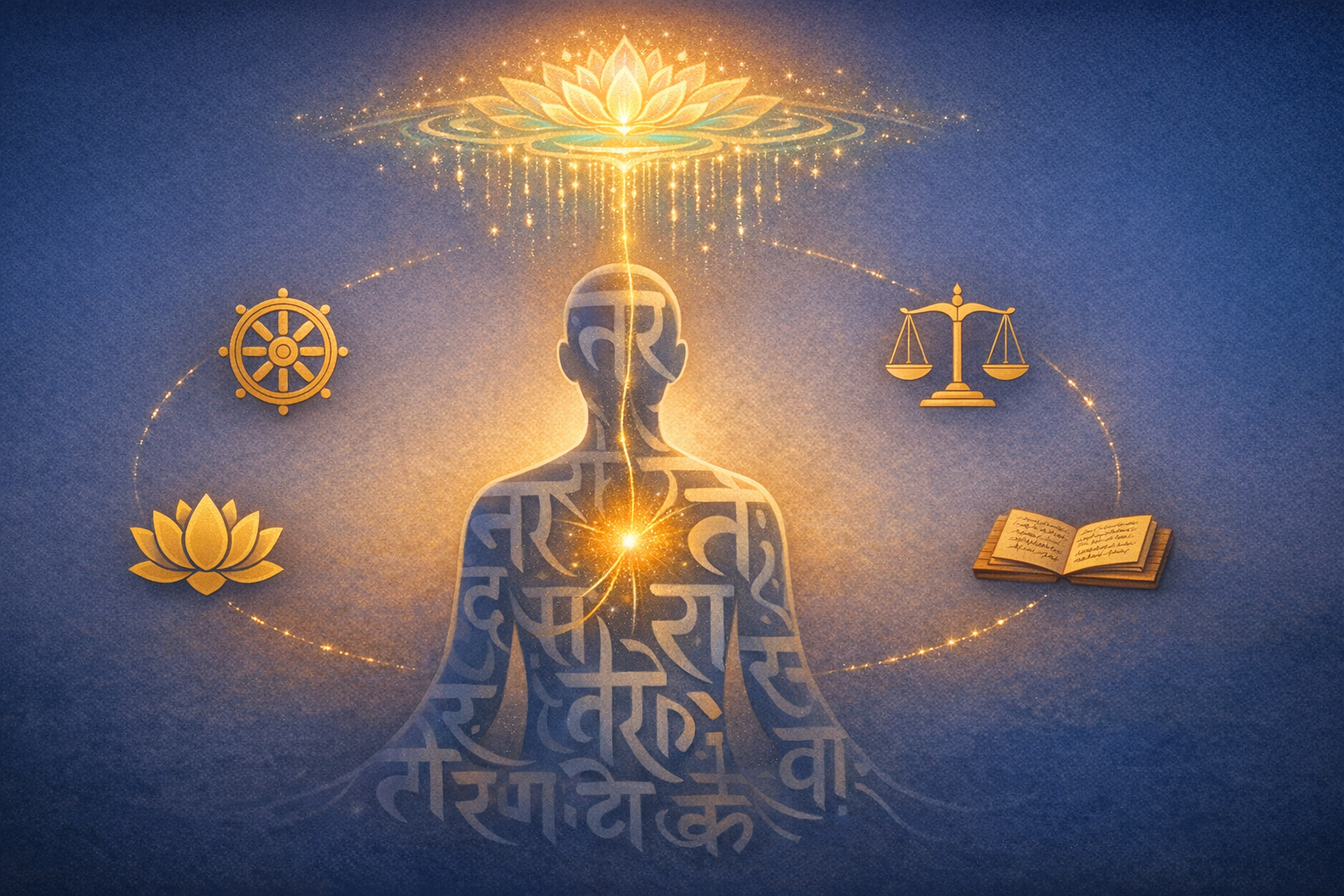
The Sanskrit term “nara” does more than denote a human being; it encodes a civilizational understanding of agency, ethics, and liberation. Its deep Indo-European etymology, rich scriptural presence, and philosophical nuance explain why Hinduism treats human life as uniquely suited to dharma and karma. Classical distinctions—sañcita, prārabdha, and kriyamāṇa karma—show how present choices reshape experience.…
-
Bhagavad Gita on Inescapable Action: Krishna on Nature’s Gunas and Dharmic Responsibility

The Bhagavad Gita teaches that action is inescapable because Nature (Prakriti) operates through the gunas, compelling continuous activity. Krishna reframes the human challenge from “whether to act” to “how to act” through Karma Yoga—duty aligned with dharma and freedom from anxious attachment to results. Key verses (3.5, 3.27, 18.60, 2.47–48) establish a compatibilist vision in…
-
Karma and Karmaphala in the Ramayana and Mahabharata: Dharma, Consequence, and Liberation

This essay reads the Ramayana and Mahabharata as precise ethical maps of karma (action) and karmaphala (consequence), showing how intention, duty, and context shape outcomes. It explains sañchita, prārabdha, and āgāmi karma, and situates them within dharma and the puruṣārthas. Through case studies—Daśaratha’s unintended harm, Rāvaṇa’s hubris, the dice hall’s complicity, Karna’s complexity, and Bhīṣma’s…
-
Karmashaya Demystified: Uncovering the Hidden Storehouse of Karma in Patanjali’s Yoga

Karmashaya—Patanjali’s term for the subtle storehouse of karma—explains how actions leave impressions (samskaras) that condition future experience. Grounded in the Yoga Sutras (2.12), it links klesha-driven actions to both present and unforeseen outcomes, clarifying the mechanics of reactive patterns. Read together with the threefold classification of karma (sanchita, prarabdha, agami), karmashaya functions as a dynamic…
-
Karmavipaka Explained: How Karma Ripens Across Dharmic Paths and Shapes Destiny

Karmavipaka (कर्मविपाक) explains how actions ripen into lived experience within Hindu philosophy. Grounded in the Sanskrit kri, meaning “to do,” it frames karma as lawful causality rather than external reward or punishment. The threefold classification—sanchita, prarabdha, and kriyamana—clarifies how past, present, and future actions interrelate. Far from fatalism, Karmavipaka emphasizes purushartha (effort), ethical choices, and…
-
Understanding Karma’s Three Natures in Hinduism: Good, Mixed, and Dark for Ethical Living
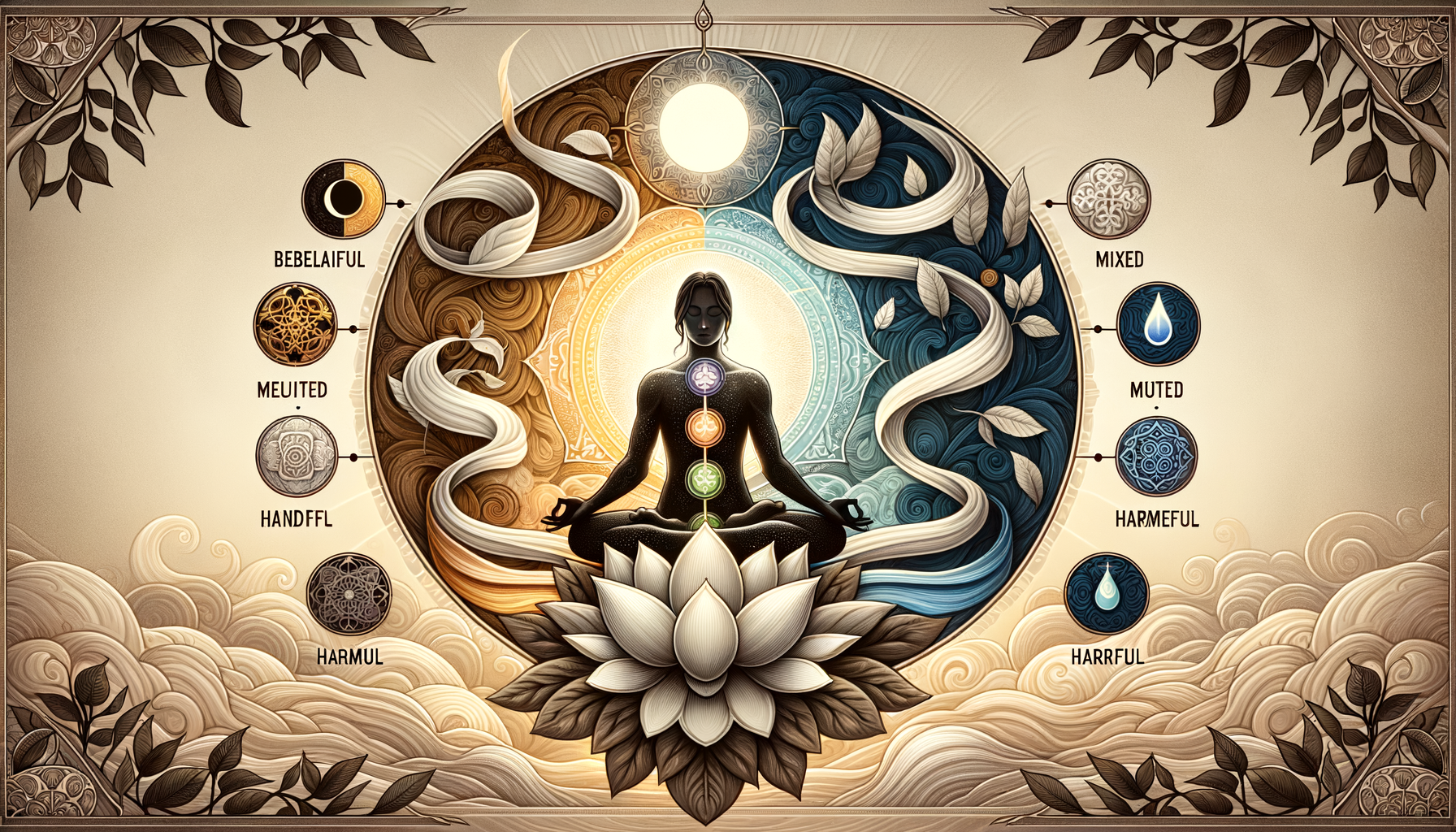
Karma in Hindu philosophy links intention, action, and consequence, shaping ethical character and spiritual progress. A clear triad—śukla (good), śukla–kṛṣṇa (mixed), and kṛṣṇa (dark)—explains why motives matter as much as deeds. Drawing on the Yoga Sūtra (4.7) and the Bhagavad Gita, this guide shows how Karma Yoga and mindful discernment reduce mixed motives and prevent…