
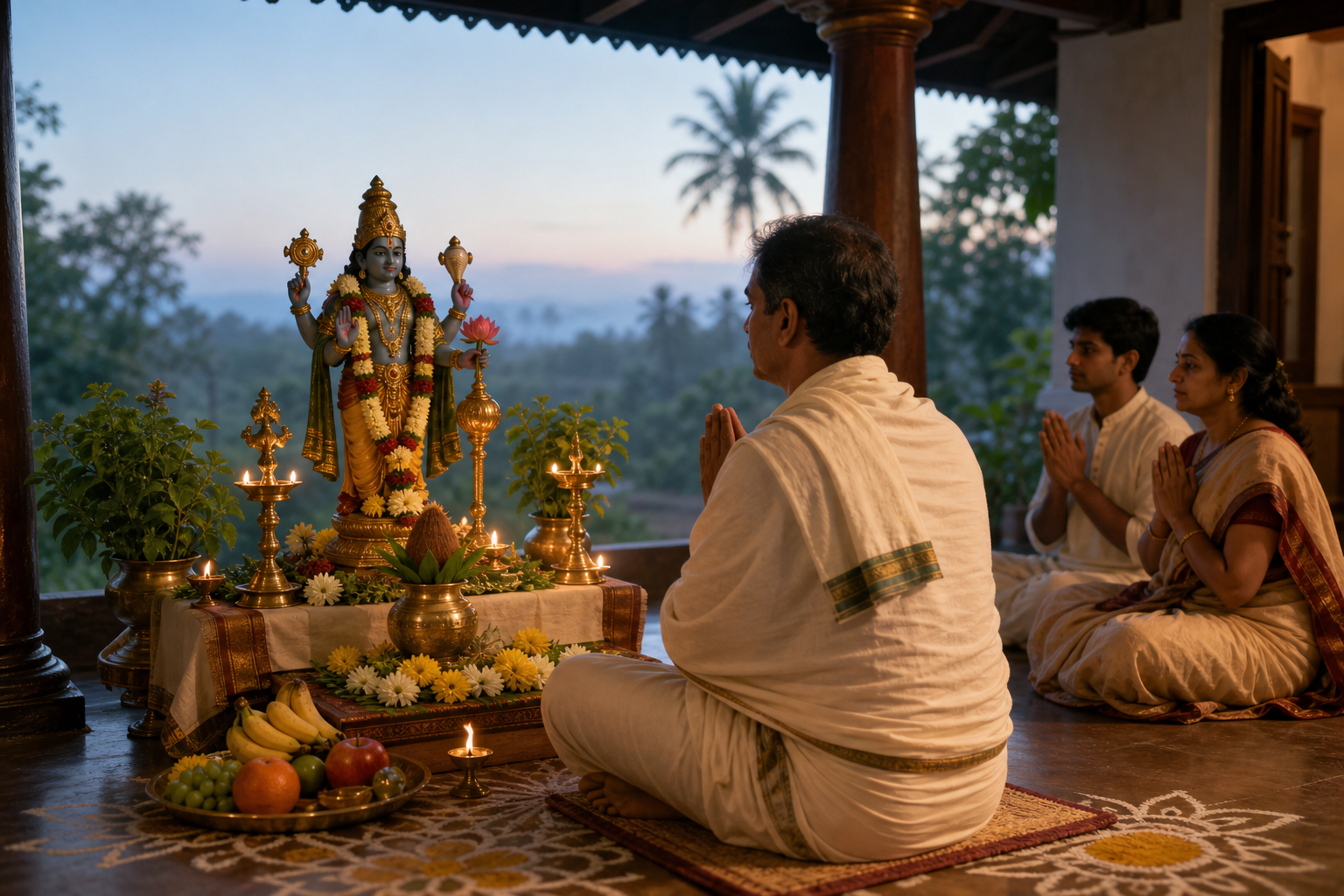
You may know that Vishnu Vidiya Vratam begins on one Vidiya tithi and ends on another, yet still be unsure what your household should do on the days between them. That is the practical challenge: not arranging one elaborate puja, but sustaining a sincere discipline through the full Phalguna observance.
You do not need to copy every custom you encounter. You need the correct local dates, a sankalpa suited to your capacity, and a daily practice you can keep without turning devotion into strain.
Confirm the 2026 dates with your local Panchang
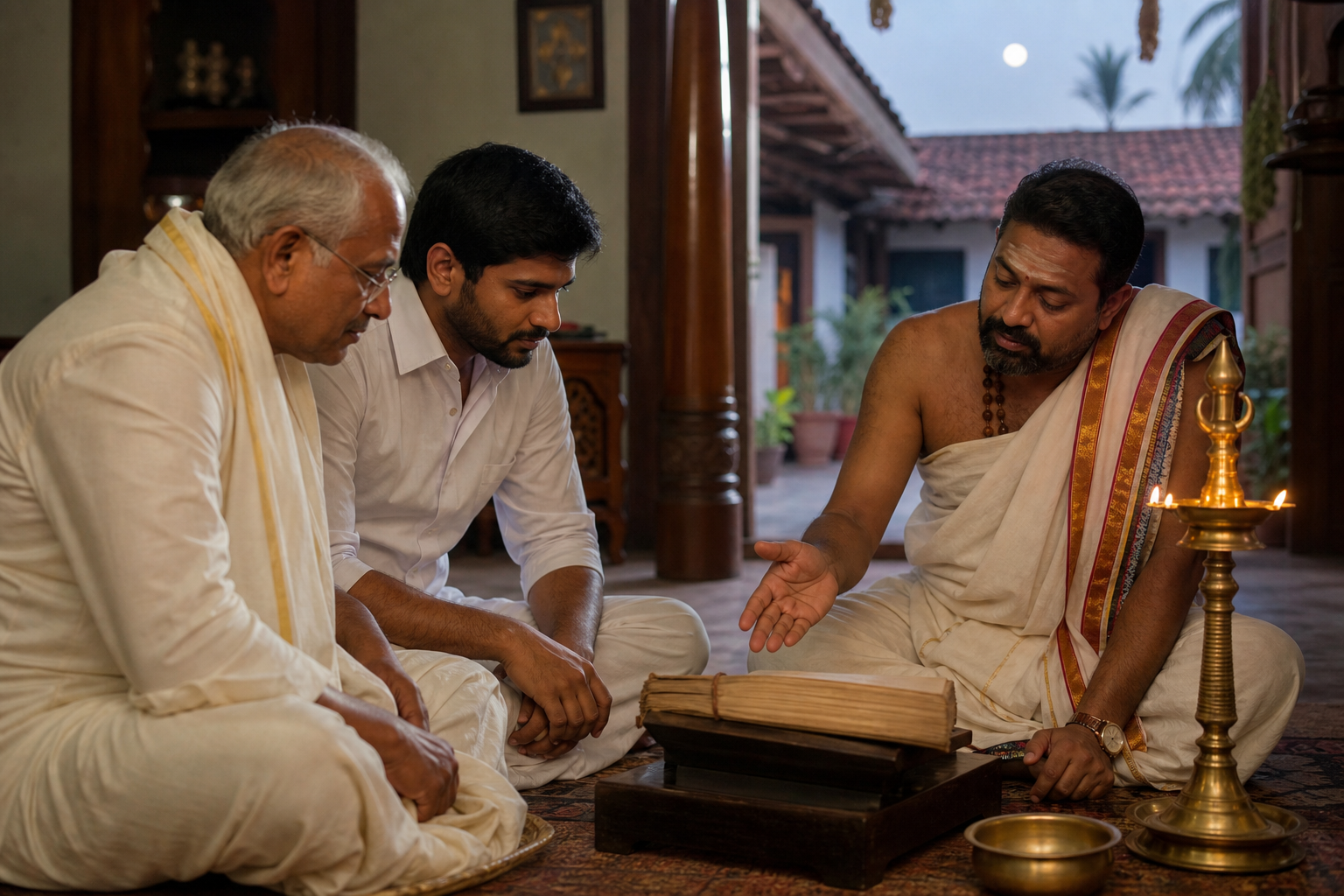
For the 2026 Hindu calendar, Vishnu Vidiya Vratam runs from 19 February through 5 March. The opening tithi is Phalguna Maasa Shukla Vidiya, in the waxing lunar phase. The concluding tithi is Phalguna Maasa Krishna Vidiya, after the full moon in the waning phase.
| Milestone | 2026 date | What to do |
|---|---|---|
| Opening | 19 February | Confirm Phalguna Shukla Vidiya locally and begin your sankalpa. |
| Continuing observance | 19 February–5 March | Maintain the daily puja, recitation, food discipline, and seva you chose. |
| Completion | 5 March | Confirm Phalguna Krishna Vidiya and conclude according to your household or temple custom. |
A tithi does not necessarily begin at midnight. Its relationship to the civil date can also depend on location and the sunrise used by the regional almanac. Treat the dates above as your calendar framework, then check the sunrise-based tithi transition in a trusted Andhra Pradesh or Telangana Panchang before fixing the exact opening and concluding worship.
Use one consistent regional authority. If your family normally follows a temple calendar, family priest, or established local Panchang, keep following it for the entire vrata. Combining the date from one almanac with the timing rule from another creates confusion without improving the observance.
Key takeaways
- In 2026, the observance begins on 19 February and concludes on 5 March.
- The relevant boundaries are Phalguna Shukla Vidiya and Phalguna Krishna Vidiya, not midnight dates alone.
- The central discipline is continuity of Vishnu bhakti across the full observance.
- Simple daily puja, Vishnu Sahasranama or another established Vishnu prayer, satvik food, dana, and seva are practical elements.
- Fasting should remain within your capacity and any requirements of your health.
- Household and temple customs vary, so settle ritual details before the first day instead of changing methods midway.
Make a sankalpa you can sustain for the whole vrata
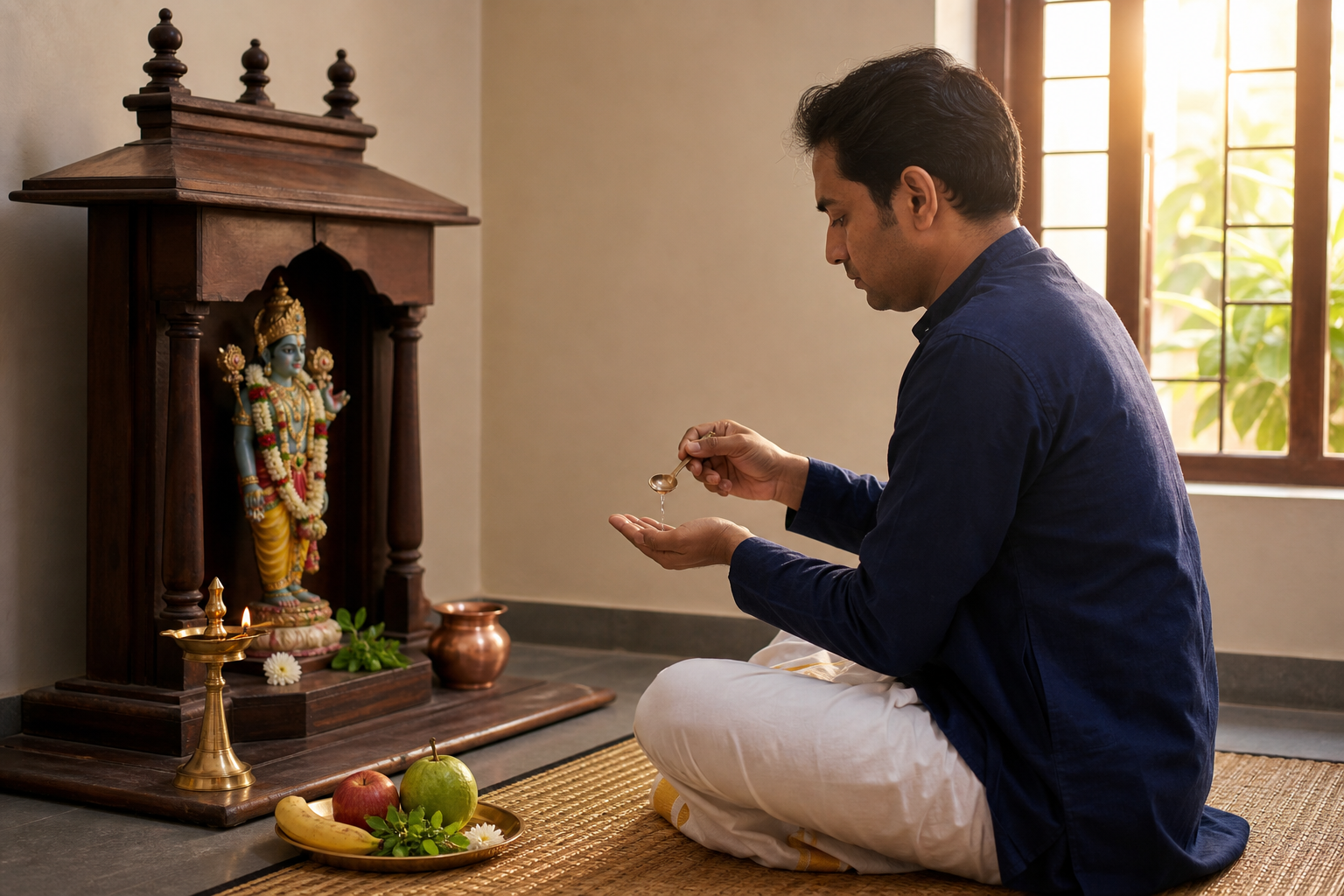
A sankalpa gives the observance a definite shape. It tells you what you are undertaking, whom the worship is for, and which disciplines you intend to maintain. Its value lies in making your devotion consistent, not in making your plan unnecessarily demanding.
If your family has a customary sankalpa formula, use it. If an exact ritual form is required in your sampradaya, ask a knowledgeable elder or temple priest for that form. A practical personal intention can still be clear: you are dedicating the Phalguna period to Lord Vishnu and committing yourself to a chosen pattern of prayer, satvik restraint, and compassionate action.
- Choose the Panchang you will follow and record the opening and concluding tithis.
- Fix a realistic daily time for worship. A time that works on an ordinary working day is more useful than one you can keep only when the household is free.
- Define your minimum daily practice: simple Vishnu puja and a recitation you can repeat consistently.
- Choose your food discipline before the vrata begins. Decide whether your capacity permits a light fast or calls for regular satvik meals.
- Add a concrete form of dana or seva that fits your means and circumstances.
- Tell participating family members what the shared routine will be, while allowing each person to observe according to capacity.
- Confirm in advance how your household or temple tradition concludes the vratam on Krishna Vidiya.
The minimum practice matters because busy days will come. If your plan works only when every day is quiet, it is not yet a sustainable plan. Establish a small devotional core that remains possible on the busiest day; add longer recitation, bhajans, temple visits, or collective worship when circumstances allow.
Use the same daily anchor through both lunar phases
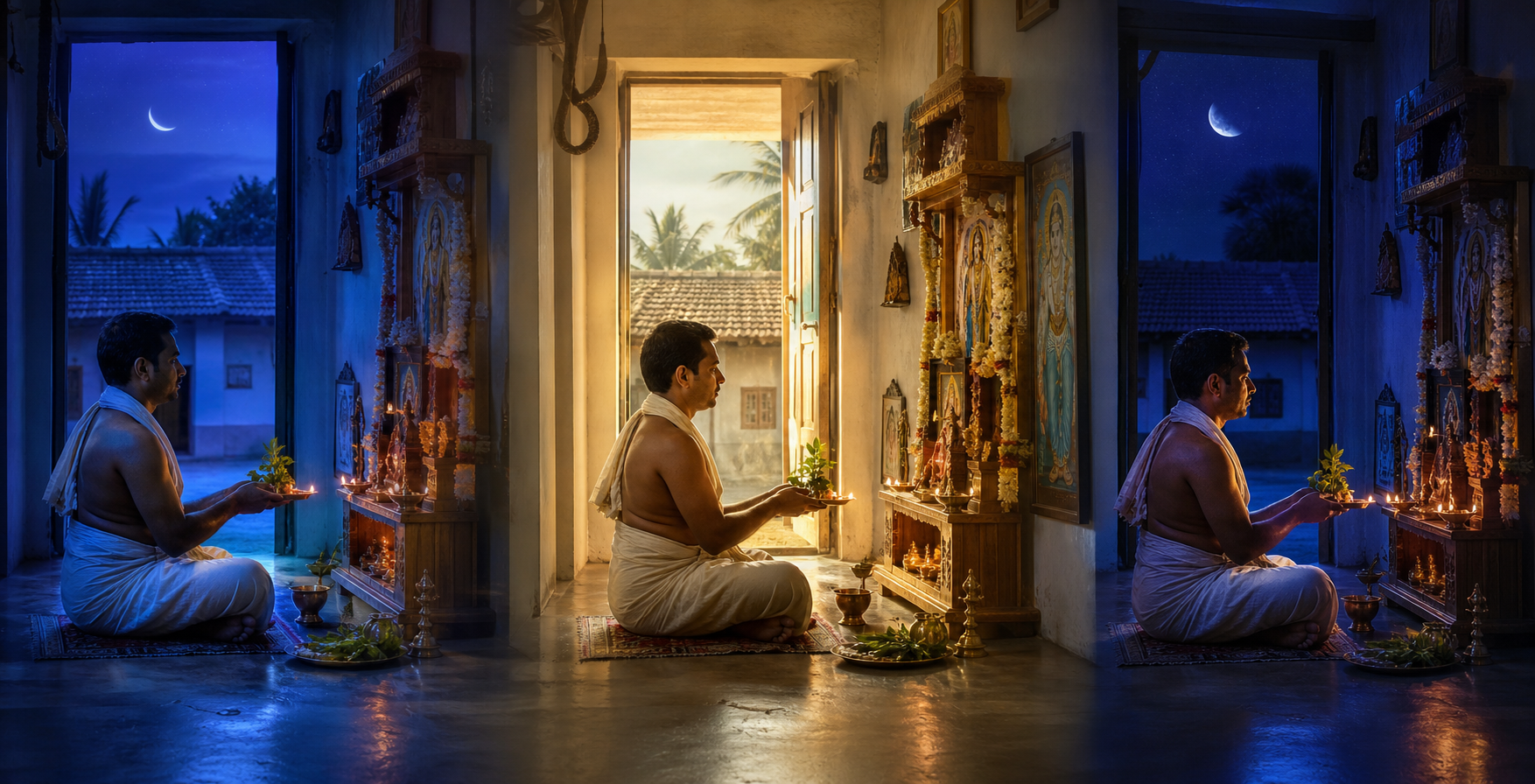
Vishnu Vidiya Vratam is not merely an opening puja followed by a closing puja. Its distinct character comes from carrying devotion across the waxing and waning phases of the Phalguna cycle. Repetition is therefore part of the spiritual work.
A workable daily sequence can remain simple:
- Prepare yourself and the place of worship according to your normal household practice.
- Recall the sankalpa and offer a simple puja to Lord Vishnu.
- Recite Vishnu Sahasranama where that is manageable, or use another Vishnu prayer established in your family tradition.
- Keep your chosen satvik food or light-fasting discipline for the day.
- Reflect briefly on one quality associated with Vishnu: protection, preservation, or compassion.
- Carry that quality into one ordinary interaction, duty, act of restraint, or act of service.
If your household already performs sandhya prayers, connect the vrata to that familiar rhythm rather than building a competing schedule. Using the same daily anchor reduces the need to renegotiate the practice every morning. The attention can then remain on bhakti rather than logistics.
Vishnu Sahasranama is a common choice, but the observance should not become a contest over recitation length. A shorter prayer performed attentively and regularly is more faithful to the vrata’s sustained character than an ambitious routine abandoned after the opening days.
Temple darshan, community bhajans, and satsang can strengthen the household discipline. Look at your calendar before the first day and decide which gatherings you can attend. This avoids the common pattern of intending to participate, postponing the decision, and discovering that the observance has almost ended.
Fast in a way that protects the vow rather than the ego
Fasting during Vishnu Vidiya Vratam is commonly approached with moderation. Light fasting and satvik meals are both compatible with an observance shaped by personal capacity. The disciplined choice is the one you can maintain safely while continuing your responsibilities and daily worship.
Do not assume that the strictest food rule you hear is universal. Andhra Pradesh and Telangana contain many family customs, temple traditions, and community practices. Ask your own family or temple about matters such as permitted foods, meal frequency, special offerings, and the concluding procedure. Keep their answer distinct from optional practices you encounter elsewhere.
If a medical condition or prescribed medication requires regular food, follow the guidance of your clinician. Do not stop medication, delay necessary meals, or intensify a fast to match another devotee. You can retain the devotional core through satvik eating, prayer, recitation, self-restraint, dana, and seva. A vratam is not a substitute for medical care.
It is also wise not to escalate your rule midway because somebody else’s vrata appears more austere. That comparison shifts attention from Vishnu to performance. Decide your discipline with honesty at the beginning and carry it steadily.
If illness, travel, work, or caregiving disrupts a day, return to the daily anchor as soon as you reasonably can. Do not invent a severe compensatory fast or ritual penalty. Where your family tradition prescribes a specific remedy, obtain it from the elder or priest who knows that tradition rather than improvising one.
Carry Vishnu’s qualities into the life you are preserving
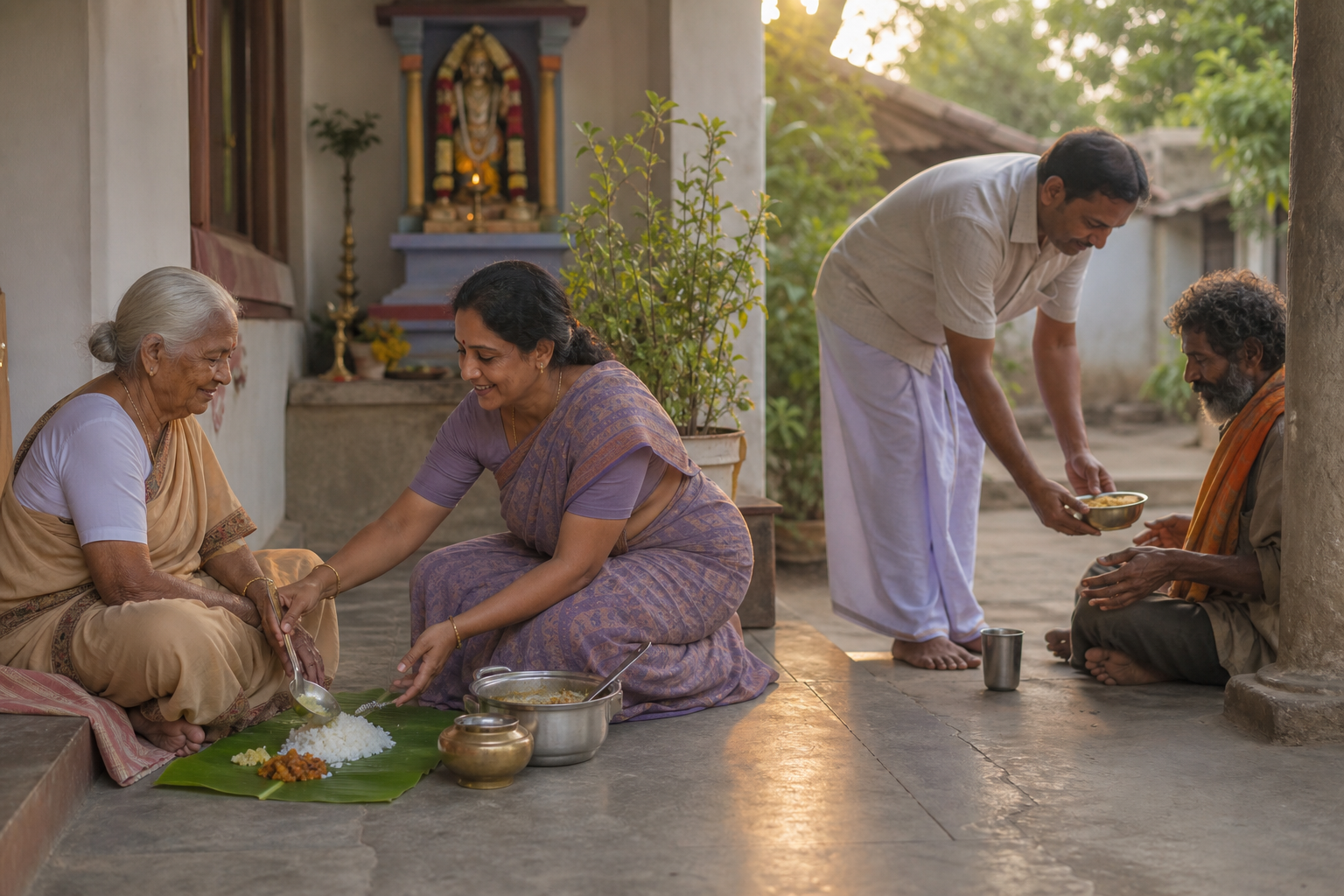
The passage from Shukla Paksha into Krishna Paksha gives this vratam a useful inner measure. Circumstances wax and wane. Energy, confidence, convenience, and emotion do the same. The discipline is not to feel equally inspired every day; it is to return to Vishnu bhakti whether the day feels expansive or diminished.
Protection, preservation, and compassion become meaningful when they enter conduct:
- Practice protection by becoming more dependable toward somebody or something legitimately entrusted to you.
- Practice preservation by maintaining a valuable duty, relationship, family practice, or shared space that neglect has begun to weaken.
- Practice compassion through dana, practical help, patient speech, or service performed without seeking attention.
This is also where a household observance can become stronger than a private resolution. Family members may share one prayer time even when their fasting capacities differ. Children, elders, working adults, and caregivers need not perform identical austerities to participate in a common devotional rhythm. A stable shared core creates cohesion without turning the home into a place of comparison.
The disciplines involved—restraint, compassion, service, and steadiness—also resonate across Hindu, Buddhist, Jain, and Sikh ethical life. That shared Dharmic resonance need not blur the identity of the observance: Vishnu Vidiya Vratam remains a vrata dedicated specifically to Lord Vishnu.
Before you begin, write down the two dates, the Panchang you will trust, your minimum daily prayer, your food commitment, and your chosen act of service. Once those decisions are settled, the vrata becomes less about repeatedly asking what to do and more about doing it with steadiness.
References
