
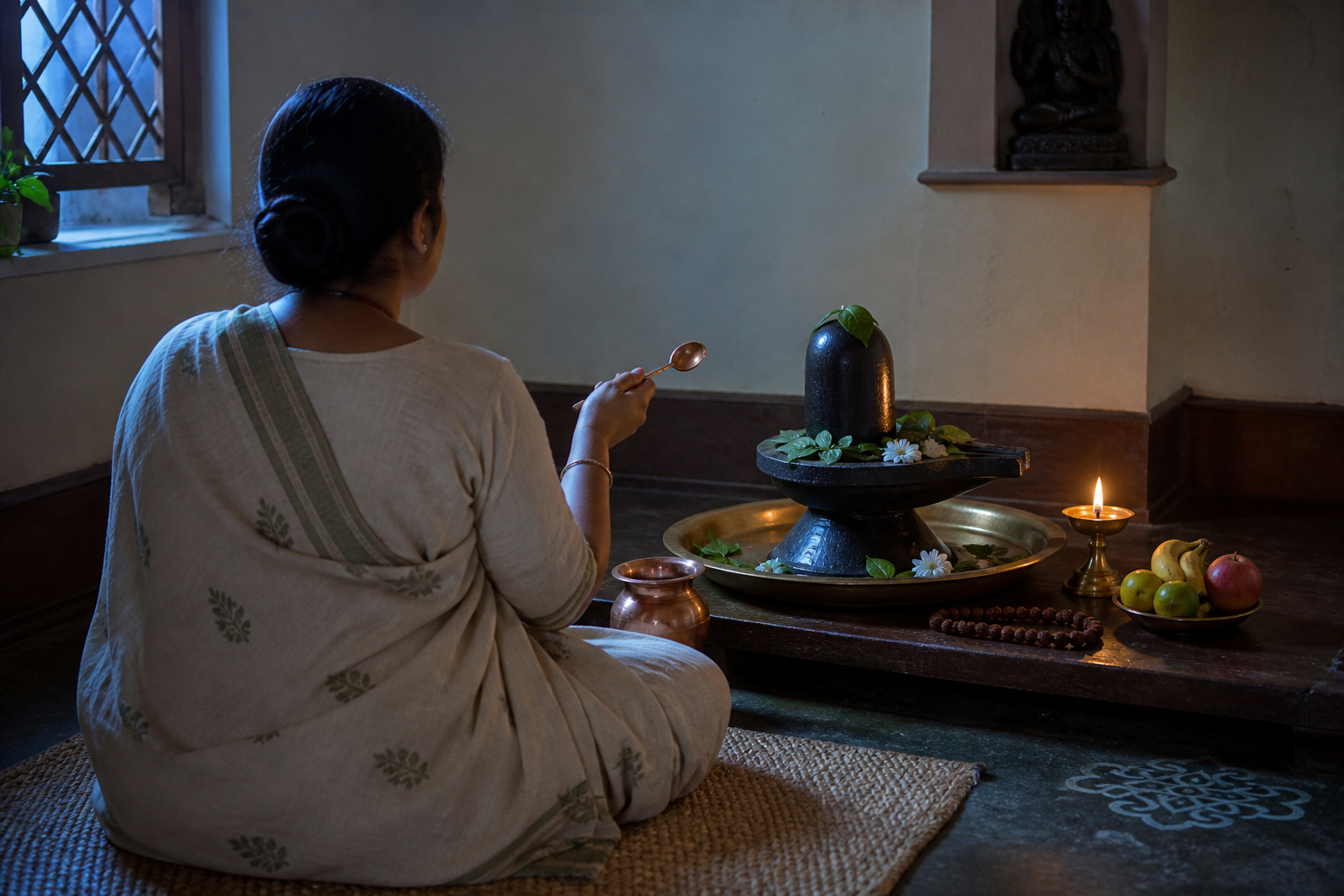
If your household follows a Marathi, Gujarati, Telugu, or Kannada Amavasyant calendar, mark 13 August 2026 for the opening of Shravan. Before that morning arrives, settle three things: which Panchanga you will follow, whether your vrata will be Ekbhukta or Nakta, and what daily worship you can sustain through the entire month.
A month-long vrata becomes difficult when its rules remain vague. A clear, modest sankalpa gives you something firmer than enthusiasm: a devotional discipline you can carry through ordinary workdays, travel, family duties, and changes in energy.
Confirm the calendar before you take the vow
In the Marathi, Gujarati, Telugu, and Kannada calendars named above, Shravan begins on 13 August 2026. These are Amavasyant calendars: Ashada ends with Ashada Amavasya, and the following Shukla Paksha Pratipada opens the new lunar month.
That qualifier matters. Hindu communities do not all begin a lunar month by the same calendar convention. If a calendar used by relatives in another region gives a different opening, that does not automatically make either date wrong. It may reflect a different Panchanga system.
Choose one calendar authority before making your sankalpa. The best practical order is your established family tradition, the temple or acharya you regularly follow, and then the regional Panchanga used in your place of worship. Do not combine the opening date from one system with the closing date from another.
Write the chosen opening and closing days where everyone observing the vrata can see them. The Gregorian date of the opening is clear for the specified calendars, but the vrata concludes on the last day of Shravan, so confirm that endpoint in the same Panchanga rather than estimating a fixed number of days.
Choose a rule you can actually keep
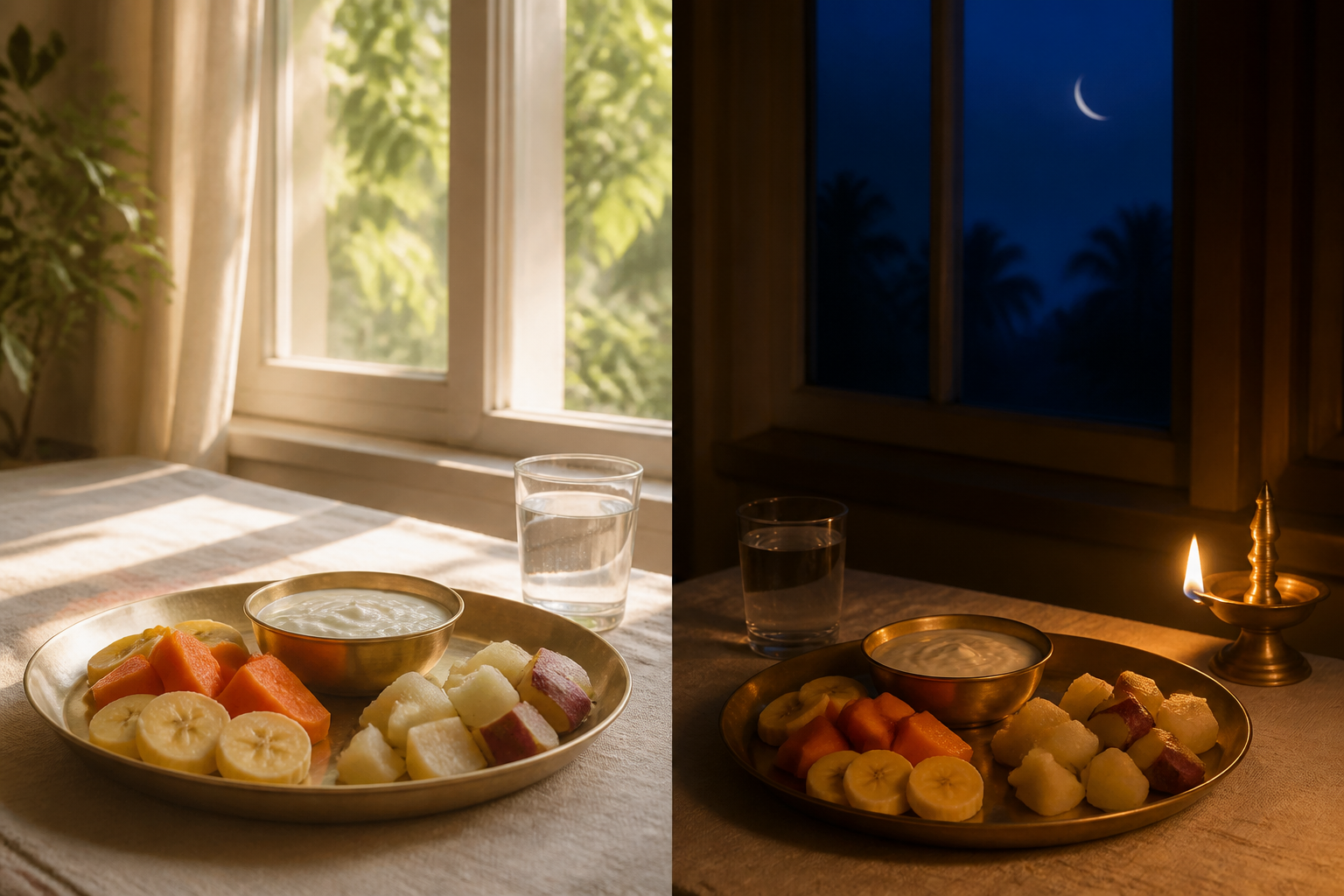
Ardha Shravanik Vrat begins on Shravan Shukla Pratipada and continues until the final day of Shravan. Ekbhukta and Nakta are its principal fasting forms. Ekbhukta generally means taking one meal during the day. Nakta places the permitted meal at night, commonly after the day’s worship. The exact foods, drinks, and timing can vary by sampradaya and household.
Choose the form before you begin. Switching between Ekbhukta and Nakta whenever one becomes inconvenient turns a vow into a daily negotiation. If your tradition permits alternatives, put those alternatives into the sankalpa from the start. For example, decide in advance how work travel, demanding physical labour, illness, or a medicine that must be taken with food will be handled.
Ekbhukta and Nakta describe a fasting pattern; they do not supply a universal menu. Ask these concrete questions before the first day:
- Which foods does your family or sampradaya permit during this vrata?
- Are water, milk, fruit, or other light items permitted outside the principal meal?
- At what point in the day is the Ekbhukta meal taken, or what event marks the Nakta meal?
- Does your rule change on a day of illness, travel, or unavoidable physical exertion?
- Who will guide you if an observance is missed: a family elder, temple priest, guru, or acharya?
Avoid adding restrictions merely because they sound more austere. Neither Ekbhukta nor Nakta automatically means a dry fast. If your inherited practice does not call for complete abstention from water, do not add it casually. The purpose is disciplined devotion, not a contest in deprivation.
Turn the month into a repeatable daily practice
Shravan observance is often associated with worship of Shiva, while regional practice also gives an important place to Goddess Lakshmi and Sri Krishna. You do not need to combine every custom you encounter. Follow the devata, mantra, stotra, or puja sequence received through your own family or sampradaya.
Build the vrata around one dependable daily rhythm:
- Begin consciously. After bathing or your normal morning preparation, remember the sankalpa and offer a short prayer. This prevents the food restriction from becoming detached from its devotional purpose.
- Protect one fixed worship period. Choose a time you can keep on busy days, not only on holidays. A brief daily practice maintained through the month is more coherent than an elaborate plan repeatedly abandoned.
- Observe the chosen meal rule. Decide the meal in advance when possible. Waiting until hunger is strong makes it easier to bargain with a rule that was never clearly defined.
- Add restraint beyond food. Watch speech, anger, wasteful consumption, and avoidable distraction. The meal boundary trains attention; conduct gives that attention a Dharmic direction.
- Close each day deliberately. Note whether the vrata was kept as intended and prepare for the next day. If something went wrong, record what happened instead of quietly rewriting the vow.
A practical sankalpa should identify the period, fasting form, devotional practice, and legitimate exceptions. It need not become a long list of heroic promises. If your work schedule makes a lengthy morning puja unreliable, establish a shorter non-negotiable practice and reserve additional worship for days when time permits.
Prepare the household as well. Tell the person who cooks which ingredients your rule permits. Check work and travel dates before the month begins. Keep appropriate food available for the permitted meal. These are small arrangements, but they prevent avoidable uncertainty from consuming the attention meant for sadhana.
Protect your health without making the vrata casual
A vrata is a religious discipline, not a medical treatment, weight-loss programme, or substitute for prescribed care. Do not change the timing or dose of medication to fit a fast. If medicine must be taken with food, treat that requirement as a health constraint to resolve before making the sankalpa.
Seek individual guidance from a qualified clinician before undertaking meal restriction if you are pregnant or breastfeeding, under 18, frail, have diabetes or another condition affected by food or fluid intake, have kidney disease, have a history of an eating disorder, or take medication tied to meals. A suitable vrata may need to centre on prayer, japa, seva, simplicity, or giving up a non-essential indulgence rather than restricting necessary nourishment.
Fainting, confusion, chest pain, severe weakness, or an inability to keep fluids down is not a test of devotion. End the restriction and seek appropriate medical help. Dharma does not require you to conceal a dangerous symptom in order to preserve the appearance of austerity.
Do not impose an adult fasting rule on a child, an elderly relative, or anyone dependent on you. Their participation can be adapted through worship, listening to katha, helping with puja, seva, or a simple form of restraint suited to their health and stage of life.
Quick answers before Shravan begins
Does 13 August 2026 apply to every Hindu calendar?
No. It is the opening date given for the Marathi, Gujarati, Telugu, and Kannada Amavasyant calendars. Follow the Panchanga convention of your family, temple, or sampradaya if it differs.
What should you do if a day is missed?
Do not assume that one mistake automatically cancels the entire vrata, but do not invent your own expiation either. Record what occurred, resume only in the manner your tradition permits, and ask the family elder, priest, guru, or acharya whose calendar and practice you adopted. Deliberately abandoning the vow and being unable to observe it because of illness are not the same situation.
When does the month-long vrata end?
Ardha Shravanik Vrat ends on the last day of Shravan. Confirm that day with the same Panchanga used for the opening. Ask in advance whether your tradition concludes with a particular puja, offering, dana, meal, or blessing; customs differ, so the ending should be inherited or guided rather than improvised.
Before 13 August, put your rule into one clear sentence and check it with the person whose tradition you follow. Once Shravan opens, return to that sentence each morning. The steadiness of the month will come from knowing what you promised, why you promised it, and how you will honour it safely.

References
- Hindu Pad — Shravana Masam (Shravan Mahina) begins in Marathi, Gujarati, Telugu & Kannada Calendars
- Hindu Pad — Ardha Shravanik Vrat
