
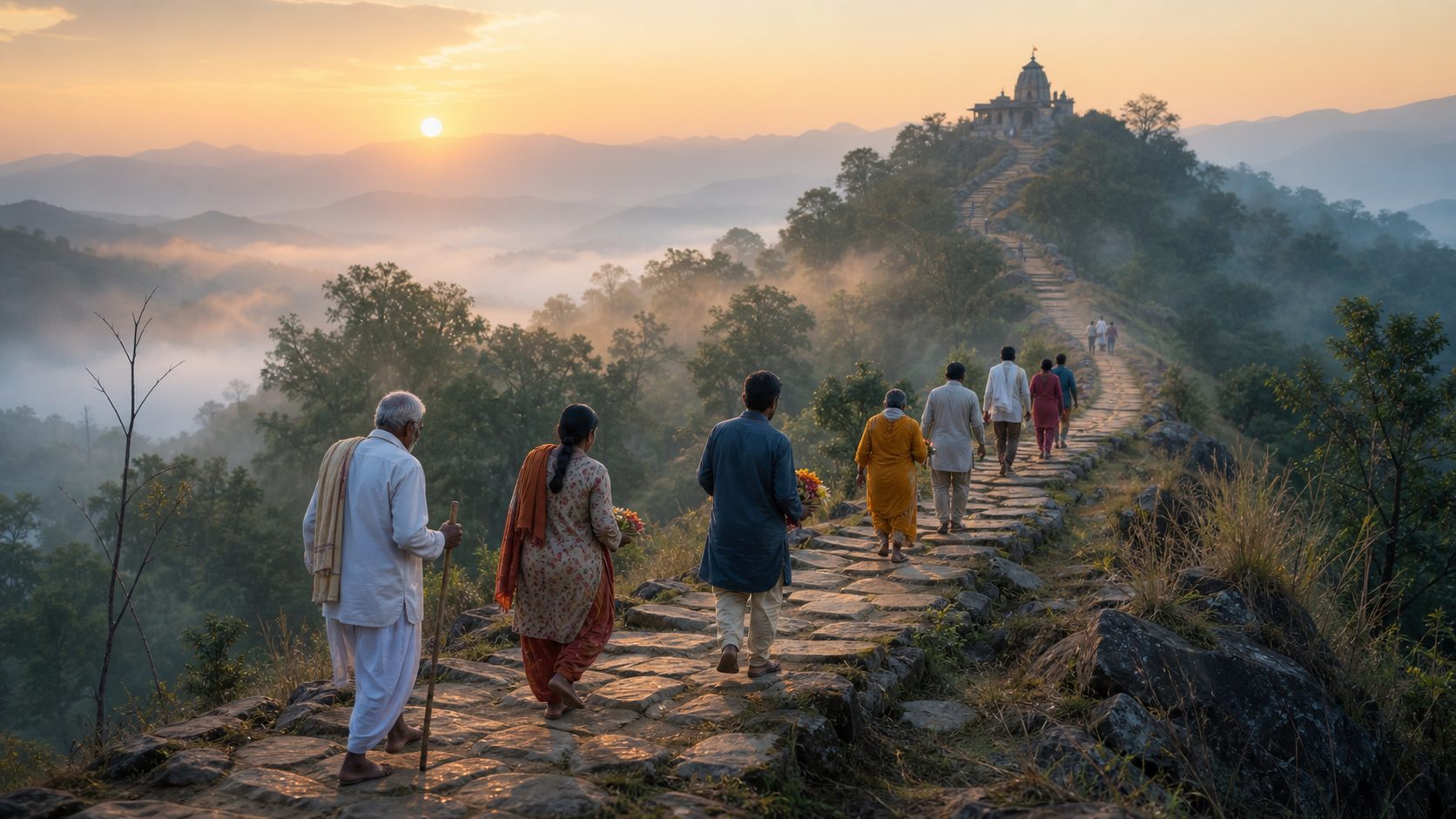
You may be preparing to climb temple steps, walk a hill circuit, or undertake the Kailash Parikrama and wondering how to keep the journey from becoming a difficult walk with darshan at the end. The answer lies less in adding rituals than in giving every part of the effort a devotional purpose before you leave.
A sacred ascent has three movements: offer the journey, govern yourself while walking, and carry one discipline home. That structure can hold a congregational ascent filled with song, a demanding high-altitude circumambulation, or an accessible form of participation that does not require completing the whole route.
Give the ascent a sankalpa before giving it an itinerary
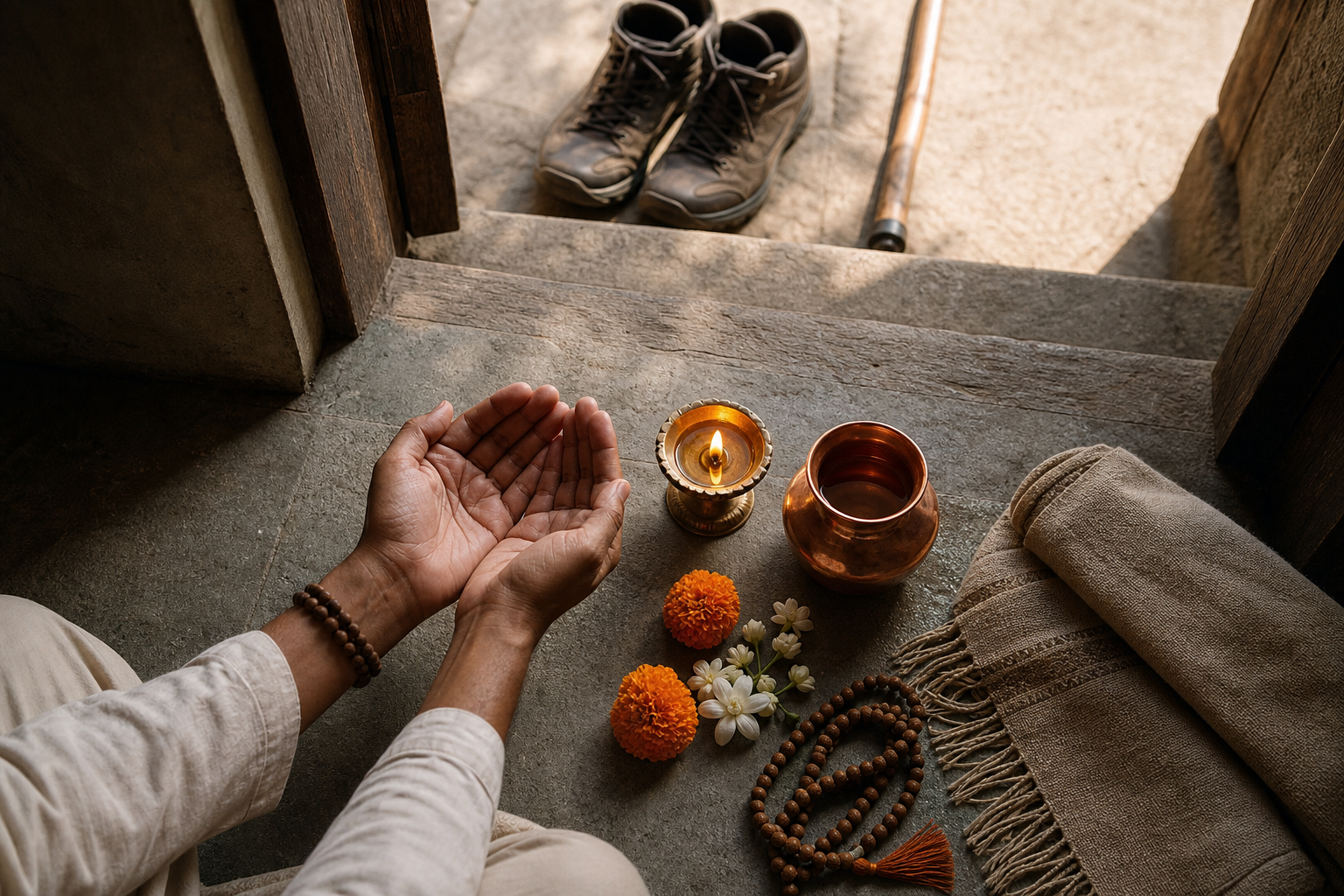
Tickets, permits, footwear, and lodging determine whether you reach the starting point. Sankalpa determines what you will do with the journey once inconvenience, fatigue, crowds, or uncertainty strip away your ideal picture of it.
Your sankalpa should be short enough to remember without looking at a screen. It is not a demand that the Divine grant a result in exchange for exertion. It is a commitment concerning the spirit in which you will travel and the conduct you will maintain.
- Name the relationship at the center of the pilgrimage. You may be walking in devotion to Shiva, Sri Venkateswara, a Tirthankara, the Buddha, the Guru, or a sacred responsibility carried within your own lineage.
- Name the discipline you will practise on the route. Choose something observable: refrain from angry speech, accept the pace of the group, help a slower pilgrim, keep the path clean, or return to prayer whenever complaint arises.
- Name what will continue after you return. Select a regular act of worship, study, restraint, reconciliation, or seva that belongs in ordinary life rather than only at a tirtha.
A workable sankalpa might be: I offer this ascent in remembrance of my mother; when discomfort comes, I will guard my speech and assist those around me; when I return, I will continue a weekly act of seva. The words need not sound grand. They need to govern a real decision.
Be precise about the tradition whose sacred ground you are entering. Kailash carries distinct meanings within Hindu, Buddhist, Jain, and Bon traditions. Hindus revere it as the abode of Shiva and Parvati; Buddhists know it as Kang Rinpoche; Jain memory connects the region with Ashtapada and Rishabhanatha; and Bon preserves its own ritual relationship with the mountain. Shared reverence is real, but it does not make the traditions interchangeable.
Before departure, test your sankalpa against three situations: a delayed start, a route you cannot finish, and another pilgrim whose practice differs from yours. If the intention survives all three without turning into resentment, competition, or imitation, it is ready to carry.
Let foot, breath, and voice become one discipline
Physical repetition can either steady attention or put the body on autopilot. Devotional sound keeps calling the mind back. During Metlotsavam, devotees ascend the Tirumala steps while singing Annamaiah’s sankeertanas. Footfall, melody, sacred language, and congregational movement become parts of the same practice.
You can use that principle without turning the ascent into a performance. Prepare one short, meaningful passage from the liturgy of your lineage or from the tradition of the place you are visiting. Learn its pronunciation and sense before the journey. Repetition should deepen attention to the words, not reduce them to background noise.
- At the start of each segment, stand still long enough to remember your sankalpa before joining the flow of walkers.
- Use a refrain that remains natural at your walking pace. If singing makes you rush, gasp, or compete with the group, slow down or keep silence.
- When irritation appears, notice it before adding a spiritual explanation. Return to the words, adjust your pace, and perform the next useful act in front of you.
- Treat pauses for water, food, warmth, and rest as part of responsible practice. Neglecting the body is not proof that the mind has transcended it.
- Leave room for silence. Song gathers a community; silence lets its meaning settle.
Annamaiah’s sankeertana, Sikh kirtan, Jain stavan, and Buddhist gatha recitation share a kinship through sacred text, ethical formation, communal voice, and contemplation. Kinship is not permission to lift a form out of its setting carelessly. If you do not know the local words or their place in the ritual, listen respectfully. Silence is more devotional than confident misuse.
At high altitude, the rule becomes even simpler: breathing safely takes precedence over maintaining a musical rhythm. A chant should follow the breath available to you. The breath should never be forced to obey the chant.
Recognize the thresholds that the path gives you
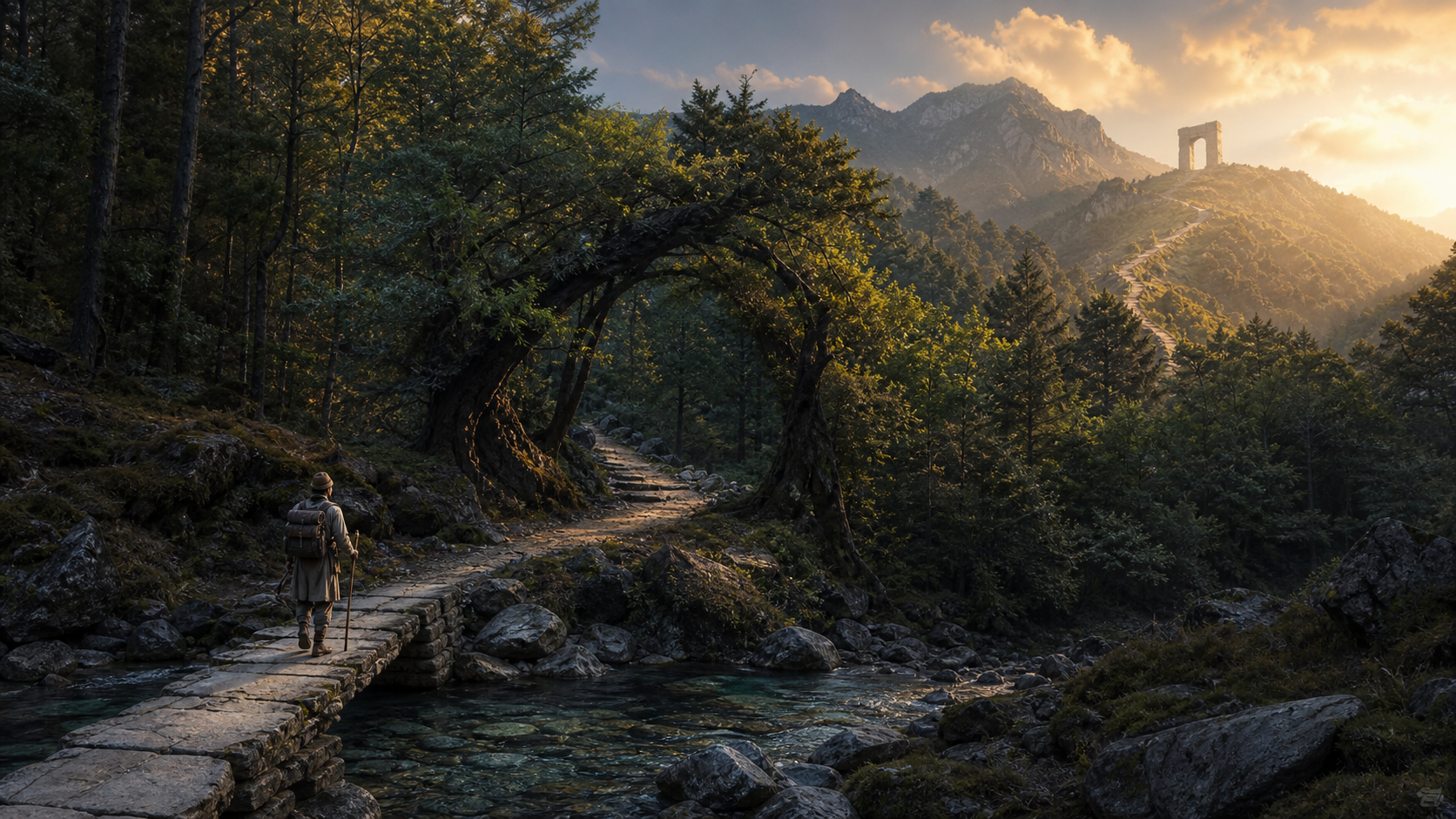
A sacred route is not merely scenery between departure and destination. Gates, changes of direction, difficult passages, places of renunciation, and the final walk back all give form to the inner journey. You do not need to invent dramatic gestures. You need to notice when the route is already asking a question.
The Kailash Outer Kora makes this structure especially visible. Pilgrims begin from Darchen, cross a ritual threshold near Yamadwar, walk toward Dirapuk and the mountain’s north face, pass Shiva Tsal, cross Drolma La, descend near Gauri Kund, and eventually return to Darchen. Each location belongs to a living sacred geography, not to a private obstacle course.
- At the threshold, ask what you are entering and what conduct entry requires. Put away the habits that turn every place into a backdrop, every pause into content, and every delay into an offence against your schedule.
- At the point of strain, ask what effort is revealing. It may expose impatience, fear, dependence on others, attachment to control, or the temptation to convert devotion into achievement.
- On the return segment, ask what concrete obligation follows you home. Decide before the emotional intensity fades.
At Shiva Tsal, Tibetan pilgrims may enact renunciation by leaving a strand of hair or an old garment. The meaning of that local act is not general permission for visitors to deposit possessions. Follow the directions of local custodians and authorized pilgrimage leaders; symbolic surrender never excuses litter.
Ritual direction also matters. Hindu and Buddhist pilgrims customarily circle Kailash clockwise, while Bon pilgrims proceed counterclockwise. This difference is not a problem to be harmonized away. It is a reminder that unity across dharmic traditions can preserve distinct ritual grammars.
The same respect applies at a crowded step festival or temple approach. A photograph is not automatically irreverent, but blocking the flow, interrupting collective singing, or treating worshippers as scenery makes your documentation an imposition. Decide in advance that the practice in front of you has priority over recording it.
Choose an ascent your body can serve safely
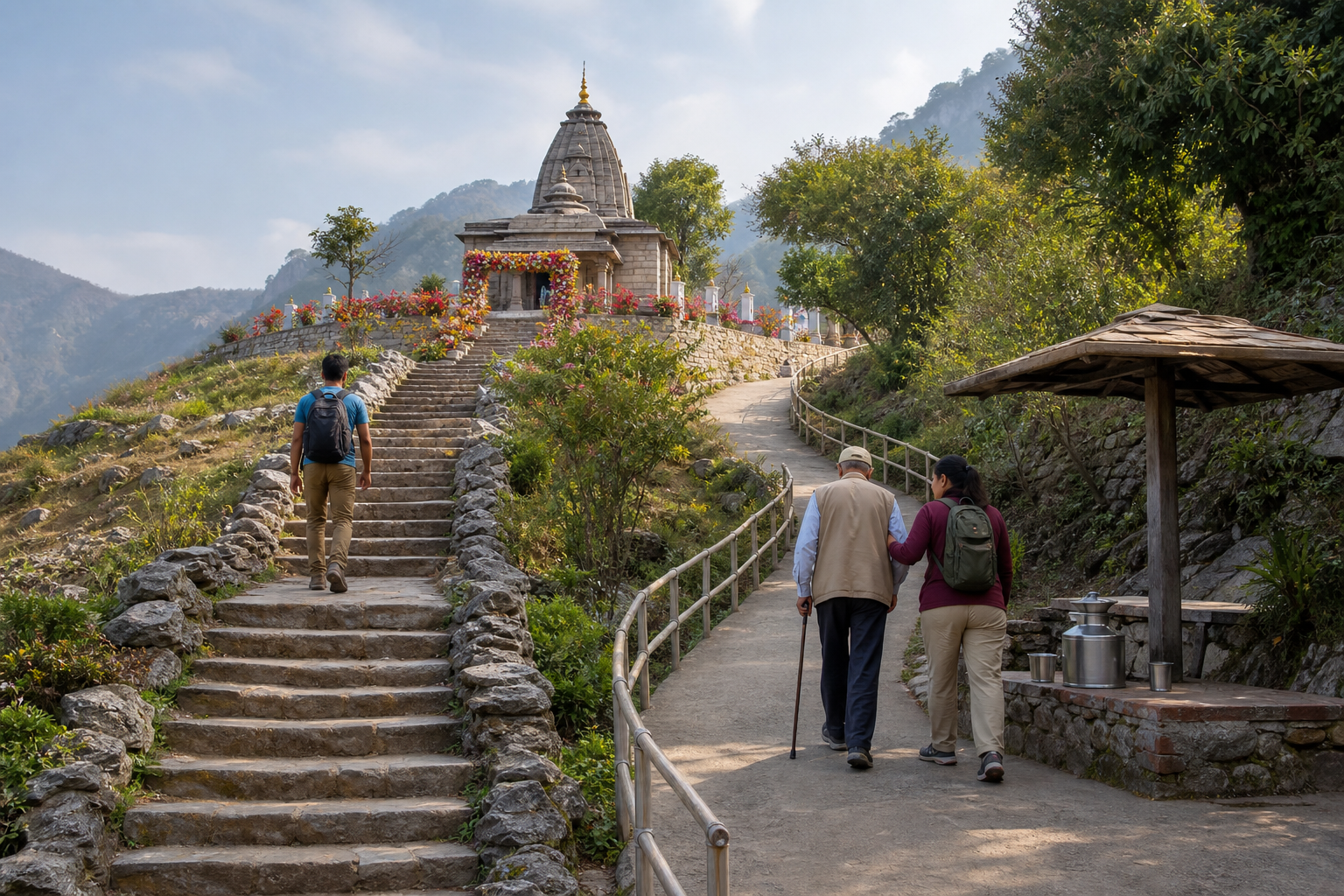
A vow cannot require you to pretend that altitude, illness, age, or limited mobility is unreal. The form of the offering may change. Its sincerity need not.
This distinction is critical at Kailash. The devotional practice is a circumambulation around a sacred center, not a demand to conquer a summit. The Outer Kora generally covers about 51 to 56 kilometres over three days, beginning and ending near Darchen at approximately 4,575 metres. Its hardest section crosses Drolma La at about 5,630 metres. Those numbers describe a serious high-altitude undertaking, regardless of how spiritually prepared you feel.
| Decision | Concrete rule | What it protects |
|---|---|---|
| Route commitment | Judge the actual distance, elevation, pass crossing, and daily schedule before accepting the itinerary. | It prevents an inspiring image of the destination from hiding the physical demands of the route. |
| Physical preparation | For the Kailash Kora, the available planning framework recommends 8 to 12 weeks of progressive aerobic, leg, core, balance, gradient, and daypack training. | It lets you discover limitations before they appear on an exposed trail. |
| Acclimatization | Ascend gradually and preserve rest days near Manasarovar or Darchen. Medication, if considered, requires qualified medical advice, and supplemental oxygen does not replace acclimatization. | It keeps equipment or medicine from becoming a false assurance. |
| Stop rule | Headache, nausea, poor sleep, and unusual fatigue can signal acute mountain sickness. If symptoms worsen during ascent, halt or descend and seek prompt assessment from the medical support available on the journey. | It removes the dangerous temptation to reinterpret warning signs as a test of faith. |
| Alternative participation | Choose worship at Manasarovar without the high-pass circuit, a shorter segment, or a seated devotional program when strenuous movement is unsuitable. | It preserves participation without making one physical feat the measure of bhakti. |
Have a qualified clinician assess your suitability before a high-altitude yatra if you are older, have a medical condition, or have concerns about the exertion. No general checklist can decide an individual’s fitness. Build the stop rule into your sankalpa: you will follow trained medical and route staff, even when the emotionally difficult decision is to turn back.
Do not treat the Inner Kora as a spiritually superior upgrade. It crosses higher, more exposed terrain and is unsuitable for most visitors without extensive acclimatization, experience, local guidance, and stable conditions. Greater objective risk does not prove greater devotion.
Before paying for a Kailash itinerary, obtain clear answers to three questions: Which permits and border procedures currently apply? Where are the acclimatization and weather-buffer days? What is the descent or alternative-worship plan if you cannot cross the pass? Regulations and access arrangements can change, so verify them through current official information and an authorized operator rather than relying on an old itinerary.
Accessible participation should be planned with the same care. Families travelling with elders or children can choose a shorter walking segment, remain in prayer at an appropriate base, join collective singing, or attend a seated program. Decide the meaningful alternative before the group starts, so the person who does not climb is not treated as an afterthought.
Bring the ascent home through restraint and seva
The return is where you learn whether the pilgrimage was merely intense or genuinely formative. Kailash’s final day ordinarily follows a gentler valley route for roughly 10 to 14 kilometres. With the pass behind, that stretch offers space to absorb what the harder stages exposed. Your own pilgrimage needs an equivalent interval, even if it is only a quiet journey home without immediately burying the experience under messages, photographs, and routine.
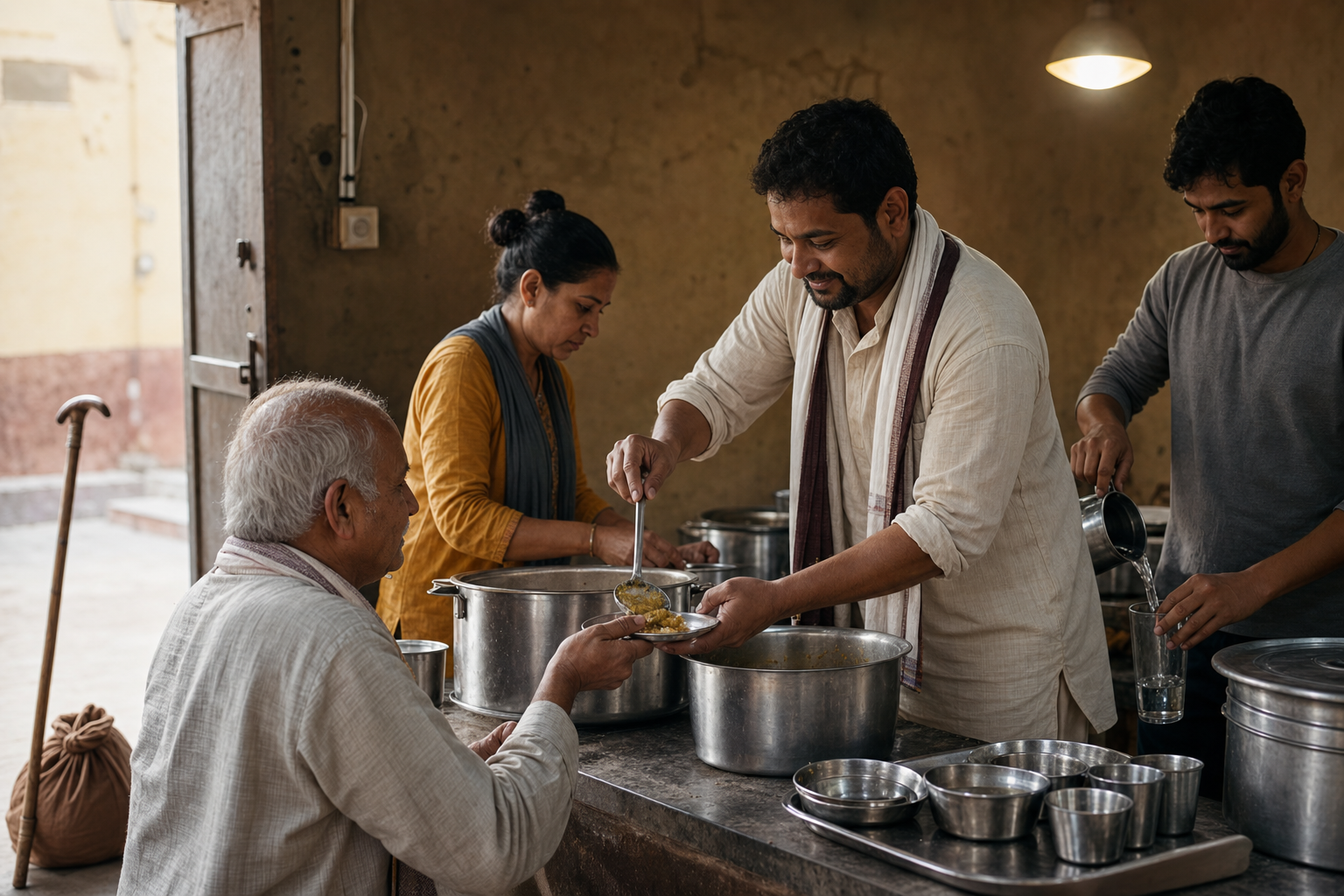
Begin integration before leaving the sacred landscape. At fragile Lake Manasarovar, reverence has physical consequences: soaps and detergents should not enter the water, waste should be carried out, and wildlife should be observed without disturbance. At Tirumala and other high-footfall sites, minimizing single-use plastic and following local waste arrangements makes the same principle visible. Ecological restraint is not an accessory to worship. It is the point at which reverence becomes conduct.
Choose your continuing discipline by looking at what the ascent actually revealed:
- If waiting exposed anger, adopt a regular practice of serving people whose pace you do not control.
- If song steadied you, keep one sankeertana, kirtan, stavan, gatha, or other lineage-appropriate recitation in your weekly rhythm and learn its meaning more deeply.
- If you depended on porters, organizers, cooks, cleaners, or fellow pilgrims, let gratitude become fair treatment, direct thanks, and practical support rather than a private feeling.
- If the sacred landscape sharpened your awareness of waste, remove a recurring disposable item from your own routine instead of leaving environmental concern at the tirtha.
- If turning back wounded your pride, keep the decision as a lesson in discernment. You honored the path by refusing to make other people rescue an avoidable act of stubbornness.
Key takeaways
- Begin with a memorable sankalpa that names the offering, your conduct on the route, and a discipline that will continue at home.
- Use footsteps, breath, sacred sound, and silence to recall the intention; never force breath or pace to maintain a devotional performance.
- Follow the ritual grammar of the place you enter. Shared dharmic values do not erase distinct traditions or authorize improvised imitation.
- Set medical and route stop rules before exertion clouds judgement. A shorter or stationary offering can be a complete act of devotion.
- Protect the sacred landscape and convert one insight from the journey into recurring seva, study, restraint, or worship.
Before you book the route, write your sankalpa, choose the practice you will carry home, and state the condition under which you will safely stop. If any one of those remains vague, the itinerary is ahead of the pilgrimage. Settle it first, and your ascent can begin before your foot touches the first step.
References
- DharmaRenaissance Blog – Kailash Giri Pradakshina: Definitive, Soul-Stirring Guide to Manasarovar Yatra and Parikrama
- DharmaRenaissance Blog – Annamaiah 523rd Vardhanthi in Tirupati: Sacred Sankeertana Week and Metlotsavam
