
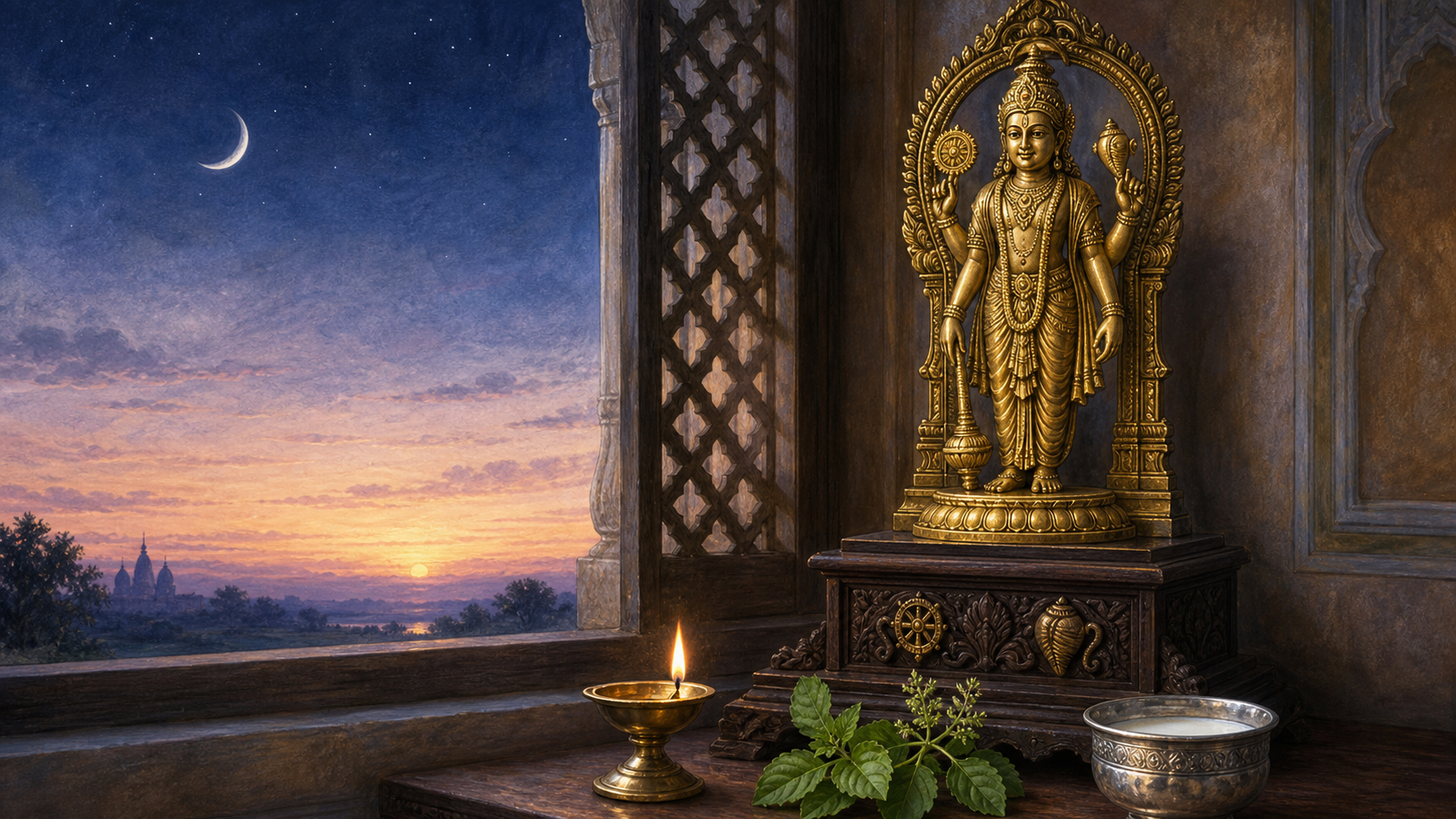
If your calendars place Falgun or Phalguna on 17 February, 18 February, and 18 March 2026, you are not looking at three incompatible answers. You are seeing a lunar tithi cross a civil-date boundary, followed by two regional systems that assign different names to the same part of the lunar cycle.
The practical sequence is clear once each date has a job: observe the February Amavasya under the calendar your family follows, begin Payo Vrata on Phalguna Shukla Padyami, and sustain a simple Vishnu practice through Dwadashi. Here is how to do that without mixing up the dates or turning a devotional vow into an unmanageable ritual schedule.
Key takeaways for the 2026 dates
- 16 February: In many locations, Krishna Paksha Chaturdashi continues until 5:09 PM, after which Amavasya begins. Treat 5:09 PM as a planning reference, not a universal time; your city Panchang may differ.
- 17 February: This is Falgun Amavasya under the North Indian purnimanta calendar. Use this date if that is the system followed by your family, temple, or regional Panchang.
- 18 February: Phalguna Shukla Padyami begins the practical observance period for Payo Vrata 2026. This is Day 1 of the twelve-day Vishnu vrata.
- 1 March: Phalguna Shukla Dwadashi is Day 12 and the stated conclusion of Payo Vrata. Reserve time for the concluding worship rather than allowing the routine simply to stop after Day 11.
- 18 March: Telugu, Marathi, Gujarati, and Kannada amanta calendars identify this as Falgun Amavasya, also associated with Ugadi or Gudi Padwa Amavasya. North Indian purnimanta calendars classify the same March Amavasya as Chaitra Amavasya.
Why Phalguna appears on two different Amavasyas
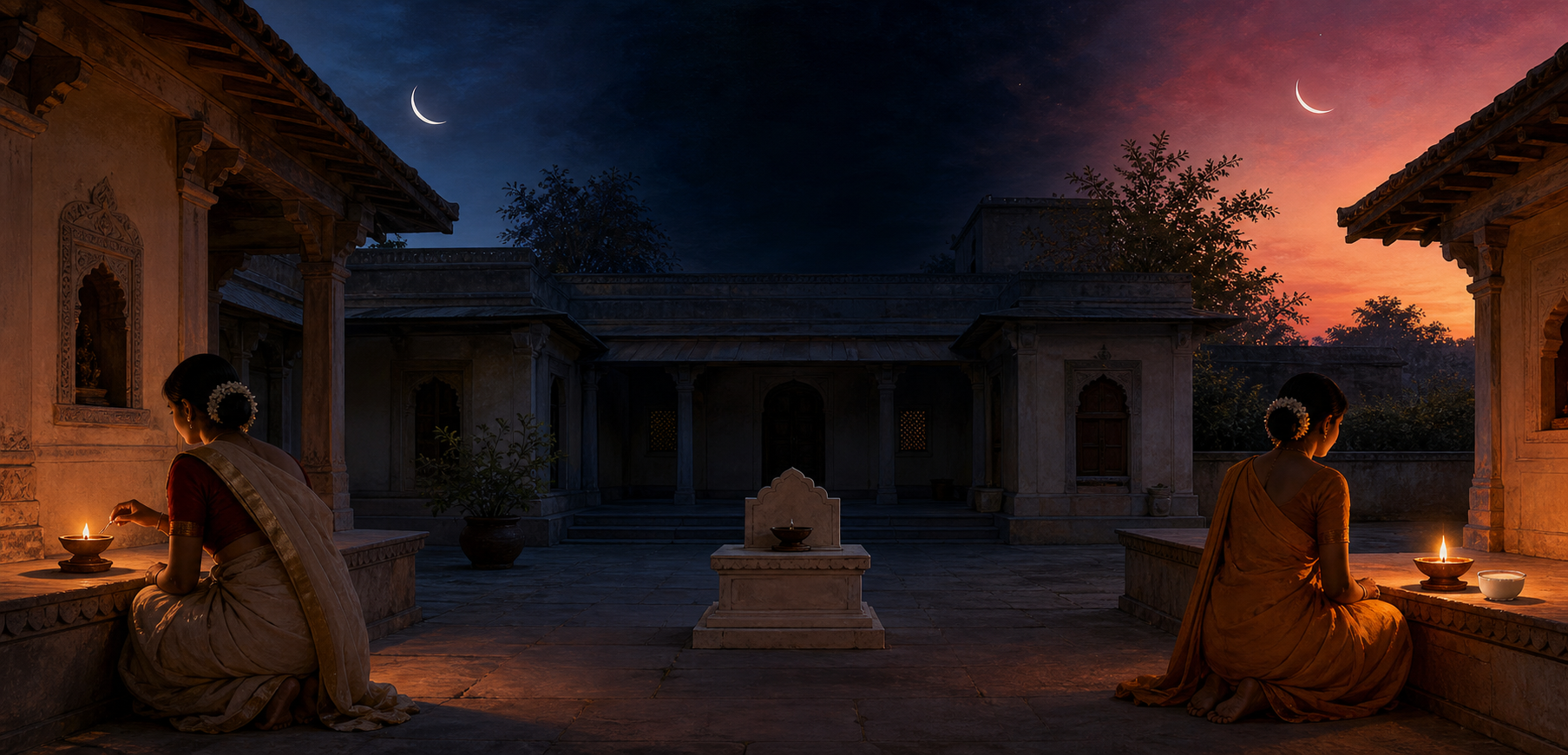
A tithi is a lunar measure, not a midnight-to-midnight date. It can begin during the afternoon or evening and continue into the next civil day. That is why an Amavasya transition after 5:09 PM on 16 February can coexist with a Falgun Amavasya observance dated 17 February. One statement identifies the tithi boundary; the other identifies the calendar day used for the observance.
The second source of confusion is the month-ending convention. In an amanta calendar, the lunar month closes at Amavasya. In a purnimanta calendar, it closes at Purnima. The Moon is not behaving differently over North India, Andhra Pradesh, Maharashtra, Gujarat, or Karnataka. The calendars are placing the boundary of the named month at different points.
For 2026, the result is a distinction you should preserve in your notes: 17 February is Falgun Amavasya in the North Indian purnimanta system, while 18 March is Falgun Amavasya in the amanta systems named above. On 18 March, the North Indian system has already moved into Chaitra. Calling either date simply Phalguna Amavasya without naming the calendar system invites an avoidable mistake.
The safest way to record any vrata is to write four pieces of information together: the civil date, lunar month, paksha, and tithi. For example, write 18 February 2026 – Phalguna Shukla Paksha Padyami – Payo Vrata Day 1. That label remains intelligible even when two printed calendars arrange their months differently.
For exact worship timing, use a Panchang calculated for the place where you will observe the vrata. Latitude, longitude, local sunrise, and sunset can shift practical tithi boundaries. When a temple is guiding the observance, ask which regional convention it uses and follow that convention consistently through Dwadashi. If you are arranging a homa, samskara, or another time-sensitive rite alongside the observance, also confirm the local Rahu Kalam, Yamagandam, and recommended muhurta rather than borrowing them from a calendar for another city.
Use Amavasya as the hinge, not as another checklist
The February sequence has a useful spiritual shape. Chaturdashi and Amavasya bring the waning cycle to stillness; Shukla Padyami begins the waxing cycle and the Vishnu vrata. If you rush through both as one crowded ritual session, you lose the change in emphasis. Let Amavasya clear space, then let Padyami establish continuity.
- Confirm the local tithi first. Check the Amavasya start and end times for your city, especially if you are making a formal sankalpa or visiting a temple. The 5:09 PM transition on 16 February should not override a reliable local calculation.
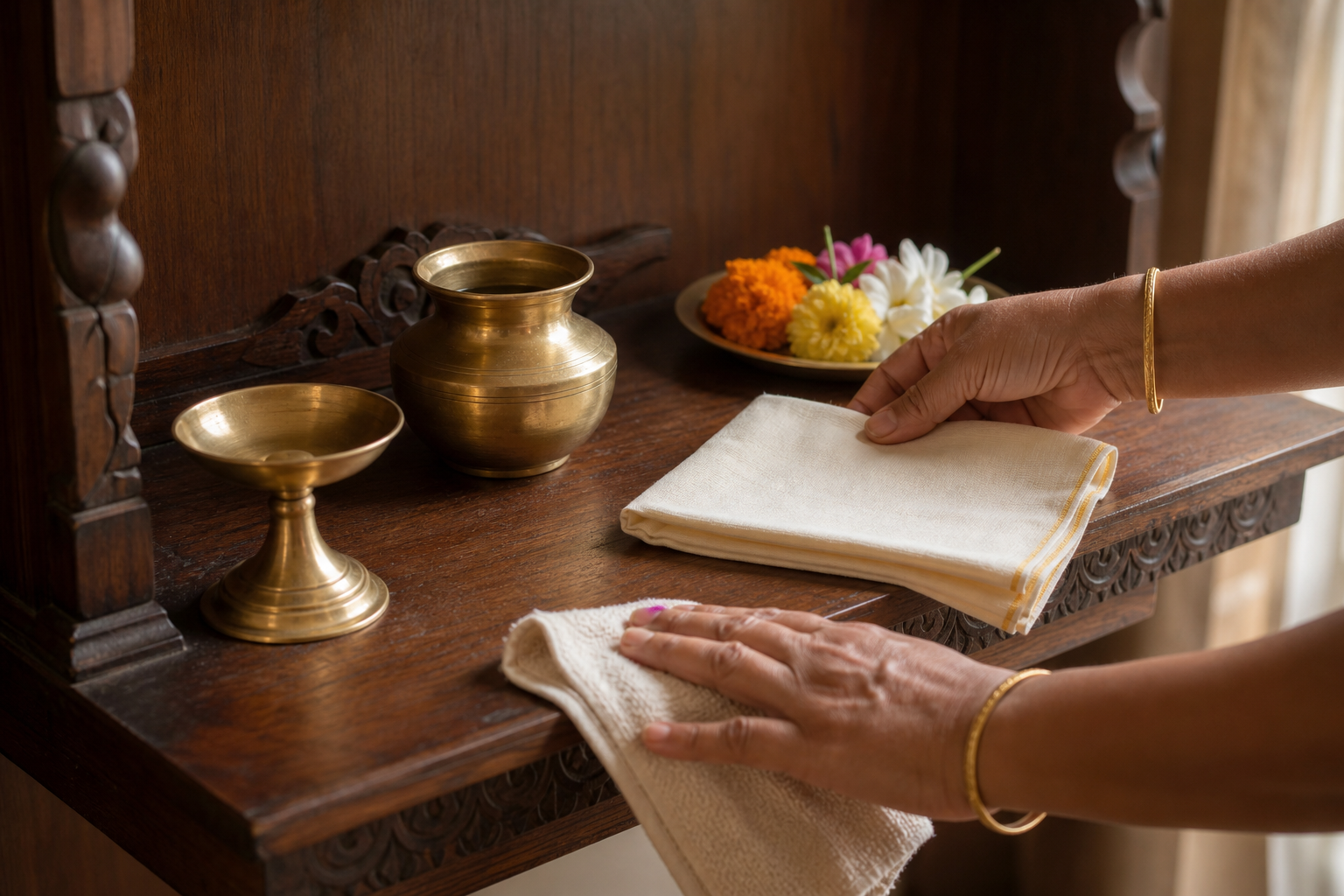
- Reduce avoidable activity before dusk. Finish pending household duties, clean the altar gently, and prepare the lamp and offerings. The purpose is to remove friction from the evening, not to create a large decorating project.
- Keep the evening practice quiet. Light a diya, sit for japa or dhyana, and observe a period of silence if that is suitable for your household. A short practice done attentively fits the character of Amavasya better than an elaborate sequence performed in haste.
- Remember ancestors according to family tradition. If your family maintains pitru tarpana, follow the method you have received from elders or a qualified ritual guide. Do not invent a complex ancestral rite from fragments. A lamp, respectful remembrance, prayer, and charity remain meaningful where formal tarpana is not part of your practice.
- Turn reflection into a concrete commitment. Decide before Padyami what you will repeat during all twelve days: the time of puja, the recitation, the food discipline, and the act of dana or seva. Write the minimum in one sentence so that a busy day does not force you to redesign the vrata.
Amavasya practices commonly include a simple sattvic diet or partial fast, japa, lamp-lighting, charity, and ancestral remembrance. Payo Vrata has a different devotional center: sustained worship of Lord Vishnu. The observances touch each other in the calendar, but they should not be collapsed into one indistinct ritual. The first prepares the ground; the second asks you to cultivate steadiness on that ground.
Build a twelve-day Vishnu practice you can actually sustain
Payo Vrata is a distinctly Vaishnava observance traditionally maintained in parts of Andhra Pradesh. Its scriptural frame comes from the Srimad Bhagavatam: Aditi undertakes the vow under the guidance of Kashyapa before the appearance of Vamana. That setting matters because it presents the vrata as disciplined devotion guided by dharma, not as a display of dietary severity.
For 2026, begin on 18 February, Phalguna Shukla Padyami, and conclude on 1 March, Shukla Dwadashi. Local tithi calculations or a temple’s established paddhati may adjust the practical schedule, so settle that question before taking a formal sankalpa. Do not switch between calendars halfway through merely because another date appears online.
A workable home routine can remain modest while retaining a clear Vaishnava center:
- Choose one repeatable time. Early worship is customary, but consistency matters when work, caregiving, or travel limits the morning. Decide the time before Day 1 and protect it throughout the vrata.
- Begin with a clean altar and a lamp. Offer your attention before adding more ritual elements. A single well-kept place of worship also makes it easier for the household to recognize that the vrata is continuing.
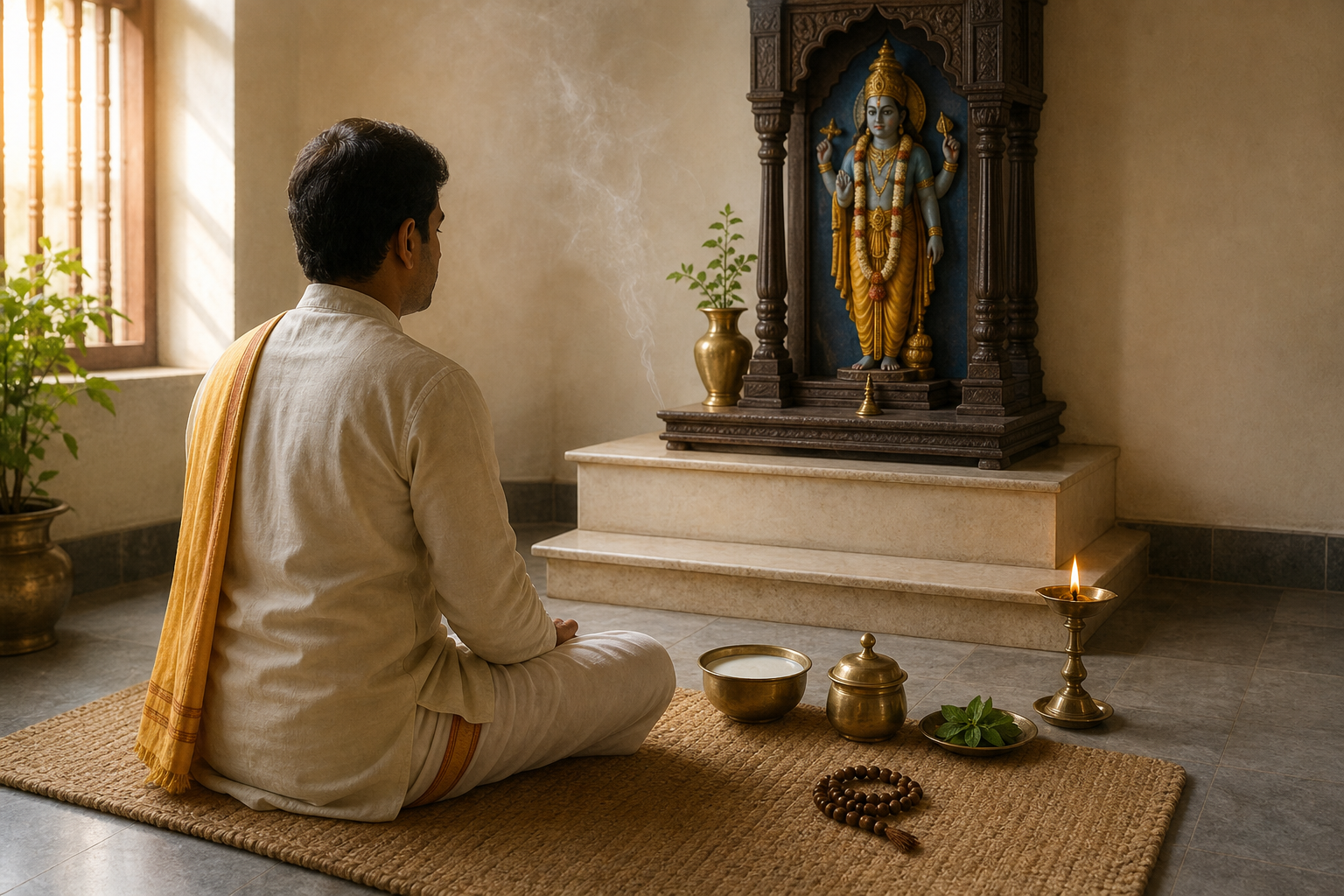
- Make a simple Vishnu offering. Milk-centered offerings are associated with Payo Vrata, and fruits can accompany a light sattvic observance. Use the form accepted in your family or temple rather than assuming that every household follows an identical dietary rule.
- Recite something you can complete attentively. Vishnu Sahasranama is a fitting choice where time and familiarity allow. A chosen Vishnu stotra or a steady period of japa is more appropriate than racing through a longer recitation merely to claim completion.
- Read a short passage of scripture. Even a brief daily reading keeps the vrata connected to teaching rather than reducing it to food restriction. The account of Aditi, Kashyapa, and Vamana in the Srimad Bhagavatam gives the observance its most relevant narrative frame.
- Carry the vrata beyond the altar. Maintain sattvic restraint and choose a definite act of charity or service. Decide who will receive the food, clothing, assistance, or time you intend to give; an unnamed promise of charity is easily postponed.
The name and milk-centered character of Payo Vrata should not be treated as a universal instruction to improvise a milk-only diet for twelve days. Dietary details belong to the particular family, sampradaya, or temple practice guiding the vow. If fasting or dietary restriction conflicts with medical needs, do not force it. Preserve the devotional core through puja, japa, scripture, sattvic conduct, and seva while following appropriate medical advice.
Think of the calendar in three manageable phases. On 18 February, make the sankalpa and establish the routine. From 19 through 28 February, repeat the same core practice instead of continually adding new requirements. On 1 March, complete the Dwadashi observance deliberately: perform the concluding worship prescribed in your tradition, make the charity you planned, and share prasada where appropriate.
If you cannot maintain the same duration every day, define a non-negotiable minimum before you begin. That minimum might be the lamp, a short Vishnu recitation, and a brief prayer, with a longer Sahasranama or scriptural session when time permits. For a formal vrata taken under priestly or temple guidance, ask in advance how illness, travel, or an interrupted day should be handled; do not invent a remedy after the interruption.
Keep the calendar exact and the household practice humane
The observance becomes clearer when you separate what must remain exact from what can be adapted responsibly.
- Keep exact: the calendar convention you are using, the local tithi, the 18 February start and 1 March conclusion for the stated 2026 schedule, and any procedure required by a formal family or temple vow.
- Adapt carefully: the length of daily recitation, the time needed for a home puja, and the form of seva. Adaptation should protect continuity, not remove Vishnu-bhakti from a Vishnu vrata.
- Do not guess: formal sankalpa language, specialized tarpana procedures, homa timings, or remedies for an interrupted formal vow. These belong with a trusted local priest, elder, temple, or regional Panchang.
- Do not measure devotion by strain: a severe diet that damages health or makes daily worship impossible defeats the practical purpose of disciplined remembrance.
In a household that includes more than one dharmic path, the shared ethic can support the observance without erasing its identity. Jain samyama, Buddhist mindfulness and ahimsa, and Sikh simran and seva resonate with its restraint, awareness, remembrance, and service. Payo Vrata nevertheless remains Vaishnava. Family members can participate through quiet support, charity, a shared sattvic meal, or respect for the worship schedule without pretending that every tradition performs the same rite.
For a usable 2026 record, place two full entries on your calendar: 18 February – Phalguna Shukla Padyami – Payo Vrata Day 1, and 1 March – Shukla Dwadashi – completion. Add a separate note that Falgun Amavasya is 17 February under purnimanta reckoning and 18 March under the named amanta calendars. Then attach your city’s Panchang timing to the entry you will actually follow. That one act of precision leaves you free to give the twelve days to devotion rather than calendar confusion.
References
- DharmaRenaissance Blog – February 16, 2026 Panchang: Krishna Paksha Chaturdashi to Amavasya Timings & Insights
- DharmaRenaissance Blog – Payo Vrata 2026 Dates & Meaning: Twelve Sacred Days of Vishnu Devotion in Phalguna
- DharmaRenaissance Blog – Falgun Amavasya 2026: Exact Dates, Regional Calendars, Rituals, and Profound Significance
