

If you are choosing a time for puja, study, a vrata, or a new undertaking on November 25, one boundary matters most: 7:11 PM. Use that time as a planning marker, then confirm it for your city before attaching it to a formal ritual.
Tuesday, November 25, 2025 is observed as Shukla Paksha Panchami until the evening transition, after which Shukla Paksha Sashti begins. The practical rhythm is straightforward: use the Panchami portion for learning and constructive effort, then let the Sashti portion strengthen a commitment already chosen.
The day at a glance
| Planning point | Working guidance |
|---|---|
| Civil date | Tuesday, November 25, 2025 |
| Daytime tithi | Shukla Paksha Panchami |
| Transition marker | 7:11 PM local reference time |
| After the transition | Shukla Paksha Sashti |
| What still needs local verification | Exact tithi ending time, muhurat, Nakshatra, and Rashi details |
The central calendrical fact is the change from Panchami to Sashti at approximately 7:11 PM. That does not make every minute before the transition equally suitable for every purpose. A tithi is one part of a Panchang calculation; it is not a complete electional muhurat by itself.
Shukla Paksha is the bright or waxing half of the lunar cycle. Panchami is its fifth tithi, while Sashti is the sixth. The change at 7:11 PM is therefore a change of lunar day, not merely a change in the devotional mood assigned to the same tithi.
Plan the two parts of the day differently
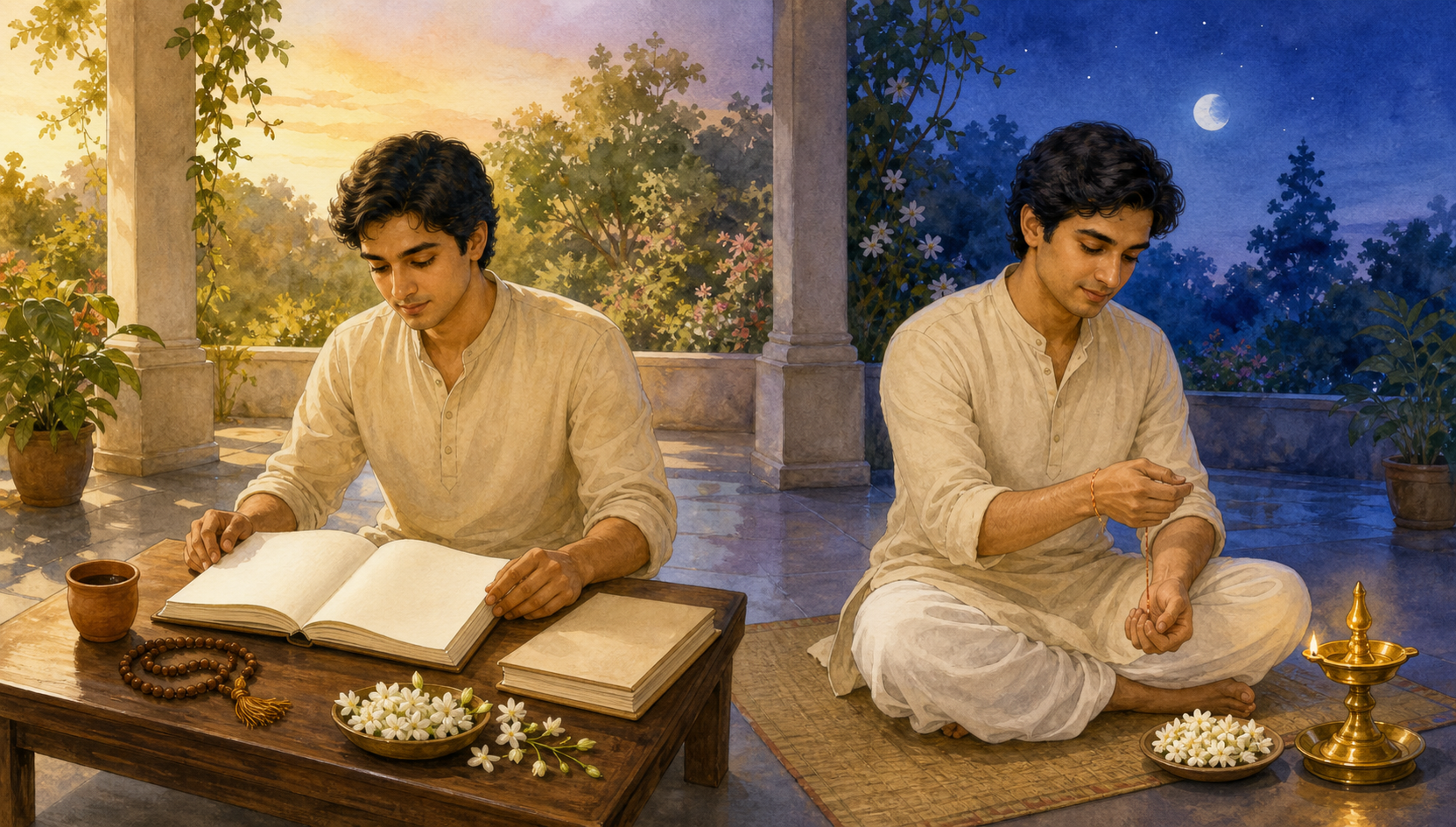
Panchami is traditionally approached through steady growth, learning, refinement, and disciplined initiative. If your aim is personal rather than ceremonial, you do not need an elaborate observance. Choose one constructive act that can actually be completed: resume a neglected scripture reading, review notes from a teaching, begin a manageable period of japa, or make a quiet charitable offering.
The useful word here is steady. Do not turn Panchami into permission to open five new commitments. Select one practice, define its first step, and do that step before the evening transition. A modest beginning that you can continue is more aligned with disciplined growth than a dramatic sankalpa abandoned the next morning.
If you specifically want an activity to begin during Panchami, place it comfortably before 7:11 PM rather than at the edge of the transition. The buffer matters because the stated clock time can shift with location, and a task that merely starts at the last moment may not meet the rule followed by your household or officiating priest.
After the transition, Sashti brings a more fitting emphasis on resolve, protection, and the keeping of wholesome vows. The evening is therefore well suited to consolidating what you began earlier. You might close your study with prayer, write down the discipline you intend to maintain, or renew a simple commitment that has become inconsistent.
This is best understood as a devotional framework, not a promise that a tithi will guarantee an outcome. Panchami can help you give form to learning; Sashti can help you give continuity to resolve. Your conduct is what joins the two.
Verify the clock before a time-sensitive ritual
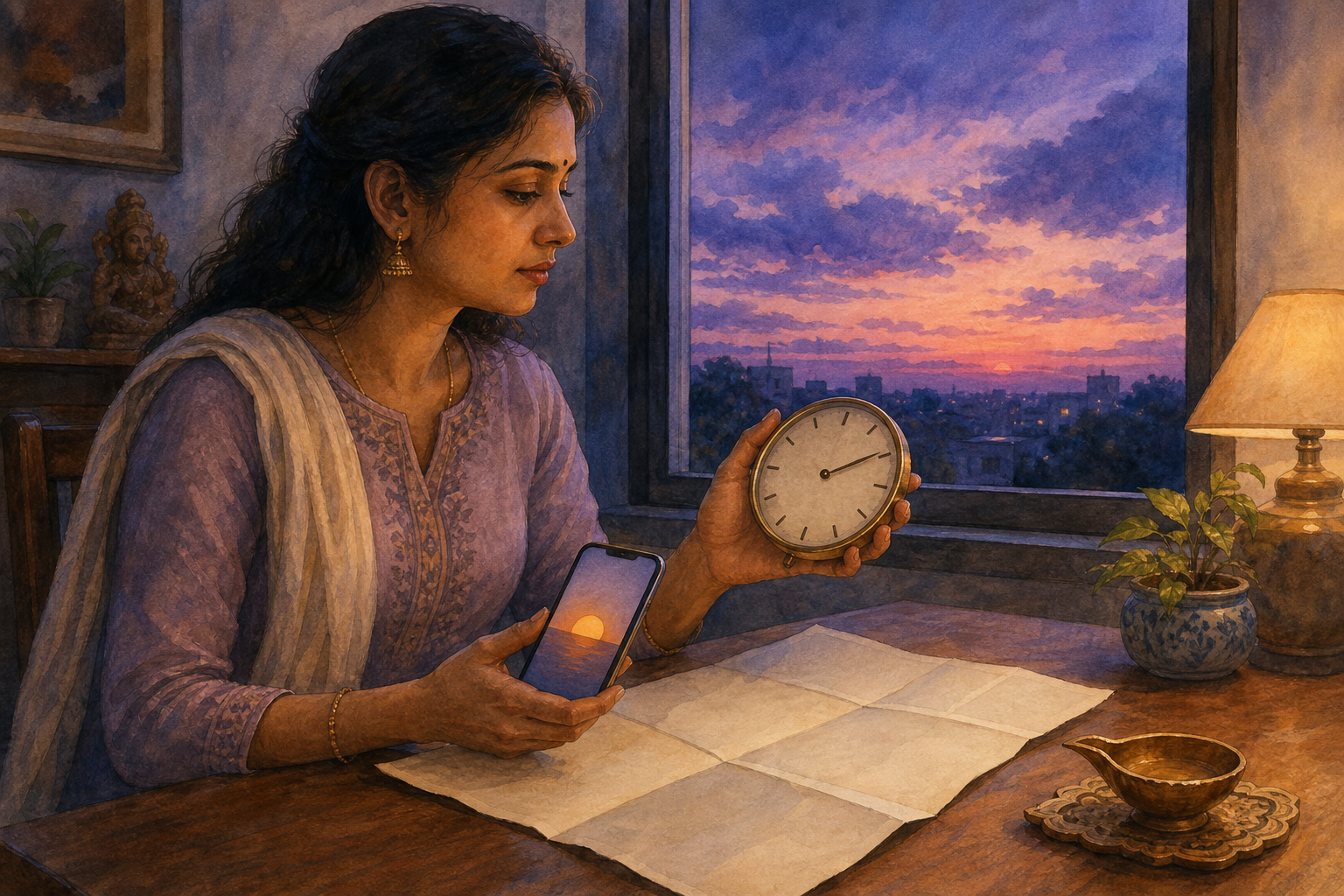
Panchang times vary by longitude, latitude, and the calculation used for a place. That variation is normal. It is also why a time copied without its city can be misleading. The 7:11 PM marker is adequate for a broad daily plan, but it should not be treated as a universal worldwide cutoff.
Before scheduling a wedding-related rite, a formal initiation, a major puja, or another ceremony governed by family parampara, check a regional Panchang or consult the priest who will conduct it. Give the actual city where the rite will occur, not the city where the family member arranging it happens to live.
Ask three precise questions:
- At what local time does Shukla Paksha Panchami end in the ceremony’s location?
- Does this observance need to begin during Panchami, finish during Panchami, or merely include Panchami?
- Which Nakshatra, Rashi, and muhurat conditions does our parampara require for this specific act?
Those questions prevent the most common planning error: treating the tithi name as if it were the complete muhurat. Nakshatra and Rashi information for November 25 cannot be supplied reliably without a location-specific calculation. An auspicious label copied from another region should not overrule the local almanac used by your household.
The same discipline applies to Brahma Muhurta. Early morning is widely valued for meditation, japa, and study, but its precise clock interval should come from the local calculation you follow. If you do not have one, keep the practice in a quiet early-morning period and avoid presenting an invented time as calendrical precision.
A simple observance for home practice
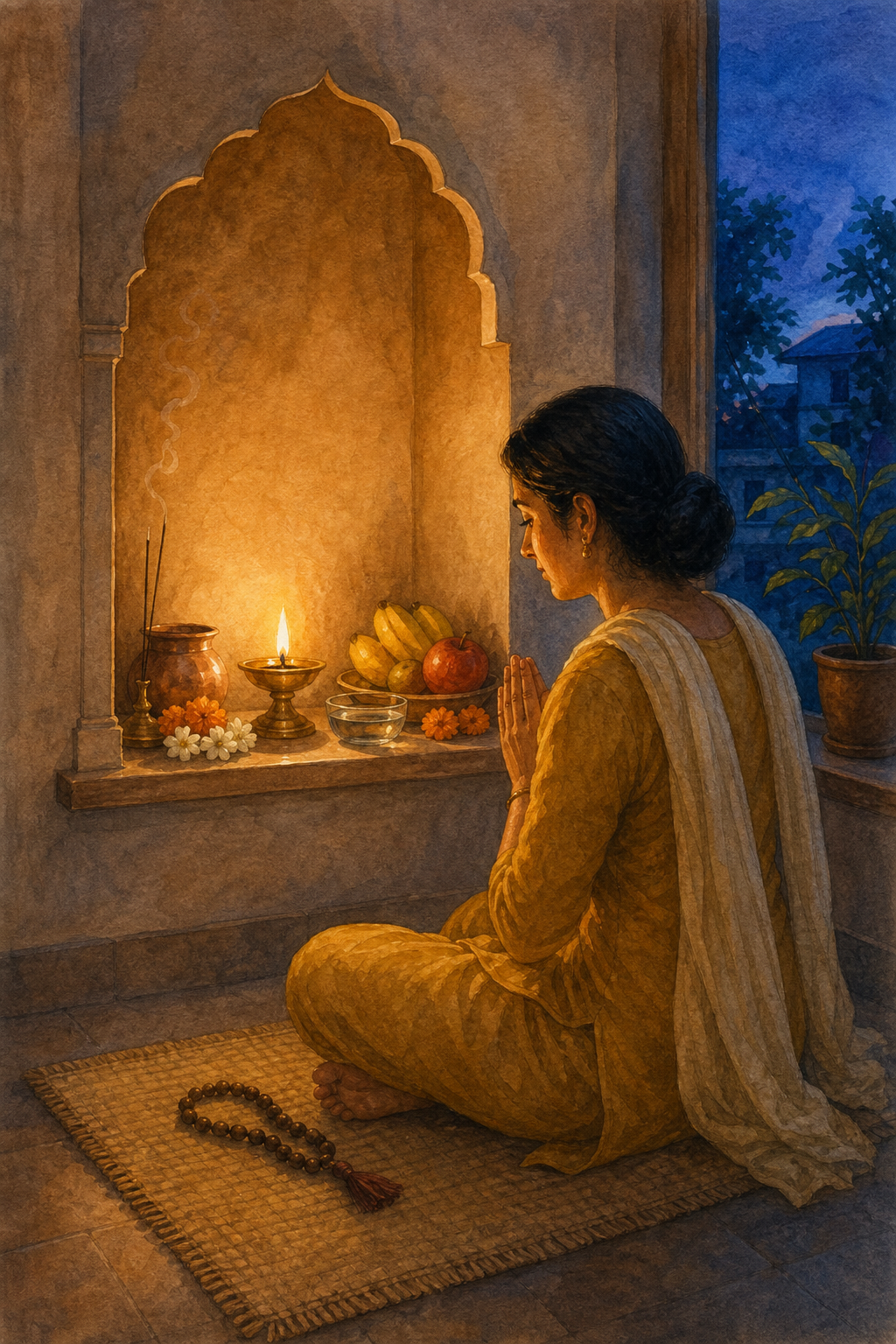
If no special family vrata applies, you can honour the day without constructing a new ritual. Keep the sequence short enough that attention remains on the practice rather than on managing it.
- Begin in quiet. Use the early morning for japa, meditation, prayer, or a short passage of svadhyaya. Decide the passage or mantra beforehand so that the session does not become a search for material.
- Complete one constructive task during Panchami. Choose a defined act of learning, service, repair, or preparation and finish its first meaningful unit before the evening boundary.
- Offer charity without display. Let the gift be proportionate and useful. The purpose is to turn inward clarity into outward responsibility, not to make the observance visible.
- Pause after the Sashti transition. Review what you began and state one commitment you can keep. End with gratitude or prayer for steadiness and protection.
A household containing more than one Dharmic tradition can share the ethical core without pretending that all calendars or rites are interchangeable. Jain and Buddhist families have their own calendrical disciplines. Sikh practice places enduring weight on early remembrance, seva, and ethical living. A shared morning of remembrance or an act of service can create harmony while each person retains the integrity of their own lineage.
If your family already has a Panchami or Sashti observance, follow that parampara first. A general daily guide should support an inherited practice, not casually replace its deity, mantra, dietary rule, or ritual sequence.
Key takeaways
- November 25, 2025 is a Tuesday observed as Shukla Paksha Panchami until approximately 7:11 PM, followed by Shukla Paksha Sashti.
- Use the Panchami portion for focused learning, constructive beginnings, japa, svadhyaya, or quiet charity.
- Use the Sashti portion to reaffirm a vow, strengthen discipline, offer prayer, or consolidate what you began earlier.
- Treat 7:11 PM as a general planning marker, not a location-independent guarantee.
- For a formal or time-sensitive rite, verify the local tithi ending time, Nakshatra, Rashi, and required muhurat with a regional Panchang or trusted priest.
Before you place a ritual time on the family calendar, write down the ceremony’s city and confirm which local Panchang your household follows. For personal practice, choose one clear act before the transition and one sustainable commitment after it. That is enough to make the day’s movement from learning to resolve tangible.
References
