
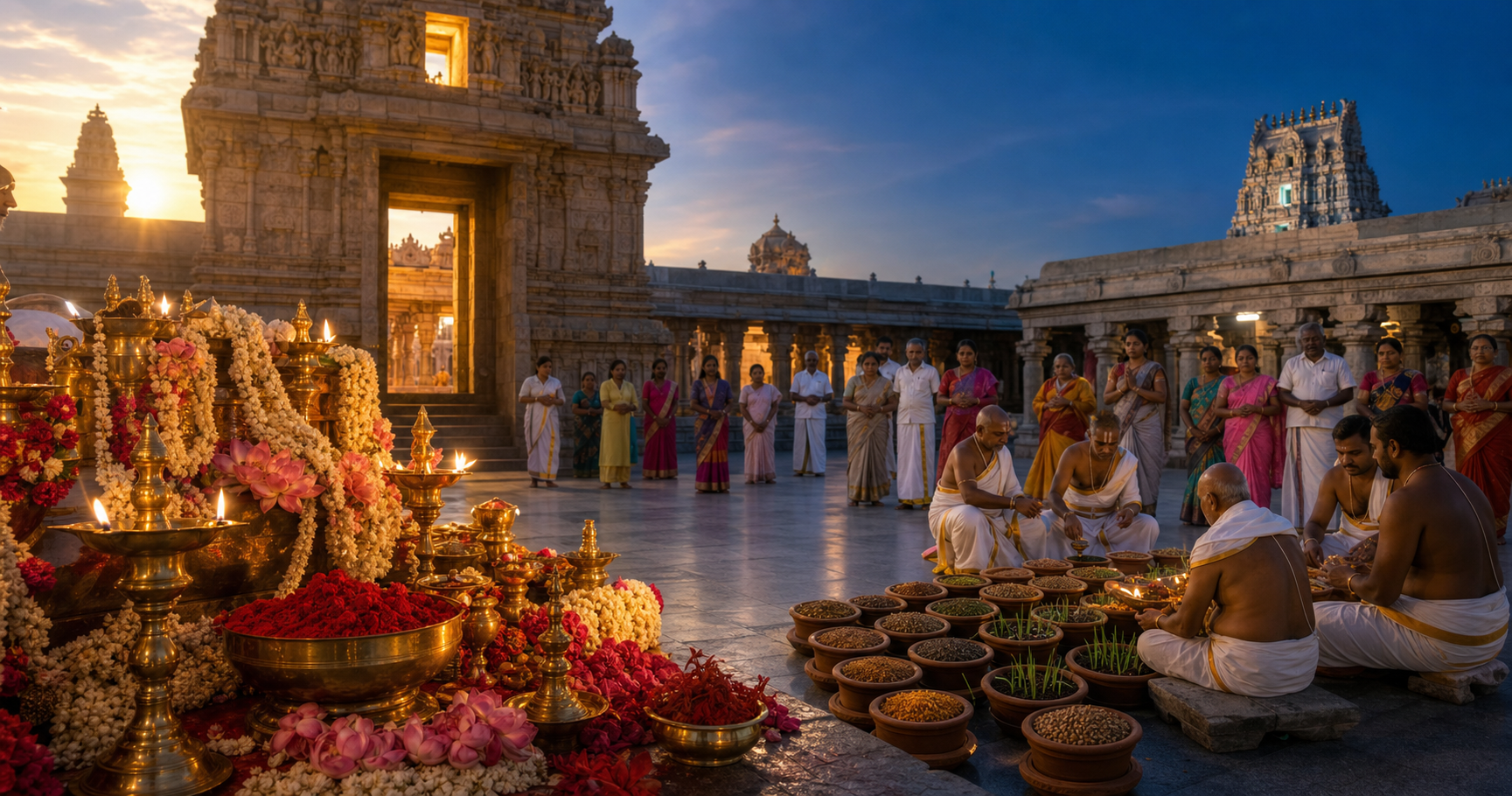
If you are planning around Tiruchanoor’s festival calendar, the most important detail is the sequence. Laksha Kumkumarchana establishes the devotional focus in the morning; Ankurarpanam opens the threshold of the Brahmotsavams in the evening. Treating them as unrelated ceremonies misses what the day is designed to accomplish.
On 16 November 2025, Laksha Kumkumarchana commenced at 8 am and Ankurarpanam followed that evening at Sri Padmavathi Ammavari Temple in Tiruchanoor, near Tirupati in Andhra Pradesh. That is a dated 2025 observance, not a reusable timetable. If you are preparing for a future visit, confirm the current festival date and participation arrangements before making travel plans.
Read the day as one sacred sequence
The movement from Kumkumarchana to Ankurarpanam is itself meaningful. The morning gathers attention through disciplined recitation and offering. The evening turns that gathered attention toward a beginning: seeds are ceremonially sown as the annual Padmavathi Ammavari Brahmotsavams approach.
| Place in the sequence | Observance | Ritual emphasis | What you should notice |
|---|---|---|---|
| Morning, from 8 am in the 2025 observance | Laksha Kumkumarchana | Kumkum offerings accompanied by sustained archana recitations | Repetition, steadiness and concentrated devotion to Sri Padmavathi Ammavaru |
| Evening | Ankurarpanam | Auspicious ceremonial sowing of seeds | The Brahmotsavam begins with preparation, renewal and responsibility |
| Festival frame | Annual Brahmotsavams | Collective worship and celebration | The inner discipline of the prelude should continue into the public festival |
This sequence gives you a practical way to approach the day. Do not reserve your reverence only for the most visible festival moments. In the temple tradition, preparing the ground is already part of worship. The morning’s concentration and the evening’s seed-sowing belong to the same spiritual movement.
What laksha and kumkum ask from you
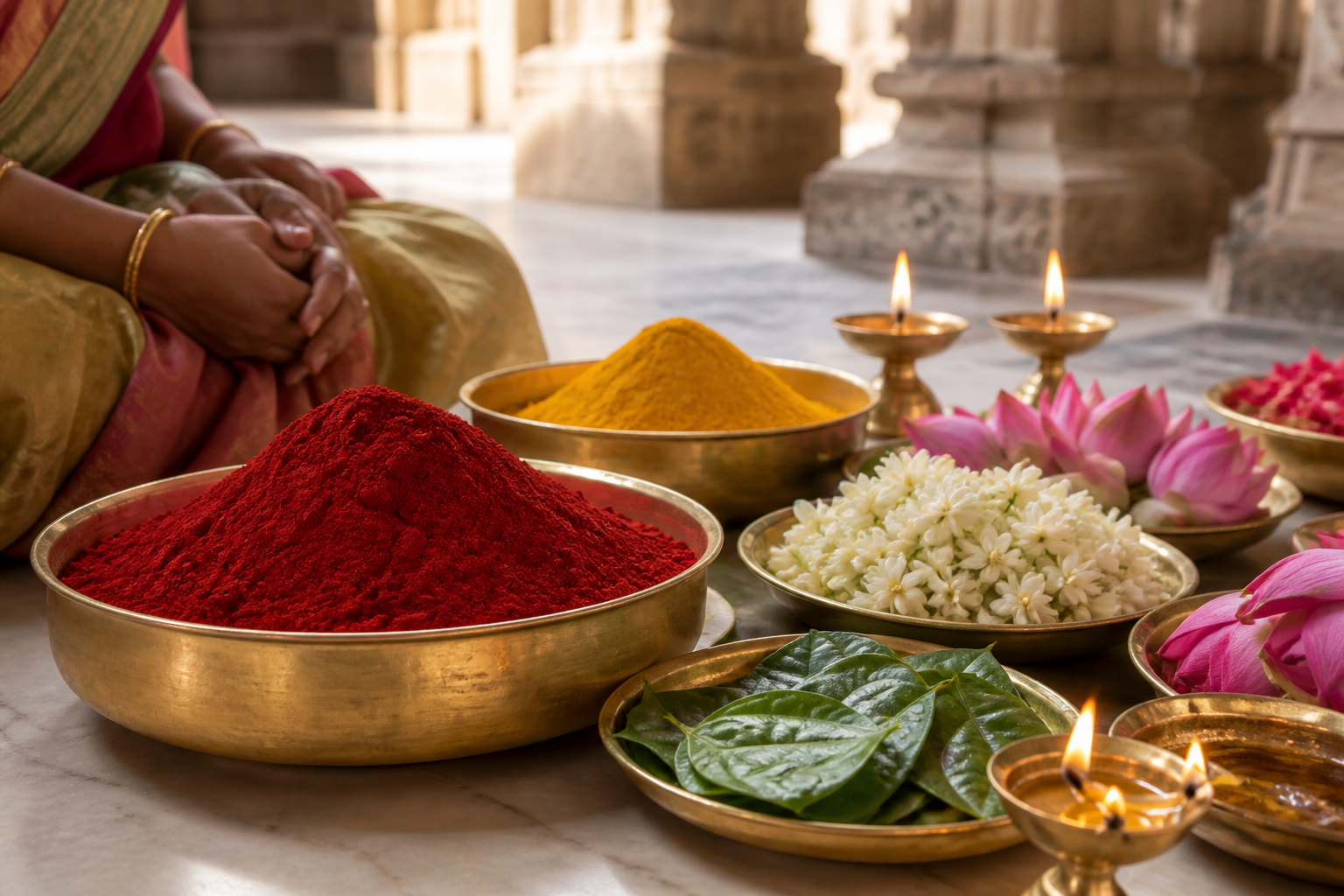
In Laksha Kumkumarchana, kumkum is offered through a disciplined succession of archana recitations, traditionally understood to reach one lakh. The number matters because it represents sustained practice rather than a brief gesture. Yet the deeper lesson is not to turn worship into arithmetic. Repetition gives the mind fewer opportunities to wander and allows devotion to acquire rhythm.
Sri Padmavathi Ammavaru is revered here as an aspect of Sri Mahalakshmi. The rite is therefore associated with prosperity, compassion and well-being. Those associations are best understood as a devotional orientation, not as a mechanical promise that an offering will produce a particular material result. Prosperity without gratitude, compassion or ethical conduct would be a very narrow reading of Lakshmi-tattva.
If you participate, decide beforehand what your offering means in conduct. You might connect it with greater patience, dependable seva, gratitude for what sustains your household, or more careful treatment of other people. That turns the archana from something you merely observe into a discipline you can carry away.
The setting also teaches through the senses: rhythmic chanting, the fragrance of offerings and the visual presence of kumkum help create a contemplative atmosphere. You do not need to chase every detail or mentally verify every recitation. Let the repetition steady your attention. Your task is to remain present and avoid becoming a disturbance to the worship around you.
Ankurarpanam begins the festival before the celebration
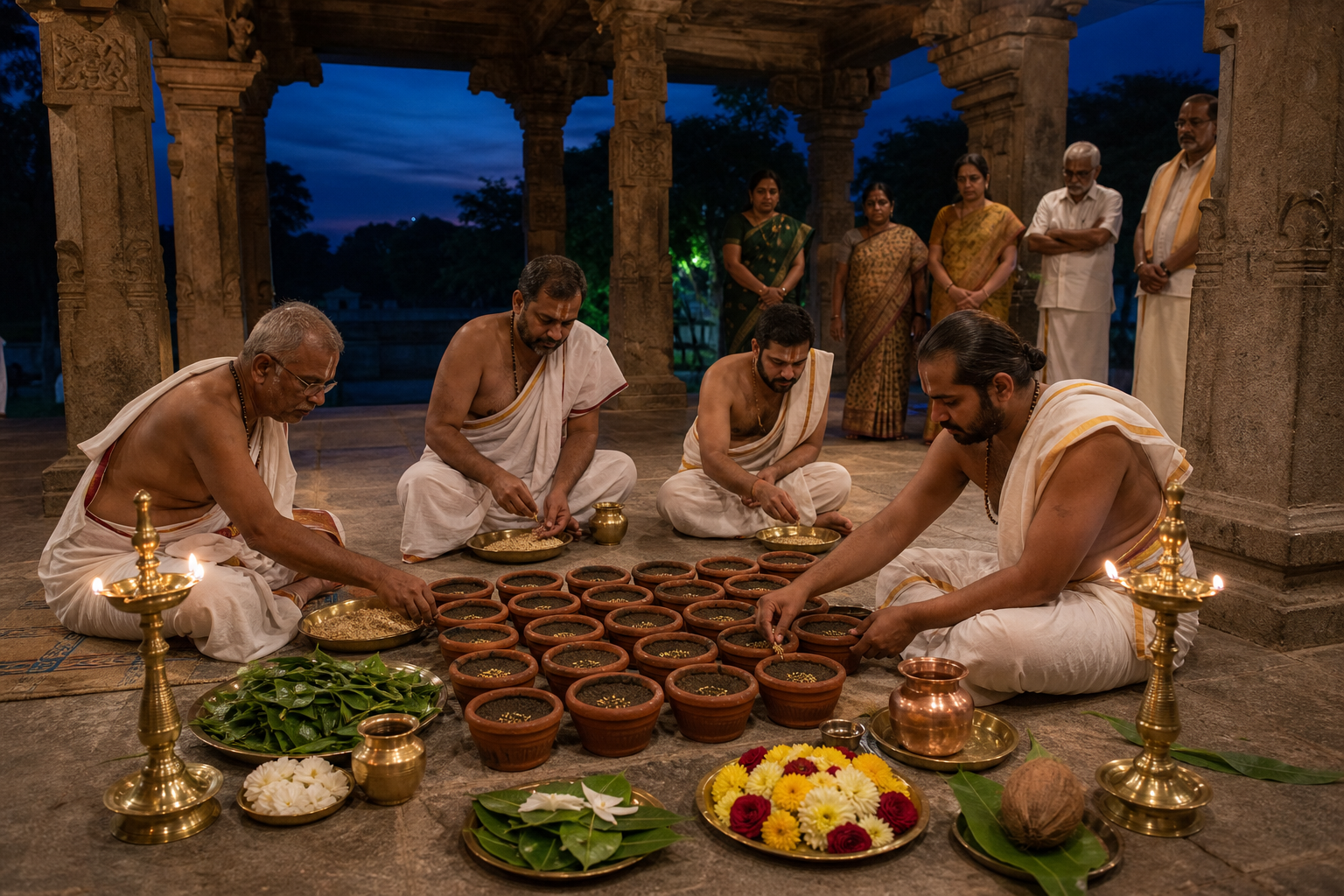
Ankurarpanam is the ceremonial sowing of seeds and the formal prelude to the Brahmotsavams. Its symbolism is precise: every visible flowering has an earlier, quieter beginning. Seeds require suitable ground, patience and continuing care. In the ritual context, that image carries the meanings of fertility, auspicious commencement and ethical renewal.
This is why Ankurarpanam should not be treated as a minor preliminary that can be ignored once the larger celebrations begin. It establishes the moral grammar of the festival. Before receiving abundance, prepare the ground. Before joining collective celebration, examine what you are cultivating. Before asking for renewal, choose the habit through which renewal will take form.
The timing also aligns with the devotional spirit associated with Karthika masam: light, vrata and worship undertaken in community. If you want a simple practice to accompany the seed symbolism, choose one realistic commitment for the festival period. Restraint in speech, regular prayer, reliable seva or deliberate gratitude will usually carry more meaning than an ambitious promise abandoned after one day.
The image of cultivation has wider resonance across Hinduism, Buddhism, Jainism and Sikhism, where disciplined practice, ethical living and collective welfare remain important concerns. That resonance should not be used to erase the distinct theology or practice of any tradition. The useful Dharmic insight is narrower and stronger: what you repeatedly nourish within yourself eventually shapes how you meet the world.
Prepare for Tiruchanoor without losing the ritual centre
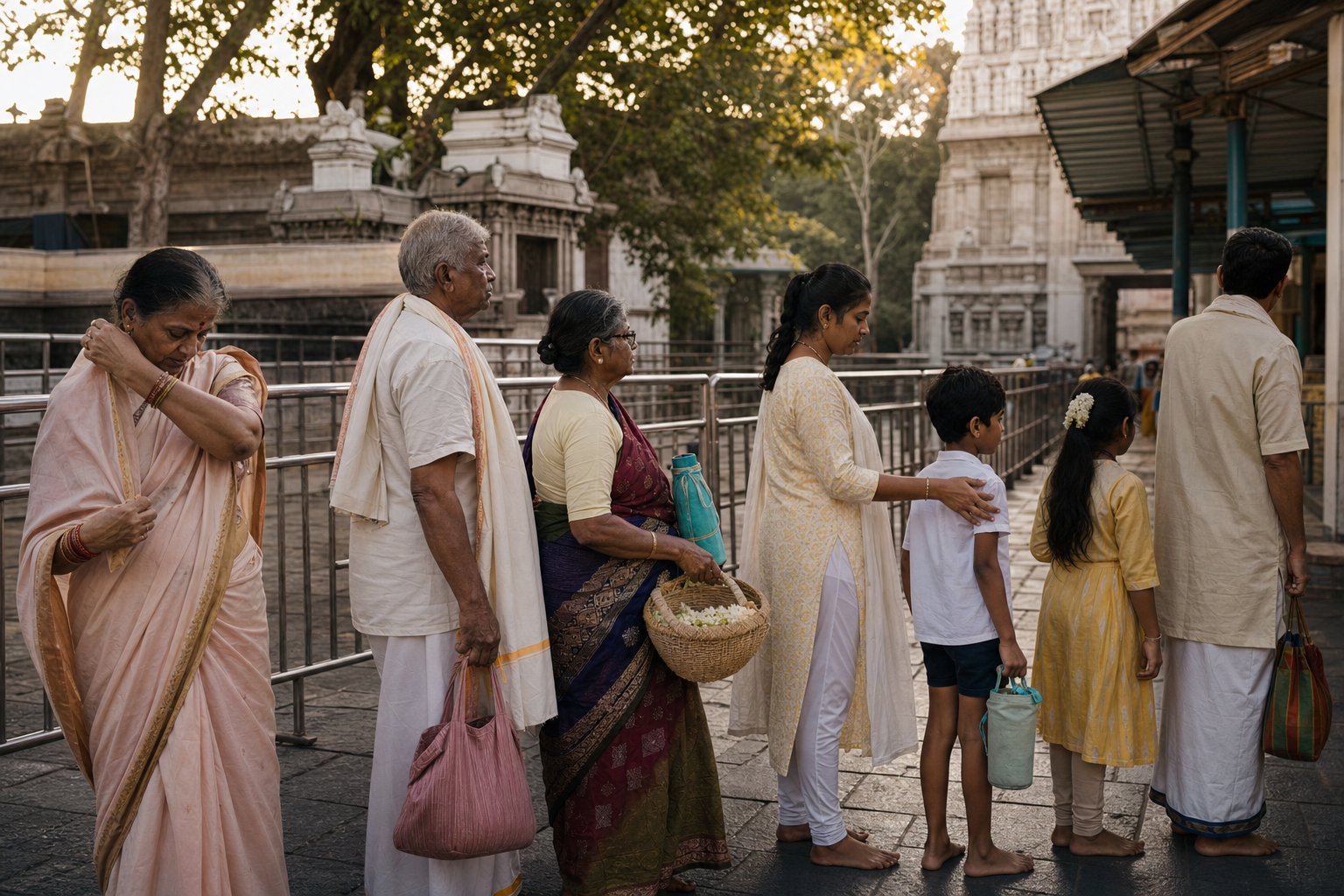
A ceremony time does not by itself tell you whether a particular area is open to every visitor, whether participation requires a separate arrangement, or how access will be managed on the day. Do not build a trip around assumptions drawn from an old date. Use this practical order instead:
- Confirm the current notice. The known schedule above belongs specifically to 16 November 2025. Verify the date, reporting time and applicable temple instructions for the year you intend to visit.
- Decide whether your priority is the morning, the evening or both. Laksha Kumkumarchana centres on sustained archana and kumkum offering; Ankurarpanam centres on the seed-sowing prelude. If you hope to attend both, plan for two distinct parts of the day rather than treating them as one continuous sitting.
- Arrive early without inventing your own time guarantee. Festival-period queues and movement require patience. An early arrival gives you room to follow on-site directions, but only the current temple instructions can establish an appropriate reporting time.
- Let temple protocol override informal advice. Follow the directions given for queues, entry, offerings and movement. Do not assume that a practice allowed during an ordinary darshan will apply unchanged during a major ritual.
- Protect the shared atmosphere. Orderly lines, restrained movement and consideration for other devotees are not merely crowd-management habits. They are part of the communal discipline that allows worship to remain contemplative.
- Carry one clear intention. Before entering, identify the quality you want to cultivate. After leaving, express it through a specific act of seva, gratitude or ethical restraint.
Sri Padmavathi Ammavari Temple is a major devotional destination, but the value of the visit is not measured by how many ritual moments you manage to collect. A well-prepared devotee knows the schedule, accepts the discipline of the space and remains attentive to the purpose of the observance.
Key takeaways
- The documented sequence belongs to 16 November 2025: Laksha Kumkumarchana began at 8 am, followed by Ankurarpanam in the evening.
- Laksha Kumkumarchana venerates Sri Padmavathi Ammavaru through kumkum offerings and archana recitations traditionally understood to reach one lakh.
- Ankurarpanam is the seed-sowing rite that formally prepares the way for the annual Brahmotsavams.
- The two ceremonies form one progression: concentrated devotion first, auspicious and ethical renewal next.
- For a future visit, verify the current schedule, arrive early, follow on-site protocols and connect your worship with one concrete practice.
Before you travel, verify the current temple notice. Before you enter, decide what you intend to cultivate. Then let the waiting, the recitation and the symbolism of the seed become parts of the same discipline. The most fitting preparation for Brahmotsavam is not excitement alone, but a mind and conduct made ready for Sri Padmavathi Ammavaru’s grace.
References
