
If you are preparing a sankalpa, observing an Ekadashi vrata, or arranging worship for Saturday, November 21, the date contains an important early-morning change. Shukla Paksha Ekadashi continues until 2:18 AM, after which Shukla Paksha Dwadashi begins.
This makes Dwadashi the running tithi for nearly all of the remaining civil date on the calendar basis used here. The transition is useful for planning, but it is not automatically a universal local time. If your vrata, parana, muhurta, or formal sankalpa depends on the exact minute, confirm the result in a panchang calculated for your city.
The tithi sequence for November 21, 2026
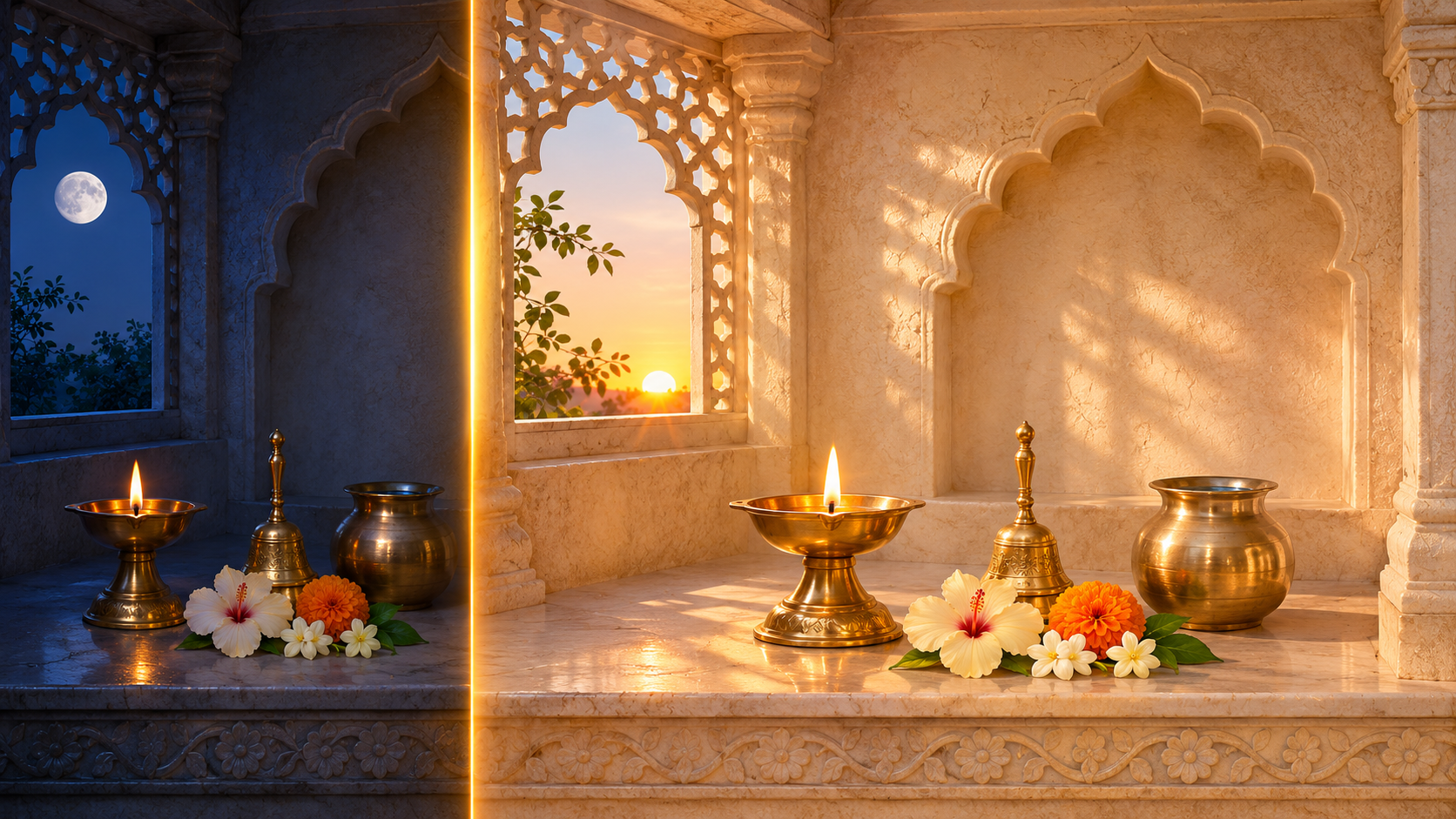
November 21 falls during Shukla Paksha, the waxing or light half of the lunar month. Ekadashi is the eleventh tithi of that fortnight, while Dwadashi is the twelfth. The change occurs shortly after the civil date begins:
| Period on November 21 | Running tithi | Practical reading |
|---|---|---|
| Before 2:18 AM | Shukla Paksha Ekadashi | An act performed during this period still falls under Ekadashi on the cited calendar basis. |
| From 2:18 AM onward | Shukla Paksha Dwadashi | Dwadashi applies for the remainder of the date on that basis. |
The key distinction is between the civil date and the lunar day. The civil date changes at midnight, but a tithi changes when its astronomical condition is completed. A new date on your wall calendar therefore does not necessarily begin with a new tithi.
How to use the 2:18 AM transition correctly

First identify the clock time of the act you are planning. Something done after midnight but before the transition remains within Ekadashi on this calendar basis. Something done after the transition falls within Dwadashi. This distinction matters most for late-night worship, a formal sankalpa, or any observance tied to the tithi prevailing at a particular moment.
Next identify the city in which the observance will take place. Panchang calculations are applied locally, so a time printed for one locality should not be copied into another time zone as though it were a globally fixed appointment. This is especially important if your intended action is close to the transition.
For ordinary daytime planning, the practical reading is straightforward: Dwadashi is the relevant tithi after the early-morning change. For minute-sensitive religious use, compare the cited result with a trusted local panchang or the calendar followed by your temple or sampradaya.
What the tithi does and does not decide
Daily puja and sankalpa
If you perform your regular worship after the transition and your local panchang agrees with it, use Shukla Paksha Dwadashi as the tithi in a tithi-specific sankalpa. If the rite takes place before the transition, Ekadashi remains applicable. Do not choose between the two merely from the printed civil date.
Ekadashi vrata and parana
Do not read the beginning of Dwadashi at 2:18 AM as an instruction to break an Ekadashi fast at that moment. The tithi transition establishes that Dwadashi has begun; it does not, by itself, establish the complete parana window. Parana practice can depend on local sunrise, the duration of Dwadashi, and the rules followed by your tradition. Use a local vrata calendar or temple instruction for the actual breaking time.
Muhurta decisions
Dwadashi alone does not make every hour of November 21 suitable for every undertaking. A complete muhurta assessment can require the prevailing nakshatra, yoga, karana, weekday, local sunrise and sunset, and the nature of the proposed act. The tithi information here answers one part of that calculation, not all of it.
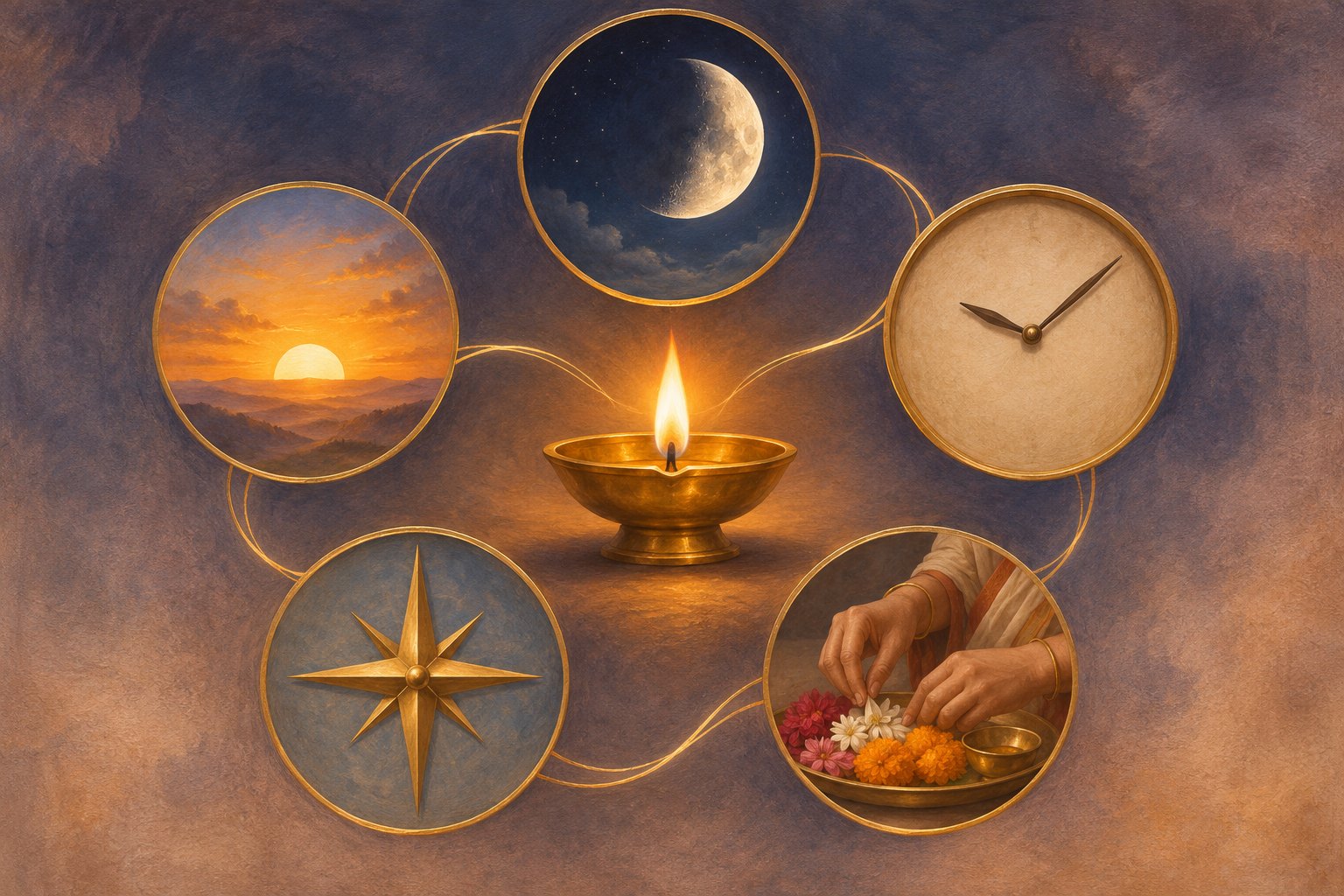
A reliable planning checklist
- Write down the city where the worship or ceremony will occur.
- Identify the actual clock time of the act, rather than relying only on the date.
- Use Ekadashi before the local transition and Dwadashi after it.
- Check a city-specific panchang if the act falls near the transition.
- For parana or muhurta, consult the full local calculation and the rules of your sampradaya.
This sequence prevents two common errors: assuming that the tithi changed at midnight, and treating one component of the Panchang as a complete muhurta.
Key takeaways
- Saturday, November 21, 2026 begins with Shukla Paksha Ekadashi on the cited calendar basis.
- Ekadashi ends at 2:18 AM, and Shukla Paksha Dwadashi follows.
- Dwadashi is therefore the principal tithi through the remainder of the civil date.
- The published transition should be verified for your location when exact timing matters.
- The start of Dwadashi is not, by itself, a complete parana time or muhurta recommendation.
Before November 21, save the panchang used by your household or temple and check its local transition and observance instructions. That one step will let you use the date confidently without confusing the civil calendar, the running tithi, and a tradition-specific ritual window.
References

Leave a Reply
You must be logged in to post a comment.