
If you are planning March 16 around both Ekadashi paran and Som Pradosh, the day has two distinct deadlines. Krishna Paksha Dwadashi ends at 7:40 AM IST, and Trayodashi then continues through the evening. Fast-breaking therefore belongs in the early morning, while Shiva worship belongs around your local sunset.
That order is more important than collecting a long list of auspicious periods. Confirm your city’s sunrise and sunset, complete any Ekadashi obligation first, and reserve the local Pradosh window for an unhurried puja.
Key takeaways
- Monday, March 16, 2026 begins under Krishna Paksha Dwadashi, which ends at 7:40 AM IST.
- If you observed Ekadashi, perform paran after your local sunrise and before Dwadashi ends. The usable interval may be short, so prepare the previous night.
- Krishna Paksha Trayodashi prevails after 7:40 AM, making the evening a Som Pradosh observance.
- Perform the main Shiva worship during the Pradosh period around local sunset. A broad traditional approximation is about 72 minutes before to 72 minutes after sunset, but a city-specific panchang should supply the precise window.
- When timings appear to conflict, the vrata-specific rule comes first: the Dwadashi deadline governs paran, and Trayodashi at twilight governs Pradosh. Generic Choghadiya or muhurta labels are secondary.
Morning: complete Ekadashi paran before 7:40 AM
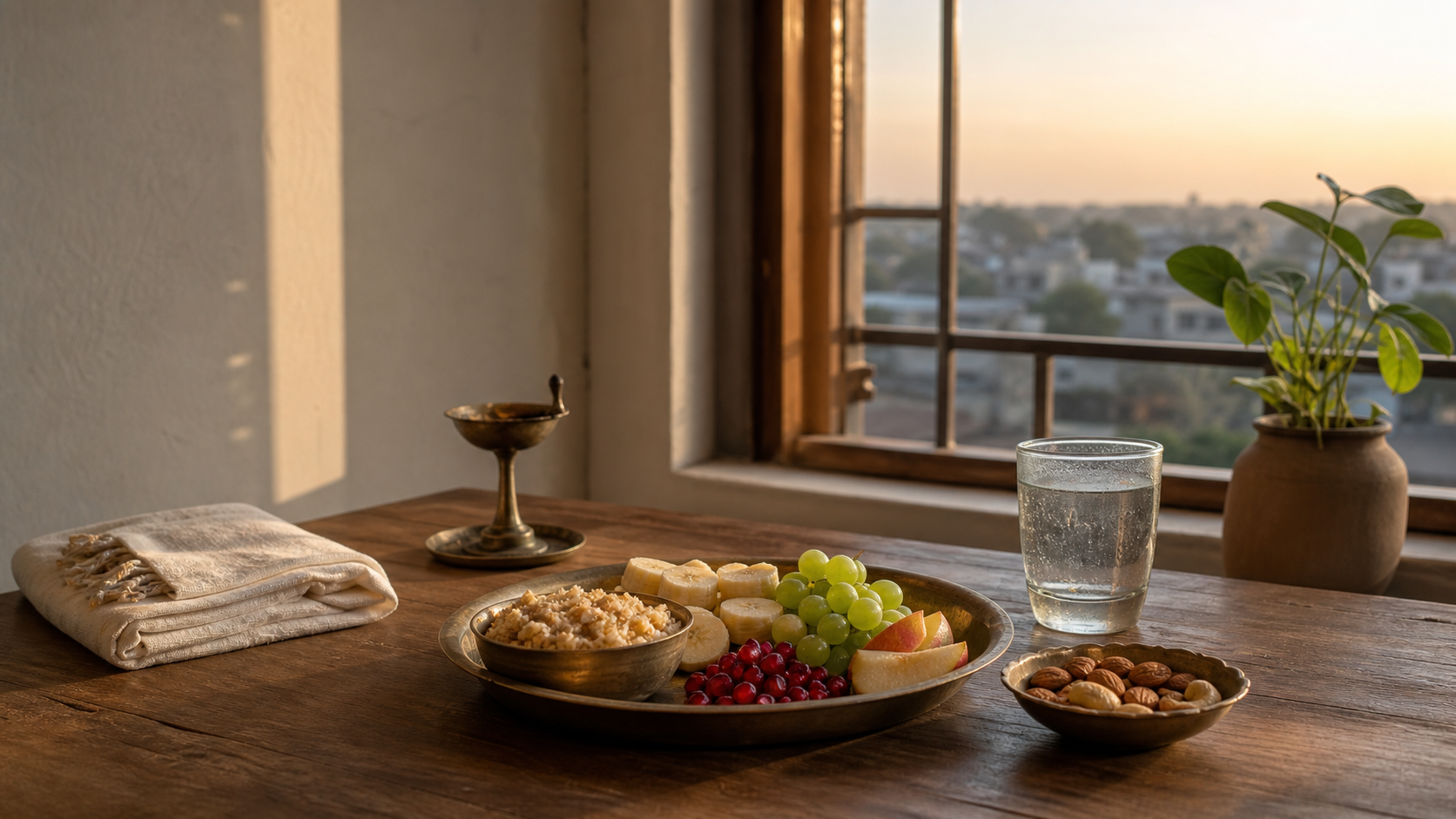
The first practical question is whether you fasted on Ekadashi. If you did not, Dwadashi does not create a new fasting duty for you. If you did, the morning interval is important because the fast is traditionally concluded during Dwadashi after sunrise.
On March 16, the endpoint is unusually close to the beginning of an ordinary morning routine. Do not plan to wake, search for the correct rule, prepare food, and then begin paran. Find your local sunrise the night before and have whatever your sampradaya permits for fast-breaking ready in advance.
- Confirm the March 16 sunrise for your city, not a national or state-level estimate.
- Check the paran rules followed by your family, temple, or sampradaya, including any prescribed food or preliminary prayer.
- Arrange the permitted food and water on March 15 so that preparation does not consume the short morning interval.
- Begin only after local sunrise and complete the paran before 7:40 AM IST.
- If you are outside the IST time zone, use a reliable local panchang rather than transferring the Indian civil date and clock time directly.
Abhijit Muhurta later in the day cannot repair a missed Dwadashi paran window. Abhijit is a general-purpose muhurta; paran is governed by the tithi attached to the vrata. This distinction prevents the most consequential scheduling mistake of the day.
The 7:40 transition is not tied to midnight. A tithi is defined through the changing angular separation of the Sun and Moon, with each tithi occupying 12 degrees. In the waning fortnight near Amavasya, Dwadashi corresponds to the separation decreasing through the 24-to-36-degree band, while Trayodashi corresponds to 12 to 24 degrees. The boundary can therefore occur at any civil-clock time.
Evening: place Shiva puja inside the Pradosh window
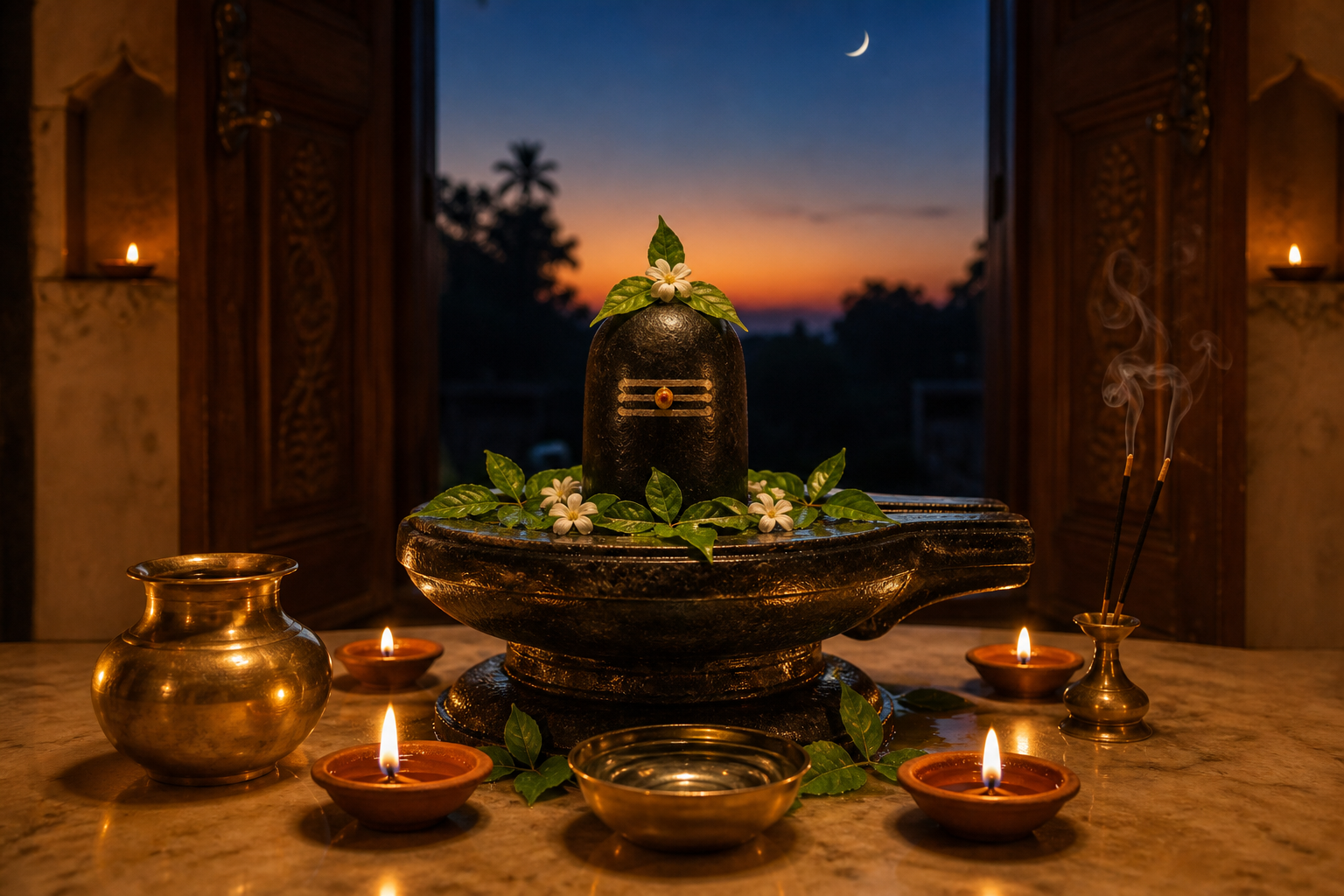
Once Dwadashi ends, the day’s devotional centre shifts to Som Pradosh. The word Som identifies Monday, while Pradosh is the sunset-centred observance associated with Trayodashi and Shiva. Because Trayodashi remains in force through the evening, March 16 has the required tithi and twilight alignment.
Pradosh is not simply an auspicious hour into which any activity can be placed. It is an observance-specific period. Use the earlier part of the evening for practical preparation, then give the actual twilight to worship rather than shopping for offerings, checking several calendars, or finishing household setup.
- Before the Pradosh period begins, clean the worship space and assemble the materials used in your household or temple tradition.
- Enter the observance with a clear sankalpa. Traditional intentions for Som Pradosh include steadiness of mind, well-being, clarity, and release from obstacles.
- Perform Shiva abhishekam according to your established paddhati. A simple observance need not be made elaborate merely because the day is significant.
- Offer bilva leaves where they are available and appropriate to your tradition.
- Recite a familiar Shiva prayer. The Mahamrityunjaya Mantra and Shiva Mahimna Stotram are customary choices; one prayer offered attentively is better than a rushed catalogue of recitations.
- Leave a period for silence, japa, or inward reflection before concluding. Daana or a concrete act of seva can extend the restraint of the vrata into care for another person.
The broad approximation of Pradosh Kaal as roughly 72 minutes on either side of sunset is useful for preparation, but it is not a universal clock appointment. Sunset varies by longitude, latitude, and time zone. If your temple publishes a local puja time, or your family follows a particular regional calculation, that established local practice should guide the exact start and conclusion.
If you cannot perform a full abhishekam, do not let complexity displace the essential act. Be present during the correct twilight, offer the form of worship genuinely available to you, and keep the period restrained and prayerful. Som Pradosh is served by attention, not by last-minute ceremonial excess.
Build a city-specific schedule instead of copying clock times
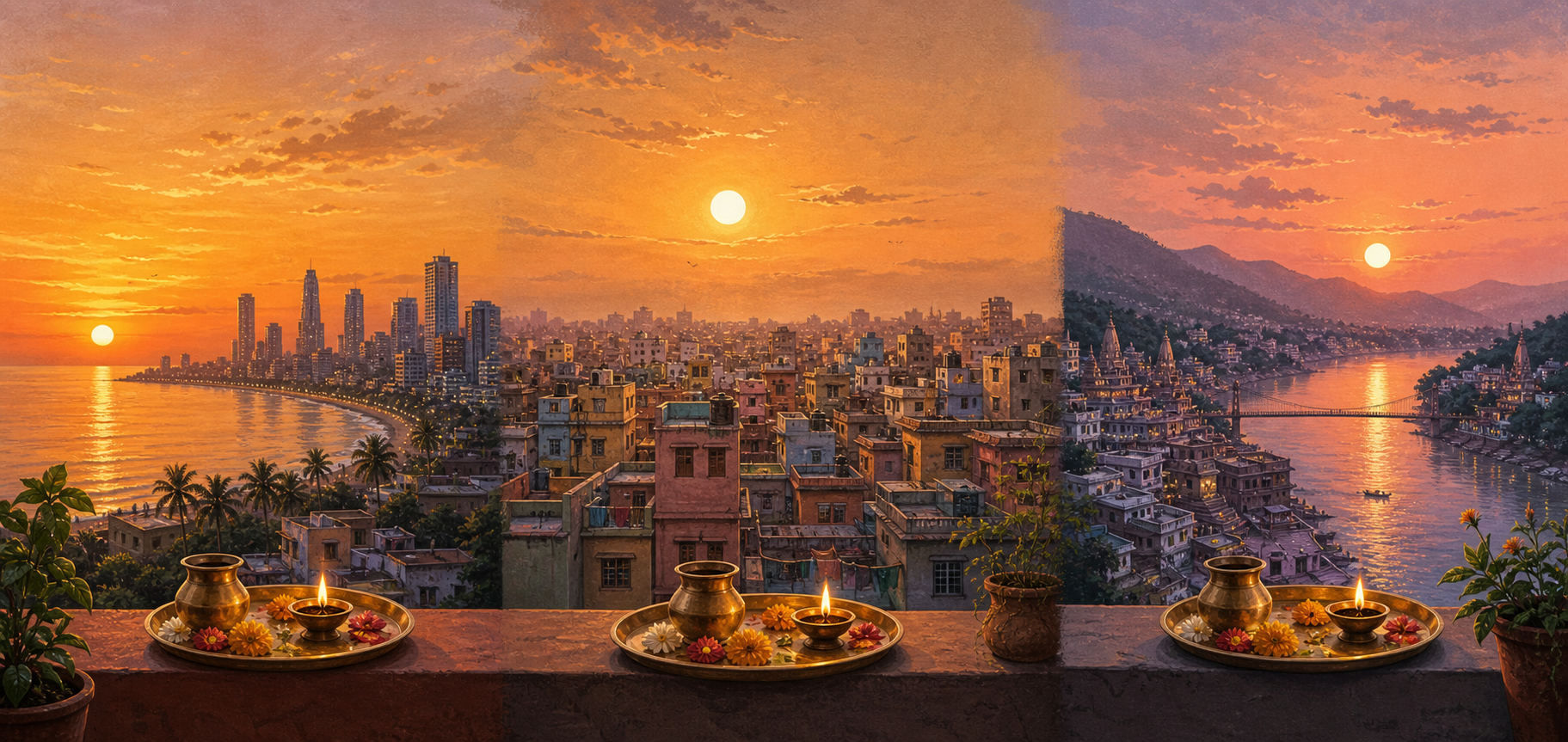
Only the Dwadashi endpoint has been supplied here as a fixed IST anchor. The rest of the useful schedule must be built from your location. Write down local sunrise, local solar noon, local sunset, and the Pradosh interval from one reliable city-specific panchang.
| Activity | Timing rule for March 16 | How to use it |
|---|---|---|
| Ekadashi paran | After local sunrise and before 7:40 AM IST | Use only if you observed Ekadashi; prepare before sunrise because the interval is short. |
| Brahma Muhurta | Pre-dawn, calculated locally | Suitable for japa, dhyana, and setting the day’s sankalpa. |
| Abhijit Muhurta | Approximately 48 minutes centred on local solar noon | Use for documentation, decisions, or a necessary initiation when the morning is unavailable. Do not assume that clock noon is always solar noon. |
| Godhuli Bela | The evening glow around local sunset | Use for light devotion and final altar preparation without allowing preparation to consume Pradosh. |
| Som Pradosh puja | Local twilight while Trayodashi prevails | Reserve this for the principal Shiva worship of the day. |
Calculate Monday’s avoided daylight segments
Rahu Kaal, Yamaganda, and Gulika Kaal are not fixed wall-clock periods. They are assigned to portions of the daylight interval. To calculate them, subtract sunrise from sunset, divide that duration into eight equal segments, and count forward from sunrise.
- Rahu Kaal on Monday is the second daylight segment.
- Yamaganda on Monday is the fourth daylight segment.
- Gulika Kaal on Monday is the seventh daylight segment.
If the daylight duration is represented by D, each segment lasts D/8. The second segment begins one-eighth of the daylight duration after sunrise; the fourth begins three-eighths after sunrise; the seventh begins six-eighths after sunrise. This method is more reliable than copying times prepared for another city.
Those who use muhurta generally avoid these three periods for discretionary new undertakings, interviews, major commitments, and comparable high-stakes beginnings. They do not require you to abandon necessary work already in progress. Use them to choose among genuinely available start times, not to turn the entire day into a maze of prohibitions.
Use Choghadiya as a secondary filter
Choghadiya divides the day into eight location-dependent portions. Shubh, Labh, and Amrit are normally preferred for a new beginning; Char is generally treated as neutral; Kaal, Udveg, and Rog are commonly avoided. Calculate or retrieve the Monday sequence from local sunrise, and remember that the night sequence begins separately at sunset.
Use a favourable Choghadiya to prepare the altar, handle a discretionary task, make a donation, or complete arrangements before worship. Do not move the central Shiva puja away from Pradosh merely to chase a better generic label. On this date, Trayodashi at sunset is the governing condition.
Read nakshatra, rashi, and month labels with restraint
The Moon is expected to remain in Mesha for much of the day, commonly under Ashwini, with a possible movement toward Bharani depending on location and the exact time being consulted. The Sun is in Meena in the sidereal zodiac. These positions may refine a personal election, but they do not change the morning Dwadashi deadline or the evening Pradosh priority.
You may also see different lunar-month names in regional calendars. Purnimanta reckoning, widespread in North India, and Amanta reckoning, common in peninsular India, place month boundaries differently. A different month label is therefore not proof that one calendar has the wrong tithi. Compare the tithi boundary, paksha, local sunrise, and local sunset before concluding that two panchangs disagree.
When timings conflict, use this order of priority
A crowded panchang can make every label appear equally decisive. They are not equal. Use a clear hierarchy when two windows overlap or point in different directions.
- Meet essential responsibilities. Panchang planning helps you place discretionary beginnings and observances; it does not erase duties whose real-world timing cannot be moved.
- Follow the vrata’s explicit tithi rule. For an Ekadashi observer, paran after sunrise and before 7:40 AM is the first religious deadline of March 16.
- Keep the observance-specific window. For Som Pradosh, Trayodashi during local twilight governs the main Shiva puja.
- Use general muhurtas for flexible tasks. Brahma Muhurta, Abhijit Muhurta, favourable Choghadiya, and avoidance periods can help place work that has more than one possible start time.
- Use nakshatra and rashi for refinement. If your practice considers them, apply them only after the tithi-based duties and local timing have been settled.
The night before March 16, save three local values where you can see them: sunrise, sunset, and the precise Pradosh interval. If you are observing Ekadashi, set the morning alarm early enough to finish paran before 7:40 AM IST. Prepare the Shiva-puja materials before evening begins. With the clocks settled in advance, you can give the twilight to worship rather than arithmetic.
References
