
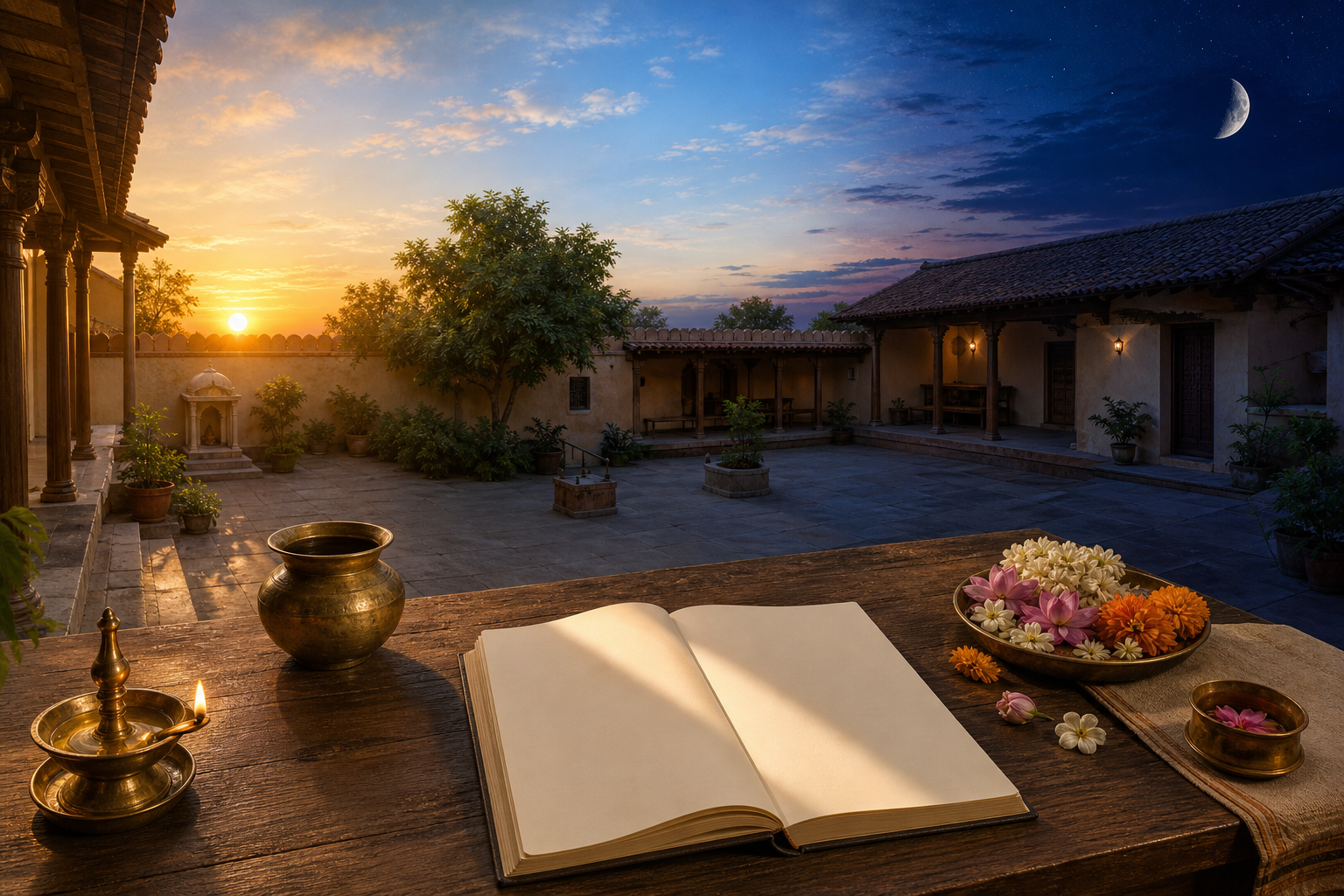
If you are trying to decide when to begin something on Sunday, June 21, the useful answer is not one clock time copied from a national calendar. You need to identify the day’s Tithi, calculate the Sunday avoidance periods from your local sunrise and sunset, and then place the actual beginning inside a clean local window.
The main rhythm is straightforward: Shukla Paksha Saptami continues until approximately 7:47 PM for most regions, after which Shukla Paksha Ashtami begins. Treat that transition as the day’s anchor, but verify its displayed time, Nakshatra, Yoga, Karana, sunrise, and sunset for your city before fixing an important muhurta.
The day turns from Surya-aligned Saptami to Ashtami
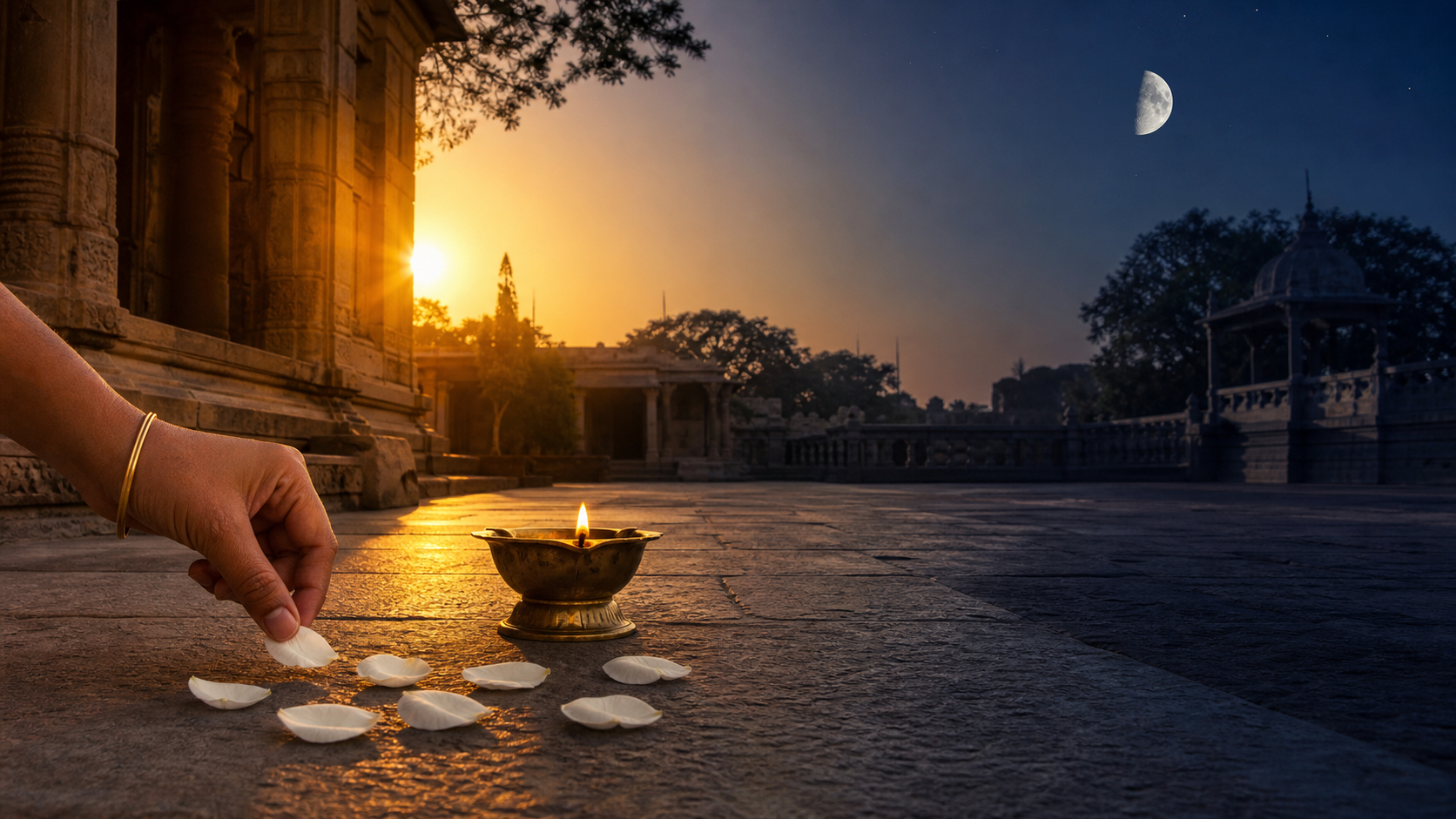
A Tithi records the angular relationship between the Sun and Moon in successive 12-degree portions. Saptami is the seventh Tithi, and on June 21 it falls in Shukla Paksha, the waxing half of the lunar month. Its traditional association with Surya makes the first part of the day suitable for clarity, purposeful effort, worship, and constructive forward movement.
This is not Ratha Saptami. That festival belongs to Magha Shukla Saptami. The broader Saptami discipline of honoring Surya still applies, however, without turning an ordinary monthly Tithi into a festival it is not.
After the evening transition, Ashtami changes the emphasis. It favors disciplined resolve, concentration, inner correction, and devotional steadiness. If you are arranging both worship and practical work, use the Saptami portion for outward action and let the Ashtami evening become quieter. Japa, meditation, a brief Devi upasana, or an honest review of the coming week fits that change naturally.
Do not treat 7:47 PM as a universal civil-time appointment. A Panchang is applied through local time, sunrise conventions, and astronomical settings. If you are outside the region for which that time was calculated, or if your trusted almanac gives a nearby but different value, follow the city-specific result. The important fact is the sequence: Saptami first, Ashtami afterward.
The transition itself also does not settle whether a particular minute is auspicious. Tithi is only one of the five Panchang limbs. Vara, Nakshatra, Yoga, and Karana still matter, as do Rahu Kaal, Yamaganda, Gulika Kaal, and the requirements of the event. If your planned start falls close to the transition, check the complete local Panchang rather than racing to begin just before Saptami ends.
Calculate the Sunday avoidance periods for your city
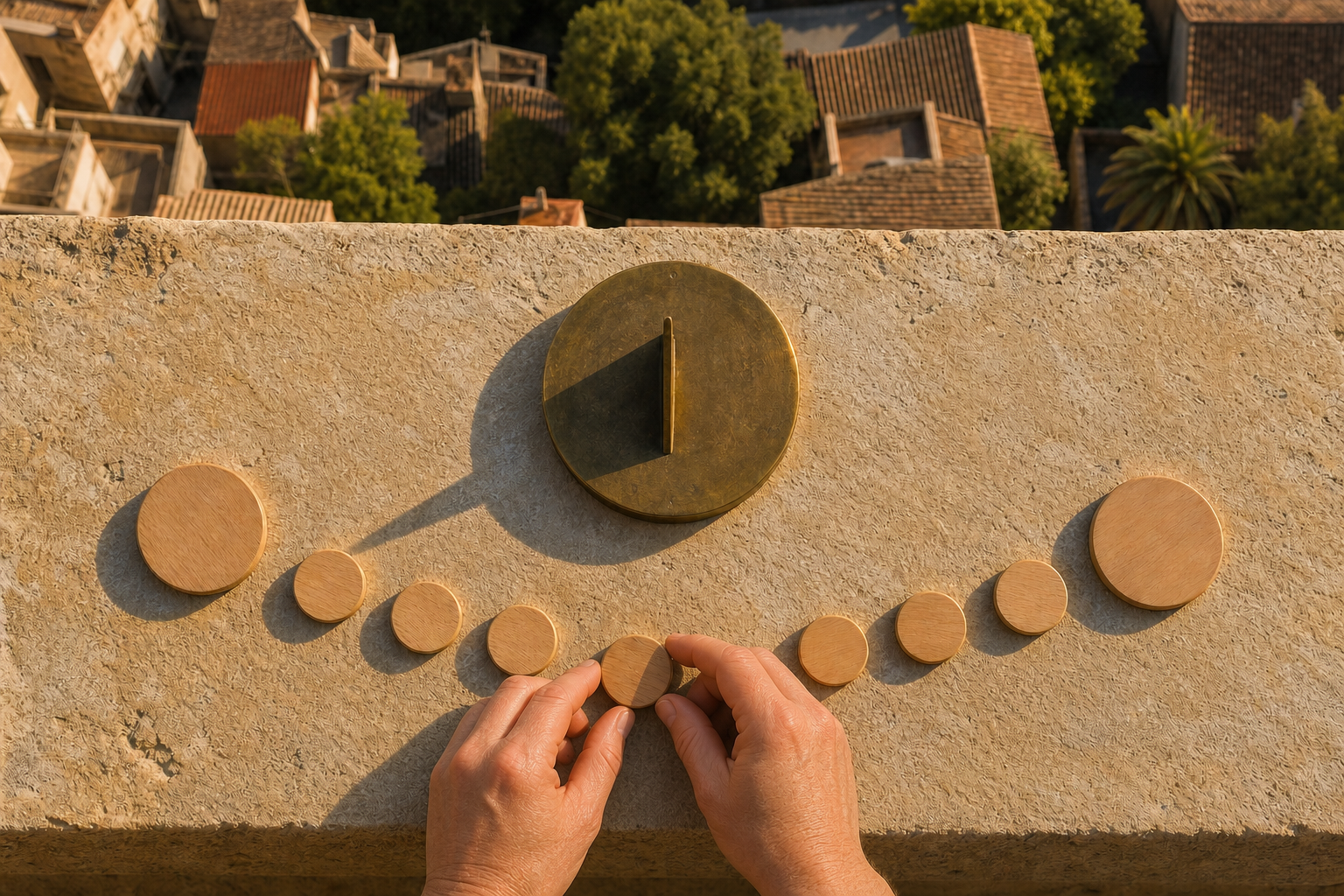
Rahu Kaal, Yamaganda, and Gulika Kaal are not fixed clock blocks that can be copied from one city to another. They are produced by dividing the local daylight interval, from sunrise to sunset, into eight equal parts. Because June daylight varies substantially by latitude, localization is essential on June 21.
Use this calculation:
- Find the exact June 21, 2026 sunrise and sunset for your city.
- Calculate the total number of minutes from sunrise to sunset.
- Divide that total by eight. The result is the length of one daylight segment.
- Count the eight segments forward from sunrise without inserting gaps.
- On Sunday, mark segment five as Yamaganda, segment seven as Gulika Kaal, and segment eight as Rahu Kaal.
- Keep the initiating act of an important undertaking outside all three periods.
| Sunday filter | Daylight segment | Calculated boundaries | Practical treatment |
|---|---|---|---|
| Yamaganda | Fifth | Sunrise plus four segments to sunrise plus five segments | Avoid beginning an important undertaking |
| Gulika Kaal | Seventh | Sunrise plus six segments to sunrise plus seven segments | Do not choose it merely because it precedes Rahu Kaal |
| Rahu Kaal | Eighth | Sunrise plus seven segments to sunset | Avoid new beginnings near the end of Sunday daylight |
For example, if the length of one local segment is represented by S, Yamaganda begins four S after sunrise, Gulika begins six S after sunrise, and Rahu Kaal begins seven S after sunrise. Use your calculated value of S; do not substitute the start time printed for another city.
These are primarily filters for beginnings. Identify the moment that actually inaugurates the undertaking: signing the document, making the formal announcement, submitting the application, conducting the opening puja, leaving on the journey, or placing the first consequential order. Routine preparation can be separated from that decisive act. You do not need to turn every avoidance period into an interruption of ordinary duties.
Sunday’s eighth segment places Rahu Kaal close to local sunset. The seventh segment immediately before it is Gulika Kaal, so a vague plan to begin something “in the evening” is especially unreliable on this date. Fix the start earlier, or calculate a suitable night Choghadiya rather than hoping that sunset automatically makes the problem disappear.
Choose a clean muhurta for the action you actually intend
Start with the event, not with the most attractive label in a calendar. A general work initiative, a journey, a vrata, and a vivaha do not require the same level of scrutiny.
- For an ordinary constructive beginning: consider a local Abhijit Muhurta or an auspicious Choghadiya after excluding the day’s avoidance periods and checking the active Tithi, Nakshatra, Yoga, and Karana.
- For business, learning, or practical gains: Amrit, Shubh, and Labh Choghadiya are the preferred classes.
- For travel or logistical movement: Char is generally acceptable when the other major filters are clean.
- For a solemn samskara: do not use a generic daily window as a substitute for an event-specific muhurta. Vivaha, in particular, should not be fixed from Abhijit Muhurta alone without competent priestly guidance.
- For a personally consequential undertaking: add Tarabalam and Chandrabalam rather than relying only on the public Panchang.
Abhijit Muhurta is the auspicious interval centered on local solar noon. It is useful when you need a practical daily window for a general undertaking and no dedicated muhurta has been selected. On June 21, its midday luminosity also sits naturally with Saptami’s Surya orientation. That symbolism does not override an actual conflict shown by your tradition or local calculation, so compare the Abhijit interval with the Sunday avoidance blocks before using it.
Choghadiya adds another layer of practical scheduling. Day and night are divided into changing blocks whose sequence depends on the weekday and whether the calculation begins at sunrise or sunset. Favor Amrit, Shubh, or Labh; use Char for movement when appropriate; and avoid initiating important work in Kaal, Rog, or Udveg. A city-specific Choghadiya is necessary because its clock boundaries move with local sunrise and sunset.
When two Panchangs show different details
A small disagreement does not automatically mean one calculation is careless. First compare the city, time zone, sunrise convention, and ayanamsa. Contemporary drik Panchangs commonly use Lahiri, also called Chitra, while another almanac may use Raman or a different established setting. North Indian Purnimanta and South Indian Amanta systems can also give the lunar month a different name while describing the same Tithi.
If you are checking the underlying lunar placement, the method is precise. Subtract the selected ayanamsa from the tropical longitude of the Moon to obtain its sidereal longitude. Divide that longitude into 27 portions of 13 degrees 20 minutes to identify the Nakshatra, and into 12 portions of 30 degrees to identify the Rashi. The active Yoga comes from the combined sidereal longitudes of the Sun and Moon divided into 27 portions. Karana measures half a Tithi, so more than one Karana can operate during a civil day that also contains a Tithi change.
You do not need to perform those astronomical calculations by hand for an ordinary plan. You do need to keep the settings consistent. Select your actual city, use one recognized ayanamsa throughout, and note the exact time of the intended action. Do not mix a Nakshatra from one application, a Choghadiya from another city, and sunrise from a third calendar.
Tarabalam makes the daily Nakshatra personal by counting from your Janma Nakshatra. Sampat, Kshema, Sadhana, Mitra, and Parama-Mitra are generally preferred classifications. Chandrabalam examines the day’s Moon sign in relation to your Janma Rashi. These checks become worthwhile when the undertaking is sufficiently important that your natal lunar context should shape the choice.
Shape worship and work around the day’s natural arc
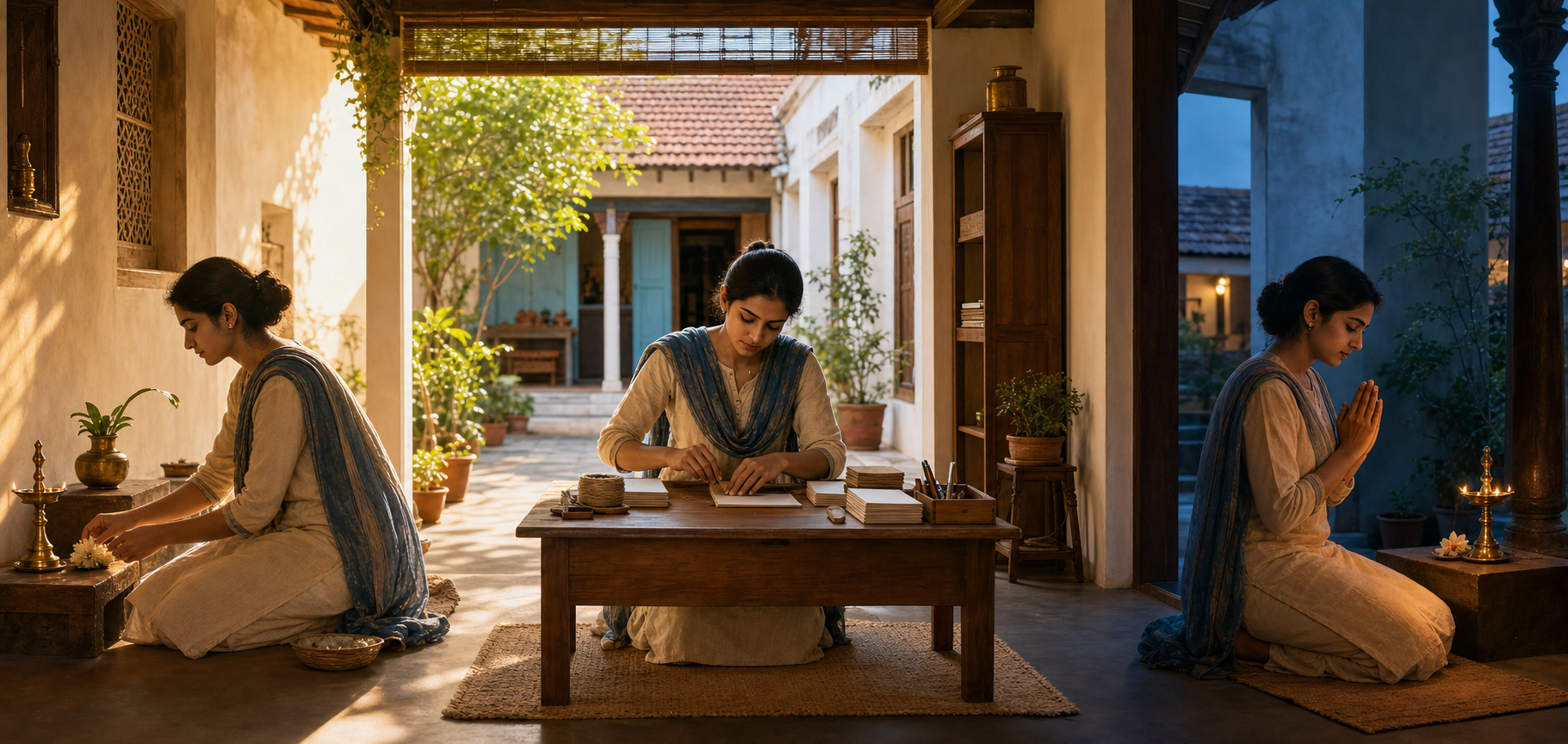
The cleanest observance does not need to be elaborate. It needs to respect the character of each part of the day and leave room for your actual duties.
- At the beginning of the day: offer Surya Arghya after sunrise. Add mindful Surya Namaskara or recitation of Aditya Hridayam if these already belong to your practice.
- During the Saptami portion: give your strongest attention to purposeful work, a constructive beginning, study, or a responsibility that requires clarity. Place the formal start inside a locally verified clean muhurta.
- Near local midday: use Abhijit Muhurta as a candidate for a general undertaking, but only after comparing it with the Sunday filters and the other Panchang limbs.
- As evening approaches: do not casually initiate an important task during Gulika Kaal or the final Rahu Kaal segment. Finish routine work, prepare for the next day, or wait for a properly calculated later window.
- After Ashtami begins: turn toward japa, meditation, Devi upasana, restraint, or a focused sankalpa. Let the shift be one of attention, not superstition.
June 21 also coincides with the June solstice in many time zones. The Sun’s seasonal turning gives added contemplative meaning to a Surya-aligned Saptami: light is abundant, but it still moves within a larger cycle. Acknowledging that order can deepen gratitude. It does not replace the Panchang calculation or create an automatic muhurta.
If your household follows another Dharmic discipline, preserve its own integrity. An Ashtami vrata in a Jain family, lunar observance in a Buddhist setting, or steady Nitnem and seva in Sikh practice should not be flattened into one ritual system. The shared value is disciplined use of time, expressed through the practice proper to each sampradaya.
Key takeaways for June 21, 2026
- Shukla Saptami governs most of the day and changes to Shukla Ashtami at approximately 7:47 PM; confirm the clock time in your local Panchang.
- On Sunday, Yamaganda is the fifth daylight segment, Gulika Kaal the seventh, and Rahu Kaal the eighth.
- Calculate those segments from your city’s actual sunrise and sunset. A timetable for another city is not a reliable substitute.
- For a general undertaking, consider a clean local Abhijit Muhurta or Amrit, Shubh, or Labh Choghadiya. Char can suit travel and logistics.
- Do not fix a wedding or another solemn samskara from a generic daily window alone. Use an event-specific muhurta with competent guidance.
- Use Saptami for Surya worship and constructive momentum, then let the Ashtami evening favor concentration, restraint, and inward practice.
Before June 21 arrives, save the sunrise, sunset, and complete Panchang for the city where the action will occur. Mark the fifth, seventh, and eighth Sunday segments, compare the remaining clean time with Abhijit and Choghadiya, and decide in advance which precise act will count as the beginning. That one preparation turns a broad calendar entry into a muhurta you can actually use.
References
