
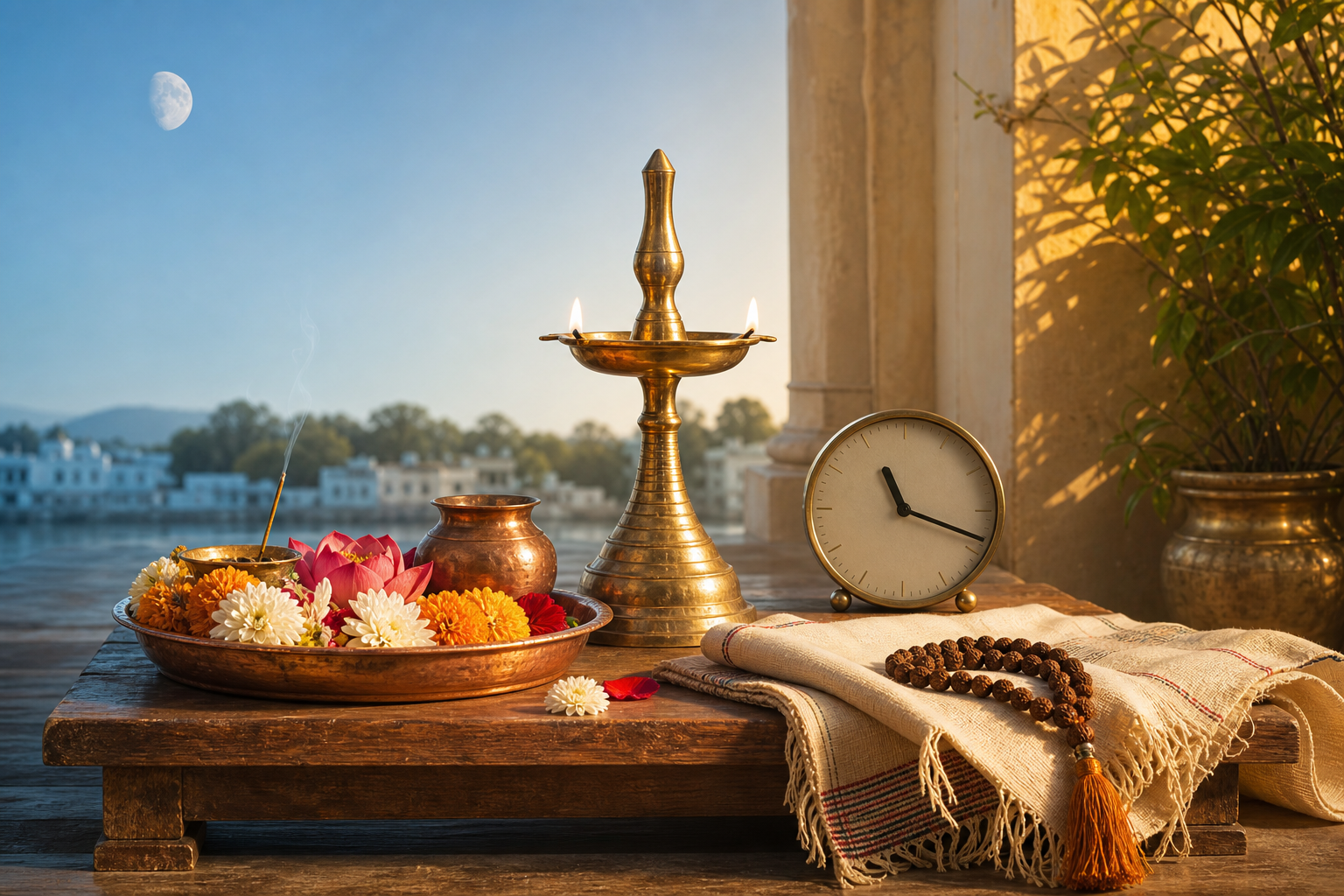
If you are arranging puja, vrata, seva, study, or an important household task for Tuesday, January 6, 2026, do not treat the date as though it carries one tithi from midnight to midnight. On this day, Krishna Paksha Tritiya is timed until 11:18 AM, after which Krishna Paksha Chaturthi begins. That clock time is not universal; your location and the calculation method used by your Panchang may shift the boundary slightly.
The practical approach is simple: use 11:18 AM as a provisional hinge, not an unquestionable universal deadline. Give the earlier part of the day to Tritiya-aligned discipline, turn toward Sri Ganesha after your locally confirmed Chaturthi begins, and check the evening moonrise before deciding whether Sankashti Chaturthi applies where you live.
The day changes tithi at 11:18 AM, not at midnight

A tithi is a lunar day, so its boundary does not have to coincide with the beginning or end of a civil date. The useful question is therefore not merely, “Which tithi is January 6?” It is, “Which tithi is prevailing when I intend to act?”
Both parts of January 6 fall within Krishna Paksha, the waning or dark half of the lunar cycle. The broader orientation remains contemplative and steadying, but the devotional emphasis changes as Tritiya gives way to Chaturthi.
| Time on January 6 | Prevailing tithi | Practical emphasis |
|---|---|---|
| Before 11:18 AM, subject to local confirmation | Krishna Paksha Tritiya | Focused study, seva, balanced engagement, and steady or grounded work |
| At the locally calculated transition | Tritiya gives way to Chaturthi | Update which tithi you are following; the transition minute is not automatically a special muhurat |
| After the transition | Krishna Paksha Chaturthi | Sri Ganesha-focused worship and reflection on inner or practical obstacles |
Treat this table as a sequence rather than as a universal clock. If your local Panchang places the transition a little earlier or later, follow that local result. The point is to preserve the order of observance: Tritiya first, Chaturthi second.
Do not mistake 11:18 AM for a Shubh Muhurat. It marks a tithi change in the timing used here. It does not, by itself, declare that exact minute auspicious for every ceremony, vow, journey, or family undertaking.
A grounded observance plan for Tuesday
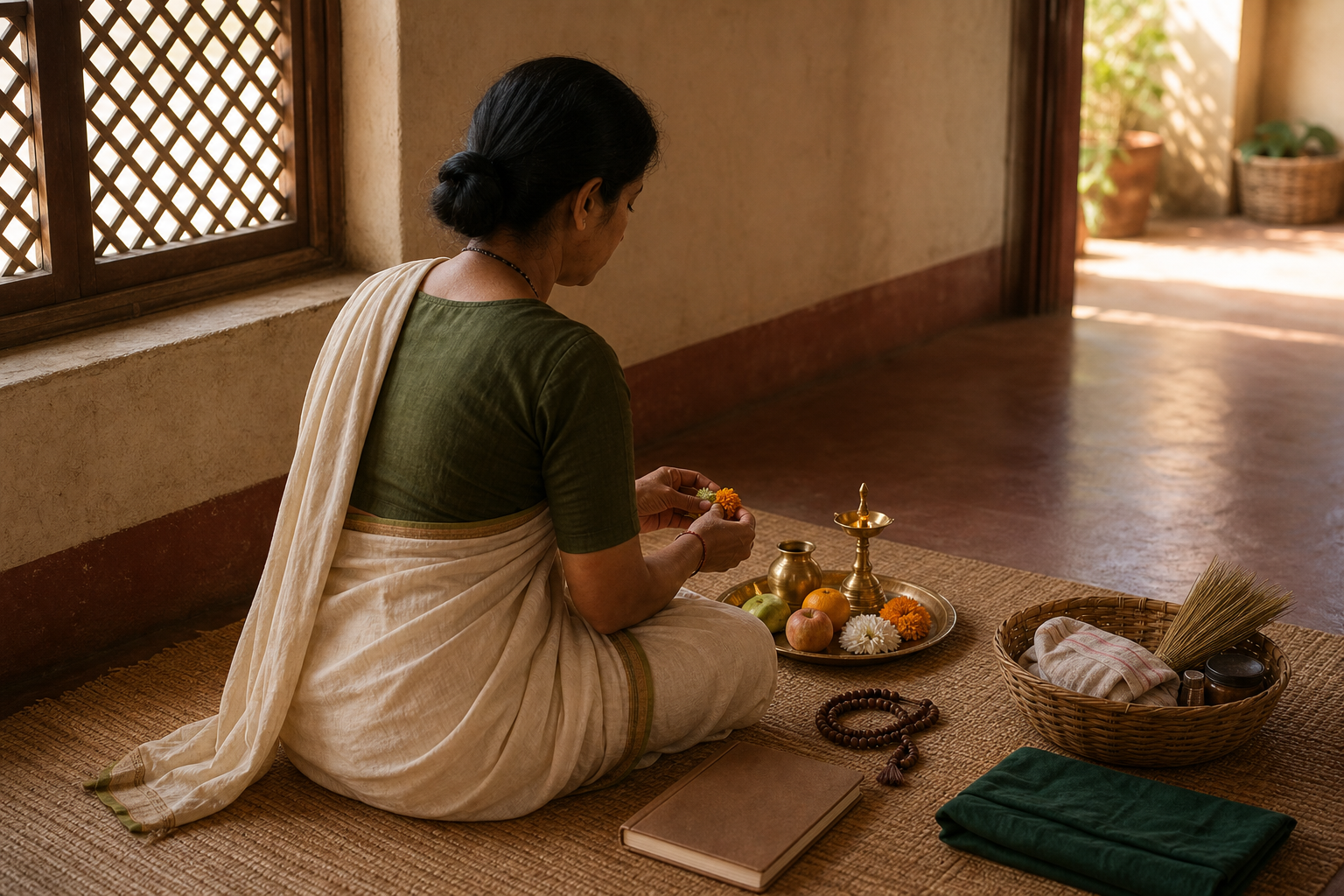
You do not need to crowd the day with activities merely because two tithis occur within it. A better observance gives each period one clear purpose and connects devotion with conduct.
- Confirm the local boundary. Open a Panchang configured for your city. Check the Tritiya end time, the calculation or regional tradition if it is identified, and the local moonrise time if Sankashti is relevant to you.
- Choose one Tritiya-aligned morning discipline. Before the locally confirmed transition, undertake focused study, seva, or a responsibility that benefits from patient and steady attention. Select something you can complete or bring to a stable stopping point.
- Mark the transition without anxiety. When Chaturthi begins locally, you do not have to abandon necessary work. A brief pause is enough to acknowledge that the lunar day has changed before moving into the explicitly devotional part of your observance.
- Turn Chaturthi reflection toward Sri Ganesha. Pray according to your household or sampradaya and identify one real obstacle requiring clarity. Then name the next dharmic action available to you. Prayer for removal of obstacles becomes more grounded when it is paired with a willingness to correct avoidance, confusion, or disorder.
- Keep formal vrata rules within your tradition. If your family or temple already observes Sankashti or another Chaturthi discipline, follow its established procedure. A date-and-tithi schedule alone is not enough reason to invent fasting rules or combine unrelated customs.
A restrained home observance can therefore remain meaningful: steady work during Tritiya, a conscious pause at the local transition, Ganesha-focused prayer during Chaturthi, and one practical step toward clearing an obstacle. Elaborateness is not required for attentiveness.
If 11:18 AM arrives but your trusted local Panchang still shows Tritiya, do not force your practice to match a clock calculated for somewhere else. Follow the locally applicable transition, especially when a vrata, temple service, or inherited family observance depends on the prevailing tithi.
Check moonrise and muhurat as separate decisions

Two different questions are often collapsed into one: whether the evening qualifies for Sankashti observance, and whether a particular time is auspicious for a separate undertaking. The tithi transition alone does not settle either question completely.
Sankashti depends on the local evening alignment
Communities may observe Sankashti Chaturthi on January 6 where Chaturthi aligns with the local moonrise. Knowing that Chaturthi begins after 11:18 AM in one calculation is not sufficient by itself. You still need to establish what prevails at moonrise in your location.
- Find the moonrise time for your city, not merely for your country or time zone.
- Confirm that your local Panchang shows Chaturthi prevailing at that moonrise.
- Check whether your household, temple, or regional tradition identifies the evening as Sankashti Chaturthi.
- Follow the vrata and completion practices already recognized in that tradition rather than deriving them from the tithi end time alone.
This check matters if you are coordinating a family fast or temple program. A generic online time can be internally correct yet still be inapplicable to your locality.
A tithi boundary is not a complete auspicious-time calculation
Nakshatra, Rashi, and Shubh Muhurat add further dimensions to choosing an exact time. These elements are also location-sensitive. If you are timing a formal samskara, temple rite, or another undertaking for which an exact muhurat matters, consult a complete local Panchang or the person guiding the observance rather than using 11:18 AM alone.
Drik and Vakyam methods, as well as regional conventions, can yield slightly different timings. Avoid manufacturing false precision by taking a tithi boundary from one system, a moonrise from another, and a ritual rule from a third. Choose the tradition followed by your household or temple and apply it consistently.
Key takeaways for your January 6 decision
- For a flexible morning activity: place focused study, seva, or grounded work before your locally confirmed Chaturthi transition if you want to align it with Tritiya.
- For Ganesha-focused worship: place it after Chaturthi begins locally and connect the prayer with one concrete corrective action.
- For Sankashti observance: verify that Chaturthi prevails at your local moonrise and confirm the custom followed by your family or temple.
- For a formal muhurat: do not rely on the 11:18 AM tithi boundary alone; check the relevant Nakshatra, Rashi, and auspicious interval locally.
- When two Panchangs differ: use the calculation tradition recognized by your household, sampradaya, or temple instead of blending incompatible timings.
Before January 6, make a two-line note from your local Panchang: the exact Tritiya-to-Chaturthi transition and the local moonrise with its prevailing tithi. That small preparation gives the day a clear shape: one steady morning discipline, one Chaturthi prayer, and no guesswork about which tithi you are honoring.
References
