
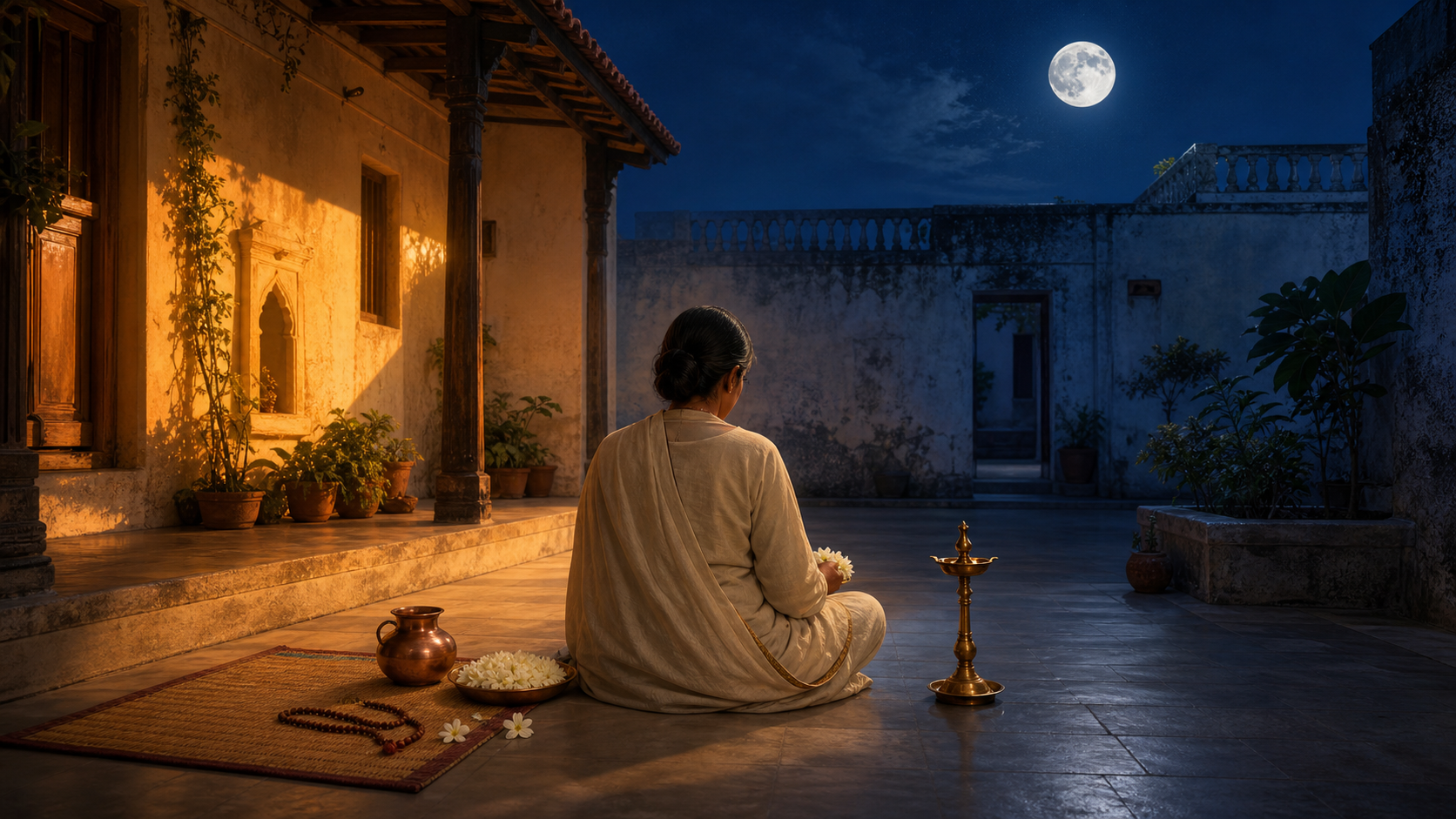
If you are deciding whether to treat Friday, January 2, 2026, as a Chaturdashi day or a Purnima evening, the answer is both. The practical dividing point is 6:12 PM, when Shukla Paksha Chaturdashi gives way to Purnima.
That distinction should shape your plan. Use the day for focused sadhana, completion, and preparation. Reserve your full-moon observance for after the transition, subject to confirmation from a Panchang calculated for your location.
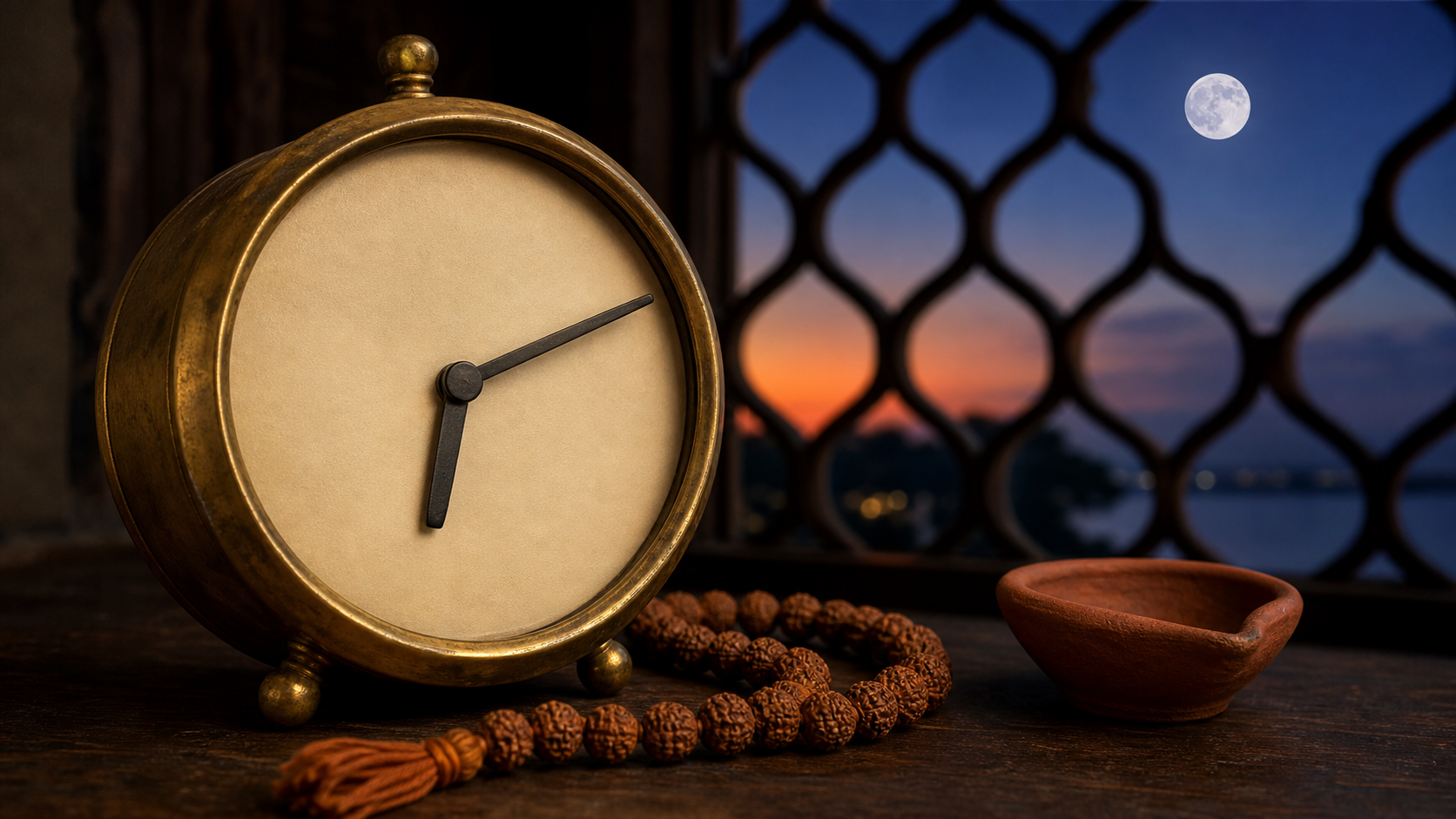
The day’s hinge is the 6:12 PM tithi transition
| Lunar phase | Reported timing | Practical emphasis |
|---|---|---|
| Shukla Paksha Chaturdashi | At the beginning of January 2 and until 6:12 PM | Steady japa, disciplined routine, completion of pending duties, and preparation for the full moon |
| Purnima | From 6:12 PM; its later boundary is reported as 4:03 PM on the following afternoon | Full-moon prayer, vrata where customary, darshana, gratitude, prasad, and seva |
The table is a planning aid, not a universal muhurta. A tithi can change in the middle of a civil date, so calling the whole of January 2 Purnima would obscure the day’s actual sequence. A morning observance falls during Chaturdashi under these timings; an evening observance after 6:12 PM falls during Purnima.
Location still matters. Regional Panchangs can display slightly different boundaries because of location and computational method. If you are arranging a flexible household prayer, the reported transition gives you a workable outline. If your vrata, temple tradition, or sankalpa depends on an exact tithi at a prescribed time, confirm the boundary for your city before fixing the ritual.
Do not substitute the Purnima label for a shubh muhurta
Purnima is widely regarded as an auspicious and spiritually luminous phase, but that does not make every minute after 6:12 PM an automatically suitable muhurta for every undertaking. Tithi, Nakshatra, Rashi, and a purpose-specific shubh window answer different questions.
The exact Nakshatra, Rashi, and shubh muhurta details for January 2 should be taken from a trusted regional Panchang. They are sensitive to location and to the siddhanta or computational convention being followed. Do not borrow a time listed for another city merely because the date is the same.
- For personal meditation, japa, or scriptural reading, use your customary pre-dawn practice or evening Sandhya routine.
- For a Purnima-specific household puja, place it after the locally confirmed transition into Purnima.
- For a tradition-specific vrata, follow the rule of the sampradaya or family parampara, including any requirement tied to sunrise, moonrise, or another prescribed condition.
- For a wedding, griha pravesha, major purchase, or other consequential ceremony, obtain a purpose-specific local muhurta rather than relying on the full-moon designation alone.
This is one of those days when restraint is more accurate than false precision. A generic clock time for Abhijit Muhurta, Nakshatra, or Rashi would look helpful but could mislead you if it was calculated for a different place.
A simple observance plan from morning to Purnima
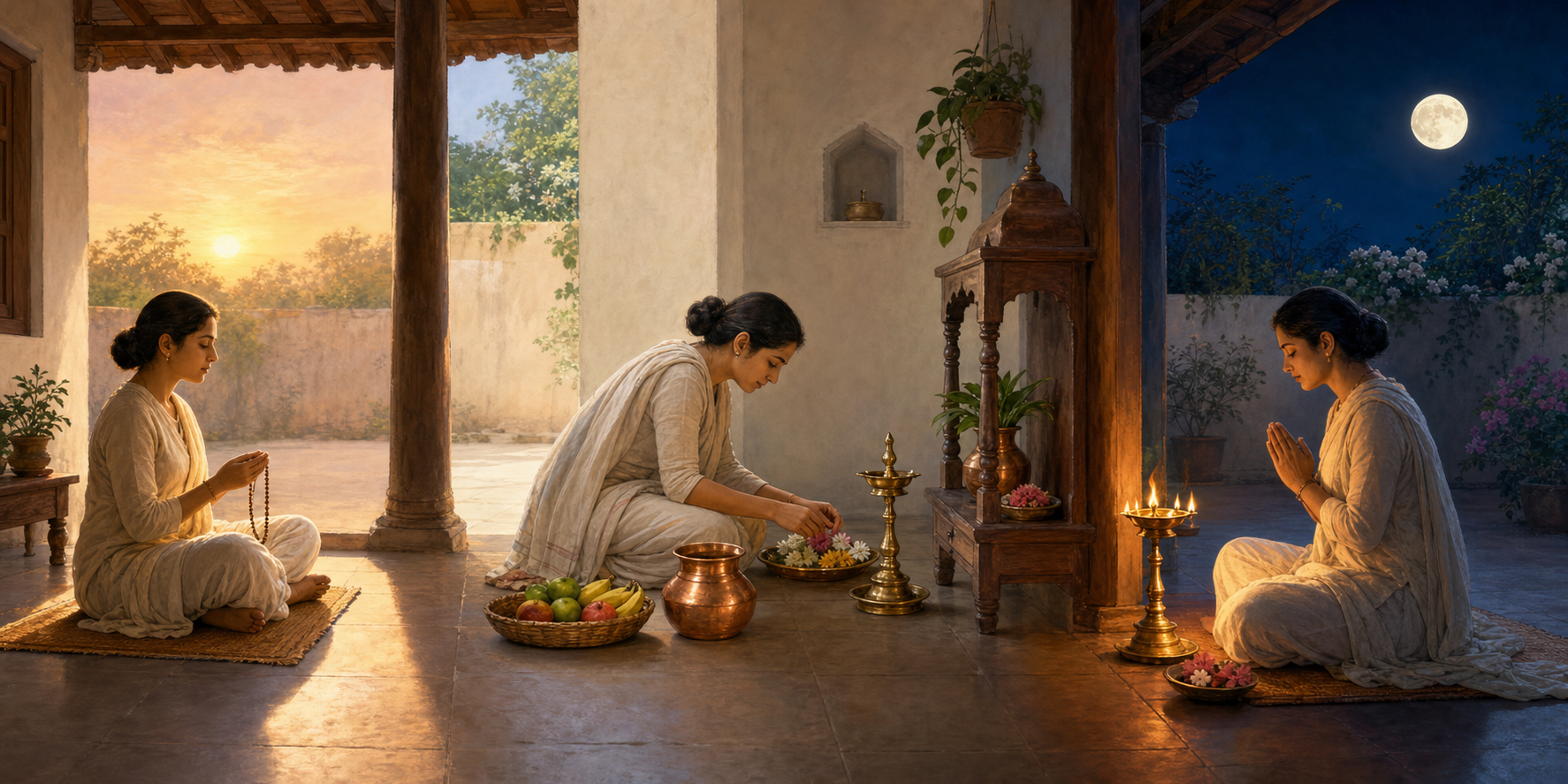
You do not need an elaborate ceremony to honor the transition. A coherent observance can follow the movement of the day itself: discipline during Chaturdashi, followed by receptivity and gratitude during Purnima.
- Begin with your normal pre-dawn or morning practice. Sit for meditation, undertake japa, or read a short passage from a revered text. Keep the practice steady rather than adding an unsupported ritual merely because the date is significant.
- Carry Chaturdashi’s preparatory quality into the day. Complete an unfinished duty, simplify the evening schedule, and maintain a satvik routine to the extent that your health and responsibilities permit.
- Before dusk, prepare only what you will actually use: a clean place for prayer, a diya, simple prasad, and the text or mantra belonging to your tradition. This keeps the evening from becoming a rush of arrangements.
- After 6:12 PM, once the local timing has been checked, mark the arrival of Purnima. Light the diya safely, offer prayer, continue japa, or seek darshana if that is part of your practice.
- Give the observance an outward expression. Share prasad or a simple meal, make time for family prayer, or perform a concrete act of seva. Fullness in the Dharmic sense need not stop at private feeling.
If work or family duties prevent a longer observance, choose one complete act instead of several hurried ones. A few quiet minutes of prayer followed by a deliberate act of service is more meaningful than treating an elaborate checklist as compulsory.
Honor shared Dharmic rhythms without erasing distinctions
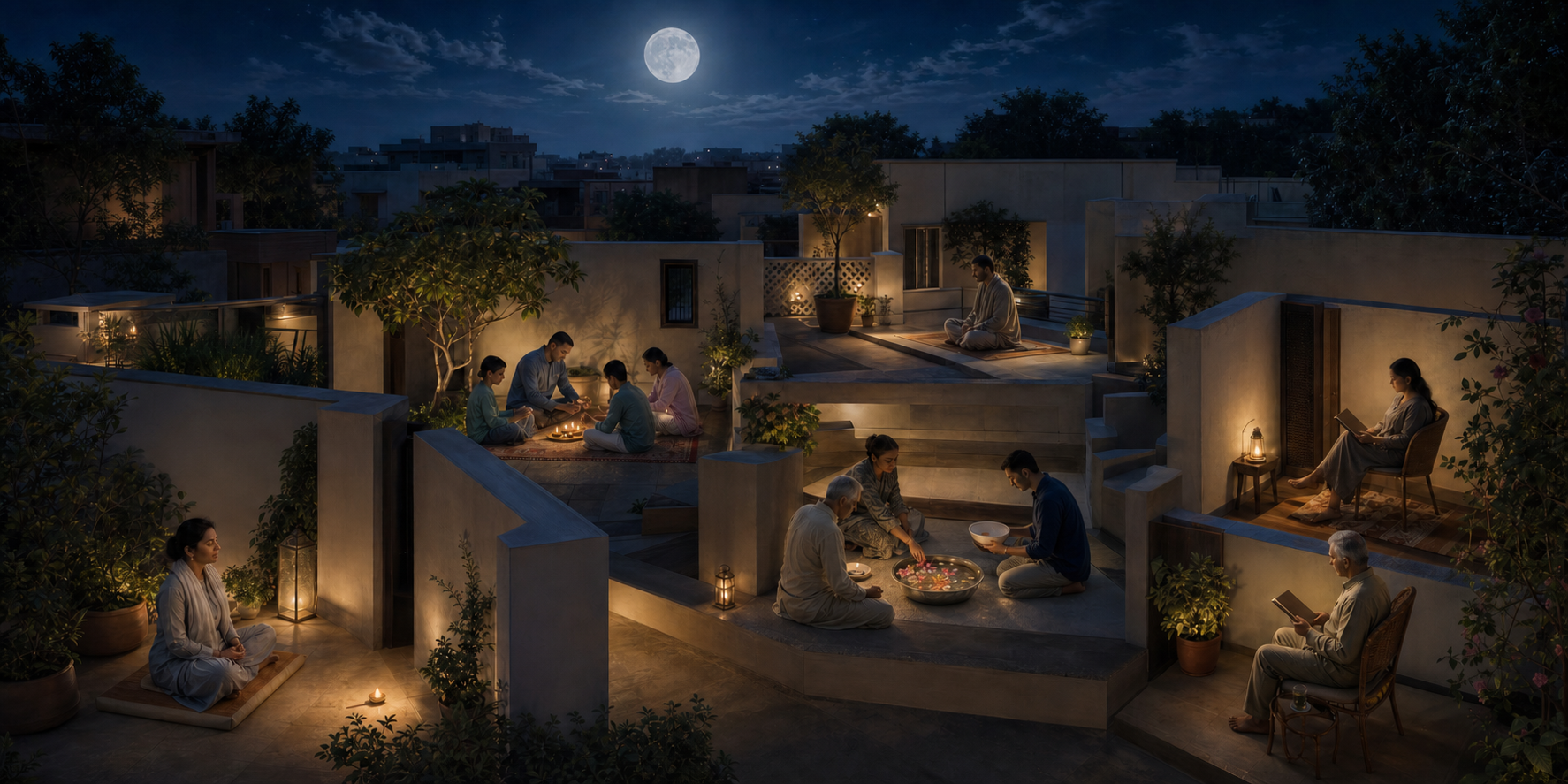
The full moon belongs to a broad civilizational rhythm, but the traditions of Bharat do not all interpret or observe it identically. Recognizing kinship should deepen respect for each path’s discipline, not flatten the paths into one generic ritual.
- In Hindu traditions, Purnima commonly supports vrata, puja, darshana, evening prayer, prasad, and devotional gathering. The deity, mantra, and fasting rule depend on the tradition being followed.
- In Buddhist settings, full-moon Uposatha or Poya observances can center ethical reflection and renewed attention to discipline.
- In Jain communities, full-moon parvas can be occasions for restraint, study, and spiritual discipline.
- Some Sikh families may appreciate the familiar cultural rhythm of the lunar cycle, while the Nanakshahi calendar remains the primary calendrical framework. A shared date should not be used to impose a Hindu ritual form on Sikh practice.
For a mixed Dharmic family or community gathering, keep the common layer simple: silence, gratitude, study, food shared respectfully, and seva. Each person can then follow the prayers, vows, and maryada of their own tradition. That approach creates unity without claiming that different observances are interchangeable.
Key takeaways for January 2
- January 2 begins under Shukla Paksha Chaturdashi and changes to Purnima at the reported time of 6:12 PM.
- Plan daytime sadhana and unfinished duties around Chaturdashi’s preparatory character.
- Place a Purnima-specific evening observance after the transition, once the time has been confirmed for your location.
- Do not invent or import Nakshatra, Rashi, or shubh muhurta timings from a Panchang prepared for another city.
- A diya, prayer or japa, simple prasad, and one act of seva form a complete household observance.
- Shared respect for the full moon can connect Dharmic communities without erasing their distinct calendars and disciplines.
Before January 2 arrives, choose the local Panchang you will trust and decide whether your observance is flexible or rule-bound. Then prepare the diya, text, prasad, or seva commitment in advance, leaving the evening free for practice after the confirmed Purnima transition.
References
