
If you are trying to decide whether Monday, January 19, 2026 should be observed as Amavasya or Shukla Paksha Pratipada, do not assign one tithi to the entire civil date. The change occurs shortly after midnight: Amavasya ends at 1:08 AM local time, and Pratipada begins immediately afterward.
That makes January 19 primarily a Pratipada day for ordinary morning, daytime, and evening activity. Amavasya still matters, but its brief presence after midnight does not automatically make every ritual associated with Amavasya appropriate throughout Monday. Your local sunrise, the rule for the particular observance, and your city-specific Panchang determine the final answer.
The tithi transition that governs January 19
The essential sequence is straightforward: Amavasya lasts until 1:08 AM on January 19, after which Shukla Paksha Pratipada continues to a stated 1:59 AM endpoint. The calendar date attached to that later endpoint is not identified, so it should not be used to plan activity beyond January 19 without checking a complete local Panchang.
| Local period | Tithi | What it means for you |
|---|---|---|
| Start of Monday until 1:08 AM | Amavasya | Only the early post-midnight portion of January 19 falls under Amavasya. |
| After 1:08 AM on January 19 | Shukla Paksha Pratipada | Pratipada governs the ordinary waking and daytime hours of Monday. |
| Stated endpoint at 1:59 AM | Pratipada ends | The associated calendar date is unspecified; verify it locally before planning beyond Monday. |
Amavasya is the concluding tithi of Krishna Paksha, the waning half of the lunar month. Shukla Paksha Pratipada is the first tithi of the waxing half. Their meeting on January 19 therefore marks a real change in lunar emphasis: completion and inward attention give way to renewal and gradual increase.
A tithi is not a midnight-to-midnight date. It can begin or end at any clock time and can overlap two civil dates. This is why a calendar heading such as “January 19 Panchang” is not enough by itself to settle a vrata, shraddha-related observance, temple rite, or formal muhurta.
Should you observe Amavasya or Pratipada?
Begin with the purpose of your observance. If it is specifically tied to Amavasya, the fact that Amavasya remains until 1:08 AM does not necessarily mean you should perform it after midnight. Many Hindu observances depend on whether the required tithi is present at sunrise or during another prescribed part of the day. The applicable rule varies with the vrata, sampradaya, region, and family tradition.
For an Amavasya-specific rite, ask one precise question of your temple or family purohit: “On which sunrise-day is this Amavasya observance assigned in our tradition?” That is more useful than asking whether Amavasya appears anywhere on January 19. Do not create an improvised pre-dawn ritual merely to catch the final minutes of the tithi unless your established practice actually calls for it.
If you are planning ordinary household worship on Monday morning or later, Pratipada is the relevant tithi in the general timing given here. You can treat the day as the opening of Shukla Paksha: restore order to the sacred space, renew a neglected daily discipline, begin a modest constructive task, or offer a prayer for clarity as the waxing phase starts.
Pratipada should not be treated as a blanket guarantee that every major undertaking is auspicious. A wedding, griha pravesh, major purchase, journey, or samskara may require a fuller muhurta assessment. The tithi is one element; it does not replace Nakshatra, local sunrise calculations, weekday considerations, or the rules governing the specific ceremony.
A practical home observance for the transition
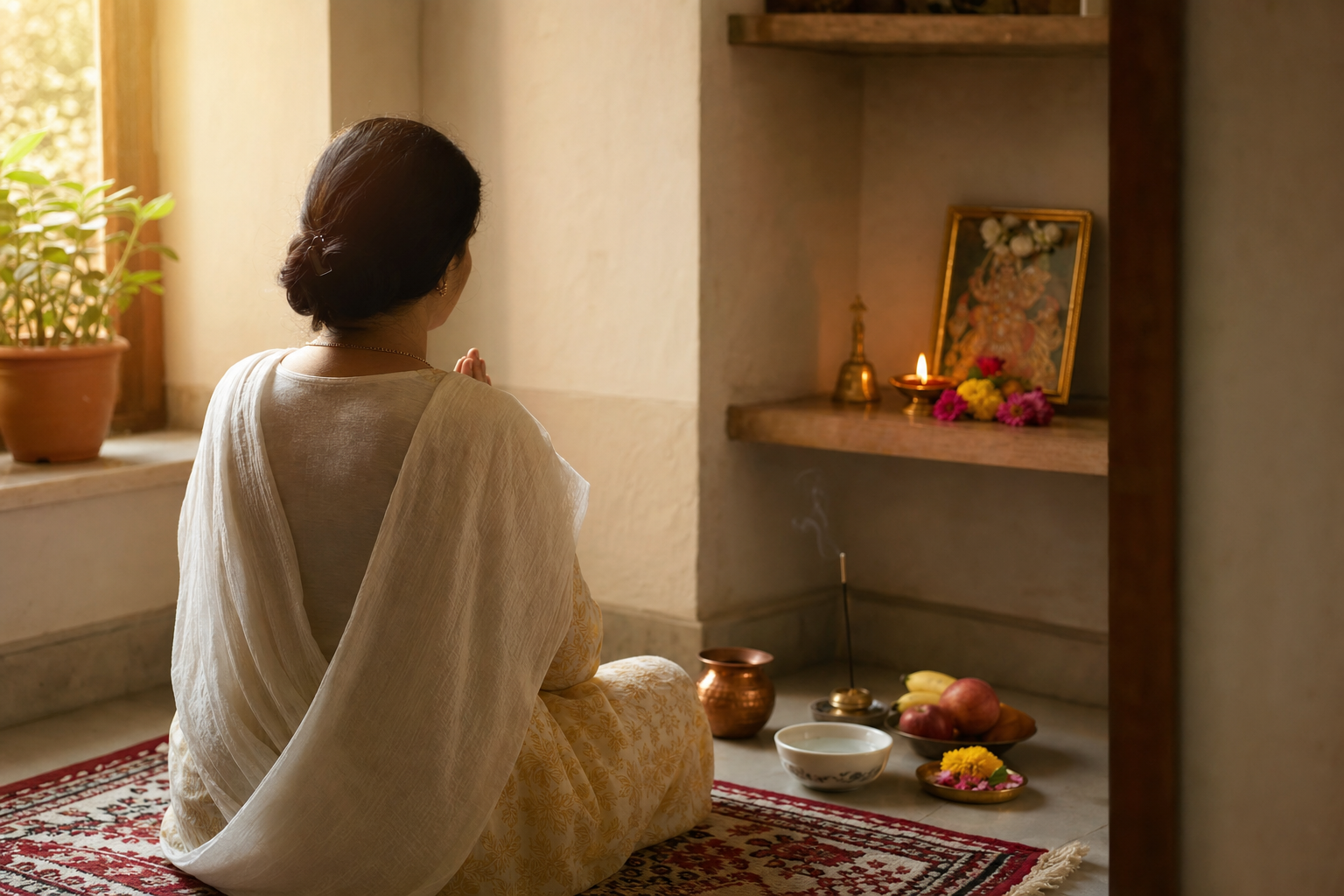
You do not need an elaborate ceremony to recognize the movement from Amavasya into Shukla Paksha. A simple household observance can preserve both sides of the transition without pretending that one universal ritual applies to every lineage.
- Confirm your local date and sunrise. Write your city or nearest calculation point at the top of your plan. This prevents you from accidentally using a Panchang prepared for a different location or time zone.
- Decide what you are actually observing. Separate an Amavasya vrata or ancestral observance from a general prayer for the beginning of Shukla Paksha. They are not interchangeable simply because the tithis touch on the same civil date.
- Clean the sacred space in the morning. Remove spent flowers and ash, clean the lamp area, and arrange only the items required for your normal household practice. The physical reset gives practical expression to Pratipada without adding invented ritual obligations.
- Keep the prayer proportionate. Perform your customary puja, japa, meditation, or recitation. If your family does not have a prescribed Pratipada practice, a sincere prayer for steadiness and right action is sufficient.
- Carry reflection into one constructive act. Amavasya is associated with introspection and dana, while Pratipada points toward renewal. You can honor both by making a charitable offering and then restarting one beneficial discipline you can realistically maintain.
- Light a deepa in the evening. Use the evening lamp as a quiet marker of the waxing phase. Keep the act within your household tradition rather than treating it as a substitute for a formal rite that requires additional Panchang details.
The most useful beginning is often small. Resume daily japa, restore a fixed prayer time, clear a pending act of seva, or bring regularity back to the home altar. Pratipada symbolizes a beginning, but dharmic renewal becomes meaningful through repetition after the first day.
What you must verify in a local Panchang

The 1:08 AM transition is enough to understand the broad shape of January 19, but it is not enough for a formal sankalpa or exact muhurta. These timings are described as local, yet no calculation city is specified. Even a correct time for one place should not be transferred casually to another.
- Location and time zone: Use the city where the observance will physically occur, not the city where the organizer lives or where a temple calendar was printed.
- Local sunrise: Sunrise can determine how a religious day is assigned when the governing rule requires the tithi present at sunrise.
- The rule for your observance: A vrata, temple festival, ancestral rite, and household puja may apply different tithi-selection rules. Confirm the rule before choosing the date.
- Nakshatra and Rashi: These details are not available in the timing information here. Do not guess them when preparing a formal sankalpa.
- Rahu Kalam and Yamaganda: Exact intervals vary with local daylight calculations. Obtain the windows for your city before scheduling an activity that your tradition avoids during them.
- Shubha muhurta: Do not infer a precise auspicious window merely from the presence of Pratipada. Check the complete local calculation or consult a trusted temple or qualified purohit.
- Travel: If you will cross a time zone before the ritual, calculate for the place where the ritual will be performed. A time saved from your home city may no longer apply.
This distinction matters most when the event cannot be moved easily. For a simple lamp offering or personal japa, a general understanding of the day may be adequate. For a samskara, major temple commitment, or ceremony involving several families, settle the city, tradition, and full Panchang details before invitations or travel arrangements are fixed.
Common mistakes to avoid on January 19
The first mistake is calling the whole day Amavasya because that tithi is present at midnight. It ends at 1:08 AM, so that label hides the Pratipada that governs the rest of Monday.
The opposite mistake is erasing Amavasya entirely because Monday morning falls under Pratipada. Its early-hours presence may still matter when determining the proper observance day under a specific rule. The correct response is not to choose the more convenient label; it is to apply the rule of the observance.
A third mistake is copying Rahu Kalam, Yamaganda, Nakshatra, Rashi, or a shubha muhurta from an undated social-media card. Those details can be location-sensitive, and some may change within the day. Match every timing to a named city and date.
Finally, avoid treating symbolic renewal as permission to schedule any major event. Shukla Paksha Pratipada offers a fitting framework for beginning again, but a symbolic theme and a technically selected muhurta answer different questions.
Key takeaways for January 19, 2026
- Monday begins under Amavasya, which lasts until 1:08 AM local time.
- Shukla Paksha Pratipada begins after 1:08 AM and governs the ordinary daytime portion of January 19.
- The later 1:59 AM endpoint is given without its associated calendar date, so verify it before planning beyond Monday.
- An Amavasya-specific observance may depend on sunrise or another prescribed period, not merely on the tithi appearing after midnight.
- Nakshatra, Rashi, Rahu Kalam, Yamaganda, and exact auspicious windows must be checked for your location.
- For a simple home observance, clean the sacred space, follow your customary prayer, offer dana if appropriate, and begin one sustainable discipline.
Before January 19 arrives, put your city, intended observance, and required tithi rule on one line. Then confirm those three details with a local Panchang or temple calendar. Once that is settled, you can meet the passage into Shukla Paksha with clarity instead of trying to force an entire lunar day into a midnight-to-midnight label.
References
