
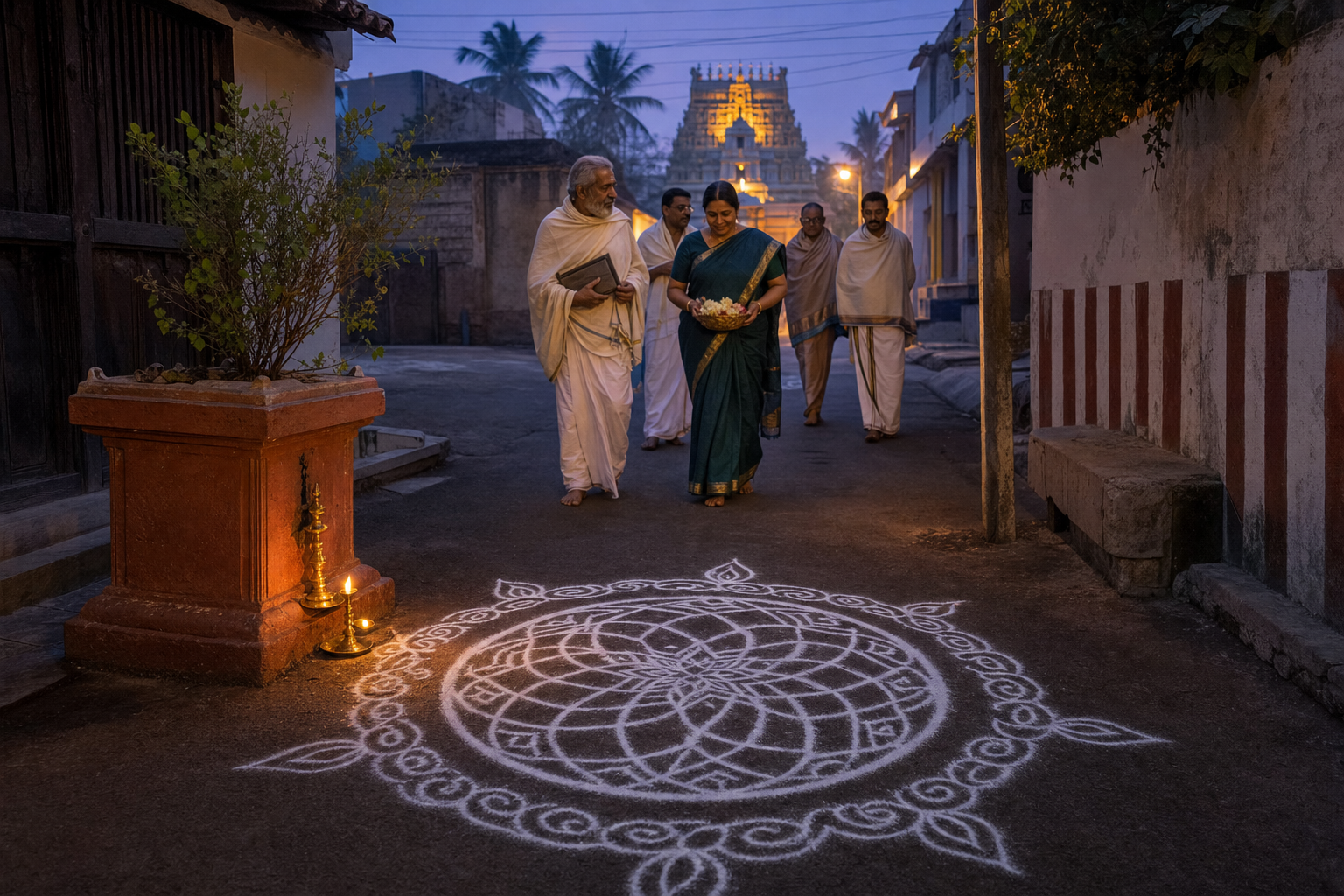
You want to keep Margazhi with sincerity, but work, family duties, changing sleep schedules, or unfamiliarity with the tradition may leave you unsure where to begin. The practical question is not how many observances you can fit into one early morning. It is which devotional rhythm you can honestly maintain through the season.
Pavai Nombu becomes manageable when you give each part a clear purpose: Tiruppavai for the mind, restraint for daily conduct, the kolam and household routine for continuity, and temple or neighborhood participation for community. You do not need to make every morning elaborate. You need a stable center to which you can return.
Begin with the vow, not the decorations
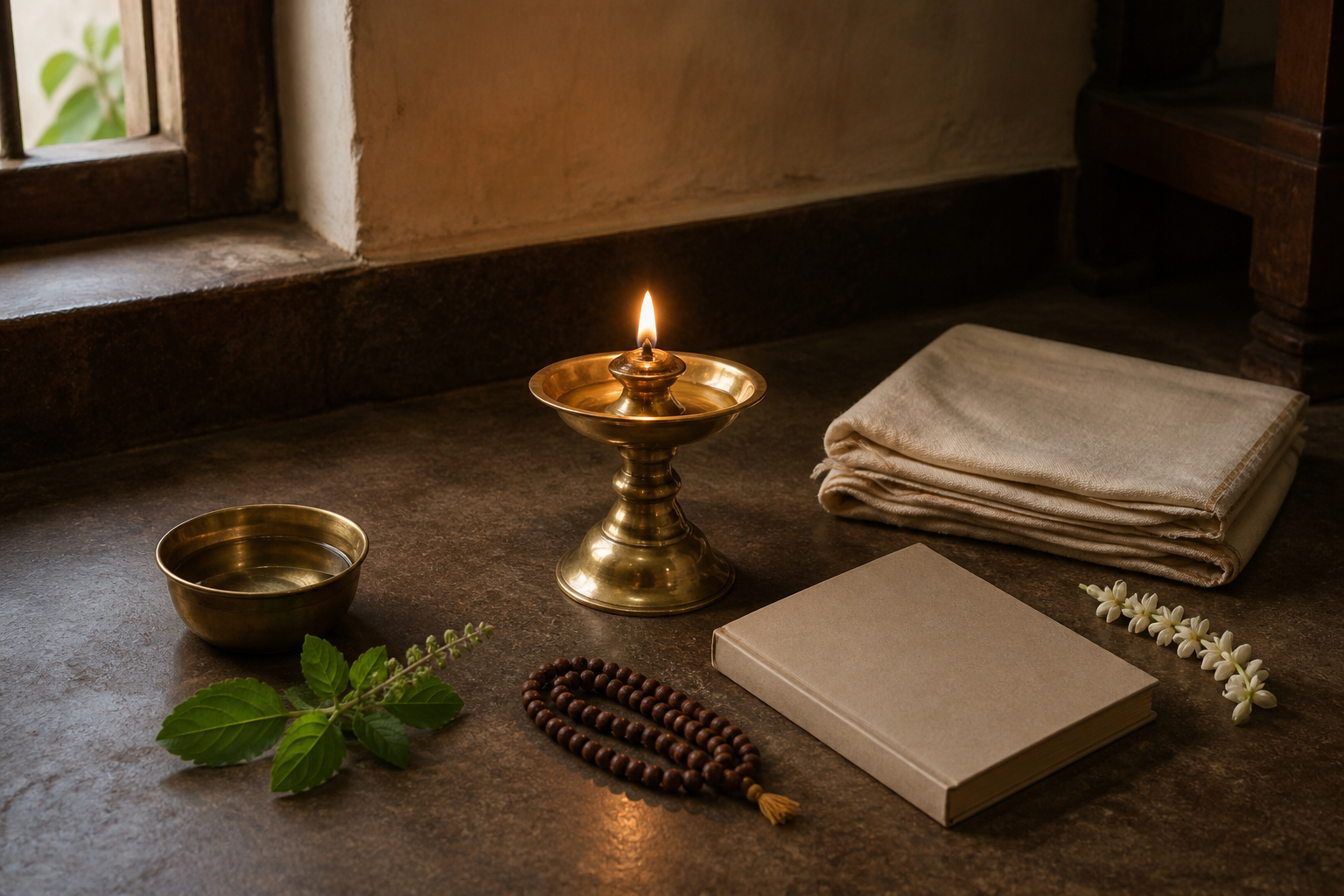
Pavai Nombu, also called Margazhi Nombu or Margali Nombu, is a month-long vrata associated particularly with Tamil culture and Vaishnava devotion. Its disciplines gather around devotion, self-restraint, simplicity, and participation with others. The visible customs matter, but they work best when they express the vow rather than replace it.
Before Margazhi begins, write one sentence describing what you are undertaking. A useful form is: During Margazhi, I will begin the day with worship and Tiruppavai, keep one clear discipline, and direct the benefit beyond myself. This forces you to decide what is essential before enthusiasm fills the month with more commitments than you can sustain.
- Choose a devotional anchor. Tiruppavai recitation is the natural center of this vrata. Decide whether you will recite at home, join temple singing, or combine the two according to your circumstances.
- Choose a restraint you can name. Sattvic food, moderation, and mindful living belong to the season. Do not leave the discipline as a vague intention to be better. State the actual habit you will keep.
- Choose a communal expression. This might be worship with your household, congregational singing, a recurring temple visit, a shared kolam practice, or a simple offering made without display.
- Identify the minimum daily form. Decide what you will still do on a difficult morning. A modest practice kept faithfully is more useful than an ambitious plan abandoned after its opening days.
Do not copy another devotee’s austerity merely because it looks more rigorous. Family custom, sampradaya, temple guidance, age, health, and household responsibilities can all shape a vrata. The general emphasis here is sattvic simplicity and moderation, not the invention of severe food restrictions. If your family follows more specific rules, learn those rules from someone qualified to explain them.
Dates need the same care. The 2025-2026 observance ran from 16 December 2025 through 14 January 2026, completing a 30-day cycle. Those dates belong to that calendar cycle; do not automatically reuse them for another year. Minor variations can arise from local panchangam calculations, so confirm the coming Margazhi with your temple or community calendar before fixing your household schedule.
Build a dawn routine that can survive an ordinary day
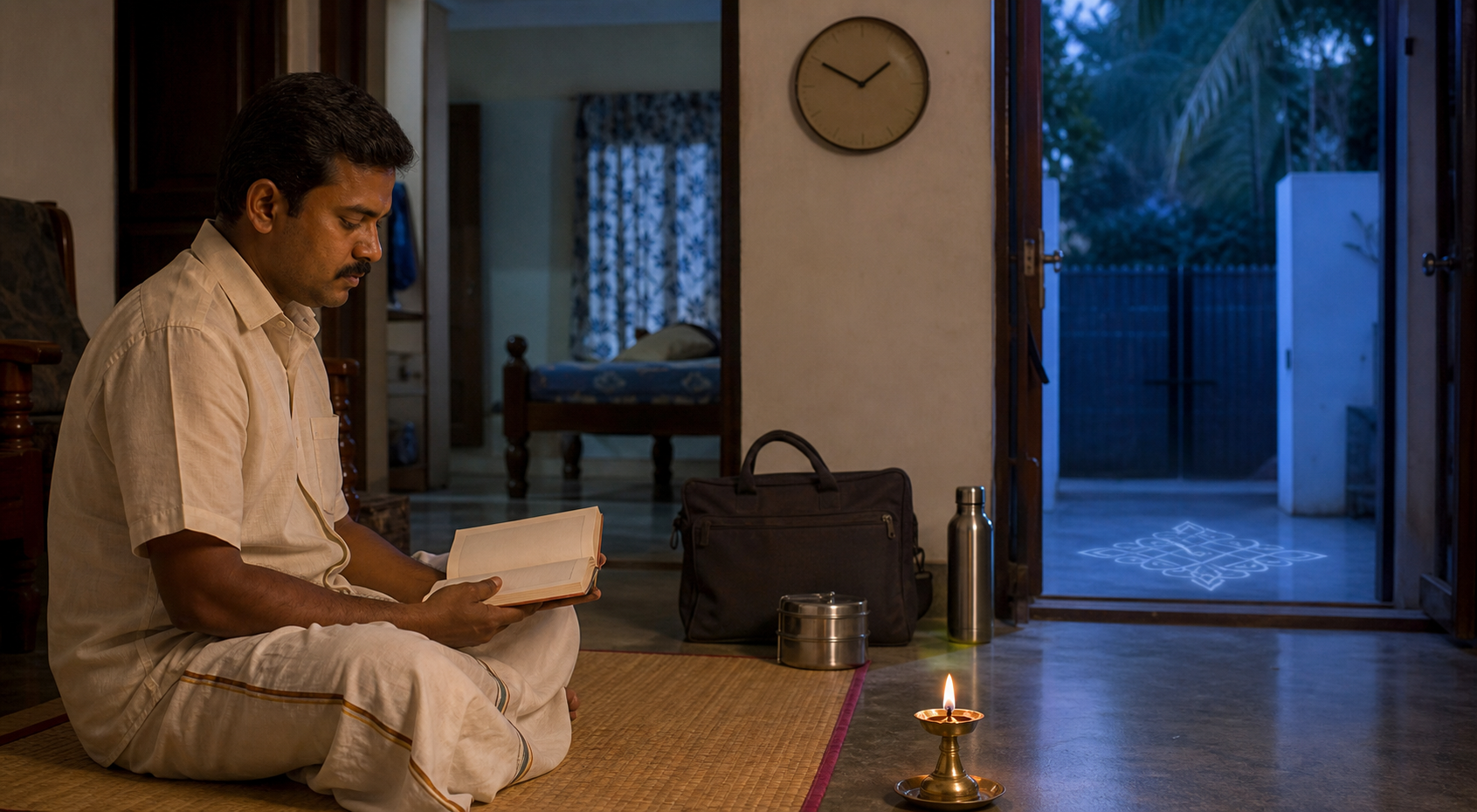
Pre-dawn worship during Dhanurmasa gives the season its distinctive rhythm. The difficulty is rarely understanding that dawn is sacred. It is protecting the practice when the rest of life remains ordinary. Reduce morning decisions by preparing the night before, and keep the sequence stable even when the presentation has to become simpler.
- Prepare before sleeping. Place your Tiruppavai text where you will use it, arrange any kolam materials, and agree on the household waking plan. A vrata becomes fragile when every small choice has to be renegotiated before dawn.
- Cross into sacred time deliberately. Wake before dawn, attend to necessary preparation, and keep the opening of the morning free from avoidable notifications and noise. The aim is not to manufacture a mood but to give worship your first undivided attention.
- Mark the threshold if this belongs to your practice. A kolam turns the entrance of the home into part of the observance. When rice flour is customary and suitable, the practice can unite devotional beauty with an eco-conscious offering rather than disposable ornament.
- Move from quiet attention into recitation. Begin with stillness or japa, then recite or sing Tiruppavai. If your temple has congregational singing, use it to strengthen rather than replace the household discipline.
- Carry the vrata into the day. Remember the restraint you chose when you eat, speak, work, and respond to other people. Otherwise the morning remains a devotional island with little effect on the hours that follow.
The routine should have a full form and a minimum form. On a spacious morning, you may make the kolam, worship with the family, recite attentively, and join a temple gathering. On a demanding morning, protect the core: arrive before the deity or sacred focus, recite Tiruppavai, and recommit to the day’s discipline. Extras may expand or contract; the center should remain recognizable.
If you miss a morning, do not use the lapse as permission to abandon the rest of Margazhi. Resume at the next opportunity. If you have undertaken a formally defined vow with rules concerning omissions, ask the elder, acharya, or temple authority who gave you those rules. A general household practice and a formally prescribed vrata should not be treated as though they carry identical obligations.
When pre-dawn observance is genuinely impossible because of work or care duties, be honest about the constraint. Preserve a stable daily period for Tiruppavai and restraint, while seeking local guidance about how your tradition accommodates the schedule. Flexibility should protect continuity, not become a reason to treat the time of observance as meaningless.
Honor the traditional marriage prayer without turning it into a gate
Pavai Nombu has a traditional association with kanyas, or unmarried girls, praying for an auspicious marriage and harmonious family life. That purpose deserves respect. It should not be mocked as obsolete, diluted until it means nothing, or used to make a young woman feel that her spiritual worth depends on a marriage timetable.
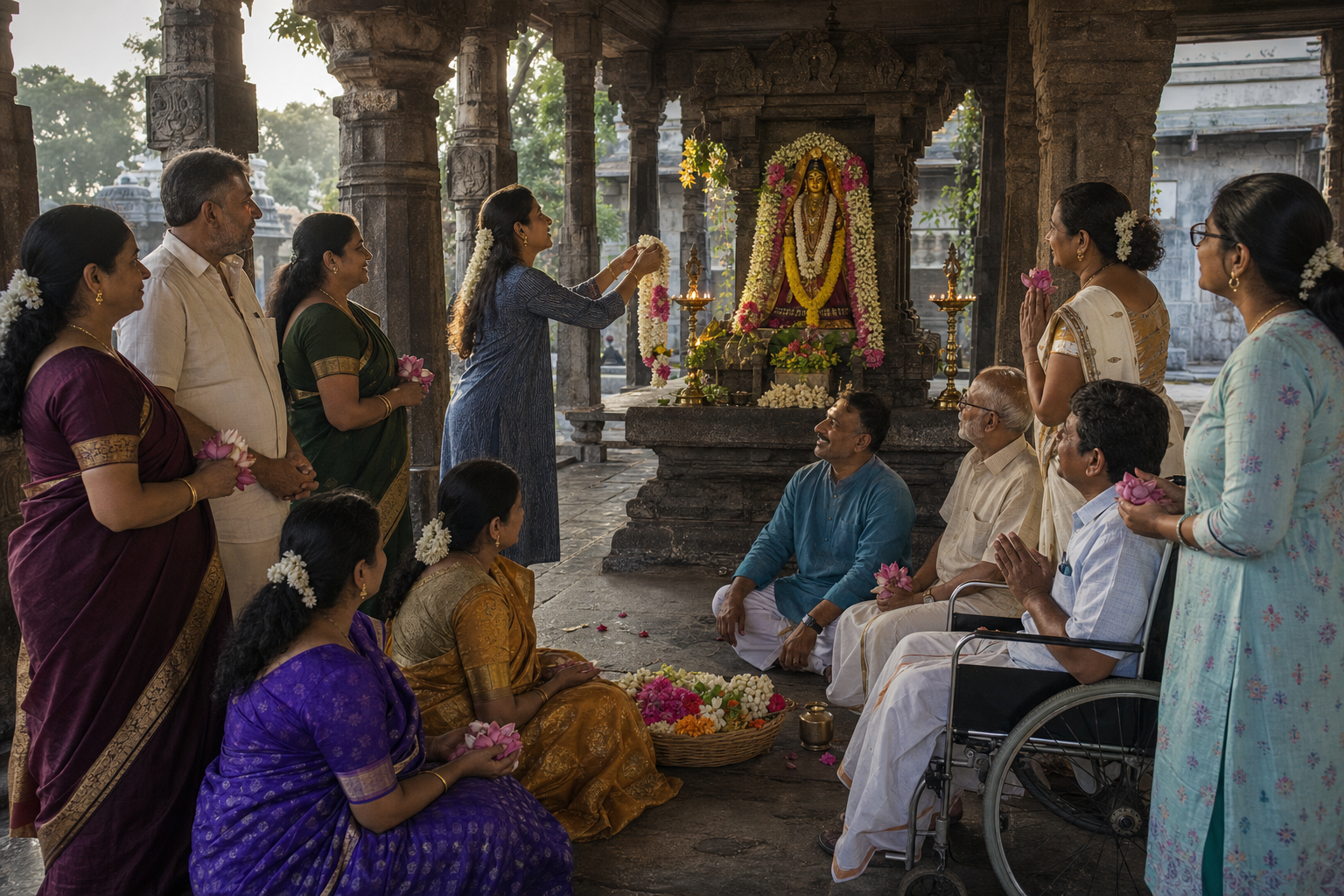
The older association also does not require you to exclude everyone else. Contemporary observance includes families and devotees across ages and genders. Men, married women, elders, children, and household groups can participate through bhakti, self-discipline, prayer for family well-being, and service to communal harmony.
The right balance is neither gatekeeping nor erasure. If an unmarried girl undertakes the vrata with marriage as her prayer, support that intention without interrogation or pressure. If another devotee undertakes it for spiritual steadiness, household harmony, or collective welfare, do not dismiss the observance as inauthentic merely because the prayer differs.
Within a family, invite participation in ways suited to each person. One member may make the kolam, another may lead the recitation, and a child may listen or join the congregational singing. The goal is not to stage a flawless household scene. It is to let each person encounter sacred time and responsibility in a form that can mature with them.
Parents should be especially careful with the language of marriage. Present the traditional prayer as a blessing sought within dharma, not as a performance target or a remedy for family anxiety. A vrata meant to cultivate devotion should not become a vehicle for comparison, shame, or pressure.
Let a distinctly Tamil vrata create honest Dharmic fellowship
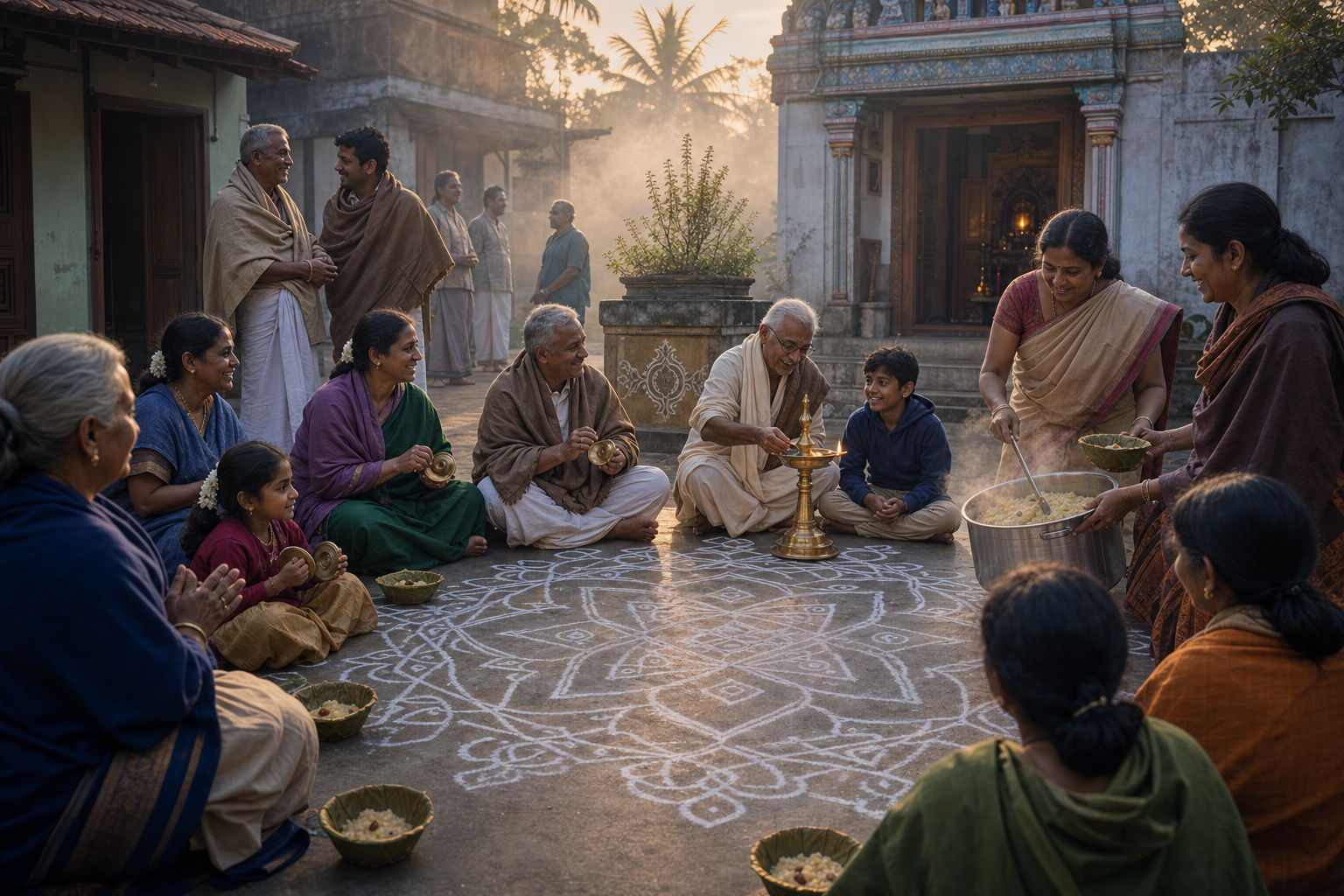
Margazhi changes character when dawn devotion moves between home, temple, and neighborhood. A household may keep the daily anchor, while congregational recitation gives individual discipline a communal sound. Kolams make sacred time visible at the threshold. Simple offerings and moderated consumption keep attention on worship rather than display.
You can strengthen that communal dimension without organizing an elaborate event. Coordinate a recurring morning when nearby families can recite together. Help an elder obtain the text or reach the temple. Invite children to learn the sequence of the morning. Keep offerings simple enough that households with different means can participate without embarrassment. Do not compare the severity of people’s restraints as though devotion were a public ranking.
This is also where Dharmic unity needs precision. Pavai Nombu remains Tamil and Vaishnava in expression; its integrity does not depend on pretending that every Dharmic observance is the same. At the same time, its commitments to restraint, compassion, and contemplative practice have recognizable resonances with Jain upavasa, Buddhist Uposatha, and Sikh Amrit Vela and Nitnem.
Resonance is not identity. These traditions have their own teachings, purposes, authorities, and forms. You can recognize a shared ethical grammar without collapsing those differences. That is a stronger basis for fellowship than vague claims that all practices are interchangeable.
When explaining the season to a child or a neighbor from another Dharmic path, begin with the particular and then name the kinship: this is a Tamil Vaishnava vrata centered on Margazhi dawn devotion and Tiruppavai; other Dharmic communities also preserve disciplined fasting, restraint, prayer, and sacred early-morning practice in their own ways. Confidence in one’s inheritance and respect for another’s inheritance can stand together.
The social test of the month comes after recitation. If a household becomes calmer, more considerate, less wasteful, and more willing to include others, the dawn discipline is entering daily life. If the observance produces display, rivalry, or contempt for people following a simpler routine, return to the vow and correct the direction.
Key takeaways for keeping Pavai Nombu faithfully
- Confirm the applicable Margazhi dates with a local panchangam or temple calendar instead of copying dates from a previous cycle.
- Center the daily practice on pre-dawn worship, Tiruppavai recitation, and a clearly chosen form of self-restraint.
- Prepare the night before and define a minimum daily form so that an ordinary difficult morning does not end the whole observance.
- Treat sattvic simplicity and moderation as disciplines, not as an invitation to invent unsafe or competitive austerities.
- Honor the traditional prayer of unmarried girls while welcoming sincere participation by devotees of every age and gender.
- Use family and temple participation to build community, while keeping Pavai Nombu’s Tamil Vaishnava identity clear.
- Recognize parallels with Jain, Buddhist, and Sikh disciplines without claiming that distinct Dharmic observances are identical.
Before your next Margazhi begins, make the first decision now: obtain the Tiruppavai text you will actually use, confirm the calendar locally, and write down the restraint you intend to keep. When the first morning arrives, you will not need to design a spiritual program. You will only need to begin.
References
