
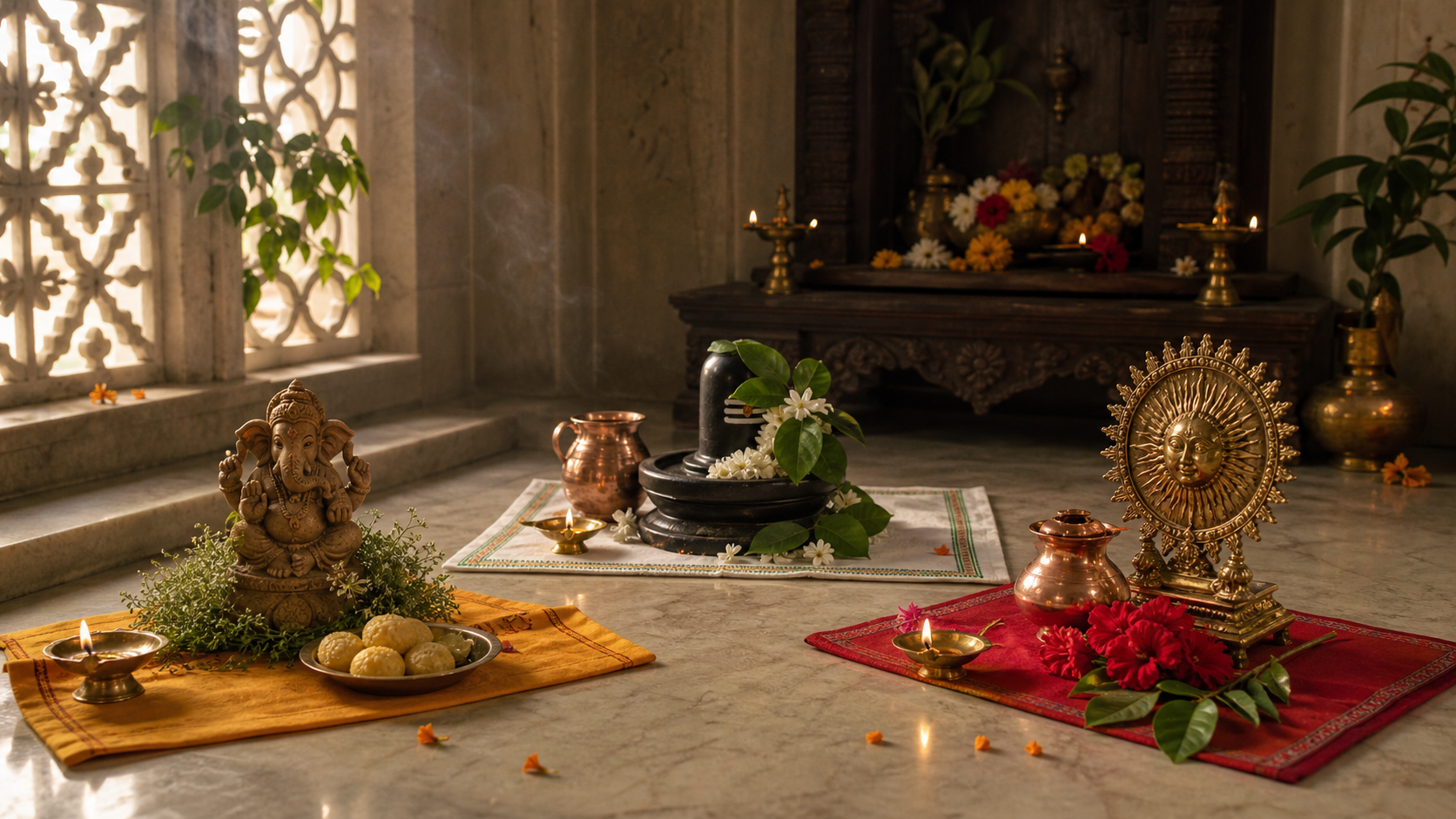
You want to honor Ganesha, Surya, and Shiva during Chaitra, but keeping all three vratas does not mean repeating one generic fast three times. Damanak Chaturthi belongs to the midday rhythm of Chaturthi, Arka Shashti begins with sunrise, and Anang Trayodashi reaches its devotional center during Pradosha.
The practical task is to give each deity the right time, offering, and inner discipline without making the month unmanageable. The plan below shows you what can be prepared once, what must remain distinct, and how to choose a vrata you can complete with steadiness.
The three vratas run on three different ritual clocks
A tithi is not a midnight-to-midnight date. It follows the changing angular relationship between the Sun and Moon, with each lunar day corresponding to another 12 degrees of separation. That is why a tithi can begin or end in the middle of a civil day, and why the relevant worship window matters as much as the printed date.
| Vrata | 2026 reference date | Lunar basis | Primary ritual window | Devotional emphasis |
|---|---|---|---|---|
| Ganesha Damana Puja | March 22 | Chaitra Shukla Chaturthi in the Amavasyant calendar | Madhyahna, when Chaturthi prevails during the local midday period | Removing impediments, clarifying intention, and beginning well |
| Arka Shashti Vrata | March 24 | Chaitra Shukla Shashthi | Sunrise arghya followed by morning worship; regional practice generally gives weight to Shashthi at sunrise | Vitality, lucid action, and protective prayers for family welfare |
| Anang Trayodashi | March 30 | Chaitra Shukla Trayodashi | A daytime vrata with Shiva worship during Pradosha, subject to the sunrise and Pradosha rules followed by the local parampara | Bringing desire, affection, and household relationships under dharmic discipline |
Those dates are a reference for the 2026 Chaitra cycle, not dates to reuse every year. They can also differ outside India. Longitude, latitude, and daylight-saving adjustments can change how a tithi overlaps sunrise, midday, or sunset in your location.
Use this four-step check before putting any vrata on your calendar:
- Set the panchang to the city where you will actually perform the vrata. Do not copy the clock time listed for another city.
- Look for the relevant tithi and ritual window together: Chaturthi at Madhyahna, Shashthi at sunrise, or Trayodashi during the rule used by your family, with Pradosha retained for Shiva-archana.
- If the tithi touches two civil dates, follow the selection rule of your regional panchang or temple rather than choosing the more convenient date yourself.
- If accepted panchangs differ, stay with your family sampradaya or the temple where you will worship. Consistency within a living parampara is more useful than switching rules from one vrata to the next.
Prepare one common altar kit, then add three distinct offerings
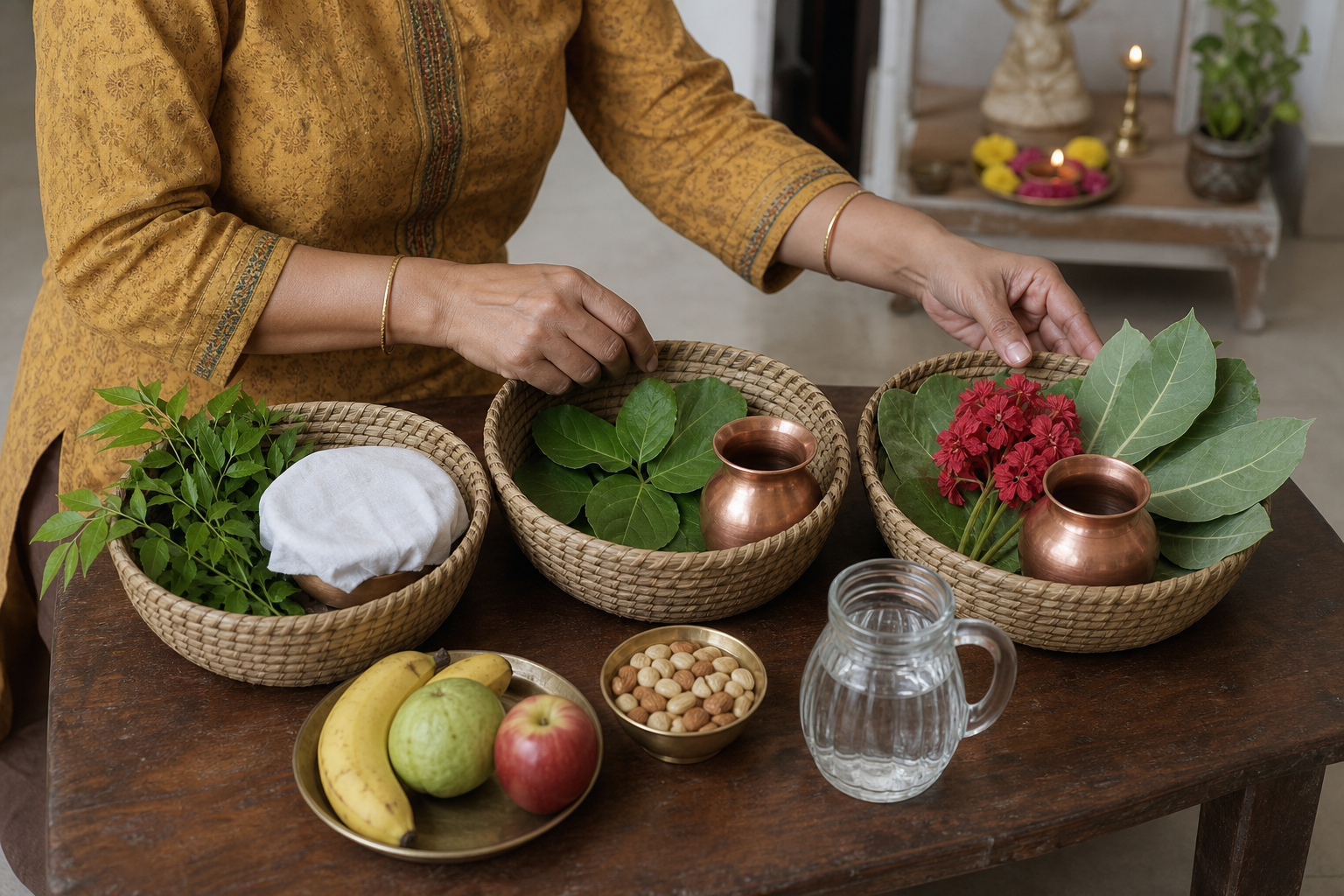
You do not need three elaborate shopping lists. Build a modest common kit, then obtain the perishable leaves and flowers close to the appropriate day.
- Clean water and a suitable vessel for offerings or abhisheka
- A stable lamp, incense, sandalwood paste, akshata, and clean cloth
- Seasonal flowers, fruit, and a sattvic sweet or other family naivedya
- A clean image or murti appropriate to the vrata
- A written note of your date, location, deity, intention, and chosen fasting discipline, so that the sankalpa is clear before the puja begins
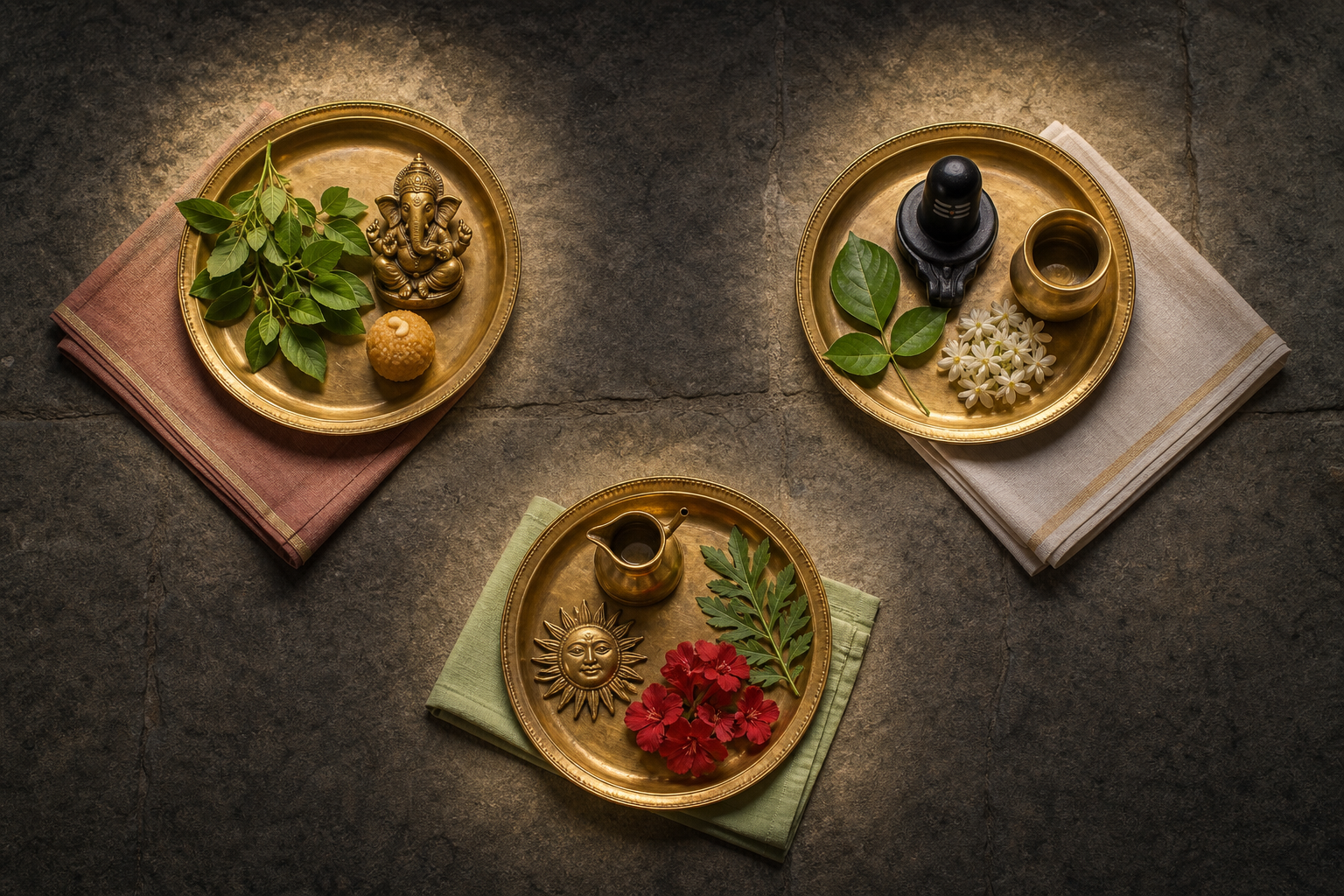
For Ganesha: Dhavanam is the defining Chaitra offering
Ganesha Damana Puja uses Dhavanam, also called Davana or Damanak in regional practice. The plant is identified as Artemisia pallens, an aromatic herb cultivated widely in South India. Obtain fresh, responsibly grown sprigs if you can. A Dhavanam garland is convenient, but loose sprigs are sufficient for a simple home puja.
Some households offer 21 sprigs or garland sections. The count is connected with five elements, ten senses, five vital airs, and the mind. Treat 21 as a meaningful regional practice, not as a condition that invalidates your worship if your family paddhati uses another arrangement. Durva may accompany Dhavanam where customary. Modaka, undrallu, kadubu, karanji, fruit, or a jaggery preparation can serve as naivedya according to local food tradition.
For Surya: handle Arka leaves as ritual material, not ordinary foliage
Arka Shashti centers on Arka leaves, identified as Calotropis procera and known regionally as aak, rui, akanda, or erukku. You will also need a vessel for sunrise arghya, preferably copper where that is your practice, along with a Surya image, solar disc, or Navagraha representation. Red or saffron cloth and red or orange flowers suit the solar orientation of the worship.
Arka requires a real safety precaution: its milky latex is caustic. Keep it away from your eyes and broken skin, and wash your hands after handling it. Pluck sparingly without damaging the plant. If Arka is unavailable, some traditions permit a symbolic offering of red or orange flowers or leaves; confirm the substitute with your family elder, acharya, or temple instead of assuming that any leaf is interchangeable.
For Shiva: keep Bilva central and Rati-Kamadeva complementary
For Anang Trayodashi, prepare a Shivalinga or Shiva murti, Bilva Patra, clean water, and the five Panchamrita ingredients: milk, curd, ghee, honey, and sugar. Add sandalwood paste, incense, a lamp, suitable flowers, fruit, and sattvic naivedya. White flowers are commonly chosen for Shiva.
The Rati-Kamadeva dimension may be marked with fragrant blossoms, sandalwood, and sugarcane, whose form recalls Kamadeva’s bow. This part of the observance sanctifies kama rather than indulging it without measure. It belongs within Shiva’s field of tapas and self-command. If your family observes Anang Trayodashi only through Shiva-archana, follow that inherited form rather than adding an unfamiliar rite merely for completeness.
Keep all three observances ecologically light. Avoid plastic garland thread, obtain only the quantity of leaves you will offer, distribute edible naivedya as prasad, and compost suitable botanical remains. The offering should express stewardship as well as devotion.
Perform each vrata in its own rhythm
Damanak Chaturthi: make Madhyahna the center
Damanak Chaturthi is a bright-fortnight Vinayaka Chaturthi. It is not Sankashti Chaturthi, which falls in the dark fortnight and is organized around moonrise. For Damana Puja, do not postpone the principal worship while waiting for the Moon; reserve the local Madhyahna window.
- Bathe, clean the altar, and make a sankalpa identifying the place, tithi, and purpose of the vrata.
- Invoke Sri Ganesha with Om Gam Ganapataye Namah.
- Offer water or perform a simple Panchamrita abhisheka if your murti and family practice permit it.
- Apply sandalwood and kumkuma, then adorn Ganesha with Dhavanam. Add Durva if it belongs to your customary worship.
- Perform archana with the Ganesha Ashtottara Shatanamavali or a shorter Ganesha stotra you already know. A concise, attentive recitation is preferable to rushing through a longer text.
- Offer modaka or your regional naivedya, followed by karpura arati and prayer for buddhi, siddhi, and auspicious progress.
- Share the prasad and carry one clarified intention into the work or undertaking for which you sought Ganesha’s grace.
Arka Shashti: begin at sunrise and complete the puja in the morning
The governing rule is the presence of Shashthi at local sunrise. Prepare the arghya vessel the previous evening so that searching for materials does not consume the short dawn period.
- Rise early, bathe, and establish a clean place from which you can offer water respectfully to Surya.
- At sunrise, offer arghya and recite Om Suryaya Namah or Om Adityaya Namah.
- Make the vrata sankalpa. Kalasha sthapana may follow, and Surya may be invoked in an image, copper solar disc, or Navagraha representation.
- Proceed through Shodashopachar, the sixteen honors: invitation and seat; the ritual waters; bathing where appropriate; gandha and akshata; the leaf or flower offering; incense and lamp; naivedya; and the concluding honors.
- Offer the Arka leaves carefully during the patra or pushpa portion of the worship. Avoid contact with any fresh latex.
- Continue with your chosen Surya practice, such as Gayatri japa, Surya Ashtakam, Aditya Hridayam, or a measured sequence of Surya Namaskar.
- Conclude with pradakshina and kshamapana, then preserve the day’s solar quality through punctual, disciplined action rather than treating sunrise worship as an isolated ritual.
Anang Trayodashi: let Pradosha gather the day’s discipline
Anang Trayodashi joins Shiva’s mastery of desire with the householder’s duty to make affection truthful, restrained, and sustaining. The Kama Dahana account gives the vrata its inner logic: desire is not allowed to command consciousness, yet love is not discarded. It is refined and returned to dharma.
- Begin after bathing with a daytime sankalpa and the fasting discipline appropriate to your capacity.
- Keep the day sattvic. Practice truthfulness, ahimsa, restraint of the senses, and particular care in speech with the people whose well-being is included in your prayer.
- During Pradosha, bathe the Shivalinga with clean water or Panchamrita according to your practice.
- Offer Bilva Patra, flowers, sandalwood, incense, lamp, and naivedya. Recite a familiar Shiva stotra or perform Shiva-mantra japa.
- Reflect briefly on Kama Dahana. If your parampara includes Rati and Kamadeva, offer fragrant flowers, sandalwood, and sugarcane with a prayer that affection remain aligned with fidelity, mutual respect, and self-command.
- Complete arati and prarthana, then perform parana at the time prescribed by your local tradition.
A single Anang Trayodashi observance and a year-long vrata are not the same commitment. The extended form repeats the observance on each Shukla Trayodashi from Chaitra through a lunar year and ends with udyapana, which can include fuller Shiva worship, stotra recitation, feeding guests, dana, or community service. Make that longer sankalpa only if you can maintain it. Do not casually promise a year and then treat the monthly observances as optional reminders.
Choose a fasting rule you can keep without harming yourself
Vrata does not mean that the harshest available fast is automatically the most dharmic. Nirjala, phalahara, and a light sattvic meal are different disciplines for different capacities and paramparas. The purpose is sustained attention and self-regulation, not dehydration or physical collapse.
- Choose nirjala only when it is already part of your established practice and your health permits it.
- Choose phalahara when fruit, water, or another permitted light intake will let you remain prayerful and functional through the proper worship window.
- Choose a light sattvic meal when your tradition permits eating after the puja or when a stricter fast would be unsafe.
People with medical conditions, pregnant women, and elderly devotees should adapt the fast and seek qualified health guidance when needed. Do not stop prescribed treatment to keep a vrata. Ritual austerity is not a substitute for medical care, and a sincere adapted observance preserves the vow more faithfully than a dangerous display of endurance.
The breaking time also follows the specific observance. Arka Shashti practice can permit a light sattvic meal after the morning puja. Anang Trayodashi parana may follow the evening worship or occur the next morning where the local rule prescribes it. Damanak Chaturthi should not inherit Sankashti’s moonrise rule simply because both observances use the word Chaturthi.
Make the inner vrata concrete. Choose one discipline you can notice during the day: refrain from harsh speech, limit distracting media, finish a neglected duty, share prasad, or make a modest act of dana. This is where the three observances meet. Ganesha clears confused intention, Surya calls you into lucid action, and Shiva asks whether desire has been placed under wise command.
Key takeaways
- Use a city-specific panchang. A civil date alone cannot tell you whether Chaturthi governs Madhyahna, Shashthi governs sunrise, or Trayodashi aligns with your Pradosha rule.
- Keep the offerings distinct: Dhavanam for Ganesha, carefully handled Arka leaves for Surya, and Bilva with Panchamrita for Shiva.
- Do not confuse Damanak Chaturthi with the moonrise-centered Sankashti observance.
- Treat the Rati-Kamadeva worship on Anang Trayodashi as a sanctification of affection under Shiva’s discipline, following your family custom.
- Select a fast that preserves concentration and health. The integrity of the sankalpa matters more than choosing the most severe option.
- Make a separate, deliberate decision before undertaking the year-long Anang Trayodashi vrata and its concluding udyapana.
For your next Chaitra, create three calendar entries only after the local panchang is available. Put the ritual window in the entry title, list the one special offering you must obtain, and decide the fasting level in advance. When the day arrives, your attention can remain with the deity instead of the logistics.
References
- DharmaRenaissance Blog – Anang Trayodashi 2026: Auspicious Date, Lord Shiva Puja Vidhi, and Year-Long Vrat Guide
- DharmaRenaissance Blog – Ganesha Damana Puja 2026: Damanak Chaturthi Date, Dhavanam Significance, Complete Vidhi
- DharmaRenaissance Blog – Arka Shashti Vrata 2026: Radiant Surya Worship with Arka Leaves, Date, Vidhi, Benefits
