

You are standing at a puja counter, or scrolling through rows of polished beads, and every mala seems to promise peace, focus, protection, or spiritual power. The useful question is simpler: what practice will this mala help you keep when enthusiasm fades?
Choose according to your mantra, sampradaya, vow, and daily routine. Then learn how to use the beads without rushing, superstition, or exaggerated health expectations. A modest mala used faithfully will serve you better than an impressive one that remains in its pouch.
Choose the practice before you choose the material
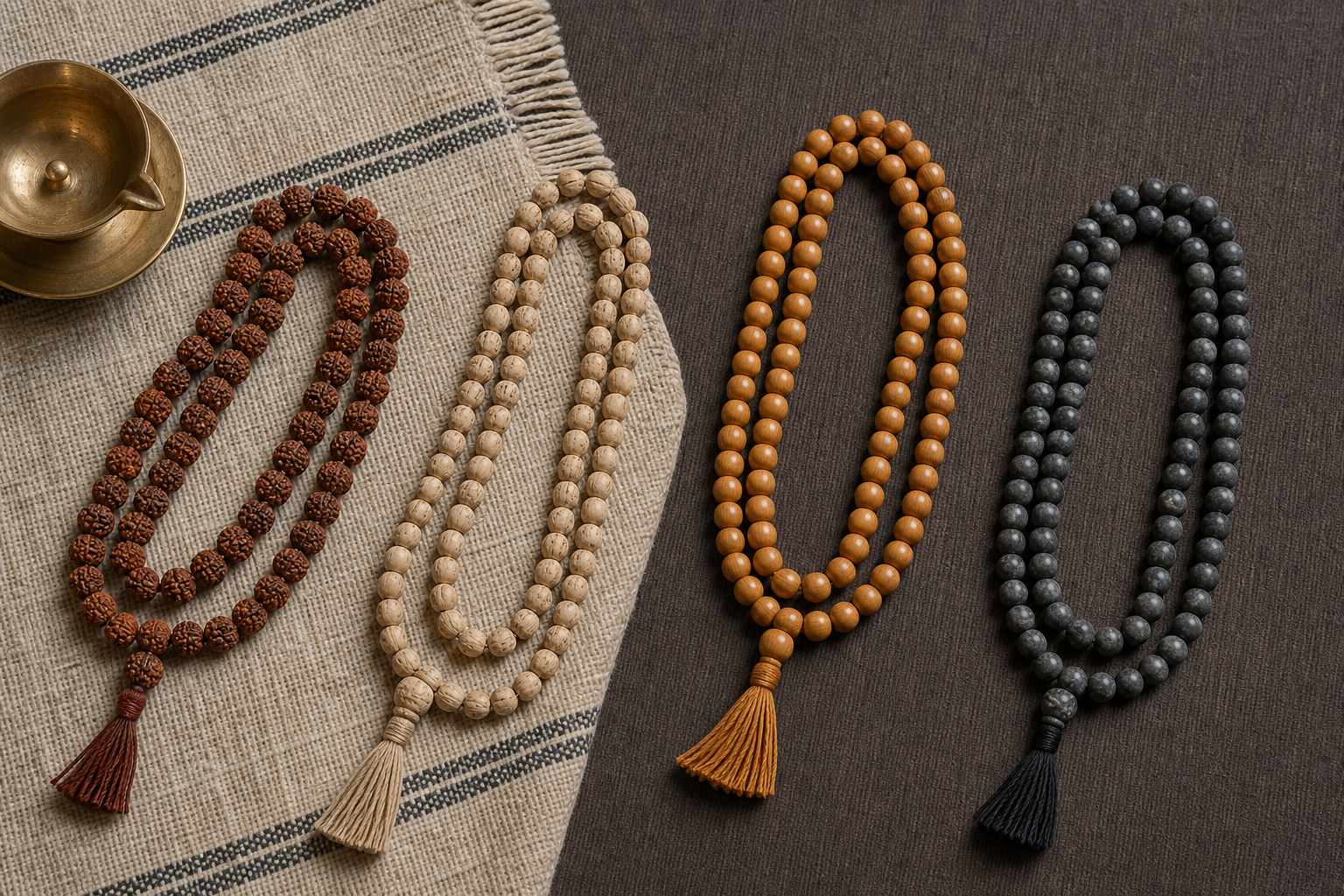
A sacred material carries associations, but it does not choose your intention for you. Tulasi wood is especially connected with purity, devotion, protection, and remembrance of Sri Krishna or Lord Vishnu. It also has a living place in the preparatory observances of many Ayyappa pilgrims. Sphatik is natural clear quartz, traditionally valued for purity, a cool tactile quality, and the mental clarity it symbolizes.
There is no universal ranking in which one material is spiritually superior for every person. The relevant distinction is fit:
| Mala | When it is a natural fit | What to verify |
|---|---|---|
| Tulasi | Your japa is rooted in Vaishnava devotion, you recite the names of Vishnu or Krishna, or Tulasi is prescribed for your Ayyappa vratham. | The wood is respectfully sourced, the stringing is sound, and you understand any observance attached to wearing it. |
| Sphatik | You want a durable tactile focus for japa or quiet contemplation without adopting a specifically Vaishnava material. | The quartz has plausible natural variation, the beads move comfortably, and the meru is easy to identify. |
| Rudraksha, Bodhi seed, or Chandan | Your teacher, family practice, temple community, or contemplative tradition already gives that material a defined place. | Follow that tradition’s instructions rather than transferring rules from a Tulasi or Sphatik practice. |
If a guru, acharya, elder, or established pilgrimage community has already specified a mala, that instruction settles the shopping decision. If you are beginning independently, first select the mantra you can recite consistently. Choose the material only after you can finish this sentence: This mala will support my practice of ______.
Beads appear in Hindu, Buddhist, Jain, and Sikh devotional settings, but that does not make their disciplines interchangeable. A Hindu mantra, Buddhist recitation, Jain Namokar Mantra, and Sikh simran arise within distinct teachings and forms of reverence. Their common ground is the deliberate return to remembrance and inner steadiness, not a single universal bead ritual.
Turn 108 beads into a repeatable japa practice
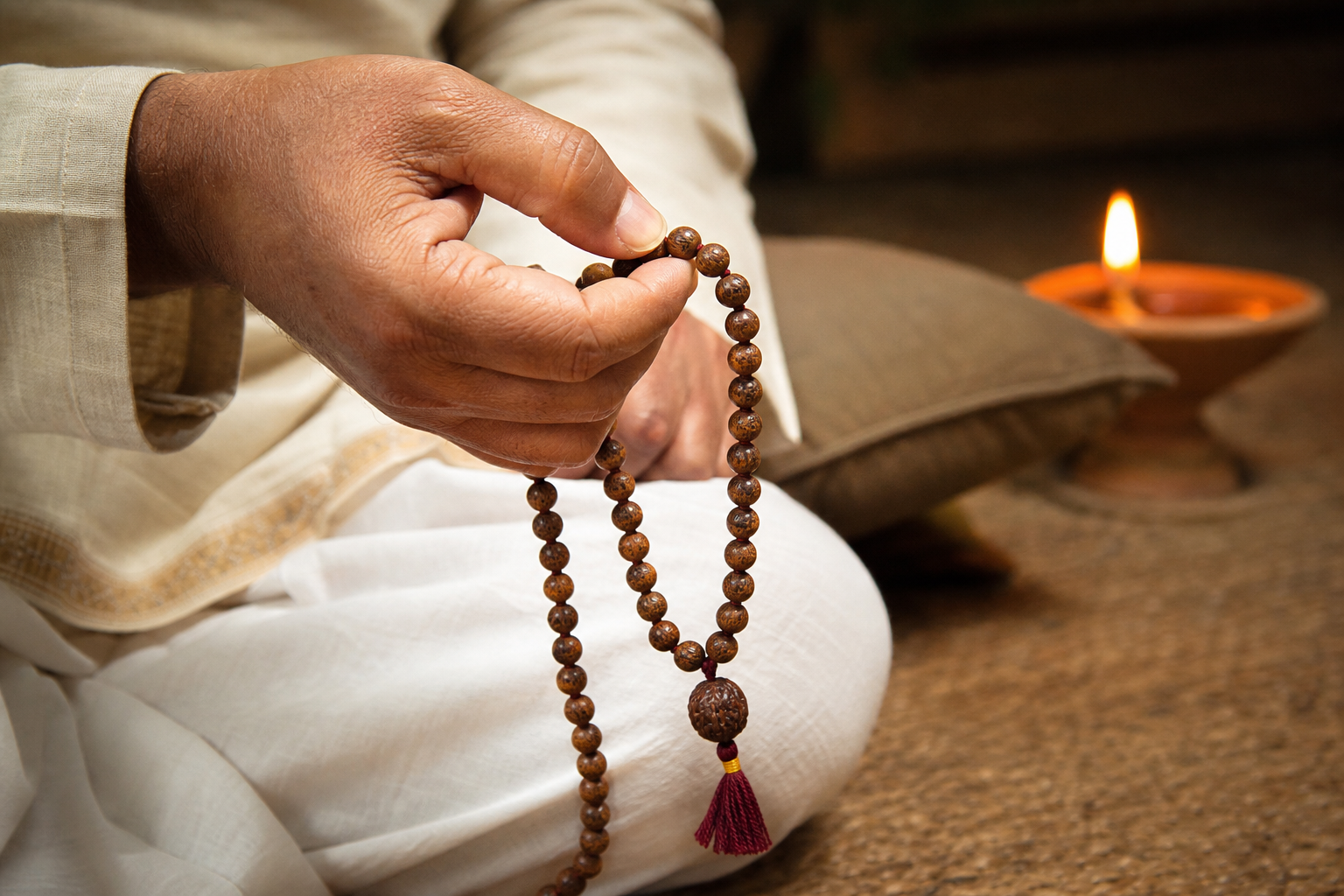
A Sphatik japa mala commonly has 108 counting beads and a distinct meru bead. The meru marks the boundary of a round; it is not an extra repetition. The standard method is to complete one mantra on each bead and, on reaching the meru again, turn the mala rather than crossing over it.
Use this sequence until it becomes uncomplicated:
- Choose one mantra for the round. Avoid changing mantras whenever the mind becomes restless.
- Sit in a stable position, either in a comfortable floor posture such as sukhasana or upright on a chair. Keep the breath natural rather than forcing it to match the length of the mantra.
- Begin with the bead beside the meru. Complete the full mantra, then move to the next bead.
- When attention wanders, return at the bead currently in your fingers. You do not need to restart the round as a punishment for distraction.
- When you reach the meru, stop. If you are continuing, reverse direction and begin another round without passing over it.
- Practice at a consistent time in a clean, quiet place. Regularity trains the mind to settle before the first repetition is complete.
Hand and finger conventions can differ among lineages. If you have received specific instruction, keep it. The essential discipline is not to turn secondary etiquette into an excuse for postponing japa.
Rushing usually becomes visible near the end of a round: pronunciation blurs, the grip tightens, and the beads begin to function like a countdown. When that happens, slow the next repetition instead of trying to recover the lost pace. If your available time repeatedly makes a full round hurried, decide on a shorter count before beginning. An honestly chosen count preserves attention; an ambitious count completed mechanically trains haste.
The bead should move only after the complete repetition. That small rule solves two common problems at once: it prevents uncertain counting and gives the hand a clear job while the mind attends to the mantra. A well-made mala therefore helps concentration through rhythm and touch, not by doing the inner work on your behalf.
For an Ayyappa pilgrimage, let the mala govern conduct

For many Ayyappa devotees, wearing Tulasi Mala marks the beginning of vratham before the journey to Sabarimala. The beads are an outward sign of an inward undertaking: simpler living, restraint in speech, disciplined food choices, service, and daily prayer. The pilgrimage mala has done its job when it changes conduct before it reaches sacred geography.
Do not treat the moment of wearing it as the entire sankalpa. Make the resolve concrete:
- Name the daily prayer or Ayyappa remembrance you will actually perform.
- Decide how restraint in speech will work when you are irritated, contradicted, or tired.
- Identify the simplicity expected in your food and routine through the pilgrimage tradition you are following.
- Choose a real form of service rather than leaving seva as a general sentiment.
- Confirm observances with the elder, guru, temple, or pilgrimage community guiding your vratham, especially where local customs differ.
The mala can then serve as an immediate checkpoint. Before harsh speech, unnecessary indulgence, or a careless decision, notice it, pause, remember Ayyappa, and ask whether the next action belongs inside the vow. That is more useful than repeatedly touching the beads while leaving habitual conduct unchanged.
It also creates visible fellowship. Other devotees recognize that you are participating in a disciplined journey, which can encourage patience, humility, and mutual support. Yet visibility raises the standard rather than lowering it. A sacred sign worn in public should make ethical inconsistency harder to excuse.
Do not improvise rules about putting on, removing, or concluding a pilgrimage mala from a general shopping description. Follow the same community or lineage through which you began the vratham. The mala belongs within that observance, not above it.
Measure mental clarity by attention and conduct
Mental clarity is too vague if it only means that a bead looks pure or feels spiritually impressive. Give it observable meaning. During japa, can you remain with the mantra for longer stretches? Can you notice distraction sooner without becoming frustrated? Outside japa, does remembrance create a pause before reactive speech or impulsive action?
Sphatik may feel cool to the touch, and many practitioners associate its transparent or milky appearance with calm, balance, and one-pointedness. These are traditional and experiential reasons for choosing quartz, not proof that crystal independently treats anxiety, insomnia, or another health condition. The tactile rhythm, steady breathing, repeated mantra, and regular contemplative routine are inseparable from the experience.
The same distinction matters with Tulasi. Ayurveda values Tulasi leaves as aromatic and uplifting, but wearing wooden Tulasi beads is not a way of receiving a medical dose. Any improvement you notice in calm, routine, or sleep habits may arise indirectly from regular prayer, slower breathing, and contemplative discipline. Do not turn that possibility into a medical guarantee attached to the necklace.
If anxiety, low mood, sleep difficulty, or another health concern persists or interferes with daily life, seek qualified medical or mental-health care. Keep the mala as a spiritual support if it helps, but never use it to replace assessment or treatment. If wearing any mala irritates your skin, remove it or wear it over clothing rather than enduring the reaction as a test of devotion.
Inspect construction, reject medical promises, and care for the beads
Natural Sphatik need not look flawless. Genuine quartz can be clear or slightly cloudy and may contain fine inclusions, internal lines, or veil-like features. It commonly feels cool when first touched. Perfect uniformity and a completely featureless interior deserve closer scrutiny because glass and synthetic imitations can be made to look unusually regular.
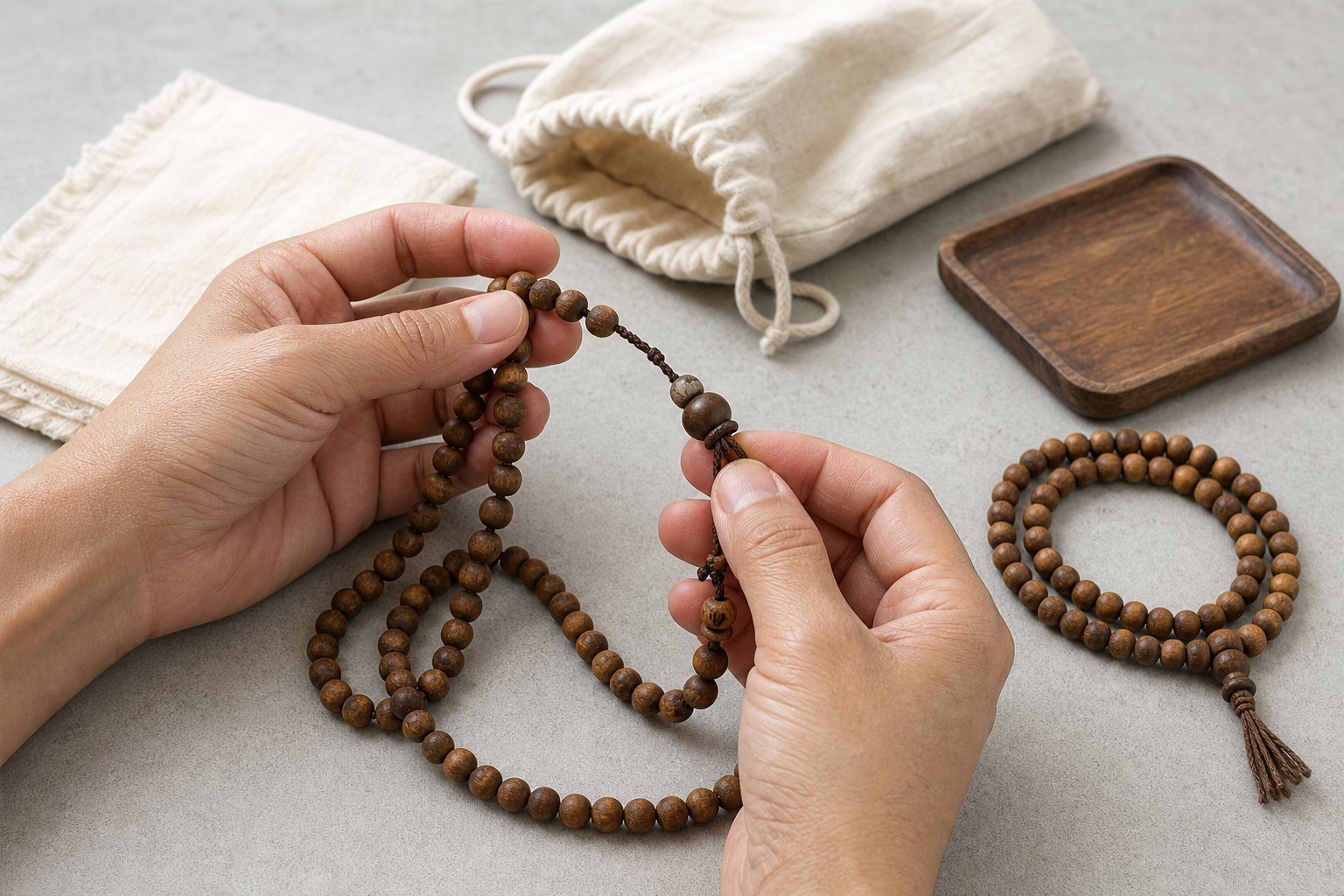
Appearance and touch are screening clues, not laboratory proof. A responsible seller should be able to describe the material plainly, disclose how the mala was made, and let you inspect the stringing. Look for beads that are consistently cut, a thread that is secure but flexible, and a meru you can identify without interrupting japa. Vendor transparency and responsible sourcing matter more than a dramatic claim about invisible energy.
Tulasi requires a different emphasis. Seek workmanship that respects both the sacred plant and the artisan. Avoid sellers who turn reverence into a health cure or imply that ownership alone produces purity. The point of buying sacred beads is to support a disciplined relationship, not to acquire a substitute for practice.
Care should remain simple:
- Keep Tulasi wood clean and dry. Avoid perfume, harsh chemicals, and prolonged dampness, and use a dedicated pouch when the mala is not being worn or used.
- Clean Sphatik gently with clean water and a soft cloth, then dry it in shade. Avoid harsh cleaners and prolonged direct heat.
- Check the thread periodically. Repair loose stringing before a round of japa or travel rather than waiting for the beads to scatter.
- Begin with a brief sankalpa and your chosen mantra. Consecration can be as restrained as clean handling, a prayer for right intention, and a few attentive repetitions.
- If you place Sphatik in soft moonlight as a devotional custom, understand that this is optional ritual care, not an authenticity test or medical procedure.
Key takeaways
- Choose a mala by mantra, lineage, or pilgrimage vow, not by the largest list of promised benefits.
- Tulasi is a natural fit for Vaishnava remembrance and for Ayyappa vratham where that practice is prescribed.
- Sphatik offers a cool, clear, tactile japa aid, but its spiritual associations are not clinical treatment claims.
- For a 108-bead japa mala, complete one mantra per bead and reverse direction at the meru.
- Judge clarity by steadier attention, quicker recovery from distraction, and more measured conduct.
- Protect Tulasi from dampness and chemicals; clean Sphatik gently and inspect all stringing before it fails.
Before you buy anything, write three lines: the mantra or vow you are keeping, the time you will practice, and the conduct the mala should remind you to protect. Take those answers to the puja shop. They will tell you more than a label promising spiritual power.
References
- DharmaRenaissance Blog – Tulasi Mala: Sacred Significance, Ayyappa Pilgrimage Observance, and Holistic Health Benefits
- DharmaRenaissance Blog – Sphatik Mala Benefits Unveiled: Authentic Quartz Guide for Calm, Clarity, and Who Should Wear It
