
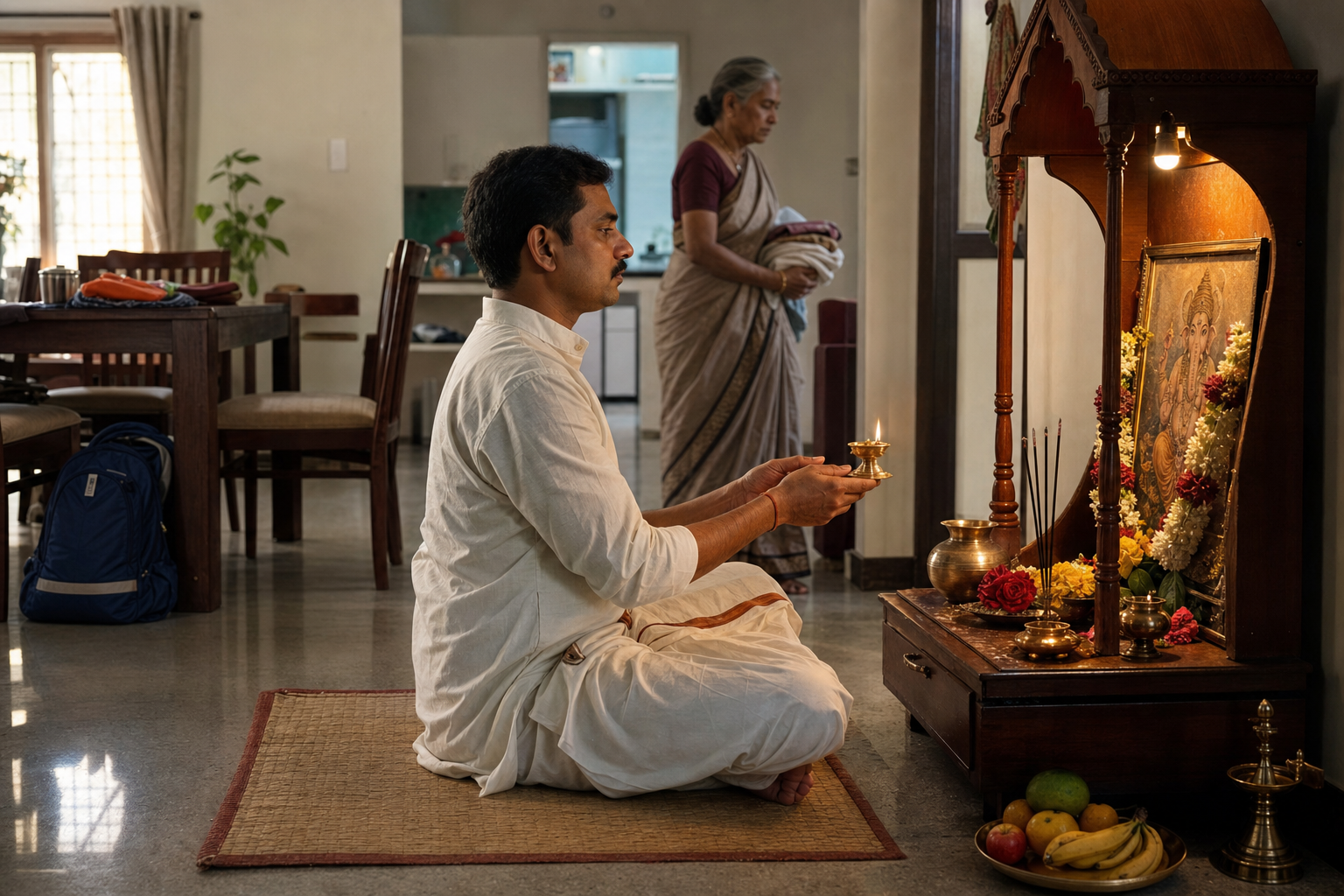
If you are trying to establish Dakshinachara at home, the difficult question is rarely which ritual object to acquire next. It is how to make worship serious enough to shape your life, yet simple enough to coexist with work, meals, children, elders, study and the other duties of a householder.
A workable answer has three connected parts: a modest daily practice, a calendar of meaningful observances and conduct governed by dharma. When these reinforce one another, the shrine becomes part of household life rather than a display that receives attention only on festival days.
Begin with the tradition you can actually continue
Dakshinachara, commonly described as the right-hand path, is not one universal household ceremony. It is a dharma-bound orientation joining devotion, disciplined sadhana, ethical living and social responsibility. Its forms can draw upon the Puranas, Agamas and Tantras, but the household expression remains attentive to purity, wholesome conduct and the welfare of the wider community.
This matters because the word can be misunderstood in two opposite ways. Dakshinachara is not merely respectable social custom with all Tantric theology removed. Shakti worship, mantra, image and yantra veneration can belong within it. Nor does the label make every mantra, yantra or procedure interchangeable. A Shakta observance, a family puja and an Agamic temple rite may all have a Dakshinachara orientation while retaining different rules.
Before you add anything to your shrine, answer four practical questions:
- Who is at the centre of your worship? Begin with the deity, form of Shakti, family deity or chosen form of the Divine already meaningful in your household.
- What has actually been handed down? Record the prayers, festival customs, food offerings and temple relationships your family already knows. A small inherited practice is a firmer foundation than a large collection assembled from unrelated instructions.
- Which elements require guidance? Separate familiar prayer, devotional singing and ordinary japa from any mantra, yantra or ritual presented as requiring initiation, consecration or lineage-specific procedure.
- What can the household sustain? Choose a form that respects legitimate family duties. A daily rite that repeatedly disrupts care, employment or study is not well fitted to the householder’s dharma.
When instructions conflict, do not settle the matter by counting online opinions. As a practical rule, give more weight to an established family custom or the teacher, sampradaya or temple responsible for the rite than to a decontextualized ritual fragment. This is not a universal ranking of spiritual authority. It is a way to prevent accidental mixing of procedures that were never meant to function as one system.
If you have no detailed family procedure, start with openly practiced forms: respectful prayer, a safely offered lamp where appropriate, a familiar divine name, devotional reading, quiet meditation and service. You do not need to imitate a full temple ceremony to begin sincere household worship.
Use a daily sequence that survives ordinary life
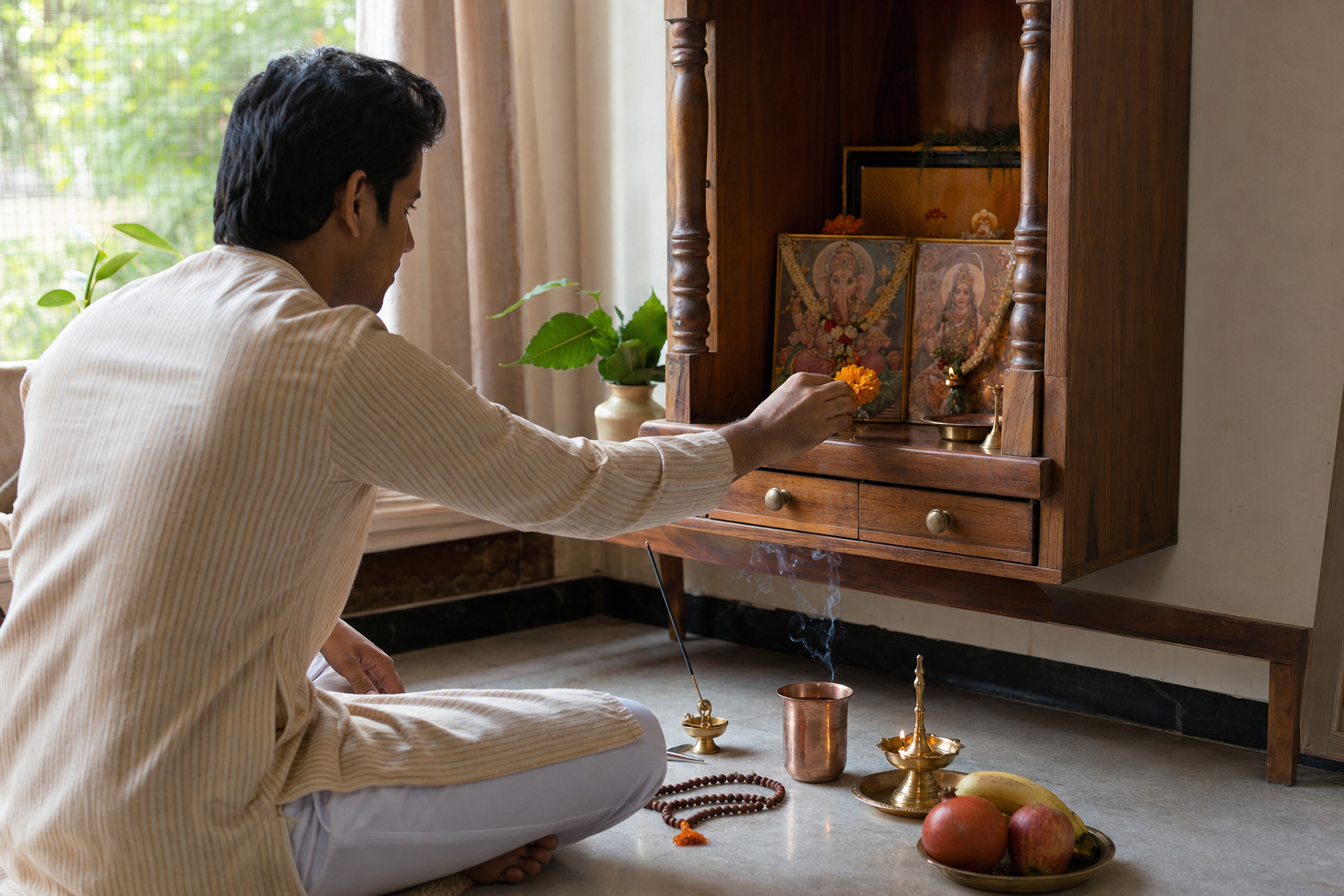
Consistency is more useful than occasional complexity. Attach worship to an event that already happens, such as your normal morning preparation or the household’s dusk transition. Evening arati is especially suited to home life because it marks a clear movement from the day’s outward activity toward recollection and gratitude.
A simple sequence can be adapted to your family custom:
- Prepare yourself and the place. Wash as appropriate, put the worship area in order and remove stale offerings. Silence avoidable distractions. The purpose is not decorative perfection; it is to approach deliberately rather than in the middle of disorder.
- Become present. Sit or stand according to your custom. Remember the deity, guru or sacred purpose of the practice. State a simple intention: to worship with attention and to carry the discipline into your conduct.
- Make only the offerings you understand. A lamp, incense, water, flowers or food may be used where they belong to your tradition. You do not need every item every day. Keep any flame stable, attended and away from fabric, children and animals. If an open flame is unsafe, omit it or use an alternative accepted in your tradition.
- Perform prayer or japa. Recite the prayer, mantra or divine name you have genuinely received or learned through established worship. Let the repetition be audible, soft or mental according to the practice. There is no single count that defines Dakshinachara as a whole; use the count taught within your tradition rather than inventing one from several incompatible systems.
- Pause after recitation. A short period of silence keeps japa from becoming a race to finish a number. Notice whether the mind is steadier, then return attention without turning wandering thoughts into a reason to abandon the practice.
- Complete arati or a closing prayer. At dusk, arati may be the central act rather than an addition to a longer puja. Conclude with reverence and a prayer that widens beyond private wishes to the well-being of family, community and all beings.
- Close the space properly. Extinguish anything that must not remain burning, handle offerings according to household custom and leave the shrine ready for the next observance. A clear ending protects both safety and continuity.
On a crowded day, keep a minimum form rather than abandoning the rhythm: prepare the space, remember the Divine, repeat a familiar name or prayer with attention, bow and close. This is not a substitute for every fuller observance. It is the dependable thread that prevents household sadhana from becoming an all-or-nothing project.
Do not treat missed practice as a demand for an exhausting compensatory ritual. Resume at the next established point unless your tradition gives a specific rule for the observance involved. The discipline lies in returning.
Let vrata, temple worship and pilgrimage expand the daily core
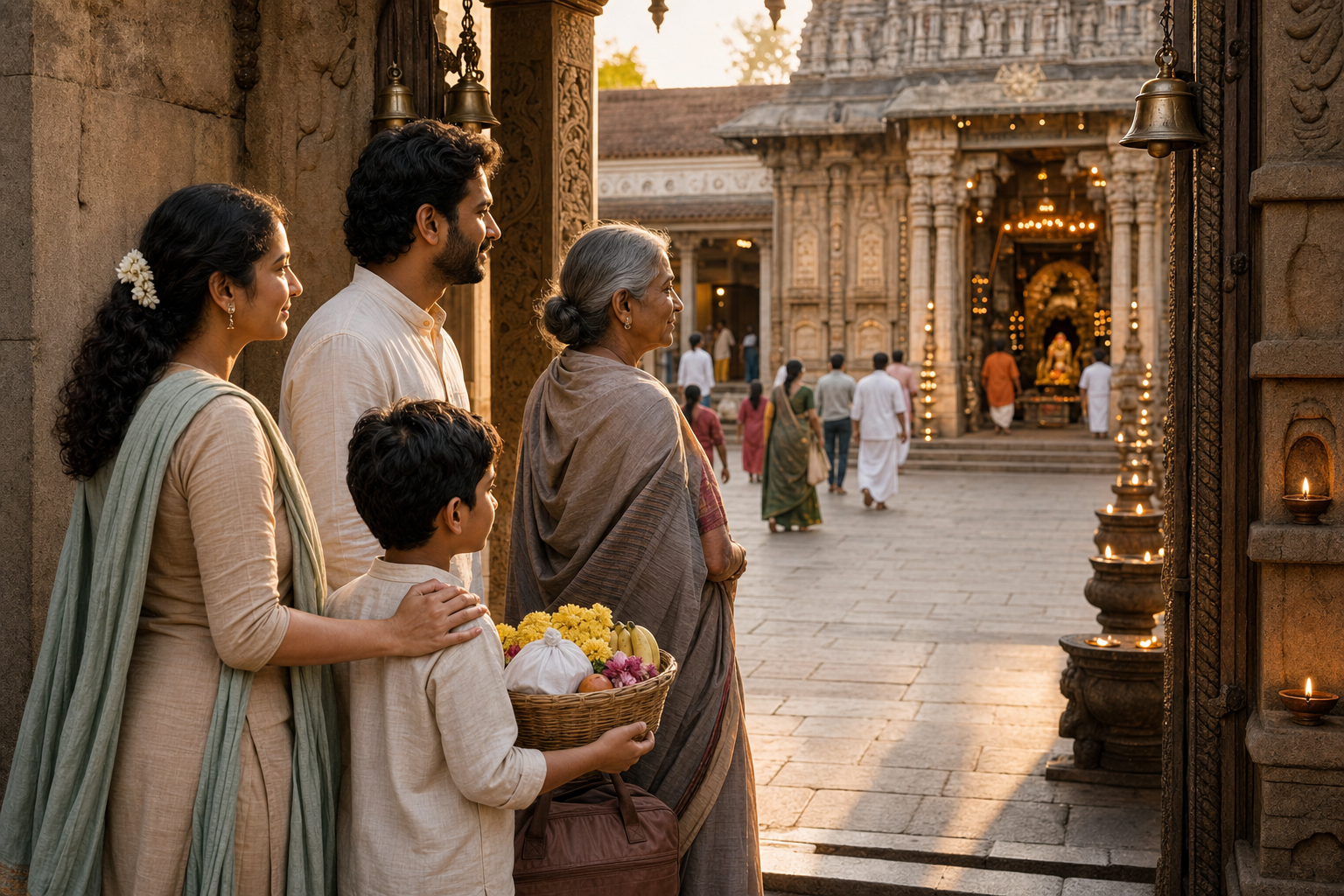
The daily rite is the centre, not the entire field. Dakshinachara also takes shape through vrata observances, temple rites, seasonal celebrations and tirtha-yatra. These give the household calendar a sacred rhythm and connect private devotion with a living community.
Add these layers carefully:
- Choose one vrata you can define clearly. Know its devotional purpose, its beginning and completion, and the conduct it asks of you. Do not reduce every vrata to fasting. A vow may involve worship, restraint, charity, study or another discipline defined by the tradition. Do not undertake food restrictions that conflict with medical needs; seek appropriate professional advice where fasting could put your health at risk.
- Use festivals to deepen understanding. Learn why your household performs a particular worship, not only which materials appear on the tray. Prepare the shrine and family schedule early enough that the observance does not dissolve into last-minute strain.
- Return to the temple. Temple worship prevents home practice from becoming entirely self-designed. Observe how a deity is approached, ask focused questions when appropriate and participate without assuming that a specialist temple rite must be reproduced in the home.
- Treat pilgrimage as continuity, not escape. A tirtha-yatra can bind devotion to sacred geography and community. Before returning, decide which prayer, discipline or act of service will carry the pilgrimage’s purpose into ordinary life.
- Make service part of the calendar. Devotion, study and meditation need an outward expression. Choose service that answers a real household or community need instead of using ritual activity to avoid the people already entrusted to your care.
The safest way to grow is sequentially. Stabilize a small daily practice. Add one well-understood recurring observance. Learn its boundaries through the tradition that preserves it. Only then decide whether another element belongs. This slows the accumulation of ritual objects, but it strengthens actual abhyasa: sustained practice.
Judge ritual purity by what it trains in you
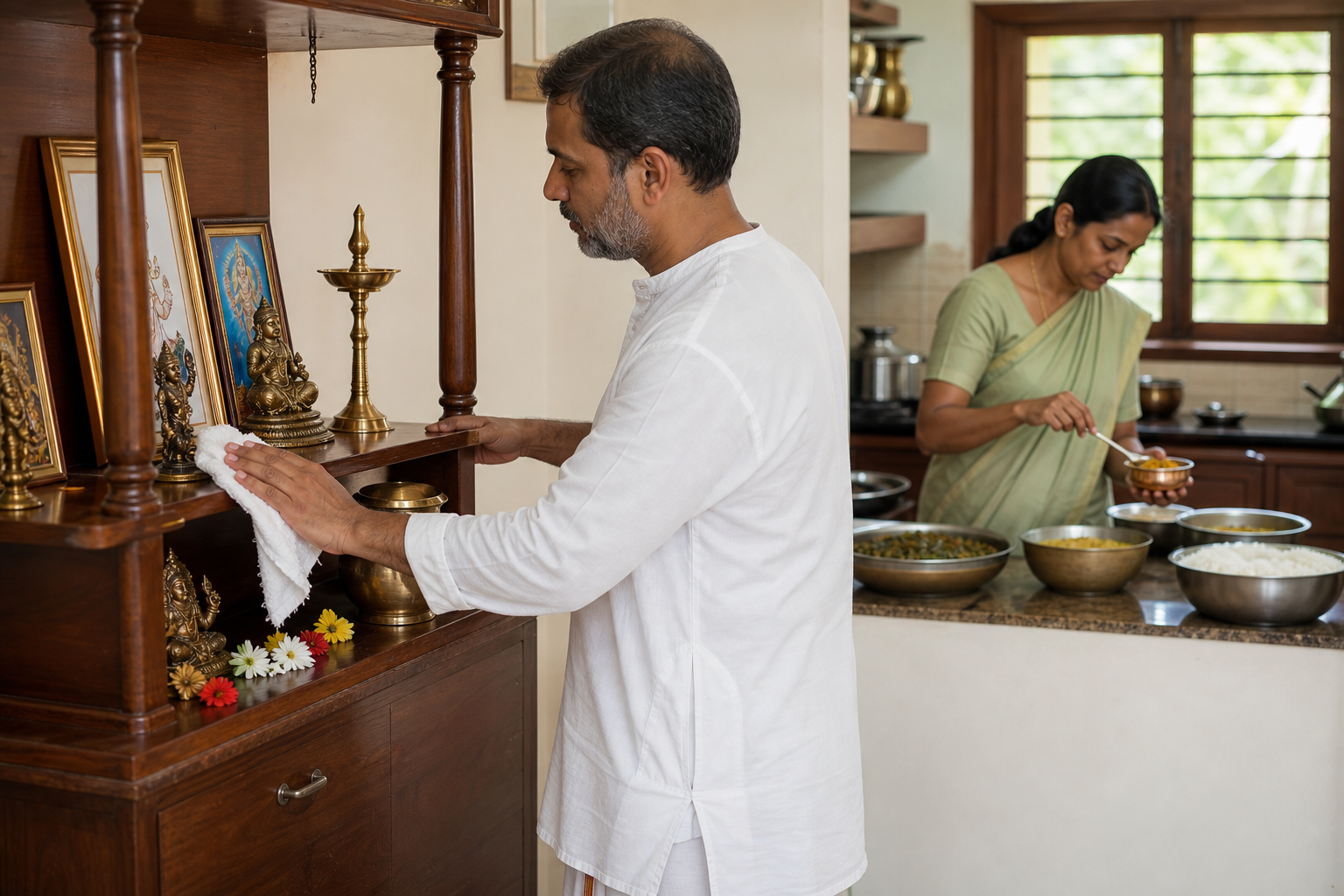
Cleanliness, appropriate offerings and an orderly shrine help gather attention. Yet sattvic worship cannot be reduced to the appearance of the altar. Dakshinachara joins outwardly wholesome ritual with compassion, truthfulness, non-violence, self-mastery and responsible conduct. The ethical life is not an optional result added after puja; it is part of the practice’s integrity.
Use a brief examination after worship or at the end of the day:
- Did the practice make you more attentive to a duty you were avoiding?
- Did japa create enough space to restrain a harsh word or impulsive action?
- Did the vrata cultivate self-command, or merely produce pride about endurance?
- Did the festival include the household, or turn everyone else into support staff for one person’s performance?
- Did concern for purity improve your own preparation, or become a pretext for judging another person’s human worth?
These questions do not replace lineage-specific ritual standards. They reveal whether the outer and inner sides of practice are separating. A perfectly arranged shrine cannot compensate for dishonesty or neglect, just as good intentions do not make every improvised rite correct.
When purity rules are unclear, identify whose rule you are trying to follow. A family observance, a temple requirement and an initiated sadhana may set different boundaries. Ask the family elder, guru or temple authority connected to that particular practice. Until the point is resolved, retain the simple elements you understand instead of adding doubtful procedures.
Also notice when a method has become badly proportioned to household life. Constant novelty-seeking, fear of minor mistakes, conflict over smoke or noise, and repeated neglect of ordinary responsibilities are reasons to simplify and seek guidance. A right-hand practice should bring devotion and dharma into alignment, not make them competitors.
Key takeaways for a sustainable household practice
- Dakshinachara is a dharma-guided orientation, not one universal ritual script.
- Start with the deity, prayers and observances already rooted in your family or sampradaya.
- Keep a repeatable daily core: preparation, recollection, offering, japa or prayer, silence and a clear close.
- Do not improvise a mantra, yantra or procedure identified as initiation-dependent or lineage-specific.
- Add vrata, festivals, temple worship, pilgrimage and service one understood layer at a time.
- Test the practice by its fruit in conduct: greater truthfulness, ahimsa, self-mastery, compassion and faithfulness to duty.
Begin at the next natural worship point in your day. Prepare the space, choose one familiar prayer or divine name, complete a modest cycle and leave the shrine ready for your return. Once that rhythm is dependable, let the sacred calendar deepen it without displacing the dharma already in front of you.
References
