
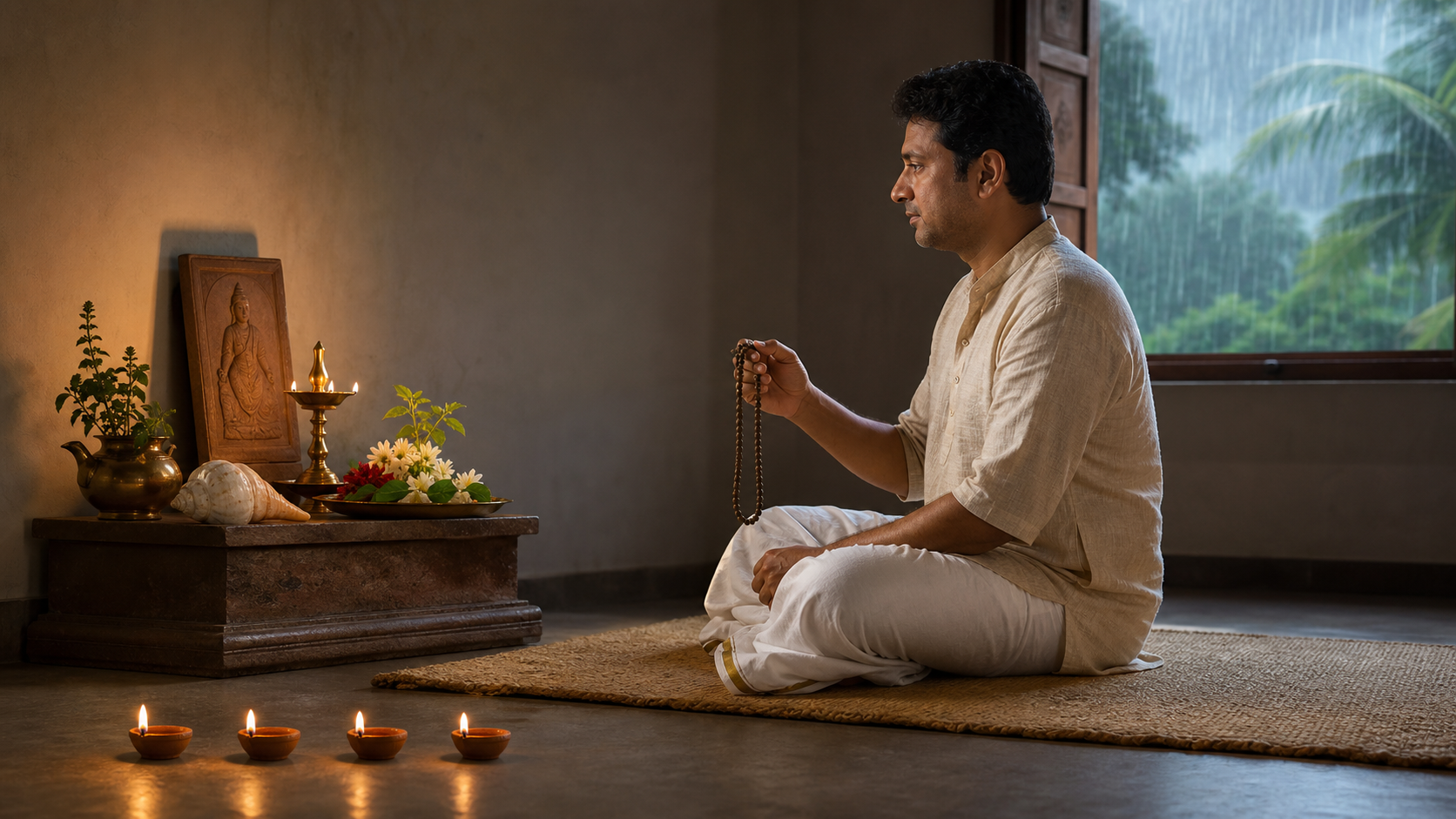
You have decided to observe Chaturmas in 2026, but two practical questions remain: when exactly should you begin, and what promise can you realistically carry to the end? An impressive list of restrictions can collapse under work, travel or illness. A vague intention, meanwhile, may never become a discipline.
Use the Chaturmas dates as the outer boundary and your niyama as the inner rule. Decide the rule before the observance begins, state it plainly, and settle in advance how you will handle genuine exceptions. That preparation turns religious enthusiasm into steady sadhana.
Mark the 2026 Chaturmas dates before choosing a rule
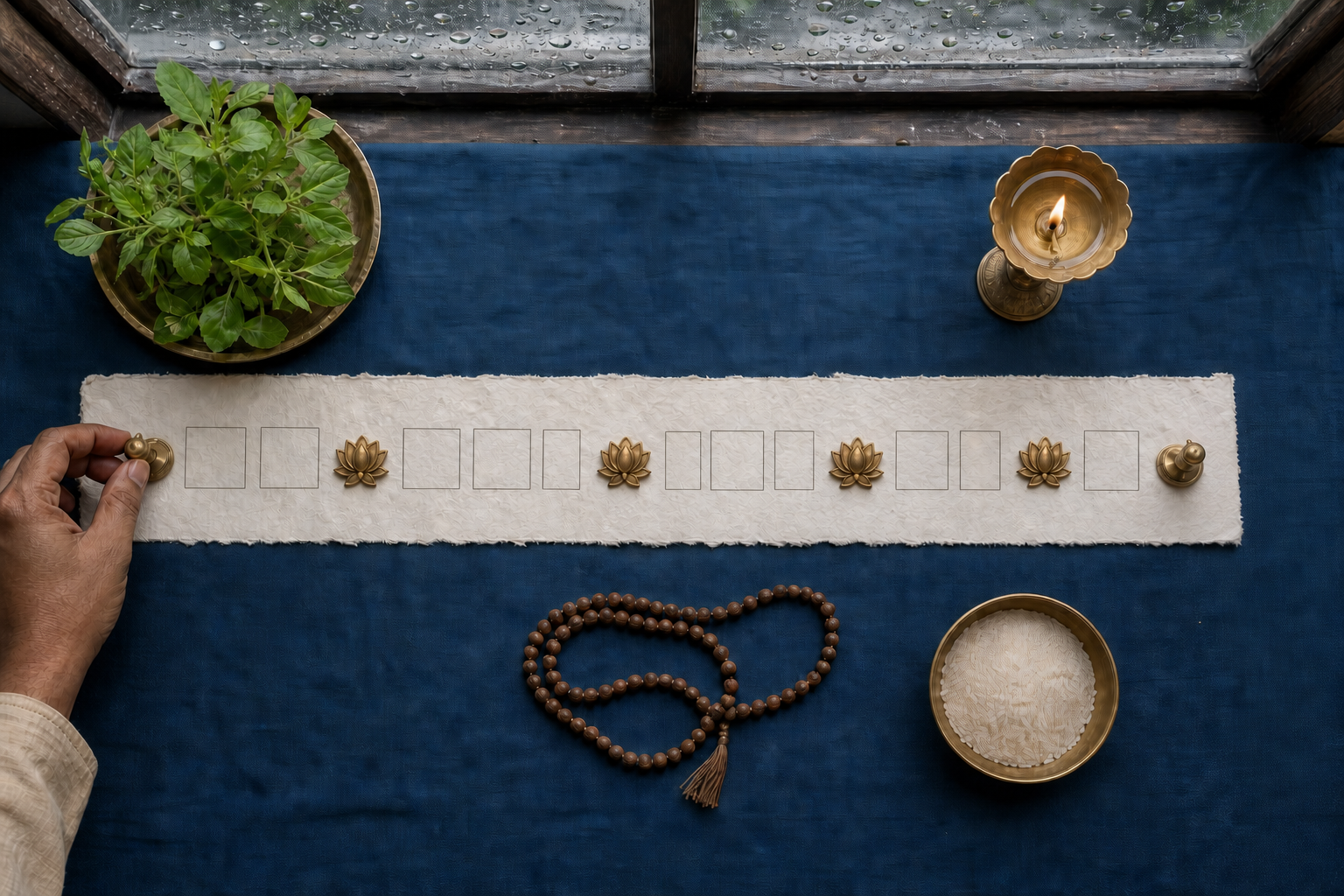
In 2026, Chaturmas begins on July 25 and concludes on November 21. The opening falls on Devshayani Ekadashi, also called Shayani Ekadashi, while the conclusion falls on Dev Prabodhini Ekadashi, also known as Utthana Ekadashi.
The observance moves through Shravan, Bhadrapad, Ashwin and Kartik. These traditional months give Chaturmas its religious shape, so do not treat it as a casual block of four Gregorian months or calculate a different finishing date by simply adding four months to July 25.
Put both dates in your calendar now. If your family, temple, guru or sampradaya follows a particular panchanga or method of sankalpa, confirm the local ritual timing with them. The dates identify the observance window; they do not replace lineage-specific instructions about when or how a formal vow is made.
- Record July 25 as the opening and November 21 as the conclusion.
- Review travel, festivals, work shifts, medical needs and family commitments that fall inside the period.
- Decide whether you are keeping a personal discipline or undertaking a formal vow under religious guidance.
- Tell the people who share your home about any practice that will affect meals, schedules or household responsibilities.
This calendar check is not administrative fuss. It exposes conflicts while you can still design a truthful niyama, instead of discovering halfway through that your promise depended on an ordinary life with no journeys, guests, illnesses or demanding days.
Choose a niyama that trains you rather than displays austerity
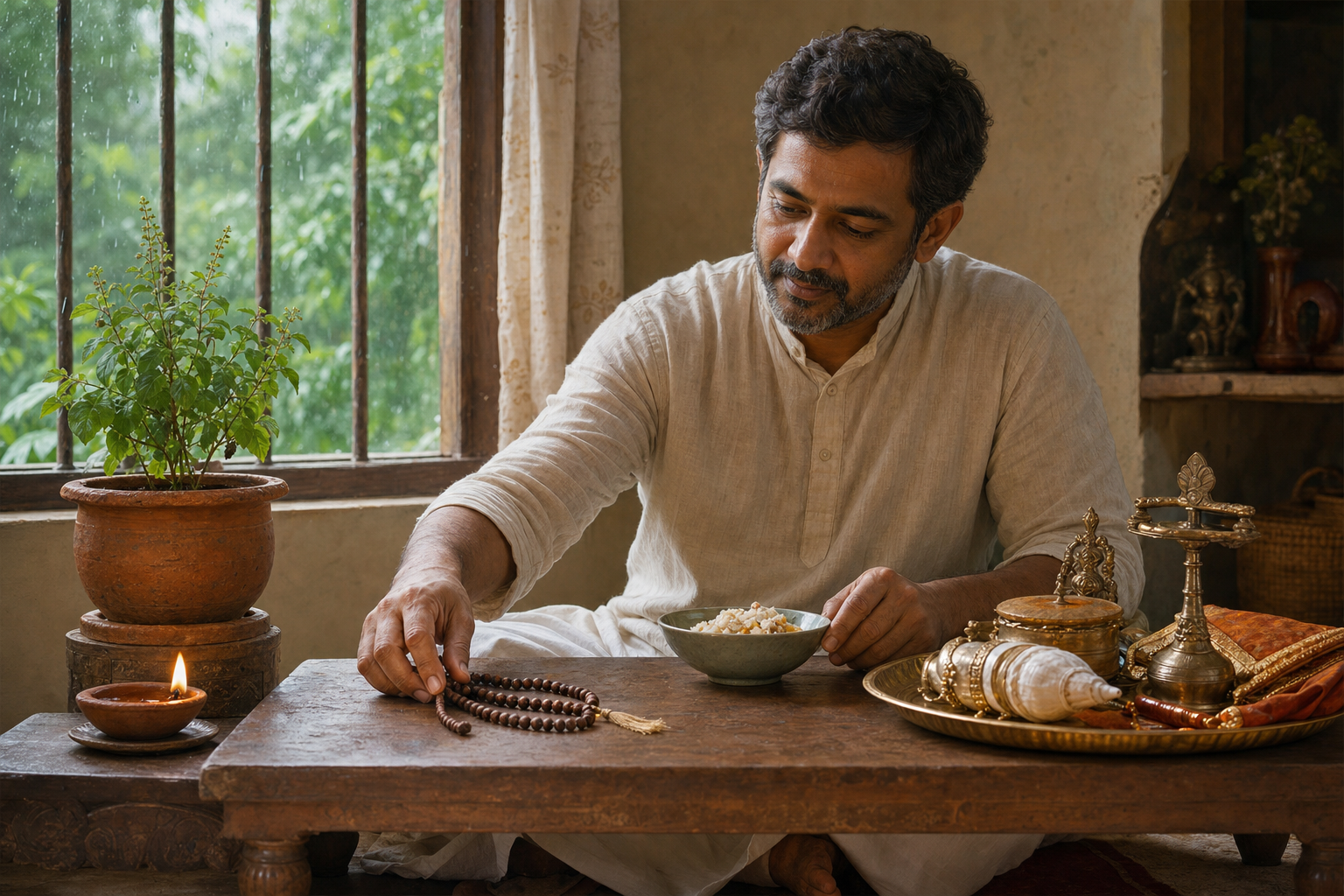
A niyama is the rule you undertake for the vrata. For many householders, Chaturmas does not require one identical checklist: devotees may set particular niyamas for themselves. That freedom is useful, but it should not become permission to redefine the promise whenever it becomes inconvenient.
If you have received instructions from a guru, matha, temple or family tradition, follow those instructions rather than substituting a generic plan. If you are choosing for yourself, begin with the area of life that most needs disciplined attention. The aim is not to collect hardships. It is to establish a rule that redirects attention, appetite, speech, time or conduct toward dharma.
The following are ways to formulate a personal commitment, not a universal Chaturmas code:
- Devotional practice: attach a defined period of prayer to a stable daily cue, such as waking or retiring for the night.
- Study: choose the material before Chaturmas begins, set a repeatable reading rhythm, and record a brief reflection so that reading does not become page-counting.
- Speech: identify a concrete habit such as gossip, needless insult or impulsive argument instead of promising vaguely to speak better.
- Consumption: relinquish a clearly named nonessential indulgence rather than declaring an undefined intention to live simply.
- Service: name the person, community or duty you will serve and decide when the act will occur.
Choose a core niyama before adding supporting practices. Every extra restriction creates another point at which the observance can become confused, performative or unsafe. A modest rule kept from opening to conclusion usually demands more self-command than an elaborate programme that survives only while motivation is high.
Do not use Chaturmas to justify medically unsafe fasting or dietary deprivation. Children, pregnant people, older adults, anyone managing a chronic condition, and anyone whose medication depends on food timing need advice from a qualified clinician before adopting a restrictive diet. A medically necessary meal is not a spiritual failure. If you want a food-related niyama, choose one compatible with your health and religious guidance.
Write the promise so that you can tell whether you kept it
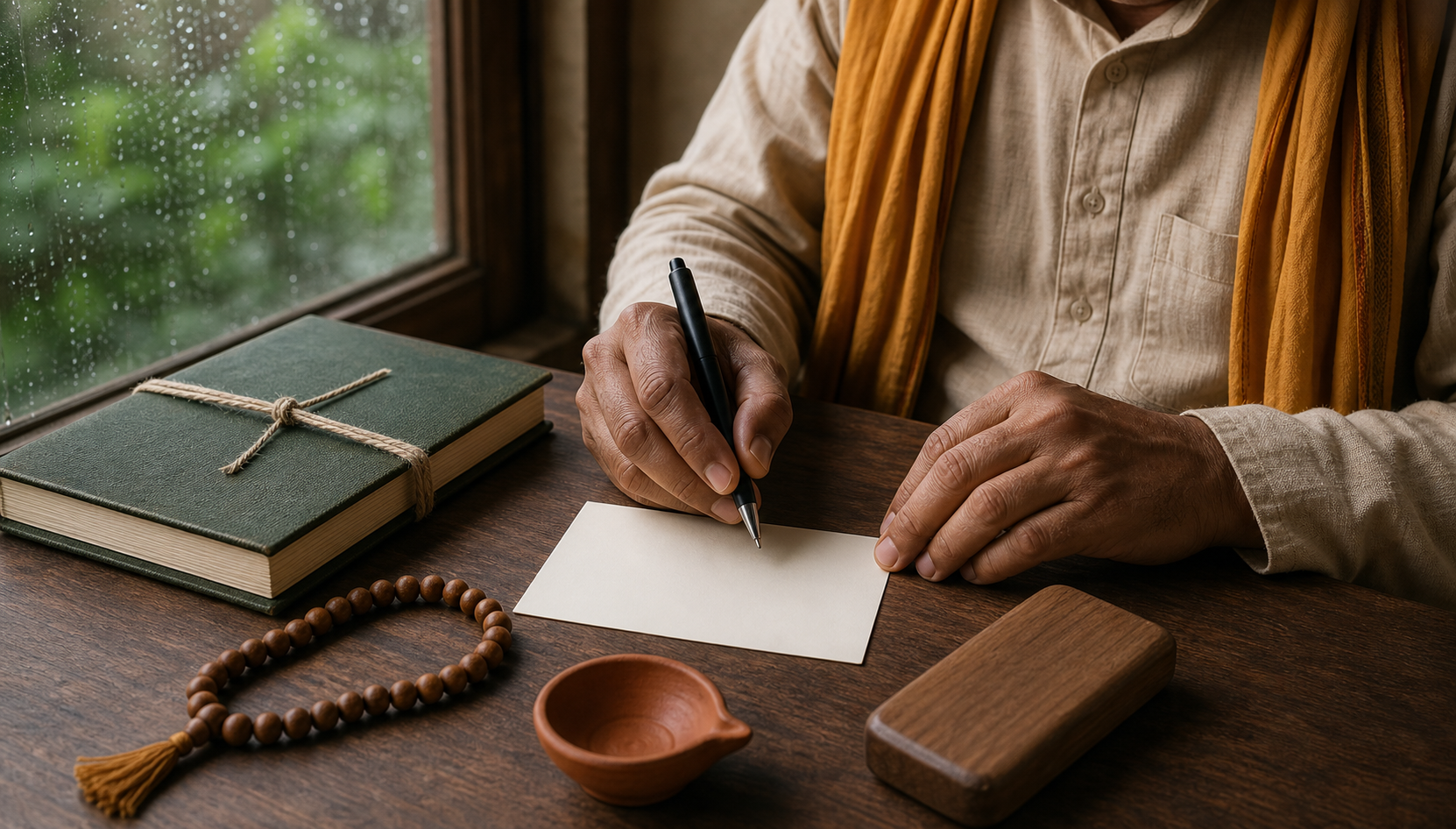
A useful niyama can fit into one sentence:
From July 25 through November 21, I will follow [defined practice] at [defined time or frequency]; if [genuine exception] occurs, I will use [safe fallback].
A practical niyama template
Test your sentence before adopting it. It should answer these questions without requiring a fresh decision each day:
- What is the action? Use an observable verb such as pray, read, refrain, serve or give.
- When does it happen? Connect the practice to a time, event or repeatable cue.
- Where is the boundary? Name exactly what is included and excluded.
- What is a legitimate exception? Define illness, medical necessity, unavoidable travel or another real constraint narrowly.
- What is the fallback? Choose a safe, proportionate alternative that preserves the intention of the discipline.
For example, “I will be more devotional” cannot be kept or broken because it names no action. “I will pray before checking messages after waking” gives the intention a cue and a boundary. “I will control my speech” is similarly vague; “I will refrain from passing on gossip, even when the person is not named” identifies the conduct you are trying to interrupt.
Watch for promises crowded with the word “and.” A rule that combines a new morning routine, a new diet, an ambitious reading plan, additional worship and several behavioural restraints may actually be several vows hidden inside one sentence. Separate them. Keep the central niyama unmistakable, and treat anything else as voluntary support unless your tradition directs otherwise.
Also ask why you want this particular rule. A Chaturmas niyama should not be a disguised weight-loss programme, an instrument for punishing yourself, or a public test of who appears most austere. Choose the practice that calls you back to steadiness when nobody is watching.
Plan for real-life pressure without building convenient loopholes
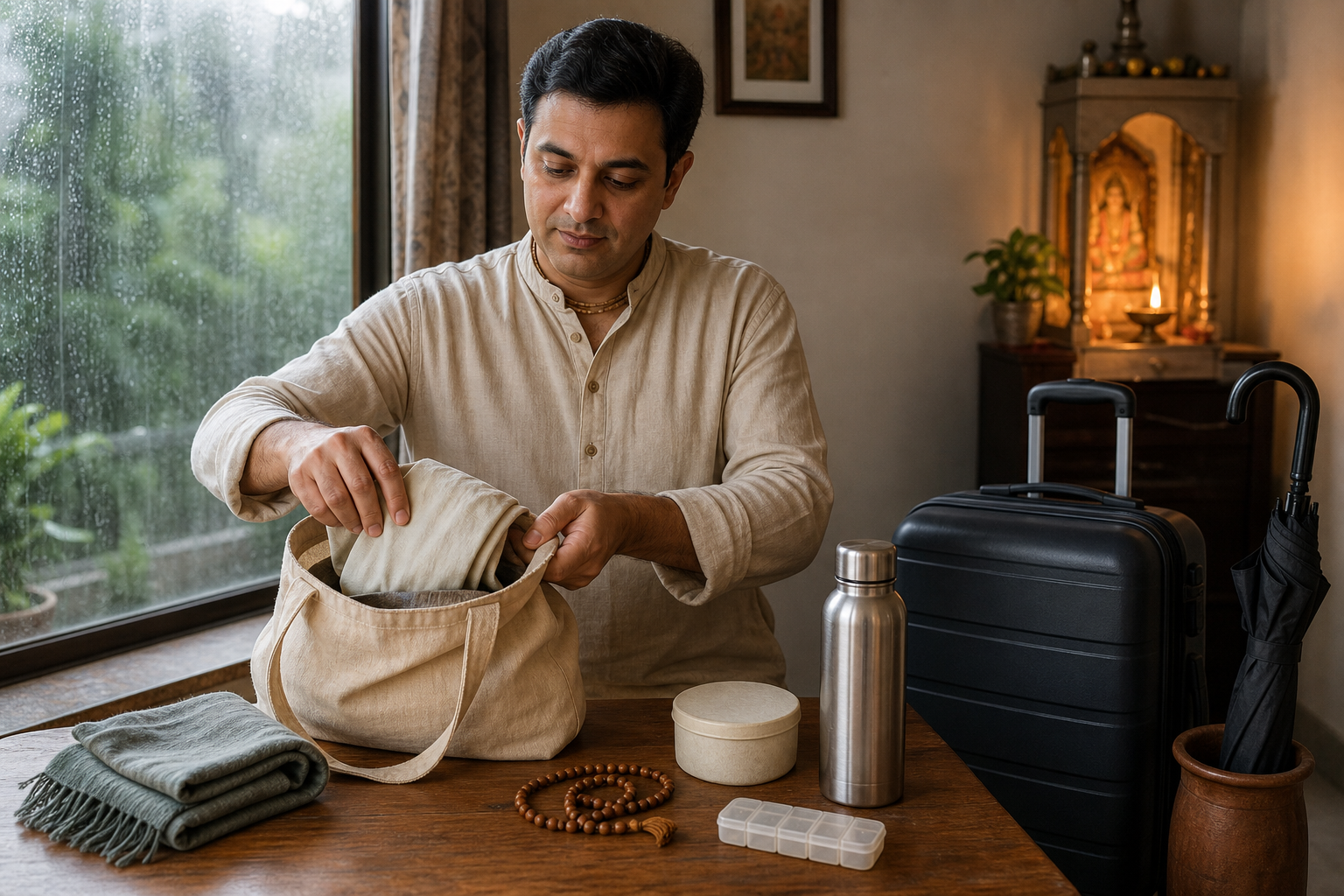
The best time to decide what illness, travel or caregiving will mean is before any of them occurs. An exception written in advance protects the purpose of the vrata. An exception invented at the moment of temptation usually protects convenience.
Keep exceptions narrow. If the normal place or time for prayer becomes unavailable during travel, your fallback might be a shorter private observance at the next suitable opportunity. If a dietary rule conflicts with medication or medical advice, health takes priority and the discipline should be adapted safely. If hospitality creates social awkwardness but no genuine necessity, inconvenience alone need not erase a rule you freely chose.
Prepare the environment as well as the intention. Keep required reading or worship materials accessible. Add the practice to your daily schedule. Remove the nonessential item you intend to avoid rather than repeatedly testing yourself against it. If the niyama affects family meals or shared duties, settle the arrangement before the opening date.
If you lapse, do not pretend it did not happen, and do not abandon the whole observance in frustration. Use a simple recovery process:
- Name the lapse plainly, without dramatizing it or manufacturing an excuse.
- Resume the niyama at the next scheduled opportunity.
- Identify the condition that led to the lapse, such as poor planning, an unclear boundary or an avoidable trigger.
- Change the environment or reminder system while preserving the substance of the promise.
Do not compensate for a missed practice with extreme fasting, sleep deprivation or another unsafe penalty. If illness or a lasting change in circumstances makes the original niyama genuinely harmful or impossible, revise it honestly under trusted religious guidance. If you made a formal sankalpa with a teacher, ask that teacher how a lapse or necessary change should be handled.
Common questions about Chaturmas niyama
Does every member of a family need the same niyama?
Not necessarily. Family members may have different duties, health needs and levels of religious instruction. A household can share the Chaturmas observance while each person keeps an appropriate discipline. Coordinate only where a niyama changes shared food, schedules or responsibilities.
Is a stricter niyama automatically more spiritually valuable?
No. Difficulty by itself does not establish clarity, devotion or self-mastery. A rule has value when it is dharmic, consciously chosen and faithfully maintained. Severity that damages health, transfers burdens to other people or feeds spiritual pride defeats the purpose of disciplined observance.
Is a food restriction compulsory for everyone?
There is no single food rule that should be imposed on every reader without regard to sampradaya, family tradition or health. Follow the dietary discipline given by your religious tradition if it is medically safe. Otherwise, seek guidance instead of copying an austerity whose purpose and limits you do not understand.
What if you cannot begin on July 25?
Be accurate about what you are undertaking. Do not describe a later start as though you had kept the full observance from its opening. You can still begin a sincere discipline from the date available to you, but seek guidance from your guru or temple if you want to make a formal Chaturmas sankalpa after the prescribed opening.
Before July 25, put your niyama into one sentence and read it aloud. If the action, boundary or exception still needs explanation, revise the sentence. Then place November 21 in your calendar and begin with a promise small enough to carry faithfully, but meaningful enough to change how you use your attention.
References
- Hindu Pad — Chaturmaas Vrat 2026 | Chaturmasya Vratam
- Hindu Pad — Chaturmas Vrata Niyama: Rules & Codes of Chatur Mas Vratam