
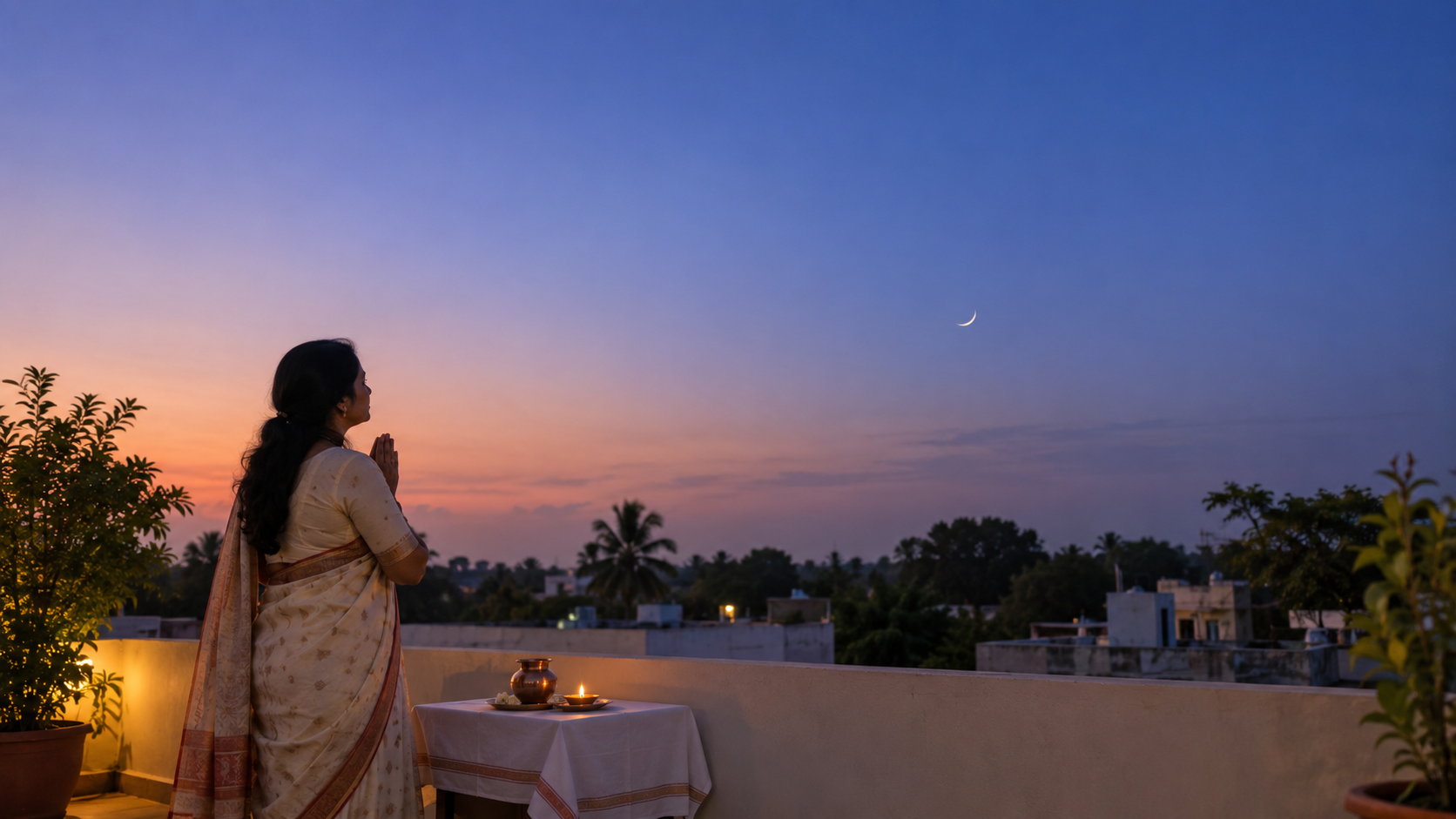
You have checked the local panchanga and found a place from which you can see the Moon. Then the practical questions begin: Which Chandra mantra should you use? Must you offer arghya? How many repetitions are appropriate?
You do not need to assemble an elaborate ceremony from unrelated instructions. Choose one recognised mantra, prepare it before the observance, and let the actual darshan remain central. Where your family, sampradaya, temple, or guru has given a method, that living instruction takes precedence over a generic routine.
Choose the mantra that matches your practice
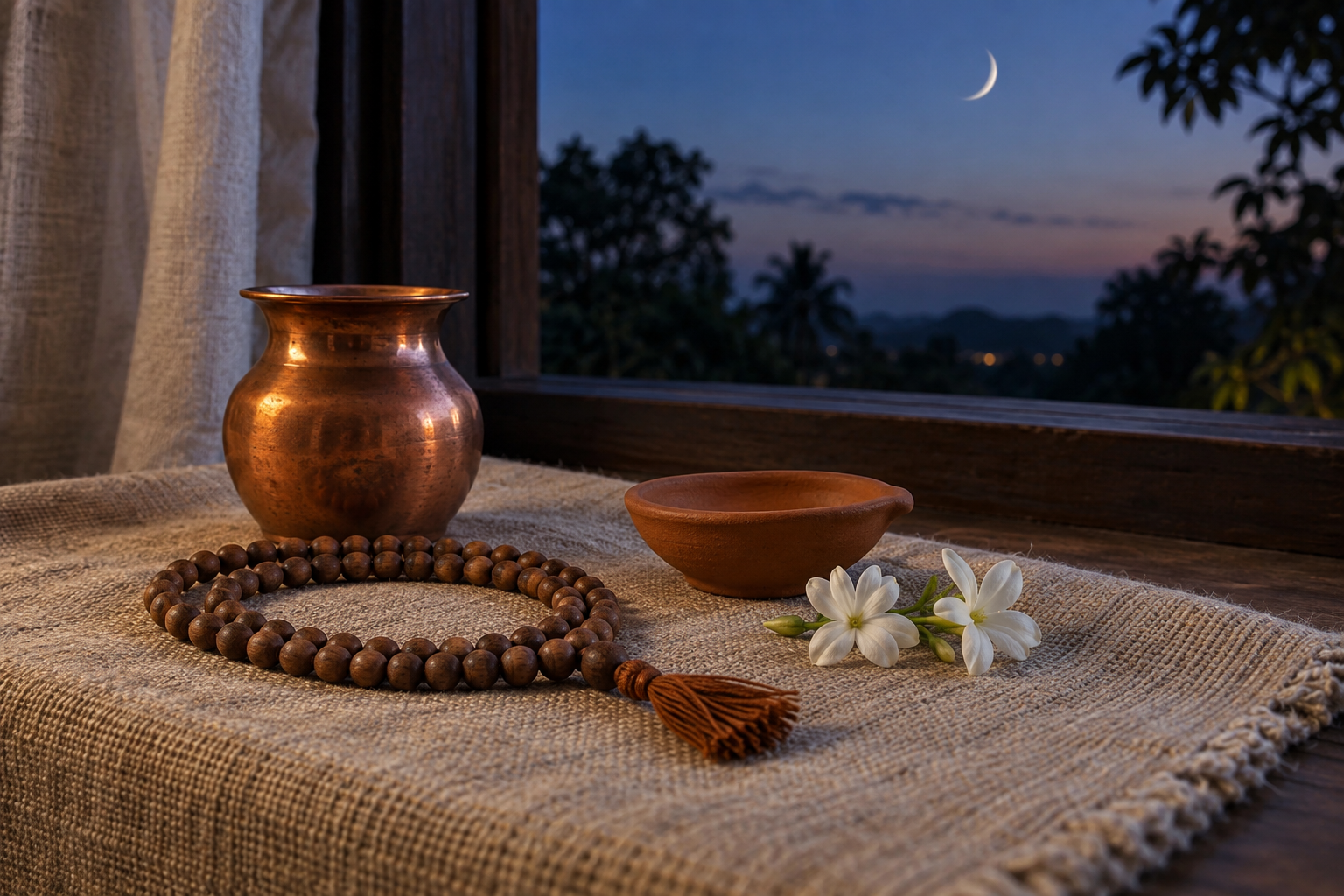
Two traditional Chandra Darshan mantra forms cover the most common needs: a concise moola mantra for straightforward japa and a beeja mantra associated with Chandra shanti and vrata practice.
| Form | Mantra | Transliteration | When to choose it |
|---|---|---|---|
| Moola mantra | ॐ सोम सोमाय नमः | Oṁ Soma Somāya Namaḥ | For a concise, accessible japa during Chandra Darshan or arghya |
| Beeja mantra | ॐ श्रां श्रीं श्रौं सः चन्द्राय नमः | Oṁ Śrāṁ Śrīṁ Śrauṁ Saḥ Candrāya Namaḥ | When your Chandra shanti or vrata practice specifically calls for the beeja form |
If you have not received a specific mantra, the moola mantra is the clearer starting point. It is short enough to learn accurately, and its words make its devotional direction plain: Soma is being addressed with reverential salutation. Soma and Chandra are both names associated with the Moon and the lunar devata.
The beeja mantra is not simply a longer or more impressive version. Its sequence—śrāṁ, śrīṁ, śrauṁ, saḥ—contains seed syllables rather than an ordinary sentence that can be translated word by word. Use it when that form belongs to the vrata or instruction you are following. Chanting both mantras is unnecessary unless your tradition explicitly places both in the same observance.
A simple Chandra Darshan practice you can follow
This sequence is intentionally modest. It gives you a coherent devotional practice without pretending to replace a complete household or temple vrata.
- Consult a reliable local panchanga or temple calendar. Use information calculated for your location rather than assuming that a distant city’s viewing window applies to you.
- Choose either the moola mantra or the beeja mantra before you begin. Keep the Devanagari or an accurate transliteration where you can read it without searching on your phone during the observance.
- Go to a place with an open view of the sky. Remove avoidable distractions and allow enough time that you are not rushing from one task to another when the Moon becomes visible.
- At darshan, pause and acknowledge Chandra. Offer namaskara if that is customary in your practice, then begin your chosen mantra at an even, unhurried pace.
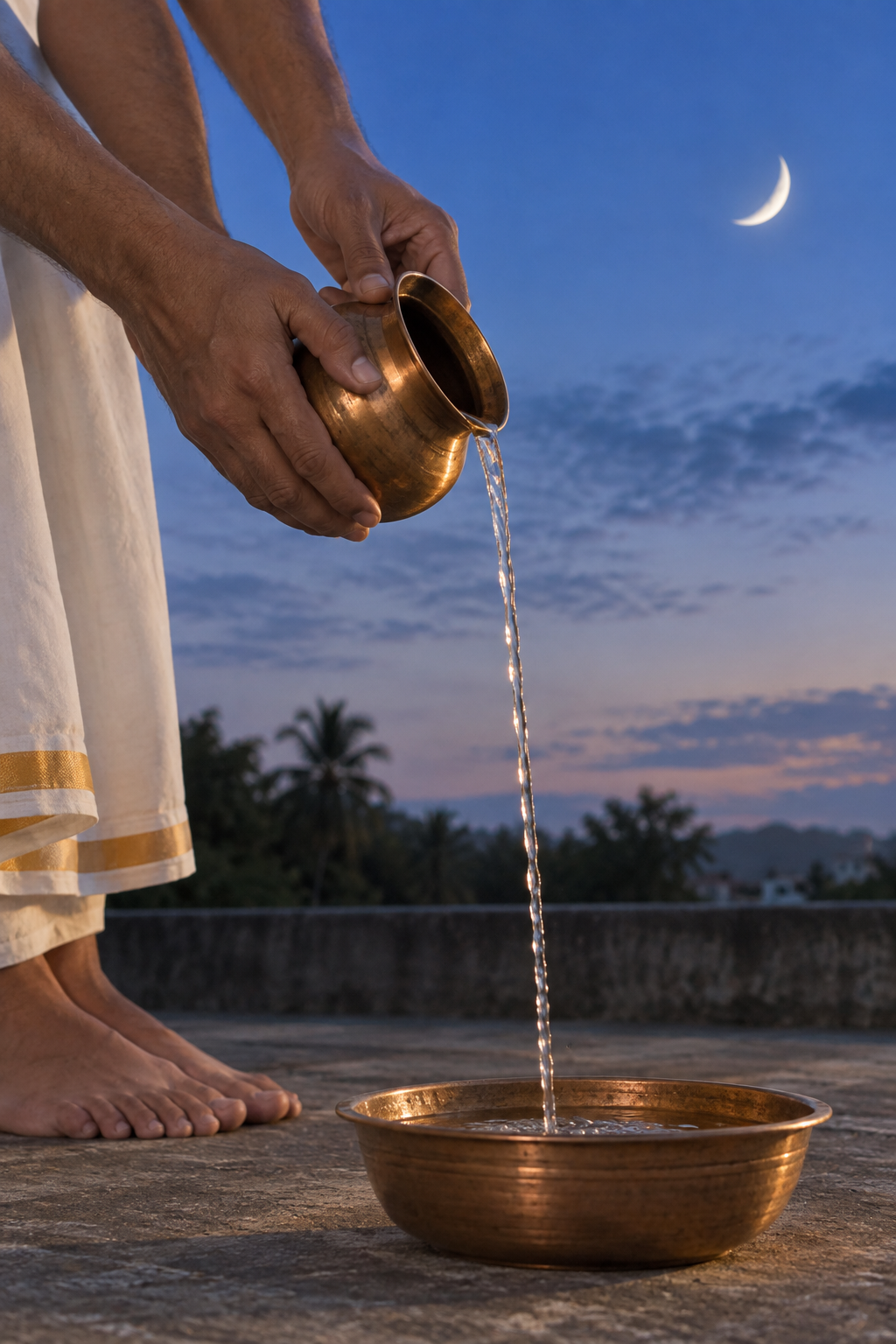
- If arghya is part of the method you have learned, make the offering while reciting the mantra as instructed. Preserve the vessel, ingredients, gestures, and sequence taught in your family or sampradaya rather than combining details from several unrelated rituals.
- Complete the japa without switching formulas midway. Close with a quiet namaskara and carry the same mantra into the next observance.
The important discipline is continuity. A short mantra recited carefully at successive observances is more coherent than a different procedure assembled each month because one version sounded more elaborate.
Keep pronunciation, counting, and arghya in their proper places
Learn the sound before increasing the repetitions
Break the moola mantra into four clear units: Oṁ | Soma | Somāya | Namaḥ. In the beeja form, keep the opening sequence distinct: Oṁ | Śrāṁ | Śrīṁ | Śrauṁ | Saḥ | Candrāya | Namaḥ. The letter “c” in the formal transliteration Candrāya corresponds to the “ch” sound commonly written in the English spelling Chandra.
Do not hurry through śrāṁ, śrīṁ, and śrauṁ as though they were interchangeable. The changing vowel is part of each syllable. If you are adopting the beeja mantra for a formal vrata or remedial practice, hear it from a trusted teacher who can correct your recitation. A rough English spelling can help you remember the sequence, but it cannot represent every Sanskrit sound precisely.
Do not invent a universal repetition count
A mantra’s wording is not, by itself, a counting instruction. If your vrata, guru, or household tradition gives a count, follow it. If you have no prescribed count and are undertaking simple devotional japa, choose a modest fixed count that lets you pronounce every repetition attentively. Do not automatically attach a familiar sacred number and then rush to finish it.
Use the same principle for duration. The purpose of setting a count is to support steadiness, not to turn darshan into a race. Decide before the Moon appears, complete what you chose, and avoid increasing the count merely to make the observance feel more consequential.
Do not improvise a formal arghya procedure
Arghya can accompany Chandra Darshan, and the moola mantra may be used during the offering. That does not make every online arghya instruction universally applicable. The details of an offering may belong to a particular vrata, region, family practice, or sampradaya.
If you have been taught an arghya method, follow it intact. If you have not, reverent darshan and careful japa provide a restrained devotional practice while you seek proper instruction. Do not claim that this simplified practice fulfils every requirement of a formal vrata whose rules you have not learned.
Chandra Darshan practice: four practical questions
What if clouds or buildings prevent the darshan?
A calendar entry tells you when to look; it does not create a visual darshan when the Moon is hidden. You may still chant your chosen mantra as an act of remembrance. If a vow or vrata specifically depends on physical sighting, ask the priest, elder, or guru responsible for that observance how an obstructed sighting is handled. Do not declare a substitute universally valid on your own.
Can you chant without making an arghya offering?
Yes, for simple devotional japa you can chant while beholding Chandra without pretending that you have performed a complete arghya ritual. If you are keeping a defined vrata, however, its own requirements determine whether an offering is mandatory. Distinguish personal devotion from formal ritual compliance.
Should you recite both Chandra mantras?
Not by default. Choose the moola mantra for uncomplicated darshan and japa. Choose the beeja form when it belongs to your Chandra shanti or vrata practice. Adding mantras does not automatically deepen the observance; attention and continuity matter more than accumulation.
What should you do after a pronunciation mistake?
Pause, return to the beginning of the word or repetition, and continue at a slower pace. Do not let embarrassment push you into faster, less careful chanting. Sincerity does not make pronunciation irrelevant, but anxiety does not improve it either. Practise the syllables before the next darshan, especially if you are using the beeja mantra.
Prepare before the Moon appears
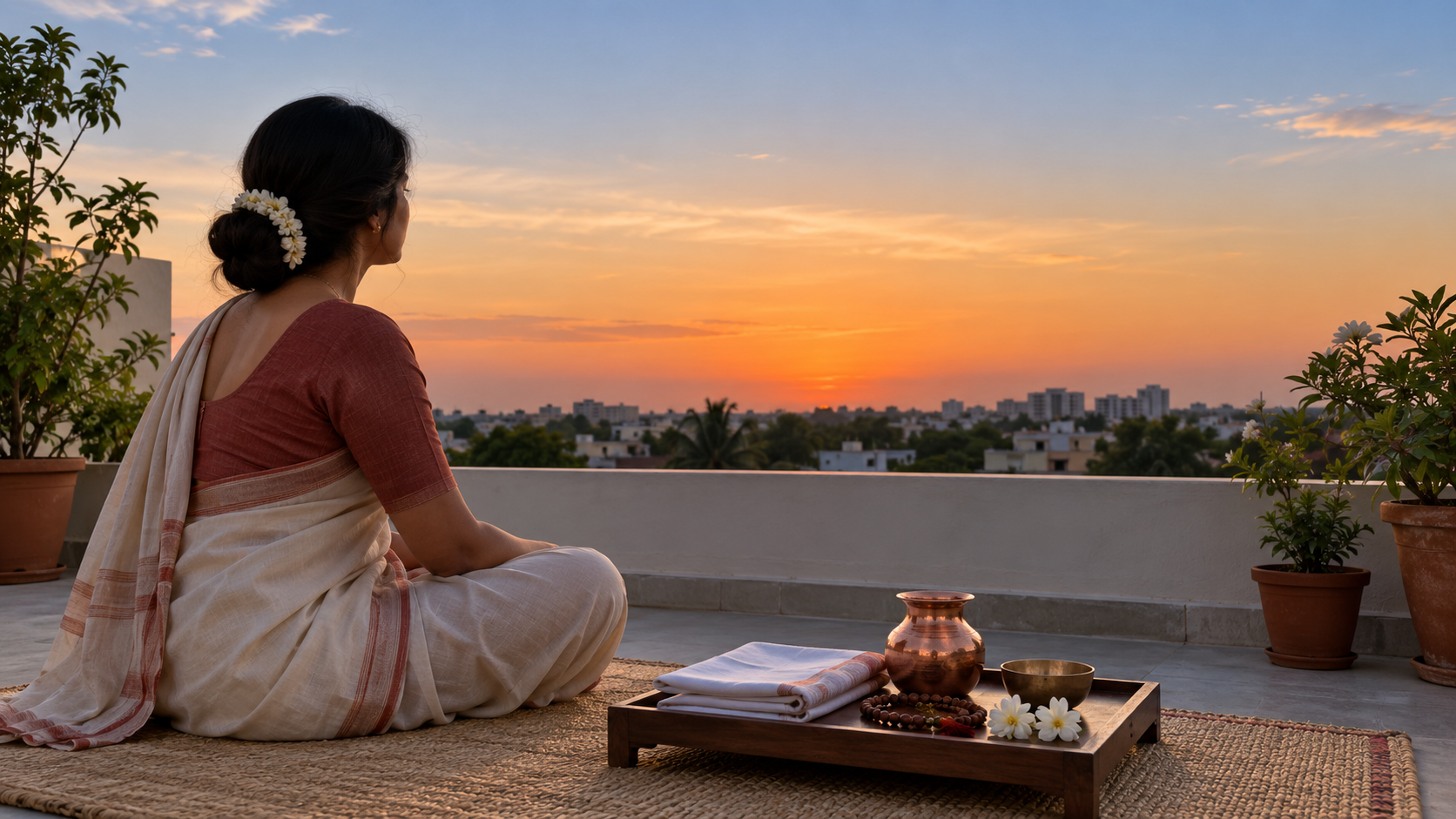
For your next Chandra Darshan, make three decisions in advance: which mantra you will recite, where you will look for the Moon, and whether you have an established arghya instruction to follow. Write the chosen mantra clearly, rehearse its syllables, and leave the rest uncluttered.
Begin with the moola mantra if you need a dependable starting point: ॐ सोम सोमाय नमः. Let one carefully maintained practice become familiar before you add anything else.
References

Leave a Reply
You must be logged in to post a comment.