

If you are considering Brahma Kricchra because you regret a specific action, your first decision is not what to stop eating. It is whether you are ready to undertake a disciplined act of atonement with clear guidance, a truthful intention, and a plan to correct the conduct that brought you to it.
This is a demanding observance, not a casual fast or a spiritual challenge to attempt from a short description. You need to know the rules before you begin, protect your health throughout, and ensure that the twelve days lead to a real change in how you live.
Understand what the twelve days are meant to accomplish
Brahma Kricchra is a twelve-day form of tapasya intended for purification and atonement for sins or misdeeds, with strict rules concerning food, behaviour, and spiritual practice. All three dimensions matter. Reducing it to a diet removes much of its moral and spiritual purpose.
The duration gives the penance a definite boundary, but it does not make the result automatic. Twelve days of restriction cannot by themselves undo harm, settle a neglected duty, or remove a destructive habit. The discipline becomes meaningful when it expresses sincere remorse and supports a different course of action.
Before committing, name the matter for which you seek atonement. Be concrete without becoming theatrical. Instead of saying, “I have been bad,” identify the conduct: you deceived someone, acted from anger, neglected a responsibility, or repeatedly gave in to a harmful tendency. Then identify what must change after the observance. If you cannot yet do that, spend more time in reflection before choosing a start date.
Do not treat penance as self-hatred. Dharmic self-correction asks you to face an action honestly while retaining the capacity to choose better action. Shame that produces concealment or despair is not the same as remorse that produces responsibility.
Prepare the observance without filling gaps by guesswork

The name of the vrata does not give you a complete day-by-day procedure. A brief definition cannot tell you what is permitted at each stage, how a day is counted, what spiritual practices accompany the food discipline, or how the observance is concluded. Ask a competent acharya, purohita, guru, or other teacher who knows the practice as it is followed in your sampradaya and family tradition.
Settle these questions before the first day:
- On which date and at what time does the observance begin and end?
- What exactly are the food and water rules for each part of the twelve days?
- Are the rules concerned with the kind of food, its quantity, the time of eating, the manner in which it is received, or some combination of these?
- Which rules of conduct must be maintained at home, at work, and in speech?
- Which prayers, recitations, worship, study, or contemplative practices are prescribed?
- What should be done if illness or an unavoidable duty interrupts the observance?
- Is there a prescribed concluding act, offering, prayer, or charitable duty?
Write the answers down. Memory becomes unreliable when ordinary routines change, and improvisation can quietly turn a received discipline into a self-designed one. If two people give you conflicting instructions, do not combine the most severe parts of both. Return to the teacher responsible for guiding your observance and ask which procedure you are actually following.
Protect the twelve-day period from predictable disruption. Check work, travel, caregiving, and family obligations before fixing the date. Tell the people who prepare or share your meals only what they need to know. You do not have to make the penance a public performance, but those directly affected should understand the practical limits you will observe.
Food restriction can carry medical risk. Do not begin an austere regimen without professional medical advice if you have a health condition, are pregnant or breastfeeding, take medicine that depends on food or hydration, have a history of disordered eating, or have any other reason fasting may be unsafe. A spiritual vow does not require you to ignore bodily danger. If you become unwell during the observance, stop and obtain appropriate medical help rather than trying to prove endurance.
Keep food, conduct, and spiritual practice together

The most visible part of Brahma Kricchra may be its regulation of food, but visibility is not the same as completeness. The discipline also reaches behaviour and spiritual practice. Use those three areas as a daily check against reducing the observance to mere deprivation.
Follow the food rule exactly, not competitively
Observe the regimen your teacher has given you. Do not assume that “strict” must mean total abstinence from food or water, and do not intensify the rule to feel more devout. Greater severity is not automatically greater sincerity. Accuracy, steadiness, and honesty are better measures than comparison with another person’s austerity.
Arrange permitted food in advance if the instructions call for it. This prevents hunger, inconvenience, or social pressure from making the decision for you in the middle of the observance. It also keeps the focus on discipline rather than continual negotiation over what might count as an exception.
Watch the conduct that food restriction can expose
Austerity can reveal impatience, pride, irritability, or a desire for recognition. Notice those reactions without pretending they are spiritual achievements. If restricted eating makes you harsh with your family or careless in your duties, the behavioural side of the penance needs attention.
Use a simple evening examination. Ask: Where did I act from the same tendency for which I am making atonement? What triggered it? What response would have been more aligned with dharma? Record one or two sentences. The purpose is not to produce an impressive diary; it is to see the pattern clearly enough to interrupt it.
Give the prescribed spiritual practice protected time
Do not leave prayer, worship, recitation, study, or contemplation for whatever time remains after everything else. Once your teacher has specified the practice, reserve a realistic period for it each day. If your schedule cannot hold the prescribed discipline, resolve that problem before starting rather than repeatedly omitting a central part of the observance.
Avoid adding dramatic vows that were not part of your guidance. An overloaded regimen may collapse after a few days and distract from the penance you actually undertook. Brahma Kricchra already calls for sustained discipline across twelve days; it does not need embellishment.
Make atonement visible in what you do afterward
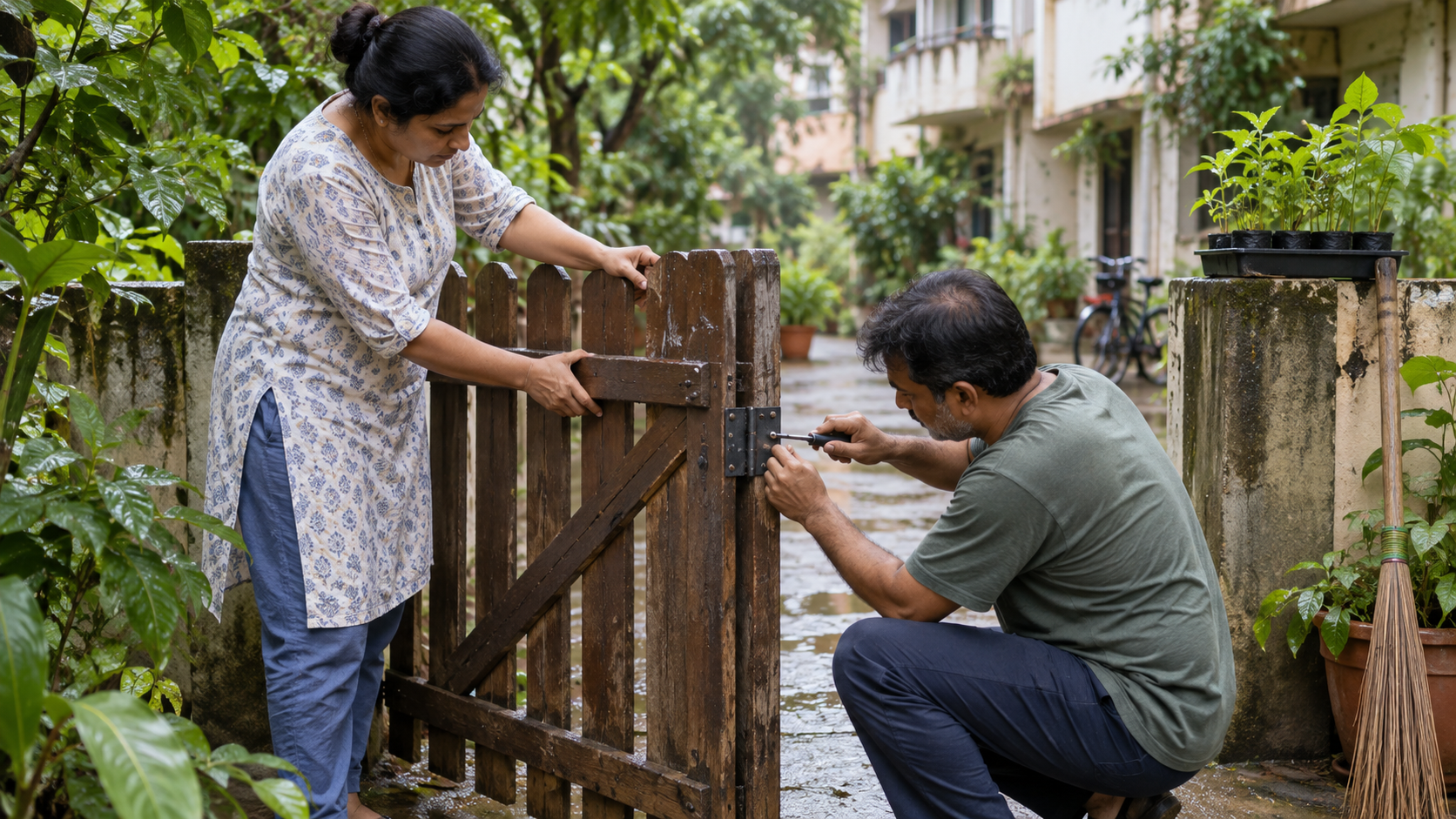
Penance is incomplete as an ethical response if the original behaviour simply resumes on the thirteenth day. Before finishing, translate remorse into one corrective action and one preventive practice.
- Acknowledge the wrong precisely. Separate the action from the excuses you usually attach to it.
- Repair what can responsibly be repaired. This may mean returning something, fulfilling a neglected obligation, correcting a falsehood, apologising without demanding forgiveness, or accepting a fair consequence.
- Do not create fresh harm in the name of confession. If contacting an affected person could endanger them or you, violate a legitimate boundary, or reopen a situation recklessly, seek wise counsel before acting.
- Install a practical restraint. Change the circumstance that repeatedly enables the conduct. A person correcting angry speech might pause before responding; someone correcting neglect might place the duty into a fixed routine. Choose a safeguard that can be observed, not a vague promise to be better.
- Complete the religious observance as instructed. Follow the prescribed conclusion rather than inventing a ceremonial ending from unrelated practices.
This distinction matters: the penance addresses your purification and responsibility, while restitution addresses consequences borne by someone else. One should not be used to avoid the other. Where direct repair is possible and appropriate, private austerity is not a substitute for it.
After completion, retain the smallest daily discipline that directly opposes the old pattern. The twelve-day observance is bounded; the ethical correction should not be. If the same lapse returns, do not hide behind the fact that you completed a difficult vrata. Reassess the trigger, strengthen the safeguard, and seek further guidance.
Questions to settle before you begin
Is Brahma Kricchra simply a twelve-day fast?
No. It lasts twelve days and includes strict food regulation, but it also governs behaviour and spiritual practice. Calling it only a fast obscures two essential parts of the penance.
Can I perform it using only a short online description?
A short description can help you understand the purpose and duration, but it is not enough to establish the complete regimen. Obtain tradition-specific instructions before beginning, especially for the food rules, daily practices, interruptions, and conclusion.
What if the food discipline is unsafe for me?
Do not attempt a medically unsafe restriction. Ask a qualified health professional about the risk and ask your religious guide whether another form of penance is appropriate. Do not design your own severe substitute or stop prescribed treatment to preserve the appearance of completing a vow.
Does completing twelve days erase the consequences of wrongdoing?
Completion should not be treated as an automatic cancellation of responsibility. Where your action caused repairable harm, atonement should support truthful acknowledgement, appropriate repair, and changed conduct. The proof of the observance lies partly in what you no longer repeat.
Before choosing a date, write down the act you are addressing, the repair it calls for, and the teacher who will settle the procedure. If any one of those remains unclear, preparation is still your present practice. Begin the twelve days only when you can undertake them safely, accurately, and with a credible plan for the life that follows.
References

Leave a Reply
You must be logged in to post a comment.