

You are probably checking April 4 because you need a practical answer: should you perform the puja, begin the journey, send the application, or start another important task before or after the morning tithi change? The cleanest choice is to use Dwitiya only when the work can begin and finish before your local boundary. Otherwise, verify the local transition and begin under Tritiya.
The published reference for Saturday, April 4, 2026 places Krishna Paksha Dwitiya until approximately 8:26 AM, followed by Krishna Paksha Tritiya. Do not copy 8:26 AM into your calendar without checking the location attached to it. Tithi boundaries, sunrise, solar noon, Rahu Kalam, Yamaganda, Gulika, Nakshatra and Lagna must all be converted to your own place and clock.
Key takeaways for April 4, 2026
- April 4 is Saturday, or Shanivara, so the day’s practical emphasis is patience, duty, disciplined effort, service and responsible follow-through.
- Krishna Paksha Dwitiya operates until approximately 8:26 AM in the reference calculation; Krishna Paksha Tritiya follows for the remainder of the date.
- The clock time is not universal. Confirm the transition for your city before using it for an observance or important beginning.
- If the local transition occurs after sunrise, Dwitiya is the Udaya tithi, the tithi present at sunrise. This is often the deciding factor for assigning an observance to a civil date.
- Neither Dwitiya nor Tritiya is a rikta tithi. Routine worship, study, japa, administration, home organization and consolidation need not be rejected merely because the Moon is waning.
- For a routine beginning, look for a favorable local Choghadiya or Abhijit Muhurta that does not overlap the Saturday avoidance periods. A major samskara or purpose-specific ceremony requires a fuller, locally calculated muhurta.
Which tithi governs your observance?

| Calendar factor | April 4 reading | What you should do |
|---|---|---|
| Vara | Saturday, or Shanivara | Give preference to disciplined work, service, repair, accountability and patient completion. |
| Morning tithi | Krishna Paksha Dwitiya until about 8:26 AM in the reference calculation | Use it only if your local Panchang confirms the boundary and the intended activity fits comfortably before it. |
| Later tithi | Krishna Paksha Tritiya after the boundary | Use the later period for consolidation, accounts, correspondence, study, japa or an orderly routine start. |
| Lunar month | Chaitra in many North Indian Purnimanta calendars; the month label may differ in an Amanta calendar | Do not treat different month names as proof that one calendar is wrong. Compare the tithi, place and convention first. |
A tithi is not a fixed twenty-four-hour date. It measures each 12-degree increase in the angular separation of the Moon and Sun. Because the Moon does not move at a uniform apparent speed, an individual tithi commonly lasts about 19 to 26 hours and can end at any civil-clock time. That is why two tithis can appear on one date and why midnight does not determine the change.
For a vrata, festival or lineage-specific observance, first identify the tithi present at your local sunrise. If your locally calculated Dwitiya-to-Tritiya boundary comes after sunrise, the Udaya tithi is Dwitiya. Your sampradaya may also apply rules involving how long a tithi touches sunrise or another part of the day, so follow its established calendar for formal observances.
For ordinary work, the decision is simpler. A short morning practice that can be completed well before the local boundary may remain entirely within Dwitiya. If the task would straddle the transition, begin after Tritiya starts instead of trying to squeeze it into the final minutes. The point is continuity and attentiveness, not anxiety about a minute on the clock.
Calculate the local Saturday muhurta windows
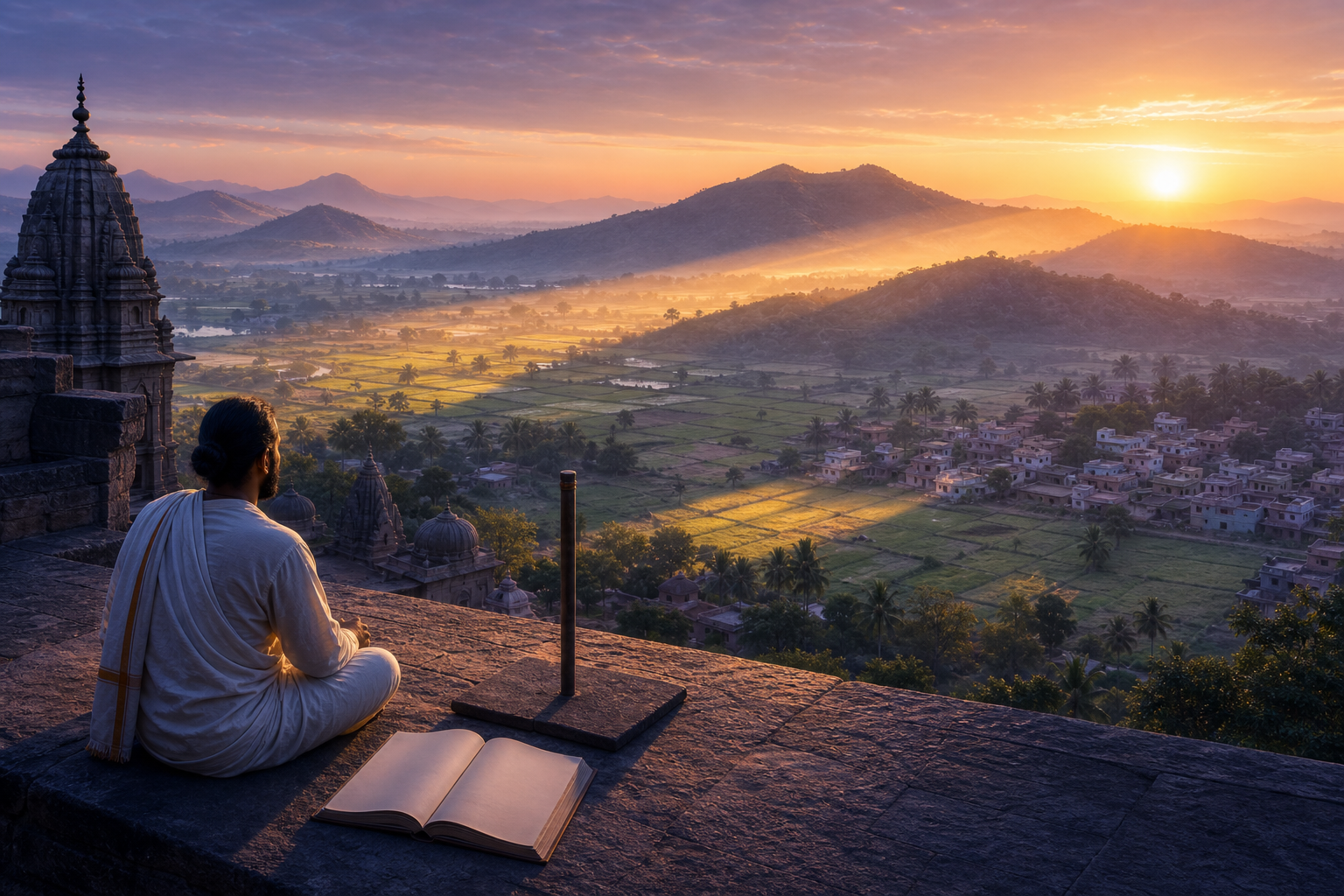
A useful Panchang decision begins with your location, not with a generic nationwide timetable. Retrieve the accurate sunrise and sunset for April 4 at the place where the action will begin. Then calculate the Saturday periods from that daylight interval.
- Record local sunrise as S and local sunset as E, using the correct time zone and civil-clock rules for your location.
- Calculate the daylight duration as E minus S.
- Divide that duration by eight. Call the resulting segment length L.
- On Saturday, Gulika occupies the first segment, from S to S plus L.
- Rahu Kalam occupies the second segment, from S plus L to S plus two times L.
- Yamaganda occupies the sixth segment, from S plus five times L to S plus six times L.
- Find true local solar noon. The practical Abhijit candidate is roughly the period beginning 24 minutes before it and ending 24 minutes after it, subject to the local tradition and the actual length of the day.
- Check the daytime Choghadiya. Prefer Shubha, Labh or Amrit, and normally avoid Udveg, Rog and Kala for a new beginning.
- Reject any candidate that overlaps the avoidance period your family or lineage observes. Then confirm the active Nakshatra and, for a higher-stakes beginning, the Lagna.
The Saturday assignment is Gulika in the first daylight segment, Rahu Kalam in the second and Yamaganda in the sixth. These are segment positions, not permanent clock times. A timetable that prints the same Rahu Kalam for every city ignores the change in local sunrise, sunset and daylight length.
Abhijit Muhurta is a practical fallback for a routine beginning when a more purpose-specific muhurta is unavailable. It is centered on true solar noon, not automatically on 12:00 PM. Do not let the attractive Abhijit label end the calculation: check whether the proposed period conflicts with another interval your tradition avoids.
Choghadiya adds another usable layer. Both day and night are divided into eight portions, with labels that describe their general quality. For correspondence, study, household organization or another ordinary start, a local Shubha, Labh or Amrit portion that also clears Rahu Kalam and Yamaganda is usually more defensible than a clock time copied from an unspecified city.
Choose work that fits Dwitiya, Tritiya and Shanivara
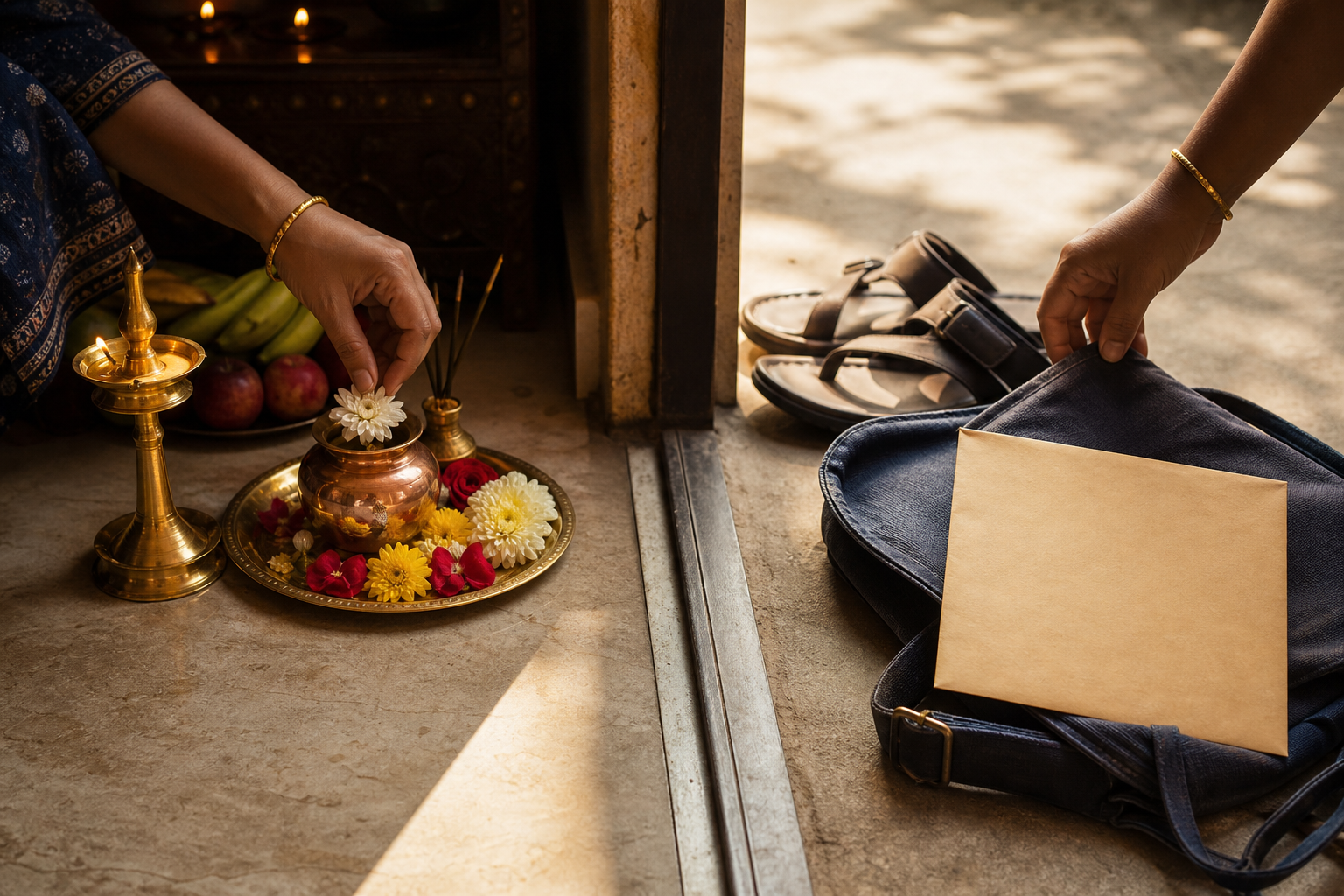
Early Krishna Paksha is a period of reduction and consolidation. The Moon is still visibly bright but waning, so the day’s symbolism favors removing excess, refining what already exists and bringing attention back to essentials. That does not make the day unusable for beginnings. Dwitiya and Tritiya are not among the rikta tithis, which are the fourth, ninth and fourteenth tithis.
Before the local Dwitiya boundary
- Complete a brief, familiar morning puja or recitation.
- Continue a course of study already underway.
- Finish a focused task whose beginning and end both fit comfortably before the transition.
- Review a plan before committing to its next stage.
Avoid starting at the last moment merely to claim Dwitiya. If you cannot finish the intended act before the transition, the later Tritiya period provides the cleaner boundary.
After Tritiya begins locally
- Consolidate notes, schedules, records or household plans.
- Settle routine accounts and close small administrative obligations.
- Begin or deepen japa, meditation and quiet scriptural study.
- Organize the home, respond to correspondence or repair an unfinished process.
- Make a modest routine start after checking the local avoidance periods.
Saturday adds the discipline associated with Shani. The most fitting response is not fear but responsibility: keep promises, finish neglected duties, restrain waste, offer appropriate dana, perform seva and treat others with patience. Lighting a diya at dusk and keeping the evening simple can give the day a clear devotional shape without turning Panchang observance into a burden.
This rhythm also points to values held across the wider Dharmic family. Hindu, Buddhist, Jain and Sikh traditions differ in theology and calendar practice, but disciplined remembrance, restraint, seva, dana, truthful conduct and ahimsa give household life a shared moral direction. On this date, you can express that inheritance through one concrete act of service rather than through an elaborate display.
Why Panchang displays may disagree

A complete Panchang has five limbs: Tithi, Vara, Nakshatra, Yoga and Karana. A date-and-tithi line gives you only part of the picture. The Moon’s Nakshatra, the prevailing sidereal Rashi and the ascendant during your chosen start can materially refine a muhurta, but none of them should be guessed from the civil date alone.
Nakshatra divides the zodiac into 27 lunar mansions, and the Moon changes its Nakshatra roughly once in twenty-four hours. Lagna moves much faster, cycling through the Rashis at roughly two-hour intervals. A calculation must therefore know both your location and intended start time. Many modern Panchangs use a nirayana, or sidereal, framework with an ayanamsa such as Lahiri; two systems using different settings may print different transition times.
- Check the city or coordinates attached to the calculation.
- Check the time zone shown on April 4, including any applicable seasonal clock change.
- Confirm that the listed 8:26 AM boundary has been recalculated for your location.
- Identify whether the calendar follows the Purnimanta or Amanta month convention.
- Check the ayanamsa when comparing Nakshatra or Rashi results.
- For a formal observance, use the Udaya tithi and the rules followed by your sampradaya rather than a bare civil-date label.
The North Indian Purnimanta system generally places this waning fortnight in Chaitra. An Amanta calendar used in much of South India may display another month name while preserving the same Dwitiya-to-Tritiya sequence. Month-name disagreement is therefore not enough to reject a calendar; first compare its convention, place and tithi boundary.
On the evening of April 3, save three local details: the Dwitiya-to-Tritiya transition, sunrise and sunset, and true solar noon. Calculate the Saturday avoidance segments, mark one favorable Choghadiya or Abhijit candidate, and verify the Nakshatra if the beginning matters beyond routine household work. You will then enter April 4 with a usable plan, not a collection of disconnected auspicious labels.