
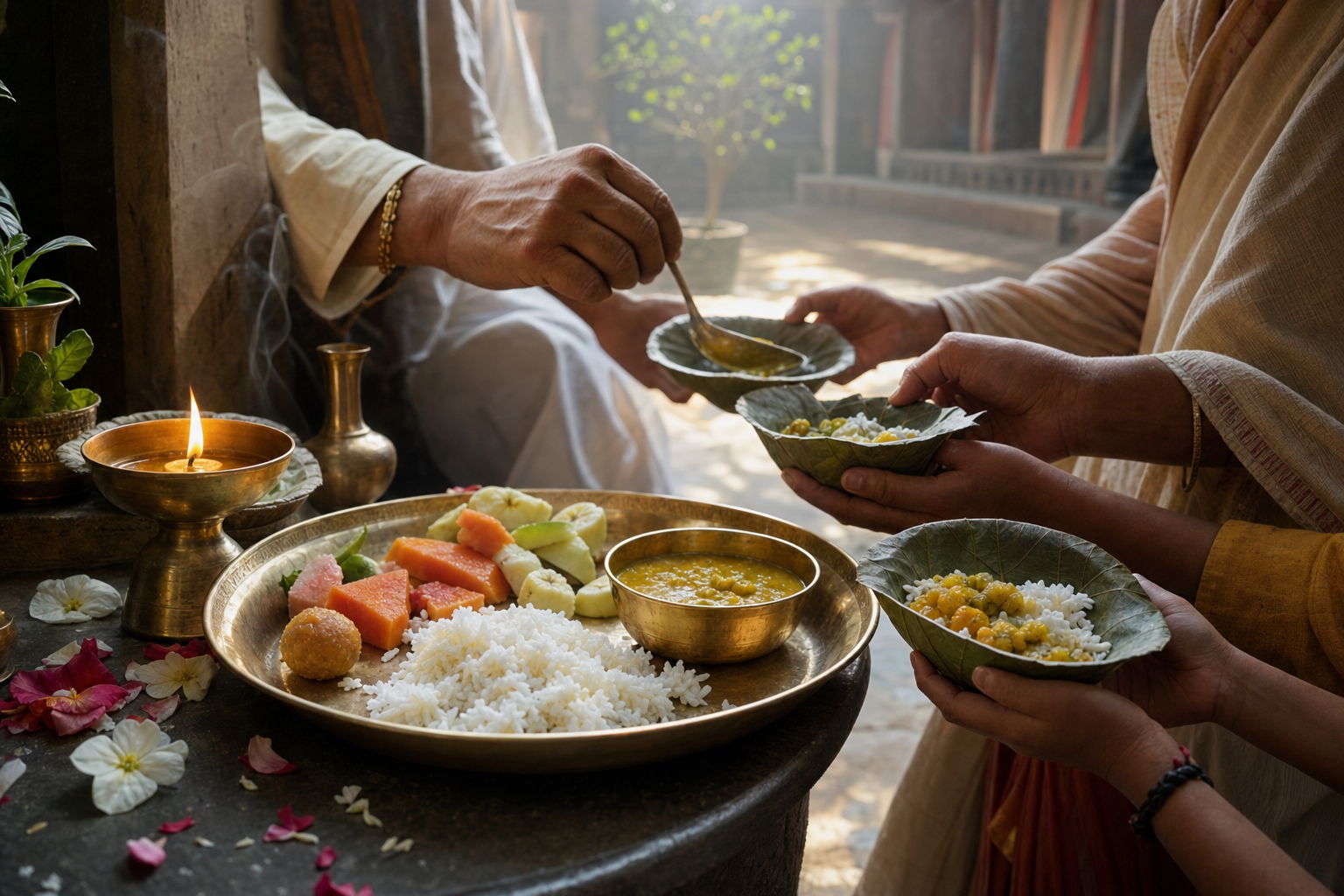
If you are deciding what to prepare for puja—or wondering what makes an ordinary meal worthy of offering—you do not need an elaborate feast. You need food prepared attentively, offered without possessiveness, and shared in a way that actually nourishes life.
That last movement matters. Sacred food is not merely placed before the Divine and then consumed privately. It passes through a cycle of gratitude, surrender, blessing, and distribution. Once you see that cycle, divine nourishment and sacrifice stop looking like separate religious ideas. They become two sides of one discipline: receive life gratefully, then use what you have received for more than yourself.
An offering is completed when nourishment begins to circulate
Naivedyam is food presented to the deity. Prasadam is that offering received back as grace. The physical dish may still be rice, milk, fruit, or another familiar preparation, but your relationship to it has changed. You no longer approach it as an isolated consumer claiming an object. You receive it as something entrusted to you.
This is why simplicity is not an obstacle. A humble preparation can express the full movement of worship when it is made cleanly, offered sincerely, and distributed with care. Milk, grain, gentle sweetness, and unhurried preparation can carry more devotional coherence than an extravagant menu produced for display.
You can test the integrity of an offering with three questions. Was the food prepared with attention rather than resentment or haste? Was it offered as an act of gratitude rather than a transaction for divine favour? After the offering, did the food nourish the people present—or was ritual appearance treated as more important than living need?
The third question keeps sacred food from becoming decorative religion. Prasadam asks to be received, and receiving naturally leads to sharing. The portion may be small, but no one needs a large serving to practise equal regard, restraint, and gratitude.
Chhinnamasta shows what sacrifice is—and what it is not

The fierce form of Chhinnamasta brings the relationship between hunger and divine giving into unforgettable focus. In the Pranatosini Tantra narrative, Parvati is bathing in a river when her attendants ask for food. Their hunger is answered by a startling manifestation: the Goddess severs her own head, and three streams of life-giving blood flow from her body. Two nourish the attendants, while the central stream nourishes the Goddess herself. Once their need has been met, she restores her form.
This is sacred imagery, not an instruction to imitate bodily harm. Nor should it be used to praise exhaustion, abusive demands, or the disappearance of personal boundaries. Chhinnamasta’s act belongs to a theological vision in which Shakti is the source, circulation, and renewal of life. The apparent destruction of form reveals an underlying abundance of power.
The central stream is especially important when you are trying to understand sacrifice. The Goddess feeds others without becoming lifeless herself. Her giving includes replenishment. The image therefore resists two opposite errors: hoarding energy as though nothing can be spared, and depleting yourself until you can no longer sustain anyone.
Chhinnamasta is also commonly shown standing above Kama and Rati in embrace. The point is not hatred of desire. It is mastery of desire and the redirection of creative force. The three streams can be contemplated as prana, generosity, and self-knowledge; yogic readings also associate the central current with inner transformation. These are interpretations of a many-layered tantric image, not a single formula to which every lineage must conform.
For your own practice, the useful question is not, “How much can I suffer?” Ask instead, “Which energy is controlling me, and where could it be redirected?” Time spent feeding vanity might become service. Anger might become protection of someone vulnerable. Restless appetite might become disciplined effort. Money reserved for unnecessary display might help provide a meal. Sacrifice becomes spiritually meaningful when attachment is cut and life is strengthened.
Prepare Palannam as a complete devotional practice
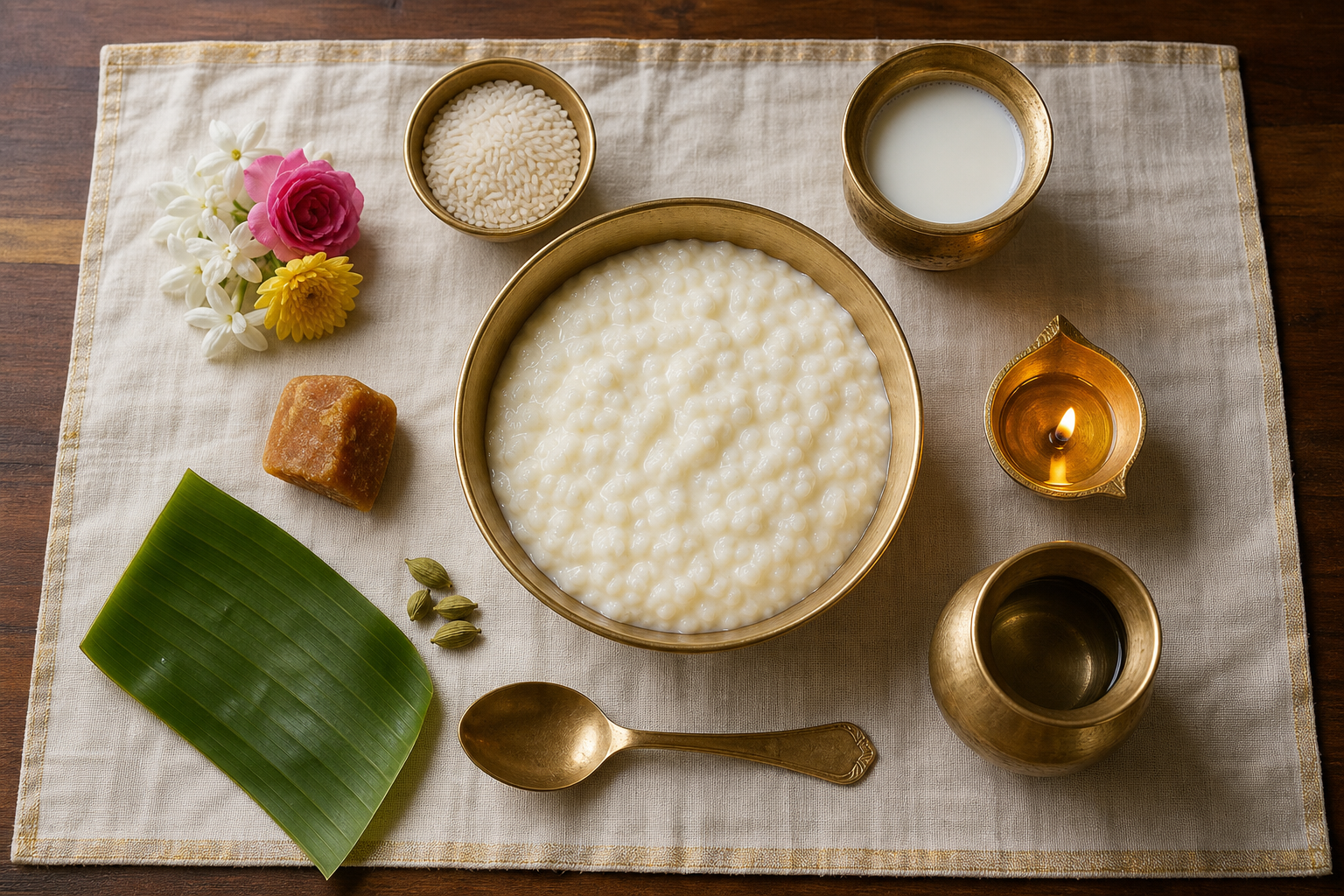
Palannam, or milk rice, is a practical naivedyam when you want the preparation itself to support a calm state of worship. It is associated with Ma Annapurani, the giver of food and sustenance, and its basic ingredients are accessible: rice, milk, and sweetness. Cashews, almonds, raisins, ghee, and cardamom can add celebratory warmth without changing the dish’s essential simplicity.
- Prepare the space before the food. Use a clean vessel and clear the immediate cooking area. Gather the ingredients so that the preparation can remain unhurried.
- Measure one part rice to four or five parts milk. Short-grain rice is customary because it softens into the milk, though some households prefer a fragrant variety.
- Cook slowly over low heat. Stir with attention until the grains are tender and the mixture becomes soft and velvety. Do not force the process with unnecessary haste; the gradual thickening is part of the dish’s character.
- Add sweetness according to your household practice. Sugar gives the familiar gentle sweetness. Jaggery may be used for a deeper profile where that choice belongs to the family’s method.
- Add optional enrichment with restraint. Cashews, almonds, and raisins may be roasted in ghee and folded into the milk rice. Cardamom can provide aroma. These additions are adornments, not the measure of devotion.
- Offer the Palannam while it is fresh and warm. Place it before Ma Annapurani with gratitude for the grain, milk, labour, land, animals, and relationships through which nourishment reached your home.
- Distribute it as prasadam. Serve the people present, receive your own portion mindfully, and set aside a share for someone beyond the immediate act of worship when that is practical.
Do not turn the recipe into an anxiety test. The purpose is not to prove ritual sophistication. If you spend the entire preparation worrying about garnish, presentation, or comparison with another household, attention has shifted from offering to performance. Return to the essentials: cleanliness, freshness, steadiness, gratitude, and sharing.
The dish also teaches something through its ingredients. Grain carries the work of cultivation and the dependence of human life on land. Milk evokes nurturing abundance. Sweetness marks the offering as welcome rather than reluctant. Ghee and nuts add festal generosity when available. Each ingredient can prompt gratitude, but no ingredient licenses waste.
Carry the altar’s ethic into the way you feed others
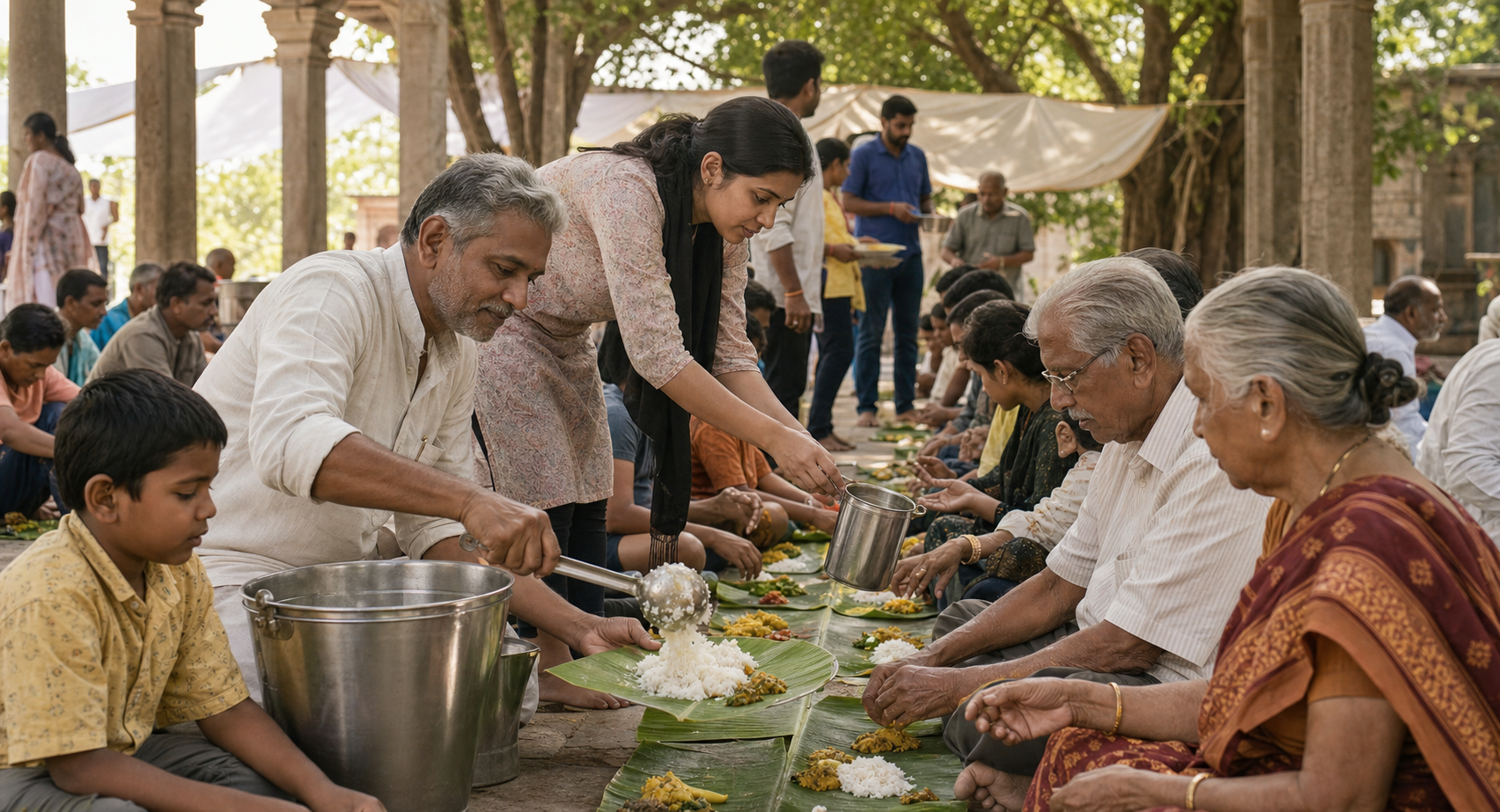
A sacred meal should sharpen your awareness of ordinary hunger. If devotion ends at the edge of the puja plate, the ritual has not yet reshaped conduct. You do not need to launch a large programme to act on this insight. You can begin by deciding who will receive the food before you decide how impressive the menu will be.
Several Dharmic traditions give nourishment this moral and spiritual weight without becoming interchangeable. Hindu naivedyam and prasadam place food within a relationship between deity, devotee, and community. Buddhist dāna trains generosity and weakens clinging; the Vajrayana figure Chinnamunda carries a fierce resonance with wisdom severing attachment so that compassion can act. Jain dāna and aparigraha join giving to non-possessiveness and care for life. Sikh langar makes communal feeding an institution of seva. The forms differ, but each asks whether spiritual discipline becomes tangible care.
You can bring that ethic into a home observance, temple gathering, or community meal by making a few concrete decisions early. Estimate portions around the people who will actually eat, not around the appearance of abundance. Keep distribution in the plan rather than treating leftovers as an afterthought. Make the simplest suitable food well before adding costly variety. Give recipients the same courtesy you would want when accepting food yourself. And take your own share without guilt: service that cannot be sustained soon ceases to serve.
This is also where ahimsa meets nourishment. Feeding life is not only the avoidance of injury. It is active attentiveness to need. The hungry attendants in Chhinnamasta’s manifestation are not dismissed with a teaching about transcending the body; their hunger is answered. The lesson is demanding because it does not allow spiritual language to become an excuse for ignoring material care.
Key takeaways for your next sacred meal
- Sacred food follows a cycle: prepare attentively, offer gratefully, receive humbly, and distribute responsibly.
- Ritual complexity is optional. Clean, fresh, simple food can carry a complete devotional intention.
- Chhinnamasta’s self-offering is divine symbolism, not approval of violence, coercion, or self-destruction.
- The central stream that nourishes the Goddess makes replenishment part of giving, not its opposite.
- Sacrifice means redirecting attachment, desire, time, and resources toward the protection and nourishment of life.
- Palannam offers a practical starting point: one part rice, four or five parts milk, slow cooking, modest sweetness, a warm offering, and mindful sharing.
For your next puja, add one name to the ingredient list: the person with whom you will share. Then prepare only what you can offer and distribute with care. That small decision carries sacred food beyond the altar and turns nourishment into a repeatable practice of dharma.
References
- DharmaRenaissance Blog — Chhinnamasta in the Pranatosini Tantra: Divine Self-Sacrifice and Cosmic Renewal
- DharmaRenaissance Blog — Palannam (Milk Rice): A Soul-Nourishing Naivedyam Beloved by Ma Annapurani
