
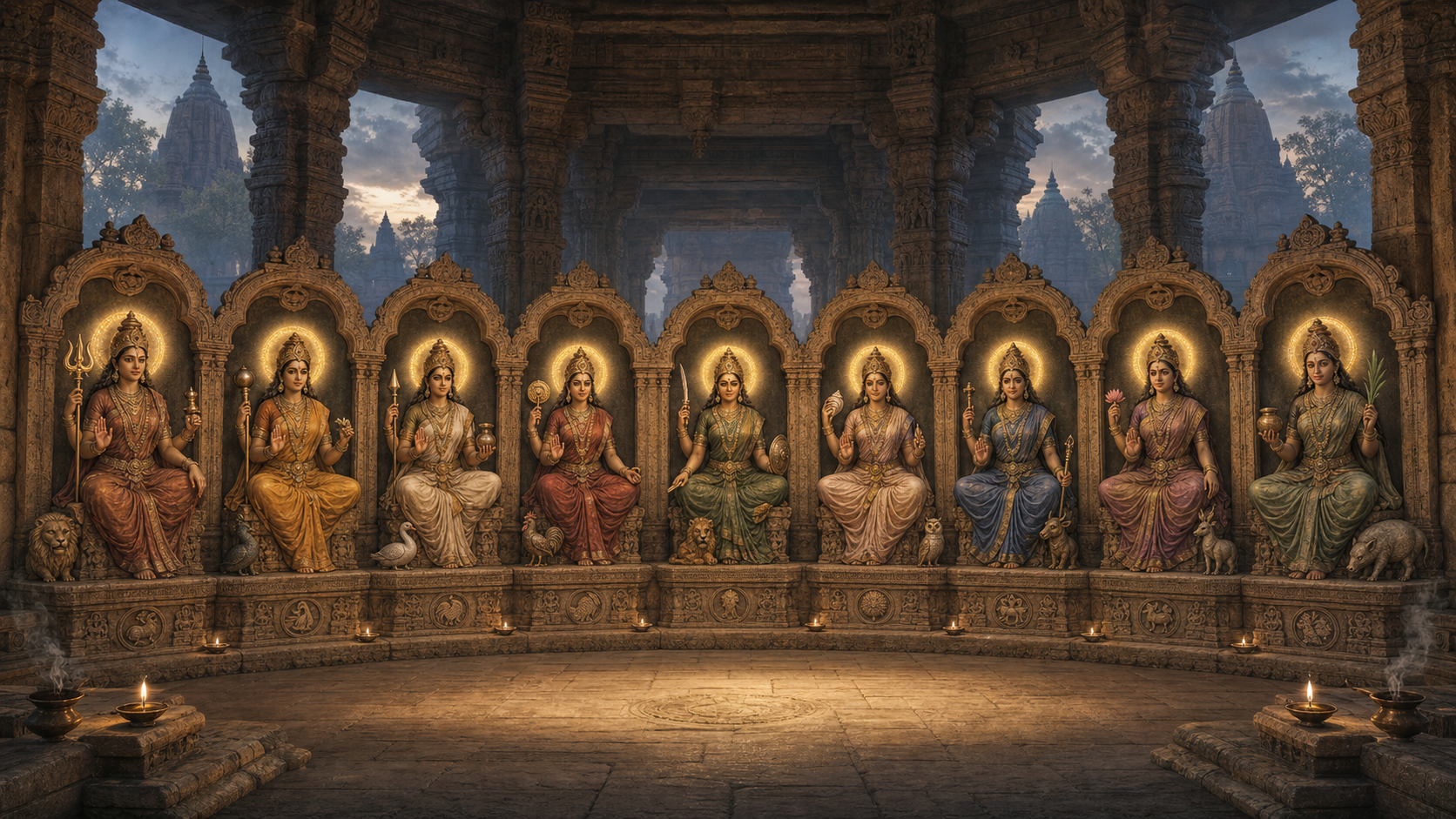
You may have learned the seven Mothers, encountered the name Nava Matrikas, and immediately wondered which two goddesses complete the group. The practical answer begins with a common ninefold list, but it cannot end there: Shakta traditions preserve more than one way of naming and arranging the Mothers.
Knowing that variation matters will help you avoid two common mistakes. You will not dismiss a local temple’s arrangement because it differs from an online list, and you will not turn a useful theological map into an improvised ritual.
Nine expands the sacred company; it does not correct seven
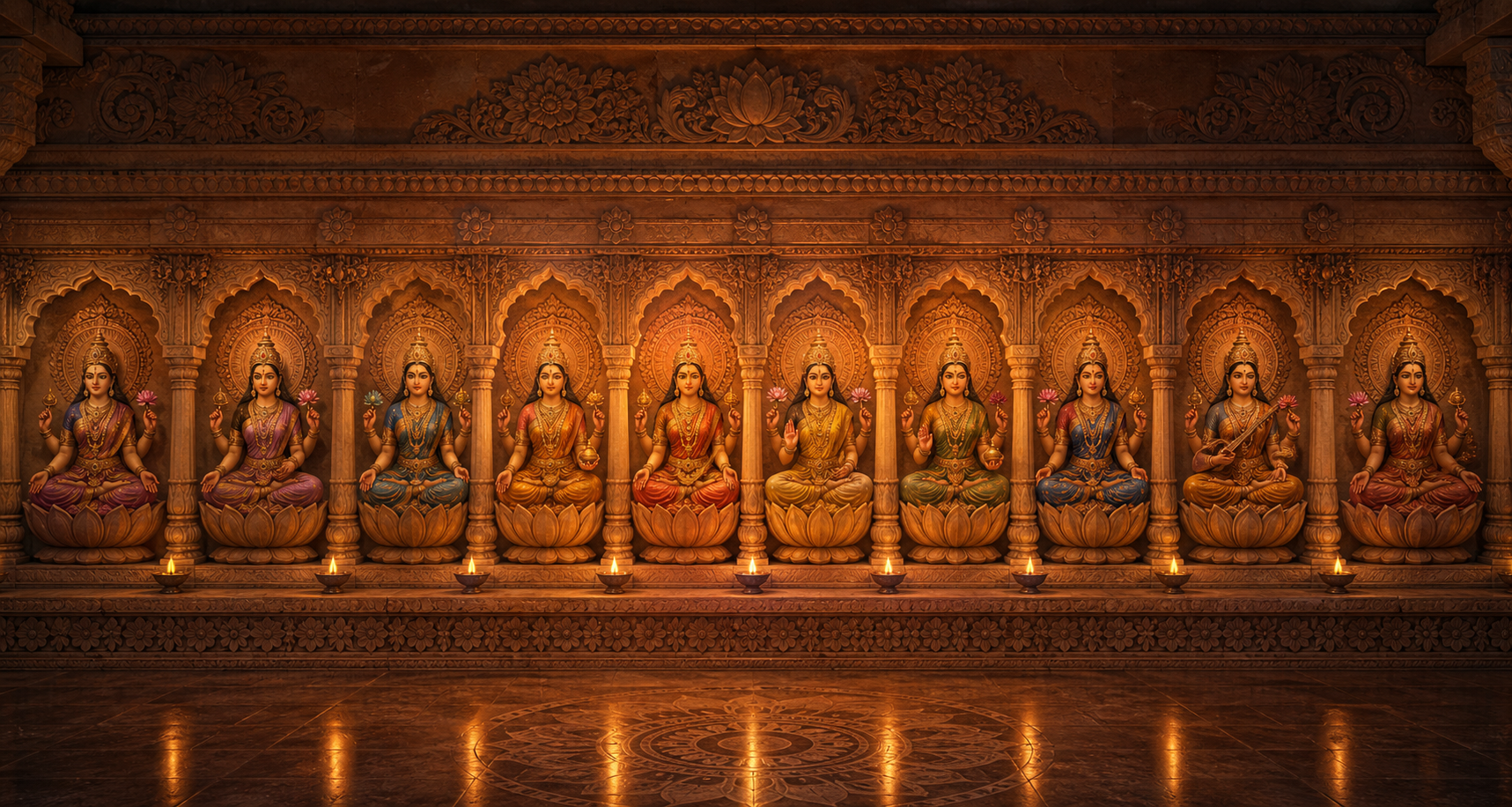
Sapta means seven and nava means nine. The Nava Matrikas therefore form a ninefold company of the Mothers, while the Saptamatrikas form a sevenfold company. The second number does not make the first obsolete. Each count belongs to a particular textual, regional, iconographic, or ritual setting.
Matrika carries the sense of a divine Mother or little Mother. The term should not be mistaken for a statement of lesser status. It evokes a power that generates, nourishes, guards, disciplines, and, when necessary, destroys what threatens the sacred order. The Matrikas belong to an old current of goddess veneration in the Indian subcontinent, not to a recent attempt to produce a tidy catalogue of deities.
The collective is as important as any individual figure. A list of nine isolated biographies can tell you their names, but it can hide what their grouping teaches: divine power appears in many distinct forms without ceasing to be Shakti. In a Shakta reading, their associations with well-known devas do not make the Mothers secondary or dependent. The masculine divine form and its Shakti are not competing owners of the same power.
This also changes how you read fierce imagery. A formidable face, weapon, or martial posture is not evidence that a Mother is evil. Fierceness can communicate protection, the confrontation of disorder, and the removal of forces that ordinary gentleness cannot subdue.
The common ninefold arrangement and what each name indicates
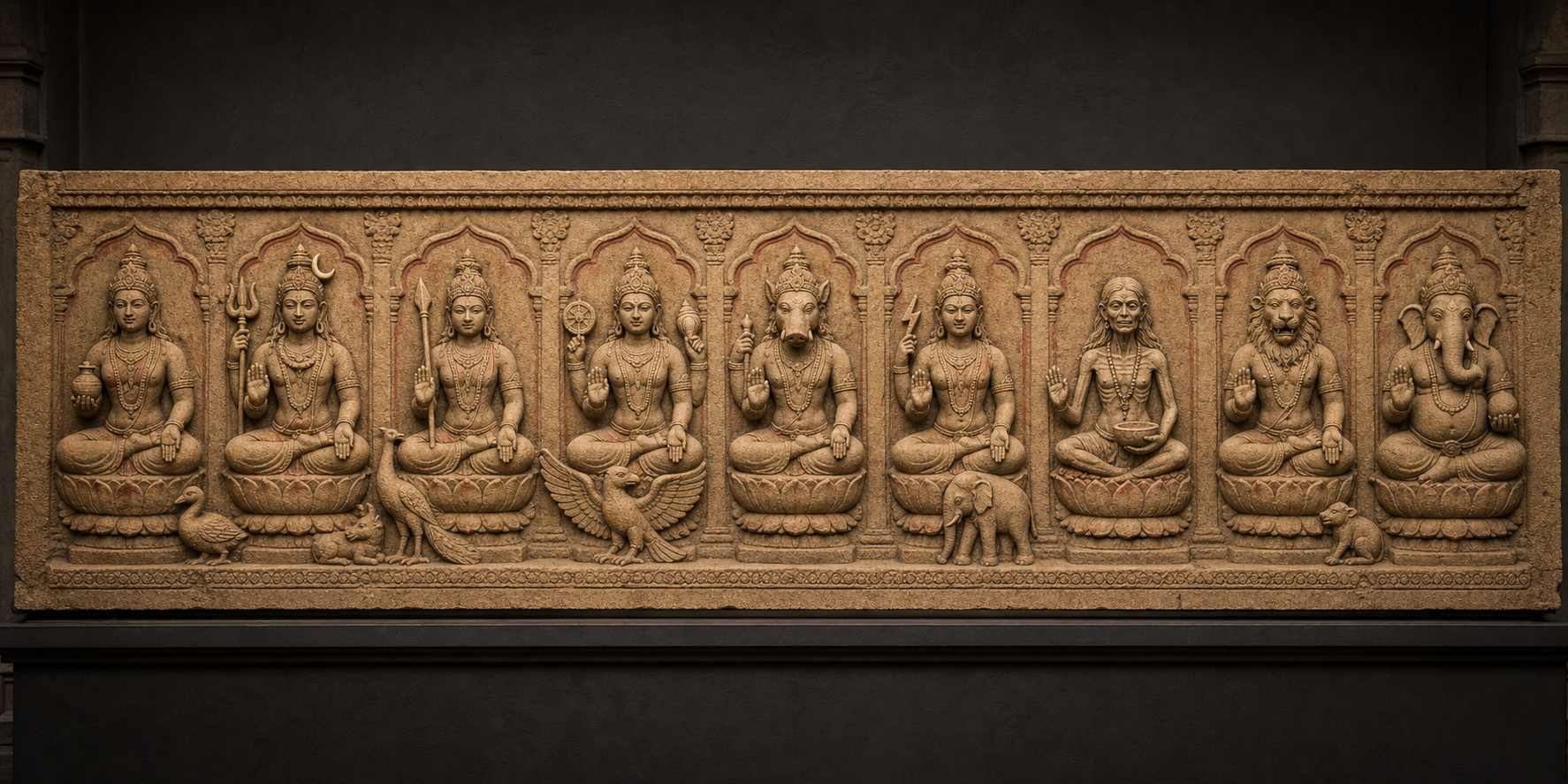
A widely encountered working arrangement begins with the familiar seven Mothers and adds Narasimhi and Mahalakshmi. It gives you a sound vocabulary for study, provided you remember that a local lineage may preserve a different enumeration or order.
- Brahmani is the Shakti associated with Brahma.
- Maheshvari is associated with Shiva in his form as Maheshvara.
- Kaumari is associated with Kumara, also known as Skanda.
- Vaishnavi is associated with Vishnu.
- Varahi is associated with Varaha, the boar form.
- Aindri, also called Indrani, is associated with Indra.
- Chamunda is a fierce form of Devi and occupies a distinctive place within the company.
- Narasimhi is associated with Narasimha, the man-lion form.
- Mahalakshmi is the great form of Lakshmi within this ninefold arrangement.
Use this list as an entry point, not as a universal checksum. Spellings also vary when Sanskrit names move among scripts and regional languages: Maheshvari may appear as Maheshwari, Aindri as Indrani, and Kaumari in forms shaped by local pronunciation. A spelling difference alone does not prove that two traditions are naming different goddesses.
The better question is not simply, “Which list is correct?” Ask, “Which ninefold arrangement does this text, shrine, or lineage recognize?” That question can be answered from evidence in front of you. The demand for one list that overrides every context cannot.
How to identify a Nava Matrika group without forcing the count
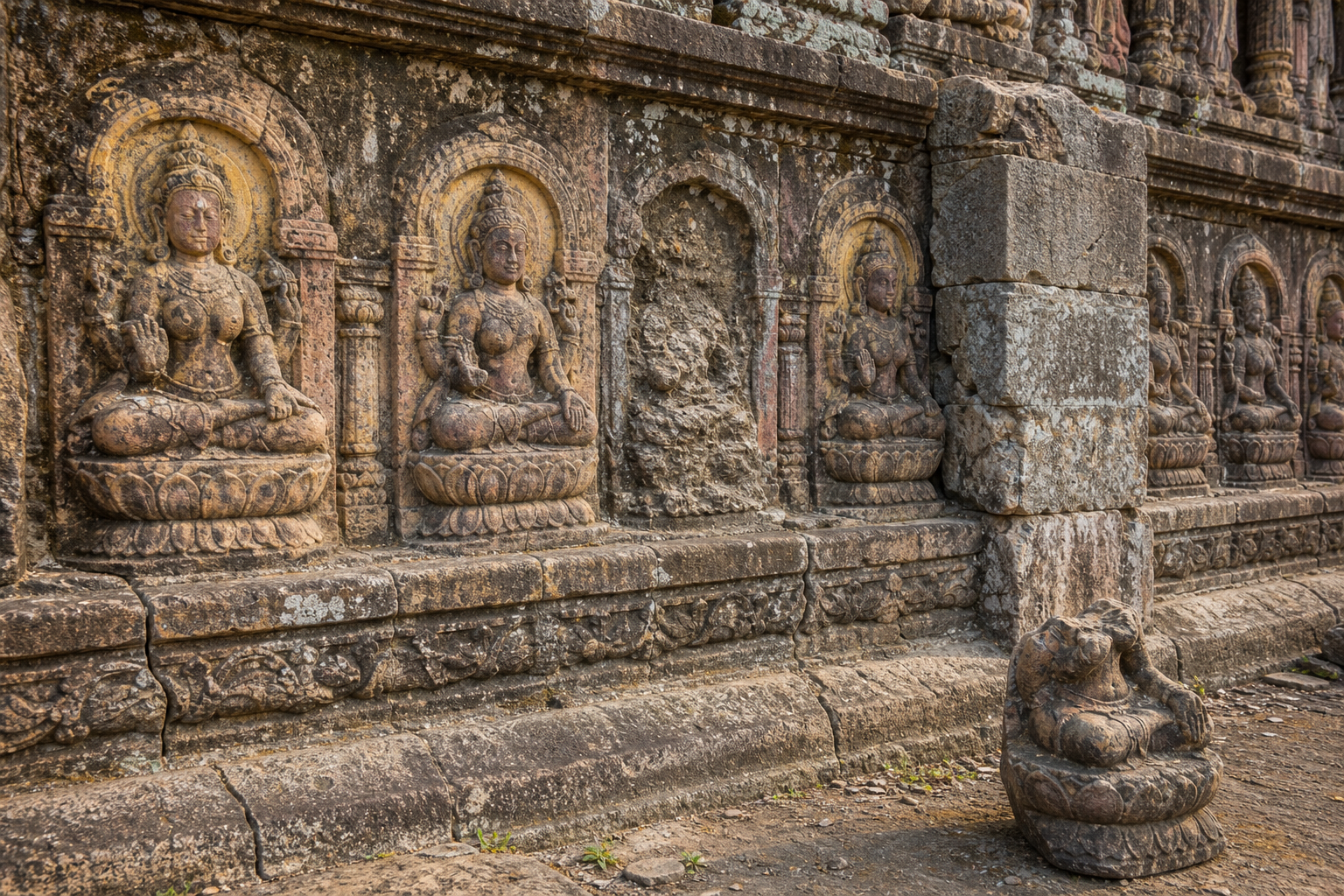
A row containing nine figures is not automatically a Nava Matrika group. Attendants, guardians, or other deities can appear beside a company of Mothers. Conversely, damage, renovation, or the loss of an image can make an originally larger group appear smaller. Counting visible bodies is therefore only the first check.
- Establish the setting. Record the temple, museum, manuscript, household shrine, or festival in which the group appears. A detached image has less interpretive context than an image still worshipped in its original setting.
- Look for names before assigning them. Read an inscription, object label, temple notice, or published local description if one exists. Copy the names and their order exactly, including unfamiliar regional forms.
- Separate the Mothers from neighboring figures. Do not assume that every figure in the same sculptural row belongs to the numbered group.
- Compare attributes cautiously. A recognizable association may support an identification, but damaged objects and regional iconography can make one visual feature ambiguous.
- Ask the custodian of the living tradition. For an active shrine, a knowledgeable priest, hereditary practitioner, or temple authority can tell you which names the community actually invokes.
- Let local evidence govern the local case. If a shrine’s received list differs from the common arrangement above, describe that difference instead of silently replacing it.
This method matters because classification is not harmless when it erases a community’s own memory. A museum label may need a cautious identification; a living shrine already has a ritual identity. Treating those two situations as identical produces false certainty.
Approach worship at the level for which you have guidance
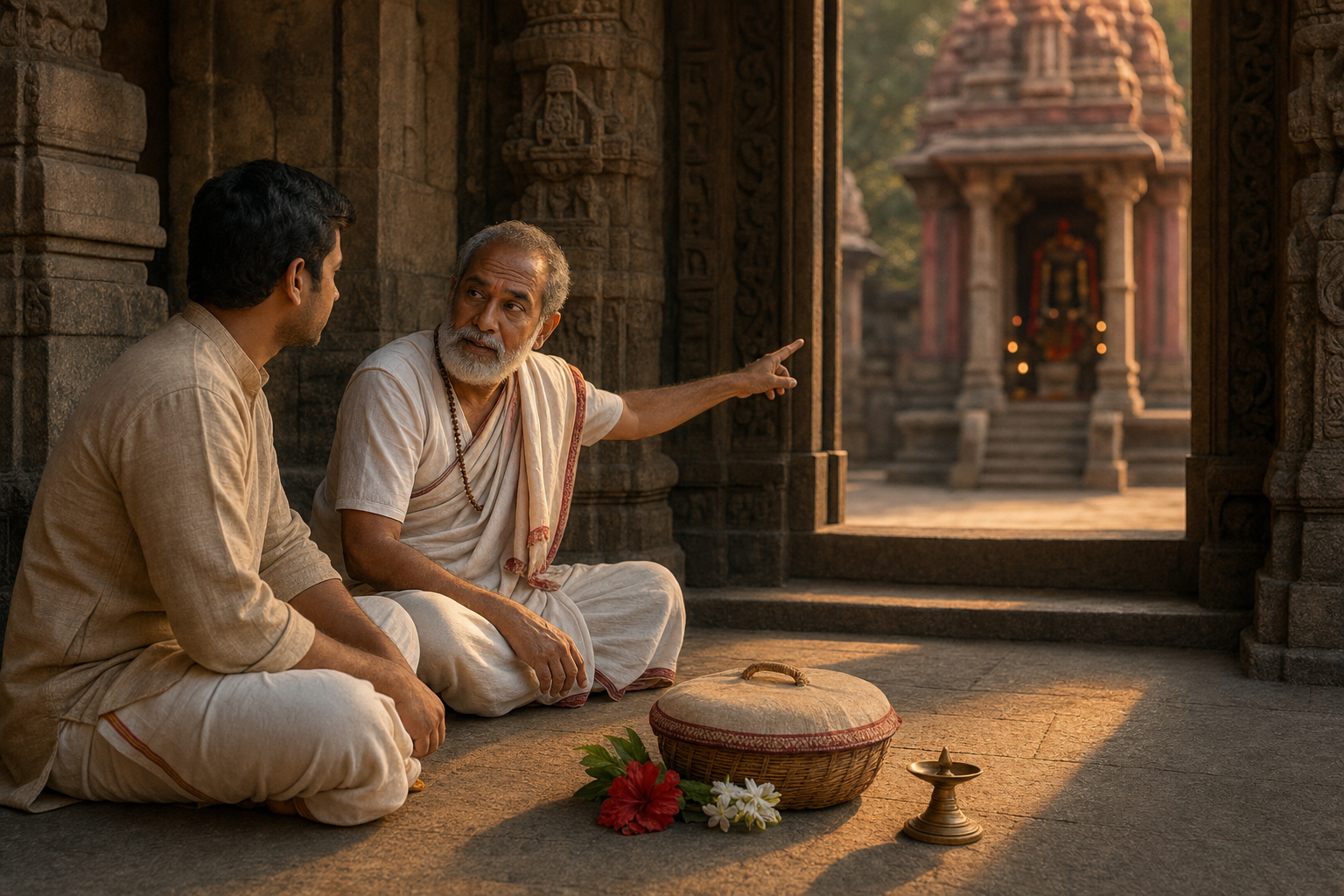
Learning the names, receiving darshan, and undertaking formal Matrika sadhana are different acts. You do not need esoteric instructions merely to approach the Mothers with reverence. You do need proper guidance before adopting a lineage-specific mantra, yantra, nyasa, initiation practice, or ritual sequence.
- Decide what you are actually seeking. If your purpose is study, begin with names, context, and iconography. If it is temple worship, follow that temple’s public practice. If it is formal sadhana, seek instruction within a recognized sampradaya.
- Keep general reverence simple. A respectful namaskara to Devi is more coherent than assembling fragments of several incompatible procedures. If a lamp, flower, or other offering is already part of your household practice, offer it according to that practice.
- Do not invent nine separate mantras from the nine names. A ritual’s sequence, pronunciation, visualizations, and internal placements can belong together. Removing one element from its setting may change the practice rather than simplify it.
- Do not combine methods merely because all of them use the word Matrika. A temple observance, a household custom, and an initiated Tantric discipline can honor the same divine company while operating under different rules.
- When asking a teacher or priest, be precise. Show the exact list you found and ask which Mothers are recognized, in what order, and what form of practice is open to an uninitiated devotee.
This restraint is not fear of the Mothers. It is respect for the integrity of a living discipline. Shakta practice does not become more authentic when its most specialized elements are detached from the relationships and instructions that give them meaning.
Key takeaways
- Nava Matrikas means a ninefold company of divine Mothers; it does not invalidate the sevenfold Saptamatrika arrangement.
- A common list adds Narasimhi and Mahalakshmi to Brahmani, Maheshvari, Kaumari, Vaishnavi, Varahi, Aindri, and Chamunda.
- Regional, textual, temple, and lineage arrangements can differ, so context must accompany any list.
- Count figures only after distinguishing the Mothers from attendants and neighboring deities.
- For a living shrine, its received names and ritual order are more relevant than a generic list.
- General reverence and formal sadhana are not the same; obtain lineage guidance before using specialized mantras or ritual procedures.
The next time you encounter a Matrika panel or shrine, write down the place, the locally used names, and their order before trying to fit the group into a universal scheme. If you intend to worship rather than study, take that exact information to the temple priest or your teacher and ask for the appropriate public form of reverence. That one habit will keep both your understanding and your practice anchored in the tradition before you.
References
